

What do you think?

Modern Slavery: A Global Perspective
Siddharth Kara is a tireless chronicler of the human cost of slavery around the world. He has documented the dark realities of modern slavery in order to reveal the degrading and dehumanizing systems that strip people of their dignity for the sake of profit―and to link the suffering of the enslaved to the day-to-day lives of consumers in the West. In Modern Slavery, Kara draws on his many years of expertise to demonstrate the astonishing scope of slavery and offer a concrete path toward its abolition.
From labor trafficking in the U.S. agricultural sector to sex trafficking in Nigeria to debt bondage in the Southeast Asian construction sector to forced labor in the Thai seafood industry, Kara depicts the myriad faces and forms of slavery, providing a comprehensive grounding in the realities of modern-day servitude. Drawing on sixteen years of field research in more than fifty countries around the globe―including revelatory interviews with both the enslaved and their oppressors―Kara sets out the key manifestations of modern slavery and how it is embedded in global supply chains. Slavery offers immense profits at minimal risk through the exploitation of vulnerable subclasses whose brutalization is tacitly accepted by the current global economic order. Kara has developed a business and economic analysis of slavery based on metrics and data that attest to the enormous scale and functioning of these systems of exploitation. Beyond this data-driven approach, Modern Slavery unflinchingly portrays the torments endured by the powerless. This searing exposé documents one of humanity’s greatest wrongs and lays out the framework for a comprehensive plan to eradicate it.
From labor trafficking in the U.S. agricultural sector to sex trafficking in Nigeria to debt bondage in the Southeast Asian construction sector to forced labor in the Thai seafood industry, Kara depicts the myriad faces and forms of slavery, providing a comprehensive grounding in the realities of modern-day servitude. Drawing on sixteen years of field research in more than fifty countries around the globe―including revelatory interviews with both the enslaved and their oppressors―Kara sets out the key manifestations of modern slavery and how it is embedded in global supply chains. Slavery offers immense profits at minimal risk through the exploitation of vulnerable subclasses whose brutalization is tacitly accepted by the current global economic order. Kara has developed a business and economic analysis of slavery based on metrics and data that attest to the enormous scale and functioning of these systems of exploitation. Beyond this data-driven approach, Modern Slavery unflinchingly portrays the torments endured by the powerless. This searing exposé documents one of humanity’s greatest wrongs and lays out the framework for a comprehensive plan to eradicate it.
360 pages, Hardcover
Published October 10, 2017
About the author
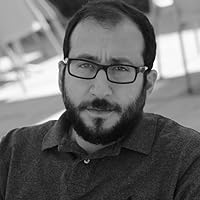
Siddharth Kara
11 books648 followersSiddharth Kara is an author, researcher, and activist on modern slavery. Kara has written several books and reports on slavery and child labor, including the New York Times bestseller and Pulitzer Prize finalist, Cobalt Red. Kara also won the Frederick Douglass Book Prize. He has lectured at Harvard University and held a professorship at the University of Nottingham. He divides his time between Los Angeles and London.
Ratings & Reviews
Friends & Following
Create a free account to discover what your friends think of this book!
Community Reviews
Displaying 1 - 17 of 17 reviews

May 25, 2023
It’s really difficult to rate a book I really hated reading. This was genuinely probably the toughest book I’ve read in a long time. Really important too, and it’s impossible not to applaud the author for making this his life’s mission considering how much absolute horror he has to confront through his research. I feel pretty despondent after finishing this to be honest, but I still wish I could make everyone read this?
One really important note is that I really like that the author doesn’t go for trauma porn, every bit of research is presented in a way that’s haunting (because what’s happening is haunting!) but doesn’t lean into gore for shock value, which is so important for respecting people’s dignity. Definitely will read more of his work
One really important note is that I really like that the author doesn’t go for trauma porn, every bit of research is presented in a way that’s haunting (because what’s happening is haunting!) but doesn’t lean into gore for shock value, which is so important for respecting people’s dignity. Definitely will read more of his work

Read
January 8, 2022Thoughts while reading this:
The world is much scarier than I thought it was. More scary than the "slavery existing" part. There is a section in the book where mafia backed juju priests conduct magic rituals to strip away girls identities and will before they go work in debt bonded prostitution. I didn't realize that deep emotional / spiritual work can be used to harm others in such a way.
That, plus the author's meeting with the juju priests has me questioning morality --- it seems like spiritual access is a morally neutral thing, and that just meditating or whatever won't necessarily make you a good person. That has me far more confused, and suspicious, about how moral and religious precepts are constructed. Are they just as bogus [intellectual fronts for psychological aggression/power] as other ideologies?
About 3/4's of the way through book, in one of the more mild seeming sections, made brain came to a hard stop of some kind I haven't understood fully. One of the major reasons slavery exists is the global inequality, yet with huge numbers of poor people and the cheapness of travel, this means it's super easy. I came away from this section feeling like making "Do no harm" pledges are utterly pointless, because there is always people suffering somewhere down the line, and living totally off the land as a hermit is only possible because of modern technology and governments doing the innovation and protection work for you.
The world is much scarier than I thought it was. More scary than the "slavery existing" part. There is a section in the book where mafia backed juju priests conduct magic rituals to strip away girls identities and will before they go work in debt bonded prostitution. I didn't realize that deep emotional / spiritual work can be used to harm others in such a way.
That, plus the author's meeting with the juju priests has me questioning morality --- it seems like spiritual access is a morally neutral thing, and that just meditating or whatever won't necessarily make you a good person. That has me far more confused, and suspicious, about how moral and religious precepts are constructed. Are they just as bogus [intellectual fronts for psychological aggression/power] as other ideologies?
About 3/4's of the way through book, in one of the more mild seeming sections, made brain came to a hard stop of some kind I haven't understood fully. One of the major reasons slavery exists is the global inequality, yet with huge numbers of poor people and the cheapness of travel, this means it's super easy. I came away from this section feeling like making "Do no harm" pledges are utterly pointless, because there is always people suffering somewhere down the line, and living totally off the land as a hermit is only possible because of modern technology and governments doing the innovation and protection work for you.

January 4, 2024
Difficult to read but important to understand.

April 1, 2019
This book is really, really good but really, more depressing than I could imagine. It is based on years of research, documents hundreds of cases of modern slavery. It also gets right to the root causes of slavery - so why it is that slaves are leaving Africa today from the same ports as in the transatlantic slave trade, why it is that the Rohingya are one of the groups at most risk of slavery, and why it is that both women trafficked for prostitution, and men trafficked to work at sea cross "the same routes into Thailand for the same purpose of soul-crushing exploitation."
August 1, 2025
A heart-wrenching must read for any person still hanging to the fragile threads of civilisation.
Five stars for the work and dedication of Mr. Kara; Zero for our humanity.
Five stars for the work and dedication of Mr. Kara; Zero for our humanity.
August 15, 2024
Unavoidable essay for those who really desire to be aware about the dreadful injustices of the world, and how globalized politic, economic and food chain are entangled with them.
Although Kara's accounts can also be found in ONU's human rights violations' records (or in some commited journalists such as Xavier Aldekoa in Spain), his seriousness and honesty manage to generate questions about our humanity that are hardly posed by other manichean or abstract perspectives
In conclusion, Siddarth Kara is one of the most reliable heroes of real ethics nowadays and, although some of his writings are somehow repetitive and reiterative (one of his obsessions are counting numbers of víctims of slavery) as another of his masterworks show (Red Cobalt), this essay is a MUST.
I just wonder why this great opus hasn't still been translated into Spanish....
Although Kara's accounts can also be found in ONU's human rights violations' records (or in some commited journalists such as Xavier Aldekoa in Spain), his seriousness and honesty manage to generate questions about our humanity that are hardly posed by other manichean or abstract perspectives
In conclusion, Siddarth Kara is one of the most reliable heroes of real ethics nowadays and, although some of his writings are somehow repetitive and reiterative (one of his obsessions are counting numbers of víctims of slavery) as another of his masterworks show (Red Cobalt), this essay is a MUST.
I just wonder why this great opus hasn't still been translated into Spanish....

Read
November 14, 2023alternates between boring recitation of bureaucratic protocols and frighteningly gripping testimony. much of what it discusses can be explored here if you don't have the stomach for the stories https://www.walkfree.org/global-slave...

May 7, 2023
This is a heartbreaking book about the ways in which “Modern Slavery” persists in different fields throughout the world. The term itself is quite contentious and has received its own fair share of criticism, but it seems to me less important how it’s defined and more important what circumstances it’s meant to shed light on. Personally I think the term is more to catch attention than it is to make a direct comparison to chattel slavery, but it’s still worth looking into these examples of horrifying exploitation in its many forms.
Kara is a researcher-journalist, but one who isn’t necessarily connected to the broader academic world. And so he isn’t representative of the antislavery wing of academia led by people like Kevin Bales. Kara is more like a journalist who has in the process of his focus on uncovering exploitation over the years collected data that he then extrapolates from in his books. This one is a summary of his findings over different fields such as sex, labor, and organ trafficking. Due to his methods they’re not technically hard data, but are still very useful to get a sense of how widespread and intense these issues have become.
He doesn’t let go of his personal subjectivity and so the book can occasionally feel tonally inconsistent, flitting between personal memoir, anecdote, and the presentation of data. This can make it a bit uneven at times. Still, I highly recommend this for anyone willing to glimpse the very dark side of global capitalism. It’s not a perfect book, and his suggestions don’t always seem like the best solutions, but they’re still worth considering. (In particular, some may find troubling the suggestion that more or harsher laws need to be in place, both domestically and internationally, or that a solution is to give more funding support to international NGOs.)
Kara is a researcher-journalist, but one who isn’t necessarily connected to the broader academic world. And so he isn’t representative of the antislavery wing of academia led by people like Kevin Bales. Kara is more like a journalist who has in the process of his focus on uncovering exploitation over the years collected data that he then extrapolates from in his books. This one is a summary of his findings over different fields such as sex, labor, and organ trafficking. Due to his methods they’re not technically hard data, but are still very useful to get a sense of how widespread and intense these issues have become.
He doesn’t let go of his personal subjectivity and so the book can occasionally feel tonally inconsistent, flitting between personal memoir, anecdote, and the presentation of data. This can make it a bit uneven at times. Still, I highly recommend this for anyone willing to glimpse the very dark side of global capitalism. It’s not a perfect book, and his suggestions don’t always seem like the best solutions, but they’re still worth considering. (In particular, some may find troubling the suggestion that more or harsher laws need to be in place, both domestically and internationally, or that a solution is to give more funding support to international NGOs.)

April 27, 2023
A meticulously-researched and incredibly disturbing survey of modern slavery/debt bondage; each section could stand on its own as a reading on a university syllabus. Tackles the extreme economic incentives (60%+ ROI almost guaranteed, immediately, with no real risk? It's only rational to purchase slaves) and moral atrocities that are part and parcel of modern forced servitude. Kara takes the reader to California, Nigeria, eastern Europe, Thailand, and other south Asian countries, coupling raw statistics (an estimated 31 million enslaved persons with an economic impact of tens of billions) and brief interviews with survivors.
Some particularly haunting passages include sections like:
and
The book finishes with practical proposals for the abolishment of slavery. They all involve international coordination for enforcement and severe economic penalties for slavers; which, in this time of runaway global capitalist race to the bottom does not spark hope.
Lastly, apparently ~30% of the Nepalese GDP is remittance payments from international laborers. Astonishing.
Some particularly haunting passages include sections like:
[Following a government crackdown on illegal fishing practices] Some Thai ship captains saw a business opportunity. On a per-kilogram basis, a ship full of people can fetch roughly three to four times as much money as a ship full of fish. In addition, a ship can be filled with fleeing [Rohingya] refugees in a fraction of the time it takes to fill it with fish."
and
A few days after I came home, some men came in the night. They broke into my home, dragged me into the street, stripped my clothes, raped me, and chopped off my left arm with a meat cleaver. They said this was my punishment for breaking the oath."
The book finishes with practical proposals for the abolishment of slavery. They all involve international coordination for enforcement and severe economic penalties for slavers; which, in this time of runaway global capitalist race to the bottom does not spark hope.
Lastly, apparently ~30% of the Nepalese GDP is remittance payments from international laborers. Astonishing.

December 7, 2025
With the help of an LLM I asked for some books to expand my 'usual' reading material and this one popped up as well. What an unbelievable journey into the terribleness and darkness of modern slavery. I am from Europe but have lived and travelled extensively in Africa and South East Asia for almost 15 years so I am not a complete stranger to seeing and noticing the abuse of 'lesser' people.
Having said that, I never really looked beyond the surface and even though I am not surprised I am appalled of all the extremely inhumane things I read in this book. I have an amazing respect for the author who is a superhero himself. Finding the courage to go undercover in these dark places and industries throughout the world to do the necessary research and interview the victim but also other stakeholders that are involved in slavery.
The passion and honesty in his writing style did not go unnoticed and it really takes the reader (at least me) into dark places as well. It is unbelievable what horrors so many people go through in life. I sincerely hope that the UN, governments, and other influential people will take some of the advice offered in this book. I will definitely do my part and will encourage others as well to read this book.
Having said that, I never really looked beyond the surface and even though I am not surprised I am appalled of all the extremely inhumane things I read in this book. I have an amazing respect for the author who is a superhero himself. Finding the courage to go undercover in these dark places and industries throughout the world to do the necessary research and interview the victim but also other stakeholders that are involved in slavery.
The passion and honesty in his writing style did not go unnoticed and it really takes the reader (at least me) into dark places as well. It is unbelievable what horrors so many people go through in life. I sincerely hope that the UN, governments, and other influential people will take some of the advice offered in this book. I will definitely do my part and will encourage others as well to read this book.
June 28, 2020
Very interesting and informative, if somewhat dismal due to its subject matter. I particularly appreciated the narratives Kara shares from current and former slaves. The author strives for transparency about his definitions and methods, which I found helpful. He also from time to time mentions his personal struggles in dealing with the emotional/mental/spiritual impacts of his work, but does not dwell on that aspect at great length.
Overall, the tone and approach is convincing, fact-based advocacy. But for that very reason, a handful of mildly overblown statements toward the end really stood out for me. Example 1 (end of chapter 7): "We are what we eat, and if we eat the products of slavery, we are slaves." (I would disagree with the premise that we are what we eat, but even if it were true, his conclusion does not logically follow since we are not eating slaves.) Example 2 (start of chapter 8): "As long as there is even one slave in the world, the legitimacy of contemporary civilization is threatened." (Really? Even if that person is in some remote place that "contemporary civilization" hasn't reached? I realize it's a bit of hyperbole, but still.)
Overall, the tone and approach is convincing, fact-based advocacy. But for that very reason, a handful of mildly overblown statements toward the end really stood out for me. Example 1 (end of chapter 7): "We are what we eat, and if we eat the products of slavery, we are slaves." (I would disagree with the premise that we are what we eat, but even if it were true, his conclusion does not logically follow since we are not eating slaves.) Example 2 (start of chapter 8): "As long as there is even one slave in the world, the legitimacy of contemporary civilization is threatened." (Really? Even if that person is in some remote place that "contemporary civilization" hasn't reached? I realize it's a bit of hyperbole, but still.)

August 4, 2018
Just like his other books, this is hard to read but very interesting. This book stands alone but also acts as an update. And like the others, this book is well researched and will make you think, perhaps re-examine a few of your consumer tendancies, or push for change.

December 16, 2021
Kara utilizes stories very well to allow the harsh realities of modern slavery sink in. It is a very easy book to read and, in my opinion, an essential read for anyone looking to learn more about human trafficking.

December 27, 2023
scary, but a very informative and good read. really changed my mindset on fast-fashion.
September 6, 2024
Gut wrenching. A whole research on different forms of slavery and some cases mentioned in great detail.
A difficult read that left me hopeless.
A difficult read that left me hopeless.

October 24, 2025
Very technical with some stories. He does do his research and open your eyes to modern slavery that many don't realize is happening around the world.
This entire review has been hidden because of spoilers.

October 27, 2025
This is unrelenting grimsville, and that is no surprise, given the book's title. What alleviates the grimness and what makes this a truly extraordinary book, is the author's utter commitment to eradicating slavery and the author's profound humanity. Kara has worked for decades and is engaged in actual activism. Kara also looks beyond the obvious and the politically expedient and tries to be as meticulous in his statistics as possible. Above all, he puts himself on the line. He goes to interview people in all sorts of situations, often highly dangerous to himself. He has an utmost respect for all enslaved people and treats his enslaved interviewees with respect, care and consideration. He also interviews enslavers with tact and curiosity because although he does condemn, he wants above all to find out why so that he can prevent. He lists steps to prevention and ever and anon admits that it is an uphill battle as the political and economic will is lacking.
At times, he has to take time out or be sick in a corner as he is overwhelmed with the misery and cruelty he encounters. However, he always reminds himself that the enslaved are yet more miserable and keeps going. For me, worse than the chapters on child prostitution, agricultural enforced labour and other forms of exploitation, was the chapter on the Thai seafood industry. This is truly devastating, with minoritised oppressed people (mostly Rohingya refugees from Myanmar) trapped on boats, forced to work inhuman hours and simply thrown overboard when they become too ill and malnourished to work. Kara tried to interview some workers and was faced with terrified fear so only a very few people would speak out. I have started to check the origin of all seafood I buy. But another thing Kara points out is that we are all enmeshed.
He himself tries to live ethically. He does not eat meat and pays attention to sustainably farmed foods. But he depends on nuts and he loves nuts, and most of the world's nuts are farmed in California using enslaved labourers from Latin America who are forced to stay beyond their legal visa requirements and then threatened with deportation.
Kara is also very clear about defining his terms, including the term 'modern slavery'.
This was an eye-opener for me. I have stopped thinking of enslavement as something in the past and started to accept its pervasiveness today. Millions of humans are enslaved on this day. This is devastating.
I am grateful to becklovesbooks who hosted the 'Diverse Reading' challenge with the prompt 'Modern slavery'. I would not have discovered this book otherwise.
At times, he has to take time out or be sick in a corner as he is overwhelmed with the misery and cruelty he encounters. However, he always reminds himself that the enslaved are yet more miserable and keeps going. For me, worse than the chapters on child prostitution, agricultural enforced labour and other forms of exploitation, was the chapter on the Thai seafood industry. This is truly devastating, with minoritised oppressed people (mostly Rohingya refugees from Myanmar) trapped on boats, forced to work inhuman hours and simply thrown overboard when they become too ill and malnourished to work. Kara tried to interview some workers and was faced with terrified fear so only a very few people would speak out. I have started to check the origin of all seafood I buy. But another thing Kara points out is that we are all enmeshed.
He himself tries to live ethically. He does not eat meat and pays attention to sustainably farmed foods. But he depends on nuts and he loves nuts, and most of the world's nuts are farmed in California using enslaved labourers from Latin America who are forced to stay beyond their legal visa requirements and then threatened with deportation.
Kara is also very clear about defining his terms, including the term 'modern slavery'.
This was an eye-opener for me. I have stopped thinking of enslavement as something in the past and started to accept its pervasiveness today. Millions of humans are enslaved on this day. This is devastating.
I am grateful to becklovesbooks who hosted the 'Diverse Reading' challenge with the prompt 'Modern slavery'. I would not have discovered this book otherwise.
Displaying 1 - 17 of 17 reviews