

What do you think?

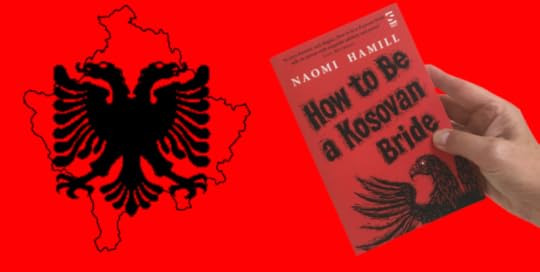
How To Be a Kosovan Bride
How to be a Kosovan Bride opens up something entirely new to the reader: the history, culture and stories of one of the newest countries in the world. It weaves together Albanian folktale, stories of Kosovan experience of the war in 1999 and a look into the lives of modern-day Kosovan women.
The dark undercurrent of Albanian blood feuds underpins a story about the impact of war and the way that new life can emerge from darkness.
It is characterised by striking imagery and daring form.
The dark undercurrent of Albanian blood feuds underpins a story about the impact of war and the way that new life can emerge from darkness.
It is characterised by striking imagery and daring form.
218 pages, Paperback
First published August 15, 2017
Ratings & Reviews
Friends & Following
Create a free account to discover what your friends think of this book!
Community Reviews
Displaying 1 - 30 of 33 reviews

November 13, 2019
[3.75] A compelling novel that opened my eyes to a part of the world (Kosovo) that I know little about. Written in a rhythmic style with short chapters, the novel illuminates life in Kosovo and the aftermath of war - focusing on two young women who straddle traditional small town life and modernity.

April 15, 2018
Someone, somewhere, remembers these two and is glad that guns were silenced and tanks were turned back and hatred was not allowed its reign over this piece of land
This book is published by the brilliant Norfolk based publisher Salt – and like their Costa Award shortlisted The Clocks in This House All Tell Different Times has been longlisted for the prestigious Author’s Club Best First Novel Award for 2018.
Naomi Hamill herself is a Manchester based secondary school teacher who (in what I imagine is the very limited spare time available to her) is also completing an MA in Creative Writing at Manchester Metropolitan University and travels to Kosovo every Summer to run a summer school as part of the charity Manchester Aid to Kosovo.
These two admirable aspects of her life have clearly been the two drivers for this ultimately powerful and moving novel.
The book starts with two weddings and two chapters “How to Pass a Virginity Test” and “How to fail a Virginity Test”: two brides, one, a promising young student is returned to her family after not bleeding on her wedding night (there is more than a hint the reason may have been an unadmitted pre-marriage assault but her bridegroom), the second settles down to life at the heart of a Kosovan family. Thereafter the chapters of the book effectively alternate between the two characters who are initially identified as, respectively, The Returned Girl and the (girl who becomes the) Kosovan Wife. These Chapters are short and all titled “How to …” and in themselves sketch out the two different paths that the girls follow.
The family of the Returned Girl quickly decide not to try and force a marriage of convenience on her, but instead to allow her to study from where she goes to University in the capital, thriving when she no longer has the label of a Returned Girl, getting involved with an English UN worker and then later in the burgeoning young activist movement of the Kosovan self-determination party Vetëvendosje.
The Kosovan wife quickly becomes a mother and struggles against her identity being subsumed into her extended family, and her life being forced into taken over by pre-determined traditional expectations of homemaking and motherhood.
Both girls being to write – on both cases as a form of liberation and discovery.
The Returned Girl is asked to write as part of her English course, but also uses it as a way of trying to uncover the unspoken horrors and untold stories of her families experiences during the Kosovo War. The stories she starts to gather, and others she is inspired to write, are included in the text after her “How to ..” chapters. While these are often full of harrowing details of atrocity and of terrible choices made, there are also uplifting elements of moments of kindness or for instance a chapter which alternates between a Muslim and a Christian who in alternate paragraphs are drawn through their different traditions of prayer into gaining a greater peace and a greater resolve to do what will need to be done and what will cause less evil and less pain and less suffering in the world.
The Kosovan Wife is determined for her own children (perhaps particularly her son) not to be drawn into a life of feuds, violence and revenge but instead whispers words of love deliberately into his ear: peace, she coos,; kindness, she sings, gentleness she murmurs; reconciliation, she prays. Gradually recovering from post partum depression, she resolves to write down for her children an Albanian folk tale that she remembers from her grandfather, this story “The Maiden in the Box” (http://www.albanianliterature.net/fol...) is also included in the book in instalments, after the Kosovan Wife’s “How to …” sections and ultimately ends as a tale of forgiveness.
The story of the two girls ends poignantly a wedding which both attend, both temporarily affected for a longing by what they see in the life of the other which they believe to missing in their own lives (motherhood/traditional life and freedom/modern city live respectively) but both claiming their futures and both in the closing paragraphs named for the first time in the book – Liridona and Lulezime respsectively) signalling a choice they have made to henceforth form and shape their own identities.
A final postscript tells of two boys, full of snow, playing in a park observed by and laughing at some English strangers
Who can say what’s happened on this land before this moment. We know some of it. We know vulgarity, we know occupation, we know fear, we know murder and not just from outsiders ….. But now, just now, this piece of land is sacred. Prayed for by the believers, all kinds; hoped and wished for by the unbelievers: this piece of land is dedicated to good, to peace, to healing.
A story I believed reflects something Hamill saw and which inspired her book and the final words of this powerful and uplifting tale of redemption – the words with which I have started this review.

January 20, 2018
Unusual, charming and poignant.
How to Be a Kosovan Bride tells the stories of two different Kosovan women and the different paths they follow after becoming brides. The first bleeds on her wedding night and thus passes the "virginity test" to become the Kosovan Wife. The second does not and is returned in shame to her family - she is the Returned Girl. Interspersed are an Albanian folk tale called The Maiden in the Box, and vignettes of stories from the Kosovan war.
The way the book is written makes it feel like a folk tale and it is very effective at conveying the tension between Albanian tradition and modernity via the different paths taken by the Kosovan Wife and the Returned Girl. The snippets of war experiences are upsetting but because of the way they are told, there is enough of a remove to prevent them becoming harrowing to the reader. I confess to only having a vague prior knowledge of the Kosovan War, but this book has prompted me to want to learn more.
This book is unlike anything I can remember reading before and I thought it was really rather wonderful. I would definitely read more from this author.
How to Be a Kosovan Bride tells the stories of two different Kosovan women and the different paths they follow after becoming brides. The first bleeds on her wedding night and thus passes the "virginity test" to become the Kosovan Wife. The second does not and is returned in shame to her family - she is the Returned Girl. Interspersed are an Albanian folk tale called The Maiden in the Box, and vignettes of stories from the Kosovan war.
The way the book is written makes it feel like a folk tale and it is very effective at conveying the tension between Albanian tradition and modernity via the different paths taken by the Kosovan Wife and the Returned Girl. The snippets of war experiences are upsetting but because of the way they are told, there is enough of a remove to prevent them becoming harrowing to the reader. I confess to only having a vague prior knowledge of the Kosovan War, but this book has prompted me to want to learn more.
This book is unlike anything I can remember reading before and I thought it was really rather wonderful. I would definitely read more from this author.

August 14, 2017
How to Be a Kosovan Bride, by Naomi Hamill, follows the trajectory of two young women living in newly liberated but still deeply traditional, contemporary Kosovo. Both enter into marriages sanctioned by their respective families while other girls their age continue with school. One is warmly welcomed by her in-laws but discovers that life as a wife is not as satisfying as she had hoped. The other becomes a Returned Girl, rejected when her husband accuses her of lying about her virginity.
The Returned Girl determines that she will not accept a marriage to a lesser man just for the sake of form. Instead she will pick up her studies and, despite the skewed entry system, try for university. Her family support her efforts, ignoring the looks and comments from their local community.
The Kosovan Wife quickly falls pregnant, much to the delight of her husband and his parents with whom they live. They regard her as a good girl, believing their son has made an excellent choice. The Kosovan Wife is grateful that, for now at least, he leaves her alone.
Interwoven with the lives of these two women are related tales of the previous generation during the Kosovo War. Many are still haunted by the cruelties inflicted by the occupying soldiers from whom they fled into the mountains, where they struggled to survive the hunger and cold. Those who returned often found that their homes had been destroyed. Although wishing to move forward, the older generation’s hopes for the future are at odds with many of the young women’s dreams of personal freedom, which traditional living precludes.
The Returned Girl is much taken by the idea of life in London. University offers her the chance to meet foreigners and secretly, scandalously, she dates boys her family do not know. She acquires an interest in politics. She starts to write down her relatives’ stories from the war.
The Kosovan Wife is also writing, as a means to escape the increasing unhappiness of her married life. She retells an old folk tale in which a good woman is wronged by a series of men. Unlike the Kosovan Wife’s experiences, these men are taken to task for their behaviour and thereby gain understanding.
The rhythm and form of the narrative quietly capture the difficulties to be faced when female aspiration stretches beyond the widely accepted limitations of weddings, babies and home. Whatever path taken, the glimpsed alternatives bring into question choices made. Tradition and poverty prove as constricting to women as closed borders.
This subtle exploration of the complexities of life in newly liberated Kosovo is presented in nuanced, engaging prose. A modern history told through its people. An intelligent, rewarding story.
My copy of this book was provided gratis by the publisher, Salt.
The Returned Girl determines that she will not accept a marriage to a lesser man just for the sake of form. Instead she will pick up her studies and, despite the skewed entry system, try for university. Her family support her efforts, ignoring the looks and comments from their local community.
The Kosovan Wife quickly falls pregnant, much to the delight of her husband and his parents with whom they live. They regard her as a good girl, believing their son has made an excellent choice. The Kosovan Wife is grateful that, for now at least, he leaves her alone.
Interwoven with the lives of these two women are related tales of the previous generation during the Kosovo War. Many are still haunted by the cruelties inflicted by the occupying soldiers from whom they fled into the mountains, where they struggled to survive the hunger and cold. Those who returned often found that their homes had been destroyed. Although wishing to move forward, the older generation’s hopes for the future are at odds with many of the young women’s dreams of personal freedom, which traditional living precludes.
The Returned Girl is much taken by the idea of life in London. University offers her the chance to meet foreigners and secretly, scandalously, she dates boys her family do not know. She acquires an interest in politics. She starts to write down her relatives’ stories from the war.
The Kosovan Wife is also writing, as a means to escape the increasing unhappiness of her married life. She retells an old folk tale in which a good woman is wronged by a series of men. Unlike the Kosovan Wife’s experiences, these men are taken to task for their behaviour and thereby gain understanding.
The rhythm and form of the narrative quietly capture the difficulties to be faced when female aspiration stretches beyond the widely accepted limitations of weddings, babies and home. Whatever path taken, the glimpsed alternatives bring into question choices made. Tradition and poverty prove as constricting to women as closed borders.
This subtle exploration of the complexities of life in newly liberated Kosovo is presented in nuanced, engaging prose. A modern history told through its people. An intelligent, rewarding story.
My copy of this book was provided gratis by the publisher, Salt.

December 17, 2018
How To Be A Kosovan Bride begins with a wedding. Or perhaps two weddings. I believe the ambiguity is deliberate on the part of the author. There are definitely two stories being told, but it is not immediately clear if this is the story of two different women or a sort of “sliding doors moment” where two possible stories are told. Both women are only named once and that at the end of the book. For all the narrative leading up to that point, they are The Kosovan Bride and The Returned Girl and the difference between them is that The Kosovan Bride passed her virginity test on her wedding night and was accepted by her husband whereas The Returned Girl did not and was rejected. We follow both wedding night outcomes.
It felt to me that the author deliberately leaves her protagonists unnamed with a degree of doubt about their identity so that they can act as stereotypes for two distinctly different types of women finding their way in a brand new country that is still lacking stability.
As we follow each woman, we learn a lot about Albanian culture. The Kosovan Bride finds herself trapped in a traditional way of life where her role is to produce and then care for children. The Returned Girl works hard and heads to the city, to the new way of life, where she is accepted at university. The reader unavoidably begins to compare the two ways of life. There is a distinctly feminist undertone to the story.
Both girls begin to write as their stories develop and the narrative is a mixture of their stories and their writings. The Kosovan Bride writes a fairy tale ostensibly for her children, but it recounts the treatment of a woman by a series of men and the eventual outcome as fortunes ebb and flow. The Returned Girl captures sometimes dark and disturbing stories of friends and relatives and their treatment during wars and unrest.
This mixture of the women’s stories and their writings, along with some other elements written in the second person addressing a man, all combine to paint a picture of Kosovan life, its deep traditional values alongside its shallow historical foundations. There is a continual sense of tension between those who want to hold onto tradition and those who look to the West for a new way of life. The birth struggles of a new nation.
The writing remains fresh all the way through, helped by the continual jumping from one woman to another and the mixing together of their writings. There’s a pattern to the order in which each element appears, but the different elements mean there is never a dull moment. The only thing I wasn’t completely convinced by in the writing was the ongoing use of repetition of sentences. I think I can see why the author chose to use that device, but it didn’t quite work for me.
This is a fascinating book to read. It is not a long book and if you can set aside 2-3 hours for it, you can probably read it in one sitting - this might be the best way to enjoy it.
Definitely recommended.
It felt to me that the author deliberately leaves her protagonists unnamed with a degree of doubt about their identity so that they can act as stereotypes for two distinctly different types of women finding their way in a brand new country that is still lacking stability.
As we follow each woman, we learn a lot about Albanian culture. The Kosovan Bride finds herself trapped in a traditional way of life where her role is to produce and then care for children. The Returned Girl works hard and heads to the city, to the new way of life, where she is accepted at university. The reader unavoidably begins to compare the two ways of life. There is a distinctly feminist undertone to the story.
Both girls begin to write as their stories develop and the narrative is a mixture of their stories and their writings. The Kosovan Bride writes a fairy tale ostensibly for her children, but it recounts the treatment of a woman by a series of men and the eventual outcome as fortunes ebb and flow. The Returned Girl captures sometimes dark and disturbing stories of friends and relatives and their treatment during wars and unrest.
This mixture of the women’s stories and their writings, along with some other elements written in the second person addressing a man, all combine to paint a picture of Kosovan life, its deep traditional values alongside its shallow historical foundations. There is a continual sense of tension between those who want to hold onto tradition and those who look to the West for a new way of life. The birth struggles of a new nation.
The writing remains fresh all the way through, helped by the continual jumping from one woman to another and the mixing together of their writings. There’s a pattern to the order in which each element appears, but the different elements mean there is never a dull moment. The only thing I wasn’t completely convinced by in the writing was the ongoing use of repetition of sentences. I think I can see why the author chose to use that device, but it didn’t quite work for me.
This is a fascinating book to read. It is not a long book and if you can set aside 2-3 hours for it, you can probably read it in one sitting - this might be the best way to enjoy it.
Definitely recommended.

October 1, 2018
If I'm being completely honest I can't remember how I came to learn about this book, I do know it has been on my to be read pile for quite some time. I always find it interesting to learn about other cultures or place, for it doesn't matter if it comes in the form of fiction or nonfiction. For me, I think you can tell a lot about other places by the way certain things or people are treated within a there society. so with this in mind, I turn to the book at hand.
Within this story, we are lead through the lives of two very different girls. When we first meet them they are both about to be married off to prospective husbands. Within the text, we never get to learn either of these women names and in some ways, it allows for them to take on any woman you might come across within the borders of Kosovo, or for that matter someone you might know. While their fates might differ greatly, what they hope and wish for share so many strands. As I read I got to see how traditions of this country can affect a young girls life without anything that she can do. about it. Due to one small act, a life can be changed forever and she can be branded till the day she dies. I became intertwined with this two woman as they both fought for a life that was free and could make there own choices. I could not help but wanting for them to succeed in their lives. For many of us in the west, the thought of an arranged marriage is not soothing that would ever cross our minds but for a lot of woman in the world, it is a fact of everyday life. And while some work out it would seem a lot go on to have unhappy lives.
I can safely say that I don't think I have ever read a book quite like this. From the way it is structured to the lives I got to learn about it all felt very unique. The author's style made it easy for me to jump between the different narrative strains without confusion. In between learning of these girls lives, we get tales of the old Kosovo, both from the war and much further back. It shows a country that was not only torn apart by the civil war but also one that is struggling to come to terms with a changing world. How the young women growing up now are looking further abroad and at the lives of the modern woman. They see a life full of freedoms and choice and are starting to ask why they still need traditions that bind them. Why can't they go on and go to university and have careers in any field they choose. To me, this came across well and breathed life into the characters and stories, this yearning to be free to decide our own lives and not be dictated to. As I become absorbed into the lives I began to see just how hard they have it. That even when you fight against it all, our countries still have a view of how a woman should behave and live there lives. These two women are people that you would want to help if given the choice, but this is not the way of life.
This is one of those books that was a complete pleasure to read, even if it does delve into some dark place, both in the lives of these two women and the scars the war has left on this country. It is written with expert pacing and while short still gave me a huge tale to take in. I would highly recommend picking up a copy if you come across t.
Within this story, we are lead through the lives of two very different girls. When we first meet them they are both about to be married off to prospective husbands. Within the text, we never get to learn either of these women names and in some ways, it allows for them to take on any woman you might come across within the borders of Kosovo, or for that matter someone you might know. While their fates might differ greatly, what they hope and wish for share so many strands. As I read I got to see how traditions of this country can affect a young girls life without anything that she can do. about it. Due to one small act, a life can be changed forever and she can be branded till the day she dies. I became intertwined with this two woman as they both fought for a life that was free and could make there own choices. I could not help but wanting for them to succeed in their lives. For many of us in the west, the thought of an arranged marriage is not soothing that would ever cross our minds but for a lot of woman in the world, it is a fact of everyday life. And while some work out it would seem a lot go on to have unhappy lives.
I can safely say that I don't think I have ever read a book quite like this. From the way it is structured to the lives I got to learn about it all felt very unique. The author's style made it easy for me to jump between the different narrative strains without confusion. In between learning of these girls lives, we get tales of the old Kosovo, both from the war and much further back. It shows a country that was not only torn apart by the civil war but also one that is struggling to come to terms with a changing world. How the young women growing up now are looking further abroad and at the lives of the modern woman. They see a life full of freedoms and choice and are starting to ask why they still need traditions that bind them. Why can't they go on and go to university and have careers in any field they choose. To me, this came across well and breathed life into the characters and stories, this yearning to be free to decide our own lives and not be dictated to. As I become absorbed into the lives I began to see just how hard they have it. That even when you fight against it all, our countries still have a view of how a woman should behave and live there lives. These two women are people that you would want to help if given the choice, but this is not the way of life.
This is one of those books that was a complete pleasure to read, even if it does delve into some dark place, both in the lives of these two women and the scars the war has left on this country. It is written with expert pacing and while short still gave me a huge tale to take in. I would highly recommend picking up a copy if you come across t.
May 14, 2018
Interesting to get a perspective on life in Kosovo during and after the war in the 1990s and in particular the role of women in traditional Kosovan society. Written in the style of a folk tale, the two main protagonists are women, one of whom is successfully married young, whilst the other is returned to her parents after failing the virginity test on her wedding night. The later trajectories of their lives show that sometimes the better option in the short term does not always remain so - although I did feel that the way that this is portrayed was maybe a little too obvious/heavy handed at times. Despite this, overall a compelling read.

August 16, 2017
Novel set in KOSOVO
How to be a Kosovan Bride is constructed in short chapters, often no more than a couple of pages. All human life passed across these pages, both pain and pleasure, love and hate. Central are two women, the “Kosovan Wife” and the “Returned Girl” whose stories are firmly set against a backdrop of traditional culture, fables and the legacy of war. No-one has a name, so the reader has to focus more on the story than the character’s individuality – one young woman is a wife in a traditional role, married young, bearing children, living in a home environment and at times struggling with her place in society; the other has been rejected for marriage for now and sets off to study and write in Pristina – she is young, too, and shows a determination to study hard with an iron focus on her goal of going up in the world, on her terms.
This is still a society where the people have been under siege and are only just finding their way into modern ways after war torn years and where society is still burdened oftentimes by archaic traditions.
The stories are beautifully told and deliver wonderful insight into this little-known country. It certainly got me thinking about how little I know about Kosovo, tucked in the heart as it is of South Eastern Europe. A truly thought-provoking read that brings a culture and country to colourful and realistic life. And a charming way to discover just a little more about Kosovo.
How to be a Kosovan Bride is constructed in short chapters, often no more than a couple of pages. All human life passed across these pages, both pain and pleasure, love and hate. Central are two women, the “Kosovan Wife” and the “Returned Girl” whose stories are firmly set against a backdrop of traditional culture, fables and the legacy of war. No-one has a name, so the reader has to focus more on the story than the character’s individuality – one young woman is a wife in a traditional role, married young, bearing children, living in a home environment and at times struggling with her place in society; the other has been rejected for marriage for now and sets off to study and write in Pristina – she is young, too, and shows a determination to study hard with an iron focus on her goal of going up in the world, on her terms.
This is still a society where the people have been under siege and are only just finding their way into modern ways after war torn years and where society is still burdened oftentimes by archaic traditions.
The stories are beautifully told and deliver wonderful insight into this little-known country. It certainly got me thinking about how little I know about Kosovo, tucked in the heart as it is of South Eastern Europe. A truly thought-provoking read that brings a culture and country to colourful and realistic life. And a charming way to discover just a little more about Kosovo.

October 19, 2017
A wonderful introduction to a country that I've barely ever given much thought to. Beautifully told stories, cleverly interwoven. Interesting mix of universal and specific feel to the stories - were those central female characters real, and how much did it matter? Addresses difficult and tragic history in a clever blend of fact and emotion. Exactly how I love to be taught about something real and important that I might otherwise never read about. I read this far too quickly and wished there was more
February 13, 2023
would definitely recommend! I loved the changing perspectives, the easily readable writing style and the insight in Kosovan traditions (it did feel a bit stereotypical and maybe sometimes not nuanced enough, but at the same time thats probably exactly what's needed for the story and for what's supposed to be brought to the reader).

June 19, 2019
An emotive book told with a gorgeous, rhythmic writing style.

February 28, 2023
An emotionally driven insight into parts of the world that many don’t think of, don’t learn about and aren’t interested in doing so. Heartbreaking tales that you know would be common for so many people from Kosovo, the fight to exist was and is real. The stories almost read like poetry. It was such a great book and I’ll be recommending everyone who will listen to give it a read.

August 21, 2017
Running through this book is an Albanian folk tale of the 'Maiden in the Box' which I think is the key to this story of the 'Kosovan Bride' and 'The Returned Girl'. It is written very much in the style of a folk tale, telling rather than showing, and in this lies its strength. The two main protagonists may be two possible lives of the same woman, two different 'real' people or just two archetypes, but that is not important. The way the story is written gives a timelessness and universality to a story that written in a more realistic style could be too harrowing (at least for me) a read.
December 30, 2017
I LOVE LOVE LOVE this book. It is unlike anything I have read before. it introduced me to a country and a people in subtle but complicated ways. It drew me in from the first page but the short interwoven stories gave me breathing and thinking space. The anonymous characters become immediately intriguing and relatable.
It also gives a brilliant insight into life as a woman in a more restricted, male-controlled society and makes me very grateful to have the opportunities that life in the UK affords me.
Read it and tell people about it.
It also gives a brilliant insight into life as a woman in a more restricted, male-controlled society and makes me very grateful to have the opportunities that life in the UK affords me.
Read it and tell people about it.

October 7, 2017
I knew little about Kosovo and Albania before I reading book. This was a beautifully written, fantastic introduction. The book combines folklore with true to life accounts, and every chapter left me wanting to find out even more about the people I was reading about.
A really charming and touching book.
A really charming and touching book.
October 15, 2017
Blimey. This is a good book. It builds like a symphony, different themes, melodies, and variations, all amounting to a resonant and soul-stirring novel. Beautiful. I fell a little in love with it.

February 25, 2019
This may be a small book but it is so full of emotions. I couldn't stop reading even though it was painful to read. Very hard hitting! Beautifully written
May 6, 2025
Extremely good and enlightening read.
The book is a novel but I feel like it really depicts a lot of social aspects that touched people living through the Kosovo war. While it does not touch upon specific historical events, it depicts what were some very common occurrences of the Kosovan population.
The main story(es) follow two young women, the kosovan wife, just married, that quickly falls pregnant and starts her family, and the returned girl, also just married but that "fails" her "virginity test" on the first night of wedding so she gets returned to her family.
The kosovan wife feels oppressed by a life she was always taught to want, and by a husband that treats her as a possession basically; while the returned girl gets to explore herself thanks to her hard work and an understanding family that lets her go to university in Pristina.
Their stories are interlaced with an Albanian folklore tale and few snapshots of life during the war (fleeing the villages, hiding in the woods, struggles with pregnancies, the contacts with soldiers etc).
With its peculiar repetitive prose, the whole novel quite raw in the trauma that it evokes while it also does not condone the patriarchy of the society it depicts, and how such patriarchy negatively impacts women in the name of honor and rights, but also men, in what it does not let them live a peaceful and loving life because of all the expectations it places on them too.
I had a vague knowledge of the Kosovan war and I feel like this book is a great start to understanding the trauma of a population that was hunted down and whose villages were basically wiped a mere 20something years ago.
Extremely recommended.
The book is a novel but I feel like it really depicts a lot of social aspects that touched people living through the Kosovo war. While it does not touch upon specific historical events, it depicts what were some very common occurrences of the Kosovan population.
The main story(es) follow two young women, the kosovan wife, just married, that quickly falls pregnant and starts her family, and the returned girl, also just married but that "fails" her "virginity test" on the first night of wedding so she gets returned to her family.
The kosovan wife feels oppressed by a life she was always taught to want, and by a husband that treats her as a possession basically; while the returned girl gets to explore herself thanks to her hard work and an understanding family that lets her go to university in Pristina.
Their stories are interlaced with an Albanian folklore tale and few snapshots of life during the war (fleeing the villages, hiding in the woods, struggles with pregnancies, the contacts with soldiers etc).
With its peculiar repetitive prose, the whole novel quite raw in the trauma that it evokes while it also does not condone the patriarchy of the society it depicts, and how such patriarchy negatively impacts women in the name of honor and rights, but also men, in what it does not let them live a peaceful and loving life because of all the expectations it places on them too.
I had a vague knowledge of the Kosovan war and I feel like this book is a great start to understanding the trauma of a population that was hunted down and whose villages were basically wiped a mere 20something years ago.
Extremely recommended.

Read
February 27, 2019An odd book, but eminently readable. There's a sort of resignation to the overall tone that charmed me at times and put me off at others; no real solutions are offered, but there's a sense that there's some hope to this whole existence thing nonetheless.
The book follows two Kosovan girls: one who bleeds on her wedding night, and one who doesn't. Their lives split at this point. One becomes a wife and mother, one becomes a student involved in politics—though both want to express themselves. Interspersed with these two stories are snippets about the war, about a folk tale, about Albania now.
Hamill's style for the book makes what would be harrowing as a detailed account into something that can be faced without losing all your emotional energy to it. The horror isn't underplayed—you know it's there in people's responses to it—but it isn't the be-all end-all of the story. There's enjoyment in reading the simple but effective prose: "He is a round plastic bucket of a man; he has the potential to be useful, but really he is empty."
Not a book I'd try myself, but exactly the kind of book I joined a book group to read: so I would be exposed to new styles, ideas, and places. Glad this was one of the picks.
The book follows two Kosovan girls: one who bleeds on her wedding night, and one who doesn't. Their lives split at this point. One becomes a wife and mother, one becomes a student involved in politics—though both want to express themselves. Interspersed with these two stories are snippets about the war, about a folk tale, about Albania now.
Hamill's style for the book makes what would be harrowing as a detailed account into something that can be faced without losing all your emotional energy to it. The horror isn't underplayed—you know it's there in people's responses to it—but it isn't the be-all end-all of the story. There's enjoyment in reading the simple but effective prose: "He is a round plastic bucket of a man; he has the potential to be useful, but really he is empty."
Not a book I'd try myself, but exactly the kind of book I joined a book group to read: so I would be exposed to new styles, ideas, and places. Glad this was one of the picks.
August 7, 2025
This is one of those books that’s hard to define, categorise - or even rate. At first, it seems to tell the story of two young women navigating life in contemporary Kosovo, caught between modern freedoms and deeply rooted traditions and traumas. But then it becomes something more. Their narratives are interwoven with folk tales, memories of war, reflections on religion, food, love, and hope. Gradually, it becomes a meditation on storytelling itself - its power to move, to transform, and to bridge cultures and inner worlds.
One drawback: the constant shifts between the two main stories and the many embedded tales made it hard to follow at times, occasionally pulling me out of the narrative.
Still, this is a beautifully told and fascinating novel - if “novel” is even the right word - set in an equally captivating country. I’m glad I picked it up while visiting Kosovo.
One drawback: the constant shifts between the two main stories and the many embedded tales made it hard to follow at times, occasionally pulling me out of the narrative.
Still, this is a beautifully told and fascinating novel - if “novel” is even the right word - set in an equally captivating country. I’m glad I picked it up while visiting Kosovo.
May 14, 2026
really impressive work for a non albanian-kosovar author.
a must read for albanians born after the ‘99 kosovo ethnic war. love how the book centers the experiences of different types of albanian women and how each envy one another. as a non-returned returned girl archtype, i also find myself envying the kosovar wife occasionally. great reminder that we as albanian women all have it hard at times, and a great historical lesson on the difficulties of life under the kosovo war. learned a lot about the apartheid and displacement.
may kosovo be forever sacred & may Albanian mainstream literature center more Albanian women.
a must read for albanians born after the ‘99 kosovo ethnic war. love how the book centers the experiences of different types of albanian women and how each envy one another. as a non-returned returned girl archtype, i also find myself envying the kosovar wife occasionally. great reminder that we as albanian women all have it hard at times, and a great historical lesson on the difficulties of life under the kosovo war. learned a lot about the apartheid and displacement.
may kosovo be forever sacred & may Albanian mainstream literature center more Albanian women.
August 28, 2020
This is a fantastic book. I finished it last night. Naomi Hamill has a beautiful, rhythmic, repetitive writing style, and a clear love for Kosovo and its people. Through short, evocative chapters she weaves several different stories together - stories of tradition and opportunity, stories of the horrors of war and the hope of a new dawn. Together they give an extraordinary glimpse into life in one of the youngest countries in the world. I felt like I could feel the cold, the fear, the joy, the excitement. Unusual and outstanding.
December 13, 2021
This book was so, so good! It was such a fun and interesting read. I really enjoyed how the author decided to set up the story and how she used individual essays to further develop the story. It reminded me a little bit of the style of writing in Terry Tempest William's "When Women Were Birds". This book is a beautifully written story about Kosovan culture and history, every story powerful with emotion.
January 18, 2026
4.5/5 stars
A fantastic story that brings to light a history that I unfortunately know very little about. *(will definitely be looking into the history of Kosovo more after reading this)
Overall, this was a beautiful story with a unique structure and an overall wonderful intertwining narrative.
Highly Recommend.
Side note:
Honestly, I'm annoyed that I let this sit on my shelf for so many years before deciding to pick it up...
A fantastic story that brings to light a history that I unfortunately know very little about. *(will definitely be looking into the history of Kosovo more after reading this)
Overall, this was a beautiful story with a unique structure and an overall wonderful intertwining narrative.
Highly Recommend.
Side note:
Honestly, I'm annoyed that I let this sit on my shelf for so many years before deciding to pick it up...

January 19, 2019
The language echoes that of folk tale, with most characters named for their role in the story rather than having a given name. It seems a little stilted at first, but as I got used to it I was able to admire the ways in which Hamill uses style to great effect. Words and phrases are repeated, drawing powerful parallels between characters and events.
The two lead characters are the Kosovan Wife and the Returned Girl, their stories told alternately. They start out the same: after Kosovo gains independence and the country’s infrastructure begins to stabilise, two girls leave school a year early to get married. Their families and communities throw huge parties for their weddings. But when the traditional virginity test is conducted, one girl passes and stays with her husband, while the other girl fails and is sent home to her parents.
From this near-identical beginning, their lives have different paths, but there are similarities. The Kosovan Wife’s unhappy marriage and the Returned Girl’s continued education lead them to both write fiction of their own, and this starts to be interspersed with their stories. The Kosovan Wife is retelling an Albanian folk tale, while the Returned Girl is mining her family’s memories of the recent war. Through their fiction and their own lives, a picture is painted of Kosovo as a whole.
Read my full review: http://www.noseinabook.co.uk/2019/01/...
The two lead characters are the Kosovan Wife and the Returned Girl, their stories told alternately. They start out the same: after Kosovo gains independence and the country’s infrastructure begins to stabilise, two girls leave school a year early to get married. Their families and communities throw huge parties for their weddings. But when the traditional virginity test is conducted, one girl passes and stays with her husband, while the other girl fails and is sent home to her parents.
From this near-identical beginning, their lives have different paths, but there are similarities. The Kosovan Wife’s unhappy marriage and the Returned Girl’s continued education lead them to both write fiction of their own, and this starts to be interspersed with their stories. The Kosovan Wife is retelling an Albanian folk tale, while the Returned Girl is mining her family’s memories of the recent war. Through their fiction and their own lives, a picture is painted of Kosovo as a whole.
Read my full review: http://www.noseinabook.co.uk/2019/01/...
June 28, 2020
This was given to me as a birthday present and I will forever be grateful to my friend for this gift. It is beautifully written, with multiple storylines and a fable. It is lyrical and heartbreaking and will remain with me for a long time.
May 8, 2021
Loved everything about this novel: the form, the voice, the intertwining stories. Excellent.

February 14, 2025
A truly compelling read, educational and heartfelt, you feel a sense of protectiveness over the 2 main characters, woven amongst the wider context of the country’s culture and history.
Displaying 1 - 30 of 33 reviews