What do you think?
Rate this book


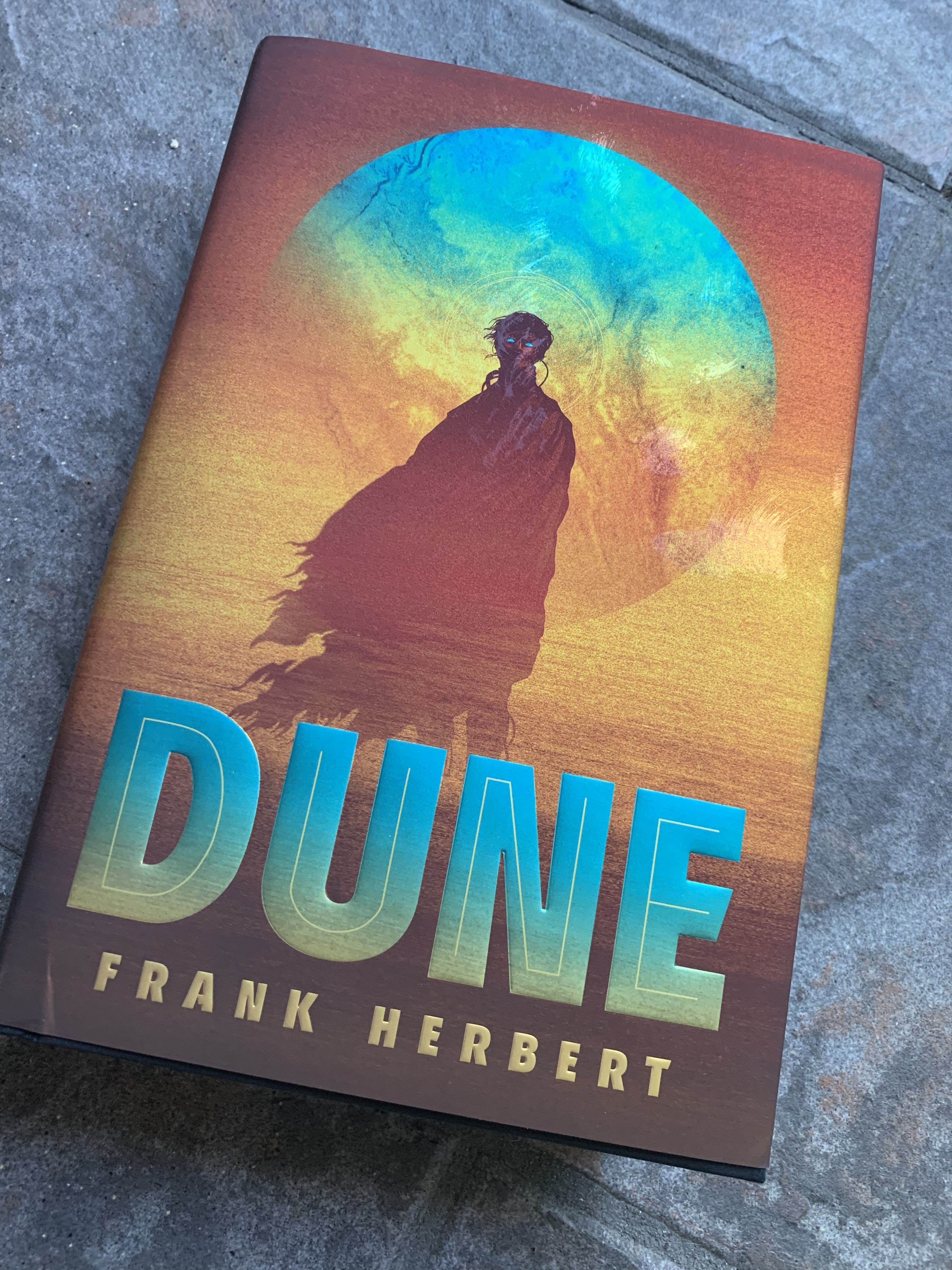
Giant in size and scope—widely hailed as one of Science Fiction's all-time greatest novels—Dune portrays a far-distant future, when hosts of seeming noblemen rule planets throughout the galaxy.
Emperor Shaddam IV is master of them all. But it is a time when intrigue and assassination are the most common forms of diplomacy. The Emperor can old onto his throne only through the might of his Sardaukar, soldier-fanatics unequaled in ferocity and skill. Not even they would be able to repel the forces of a united nobility, however, and that is the threat which turns Shaddam against Duke Leto, ruler of the planet Caladan.
Fearing the Duke's growing popularity and strength, the Emperor commands him to exchange rich and lovely Caladan for Arrakis, or Dune, a forbidding desert world.
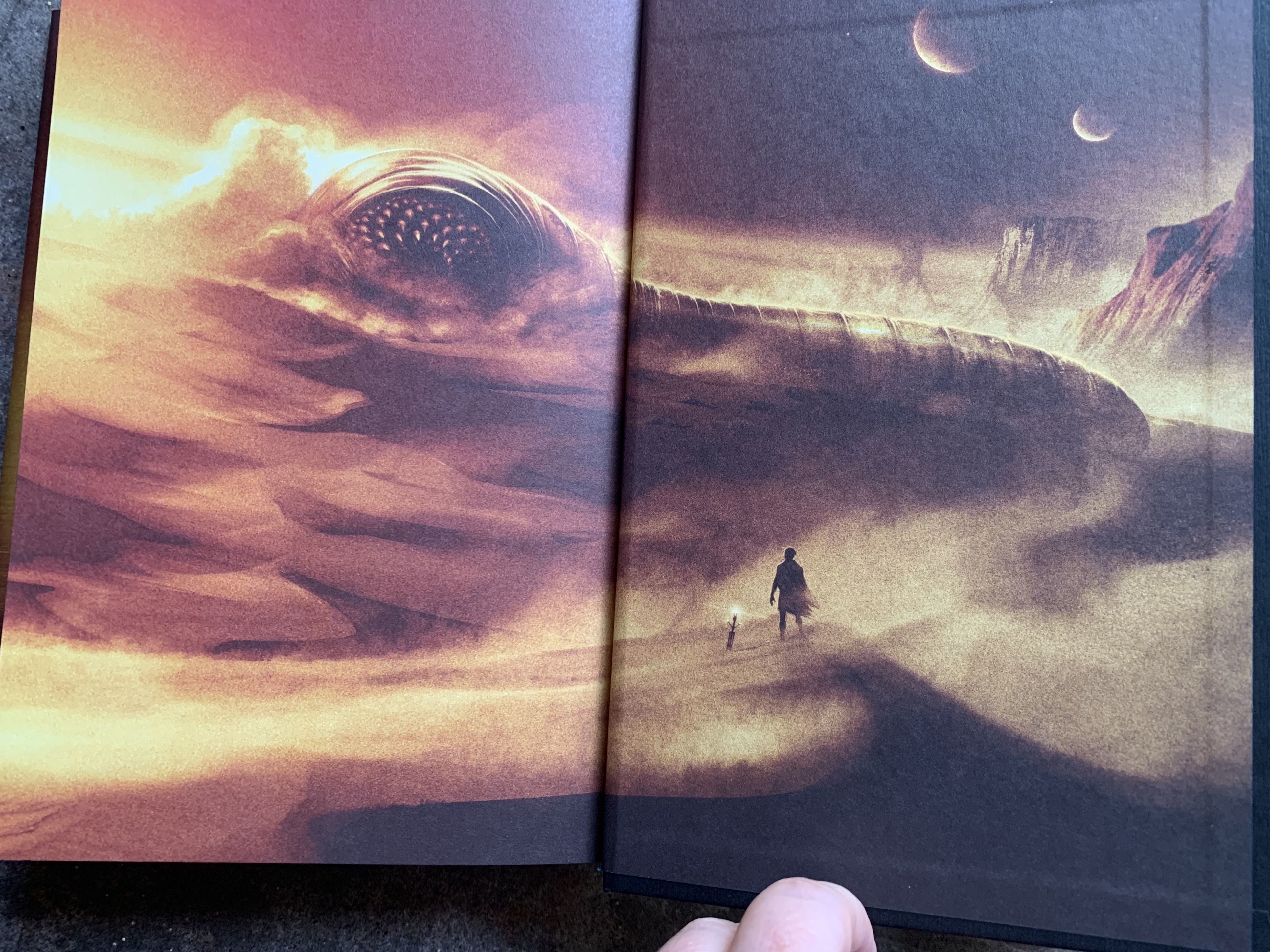
Arrakis is just barely habitable by humans. Water there is worth its weight in platinum…600-mile-an-hour winds whip up sandstorms that can envelop an entire continent…and gigantic sandworts pose a constant, terrifying danger to all who venture out into the open desert.
What better place to arrange the “accidental” deaths of the Duke and all his household? And who better to carry out the task than Leto’s sworn enemy, Baron Vladimir Harkonnen?
Harkonnen’s treachery succeeds—though not completely. The Duke and most of his men are wiped out soon after their arrival on Dune, but his lady, Jessica, and their son Paul escape.
The two flee to the desert, their survival no more than a slim hope…until they fall into the hands of the Fremen. Savage tribesmen who have their own secrets for surviving on Dune, the Fremen acknowledge no outside masters. Yet since ancient times, their legends have foretold the coming of the Lisan al-Gaib—the One who will lead them to Paradise—and they greet Paul as that long-awaited saviour.
It is just the beginning of a series of events with consequences that will be felt on many worlds.
557 pages, Hardcover
First published June 1, 1965





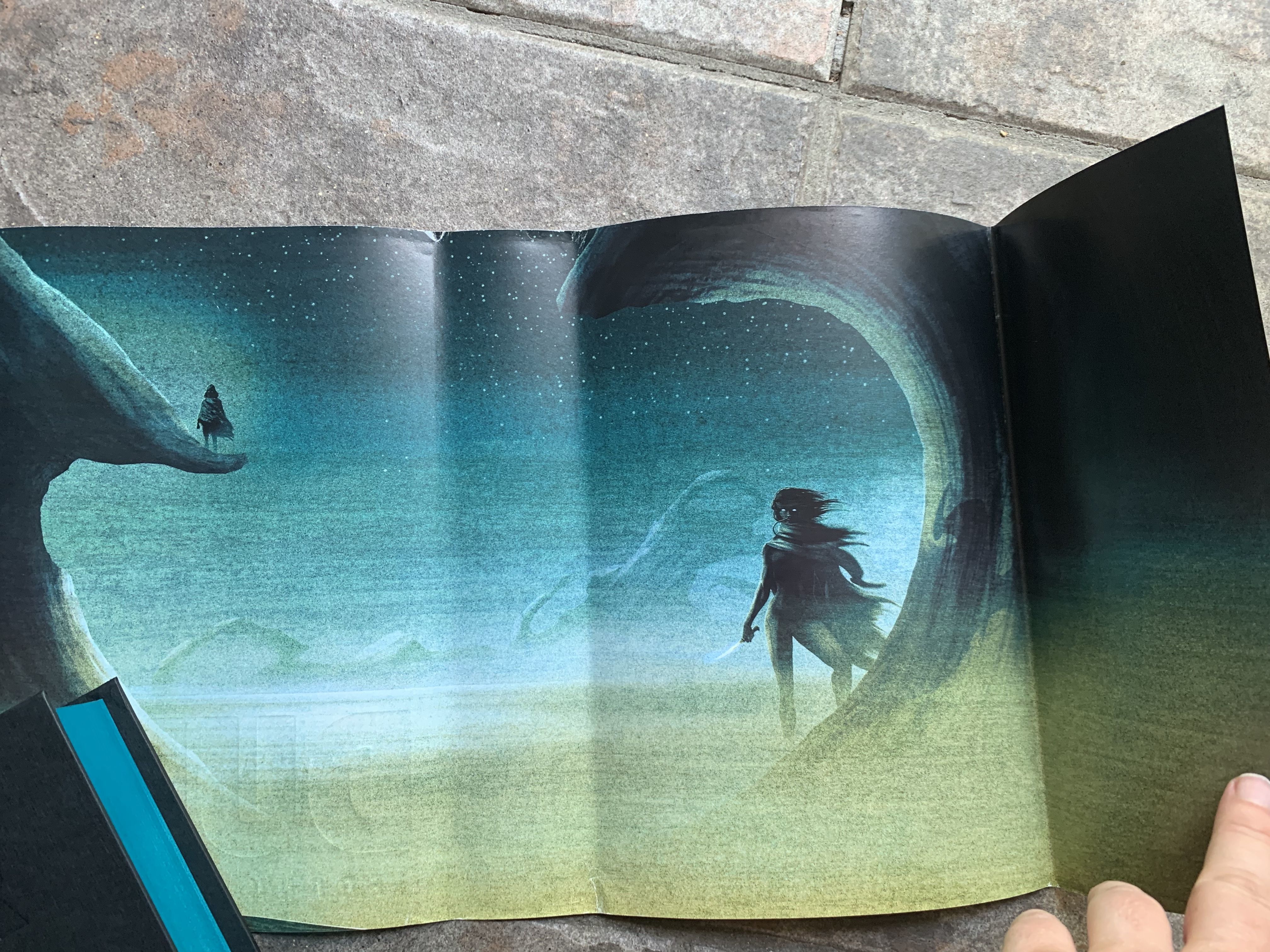


’They were all caught up in the need of their race to renew its scattered inheritance, to cross and mingle and infuse their bloodlines in a great new pooling of genes. And the race knew only one sure way for this—the ancient way, the tried and certain way that rolled over everything in its path: jihad.’
’And what [Paul] saw was a time nexus within this cave, a boiling of possibilities focused here, wherein the most minute action—a wink of an eye, a careless word, a misplaced grain of sand—moved a gigantic lever across the known universe. He saw violence with the outcome subject to so many variables that his slightest movement created vast shiftings in the pattern.’
’A leader, you see, is one of the things that distinguishes a mob from a people. He maintains the level of individuals. Too few individuals, and a people reverts to a mob.’
‘An act of disobedience must be a sin and require religious penalties. This will have the dual benefit of bringing both greater obedience and greater bravery. We must depend not so much on the bravery of individuals, you see, as upon the bravery of a whole population.’


“I have seen a friend become a worshiper, he thought.”I don’t think I actually *enjoyed* this book. But I certainly respected the hell out of it. For a bit I thought I had it all figured out, pegged it as your bog-standard Chosen One story, and then it went where I didn’t think it’d go and neatly subverted my expectations. It tackled stuff that is uncomfortable and therefore is generally handwaved over in the usual SF epics. And for that I seriously respected this dense complex tome.
“A leader, you see, is one of the things that distinguishes a mob from a people. He maintains the level of individuals. Too few individuals, and a people reverts to a mob.”
“The Fremen have a simple, practical religion," he said.
"Nothing about religion is simple," she warned.
But Paul, seeing the clouded future that still hung over them, found himself swayed by anger. He could only say: "Religion unifies our forces. It's our mystique."
"You deliberately cultivate this air, this bravura," she charged. "You never cease indoctrinating."
"Thus you yourself taught me," he said.”
“No more terrible disaster could befall your people than for them to fall into the hands of a Hero," his father said.
“He found that he no longer could hate the Bene Gesserit or the Emperor or even the Harkonnens. They were all caught up in the need of their race to renew its scattered inheritance, to cross and mingle and infuse their bloodlines in a great new pooling of genes. And the race knew only one sure way for this—the ancient way, the tried and certain way that rolled over everything in its path: jihad.”
“When law and duty are one, united by religion, you never become fully conscious, fully aware of yourself. You are always a little less than an individual.”
“He was warrior and mystic, ogre and saint, the fox and the innocent, chivalrous, ruthless, less than a god, more than a man. There is no measuring Muad'Dib's motives by ordinary standards. In the moment of his triumph, he saw the death prepared for him, yet he accepted the treachery. Can you say he did this out of a sense of justice? Whose justice, then? Remember, we speak now of the Muad'Dib who ordered battle drums made from his enemies' skins, the Muad'Dib who denied the conventions of his ducal past with a wave of the hand, saying merely: "I am the Kwisatz Haderach. That is reason enough.”
“Nothing money won't repair, I presume," Paul said.
"Except for the lives, m'Lord," Gurney said, and there was a tone of reproach in his voice as though to say: "When did an Atreides worry first about things when people were at stake?”


“The mind commands the body and it obeys. The mind orders itself and meets resistance.”
“It is so shocking to find out how many people do not believe that they can learn, and how many more believe learning to be difficult.”
“I must not fear. Fear is the mind-killer. Fear is the little-death that brings total obliteration. I will face my fear. I will permit it to pass over me and through me. And when it has gone past I will turn the inner eye to see its path. Where the fear has gone there will be nothing. Only I will remain.”
"If you harm my son,” she said, “you’ll have me to meet. I call you out now. I’ll carve you into a joint of—"
“Mother.” Paul stepped forward, touched her sleeve. “Perhaps if I explain to Jamis how—”
“Explain!” Jamis sneered."








![Profile Image for s.penkevich [hiatus-will return-miss you all].](https://i.gr-assets.com/images/S/compressed.photo.goodreads.com/users/1735525095i/6431467._UX200_CR0,11,200,200_.jpg)