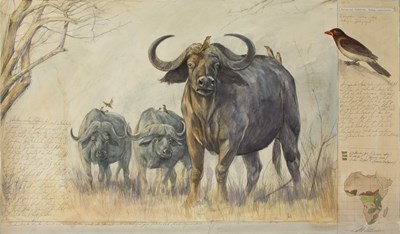
Von den Vögeln, die in der afrikanischen Savanne Büffel von lästigen Insekten befreien, über Hunde, die mit dem Menschen eine unzertrennliche Partnerschaft fürs ganze Leben eingegangen sind, bis hin zu Zellkörpern und Blaualgen, die sich einst zusammenfanden und heute die Welt der Flora grün färben und die Grundlage für das Leben auf unserem Planeten liefern : Symbiosen, die Netzwerke des Lebens, gehören zu den erstaunlichsten Phänomenen der Natur. Dieses Buch zeigt und erklärt die wechselseitigen Bündnisse verschiedener Lebewesen und lädt mit großen satten Schautafeln zum Entdecken der bunten Formen des fantastischen Miteinanders ein. Es unterstreicht durch den die Bilder und Texte prägenden liebevollen Blick, wie zerbrechlich die gewachsenen Kooperationen sind, die das Überleben so vieler Lebensformen sichern. Dabei wird sinnlich erfahrbar, welche Achtsamkeit wir der Natur und uns als ihrem Bestandteil schuldig sind, denn im wirklichen Leben ist niemand eine Insel für sich allein.
I picked this up quite some time ago and yes, mostly because it's beautifully made. *lol* But I've also been fascinated with symbioses for quite a while.
There are all kinds of symbioses that many people know but never think about: the birds on the backs of African water buffalos (cleaning the buffalos' skin from insects), the relationship between humans and dogs (or other pets, for that matter), or certain fungi, or remoras that swim with certain sharks (same principle as with the birds on the water buffalos). And then there are the lesser known ones such as cell bodies and cyanobacteri that are responsible for the chlorophyll that makes plants green thus enabling photosynthesis on which our life on Earth is based.
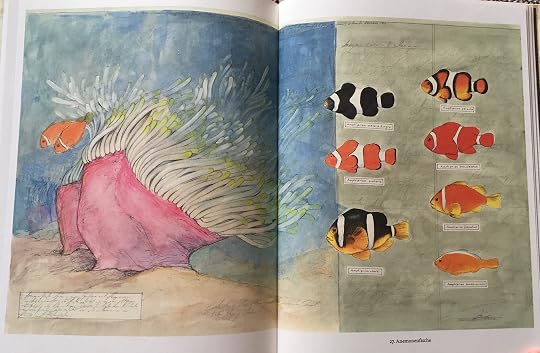
All sorts of cooperations have formed over the millenia. Flowers rely on bees to spread, other plants need birds or rodents. Some animals have learned to cooperate with humans and some humans have learned to use certain animals - not just industrially but also to find water in dry areas. Some frog species rely on special plants to protect and nurture their young whereas anemones offer protection for clown fish. Why? Because both sides profit. That's the reason for symbioses. Be it food or shelter.
The authors did a great job of explaining the formation of such symbioses - why did these two species come together, when, how and how did the relatonship evolve - and the illustrator makes sure the reader gets to appreciate the beauty of it all. The ecosystem is a marvellous, albeit often fragile, thing. No species is an island, we all (more or less) need each other although especially we humans seem to forget that all too easily. I'm glad I found this book and that the authors chose such a great illustrator to draw readers to it (much like a venus flytrap). *lol*
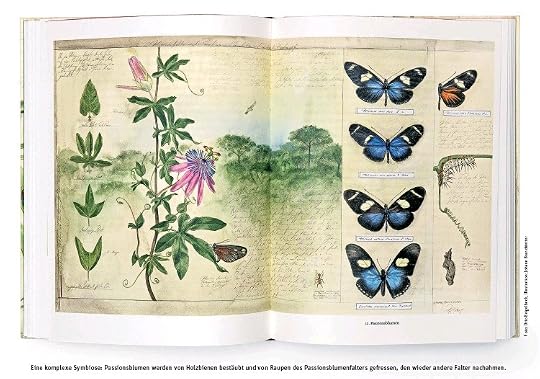
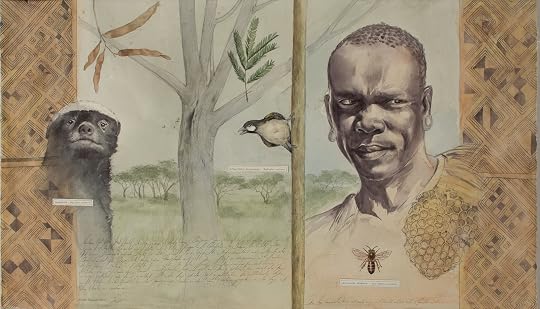
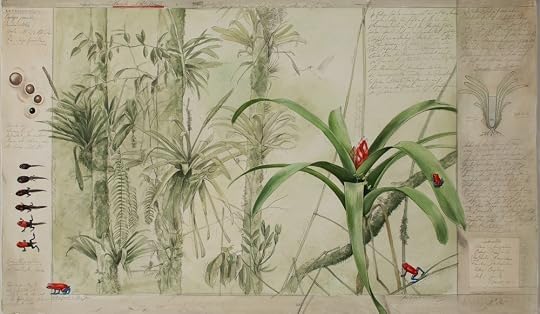
Here, for your enjoyment some of the beautiful art: There are smaller illustrations of various details throughout the book, too, but it was these big ones that were absolutely remarkable.
I like how the authors, despite presenting many important scientific facts behind the different symbioses on the planet, also ensured to showcase the fragility of these highly specialized cooperations. Those interested in biology and evolution know that the more specialized you are, the more vulnerable you're also to changing conditions such as the climate. And I'm sure many reads aren't even aware of all the symbioses which makes it all the more important to have this comprehensive work (if we know, we might take better care not to upset the balance).
Okay, das wird nur ein kurzes Review. Das Buch war unterhaltsam und ich fand es interessant einen Einblick, in Form von 30. kurzen Kapiteln, in diverse Beziehungen zu erhalten. Auch die Illustrationen sind natürlich grandios gelungen. Aber kommen wir nun zu den Dingen die mir nicht sonderlich gefielen.
Zu Beginn jedes Kapitels, zeigt eine wunderschöne, doppelseitige Illustration, um was es auf den folgenden Seiten gehen wird. Innerhalb des Kapitels hat es kleinere Illustrationen, welche aus derselben Illustration stammen, welche das Kapitel eröffnet hat. Hier hätte ich mir zumindest gewünscht, dass diese kleineren Illustrationen etwas näher "heranzoomen". Nachdem ich mir die erste Illustration angeschaut habe, brauch ich, eine Seite weiter, nicht nochmals einen Ausschnitt in derselben Grösse zu sehen. Nebst den genannten kleineren Illustrationen, sind im Fliesstext auch "Zitate" eingebaut, wie man sie von einem Interview in einer Zeitung kennt. In diesem Fall fand ich diese jedoch sehr störend. Ich sehe keinen guten Grund, wieso es Zitate in eines Fliesstexts eines Buches braucht, ich bin ja das Buch am lesen? Und auch wenn man zu einem späteren Zeitpunkt nochmals zum Buch zurückwill; ein Kapitel ist in 15 Minuten gelesen, da braucht man keine Zitate um das Gedächtnis aufzufrischen. Für mich wirkten diese Zitate, zusammen mit den kleineren Illustrationen so, als wären sie da platziert worden um den Text zu strecken. Und mit strecken werden wir gleich weiterfahren. Der Begriff der "Symbiose" wird in Teilen des Buches arg gestreckt. Zum Teil wird sogar versucht schon fast parasitäre Beziehungen so ins Licht zu rücken, das es schon fast wie eine Symbiose ausschaut. Häufiger werden aber mutualistische Beziehungen (ein Part profitiert, der andere profitiert nicht, kommt aber auch nicht zu schaden) Symbiosen genannt. Ich hätte mir hier ein bisschen mehr Feingefühl gewünscht, vorallem da ich mir sicher bin das Herr Reichholf den Unterschied kennt.
Alles in allem aber dennoch ein schönes Buch mit vielen interessanten Geschichten. Obwohl die vorgestellten Beziehung nicht immer Symbiosen sind, auch wenn sie so genannt werden.
Eines der schönsten Bücher der letzten Jahre und dazu eines, das mein Biologenherz höher schlagen lässt. In über 30 kurzen Kapiteln stellt der Autor jeweils eine Symbiose vor, immer begleitet von einer gezeichneten Illustration (die so schön sind, dass ich sie mir am liebsten rahmen und an die Wand hängen würde). Alles ist fachlich über jeden Zweifel erhaben und dazu noch verständlich und sprachlich präzise geschrieben. Ich beklage gerne, dass deutsche Akademiker nicht populär können (im Gegensatz zu vielen anglo-amerikanischen Kollegen), aber Reichholf kann es! Wer also sich selbst oder einem naturbegeisterten Menschen ein Geschenk machen will, kann hier nichts falsch machen.