I am by nature a private person. Secrets are different from privacy. They are things you are forced to keep to yourself, by family, friends, by your own shame. Secrets like these come to the surface one day and demand an airing.
Emerging from an unconventional, boisterously happy childhood, Mary-Rose MacColl was a rebellious teenager. And when, at the age of fifteen, her high-school teacher and her husband started inviting Mary-Rose to spend time with them, her parents were pleased that she now had the guidance she needed to take her safely into young adulthood.
It wasn't too long, though, before the teacher and her husband changed the nature of the relationship with overwhelming consequences for Mary-Rose. Consequences that kept her silent and ashamed through much of her adult life. Many years later, safe within a loving relationship, all of the long-hidden secrets and betrayals crashed down upon her and she came close to losing everything.
In this poignant and brave true story, Mary-Rose brings these secrets to the surface and, in doing so, is finally able to watch them float away.
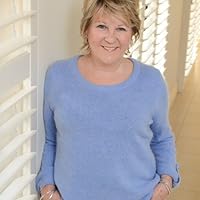
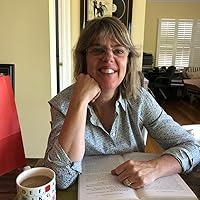
Mary-Rose MacColl is an Australian writer whose first novel, No Safe Place, was runner-up in the 1995 Australian Vogel literary award. Her first non-fiction book, The Birth Wars, was a finalist in the 2009 Walkley Awards. In Falling Snow (October 2012), Mary-Rose's fourth novel, tells the largely unknown story of a small group of Scottish women who ran a field hospital for France in World War I in an old abbey. MacColl holds degrees in journalism and creative writing and lives between Brisbane, Australia and Banff, Canada with her husband and son.
A story I read into the small hours of the night. I couldn't turn away from MacColl's narration of the memories of a shameful part of her past, involving the adoption out of the child borne from a 'relationship' with her teacher's husband while in her teens, intertwined with present-day vignettes of her love of ocean swimming while supported by a loving husband and her second child. Diving into the risky waters of memory, MacColl identifies lurking shadows that signal danger (to both the reader and her older self), and faces up to the fears and her personal truths, which help her realise that the 'shameful secret', becomes less so when brought up to the surface for air. And that she was the wronged one, the one who should not have felt ashamed.
For a Girl: A True Story of Secrets, Motherhood and Hope (Allen & Unwin Books 2017) is a memoir by Brisbane author and journalist Mary-Rose MacColl. This is a deeply moving and personal account of a woman struggling to reclaim her past, to make sense of what happened to her and to find a way to move forward towards understanding, acceptance and peace. Mary-Rose now has a partner, and a son, Otis. But many years ago, somewhere between the feisty 10-year-old girl on the cover of the book, and the Mary-Rose of today, she had another child, a daughter, Ruth, who was given up for adoption. The circumstances are almost overwhelming: as a 15-year-old, Mary-Rose was befriended (groomed?) by her teacher and her teacher’s husband. For many years they had a hold on her that was intimate, manipulative, emotional and isolating. The relationship developed into a complex tangle of sexual abuse and exploitation threaded through with financial, emotional and professional ties, a blurring of boundaries so intense and complicated that it has taken her four decades to separate herself. She gave her baby away to strangers. Her parents didn’t know the truth. It took years of counselling and the love and support of her partner and good friends to realise the entrenched nature of her pain, the enormity of her grief, the consequences of her loss, the repercussions of the betrayal, and the reasons for her guilt, and to understand the source of her aching heart and the physical manifestations of her hurt. It is only now that she is beginning to understand the wrong that was done to her; that she was a child, and powerless in a situation where others used their power and influence to guide her life and her actions onto paths that were not of her own choosing. It is easier to point the finger of blame towards adults when the victims are the very young; harder when they are adolescents. But despite the age of consent being 16, a 16-year-old can still be vulnerable, particularly to the predatory actions of those in positions of power and authority, such as teachers, doctors and counsellors. Adults in these ‘caring’ professions have an extra duty of care, an even greater responsibility to respect boundaries. And when they don’t, the consequences are tragic. Mary-Rose speaks of her experience as akin to being brainwashed in a cult – she cannot now connect herself and her values with the young woman she was then, there is a disconnect there that she simply cannot comprehend. She thinks back on what happened and finds it extremely difficult to accept how and why it played out the way that it did. This is Mary-Rose’s story, of her childhood, her teenage years, her career, her family of origin, and her new family. It is also the story of that inappropriate and doomed relationship that shadowed her early years and tinted all that came afterwards. It is the story of being young, naïve and pregnant; of being sent away to Melbourne to give birth; of feeling nothing at the time but absence towards the daughter she gave up for adoption; of the pain and self-recriminations she suffered in later years, brought on by the birth of her much-wanted son. It is about the release of severe emotional trauma that had laid dormant in her body; how her second child opened the floodgates of grief. And it is a love letter, too, to the daughter she birthed, wishing for her the best life can offer, all the things she wished she could have given her at the time. I cannot imagine how difficult it was to write this book. The pain, the (misplaced) guilt, the self-loathing, the misunderstandings, the yearning to go back and do it again, but differently – all of this is laid bare; it is raw, frank, searching and grim. And yet, somehow, it is also a hopeful story, one hopes a cathartic story, that seeks through its telling to exonerate the innocent from that misplaced guilt, and to offer to all of those affected some notion of peace. It is not a bitter book, nor vengeful, and is extraordinarily balanced. It is well-written and heartrending and sad. At the end of the book, she speaks of making peace with her own mother before she died, and how important that was to her. For my own reasons, I found this book difficult to read. It is an uncomfortable subject; it may open wounds for some readers. Yet through her writing, Mary-Rose has navigated this difficult issue with poignancy, empathy, compassion and self-deprecating humour. If even one person reads this book and recognises themselves, and then feels less alone, that is worthwhile. Many of the people in her story – parents and children – have experienced the worst kind of pain, exacerbated by secrets festering in silence. The grief of a mother for her lost child, a father for his absent son, a child’s feeling of abandonment … these emotions are almost unbearable, and yet bear them we do, because what choice do we have? Through her courage in telling her story, Mary-Rose makes the case that the shame and secrets of betrayal should not kept silent and dark, but let out into the light and set free.
Aussie author Mary-Rose MacColl captured my heart and held it gently as I read her story. This is about how her school teacher and her school teacher's husband changed her life when she met them in her early teens. How they took her into their fold and offered friendship and nurture, only to steal her innocence and her trust through committing the ultimate betrayal. This is not a story for the faint-hearted –it is unflinchingly raw and honest, yet it is a story of hope and survival. Mary-Rose's prose is easy to read, yet profound. Hers is a story every mother who relinquishes her child, nay every mother... every woman who has been exploited, nay every woman and indeed every man should read. Mary-Rose McColl is one strong woman who climbed virtual mountains and wracked every pore of her being to make her mark without acknowledging labels like victim or survivor. She is herself and she is extraordinary. Thank you Mary-Rose for your honesty and your courage in sharing your story.
Raw. Raw. Raw. Page after page the story unfolds. The story of one woman's grief, pain, innocence lost, hidden secrets,decisions made on her behalf by many others, the influence of institutions and bureaucracy and men getting off scot free. It is the story in some part of many many many woman then, now and sadly still to come. It is also the story of the strong parts of her life, the strength the remembering brings and the people she encounters through life who become one of her rock and in some cases the only reason she survives. And brings home to me the toxicity of not speaking your truth, for what ever reason, and holding in pain and guilt and rage and fear. It always must come out some way or another
Raw. That's the word for this book, and how it made me feel. As a teenage mother myself (with an entirely different story) I found this book stirred up memories and emotions of that time in my life. I would use the word "unflinching" but that would be incorrect, because Mary-Rose McColl definitely flinches as she tells her story, but nevertheless, she does not shy away from sharing the intimate details, good, bad, and ugly. It is the story of sexual abuse, an unwanted pregnancy and a baby girl given up for adoption. After giving up her baby, McColl's life falters a little, but she manages to keep moving ahead, unaware of the catastrophic damage the sexual abuse has wrought. It is the birth of her son, years later, which stirs up memories and realisations which threaten to bring her crashing down. This story could quite easily have become a self-indulgent, rambling mess, but using simple language, and without over-egging the mixture, McColl delivers an extremely readable account. It's a sad read, it will make you angry, but a hopeful one too.
This true story made me feel so many different emotions - I was sad that this happened to this woman. It was wrong, so wrong, and no wonder it has left her with life-long demons. I was glad - glad she could free herself from some of those chains by sharing her secret, I hope it gave her peace - but also over-rideingly angry! - angry that these awful people took advantage of her, angry that she was so damn naive and trusting (not meaning to be judgmental, more frustrated at her innocence) and angry that her parents couldn't stop what was happening when they obviously had their suspicions. I'm also angry that this couple got away with it and probably did it to others, and hid behind their so called religion. I also feel sad for "Ruth" having to learn of the way she came into the world can not have been a nice experience for her. Not a pleasant book to read, but I hope it helped the healing process for the author. She is so lucky to have found such a supportive husband, I take my hat off to him!
This is an absorbing, poignant and often harrowing tale of the author's relationship as a teenager with an older couple - her teacher and her husband, which became sexual and resulted in a baby girl she gave up for adoption. The story jumps back and forth in time as she traces the trajectory of the relationship, how it affected her life years later as a wife and mother of another child, and her search for her daughter.
The only criticism I have is the author's way of referring all throughout the book to the perpetrators as 'my teacher and her husband.' Or if just talking about the husband 'my teacher's husband.' I understand why it was done that way, as a distancing technique, but I found the repetitiveness irritating. I would have preferred if she'd just called them 'Mr and Mrs X.'
I read this book in a single day. It's raw, heartfelt, honest and devastating. MacColl's writing is clear and precise, which allows the reader to feel the full hit of the emotions she describes.
I simply couldn't put it down. Her descriptions of how her trauma lodged itself in her body, of how her body refused to let her lie to herself anymore, were compelling. MacColl's story is both intensely person and also echoes the stories of thousands of young women who, by choice or force, gave their children up for adoption. The ramifications of a choice influenced by those who you counted on to have your best interests at heart, the way a single decision lodges in the very cells of your body, is described in poignant detail. A brave, and brilliantly written, story.
It's 24 hrs since I finished this book and my head is still full of so many emotions. On one level this book is easy to read: the language is clear and simple. I think that it is that very simple language that makes it so personal and brutally honest that it's actually hard to read. The story of the author's journey in dealing with what can only be seen as an outsider as sexual exploitation of a vulnerable teenager by people in a position of trust and responsibility is harrowing. I hope that that part of the author's life is behind her, but I know it can never be gone, and that her life is now full of happiness and certainty.
A very honest account of a young girl being betrayed and abused by people she thought she could trust.
I was quite shocked at how little attention her journalist parents paid her in these formative years and why she didn’t confide in her brothers or other relatives.
I felt sad for her daughter who she gave away and I also felt sorry for her young son who had to witness the after effects many years later.
All I want to say is that the author is very brave in sharing her story with her readers, especially in the way that she was taken advantage of by her teacher (who should never have been allowed to teach) and the teacher's husband. Furthermore it also exposes Australia's shameful past regarding secret adoptions and let's hope that nothing like this is ever repeated again.
This one was a tough read. Beautifully written and deeply honest, the rawness of Mary-Rose MacColl's telling of the teacher and her husband who wove a spell over the teenage Mary-Rose, which resulted in her falling pregnant and giving up the baby for adoption is something I'll never forget.
There is nothing "easy" about the content of this book, but it is at once heartbreaking and life-affirming, and beautifully written: thank you for sharing, Mary-Rose.
This is such a touching, raw, personal book there's no way I could give it a conventional 'review'. Mary-Rose has chosen to share the heartbreaking story of her journey through abuse to motherhood - a layer cake of guilt, denial, punishment and redemption. There will be triggers for some readers, poignant moments of identification for others; and the imagery will stay with you for some time. I read the whole thing in one sitting on a plane trip and I've never been quite so glad to find my family waiting for me when I arrived home. This is a very important book from one of Australia's best storytellers.