

What do you think?

The Three Lives of James Madison: Genius, Partisan, President
A sweeping reexamination of the Founding Father who transformed the United States in each of his political “lives”—as a revolutionary thinker, as a partisan political strategist, and as a president
Over the course of his life, James Madison changed the United States three times: First, he designed the Constitution, led the struggle for its adoption and ratification, then drafted the Bill of Rights. As an older, cannier politician he co-founded the original Republican party, setting the course of American political partisanship. Finally, having pioneered a foreign policy based on economic sanctions, he took the United States into a high-risk conflict, becoming the first wartime president and, despite the odds, winning.
Now Noah Feldman offers an intriguing portrait of this elusive genius and the constitutional republic he created—and how both evolved to meet unforeseen challenges. Madison hoped to eradicate partisanship yet found himself giving voice to, and institutionalizing, the political divide. Madison’s lifelong loyalty to Thomas Jefferson led to an irrevocable break with George Washington, hero of the American Revolution. Madison closely collaborated with Alexander Hamilton on the Federalist papers—yet their different visions for the United States left them enemies.
Alliances defined Madison, too. The vivacious Dolley Madison used her social and political talents to win her husband new supporters in Washington—and define the diplomatic customs of the capital’s society. Madison’s relationship with James Monroe, a mixture of friendship and rivalry, shaped his presidency and the outcome of the War of 1812.
We may be more familiar with other Founding Fathers, but the United States today is in many ways Madisonian in nature. Madison predicted that foreign threats would justify the curtailment of civil liberties. He feared economic inequality and the power of financial markets over politics, believing that government by the people demanded resistance to wealth. Madison was the first Founding Father to recognize the importance of public opinion, and the first to understand that the media could function as a safeguard to liberty.
The Three Lives of James Madison is an illuminating biography of the man whose creativity and tenacity gave us America’s distinctive form of government. His collaborations, struggles, and contradictions define the United States to this day.
Over the course of his life, James Madison changed the United States three times: First, he designed the Constitution, led the struggle for its adoption and ratification, then drafted the Bill of Rights. As an older, cannier politician he co-founded the original Republican party, setting the course of American political partisanship. Finally, having pioneered a foreign policy based on economic sanctions, he took the United States into a high-risk conflict, becoming the first wartime president and, despite the odds, winning.
Now Noah Feldman offers an intriguing portrait of this elusive genius and the constitutional republic he created—and how both evolved to meet unforeseen challenges. Madison hoped to eradicate partisanship yet found himself giving voice to, and institutionalizing, the political divide. Madison’s lifelong loyalty to Thomas Jefferson led to an irrevocable break with George Washington, hero of the American Revolution. Madison closely collaborated with Alexander Hamilton on the Federalist papers—yet their different visions for the United States left them enemies.
Alliances defined Madison, too. The vivacious Dolley Madison used her social and political talents to win her husband new supporters in Washington—and define the diplomatic customs of the capital’s society. Madison’s relationship with James Monroe, a mixture of friendship and rivalry, shaped his presidency and the outcome of the War of 1812.
We may be more familiar with other Founding Fathers, but the United States today is in many ways Madisonian in nature. Madison predicted that foreign threats would justify the curtailment of civil liberties. He feared economic inequality and the power of financial markets over politics, believing that government by the people demanded resistance to wealth. Madison was the first Founding Father to recognize the importance of public opinion, and the first to understand that the media could function as a safeguard to liberty.
The Three Lives of James Madison is an illuminating biography of the man whose creativity and tenacity gave us America’s distinctive form of government. His collaborations, struggles, and contradictions define the United States to this day.
888 pages, Kindle Edition
First published October 31, 2017
About the author
Noah Feldman
31 books213 followersNoah Feldman is an American author and professor of law at Harvard Law School.
Feldman grew up in Boston, Massachusetts, where he attended the Maimonides School. He graduated from Harvard College in 1992, ranked first in the College, and earned a Rhodes Scholarship to Oxford University, where he earned a D.Phil in Islamic Thought in 1994. Upon his return from Oxford, he received his J.D., in 1997, from Yale Law School, where he was the book review editor of the Yale Law Journal. He later served as a law clerk for Associate Justice David Souter on the U.S. Supreme Court.
In 2001, he joined the faculty of New York University Law School (NYU), leaving for Harvard in 2007. In 2008, he was appointed the Bemis Professor of International Law. He worked as an advisor in the early days of the Coalition Provisional Authority in Iraq following the 2003 invasion of the country. He regularly contributes features and opinion pieces to The New York Times Magazine and is a senior adjunct fellow at the Council on Foreign Relations.
Feldman grew up in Boston, Massachusetts, where he attended the Maimonides School. He graduated from Harvard College in 1992, ranked first in the College, and earned a Rhodes Scholarship to Oxford University, where he earned a D.Phil in Islamic Thought in 1994. Upon his return from Oxford, he received his J.D., in 1997, from Yale Law School, where he was the book review editor of the Yale Law Journal. He later served as a law clerk for Associate Justice David Souter on the U.S. Supreme Court.
In 2001, he joined the faculty of New York University Law School (NYU), leaving for Harvard in 2007. In 2008, he was appointed the Bemis Professor of International Law. He worked as an advisor in the early days of the Coalition Provisional Authority in Iraq following the 2003 invasion of the country. He regularly contributes features and opinion pieces to The New York Times Magazine and is a senior adjunct fellow at the Council on Foreign Relations.
Ratings & Reviews
Friends & Following
Create a free account to discover what your friends think of this book!
Community Reviews
Displaying 1 - 30 of 181 reviews

August 14, 2021
https://bestpresidentialbios.com/2021...
The book’s publisher promotes this as “an illuminating biography” of James Madison. But Feldman’s 628-page narrative is more an artful exploration of James Madison’s evolving political philosophy than a cradle-to-grave review of his life. Almost nothing of his youth or his retirement years appears, and readers seeking insight into his closest relationships will find even the gregarious Dolley Madison is unusually reclusive.
Feldman’s thesis is straightforward – that Madison led three public lives: as father of the Constitution, as a partisan politician and, finally, as president. Each of these facets of Madison’s life is thoroughly revealed and considered, including the factors which influenced his evolving political perspectives. Readers already acquainted with Madison who are fascinated by politics in early America are likely find the discussion of his intellectual evolution uncommonly intriguing.
And while Feldman avoids shining a bright light on Madison’s personal life, he does not overlook the private side of his subject entirely. He provides an interesting review of Madison’s failed attempt to marry Kitty Floyd, ongoing references to Dolley Madison which will almost certainly leave readers wishing for a biography of Dolley herself and keen observations concerning Madison’s intellectual strengths and personality challenges.
In addition, Feldman provides a clever comparison of Madison’s and Hamilton’s personas, extensive exposure to the Constitutional Convention, an excellent description of the factors leading to the War of 1812 and a fascinating examination of several Federalist essays. Finally, the book’s final chapter offers a wonderfully thought-provoking review of Madison’s (political) legacy.
But readers expecting comprehensive coverage of Madison’s life will find significant portions of his early life, retirement years and personal relationships missing from the book. And although Feldman could easily have supplemented the narrative to provide readers a deeper sense of Madison’s inner-self, his primary interest was obviously in understanding and conveying Madison’s intellectual development.
In addition, while the narrative’s discussion of serious (and often complicated) history is appropriately sober and scholarly, treatment of some events – such as the Burr/Hamilton duel – come across as surprisingly sterile. This is not unusual for a history text but can prove disappointing in a biography. Finally, the book’s pace is often uneven; the four-month Constitutional Convention, for example, consumes nearly as much space as Madison’s entire first term as president.
On balance, however, Noah Feldman’s “The Three Lives of James Madison: Genius, Partisan, President” provides readers with excellent insight into Madison’s evolving political philosophy and his contributions to early American democracy. This book is of most utility to anyone familiar with Madison who wishes to dive deeply into his public life and intellectual development. Readers seeking a thorough introduction to Madison’s public and private lives will need to look elsewhere.
Overall Rating: 3½ stars
The book’s publisher promotes this as “an illuminating biography” of James Madison. But Feldman’s 628-page narrative is more an artful exploration of James Madison’s evolving political philosophy than a cradle-to-grave review of his life. Almost nothing of his youth or his retirement years appears, and readers seeking insight into his closest relationships will find even the gregarious Dolley Madison is unusually reclusive.
Feldman’s thesis is straightforward – that Madison led three public lives: as father of the Constitution, as a partisan politician and, finally, as president. Each of these facets of Madison’s life is thoroughly revealed and considered, including the factors which influenced his evolving political perspectives. Readers already acquainted with Madison who are fascinated by politics in early America are likely find the discussion of his intellectual evolution uncommonly intriguing.
And while Feldman avoids shining a bright light on Madison’s personal life, he does not overlook the private side of his subject entirely. He provides an interesting review of Madison’s failed attempt to marry Kitty Floyd, ongoing references to Dolley Madison which will almost certainly leave readers wishing for a biography of Dolley herself and keen observations concerning Madison’s intellectual strengths and personality challenges.
In addition, Feldman provides a clever comparison of Madison’s and Hamilton’s personas, extensive exposure to the Constitutional Convention, an excellent description of the factors leading to the War of 1812 and a fascinating examination of several Federalist essays. Finally, the book’s final chapter offers a wonderfully thought-provoking review of Madison’s (political) legacy.
But readers expecting comprehensive coverage of Madison’s life will find significant portions of his early life, retirement years and personal relationships missing from the book. And although Feldman could easily have supplemented the narrative to provide readers a deeper sense of Madison’s inner-self, his primary interest was obviously in understanding and conveying Madison’s intellectual development.
In addition, while the narrative’s discussion of serious (and often complicated) history is appropriately sober and scholarly, treatment of some events – such as the Burr/Hamilton duel – come across as surprisingly sterile. This is not unusual for a history text but can prove disappointing in a biography. Finally, the book’s pace is often uneven; the four-month Constitutional Convention, for example, consumes nearly as much space as Madison’s entire first term as president.
On balance, however, Noah Feldman’s “The Three Lives of James Madison: Genius, Partisan, President” provides readers with excellent insight into Madison’s evolving political philosophy and his contributions to early American democracy. This book is of most utility to anyone familiar with Madison who wishes to dive deeply into his public life and intellectual development. Readers seeking a thorough introduction to Madison’s public and private lives will need to look elsewhere.
Overall Rating: 3½ stars

December 15, 2021
It’s wild that John Adams actually said the following to Thomas Jefferson about James Madison “...his administration has acquired more glory, and established more union, than all his three predecessors, Washington, Adams, and Jefferson, put together.” The author of this book put it similarly, “Although Washington and Jefferson are more famous, the United States is Madiso-nian much more than it is Washingtonian or Jeffersonian.” As I finished this great book, I was left with a similar feeling; that Madison is much more integral to our values, ideals and systems than I had ever previously realized.
This biography is split into three books: “Constitution”, where we learn about his involvement in creating the Constitution and its ratification, “Party”, where we learn about his involvement in creating the Republican party and partisan politics, and “War”, where we learn about his presidency and the War of 1812. This is a great book and I’m so happy I read it. Here are a few misgivings I had about it, and then I’ll finish on the positives:
Having just physically visited Madison’s estate of Montepelier just a few months ago, I have to say I was disappointed to find that this book just essentially skipped over his entire childhood. We get a few stories from his college years, but the Revolution ends before page 40, and the book really begins with his political life. It then essentially remains that way through the rest of the book. We don’t really get a feel for the man in a personal way or learn much about his life outside of politics, other than his relationship with his wife Dolley.
While many sections were fascinating and had me riveted (which I’ll get to here in a moment), others did have me struggling a bit like his battles with Hamilton (which just essentially read like a copy/paste from other biographies). While fascinating at parts, the section on the constitution convention and ratification did seem to drag on after a while. By the time of the “Enemies” chapter (around page 357) I was really anxious for that whole section of his life (the first government) to be over and to get to some new material in his presidency and beyond. In total fairness to the author, this could just be because I’ve read six founding father biographies now and have heard the same events many times.
I only had two other small gripes. At the start of each chapter are a few paragraphs that are titled “The Argument”. They are essentially a summary of the chapter that follows. I wasn’t sure why these needed to be included and in fact, I stopped reading them once we got to his presidency as I didn’t want “spoilers” ha! The other thing was that I think this was the first of the founding father biographies to use extensive footnotes at the bottom of pages, which isn’t necessarily a bad thing, but many of them I wasn’t sure why they wouldn’t just be included in the paragraphs above as they could sometimes could get up to literally half of an entire page in size, etc.
Anyways, with those out of the way, there is some truly great writing here. The tension, drama, and suspense that was present in the constitutional convention and the election of Jefferson was really palpable even though I already knew what the outcome was. I really liked the section on the Louisiana Purchase as well. I’d have to say my favorite section of the book was on the War of 1812, which I barely knew anything about prior to reading it. That whole section was such an amazing climax to the book and I was riveted the whole time. Another positive about the author is that he never shied away from Madison’s defeats or personal flaws. He didn’t show much bias in defending him either when Madison’s views changed over time or went against how he previously felt, such as the contradictory views Madison had about slavery.
And with that, I have completed my journey through biographies on all six of the main founding fathers of America! Almost 5,000 pages later, I can still say that I’m fascinated by the revolutionary generation and the whole time period. My plan now is to continue on forward in United States history in chronological order, but this time just with reading biographies on each president. However, with the next one being Monroe, I’ll still be in the time period for some time. And I’m sure I’ll return back to it someday as the fascination still remains.
In conclusion, while this might not be the absolute perfect biography on Madison, this is a great book and I’d definitely recommend it to anyone interested in these subjects. I’m so happy I read it and learned so much.
This biography is split into three books: “Constitution”, where we learn about his involvement in creating the Constitution and its ratification, “Party”, where we learn about his involvement in creating the Republican party and partisan politics, and “War”, where we learn about his presidency and the War of 1812. This is a great book and I’m so happy I read it. Here are a few misgivings I had about it, and then I’ll finish on the positives:
Having just physically visited Madison’s estate of Montepelier just a few months ago, I have to say I was disappointed to find that this book just essentially skipped over his entire childhood. We get a few stories from his college years, but the Revolution ends before page 40, and the book really begins with his political life. It then essentially remains that way through the rest of the book. We don’t really get a feel for the man in a personal way or learn much about his life outside of politics, other than his relationship with his wife Dolley.
While many sections were fascinating and had me riveted (which I’ll get to here in a moment), others did have me struggling a bit like his battles with Hamilton (which just essentially read like a copy/paste from other biographies). While fascinating at parts, the section on the constitution convention and ratification did seem to drag on after a while. By the time of the “Enemies” chapter (around page 357) I was really anxious for that whole section of his life (the first government) to be over and to get to some new material in his presidency and beyond. In total fairness to the author, this could just be because I’ve read six founding father biographies now and have heard the same events many times.
I only had two other small gripes. At the start of each chapter are a few paragraphs that are titled “The Argument”. They are essentially a summary of the chapter that follows. I wasn’t sure why these needed to be included and in fact, I stopped reading them once we got to his presidency as I didn’t want “spoilers” ha! The other thing was that I think this was the first of the founding father biographies to use extensive footnotes at the bottom of pages, which isn’t necessarily a bad thing, but many of them I wasn’t sure why they wouldn’t just be included in the paragraphs above as they could sometimes could get up to literally half of an entire page in size, etc.
Anyways, with those out of the way, there is some truly great writing here. The tension, drama, and suspense that was present in the constitutional convention and the election of Jefferson was really palpable even though I already knew what the outcome was. I really liked the section on the Louisiana Purchase as well. I’d have to say my favorite section of the book was on the War of 1812, which I barely knew anything about prior to reading it. That whole section was such an amazing climax to the book and I was riveted the whole time. Another positive about the author is that he never shied away from Madison’s defeats or personal flaws. He didn’t show much bias in defending him either when Madison’s views changed over time or went against how he previously felt, such as the contradictory views Madison had about slavery.
And with that, I have completed my journey through biographies on all six of the main founding fathers of America! Almost 5,000 pages later, I can still say that I’m fascinated by the revolutionary generation and the whole time period. My plan now is to continue on forward in United States history in chronological order, but this time just with reading biographies on each president. However, with the next one being Monroe, I’ll still be in the time period for some time. And I’m sure I’ll return back to it someday as the fascination still remains.
In conclusion, while this might not be the absolute perfect biography on Madison, this is a great book and I’d definitely recommend it to anyone interested in these subjects. I’m so happy I read it and learned so much.

July 18, 2019
One of the best biographies I've read to date. The biography has its strengths in its explanation of Madison's intellectual development and contribution to legal and political theory (I must wonder if the author found Madison a relatable figure. both are relatively scholarly intellectuals who have contributed to constitution making). Unlike more popular biographies which focus on relatively irrelevant details (like the subject's spouse's ancestors for example), this biography traces Madison's life through his ideas. For a figure like Madison, that is an especially good way to write about his life, since he was first and foremost a man of ideas. The book is not made made longer by long descriptions of the supporting characters. Dolly gets maybe around 10 pages total, and other framers have short pen portraits. The supporting characters are only mentioned as they intersect Madison's life, sometimes even dying "off screen" mentioned in a brief passing note, but I see this as positive factor.
The first thing to note about the biography is how it portrays Madison's flexibility and pragmatism. Madison was a deep thinker, with life long principles but was willing to "made do" in order to achieve his goals. This leads to some pretty funny situations. In his first "at wide" election, Madison disregarded the tradition of giving potential voters free alcohol (voting was different back in the day), considering it inconsistent with the virtues of a new republic. He lost. But after that, he never again, failed to provide drinks on election day. During the ratification debates, Madison insisted that the structural checks balances, as well as the enumerated nature of the federal government would render a bill of rights a redundancy. But after seeing the popularity of a federal bill of rights, Madison campaigned on a bill of rights, claiming that he himself at the Philadelphia Convention had suggested a bill of rights. That claim was untrue, but was impossible to disprove since the Convention attendees had sworn an oath of secrecy! (this came up again later, when Madison, as the speaker of the house, took the position that the House had a role in foreign affairs, when at the convention he argued against this position. This time Washington broke the seal of silence to protect his treaty). At the Convention, Madison had argued for the Virginia plan, a national legislature with both houses elected by proportion and with a veto over state laws. The small states, threatened by their loss of power forced the convention to compromise. The senate would be elected by states and the house by proportion, and the national veto was lost. But when Madison was trying to get states to ratify the constitution, he argued that the federalism was a positive good, since the states would resist the power of the central government. Both Madison and Jefferson first believed that the Louisiana Purchase would need a constitutional amendment (they even drafted their own versions) but dropped the issue. Madison had written his constitution to avoid faction, but ended up contributing to the founding of America's first political party in his opposition to Hamilton's plans.
But this practicality had a darker side as well. Madison wrote to his father that he would free his slave because of the legal uncertainty of having a slave in a free state, as well as the possible ideas of freedom the slave could introduce to the other slaves in his plantation. In the same letter, Madison felt that it was wrong to try to sell his slave to another as a slave for simply wanting freedom, the ideal that Madison recognized in the same breath was what the Revolution was fought for. Though Madison thought slavery wrong, and did not believe (like Jefferson) that blacks were inherently inferior to whites, Madison notably never tried to free his own slaves, the source of his own wealth (though he did support re-colonization efforts). In a sense that shows the duality of practicality. It allows one to get more done, but always at the cost of principle.
The second theme in the book is comforting to the modern reader. Politics has always been dirty. For most of us, we likely imagine the Founders as gentlemen, more likely to chat over tea in a Jane Austen English garden than to throw down the gauntlet. But throw down the gauntlet they did. Patrick Henry famously opposed the ratification of the constitution in Virginia. When he lost that debate, he still controlled the Virginia legislature, using it to block Madison from becoming a senator (originally senators were appointed by state legislatures). Henry than gerrymandered Madison's home county with counties he knew opposed Madison in an attempt to block Madison from winning a House of Representatives seat, and got Madison's close friend Monroe to run in that district (Madison through some campaigning did prevail. More amazingly Madison never held it against Monroe, even when Monroe ran against him later for presidency. Madison even appointed Monroe his secretary of state afterwards). Gallatin, the Swiss born Republican was accused of not meeting the residency requirements for a senator seat, despite indisputable proof that he had been in the United States for a sufficient time. Regardless of his evidence, the Senate refused to seat him and he was effectively booted out of the Senate. When due to electoral quirks, Jefferson and Burr tied for the presidency, and the vote was up to the lame duck Federalist House of Representatives, there was serious talk of the Federalists simply refusing to vote for either Republican and voting for a Federalist presidency instead (a quasi coup of sorts). Politics has always been dirty, but the framework survived.
I was really surprised how old some of the modern controversies are. For example, Madison in an attempt to block treaties he thought bad policy argued that any treaty requires the House to implement it. Though the text of the constitution made no provision for the participation of the House, Madison argued that there must be by implication. Otherwise, the president with the senate alone could create laws that bound the entire country, ducking bicameralism as well as binding the states through the Supremacy Clause. The question of self-executing treaties, and the impact on federalism is a live issue today. Scholars like Professor Goldsmith still debate over if the president acting with the senate could render all state executions illegal by joining an international convention against the death penalty. Hamilton's move of citing an obscure and ambiguous chapter from Vattel's treatise on international law to deny the binding obligation of a French treaty of friendship should be familiar to any lawyer or follower of politics.
In opposing the National Bank, Madison pioneered constitutional arguments, pointing to the meaning of the constitution, the intention of those behind it, as well as making structural arguments. After decades had past the establishment of the National Bank, Madison thought that the practice and acceptance of the Bank by the people and the government had rendered it constitutional even if it was not initially constitutional (a concept called "constitutional liquidation" in modern terms).
Lastly, the book does a great job of explaining the complexities and nuances of Madison's intellectual thought. Madison had the habit of writing well-researched memos to himself before he publicly announced his positions, often making him the most knowledgable debater the subjects he spoke of. Madison started out his political career with an interest in religious liberty and famously wrote against the use of state taxes to support churches. The author argues that Madison's ideals on politics was heavily influenced by his own personal friendships (with Randolph, Jefferson, Hamilton [for a while], and Monroe). For Madison, friends could disagree and deliberate provided they shared certain republican principles, and governance should be the same.
Madison is probably most famous for his "enlargement theory" of the republic. Madison argued that in republic, there was always the fear of the majority taking away the rights of the minority (debtors versus creditors for example), a contradiction in the center of self-rule. His solution to this contradiction was to "enlarge" the republic (this was very contrary to the traditional idea that a republic must be small to allow participation). By enlarging the republic, Madison argued that there would be more competing interests, so the chances of a majority forming was lower, and even if the majority formed it would be more difficult for it coordinate over vast distances. Lastly, Madison hoped that an enlarged republic would draw "better" men into the national government, who could look past their local prejudices to govern for the public good. Interestingly, even at the time others had found problems in the theory. Hamilton noted that some interests only had a few sides (creditor/debtor for example), there could still be national demagogues, and that people gathered in one place inevitably are subject to majoritarian passions. Madison's plan for a central government was in line with this enlargement theory, and he hoped that it could restrain the more local state governments. But in order to prevent the government from becoming oppressive itself, Madison intended for structural balances between the branches (and even within the Congress) to check and balance each other. When Hamilton proposed the National Bank, the federal assumption of state debts, and trade policies to encourage domestic manufacturing, Madison grew worried about merchant interests undermining the basis of republican virtues. After losing repeatedly to Hamilton's policy measures (even after denouncing the bank and trade policies as unconstitutional), Madison turned to public opinion and forming a national party to fight what he saw was the undermining of the constitution.
The last part of Madison's career (from secretary of state to presidency) and the book is probably in some senses the weakest part of the book as well. At least personally, I feel like this weakness comes from the nature of Madison's career which turned from theorizing (which the book is excellent at describing) to more practical and mundane responses. When Britain and France started to fight each other, it started to take a toll on American shipping. Madison had been interested in using economic sanctions for political purposes since the days of the Convention. Before the Convention, he had suggested that Congress enforce its power against the states by blockading the trade of non-complying states with a navy. Madison and Jefferson worked together to try to use American shipping to force both to recognize American neutrality. The details here are pretty complex, though the book does a good job explaining it (i.e. the French would only let French ships carry the trade from the French West indies to France, but American ships could carry the trade by stopping in the US first, creating a legal fiction. The British first recognized this as legitimate but then changed their minds, this was a major contributing factor to eventual war). First Madison suggested the Embargo, halting trade with both in the hopes that British and French West Indies reliance on North American supplies would force them to recognize US neutrality (it did raise prices in the Indies but not fast enough). Madison then won his first presidential election by promising to repeal the Embargo, which had hurt American shipping. Then Madison tried various combinations of sticks and carrots trying to get both to recognize American shipping. Eventually tensions boiled over with the British over trade policy, leading to the War of 1812 (which has its many own farces. The British changed their trade policy before the was declared, but due to transatlantic communications, the message didn't get there in time. The major American victories occurred after the peace treaty was signed, again due to delays in communications. The war basically ended because the Duke of Wellington advised against it. When the British invaded D.C. the government was so unprepared that the sitting secretary of state was riding around with a telescope to spot troop movements). The author argues that despite the burning of the capital, and the multiple failures of the militia to invade Canada, the war was a relative success for a young nation. The war was waged as a last resort, it did not lead to a standing army (that classical republican theory associated with tyranny), and Madison did not try to suppress civil liberties (even leaving alone, the Hartford Convention which almost declared a secession of the New England states).
As my long review indicates, this book is packed full of great information of both historical and modern interest. There's very little "filler" material, and the book reads well. The interpersonal dramas, conflict, and friendships along with a clear explanation of technical and complex legal, as well as political controversies make the book a joy to read as well.
The first thing to note about the biography is how it portrays Madison's flexibility and pragmatism. Madison was a deep thinker, with life long principles but was willing to "made do" in order to achieve his goals. This leads to some pretty funny situations. In his first "at wide" election, Madison disregarded the tradition of giving potential voters free alcohol (voting was different back in the day), considering it inconsistent with the virtues of a new republic. He lost. But after that, he never again, failed to provide drinks on election day. During the ratification debates, Madison insisted that the structural checks balances, as well as the enumerated nature of the federal government would render a bill of rights a redundancy. But after seeing the popularity of a federal bill of rights, Madison campaigned on a bill of rights, claiming that he himself at the Philadelphia Convention had suggested a bill of rights. That claim was untrue, but was impossible to disprove since the Convention attendees had sworn an oath of secrecy! (this came up again later, when Madison, as the speaker of the house, took the position that the House had a role in foreign affairs, when at the convention he argued against this position. This time Washington broke the seal of silence to protect his treaty). At the Convention, Madison had argued for the Virginia plan, a national legislature with both houses elected by proportion and with a veto over state laws. The small states, threatened by their loss of power forced the convention to compromise. The senate would be elected by states and the house by proportion, and the national veto was lost. But when Madison was trying to get states to ratify the constitution, he argued that the federalism was a positive good, since the states would resist the power of the central government. Both Madison and Jefferson first believed that the Louisiana Purchase would need a constitutional amendment (they even drafted their own versions) but dropped the issue. Madison had written his constitution to avoid faction, but ended up contributing to the founding of America's first political party in his opposition to Hamilton's plans.
But this practicality had a darker side as well. Madison wrote to his father that he would free his slave because of the legal uncertainty of having a slave in a free state, as well as the possible ideas of freedom the slave could introduce to the other slaves in his plantation. In the same letter, Madison felt that it was wrong to try to sell his slave to another as a slave for simply wanting freedom, the ideal that Madison recognized in the same breath was what the Revolution was fought for. Though Madison thought slavery wrong, and did not believe (like Jefferson) that blacks were inherently inferior to whites, Madison notably never tried to free his own slaves, the source of his own wealth (though he did support re-colonization efforts). In a sense that shows the duality of practicality. It allows one to get more done, but always at the cost of principle.
The second theme in the book is comforting to the modern reader. Politics has always been dirty. For most of us, we likely imagine the Founders as gentlemen, more likely to chat over tea in a Jane Austen English garden than to throw down the gauntlet. But throw down the gauntlet they did. Patrick Henry famously opposed the ratification of the constitution in Virginia. When he lost that debate, he still controlled the Virginia legislature, using it to block Madison from becoming a senator (originally senators were appointed by state legislatures). Henry than gerrymandered Madison's home county with counties he knew opposed Madison in an attempt to block Madison from winning a House of Representatives seat, and got Madison's close friend Monroe to run in that district (Madison through some campaigning did prevail. More amazingly Madison never held it against Monroe, even when Monroe ran against him later for presidency. Madison even appointed Monroe his secretary of state afterwards). Gallatin, the Swiss born Republican was accused of not meeting the residency requirements for a senator seat, despite indisputable proof that he had been in the United States for a sufficient time. Regardless of his evidence, the Senate refused to seat him and he was effectively booted out of the Senate. When due to electoral quirks, Jefferson and Burr tied for the presidency, and the vote was up to the lame duck Federalist House of Representatives, there was serious talk of the Federalists simply refusing to vote for either Republican and voting for a Federalist presidency instead (a quasi coup of sorts). Politics has always been dirty, but the framework survived.
I was really surprised how old some of the modern controversies are. For example, Madison in an attempt to block treaties he thought bad policy argued that any treaty requires the House to implement it. Though the text of the constitution made no provision for the participation of the House, Madison argued that there must be by implication. Otherwise, the president with the senate alone could create laws that bound the entire country, ducking bicameralism as well as binding the states through the Supremacy Clause. The question of self-executing treaties, and the impact on federalism is a live issue today. Scholars like Professor Goldsmith still debate over if the president acting with the senate could render all state executions illegal by joining an international convention against the death penalty. Hamilton's move of citing an obscure and ambiguous chapter from Vattel's treatise on international law to deny the binding obligation of a French treaty of friendship should be familiar to any lawyer or follower of politics.
In opposing the National Bank, Madison pioneered constitutional arguments, pointing to the meaning of the constitution, the intention of those behind it, as well as making structural arguments. After decades had past the establishment of the National Bank, Madison thought that the practice and acceptance of the Bank by the people and the government had rendered it constitutional even if it was not initially constitutional (a concept called "constitutional liquidation" in modern terms).
Lastly, the book does a great job of explaining the complexities and nuances of Madison's intellectual thought. Madison had the habit of writing well-researched memos to himself before he publicly announced his positions, often making him the most knowledgable debater the subjects he spoke of. Madison started out his political career with an interest in religious liberty and famously wrote against the use of state taxes to support churches. The author argues that Madison's ideals on politics was heavily influenced by his own personal friendships (with Randolph, Jefferson, Hamilton [for a while], and Monroe). For Madison, friends could disagree and deliberate provided they shared certain republican principles, and governance should be the same.
Madison is probably most famous for his "enlargement theory" of the republic. Madison argued that in republic, there was always the fear of the majority taking away the rights of the minority (debtors versus creditors for example), a contradiction in the center of self-rule. His solution to this contradiction was to "enlarge" the republic (this was very contrary to the traditional idea that a republic must be small to allow participation). By enlarging the republic, Madison argued that there would be more competing interests, so the chances of a majority forming was lower, and even if the majority formed it would be more difficult for it coordinate over vast distances. Lastly, Madison hoped that an enlarged republic would draw "better" men into the national government, who could look past their local prejudices to govern for the public good. Interestingly, even at the time others had found problems in the theory. Hamilton noted that some interests only had a few sides (creditor/debtor for example), there could still be national demagogues, and that people gathered in one place inevitably are subject to majoritarian passions. Madison's plan for a central government was in line with this enlargement theory, and he hoped that it could restrain the more local state governments. But in order to prevent the government from becoming oppressive itself, Madison intended for structural balances between the branches (and even within the Congress) to check and balance each other. When Hamilton proposed the National Bank, the federal assumption of state debts, and trade policies to encourage domestic manufacturing, Madison grew worried about merchant interests undermining the basis of republican virtues. After losing repeatedly to Hamilton's policy measures (even after denouncing the bank and trade policies as unconstitutional), Madison turned to public opinion and forming a national party to fight what he saw was the undermining of the constitution.
The last part of Madison's career (from secretary of state to presidency) and the book is probably in some senses the weakest part of the book as well. At least personally, I feel like this weakness comes from the nature of Madison's career which turned from theorizing (which the book is excellent at describing) to more practical and mundane responses. When Britain and France started to fight each other, it started to take a toll on American shipping. Madison had been interested in using economic sanctions for political purposes since the days of the Convention. Before the Convention, he had suggested that Congress enforce its power against the states by blockading the trade of non-complying states with a navy. Madison and Jefferson worked together to try to use American shipping to force both to recognize American neutrality. The details here are pretty complex, though the book does a good job explaining it (i.e. the French would only let French ships carry the trade from the French West indies to France, but American ships could carry the trade by stopping in the US first, creating a legal fiction. The British first recognized this as legitimate but then changed their minds, this was a major contributing factor to eventual war). First Madison suggested the Embargo, halting trade with both in the hopes that British and French West Indies reliance on North American supplies would force them to recognize US neutrality (it did raise prices in the Indies but not fast enough). Madison then won his first presidential election by promising to repeal the Embargo, which had hurt American shipping. Then Madison tried various combinations of sticks and carrots trying to get both to recognize American shipping. Eventually tensions boiled over with the British over trade policy, leading to the War of 1812 (which has its many own farces. The British changed their trade policy before the was declared, but due to transatlantic communications, the message didn't get there in time. The major American victories occurred after the peace treaty was signed, again due to delays in communications. The war basically ended because the Duke of Wellington advised against it. When the British invaded D.C. the government was so unprepared that the sitting secretary of state was riding around with a telescope to spot troop movements). The author argues that despite the burning of the capital, and the multiple failures of the militia to invade Canada, the war was a relative success for a young nation. The war was waged as a last resort, it did not lead to a standing army (that classical republican theory associated with tyranny), and Madison did not try to suppress civil liberties (even leaving alone, the Hartford Convention which almost declared a secession of the New England states).
As my long review indicates, this book is packed full of great information of both historical and modern interest. There's very little "filler" material, and the book reads well. The interpersonal dramas, conflict, and friendships along with a clear explanation of technical and complex legal, as well as political controversies make the book a joy to read as well.

June 4, 2023
James Madison remains one of our most cerebral Presidents (his closest friend Thomas Jefferson is another one), which contributes to him not having one of the most exciting lives to read about (in contrast to Jefferson). The first half of Madison's life revolves primarily around, study, living on a Virginia plantation, and lots and lots of political and constitutional theory. Yet despite this seeming handicap for a biographer, Noah Feldman manages to make Madison's time come alive, and shows how even Madison's deep legal and political study of texts can be interesting to read about.
Feldman divides Madison's life up into three different components: each represents the roles and duties that Madison had to take up during these respective periods. While his boyhood is not dwelled upon, Feldman does spend a lot of time examining Madison's education - much of it self-taught. Madison could be recluse shutting himself up for days on end with his books, taking only the bare minimum time for any other activities. That Madison was a brilliant thinker was quickly recognized by all who encountered him, even his enemies such as Patrick Henry. Madison possessed a highly organized and logical mind, which made him a great complement to Jefferson's sometimes fanciful views. Madison could digest and then explain theoretical concepts surrounding governing, and do it from an informed and intelligent viewpoint.
That did not mean that he didn't have critics while serving in Congress (both before and after adoption of the Constitution). Madison was not the only delegate responsible for the creation of the Constitution. At the same time, it is difficult to see how it could have came into being without him. He successfully partnered with Alexander Hamilton, who is someone that he had little in common with. But both men agreed on the importance of dispensing with the ineffectual Articles of Confederation, and moving to a new system. As Feldman shows, the Madison-Hamilton partnership was just one example of how Madison could work anyone who he viewed as a friend of liberty and freedom.
The founding of the government ended Madison's first "life". The second started shortly thereafter, that of partisan. Hamilton and Madison quickly and sharply diverged on their interpretations of what the Constitution did and did not allow. Madison almost just as quickly came to view Hamilton as an enemy, and he acted accordingly. This is when he becomes a partisan, or as what Feldman calls his second life. This extends to Madison's relationship with George Washington, which also deteriorates until the two men no longer speak to each other. Madison in this period (1790s) showed himself to be quite flexible - changing his Constitutional arguments around to fit his needs. Madison was originally for a strong central government, but as the Federalists did just that under Washington and John Adams, Madison veered sharply into the state's rights category. In this sense I found Madison to be somewhat of a political chameleon, adjusting his view to suit the situation, and thus his goals.
Eventually Madison and Jefferson go into almost total opposition to Washington and Adams. While all of the political fights of the 1790s play out, Feldman still finds time to write about Madison's contradictory views on slavery. As with some of the other Virginia planter aristocrats such as Washington and Jefferson, Madison knew that slavery was wrong. Yet, he didn't stop it. He never freed any of his own enslaved persons, even at death. He did advocate - privately until very late in his life - for colonization of blacks to Africa. And he did not share Jefferson's atrocious view that blacks were inherently inferior to whites. Nevertheless, about the best thing that can be said of him regarding slavery is that he did help to eventually eliminate the disgusting overseas slave trade, and no reports of abuse surfaced about him personally.
Feldman really excels at discussing Madison's most important relationships (with one caveat that I will mention below). Much space is given to his decades-long collaboration with Jefferson. Hamilton was essential for helping Madison get the Constitution ratified by the states. Madison acted as an informal adviser to George Washington throughout the latter half of the 1780s and the first few years of Washington's presidency. His marriage to Dolley Payne Todd was huge for him. Madison, being such a bookworm and having such a quiet demeanor to him, shied away from social situation and inevitably came across as stiff and uninterested at dinners. Dolley worked to make him more sociable, both by dint of her own hosting skills and also by showing him how to be personable. I would have preferred Feldman to discuss a bit more about Dolley's relation to slavery, but he kept the narrative mostly on Madison.
The third portion of Madison's life starts when Jefferson names him as his Secretary of State in 1801. Feldman wisely points out that Madison really was not qualified for this job: he had no experience in foreign affairs. Unlike Jefferson, he had never traveled abroad (and never would). He did not study foreign affairs. To the extent that he did possess knowledge of other countries, it was about their systems of government. But none of that mattered to Jefferson, who wanted and needed his best friend in his Cabinet. Feldman shows that Madison's tenure at the State Department was less than stellar. The Louisiana Purchase more or less fell into Jefferson's and Madison's laps. Madison bungled the trade embargoes of Jefferson's second term, which helped eventually bring the U.S. into war with Great Britain.
Madison then becomes President himself, and continues bungling his handling of the escalating situation with Britain. While Feldman's writing style is pleasurable to read, I felt that there were times in the book where more context was needed. In the lead up to the War of 1812, there is very little mentioned about the different factions in Congress. How did Madison attempt to manage these factions, if he did at all? Why was he content with assembling a Cabinet that had several mediocre members, and then shy away from firing the ones who were most incompetent until too much damage had already been done?
Feldman does better when writing about Madison's efforts to spin the War into an American victory. America did not win that war. At best, it was a stalemate until the British decided that it was no longer worth fighting. Still to this day, Madison is the only President on whose watch the Capitol city was attacked, ransacked, and burned. Yet Madison falsely claimed that the Americans stood up to the British and beat them. Madison here comes across as a sort of spin doctor. Although, one area where he deserves a lot of credit is in refusing to tamp down on opposition to the war. If only subsequent Presidents had adapted that same approach.
One area where I thought that Feldman fell a little flat is with Madison's and Jefferson's handling of James Monroe while he was serving his second stint of diplomatic duty in Paris, trying to avert war. The reason this is important is because a large rift develops between Madison and Monroe, heretofore close friends. Feldman doesn't do a good job of explaining why Madison (and Jefferson) failed to communicate with Monroe about their thinking of the situation with France, and of appointing William Pinkney as in essence a co-special envoy. Monroe, already know by both men to be quite sensitive, naturally was miffed by this decision. That Madison did not explain his rationale to Monroe is unprofessional at best. The peace treaty that the two envoys subsequently concluded was - after a lengthy delay - rejected by Jefferson, further adding insult to Monroe's already-wounded pride. Madison again made no attempt to explain the administration's rationale for such a move. Why this is important is because this caused Monroe to openly entertain challenging Madison for the 1808 Republican nomination for President. It also resulted in an estrangement of a few years between the two men, until Madison desperately needed Monroe's services as Secretary of State in 1811.
One other issue I had was that the Epilogue felt disjointed. After following Madison chronologically throughout his entire life, once he leaves the presidency Feldman hops around from topic to topic. The chronological continuum is lost, and I was left with no sense of how Madison's life in retirement played out. Madison's election as and subsequent service in the Virginia constitutional convention of 1829-1830 is dispensed with in a paragraph. Nothing is mentioned about Monroe and John Marshall being there too. Nor is there any mention at all of Madison's continuing relationship with Jefferson in their retirement years, and how Madison was charged with trying to defend Jefferson's legacy once the latter died. The nullification crisis of the early 1830s dredged up the infamous Kentucky Resolutions that Jefferson had written in the late 1790s. Madison had to defend his departed friend - and also himself due to his less radical Virginia Resolutions - from attacks by those who said that these Founders encouraged nullification, and also from the nullifiers who wanted to use the two icons to justify their refusal to obey a federal law that they disagreed with. None of that is in this book. Nor is there a mention of Madison serving with Jefferson on the Board of the University of Virginia. While this section does rightly talk about Madison's legacy, and how we all are still living with it everyday, it failed as part of the biography.
This is a very good book about Madison and I enjoyed reading it. The narrative flows smoothly, and the chapters are divided into small sections to make it more easily digestible. Feldman succeeds where some other Madison books that I have read did not in making the creation of the Constitution something other than a bunch of dry legalese. While there are parts of the book that would benefit from some additional context, this is a solid work.
Grade: B+
Feldman divides Madison's life up into three different components: each represents the roles and duties that Madison had to take up during these respective periods. While his boyhood is not dwelled upon, Feldman does spend a lot of time examining Madison's education - much of it self-taught. Madison could be recluse shutting himself up for days on end with his books, taking only the bare minimum time for any other activities. That Madison was a brilliant thinker was quickly recognized by all who encountered him, even his enemies such as Patrick Henry. Madison possessed a highly organized and logical mind, which made him a great complement to Jefferson's sometimes fanciful views. Madison could digest and then explain theoretical concepts surrounding governing, and do it from an informed and intelligent viewpoint.
That did not mean that he didn't have critics while serving in Congress (both before and after adoption of the Constitution). Madison was not the only delegate responsible for the creation of the Constitution. At the same time, it is difficult to see how it could have came into being without him. He successfully partnered with Alexander Hamilton, who is someone that he had little in common with. But both men agreed on the importance of dispensing with the ineffectual Articles of Confederation, and moving to a new system. As Feldman shows, the Madison-Hamilton partnership was just one example of how Madison could work anyone who he viewed as a friend of liberty and freedom.
The founding of the government ended Madison's first "life". The second started shortly thereafter, that of partisan. Hamilton and Madison quickly and sharply diverged on their interpretations of what the Constitution did and did not allow. Madison almost just as quickly came to view Hamilton as an enemy, and he acted accordingly. This is when he becomes a partisan, or as what Feldman calls his second life. This extends to Madison's relationship with George Washington, which also deteriorates until the two men no longer speak to each other. Madison in this period (1790s) showed himself to be quite flexible - changing his Constitutional arguments around to fit his needs. Madison was originally for a strong central government, but as the Federalists did just that under Washington and John Adams, Madison veered sharply into the state's rights category. In this sense I found Madison to be somewhat of a political chameleon, adjusting his view to suit the situation, and thus his goals.
Eventually Madison and Jefferson go into almost total opposition to Washington and Adams. While all of the political fights of the 1790s play out, Feldman still finds time to write about Madison's contradictory views on slavery. As with some of the other Virginia planter aristocrats such as Washington and Jefferson, Madison knew that slavery was wrong. Yet, he didn't stop it. He never freed any of his own enslaved persons, even at death. He did advocate - privately until very late in his life - for colonization of blacks to Africa. And he did not share Jefferson's atrocious view that blacks were inherently inferior to whites. Nevertheless, about the best thing that can be said of him regarding slavery is that he did help to eventually eliminate the disgusting overseas slave trade, and no reports of abuse surfaced about him personally.
Feldman really excels at discussing Madison's most important relationships (with one caveat that I will mention below). Much space is given to his decades-long collaboration with Jefferson. Hamilton was essential for helping Madison get the Constitution ratified by the states. Madison acted as an informal adviser to George Washington throughout the latter half of the 1780s and the first few years of Washington's presidency. His marriage to Dolley Payne Todd was huge for him. Madison, being such a bookworm and having such a quiet demeanor to him, shied away from social situation and inevitably came across as stiff and uninterested at dinners. Dolley worked to make him more sociable, both by dint of her own hosting skills and also by showing him how to be personable. I would have preferred Feldman to discuss a bit more about Dolley's relation to slavery, but he kept the narrative mostly on Madison.
The third portion of Madison's life starts when Jefferson names him as his Secretary of State in 1801. Feldman wisely points out that Madison really was not qualified for this job: he had no experience in foreign affairs. Unlike Jefferson, he had never traveled abroad (and never would). He did not study foreign affairs. To the extent that he did possess knowledge of other countries, it was about their systems of government. But none of that mattered to Jefferson, who wanted and needed his best friend in his Cabinet. Feldman shows that Madison's tenure at the State Department was less than stellar. The Louisiana Purchase more or less fell into Jefferson's and Madison's laps. Madison bungled the trade embargoes of Jefferson's second term, which helped eventually bring the U.S. into war with Great Britain.
Madison then becomes President himself, and continues bungling his handling of the escalating situation with Britain. While Feldman's writing style is pleasurable to read, I felt that there were times in the book where more context was needed. In the lead up to the War of 1812, there is very little mentioned about the different factions in Congress. How did Madison attempt to manage these factions, if he did at all? Why was he content with assembling a Cabinet that had several mediocre members, and then shy away from firing the ones who were most incompetent until too much damage had already been done?
Feldman does better when writing about Madison's efforts to spin the War into an American victory. America did not win that war. At best, it was a stalemate until the British decided that it was no longer worth fighting. Still to this day, Madison is the only President on whose watch the Capitol city was attacked, ransacked, and burned. Yet Madison falsely claimed that the Americans stood up to the British and beat them. Madison here comes across as a sort of spin doctor. Although, one area where he deserves a lot of credit is in refusing to tamp down on opposition to the war. If only subsequent Presidents had adapted that same approach.
One area where I thought that Feldman fell a little flat is with Madison's and Jefferson's handling of James Monroe while he was serving his second stint of diplomatic duty in Paris, trying to avert war. The reason this is important is because a large rift develops between Madison and Monroe, heretofore close friends. Feldman doesn't do a good job of explaining why Madison (and Jefferson) failed to communicate with Monroe about their thinking of the situation with France, and of appointing William Pinkney as in essence a co-special envoy. Monroe, already know by both men to be quite sensitive, naturally was miffed by this decision. That Madison did not explain his rationale to Monroe is unprofessional at best. The peace treaty that the two envoys subsequently concluded was - after a lengthy delay - rejected by Jefferson, further adding insult to Monroe's already-wounded pride. Madison again made no attempt to explain the administration's rationale for such a move. Why this is important is because this caused Monroe to openly entertain challenging Madison for the 1808 Republican nomination for President. It also resulted in an estrangement of a few years between the two men, until Madison desperately needed Monroe's services as Secretary of State in 1811.
One other issue I had was that the Epilogue felt disjointed. After following Madison chronologically throughout his entire life, once he leaves the presidency Feldman hops around from topic to topic. The chronological continuum is lost, and I was left with no sense of how Madison's life in retirement played out. Madison's election as and subsequent service in the Virginia constitutional convention of 1829-1830 is dispensed with in a paragraph. Nothing is mentioned about Monroe and John Marshall being there too. Nor is there any mention at all of Madison's continuing relationship with Jefferson in their retirement years, and how Madison was charged with trying to defend Jefferson's legacy once the latter died. The nullification crisis of the early 1830s dredged up the infamous Kentucky Resolutions that Jefferson had written in the late 1790s. Madison had to defend his departed friend - and also himself due to his less radical Virginia Resolutions - from attacks by those who said that these Founders encouraged nullification, and also from the nullifiers who wanted to use the two icons to justify their refusal to obey a federal law that they disagreed with. None of that is in this book. Nor is there a mention of Madison serving with Jefferson on the Board of the University of Virginia. While this section does rightly talk about Madison's legacy, and how we all are still living with it everyday, it failed as part of the biography.
This is a very good book about Madison and I enjoyed reading it. The narrative flows smoothly, and the chapters are divided into small sections to make it more easily digestible. Feldman succeeds where some other Madison books that I have read did not in making the creation of the Constitution something other than a bunch of dry legalese. While there are parts of the book that would benefit from some additional context, this is a solid work.
Grade: B+

December 5, 2017
This has been a fantastic year for biographies and in this 800 page volume, Harvard Law Professor Noah Feldman has crafted the finest portrait of James Madison to date.
One of the geniuses among the founding fathers and perhaps my personal favorite, Madison's brilliance, contradictions, achievements, failures, and legacy are thoroughly and accurately portrayed in a work of great accessibility and singular erudition. This work's title is demonstrated to be quite the apposite framing for Madison's life and the three characters of Genius (pervasive throughout), Partisan (reluctantly so owing to the challenge from Hamilton and the Federalists), and President (America's first wartime President) all progress naturally in a biography of great conviction and narrative thrust.
Particular highlights in this volume are a legalistic play-by-play of the Constitutional convention, a critical examination of Madison's contributions to the Federalist Papers, the dissolution of Madison and Hamilton's relationship, Madison's machinations as President Jefferson's Secretary of State, and Madison's role as our first wartime Commander in Chief during a hugely unpopular and at times calamitous conflict.
All through this narrative Feldman displays a unique ability to describe very intricately legalistic concepts with ease and at times is quite funny, especially in his caption for a portrait of Hamilton: "Pansexual, passionate, and charismatic, move by the will to power: the anti-Madison, ideal subject of a hip-hop musical."
While the length of this volume may seem prohibitive I firmly recommend it for all wishing to understand our Constitution, Madison himself, and the early challenges that this brilliant document faced in what was still a brand new country.
One of the geniuses among the founding fathers and perhaps my personal favorite, Madison's brilliance, contradictions, achievements, failures, and legacy are thoroughly and accurately portrayed in a work of great accessibility and singular erudition. This work's title is demonstrated to be quite the apposite framing for Madison's life and the three characters of Genius (pervasive throughout), Partisan (reluctantly so owing to the challenge from Hamilton and the Federalists), and President (America's first wartime President) all progress naturally in a biography of great conviction and narrative thrust.
Particular highlights in this volume are a legalistic play-by-play of the Constitutional convention, a critical examination of Madison's contributions to the Federalist Papers, the dissolution of Madison and Hamilton's relationship, Madison's machinations as President Jefferson's Secretary of State, and Madison's role as our first wartime Commander in Chief during a hugely unpopular and at times calamitous conflict.
All through this narrative Feldman displays a unique ability to describe very intricately legalistic concepts with ease and at times is quite funny, especially in his caption for a portrait of Hamilton: "Pansexual, passionate, and charismatic, move by the will to power: the anti-Madison, ideal subject of a hip-hop musical."
While the length of this volume may seem prohibitive I firmly recommend it for all wishing to understand our Constitution, Madison himself, and the early challenges that this brilliant document faced in what was still a brand new country.

September 8, 2020
From start to finish, this biography fills a void about the father of the Constitution. The author makes a very persuasive argument that James Madison's public life can be divided into three distinct parts. I found the writing style to flow very smoothly and the story holds the reader's attention. Although this book took me outside my usual subject matter of the Civil War, it was a delight to read. A very worthy effort.

March 16, 2018
I received a free Kindle copy of The Three Lives of James Madison by Noah Feldman courtesy of Net Galley and Random House, the publisher.
I thought this book was brilliant. I loved the way that it was split into three parts, covering first his birth until the ratification of the Constitution; second, the Continental Congress and Secretary of state; and thirdly, his time as President and his life afterwards.
I've studied a lot of this time period before, but never really paid much attention to Madison, which I now realise to be a mistake after reading this book. Feldman has created an incredible biography which is well written, well researched and incredibly interesting. Once I started reading, I didn't want to put it down. I particularly liked how Feldman found letters and documents concerning each and every event and happening that Madison was involved in, and also showed the other side, whether Madison was right or wrong. I really enjoyed this book, and I recommend it to anybody who likes presidential history or early American political history.
I thought this book was brilliant. I loved the way that it was split into three parts, covering first his birth until the ratification of the Constitution; second, the Continental Congress and Secretary of state; and thirdly, his time as President and his life afterwards.
I've studied a lot of this time period before, but never really paid much attention to Madison, which I now realise to be a mistake after reading this book. Feldman has created an incredible biography which is well written, well researched and incredibly interesting. Once I started reading, I didn't want to put it down. I particularly liked how Feldman found letters and documents concerning each and every event and happening that Madison was involved in, and also showed the other side, whether Madison was right or wrong. I really enjoyed this book, and I recommend it to anybody who likes presidential history or early American political history.

December 3, 2018
More a narration of his times then a study of the nuances of the man.

June 22, 2019
I wish I could give this book a higher rating consider how much I enjoy the subject. Alas, Noah Feldman who is an excellent Constitutional and Legal scholar/author is not quite in his element as a biographer. He is trying to write a history of the Constitutional Convention, the formation of political parties and the first major triumph (The Louisiana Purchase) and the first catastrophe (The War of 1812) in American foreign policy and do it through the life of one of the periods central characters. He is right to choose Madison for this purpose but in general the character of the man is lost in the sweep of events. This isn't always the case, the fact that he became a member of a religious minority when he attended Princeton had a lifelong effect on his desire to protect minorities and religious freedoms but many other aspects of his personality are left ambiguous. In some cases, like that of his back and forth over slavery and abolition (he offered to free any slave of his who would repatriate to Africa, none accepted) it's likely this is because Madison himself obscured his legacy knowing it would be problematic. But in others I think it's because the nature of Feldman's scholarship has historically dealt with forces rather than people, and this makes the work overly long becuase it follows the sweep of those forces and perhaps too shallow, as the man that Madison was remains something of a mystery. Still, I learned a great deal from reading the book. That said, I would only recommend it to those with plenty of time and a DEEP love for the Constitution of the United States.

November 9, 2020
I enjoyed this. I read it the same time I read Chernow's Hamilton biography, which helped me walk through things with a better understanding of the Hamilton side, to complement the understanding of the Madison/Jefferson side that Feldman's book provides.
With Hamilton now getting his due as a result of the musical, perhaps Madison has taken his place as the most underappreciated Founding Father. Not that there isn't a lot of room for criticism - foremost because of his cowardice on slavery. But I did enjoy reading about his work in grappling with all the philosophical issues that arose. For about a 40 year period, Madison was right in the middle of everything. He was a very serious thinker, who was also quite adept at compromise and building relationships.
The book cleverly breaks out 3 phases of Madison's life: (1) philosopher/architect of the constitution, to (2) scrappy partisan fighter for Republican-Democratic values, and then finally as (3) President.
With Hamilton now getting his due as a result of the musical, perhaps Madison has taken his place as the most underappreciated Founding Father. Not that there isn't a lot of room for criticism - foremost because of his cowardice on slavery. But I did enjoy reading about his work in grappling with all the philosophical issues that arose. For about a 40 year period, Madison was right in the middle of everything. He was a very serious thinker, who was also quite adept at compromise and building relationships.
The book cleverly breaks out 3 phases of Madison's life: (1) philosopher/architect of the constitution, to (2) scrappy partisan fighter for Republican-Democratic values, and then finally as (3) President.

August 22, 2021
The Three Lives of James Madison: Genius, Partisan, President by Noah Feldman is an impressive piece of scholarship on the life and career of founding father and fourth President James Madison. Feldman follows Madison’s career from his time at college through to his post presidency. In many ways Madison is still an underrated figure in American history, specifically compared to his contemporary Thomas Jefferson. While Jefferson was philosophical, Madison was practical. While Jefferson was in France, Madison was writing the U.S. Constitution. While Jefferson gets credit for creating America’s creed of freedom and ideals of equality with the Declaration of Independence, Madison sought to implement it with a system of government. "If Washington inspired by his presence and example, and Jefferson by his words, Madison inspired through his creation, the Constitution."
To read about Madison and his career is to learn about the founding of America’s system of government as it happened. In a span of three years from 1785-88, Madison conceived, theorized, designed, and passed the U.S. Constitution and subsequent Bill of Rights. Feldman does an exceptional job at plotting this formative period and how it unfolded through the eyes of Madison and how he shaped the early republic as the father of the constitution, his transformation into a partisan politician, and finally as president. Throughout the narrative, Madison’s contemporaries of Washington, Jefferson, Hamilton, Adams, Monroe, and Patrick Henry are all amply profiled and the indelible marks they left on the country.
After finishing The Three Lives of James Madison, you will have much clearer understanding on the importance of Madison including the inner workings of the construction of the Constitution, his influences during Washington’s and Adam’s administrations, his work as Secretary of State under Jefferson and build up to the War of 1812, and his account as president and presiding over the War. If you are looking for a more traditional cradle to the grave biography on Madison or closer detail into his relationship with Dolley, you may need to look elsewhere, but then again Madison's life was mostly work, and Feldman covers it masterfully. The format of the book is constructed into three parts as described in the title, with mini chapters inside of chapters, which makes for easy stopping points. I highly recommend this book for those interested not only in Madison, but this period of American history.
To read about Madison and his career is to learn about the founding of America’s system of government as it happened. In a span of three years from 1785-88, Madison conceived, theorized, designed, and passed the U.S. Constitution and subsequent Bill of Rights. Feldman does an exceptional job at plotting this formative period and how it unfolded through the eyes of Madison and how he shaped the early republic as the father of the constitution, his transformation into a partisan politician, and finally as president. Throughout the narrative, Madison’s contemporaries of Washington, Jefferson, Hamilton, Adams, Monroe, and Patrick Henry are all amply profiled and the indelible marks they left on the country.
After finishing The Three Lives of James Madison, you will have much clearer understanding on the importance of Madison including the inner workings of the construction of the Constitution, his influences during Washington’s and Adam’s administrations, his work as Secretary of State under Jefferson and build up to the War of 1812, and his account as president and presiding over the War. If you are looking for a more traditional cradle to the grave biography on Madison or closer detail into his relationship with Dolley, you may need to look elsewhere, but then again Madison's life was mostly work, and Feldman covers it masterfully. The format of the book is constructed into three parts as described in the title, with mini chapters inside of chapters, which makes for easy stopping points. I highly recommend this book for those interested not only in Madison, but this period of American history.

September 14, 2020
There's nothing quite so fine as Virginian hypocrisy.
Every bio of the Founding Fathers has to deal with the disconnect between the founding principles and the founders' practice. The most obvious example of this is with respect to the slavery question. This disconnect is felt most acutely with the Virginians (Washington, Jefferson, Madison, etc.) while Founders from the Southern colonies weren't as noteworthy/influential in contributions to the founding documents or in their declarations of universal liberty and Northern founders (Adams, Hamilton, Morris, etc.) were more consistently anti-slavery (or at least consistently anti-Virginia-getting-all-the-votes).
There are other areas of disconnect that bios often address including the Federalists' flirtation with pseudo-monarchy (Britain 2.0) and the Virginians' embrace of partisanship. These bios often take one of a few approaches: (1) hagiographic; (2) condemnatory; or (3) neutral.
Feldman's impressive 2017 bio of James Madison is mostly neutral but largely favorable in dealing with Madison's rather....complicated evolution from strict Constitutionalist to fierce partisan to "flexible" Executive. His views on slaves and slavery are mostly presented as willful or negligent blindness which is a slight mark in his favor as compares to Jefferson in that Madison can't really be accused of the hypocrisy that TJ in light of TJ's extreme rhetoric on liberty compared to his actual conduct. Madison was more concerned about the nuts and bolts of a functioning government and how to correct the problems of the Articles of Confederation and Feldman does an outstanding job of taking us through the Constitutional Convention and the lengths to which Madison went to get the bulk of his vision through.
Madison's spirit of compromise and conciliation takes a sharp turn once the Federalists come into power however. It's interesting to watch Feldman largely defend Madison's rather circuitous route from "unity government" to "f*ck the Federalists." I'm surprised that Lord Acton's famous quote about the corrupting influence of power never makes an appearance as the overall sense throughout Feldman's biography is that Madison felt more and more free to abandon what were previously bedrock principles if they interfered with immediate partisan needs.
Given that Jefferson was a friend and mentor of Madison's it is easy to see how this "evolution" came about given Jefferson's own flexible" view of Presidential authority (Jefferson also had a rather liberal view of veracity which didn't rub off quite as much on Madison, thankfully). Regardless, it's interesting to see both the similarities in Jefferson and Madison's approaches to Constitutional interpretation and governance and their differences in how they articulated them. Jefferson was a bomb-thrower while Madison was more measured--which makes "angry Madison" amusing to read.
The other aspects of Feldman's bio are well done, including a very engaging and sympathetic portrait of Dolly Madison. Madison's post-presidential life is given criminally short shrift, however and the book covers the last 20 years of his life almost as an afterthought.
While Feldman does rightfully place Madison in the upper pantheon of founding fathers and looks at his shifting positions regarding Executive vs Legislative vs Judicial authority favorably, he doesn't uniformly praise nor uniformly condemn Madison. The Founders weren't gods (or angels) and Feldman doesn't try to portray Madison as one. He places him within the context of his time and that's what makes this an outstanding and worthwhile history.
Every bio of the Founding Fathers has to deal with the disconnect between the founding principles and the founders' practice. The most obvious example of this is with respect to the slavery question. This disconnect is felt most acutely with the Virginians (Washington, Jefferson, Madison, etc.) while Founders from the Southern colonies weren't as noteworthy/influential in contributions to the founding documents or in their declarations of universal liberty and Northern founders (Adams, Hamilton, Morris, etc.) were more consistently anti-slavery (or at least consistently anti-Virginia-getting-all-the-votes).
There are other areas of disconnect that bios often address including the Federalists' flirtation with pseudo-monarchy (Britain 2.0) and the Virginians' embrace of partisanship. These bios often take one of a few approaches: (1) hagiographic; (2) condemnatory; or (3) neutral.
Feldman's impressive 2017 bio of James Madison is mostly neutral but largely favorable in dealing with Madison's rather....complicated evolution from strict Constitutionalist to fierce partisan to "flexible" Executive. His views on slaves and slavery are mostly presented as willful or negligent blindness which is a slight mark in his favor as compares to Jefferson in that Madison can't really be accused of the hypocrisy that TJ in light of TJ's extreme rhetoric on liberty compared to his actual conduct. Madison was more concerned about the nuts and bolts of a functioning government and how to correct the problems of the Articles of Confederation and Feldman does an outstanding job of taking us through the Constitutional Convention and the lengths to which Madison went to get the bulk of his vision through.
Madison's spirit of compromise and conciliation takes a sharp turn once the Federalists come into power however. It's interesting to watch Feldman largely defend Madison's rather circuitous route from "unity government" to "f*ck the Federalists." I'm surprised that Lord Acton's famous quote about the corrupting influence of power never makes an appearance as the overall sense throughout Feldman's biography is that Madison felt more and more free to abandon what were previously bedrock principles if they interfered with immediate partisan needs.
Given that Jefferson was a friend and mentor of Madison's it is easy to see how this "evolution" came about given Jefferson's own flexible" view of Presidential authority (Jefferson also had a rather liberal view of veracity which didn't rub off quite as much on Madison, thankfully). Regardless, it's interesting to see both the similarities in Jefferson and Madison's approaches to Constitutional interpretation and governance and their differences in how they articulated them. Jefferson was a bomb-thrower while Madison was more measured--which makes "angry Madison" amusing to read.
The other aspects of Feldman's bio are well done, including a very engaging and sympathetic portrait of Dolly Madison. Madison's post-presidential life is given criminally short shrift, however and the book covers the last 20 years of his life almost as an afterthought.
While Feldman does rightfully place Madison in the upper pantheon of founding fathers and looks at his shifting positions regarding Executive vs Legislative vs Judicial authority favorably, he doesn't uniformly praise nor uniformly condemn Madison. The Founders weren't gods (or angels) and Feldman doesn't try to portray Madison as one. He places him within the context of his time and that's what makes this an outstanding and worthwhile history.

October 31, 2017
Thank you, NetGalley and Random House Publishing for the ARC kindle edition of this book in exchange for an honest review.
As a scholar of early American history, I have read and studied numerous texts about many of our founding fathers, but somehow an all-inclusive, solo work about James Madison has never been something I have accessed even though his influence on our nation’s founding has always fascinated me. I have often found more information about his wife rather than Madison himself. Noah Feldman’s The Three Lives of James Madison: Genius, Partisan, President answers the call for the book I have always wanted to read about Madison. Feldman examines Madison’s life in three sections with such detail and with such comprehensive research that I learned facts about Madison that I had never suspected.
I would recommend this to any history buff or student that would like to get a more in-depth examination of America’s 4th president.
As a scholar of early American history, I have read and studied numerous texts about many of our founding fathers, but somehow an all-inclusive, solo work about James Madison has never been something I have accessed even though his influence on our nation’s founding has always fascinated me. I have often found more information about his wife rather than Madison himself. Noah Feldman’s The Three Lives of James Madison: Genius, Partisan, President answers the call for the book I have always wanted to read about Madison. Feldman examines Madison’s life in three sections with such detail and with such comprehensive research that I learned facts about Madison that I had never suspected.
I would recommend this to any history buff or student that would like to get a more in-depth examination of America’s 4th president.

April 22, 2021
Would have enjoyed more focus on Madison the man rather than the era he lived in. The narrative made it so Madison played second fiddle to the events around him. Still informative, but wanted more.

February 25, 2021
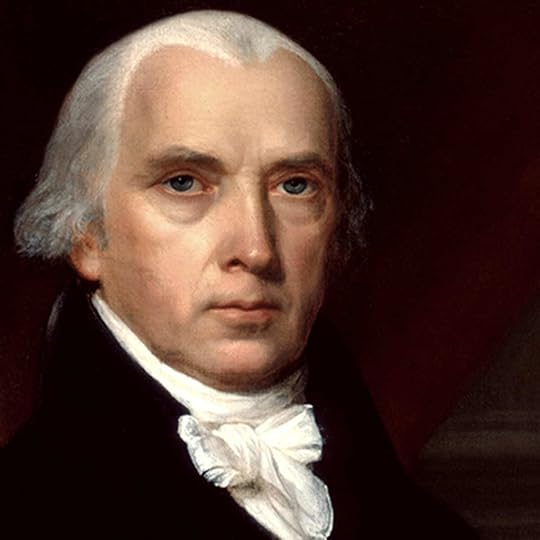
James Madison is most often known as the "Father of the Constitution," as he wrote much of it, and more importantly, was intrumental in getting it passed at the Constitutional Convention, over considerable opposition (including from his friend, frequent political rival, and future successor, James Monroe). The Three Lives of James Madison presents Madison's political career in three acts, of which his role as POTUS #4 was only the last. Noah Feldman's biography is long, detailed (especially on the minutae of the debate over the Constitution), and rather consistent with Madison's other epithet, the "Least Fun Founding Father."
Madison was a wonk. He was the sort of politician who'd have become a college professor if he hadn't come from money. He was smart (though not incandescently brilliant like his friend-turned-foe Hamilton), even-tempered, calm, patient, and, well, a little dull. Even his contemporaries hobnobbing with him in Philadelphia and Washington described him as uninteresting and basically not much fun at parties. After his failures at romance earlier in life, scoring the most eligible widowed hottie in town, Dolley Paine Todd, was a stroke of luck for him personally and politically, as Dolley had all the social skills he was lacking, and became the first First Lady to really fill out the role, turning the White House into the Place To Be.
(One of the more amusing anecdotes in this book is of Dolley trying to coach the hapless Madison and Thomas Jefferson both as they are entering a White House dinner and about to inadvertently snub the wife of the British ambassador. "No, you idiots, escort her, not me!" she whispers. Okay, minus the "you idiots" part, but she was probably thinking it.)
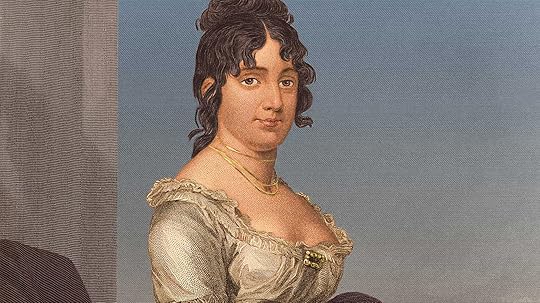
This being the fourth book in my sequential track through Presidential biographies, I enjoyed seeing once again the familiar figures appear in their familiar roles, but seen through a different lens. As before, I've found that biographers tend to be more sympathetic to their own subjects than their rivals, even when not being completely uncritical. Noah Feldman doesn't paint a flawless picture of Madison, pointing out his fumbles at romance and diplomacy, among other things, and addressing his mealy-mouthed stance on slavery in a final chapter. But he does write of Madison admiringly, and in fact, there is a lot to admire, even if there's a lot to criticize as well.
Madison's childhood is barely mentioned here: he was the son of a wealthy Virginian plantation owner, so he never really had to worry about working (though he did in fact prove to be pretty inept at running a plantation later in life, and died leaving Dolley in debt). Likewise, The Three Lives of James Madison don't include much about the Revolutionary War, as Madison was already serving in the Virginia legislature. He wouldn't actually see battle until the War of 1812.
Madison's "first" political life, according to Feldman, is as the architect of the Constitution. At this time, he was an ally of future foe Alexander Hamilton, and the two of them co-wrote the Federalist Papers, urging their fellow delegates to ratify the Constitution.
Americans hold the Constitution as almost sacred today, and seeing how the sausage was ground back in 1787 puts into perspective just how much of a compromise the Constitution was. From the 3/5 Compromise to the multiple proposals debated and discarded for splitting the powers of the government, with every state concerned that the federal government should have only powers that wouldn't affect them, it was never uncontroversial. Looming large in Madison's life at this time was that old revolutionary firebrand Patrick Henry, who was now Governor of Virginia and giving some real barn-burner speeches about the tyranny of the proposed Constitution, and worse, a "Bill of Rights" which would give the government even more laws it could use to oppress the states.
The Bill of Rights, in fact, was Madison's attempt to prevent a second Constitutional Congress, which he anticipated would be a disaster from his Republican perspective. It's during his time spent as a congressman and a political strategist that Feldman describes Madison's second "political life."
Madison's mentor and friend was Thomas Jefferson. Like Jefferson, Madison eschewed partisan politics. Unlike Jefferson, he meant it. Like Jefferson, he was unable to avoid the reality of partisanship, and so the two of them formed the Democratic-Republican Party (which later became simply the Republicans), in opposition to Hamilton's Federalist party. One of the points Feldman makes repeatedly is that Madison sincerely believed in separating political disagreements from personal feelings, and tried to remain friends even with his adversaries. This is why he managed to stay friends with James Monroe, who despite being a Virginia Republican like him, repeatedly ran against him and even fought against ratification of the Constitution. But as Alexander Hamilton grew in power and influence, Madison came to see Hamilton as not just a political adversary, but someone who was bent on subverting and destroying the Republic: not just an opponent, but an enemy. He also split with George Washington over the John Jay treaty; Washington's pride was pricked by Madison criticizing his judgment, and despite them having been close since the Philadelphia Convention, Washington never spoke of Madison again.
Madison's "third life" was of course as the fourth president, following Jefferson's two terms. Madison's presidency was, by most measures, successful. He left office after two terms with the country bigger, more powerful, and wealthier than when he took office. However, he certainly made some blunders along the way, arguably the greatest of which was the War of 1812. In hindsight, the war was probably more to America's benefit than not — it established the country as a world power, set it up to assert its sovereignty over the Western Hemisphere, and basically bought us some "street cred" with Europe. However, at best the war can be considered a draw, Madison's repeated failures to invade Canada showed how inept the American military was at the time (Madison wanted to rely entirely on militias and long opposed maintaining a standing army or navy), and he totally got outfoxed by Napoleon and Britain in his attempts to negotiate peace with both powers and play them off against each other. Instead, France succeeded in playing America off against Britain.
Lastly, there is that elephant in every Virginian Founding Father's room: slavery. Madison was, perhaps, not quite as big a hypocrite as Jefferson, but he still shared in the same hypocrisy as his mentor, condemning slavery, speaking unequivocally of its moral injustice and even the understandable desire of slaves to be free, even rejecting the assumption that Africans were inferior to whites... and yet, he owned slaves, and never made any real efforts to free either his own or anyone else's. Like Jefferson (and Washington, and Monroe), he hedged, talking about how blacks and whites could not coexist peacefully as blacks would harbor resentment against their former masters (hmm, you think?). To his credit, he did spend quite a lot of time after he left the White House coming up with a grandiose scheme whereby the federal government would sell land to raise the cash to outright purchase all slaves, and then send them to a new country in Africa that would be established for them. This was laudable in principle, perhaps, if not in execution, and of course, it was never going to happen. But unlike Jefferson, at least Madison tried.
My takeaway from this book was that Madison was a much more principled man than Jefferson, and while perhaps he didn't have Jefferson's intellectual curiosity or congenial personality, in the modern day he'd have been one of those ex-presidents who'd make a very good political science professor. He wasn't a very interesting man personally, but his political careers were eventful and showcased his intellect, and if the Constitution he architected was flawed and compromised, it was probably also the best that could have been produced under the circumstances.
This biography was not exactly enthralling, but that's partly the fault of its not exactly enthralling subject. I did find Feldman's writing to be thorough, fair, and unafraid to delve into the nitty gritty of early American politics, putting together a complex picture of all the issues Madison faced, locally, federally, and internationally. Partisanship was as complicated and aggravating then as it is now; the personalities and ambitions of individuals equally capable of derailing any plans built on a foundation of logic and reason. In the words of his future wife, he was "the great little Madison," small in stature and not exactly a hit at parties, but definitely one of our most important Founders.
A good history book, but unless you're taking a deep dive into POTUSes like I am, or you have a particular interest in James Madison, I can't say it should necessarily make it to the top of your reading list.
Madison
— Cranky Federalist (@CrankyFed) February 12, 2021
-every day is thread day
-RTs threads from obscure wonk accounts
-actually engages thoughtfully in the replies pic.twitter.com/nUcKdUZEbW

February 10, 2023
Having previously completed the biographies of Benjamin Franklin, George Washington, Alexander Hamilton, John Adams and Thomas Jefferson, I found it rather difficult choosing which biography of James Madison to read. Unlike the biographies mentioned above (which were written by such acclaimed authors as Ron Chernow, Walter Isaacson, David McCollough and Jon Meacham), there didn’t appear to be a definitive biography of Madison. I looked at several options by Ralph Ketcham, Lynne Cheney and Jay Cost. I ultimately decided upon “The Three Lives of James Madison: Genius, Partisan, President” by Noah Feldman because it had the highest average rating on Goodreads, and was readily available for purchase.
Unfortunately, I feel that this book reads more like a history book, than a traditional cradle to the grave biography. That is not a slight against the author, it is clear by the title that this biography is focused more on the public/professional life and political philosophy of Madison, rather than his personal life.
Particularly in the first section on Madison as a genius, the book felt more like a history of the Constitution, and was rather dry at times. It picks up in the middle section, (Madison as a partisan) during the administrations of Washington, Adams and Jefferson and gives some additional insight into the evolution of the Republican Party and Louisiana Purchase. However, my favorite “life” was that of Madison as President, as this section deals mainly with foreign policy and American neutrality during the Napoleonic Wars, and the War of 1812.
As previously mentioned, if you’re looking for a traditional biography detailing his early years, and private life of the 4th president of the United States, then this is not the one for you. There is little on his relationship with his wife Dolly, and virtually no information on his life in retirement after vacating the White House.
However, if you’re looking into additional insight into the crafting of the Constitution, the Bill of Rights, American political philosophy and its place in the world as a young republic, then this is right up your alley.
Despite these “criticisms,” I thoroughly enjoyed this book. How could you not considering the subject matter?
4-Stars, I really liked this one and would highly recommend it.
Unfortunately, I feel that this book reads more like a history book, than a traditional cradle to the grave biography. That is not a slight against the author, it is clear by the title that this biography is focused more on the public/professional life and political philosophy of Madison, rather than his personal life.
Particularly in the first section on Madison as a genius, the book felt more like a history of the Constitution, and was rather dry at times. It picks up in the middle section, (Madison as a partisan) during the administrations of Washington, Adams and Jefferson and gives some additional insight into the evolution of the Republican Party and Louisiana Purchase. However, my favorite “life” was that of Madison as President, as this section deals mainly with foreign policy and American neutrality during the Napoleonic Wars, and the War of 1812.
As previously mentioned, if you’re looking for a traditional biography detailing his early years, and private life of the 4th president of the United States, then this is not the one for you. There is little on his relationship with his wife Dolly, and virtually no information on his life in retirement after vacating the White House.
However, if you’re looking into additional insight into the crafting of the Constitution, the Bill of Rights, American political philosophy and its place in the world as a young republic, then this is right up your alley.
Despite these “criticisms,” I thoroughly enjoyed this book. How could you not considering the subject matter?
4-Stars, I really liked this one and would highly recommend it.

June 18, 2026
This was by far my favorite so far in my reading of American Founding Fathers. Almost as much a biography of the Constitution as it was of Madison, a lot of the content is focused on how Madison invented the Constitution, convinced the States to ratify it, and then argued for its proper interpretation the rest of his career.
Learning the history of Sacred Texts often has the discomforting consequence of humanizing them. Although the core philosophy of the Constitution was born from years of Madison's deep study of the history and theory of Governance, its ratified form was the result of hastily written compromises. It was hotly debated, viewed as risky and uncertain to succeed, narrowly ratified, incomplete, contested, and dubiously interpreted from the beginning. Madison took immense pride in what he knew to be his greatest creation and (accurately) predicted that the document would eventually become religiously venerated by the public. He anticipated it would influence governments around the world for the rest of history. He was even so bold as to suggest that global utopia would one day arrive along the path laid by his new American charter of government. Yet the weaknesses of the document became undeniable throughout the rest of his career, and by the end of his presidency he admitted that the fate of the United States depended less on uncompromising interpretation of the Constitution than on the People's genuine desire to live out the fundamental principles it attempted to enshrine.
The biography covers plenty of other interesting topics along the way: Madison's friends-to-enemies relationships with Hamilton and Washington, his lifelong friendship with Jefferson, his eventual marriage in his 40s, his disdain for partisanship followed quickly by his fierce rhetoric against the Federalist and campaign for the Republican party, and his ironic launching of the hardly successful War of 1812, and his controversial and impractical "solution" to the problem of slavery proposed after his retirement from public duty. 5/5, would strongly recommend for anyone interested in the history of our founding document and the genius behind it.
Learning the history of Sacred Texts often has the discomforting consequence of humanizing them. Although the core philosophy of the Constitution was born from years of Madison's deep study of the history and theory of Governance, its ratified form was the result of hastily written compromises. It was hotly debated, viewed as risky and uncertain to succeed, narrowly ratified, incomplete, contested, and dubiously interpreted from the beginning. Madison took immense pride in what he knew to be his greatest creation and (accurately) predicted that the document would eventually become religiously venerated by the public. He anticipated it would influence governments around the world for the rest of history. He was even so bold as to suggest that global utopia would one day arrive along the path laid by his new American charter of government. Yet the weaknesses of the document became undeniable throughout the rest of his career, and by the end of his presidency he admitted that the fate of the United States depended less on uncompromising interpretation of the Constitution than on the People's genuine desire to live out the fundamental principles it attempted to enshrine.
The biography covers plenty of other interesting topics along the way: Madison's friends-to-enemies relationships with Hamilton and Washington, his lifelong friendship with Jefferson, his eventual marriage in his 40s, his disdain for partisanship followed quickly by his fierce rhetoric against the Federalist and campaign for the Republican party, and his ironic launching of the hardly successful War of 1812, and his controversial and impractical "solution" to the problem of slavery proposed after his retirement from public duty. 5/5, would strongly recommend for anyone interested in the history of our founding document and the genius behind it.

December 31, 2024
This book lives up to the title. Divided into all three categories, I learned more about James Madison in each. It is an excellent book for research or term papers. Enjoy!

December 10, 2018
A well researched and written history of the father of the constitution and America's first partisan. Feldman is fair with regards to Madison's successes, when he is sometimes laudatory, his failures when he is frank and factual, and his many hypocrisies, when he seems as confounded as anyone. The format of looking at Madison in his three distinct 'Lives' is interesting and works to cement his thesis.
I appreciate that Feldman does not shy away from Madison's slaveholding, as other biographers (who shall remain nameless) have done when chronicling Jefferson. Madison's views and actions on slavery are as contradictory as many of his political views over his life. He espoused on more than one occasion the evils of slavery, the humanity of black slaves, and yet did nothing to change even his own household either in his lifetime or posthumously.
I feel the title could have been expanded to; Genius, Partisan, President, Hypocrite. I don't know if I can think of a single opinion or stance he held in his life, other than owning slaves, that he didn't at some point contradict when it was politically expedient. From building a constitution designed to eliminate faction to founding a party and then founding the Republican party and becoming the first arch-partisan. Fighting the Bank of the United States until chartering the Second Bank of the United States. Opposing the quasi-war and all standing armies until plunging the US into the War of 1812 and forming an ongoing standing army. I could go on, but it's midnight and I am tired.
Feldman frequently discusses Madison's great desire for political friendship. He notes how Madison was willing to repair his friendship with Monroe twice after Monroe ran against him in Virginia and then for President. However, it does seems that this political friendship extended only to Virginians. Whom he would regularly patch up after a political feud. It did not extend to Northerners who seemingly were the same as his Southern compatriots.
Madison's Presidency does not come off well in this telling. Primarily defined by the Napoleonic conflict and the War of 1812. Madison seems to bungle diplomatic policy with both Britan and France again and again. He lies to Congress that the French dropped the orders of Berlin and Vienna. Then, Britain finally revokes the orders of council, seemingly the aim of his several failed economic sanctions, yet he still declares war, rebuffs an offer of an armistice, and moves to a failed attempt to invade Canada all seemingly to save face. While the war ends 'successfully' and Madison was showered with glory, this seemed to have very little to do with any of this actions or leadership. All that was accomplished was a failed attempted to conquer Canada and the burning of Washington. One could argue that it brought respect to America around the world, but I think that is a debatable position.
I appreciate that Feldman does not shy away from Madison's slaveholding, as other biographers (who shall remain nameless) have done when chronicling Jefferson. Madison's views and actions on slavery are as contradictory as many of his political views over his life. He espoused on more than one occasion the evils of slavery, the humanity of black slaves, and yet did nothing to change even his own household either in his lifetime or posthumously.
I feel the title could have been expanded to; Genius, Partisan, President, Hypocrite. I don't know if I can think of a single opinion or stance he held in his life, other than owning slaves, that he didn't at some point contradict when it was politically expedient. From building a constitution designed to eliminate faction to founding a party and then founding the Republican party and becoming the first arch-partisan. Fighting the Bank of the United States until chartering the Second Bank of the United States. Opposing the quasi-war and all standing armies until plunging the US into the War of 1812 and forming an ongoing standing army. I could go on, but it's midnight and I am tired.
Feldman frequently discusses Madison's great desire for political friendship. He notes how Madison was willing to repair his friendship with Monroe twice after Monroe ran against him in Virginia and then for President. However, it does seems that this political friendship extended only to Virginians. Whom he would regularly patch up after a political feud. It did not extend to Northerners who seemingly were the same as his Southern compatriots.
Madison's Presidency does not come off well in this telling. Primarily defined by the Napoleonic conflict and the War of 1812. Madison seems to bungle diplomatic policy with both Britan and France again and again. He lies to Congress that the French dropped the orders of Berlin and Vienna. Then, Britain finally revokes the orders of council, seemingly the aim of his several failed economic sanctions, yet he still declares war, rebuffs an offer of an armistice, and moves to a failed attempt to invade Canada all seemingly to save face. While the war ends 'successfully' and Madison was showered with glory, this seemed to have very little to do with any of this actions or leadership. All that was accomplished was a failed attempted to conquer Canada and the burning of Washington. One could argue that it brought respect to America around the world, but I think that is a debatable position.

January 1, 2020
James Madison was an atypical kind of guy, so he's best served by an atypical kind of biography. Some authors, like Lynne Cheney, have tried the traditional cradle-to-grave approach, but since Madison was a man of ideas more than action, putting too much focus on his day-to-day life risks missing the point. David O. Stewart chose to examine Madison's life through the prism of his most important relationships, which gave the reader a much better sense of the man. And Noah Feldman has similarly succeeded, by examining Madison through three distinct stages of his political life.
The book's title might be more accurate (though far less catchy) if it were "The Three Political Lives of James Madison," or "The Three Stages of James Madison's Career," because Feldman doesn't really attempt to delve much into Madison's personal life, family or feelings. Madison is college-aged when the book begins, and his long post-presidency is only briefly covered in the last chapter, while in between, his entire political career is chronicled. So, on the one hand, you miss some interesting aspects of Madison's life - his relationship with his parents, his forlorn aimlessness after college, his physical ailments and frailties - but, on the other hand, you're spared the lengthy genealogical review of his ancestors that bogs down the beginning of many more traditional presidential biographies.
Instead, Feldman cuts right to the chase in tracing the development of Madison's ideas and his political career. Madison didn't seem to have many outside interests, he wasn't well-traveled, and didn't have a career as a diplomat, lawyer or solider as most of his Founding Father contemporaries did. So, even at the expense of skimming over some details of his personal life, covering Madison as a creature of politics and a man of ideas is ultimately the best way to fully understand him.
This was the first book about Madison that I had read, a couple of years ago. After reading several others, I went back and re-read this to remind myself what I liked about it. The examination of Madison's political thought, the creation of the Constitution, Madison's defense of its ideals, and the evolution of his thinking as his theories of government were put to practical use, are all excellent. The "arguments" that begin each chapter seem a bit pretentious and lawyerly, as they are really just summaries of the chapter to come and not theses that need arguing or defending, but that's a small complaint.
In the end, you may not feel like you know Madison personally by reading this book, but you'll know why he was important in the creation of the country we know today - and why, Feldman argues in his conclusion, that Madison's actions and ideas are just as important now as they were then.
The book's title might be more accurate (though far less catchy) if it were "The Three Political Lives of James Madison," or "The Three Stages of James Madison's Career," because Feldman doesn't really attempt to delve much into Madison's personal life, family or feelings. Madison is college-aged when the book begins, and his long post-presidency is only briefly covered in the last chapter, while in between, his entire political career is chronicled. So, on the one hand, you miss some interesting aspects of Madison's life - his relationship with his parents, his forlorn aimlessness after college, his physical ailments and frailties - but, on the other hand, you're spared the lengthy genealogical review of his ancestors that bogs down the beginning of many more traditional presidential biographies.
Instead, Feldman cuts right to the chase in tracing the development of Madison's ideas and his political career. Madison didn't seem to have many outside interests, he wasn't well-traveled, and didn't have a career as a diplomat, lawyer or solider as most of his Founding Father contemporaries did. So, even at the expense of skimming over some details of his personal life, covering Madison as a creature of politics and a man of ideas is ultimately the best way to fully understand him.
This was the first book about Madison that I had read, a couple of years ago. After reading several others, I went back and re-read this to remind myself what I liked about it. The examination of Madison's political thought, the creation of the Constitution, Madison's defense of its ideals, and the evolution of his thinking as his theories of government were put to practical use, are all excellent. The "arguments" that begin each chapter seem a bit pretentious and lawyerly, as they are really just summaries of the chapter to come and not theses that need arguing or defending, but that's a small complaint.
In the end, you may not feel like you know Madison personally by reading this book, but you'll know why he was important in the creation of the country we know today - and why, Feldman argues in his conclusion, that Madison's actions and ideas are just as important now as they were then.

September 8, 2018
The life of James Madison deserves an atypical approach, an examination of the intellectual and philosophical progress of his ideas, not the laundry list chronology of typical biography.
This is that biography.
Madison didn't really have an interesting personal life. What Feldman achieves, due to his background as a Law Professor at Harvard and a clerk for Justice Souter, is a biography steeped in legal fluency, an examination of the documents that Madison produced and the intellectual capacity that led him to construct the Constitution. Feldman divides his book (which is actually 628 of text, not 800) into three sections: the Constitution, the partisanship of the 1790s, and the Presidency.
Perhaps the strongest section is that second 100+ pages that detail the Constitution and Madison's authorship of it. If you want to read about all of the legal background that led to it, Feldman is for you. Also true of the middle third, where Jefferson and Madison feel that the elected officials are restoring aristocracy and strong central power, and initiate the first official political party in order to oppose it. We revere Jefferson and Madison, but they were fiercely partisan, even detrimentally so at times. As divisive as we feel modern politics can be, 1795-1800 was pretty brutal. Jefferson might have been the most stubborn, bitter, and petty of them all. Madison was the "pack horse in his great affairs", penning the newspaper coverage that attacked the administrations of Washington and Adams. Finally, Madison himself takes charge, and the coverage of the War of 1812 is well done, extensive enough to be comprehensive without taking over the book.
The true star is Madison himself, as his legal acumen takes over the drive of the book. If you wanted to know who he really was, this book is by far the best approach and likely to be the definitive book on Madison. Don't be concerned with his personal life; be interested in his mind.
This is that biography.
Madison didn't really have an interesting personal life. What Feldman achieves, due to his background as a Law Professor at Harvard and a clerk for Justice Souter, is a biography steeped in legal fluency, an examination of the documents that Madison produced and the intellectual capacity that led him to construct the Constitution. Feldman divides his book (which is actually 628 of text, not 800) into three sections: the Constitution, the partisanship of the 1790s, and the Presidency.
Perhaps the strongest section is that second 100+ pages that detail the Constitution and Madison's authorship of it. If you want to read about all of the legal background that led to it, Feldman is for you. Also true of the middle third, where Jefferson and Madison feel that the elected officials are restoring aristocracy and strong central power, and initiate the first official political party in order to oppose it. We revere Jefferson and Madison, but they were fiercely partisan, even detrimentally so at times. As divisive as we feel modern politics can be, 1795-1800 was pretty brutal. Jefferson might have been the most stubborn, bitter, and petty of them all. Madison was the "pack horse in his great affairs", penning the newspaper coverage that attacked the administrations of Washington and Adams. Finally, Madison himself takes charge, and the coverage of the War of 1812 is well done, extensive enough to be comprehensive without taking over the book.
The true star is Madison himself, as his legal acumen takes over the drive of the book. If you wanted to know who he really was, this book is by far the best approach and likely to be the definitive book on Madison. Don't be concerned with his personal life; be interested in his mind.

December 30, 2019
An excellent biography on the Father of the Constitution by one of the most respected Constitutional experts of our time, "The Three Lives of James Madison" does an excellent job in my opinion of showing Madison's brilliance while also calling out his faults and/or the faults attributed to him by his enemies in his times. Madison's life as a politician and President were incredibly vital to our current government, and he is most likely one of the most underrated U.S. historical figures ever. He was as important to the U.S. as any man in history.
As for his actual Presidency, he was applauded loudly for his legacy in his own era, though upon reflection from a modern perspective he sits below Washington, Jefferson and Adams in my mind. The War of 1812 was a mistake, precluded and necessitated by mistakes on the part of Madison and Jefferson, and a mistake that didn't result in any positive gains for the U.S. Furthermore, from a mind who accomplished arguably the greatest legislation of all time in the Constitution, very little of substance was actually passed legislatively in his Presidency, in no small part due to the Democratic-Republican view that Congress' right to legislate was strictly enumerated by Madison's Constitution.
Overall, an incredibly interesting man, and a very well done book.
As for his actual Presidency, he was applauded loudly for his legacy in his own era, though upon reflection from a modern perspective he sits below Washington, Jefferson and Adams in my mind. The War of 1812 was a mistake, precluded and necessitated by mistakes on the part of Madison and Jefferson, and a mistake that didn't result in any positive gains for the U.S. Furthermore, from a mind who accomplished arguably the greatest legislation of all time in the Constitution, very little of substance was actually passed legislatively in his Presidency, in no small part due to the Democratic-Republican view that Congress' right to legislate was strictly enumerated by Madison's Constitution.
Overall, an incredibly interesting man, and a very well done book.

February 21, 2023
This is one of the best biographies I've ever read. It's complex, comprehensive, and completely absorbing. Very well-researched and well-written. Before reading it I knew little of James Madison beyond his role in crafting and defending the Constitution prior to its ratification, and the fact he was President during the War of 1812. His rather savage feud with Alexander Hamilton and the major part Madison played in the development of party partisanship and US foreign policy during the early republic were new to me. So were many details of his presidency and post-presidential life. Well, now I know about all that thanks to the penetrating analyses of Mr. Feldman. A lot of thought went into this biography, that's obvious--and appropriate since Madison is one of the most thoughtful and analytic presidents ever to hold the office. This one is a definite must-read for anyone with the slightest interest in American history.

June 7, 2018
The more I read about the constitution and the background of the US government the more I'm interested in James Madison. This book was really long! and if you're not interested in really digging into the details of the history of government you might be bored by it. It covered his life by grouping his thinking and writing into three periods and showed what changed and what remained the same in his thought from the time he first began the constitution to the time he left office as the fourth president.
A few things stood out to me in this book.
From the first he was absolutely committed to religious liberty and to the fact that government must never privilege any religion. Anglicans in Virginia wanted to institute a tax to support the Anglican church in the state, and to get more people to agree they said that if you weren't Anglican you could designate your tax contribution to some other church. Madison was still adamantly opposed. He said that government should not support religion, period, end of story.
From the first he was also concerned about the fact that if you set up majority rule you invite misuse of minority rights. Because he couldn't imagine the internet, he felt that if you make the country bigger, it's harder for the majorities in the different areas to network together. I'm not sure that hypothesis has held up, but he understood at the outset that majority rule needed checks on the majority.
Like all our southern founders, he was hypocritical on the issue of slavery, but he was distinguished from the others by stating over and over again that he believed the slaves were fully human with human rights, that slavery was immoral, and that the reason he didn't believe that freed slaves could live with white Americans was because of white prejudice.
Like all books I've read about the founding, it's clear that Americans have not changed in 250 years, for better and for worse. Congress wouldn't fund an army but complained that Madison wasn't winning the 1812 war fast enough. The state militias broke and ran every time they confronted the professional British army (so much for a 'well-regulated militia').
We need to pay more attention to Madison. Jefferson had that verbal flair but was not as calm and steady as Madison. Adams, when confronted with high levels of dissent, signed the Alien and Sedition Acts which infringed civil liberties. Despite dissent in 1812-14, Madison never attempted to use the power of the government to stifle dissenting opinion. He was really the very stable genius.
A few things stood out to me in this book.
From the first he was absolutely committed to religious liberty and to the fact that government must never privilege any religion. Anglicans in Virginia wanted to institute a tax to support the Anglican church in the state, and to get more people to agree they said that if you weren't Anglican you could designate your tax contribution to some other church. Madison was still adamantly opposed. He said that government should not support religion, period, end of story.
From the first he was also concerned about the fact that if you set up majority rule you invite misuse of minority rights. Because he couldn't imagine the internet, he felt that if you make the country bigger, it's harder for the majorities in the different areas to network together. I'm not sure that hypothesis has held up, but he understood at the outset that majority rule needed checks on the majority.
Like all our southern founders, he was hypocritical on the issue of slavery, but he was distinguished from the others by stating over and over again that he believed the slaves were fully human with human rights, that slavery was immoral, and that the reason he didn't believe that freed slaves could live with white Americans was because of white prejudice.
Like all books I've read about the founding, it's clear that Americans have not changed in 250 years, for better and for worse. Congress wouldn't fund an army but complained that Madison wasn't winning the 1812 war fast enough. The state militias broke and ran every time they confronted the professional British army (so much for a 'well-regulated militia').
We need to pay more attention to Madison. Jefferson had that verbal flair but was not as calm and steady as Madison. Adams, when confronted with high levels of dissent, signed the Alien and Sedition Acts which infringed civil liberties. Despite dissent in 1812-14, Madison never attempted to use the power of the government to stifle dissenting opinion. He was really the very stable genius.

December 5, 2019
As a huge fan of James Madison this book is a real addition to the literature. Prior to this my two favorite biographies of Madison were the ones written by Ketchum (which long, and a little obtuse) and Cheney (which is much more current) - but Feldman has added to the literature.
Before I go into those points I should mention my one disappointment - Feldman argues that Madison had three lives - one as the theorist - who invented the basic structures of the Constitution; the political operator in the early stages of the Republic; and the President/Statesman. But Madison had a fourth, and I believe equally important role as Elder Statesman - receiving many guests at Montpelier in the long retirement he enjoyed. (That discussion is well covered in the Madisons at Montpelier - but Feldman could have done a bit more.
Feldman begins his story of Madison the theorist in describing his lifelong interest in the Establishment clause - many of today's modern combatants on these issues could benefit from understanding better the premise of the Establishment clause which was not to eliminate religious expression from public life but to prevent the designation of one denomination in the country.
The book also highlights the disruptive role of people like Henry and Hamilton. Madison grew increasingly disenchanted with Hamilton after both served in the Washington cabinet.
Feldman also has an interesting discussion of the necessary and proper clause and how it fits within the powers delegated to the Congress in Article 1. The expansive interpretation of the clause seems well out of what Madison and the framers conceived - it was clearly tied to the other enumerated functions in Article 1 not whatever this generation of politicians believed is necessary and proper.
One impression I got from the book is a diminished appreciation of Washington, Adams and Jefferson - Madison's three predecessors. All come of with foibles that did not serve the country well - Washington was a military man and wanted to be above the political; Adams could be a bit haughty; and Jefferson was more taken by passion of the moment than on long principles. Feldman's description of how each interacted with Madison are fascinating.
This book took me a long time to read - but when I finally got into it, I gained many insights into what I consider the most important of the founders.
Before I go into those points I should mention my one disappointment - Feldman argues that Madison had three lives - one as the theorist - who invented the basic structures of the Constitution; the political operator in the early stages of the Republic; and the President/Statesman. But Madison had a fourth, and I believe equally important role as Elder Statesman - receiving many guests at Montpelier in the long retirement he enjoyed. (That discussion is well covered in the Madisons at Montpelier - but Feldman could have done a bit more.
Feldman begins his story of Madison the theorist in describing his lifelong interest in the Establishment clause - many of today's modern combatants on these issues could benefit from understanding better the premise of the Establishment clause which was not to eliminate religious expression from public life but to prevent the designation of one denomination in the country.
The book also highlights the disruptive role of people like Henry and Hamilton. Madison grew increasingly disenchanted with Hamilton after both served in the Washington cabinet.
Feldman also has an interesting discussion of the necessary and proper clause and how it fits within the powers delegated to the Congress in Article 1. The expansive interpretation of the clause seems well out of what Madison and the framers conceived - it was clearly tied to the other enumerated functions in Article 1 not whatever this generation of politicians believed is necessary and proper.
One impression I got from the book is a diminished appreciation of Washington, Adams and Jefferson - Madison's three predecessors. All come of with foibles that did not serve the country well - Washington was a military man and wanted to be above the political; Adams could be a bit haughty; and Jefferson was more taken by passion of the moment than on long principles. Feldman's description of how each interacted with Madison are fascinating.
This book took me a long time to read - but when I finally got into it, I gained many insights into what I consider the most important of the founders.

February 14, 2019
I didn't realize when I bought Noah Feldman's The Three Lives of James Madison: Genius, Partisan, President what a timely read it would be. It isn't as much a biography of Madison as much as it is an exploration of his political career, from "Father of the Constitution" to partisan politician to wartime President. It was a political career that saw Madison go from an idealist to a realist. It saw him go from someone who opposed partisanship to someone who helped usher in partisanship. One could see Madison's changes in mind as opportunistic or hypocritical, but he always seemed to have the good of the country rather than personal gain in mind. The changes he went through were more like evolution in thought. The Three Lives isn't a hagiography, though. Feldman points out where Madison made mistakes and points out his shortcoming regarding slavery several times. Through examining the three lives of Madison, Feldman shows us that although Madison is not the most famous father, he is arguably our most important; without him, there was no Constitution, and we likely wouldn't have the form of government that we do now.
I was reading this book throughout the recent 35-day government shutdown and I couldn't help but wonder what Madison would have made of it (in my opinion, I think Madison would think that the President is trying to usurp the power of Congress and find his actions unconstitutional). I truly found The Three Lives of James Madison to be a thought-provoking, enlightening read that informs the present. I would highly recommend it to everyone for a better understanding of how our government came to be and how it was shaped early on.
I was reading this book throughout the recent 35-day government shutdown and I couldn't help but wonder what Madison would have made of it (in my opinion, I think Madison would think that the President is trying to usurp the power of Congress and find his actions unconstitutional). I truly found The Three Lives of James Madison to be a thought-provoking, enlightening read that informs the present. I would highly recommend it to everyone for a better understanding of how our government came to be and how it was shaped early on.

July 21, 2019
Here is a terrific biography that really covers in depth the very important parts of a very important person. The author instead of giving a comprehensive look at the timeline of Madison's life (which honestly I'd prefer but not so much as to review at 4 stars) splits the book into 3 books. He goes super into depth of Madison the genius who engineered, influenced and constructed the US Constitution. Then the book goes in depth on Madison's partisan fights which came to being during his time and for which we owe as much to him as to anyone for our modern Democratic party or Republican party via his comparisons and contrasts to the opposing thinkers. Finally the third book focuses on Madison as a president who was the first war time president (excluding Washington who wasn't president at the time).
There is so much vital history in this book as there is in so many of the presidential biographies I have read. Clearly this is a 5 star review but there are things I wish this book had. I love it when biographers talk about the family lineage and give corresponding history; also I wish this book didn't just focus on the 3 most significant aspects of his life.
Despite any criticism I have this is a 5 star biography, my understanding of the founders intent will be forever changed. Also it needs to be said that I know Madison was pro-slavery despite whatever abolitionist thoughts he had throughout his career, that thought alone has far reaching connotations. I know so many other things about the founding of this great nation as well thanks to this marvelous read. I recommend you too read this too.
There is so much vital history in this book as there is in so many of the presidential biographies I have read. Clearly this is a 5 star review but there are things I wish this book had. I love it when biographers talk about the family lineage and give corresponding history; also I wish this book didn't just focus on the 3 most significant aspects of his life.
Despite any criticism I have this is a 5 star biography, my understanding of the founders intent will be forever changed. Also it needs to be said that I know Madison was pro-slavery despite whatever abolitionist thoughts he had throughout his career, that thought alone has far reaching connotations. I know so many other things about the founding of this great nation as well thanks to this marvelous read. I recommend you too read this too.

March 20, 2021
The title of the book is deceiving, because while, sure, the book does talk about Madison as a genius, partisan, and president, those are neither the basis for organizational structure nor the emphases of the book.
I liked the first fifty pages or so, talking about Madison when he was a young man, his lead-up to politics, his friendship developments. And I was even excited at the beginning of the discussion of the Articles of Confederation and the Constitutional Convention, because those were kind of skipped over in the three previous presidential biographies I read. But then there was two hundred pages of the day-to-day back-and-forth arguments of the Constitutional Convention, with Madison not really focused on any more than any of the other Founding Fathers, and I was crawling out of my skin.
Things got better (for me, reading) after the Constitution was ratified, but it never was REALLY what I wanted, a biography that made me understand Madison's character, relationships, or reasoning. I still don't understand why he turned on his friends or previous political beliefs, or if he had ideals that anchored him. Maybe all of that was in there, but I was too annoyed with the book by then. I kept thinking about giving up and trying a different Madison biography, but I was stuck in the sunk-cost fallacy, and after four hundred pages and little glimpses of what I wanted, I wouldn't give myself an out.
I don't know that it was a terrible book, but it's not what I wanted. It was a history of the times Madison lived, not a biography of the man.
I liked the first fifty pages or so, talking about Madison when he was a young man, his lead-up to politics, his friendship developments. And I was even excited at the beginning of the discussion of the Articles of Confederation and the Constitutional Convention, because those were kind of skipped over in the three previous presidential biographies I read. But then there was two hundred pages of the day-to-day back-and-forth arguments of the Constitutional Convention, with Madison not really focused on any more than any of the other Founding Fathers, and I was crawling out of my skin.
Things got better (for me, reading) after the Constitution was ratified, but it never was REALLY what I wanted, a biography that made me understand Madison's character, relationships, or reasoning. I still don't understand why he turned on his friends or previous political beliefs, or if he had ideals that anchored him. Maybe all of that was in there, but I was too annoyed with the book by then. I kept thinking about giving up and trying a different Madison biography, but I was stuck in the sunk-cost fallacy, and after four hundred pages and little glimpses of what I wanted, I wouldn't give myself an out.
I don't know that it was a terrible book, but it's not what I wanted. It was a history of the times Madison lived, not a biography of the man.

June 6, 2020
A bit of a slog through this dense tome, but still highly recommended, as it was so incredibly informative. Madison was a short, quiet introvert, a profound thinker, and a genius -- the Father of the Constitution. Even as president, he had the humility to admit his mistakes and learn from them. I can't imagine how our country would have turned out without this one man's contributions.
He was not perfect and he knew it. For example, he struggled with the issue of slavery. He knew it was deeply wrong. I was so hoping he or Dolley would free their slaves when he retired, but it was not to be. No big surprise, as he was Virginia planter. That, in my mind, is the primary stain on his life.
The book is 630 pages, not 800, unless you count the Notes and the index.
He was not perfect and he knew it. For example, he struggled with the issue of slavery. He knew it was deeply wrong. I was so hoping he or Dolley would free their slaves when he retired, but it was not to be. No big surprise, as he was Virginia planter. That, in my mind, is the primary stain on his life.
The book is 630 pages, not 800, unless you count the Notes and the index.

May 13, 2020
Good book made dry by the narrator of the audiobook. He just didn’t engage me. I did learn a few things so I’m happy about that.
Displaying 1 - 30 of 181 reviews