Jean starts at a new school and struggles to fit in. He develops an unlikely friendship with rowdy class mate James, who gets him into a string of sticky situations; fights, theft, and more. At home, his parents, Mami and Papa, who fled political violence in Congo under the dictatorial regime of Le Marechal, to seek asylum as refugees – which Jean and his star-student little sister, Marie, have no knowledge of – pressure him to focus on school and sort his act out. Jean is then suspended, and Marie, who usually gets on his nerves, helps him keep his secret, which draws them closer together.
As the family attempts to integrate and navigate modern British society, as well as hold on to their roots and culture, they meet Tonton, a sapeur, womaniser, alcohol-loving, party enthusiast, who, much to Papa’s dislike, after losing his job, moves in with them. Tonton introduces the family – via his church where colourful characters such as Pastor Kaddi, Patricia and Nadege congregate – to a familiar community of fellow country-people, making them feel slightly less alone. They begin to settle, but the reality of their situation unravels a threat to their future, whilst the fear of uncertainty remains.
With colourful characters and luminous prose, No Place To Call Home is a tale of belonging, identity and immigration, of hope and hopelessness, of loss –not by death, but by distance– and, by no means the least, of love.
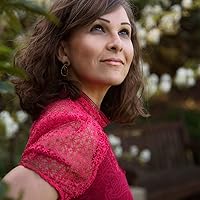
A Kinshasa born, London raised writer, poet, educator and workshop facilitator. London and UK based, but also international; Paris, Brussels, Boston etc, most recently San Francisco and Oakland, where he won the Oakland Poetry Slam. Performs regularly at shows and festivals such as Tongue Fu, Vocals & Verses, Chill Pill, The Round House, Ventnor Fringe, etc as well as Universities; SOAS, UCL, Oxford, Lincoln, University of Birmingham, Standford University and Merrit College in the Bay and other public institutions. Also includes various Radio and Television appearances.
JJ Bola has successfully published two books of poetry Elevate and Daughter of the Sun (ebook). His third, and latest, is his most comprehensive poetry collection WORD, which was launched to a sold out crowd, during Refugee Week on the 18th of June 2015 at Dalston Roof Park. JJ Bola’s work is centred on a narrative of empowerment, humanisation, healing of trauma as well as discovery of self through art, literature and poetry. Creating the increasingingly popular addage, 'hype your writers like you do you rappers', he believes that the true purpose of poetry (art) is to expose the reality of this world and how to, most importantly, survive it. [taken from author's website]
“No. None of us do; me, your mother, Marie … we cannot go anywhere. We are refugees, son.” That’s Jean’s father explaining to his son that they don’t possess passports and subsequently he will not be able to travel to France for a trip that came about because of his excelling in school. The trip was something Jean desperately wanted to be a part of, he hadn’t always been a good diligent student, but achieved enough to warrant the reward. Jean and his sister Marie along with their parents are living in the U.K. having left the Congo to avoid becoming victim to unchecked violence and unrest.
The story swings between continents and time. So, the book opens with Jean in the U.K. making the adjustment to a new school, new culture, new people. Just how they came to be in the U.K. is laid out by exposing the lives of Jean and Marie’s parents and their upbringing in the Congo. Dad, went off to school to Belgium and Mom stayed in the Congo with her four sisters and strict military father.
When Mom becomes pregnant with Jean, Dad returns home to the Congo, but finds that without a solid education, the future looks bleak, he goes back to finish school and when the situation in the Congo deteriorates he beckons his wife to leave and join him across the ocean. They build a life as much as one can living in constant fear of the unknown and deportation.
The novel really picked up its pace in the second half and the tension of leaving a bad situation and trying to form a new life and home in a equally tenuous position is felt on the page. JJ Bola draws empathy from the reader, as this is not simply another African immigrant story but is a story relatable to anyone trying to find a way to fit into new surroundings, while creating “home.”
“GOING TO CHURCH WAS AN ACT of going back home. It was a miracle how the collective religious experience of attending church could close the gap of the thousands of miles it would take to make that journey. People did not only come to hear the word of God, they came to hear the word of their God. Their God spoke Lingala, their language; with their vivacity, their energy and passion; their words dancing and moving in the same way they did, words and a language they had to hide.”
So, clearly everything like Church, food, clothing, music and anything else that can serve as a reminder of home is valued, more so for the parents than the children who were very young when they left the Congo. A well told tale of love, family, immigrant status, and “home.” The ending was rather bare and definitely untidy. But it doesn’t spoil a good and timely novel.
“Home is somewhere we know, somewhere we trust, and we only know home, as well as we know the people around us. Home is somewhere we can go, even if we never left, somewhere we can stay, even if we had to go. Home is a feeling. But maybe we all feel this way, like we have nowhere to go; always, neither here nor there, always, never knowing where you are from, always, never knowing where you are going, never knowing home.”
Thanks to Edelweiss and Arcade Publishing for an advanced DRC. Book is out and available for purchase.
Bola writes with passion and his characters are vibrant, but the novel reads very much like an early draft. There are several typos, a part two but no part one, alignment issues, a questionable structure and clunky phrasing, all of which detract from truly being able to enjoy the story. The novel concludes with some worthwhile insight in poetic prose; I suspect that Bola's poetry may be up my street.
I have always struggled with the idea of home. Grew up in different places and never quite belonged. Bola’s novel invites “the other” into a world where their otherness becomes the norm, so much so that the experience you swore was unique to you is suddenly eerily similar to the characters in his book. That said, the book does not shy away from making clear differences between the immigrants experience as “the other” and a refugees experience. Whilst I related with a lot of the experiences, the story also revealed my own privilege...and this was in chapter 1.
Bola’s divisive tactic of sometime translating the language and sometimes not was not lost on me. I was left putting the puzzle together, searching for context to fill in the missing pieces and concluding what I thought the sentence to be about. In these moments I was reminded what it must be like to be a foreigner in a country where you must do this every single day.
Bola’s writing has a unique simplicity that finds the metaphor in the everyday experience. The poetry is effortlessly spread around the book and always feels like a gift when you bump up against it. Perhaps this extract is a great example:
“If she had her last loaf of bread to eat, she would not split it in half and share it with you. She would split it in half, give you one half to eat and wait until you were hungry once more to feed you the remaining piece"
Bola splits his deep metaphors and poetic language in half and waits till you are hungry once more and feeds you the remaining piece. My favourite read of 2017.
I really liked the way the book was woven from the son's experience to the parents' history. I liked the characters - we wanted to succeed. I don't like the lack of conclusion ending but I understand that's part of the bigger point.
p. 47: Why learn the language? Is it to enjoy the poetry of Chaucer or Keats? Most who speak the language do not even read it. Is it only for moments of servitude, when you are at work and must follow instructions of how to stack a shelf or clean a toilet, when you can calculate quadratic equations or recite epics in your own tongue? Or is it to be included? So you can clearly understand the hate and prejudice fashioned against you? For before it was in a language, you only saw with your eyes, but now you hear it too; even more, you feel it. And when you do learn, you are told to speak it properly; you are constantly reminded how you do not sound the same.
p. 49: Papa and Mami avoided Congolese churches, although for different reasons. Here, however, they rushed to them, finding comfort in a place where they saw other people who shared the same story. It was less about the church, and more about having the familiarity of what they once knew in close proximity--the language, food and culture they had been missing; it was as though their entire country was filled in to a bare and empty hall.
p. 86: Papa did not get to see Mami before he left for Brussels....He was not one for goodbyes. Goodbyes meant he was not going to see the person again, and sometimes, this was preferred, but in cases such as this, he felt a goodbye was akin to handcuffing himself to something unmovable; a lamppost, a railing, a family who already told you no. He was leaving, she wasn't. She was also not yet his wife, and a girlfriend was a foreign concept. - to be a girlfriend is to be half of a whole thing you need, and one cannot be half of air to breathe or light to see, love must always be whole--therefore, regardless of what either family may have known or assumed, the privilege of seeing her, on request, before he left, was not granted.
p. 88: Professor Gibeaud's discussions on this subject always left a lingering thought in Papa's mind. He wondered why people did not react with the same visceral disgust at Leopold's name as they did with Hitler's. For if a flower by any other name still smells as sweet, then what is the smell of evil? Professor Gibeaud was a mathematician, but more so, a philosopher; true liberation is having freedom of thought, he'd say and would always urge the class to think critically, before dismissing them. So Papa read and read. He read to prove him wrong, he read to prove him right.
p. 283: Maybe everybody feels this way, like they are on their own, like they are fighting an invisible battle, fighting against an opponent who they cannot see, and against whom they cannot rest, but is always there, always attacking, always hitting. And the more you try to be yourself, the more it attacks, so the more you are forced to hide; the rough parts of you need to be made smooth, the loud needs to be quieted, the color made dull, just so you can find some peace, just so you can find some rest. So you hide, you hide in someone else's language; you hide in someone else's clothes, hoping the fight never finds you. No one tells you this. SO by the time it begins you are already losing, there is nothing quite like being in a fight you aren't prepared for; one you are not even sure you are in. No one asks for this. No one asks to be told you are not enough, no one wants to be forced out, you only do when you can no longer fit in--but what if you never have? You only feel this way when the battle moves from the outside to the inside, when you begin to be able to name it. It becomes such a deep part of you that to fight against it is to fight yourself, and so you project it onto others, and then force the fight on them instead. We are not born fighting, we are not born hating, these are placed upon us by the conditions of this world. There is a softer nature, more beautiful, more whole, that rests deep in the center of us all from which ewe emerge. But once we leave, we never return to there. p. 284: ...And in the end we are all looking for the same place: Somewhere to call home. Home is somewhere we know, somewhere we trust, and we only know home, as well as we know the people around us. Home is somewhere we can go, even if we never left, somewhere we can stay, even if we had to go. Home is a feeling. But maybe we all feel this way, like we have nowhere to go; always, neither here nor there, always, never knowing where you are from, always never knowing where you are going, never knowing home. Maybe we all feel this way or maybe it is just the idea of this feeling that scares us the most? Home is where your heart is, home is where you rest your head, home is where you never feel alone. For me, there is no place to call home, nowhere that I belong.
Brown Girl Reading says: "JJ Bola’s, debut novel, No Place To Call Home attentively develops the themes expected in a novel about refugees surviving in a strange new country. Bola touches on language, community, parent-child relationships, specifically father-son and father-daughter relationships, expectations of first generation African children, religion, moeurs, and most of all home. All of these subjects are catalysts for developing each of the main characters.
The personable third person voice of No Place To Call Home tells the story of Papa, Mami, Jean, and Marie. The ingenuity of the narrator’s voice gently pulls us into the complex life of this family. Refugees from the Congo living in London, we follow the difficulty of Papa and Mami to survive while waiting to get their papers, which will allow them to stay in the UK legally. They are fleeing political horrors of the dictator Le Maréchal.
The story quickly focuses mostly on their family life. Jean is about 11 years old, trying to fit in and master the English language. This comes with many tests, from fitting in with the boys to making excellent grades to pleasing his exigent father. Jean’s sister Marie is the model child and student. She is younger and not the first-born boy so she doesn’t have the same expectations placed upon her as, her brother, Jean.
Bola does an excellent comparison of Papa and Jean by starting out developing Jean’s character at school in the UK and then later paralleling that with Papa’s adaptation to École Polytechinique in Brussels. They are two different ages in these scenes but it depicts similar difficulties they have, how they deal with them and how they develop and reinforce their personalities. This also depicts the way Bola has chosen to talk about African societal expectations for African men and women. The roles of men are incorporated in the story and juxtaposed with those of women. For example, there is Tonton, the lazy womanizer, Pastor Kaddi the dishonest evangelical priest, and Koko Patrice, Papa's manipulative, elusive father, and Koko Mobali, Mami's domineering father.
I strongly urge you to pick up No Place To Call Home. Its touching characters and well-developed story lines will have you completely submerged. I read this book in two sittings. I couldn't put it down. However the only thing that disappointed me about this book was the ending. I was hoping for something a bit more concrete.
"JJ Bola is a Kinshasa-born, London-raised writer, poet, educator, and workshop facilitator. He has published two books of poetry, Elevate and Word, and performs regularly at shows and festivals. In 2015-2016, Bola performed on a US poetry slam tour that took him to San Francisco, Los Angeles, New York, Chicago, Dallas, Toronto, and more. He lives in London." (back cover of No Place To Call home) "
‘No place to call home’ is a novel that resembles a poem. A poem full of a deep understanding of duty, pain, and sorrow.
Even though the plot developed rather slowly, the second half of the book made up for this. JJ Bola writes from the heart. It is clear that he has seen pain first hand and that he understands what is like to grow up and live without home. Home in the broader sense of the word - not just a physical place where you can find emotional and physical safety, but also in terms of relationships and positive attachments. I think the novel speaks for itself so I have chosen four extracts to represent it.
Page 121
“Although she was actually older than Mami, she was considered young due to her unwed state. It was considered more as an affliction, a malediction than a choice. The insufferable condition of singledom; a condition women should seek to escape rather than embrace. A girl would not be considered a Mama, which was not necessarily based on motherhood for many Mamas did not have children, another damnation, until she married.”
P.167
‘Do you ever…’ James spoke, softer than before, soft as a passing cloud over a clear blue sea. ‘Do you ever think about what it would be like to die?’ ‘What do you mean?’ Jean replied, knowing exactly what he meant, but wishing he could un-know; wishing he could un-know the whole evening. ‘You know, what it would be like to end it all.’ A silence fell upon them like the moment after a tragedy. ‘I’m just tired of it, tired of all of it.’ James continued. ‘You know, my dad hits me too.’ Jean looked at him with wide eyes as if to let him know there was more in this sentence they shared than anything else. ‘But I’ve got older, stronger, and so k take it now; it doesn’t hurt as much… I’m just tired.’
P.293
‘Is that it?’ Martha asked. ‘What else can I bring?’ Mami replied. ‘The most important things cannot be packed.’ They left the house without looking back and entered the truck.
P.326-7 And at the end , we are all looking for the same place: somewhere to call home. Home is somewhere we know, somewhere we trust, and we only know home, as well as we know the people around us. Home is somewhere we can go, even if we never left, somewhere we can stay, even if we had to go. Home is a feeling. But maybe we all feel this way, like we have nowhere to go; always neither here nor there, always, never knowing where you are from, always, never knowing where you are going, never knowing home. Maybe we all feel this way or maybe it is just the idea of this feeling that scares us the most. Home is where your heart is, home is where you rest your head, home is where you never feel alone. For me, there is nowhere that I belong.
This book, just out, is the first novel written by poet JJ Bola, and qualifies for the British Books ChallengeBritish Books Challenge because it is written by someone who lives in London, and is partially set in London.
Ironically, of course, because this is also a book about not being (or feeling) British. The outsider, the refugee, the non-native English speaker; the lack of ‘home’.
It’s a lyrical book, as you’d expect from a man who loves words and by page two has already called a library a temple. Its incredibly honest, and feels more like a biography than a novel – despite Bola’s protests at the booklaunch that it is not quite as autobiographical as the reader might think. He said he began to think about the family of characters at the heart of this book as real people, and got a little annoyed when things happened he didn’t expect.
Don’t you just love the cover? I’ve seen more than one diagonal rip on a book tube poster recently, but this is perfect – not only the split of the two countries (Congo and UK) but two lives, the blue waves lapping on the red shore, two generations growing up, two narrative points in time… So evocative.
The plot switches between two timeframes: Jean is a teenage boy growing up in north London, navigating teenage life, a new language, school, and his parents are trying to survive as refugees, not knowing if they can stay and trying to build a life anyway… and in between you learn the story of how this couple met in Congo, fell in love, built a life and then had to run away to save it. There are other little characters along the way, without a huge cast. It’s their story, and yet it could be anyone’s – anyone who has tried to fit in somewhere without a rule book, to make and hope for a home.
It is hard to talk about the ending without spoiling it – but I felt very satisifed with it, and it is well crafted. The pace picks up towards the end… and leaves you wanting more but knowing it was the right thing to do. No self-indulgent bits for this author.
I learnt so much from this book, and I recommend it since it isn’t my normal kind of thing. I got through it pretty fast. Go get a copy!
In JJ Bolas "Kein Ort für ein Zuhause" steckt vermutlich ein ganzes Stück Autobiographie: Wie sein Protagonist Jean wurde er in Kinshasa geboren und wuchs in London auf. Der Originaltitel "No place to call home" drückt noch deutlicher die Verlorenheit der Familie aus, die versucht, sich mit unsicherem Rechtsstatus ein Zuhause aufzubauen und eine Identität in der Fremde zu finden.
Bola erzählt einerseits die Coming of Age Geschichte des 16-jährigen Jean, andererseits aber auch die Geschichte von dessen Eltern, die für das Band zur alten Heimat und der Verhältnisse dort stehen. Jean und seine jüngere Schwester Marie stehen für die Hoffnung auf eine bessere Zukunft: Der Vater, der in Belgien Medizin studierte, arbeitet zwei Jobs als Sicherheitsmann und Reinigungskraft, die Mutter, die einst ein gehobenes Lyzeum in Kinshasa besuchte, als Hilfskraft in der Cafeteria von Maries Schule. Die Kinder sollen lernen, Leistung zeigen, erfolgreich sein, sie sollen es schaffen im neuen Land.
Diesen Druck spüren viele Kinder aus Einwandererfamilien, die erst noch ankommen. Erst spät erfahren Jean und Marie, dass die Eltern nicht einfach nur Einwanderer sind. Sie sind Flüchtlinge, haben keine Pässe, leben in ständiger Angst vor Ausweisung und sind daher geradezu überangepasst vor Angst, (negativ) aufzufallen.
Einen genauen Hintergrund gibt Bola nicht, aber ich vermute, die Geschichte spielt während der Mobutu-Herrschaft, als die Demokratische Republik Kongo den Namen Zaire trug. Die Andeutungen von Plünderungen und Gewalt auf den Straßen, von den Zuständen in den Gefängnissen, von sexueller Gewalt sind in dem Land ja leider nicht auf eine Ära beschränkt.
Insofern steht die Familiengeschichte zugleich für die große Geschichte von Verlust und Ankommen, von der kleinen Heimat in der Diaspora, in diesem Fall eine kongolesische Kirchengemeinde. Während die Eltern die enge Verbindung zur alten Heimat spüren, erlebt Jean das Schweben zwischen zwei Welten - an der Schule hat er das Gefühl, sich als afrikanischer Junge doppelt beweisen zu müssen und besonders gesehen zu werden. Während seine Schwester und er vor allem für die Mutter aus dem Englischen übersetzen, schwindet seine Muttersprache Lingala immer mehr aus seinem Bewusstsein.
Bola schreibt ohne Sentimentalität oder übertriebene Gefühligkeit, vieles ist tragikomisch, überwiegend aus der Sicht Jeans geschildert, der die meiste Zeit vor allem ein ganz normaler Teenager sein möchte. Der Epilog bringt am deutlichsten zur Sprache, was die Existenz von Flüchtlingen von anderen Migranten und jenen unterscheidet, die nie ihr Zuhause unfreiwillig verlassen mussten: "Wenn du Glück hast, wird Zuhause für dich nie etwas sein, woran dich die Tränen deiner Mutter oder die vor Wut bebende Stimme deines Vaters erinnern.... Zuhause sollte dich niemals brechen, so dass du nie vollständig bist, wohin du auch gehst, eine Hälfte immer dort, wo du sie zurückgelassen hast, und die andere nicht willkommen, wohin du auch gehst. Du bist ein gespaltenes Pendel, beide Hälften in der Luft."
No Place to Call Home by JJ Bola is a gorgeous mediation on what makes a home – is it where you live? Where you were born? Or is it the people who love you? The Selfless Act of Breathing might be the top book I’ve read this year, so when I saw the author had another book out, I rushed to read it. While this one didn’t pack quite the same punch as that one (seriously, that book broke me in the best way!), it was still incredible. It’s told from the perspective of Jean, a rebellious middle-schooler in North London, born in Kinshasa in Congo. While adolescence is tough on everyone, Jean has the added burden of feeling torn between two identities as he weaves together stories of his life with those of his parents’ history. Bola writes like a poet. Every sentence is so beautiful that it begs to be read over and over (which is probably why it took me so long to read this one). An important reminder that everyone’s story is important. “If you are lucky, you will never have to remember home through your mother’s tears or the rage in your father’s voice when it shakes. Home will be somewhere you run to, never away from. It will never chase you away- a rabid dog hot on your heels with teeth like a shark, teeth so sharp you can already feel it cutting into you. If you are lucky, home will never up and leave you, and up and leave you, and up leave you, to the point where whenever anyone up and leaves you, it feels like home. You will look for them, as if they are home, because we all need somewhere to stay, even if it is a person; somewhere safe, somewhere warm.”
This was an ok read, I felt Jean was an ‘immature’ narrator, which I know was purposely done to give a child’s perspective on being an other in a foreign land, but it meant we didn't get a deep insight into the parents experiences within the immigration system. I also felt as if Jean’s experiences fitting in to London wasn't as fraught as the title of the book would've suggested, as wasn’t really immersed into Congolese culture and seemed to be more of a typical Black British boy. Papa and Mami were great parents (typically African) but I would've loved to read more of them navigating in Britain. Overall, I enjoyed JJ Bola’s writing but didn't really feel a connection with any of the characters as we didn't really get to know them outside Jean.
A good debut novel about growing up as a refugee in a different country. A story about hope, love, loss, the feeling of alienation living in a strange new land and having to leave your home behind, whilst struggling to try and lay foundations in your home despite the constant dread of being uprooted once again and deported back.
The book switches between the current situation, of a Congolese family (and their extended 'family') living in London, and how Papa and Mami came about to living in London via the Congo and Belgium.
An important book of our time and I’m sure many would have their eyes opened if they took the time to read it.
What at first seems to be the story of Jean soon reveals itself as a story of his immediate and extended family. The notion of home is explored most fully through the relationship and life of Mami and Papa however for me there were perhaps too many incomplete stories for it to feel fully satisfied.
Ah, this book will forever hold a special place in my heart. Took me a few days to gather my thoughts to post a review. it was poetic, moving, educational, and heart-rending. A good reminder that our stories truly matter. my immigrant self will never get tired of immigrant stories.
"We put up barriers around the world, because we put up barriers around ourselves, sometimes physical but almost always not. And in the end, we are all looking for the same place: somewhere to call home."
I liked his book about masculinity. Now, the novel was very full of a typical coming of age story of two different people in one family. It describes the life of refugees in London and how to survive the culture shocks, struggle of being away from home and learning a new language. I understand the multi layered problems refugees are being confronted with to start in a new country. Europe don't make things easy for them.
This book touches on so many important factors concerning immigration, from the assimilation of 'other cultures' into a western society; refugee status, and finding a sense of belonging away from home. This story brought a sense of nostalgia and also opened my eyes to a world that I had no idea about. Highly recommend everyone read this.
Such an exquisite, moving novel about growing up in a strange new land.. A tale of hope, love, loss and identity and in the end, just wanting to belong. Provides us a lens through which the current refugee crisis might be explored - encouraging deep empathy for those living under these terms; a perpetual purgatory that one should not be in and certainly not be consumed by fear.
A heart wrenching tale that shares the stories of so many. Full of highs and lows but also love. This book sheds light on what it's like to live in a country that isn't your own and the daily struggle to make a better life for you and your family.
I very much enjoyed this diaspora coming-of-age story, though of the two plot lines, Jean's was the least interesting but definitely the most relatable to me.
The last 100 pages were by far the best of the book.
Loved every minute of this. Great story, interesting and likeable characters and plently of laughter and emotional throughout the text. You know its a great book when it leaves you wanting more.