Jump to ratings and reviews
Rate this book

To the White Sea

Rate this book
Award-winning and best-selling author James Dickey returns with the heart-stopping story of Muldrow, an American tail gunner who parachutes  from his burning airplane into Tokyo in the final months of World War II. Fleeing the chaotic,  ruined city, he instinctively travels north toward a frozen, desolate sanctuary he is certain will assure this survival--and freedom. Making his way through enemy terrain, on the lookout for both danger and  opportunity, Muldrow's journey becomes the flight of a pure predator. Moving through the darkness,  bombarded by haunting visions that consume his  imagination, every step in his violent odyssey brings  him closer to a harrowing climax that is pure  James Dickey.

275 pages, Paperback

First published January 1, 1993

25 people are currently reading
2793 people want to read

About the author

James Dickey

188 books206 followers
Dickey was born in Atlanta, Georgia. After serving as a pilot in the Second World War, he attended Vanderbilt University. Having earned an MA in 1950, Dickey returned to military duty in the Korean War, serving with the US Air Force. Upon return to civilian life Dickey taught at Rice University in Texas and then at the University of Florida. From 1955 to 1961, he worked for advertising agencies in New York and Atlanta. After the publication of his first book, Into the Stone (Middletown, Conn., 1962), he left advertising and began teaching at various colleges and universities. He became poet-in-residence and Carolina Professor of English at the University of South Carolina.

Dickey's third volume, Buckdancer's Choice (Middletown, 1965), won the prestigious National Book Award in Poetry. From 1966 to 1968 he served as poetry consultant to the Library of Congress. In 1977 Dickey read his poem 'The Strength of Fields' at President Carter's inauguration. The Hollywood film of his novel Deliverance (Boston, 1970) brought Dickey fame not normally enjoyed by poets.

Dickey's poems are a mixture of lyricism and narrative. In some volumes the lyricism dominates, while in others the narrative is the focus. The early books, influenced obviously though not slavishly by Theodore Roethke and perhaps Hopkins, are infused with a sense of private anxiety and guilt. Both emotions are called forth most deeply by the memories of a brother who died before Dickey was born ('In the Tree House at Night') and his war experiences ('Drinking From a Helmet'). These early poems generally employ rhyme and metre.

With Buckdancer's Choice, Dickey left traditional formalism behind, developing what he called a 'split-line' technique to vary the rhythm and look of the poem. Some critics argue that by doing so Dickey freed his true poetic voice. Others lament that the lack of formal device led to rhetorical, emotional, and intellectual excess. The truth probably lies somewhere between these two assessments, and it will be left to the reader to decide which phase of Dickey's career is most attractive.

Dickey's most comprehensive volume is The Whole Motion (Hanover, NH, and London, 1992). His early poems are collected in The Early Motion (Middletown, 1981). Recent individual volumes include The Eagle's Mile (Hanover and London, 1990) and Falling, May Day Sermon, and Other Poems (Hanover and London, 1982). Dickey has also published collections of autobiographical essays, Self Interviews (Garden City, NY, 1970; repr. New York, 1984) and Sorties (Garden City, 197 1; repr. New York, 1984).

From The Oxford Companion to Twentieth-century Poetry in English. Ed. Ian Hamilton. Oxford: Oxford University Press, 1994. Copyright © 1994 by Oxford University Press.

Ratings & Reviews

What do you think?
Rate this book

Friends & Following

Create a free account to discover what your friends think of this book!

Community Reviews

5 stars
369 (28%)
4 stars
499 (37%)
3 stars
327 (24%)
2 stars
95 (7%)
1 star
26 (1%)
Displaying 1 - 30 of 168 reviews
Profile Image for Matt.
1,054 reviews31.1k followers
March 8, 2019
“‘We are going to bring it to him,’ the Colonel said with satisfaction. A lot more than usual. ‘Fire. This is what you've got to look forward to. This is what he's got to look forward to.’ He leaned into it, from the heels, you could say. I sat and waited, looking straight ahead. ‘We're going to bring it to him.’ He looked down the rows of us, but I didn't watch him do it; all this was like before. ‘To the enemy, you know. Up yonder, friends. Up yonder to the north.’ He pointed at the ceiling, not north. ‘North and fire...Fire,’ he said again. ‘We're going to put him in it. That's saying, friends, that we're going to put fire around him, all around him. We're going to put it over him and underneath him. We're going to bring it down on him and on to him. We're going to put it in his eyes and up his a--hole, in his wife's tw-t, and in his baby's diaper. We're going to put it into his pockets, where he can't get rid of it. White phosphorous, that'll hold on. We're going to put it in his dreams. Whatever heaven he's hoping for, we're fixing to make a hell out of it.’”
- James Dickey, To the White Sea


This is a great beginning. It's a beginning you can't walk away from.

I still remember standing in the used book store where I purchased my battered copy of James Dickey’s To the White Sea, reading this opening diatribe, a savage monologue that takes Apocalypse Now’s Bill Kilgore and crosses him with famed fire-bombing enthusiast Curtis LeMay. Needless to say, I plunked down two dollars (this was awhile ago), and walked outside, a bit uncertain of what I was getting into, but having a good idea that it would be ruthless.

As it turns out, the fire the unnamed Colonel is speaking of is the eventual firebombing of Tokyo. However, when To the White Sea opens, the incendiary attacks that leveled large swaths of Japan had not yet started. This is a bit of a letdown – I had been sold on fire, after all – but Dickey soon lets you know that his novel is going to be every bit as hideously violent as promised by the first page.

To the White Sea is told in the first person by an American airman named Muldrow. He is a tail-gunner on a B-29 Superfortress, and he knows he’ll soon lose his job when the firebombing starts, and they replace his weight with more destructive tonnage. As it is, though, he gets to go on the mission, which he relates in an inimitable style, alternating between terse and evocative.

While over Japan, Muldrow's plane is shot down. He parachutes to safety and gets hung up on a crane. This is the first of many obstacles he navigates with grim efficiency.

Muldrow is a hunter and a killer. He is pure animal instincts. As he races through the crowded, panicked, exploding streets of Japan – a tall white man in an Asian nation – he realizes he needs clothes. So he finds a man about his size and takes some:

He came right to me, like every animal or bird I'd ever shot, or like the Nip fighters down the string of the pursuit curve...I stood up in the doorway and came up with the .45 and shot him right straight into the face, at the same level as mine. I didn't want any blood on the clothes, or any holes. The sound of the gun was hardly any louder than the general noise, and the muzzle flame was just one more little bit of fire, exactly like all the rest of it, and gone quicker than you could think. The blast knocked him back, the shock - a .45 at close range is like a hand-held 30.06 - and he went down, with the two or three other people behind him.


Muldrow decides to head to Japan's northern island of Hokkaido, where he thinks he can survive undetected in the snow and cold that is reminiscent of his childhood in Alaska. Along the way, he muses, mutters, and slaughters. He hops a train. He matches skills with an old blind swordsman (yeah, I have no idea how Tarantino has not filmed this). He kills and steals and cements his bonds with the natural world he so admires. This is a book that celebrates a certain kind of hypermasculinity: aggressive yet code-bound; stoic and self-reliant; the frontier killer transported to 1940s Japan. Muldrow embodies Lawrence's "essential American soul." He is a a pragmatic realist for whom mercy is naïve.

(Cinematic note: though I mention Tarantino, this was supposed to be a Coen Brothers film at one point - with Brad Pitt slated to be Muldrow. There was even a script floating around the internet. Unfortunately, they never got around to it, and I doubt they will. But I would have loved to see these talented ironists take on material that is entirely irony-free).

The prose takes on almost lyrical cadences, and while the book at times seemed repetitive, that repetition is part of the rhythm. The descriptions are fantastic, and the ending is a fever dream.

This is a book that troubled me at times. I didn't know if I liked it, or if I should have liked it. There is a great deal of brutality here, and seen through Muldrow’s eyes, it provides a nasty, visceral thrill, that is a bit disconcerting.

To the White Sea is compact and efficient. Dickey knows exactly what he is going for, and you can sense the authorial confidence. There are themes he wants to discuss, chief among them the search for reality, and he plays with those themes with all the subtlety you’d expect from such a blunt instrument as Muldrow. We are treated, for instance, to a jarringly on-the-nose meeting between Muldrow and an American monk at a Buddhist monastery. The monk natters on about time and "real time" twisting himself into existential knots. Meanwhile, our homicidal hero is at peace. He has grasped reality through his commune with the natural world.

"I like the rocks in the creek, with water running over them, and not just put in a yard for somebody to stare at. That gets old."

You tell him, you crazy bastard!

After I finished, I actually Googled "To the White Sea Classic?" to get some sense of its position in the literary firmament. The search query was unhelpful, but it is an indication of my unresolved sentiments. To the White Sea is supremely well written and brims with Dickey’s skill. More than that, it achieves exactly what it sets out to achieve. Still, at times, it reads like a short story written by a talented-but-troubled high school student. The kind of story that gets search warrants issued for your house, and a referral to a therapist.

I suppose my uncertainty leaves me in that place of equivocation that Muldrow so despises. I enjoyed To the White Sea, yet felt unsettled by it. I could tick off its themes and spot its symbols, but still wonder what it was trying to say. When I think of classics, though, I think of something that stays with you, long after you’ve put it on the shelf. To the White Sea stays with you, or at least, parts of it do, clinging like Muldrow’s beloved white phosphorous.
Profile Image for Steve.
901 reviews277 followers
February 5, 2009
I’m not sure how to rate James Dickey’s novel, To the White Sea. As a piece of writing, it’s much better than I thought it would be, since the book was written toward the end of Dickey’s hard living life. However, the human factor – unless you want to identify with the Japanese victims in the novel (as tangential as they are, a very real option)– is about zero. Muldow, who is virtually the only character in the novel, since it's told in the first person, is a B-29 gunner who is shot down over Tokyo a few days before the great fire bombing. Stranded deep in enemy country, he must use his survival skills, largely learned from his frontier life in Alaska, in order to survive. On one level, To the White Sea is a great adventure story, but there’s nothing faintly romantic about it, in fact it's pretty warped (which might be why the Coen brothers bought into possibly making a movie of this). Muldow is a killer, and he was a killer before he even got to Japan; if anything, being shot down has at last provided this strange man with a landscape where he can be himself at last. And being himself involves shedding anything superfluous to his identity other than that of being a predator.

There are some who feel this novel goes on too long, but I disagree, finding the pacing, with its weird dreams (check out the endless row of deer heads going off to infinity), the killings, the meditations on other predators (wolverines, birds of prey, etc.) to all be carefully considered elements to the overall story. Dickey knew what he was doing, and I don’t believe there’s a spare word in the story. It’s Muldow’s story, and it’s told in his voice, which is both unnerving and believable.
Profile Image for David.
Author 31 books2,272 followers
August 24, 2020
Fascinating stuff. If Jack London had written a World War II novel...
Profile Image for Philip.
1,775 reviews114 followers
November 19, 2025
Dark and disturbing story of an extremely messed up American airman (and you won't find out just HOW messed up until one blink-or-you-missed-it throwaway line on page 202), shot down over Tokyo shortly before the end of World War II — it's as if Jim “The Killer Inside Me“ Thompson wrote a war story. Plot-wise, this is basically an Odyssean tale of Sgt. Muldrow's blood-soaked attempt to find his way "home;" home in this case being the wintry wastes of Hokkaido, which most resembles his true home in the snowy mountain ranges of Alaska (and which he is at least self-aware enough to realize he'll never get back to).

The writing veers disturbing close to "literary fiction" (of which I am no fan), with frequent long (and IMHO unnecessary) reveries of his hunting days in Alaska. By telling the story in Muldrow's own voice, Dickey allows himself to totally dehumanize his Japanese…I won't even say "characters," since except for one or two brief appearances — the aging samurai, the Ainu hunter — they really only figure as victims or "the lucky few who got away," with zero development as actual human beings.

I always thought that Dickey was a famous novelist, but turns out he only wrote three novels — this, Deliverance (his first and most famous), and a third in between called Alnilam which basically no one's ever heard of — and was really more famous as a poet…which probably explains his overly wordy style here. I first read this book when it came out in 1993 and then again in 2008; and frankly not sure why I pulled this off the shelf again now, other than that it had been another 15 years in between readings, and so I'd forgotten much of what it was about — but yeah, this is DEFINITELY my last reread. Like I said, dark and disturbing…twice was probably enough.

SOME PERSONAL COMMENTS — SO PLEASE FEEL FREE TO SKIP: So…war sucks, and the two world wars of the 20th Century sucked even more than most. That said, it's always been my impression that the Japanese in WWII were more demonized than the Germans. The Japanese army was certainly more brutal on an individual level than was the German; Japan's warrior bushido ethic viewed surrender as an act of cowardice, and so prisoners and even innocents (think the Chinese in Nanjing, or nurses/doctors in Singapore) were much more harshly treated — when not outright massacred — than were Allied prisoners in Europe. And yet the Holocaust in Europe was certainly equal (if not surpassing) in atrocity to Japan's crimes across China and Southeast Asia. (Granted, many details of Germany's abuses didn't come to light until late in the war, whereas Japan's sins were well-known early on.)

So — how much, if any, of this perceptual difference was racially motivated? There are numerous examples of "good Germans" in WWII fiction — whether in books or movies — but aside from Clint Eastwood's "Letters from Iwo Jima," there seem to be far fewer sympathetic Japanese characters or stories. And during the war itself, there was no German equivalent to the U.S. internment of Japanese Americans, as so many "real Americans" traced their heritage back to Germany (and who, like my own extended family, probably had distant relatives fighting on both sides). Just compare Google search images of "Japanese portrayed in WWII propaganda" (buck-toothed murderous rapist dwarfs) to "Germans portrayed in WWII propaganda" (basically caricatures of Hitler) to see the difference in how these two enemies were viewed in the popular psyche.

In any case, let's not do this again.
36 reviews1 follower
September 17, 2007
To the White Sea contains one of the most uncompromising narratives and most unilaterally driven protagonists every committed to paper.

Muldrow, a WWII gunner, shot down over Tokyo, does whatever is necessary to survive; he is a man apart, thrown into a foreign land, with a different language, culture, and ideology.

The novel, almost devoid of dialogue, is a first person narrative of madness, encapsulated in the thoughts of one man. Lyrical, akin to a tone poem (being singularly possessed), that could stand the company of The Old Man and the Sea, it furthers Hemingway’s man’s man ideal to an extreme.

This is a haunting narrative of methodical flight.
Profile Image for Amelia.
390 reviews8 followers
July 9, 2018
I feel like I should give this a higher rating, because it so well written, but too much manliness for my taste.
Profile Image for Gary Sites.
Author 1 book15 followers
December 16, 2021
Imagine, if you can, you're an American air force tail-gunner flying over enemy territory, Japan during WWII. Your plane is hit, on fire, and spirals toward the earth. All your crew-mates are dead. If not for the parachute you religiously taped to the bulkhead, you'd soon be a goner, too. Instead, you make it safely back to earth, where men belong anyway. What would you do now?
James Dickey gives us an account of one possibility through one of his strangest, and best creations, Muldrow, a man raised in the Alaskan wilderness of the 1920s and 30s, and appropriately named after an Alaskan glacier.
Early on in his predicament of being totally on his own in the land of the enemy, Muldrow makes his plan to head North. If he can make it to the White sea, to the beloved snow and ice of his childhood, he knows he can survive and feel the comfort and freedom of home again.
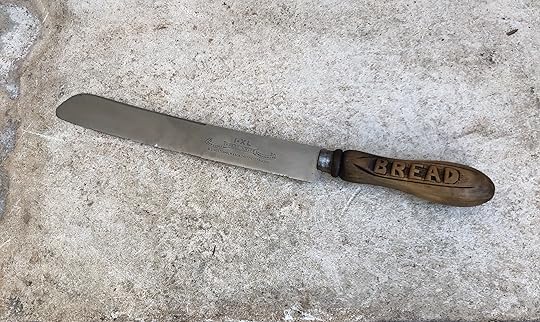
The story of his trek is one of dreams, camouflage, and savagery. For some, this tale may become a bit too gruesome to take. There were scenes I wouldn't want to revisit. But, if you have the stomach for it, Dickey's prose is as razor sharp as the bread knife Muldrow carries.

"'It's a bread knife,' I told him. 'The only difference is that I brought the point on down and fine. The edge is good, too. Kitchen steel is good steel. As good as you can get.'
'Look,' I said, bending the knife almost double. The light from the roof bulb curved, wires and all, into the light of the blade. 'That means it won't break off. It's not like one of these stiff issue blades, like a bayonet or a commando knife, that ain't got any give to it. This one will bend, it'll go around.'
'Go around what?'
'Go around anything, say, like a rib. It'll go around and come back. It'll straighten out on the other side and keep on going.'"

This passage leaves a little to the imagination, but the description of its actual use is not for the faint of heart. Ghastly is the word I'd use.
If you're a fan of Deliverance, you'll probably get along fine with this book, though it is not nearly as tight and well written.
Dickey repeats himself often, and becomes long-winded, particularly when Mulder describes animals, birds, and landscapes. About three-quarters into the book, he says,
"I was discouraged, I don't mind telling you. If the other island (his destination) didn't show pretty soon, I would be too weak and played out to get to it."
That's the way I felt about half-way through. Come on, James, get me there already, I'm dragging here.
Dickey revisits themes he explored so beautifully in his poetry, especially the connection between men and animals, and the relationship of hunter and prey.
I go back to my question, "What would you do in this situation?"
I have ideas about what I MIGHT do, but I tend to believe there's no way for any of us to know unless we were there. I'm fairly certain though, that we'd all surprise ourselves of what we may have to become in order to survive.
12 reviews
July 1, 2020
So James Dickey was a well known poet in his day, and that was where he did the most of his work, but he also wrote the novel that was used as the source material for the movie Deliverance. 23 years after writing Deliverance and just a few years before he died, he wrote To the White Sea. It's about a sociopath who is a high-level machine gunner on a bombing plane that's doing runs over Tokyo, and in his past life he was an incredibly adept hunter & outdoorsman.

His plane is shot down, and he then spends the rest of the book single-mindedly attempting to flee Tokyo & reach the snow covered & northernmost island of Japan, Hokkaido. You could call him a sociopath but you could also call him a serial killer. He's certainly not a sympathetic character, and there's an animal like efficiency in why & how he kills. When he worships the lynx, when worships the fisher martin, he becomes the lynx or the fisher martin. No ceremony, no emotion, just stalking & killing his prey.

Even though you could call the main character a hick, he is an unknowing poet, philosopher & zen Buddhist.

I found it to be a slow burn, and at times difficult to penetrate, but I became very emotionally invested and transported for the last 80 pages or so.

Profile Image for Allen.
560 reviews15 followers
April 25, 2019
Wow, I was so into this story I finished it in just a few nights. I had heard the Coen brothers, at one time. were trying to make a movie out of this but not sure why it didn’t happen. It's a wild action story told by the main character. It reads like he is telling you all this personally. It was a great action/survival tale, masterfully written.
99 reviews4 followers
January 29, 2010
Just astonishing. Best novel I'd never heard of I've read in a long time. Unusual and evocative setting (the Japanese countryside after the firebombing of Tokyo). Muscular Jack London prose. A fascinating monster of a protagonist. Even some subtle post-modern unreliable narrator gamesmanship.
Profile Image for Jim Huinink.
203 reviews2 followers
October 1, 2021
James Dickey did not write a lot of novels but when he did he wanted to create works that might ring eternal. Like Deliverance, his best known novel, this is elemental, visceral, violent, powerfully beautiful and resonant. I've read a lot and I think Dickey ranks in the top ten best writers in American history, despite his very short resume of fiction.
Profile Image for Michael Compton.
Author 5 books161 followers
August 28, 2025
An American tail gunner is shot down over Tokyo, his only hope for survival the skills he developed as, shall we say, an outdoors enthusiast. Making landfall on the eve of the incendiary bombing of Tokyo would seem to be a bad break, and as a reader, I was anticipating scenes of horror, ala Vonnegut's depiction of the Dresden bombing in Slaughterhouse Five. But Muldrow is no Billy Pilgrim. Completely indifferent to the suffering around him, he welcomes the hellfire as the perfect diversion to allow him to slip out of the city amidst the chaos. He imagines his best hope for survival is to make it to the snowy mountains of Hokkaido, where he can live as he did in Alaska. Sound insane? It is, but so is Muldrow. He kills for survival, he kills for shoes, he kills for food and shelter. Sometimes he just kills. With all the able-bodied Japanese men at war, he finds himself in a world of women, children, and old men, and he fairly gloats at how they are no match for him. Dickey makes it plain how brutal the Imperial Japanese could be, but it says something that every time our "hero" finds himself in a tight spot, we're rooting for the Japanese. The novel is as brutal and poetic as Cormac McCarthy's Blood Meridian, but whereas McCarthy allows the reader some spiritual distance from the brutality, Dickey puts you right in the mind of the killer. It's a masterful work, but I couldn't wait for it to be over.
This entire review has been hidden because of spoilers.
Profile Image for Ian Carpenter.
734 reviews12 followers
February 28, 2020
This for me is an odd book. I bought it way back and I'm wondering if it was because of the outdoor adventure of it or the promise of violence. It is a pleasantly and surprisingly surreal. What starts as a conventional WWII survival story becomes increasingly strange as the protagonist becomes unhinged. Lost in "enemy Japan" (it has the casual racism you'd expect for the period and the fact that he's surrounded by an enemy he thinks is very different from him), he gives up on any sense of rescue or mission and goes fully wild, killing as he goes, obsessing about becoming one with nature and the landscape and dropping into an animal mysticism which is fascinating and strange. But, I found his periods alone in the wilderness far too long and less and less engaging. I was craving encounters with people and that's so little of this book. But, the writing's top notch and I think any that would like this kind of story will love this book.
Profile Image for Andrew.
2,262 reviews930 followers
Read
July 14, 2017
A psychotically masculine novel in the Norman Mailer vein. Our main character, who has an odd obsession with fisher martens and few if any scruples about hacking up civilians in the hopes of making his way to the Hokkaido wilderness to hide out the war. If you like the sort of books that revolve around the vision and perception of a singular man (and I do mean man-as-in-with-a-Y-chromosome, not as in man-as-mankind) in the Woods (capitalized to reflect that this is an entity that our singular Y-chromosomed individual has to respect/combat in order to attain Self-Actualization(TM)). You know the type, Blood Meridian, The Old Man and the Sea, etc. etc. This could well not be your sort of thing. I have enough of an inner Ron Swanson to like this sort of thing, and therefore I liked To the White Sea.
Profile Image for Glenn Roberts.
126 reviews1 follower
July 17, 2019
This novel by James Dickey is an unusual and personal rendition of a man in war and his personal battles with ethics and with himself. As a tail gunner in WWII his plane was shot down over Tokyo and he was able to parachute safely to the ground. He finds safety in blending in with his surroundings as he escapes to the north in hopes of reaching snow filled mountains similar to the place he was raised...the Alaskan Brooks Range. He makes it there after hundreds of miles traveling by foot, train, truck and boat and engages in what seem like some indiscriminate murders as well as some self-defense killings. Does he really reach his goal or is it all a stream of conscious dreamscape we're treated to, in his last hours in the war?
Profile Image for Simon.
927 reviews24 followers
March 4, 2019
A strange first person survivalist tale, full of surreal poetry as a borderline psychopath struggles to express his philosophy. A difficult read at times, but it was fascinating to spend some time in the mind of a man who sees the world in such a different way, and who in the end feels like he has more in common with the animals he hunts than with his fellow human beings.
Profile Image for Carter Aakhus.
82 reviews
June 15, 2023
My interest in reading this was piqued after seeing Quentin Tarantino mention it in his book Cinema Speculation as being another great novel by Deliverance author James Dickey. There was even a period of time in the 90s during which Tarantino was attached to direct an adaptation of To the White Sea written by the Coen brothers. It sounded like an exciting book so I bought a cheap paperback and looked forward to reading it after I finished Trouble Boys. Unfortunately, it starts out with the promise of being a dynamic, engaging adventure story before it quickly loses its sense of urgency. The opening pages with the Colonel vividly describing the magnitude of the firestorm that will be dropped on Tokyo followed by Muldrow showing the new recruit some of his survival techniques were the most interesting parts of the book. So much of the story, from Muldrow’s first-person perspective, follows him being on his own as he travels north away from Tokyo trying to stay alive. The premise on paper sounds like a great adventure novel, but the prose is spare and very procedural. Aside from the beginning, the best part of the book happens when Muldrow stumbles upon a Buddhist temple in northern Japan and meets an American living there as a monk who asks him about whether or not he has dreams at night. "Well, you are really two people. One of them lives the mechanical time of the clock. The other one of them watches what the first one does. He watches from the dream, when the spirit comes loose from the clock. The second self can go backward in time. He can also go forward." Muldrow’s character sees everything in a utilitarian, black-and-white manner and this is the first philosophical discussion he’s been engaged in. Moments like that promise a much better novel.
Profile Image for Michael.
324 reviews20 followers
July 10, 2025
Holy crap, what a seriously messed-up protagonist.

Sergeant Muldrew, a B-29 tail gunner in WW2, parachutes from his critically damaged plane and lands on a construction crane somewhere in Tokyo. From there, it's a relentless, filthy, blood-soaked journey to make his way to the island of Hokkaido. When not murdering a lot of people along the way, he thinks about his time growing up in Alaska and how much he loved its bitter cold and the animals who adapted to such a harsh environment. His emotional detachment regarding his killings, combined with his love of animals and extreme nature, provides a fantastic juxtaposition between detached depravity and poetic sensibility. The prose is appropriately lean and straightforward, making both the violence and the reveries even more layered and complicated. An absolutely relentless first-person quest that never lets up, save for a couple of wonky transitions from killing to admiration. Otherwise, solid as hell. 4.5/5 stars.
31 reviews
Read
October 28, 2024
the rare protagonist who can balance being repulsive and mysterious—inhabiting his headspace was uncomfortable in a similar way as raskolnikov’s in crime and punishment, although Muldrow is more animalistic and feral whereas raskolnikov was tormented and sinister. he doesn’t have hatred but rather an utter lack of feeling for any other human, except inasmuch as they demonstrate strength in the ways he respects. the poetry of the language and the landscapes contrasted starkly with that inner darkness, or maybe emptiness. i spent most of the book hoping that he would die so that he could stop killing innocent civilians, so the ending (ambiguous as it was) was a relief. it was a strange book to be reading while travelling hokkaido, since the narrative and protagonist is not at all relatable, but the starkness of the imagery did jibe well with our frosty hikes in the mountains.
This entire review has been hidden because of spoilers.
Profile Image for Christopher.
75 reviews6 followers
December 11, 2023
This book has been sitting on my shelf for two decades. An old plane ticket as a bookmark in it. Did I ever finish it? Why is there barely a memory of it? I thought maybe there was a train ride in it if ever I had tried to read it.

There was a train. I had tried. I was too young to take in this writing. Remarkable.

Alone in an enemy country during war armed with a bread knife. Headed north to the snow hoping to blend in to the landscape and live out his days as a predator.
Profile Image for John Youngblood.
111 reviews2 followers
July 1, 2021
Truly a "one-man novel" though there are other nameless characters as well. Hard to explain, but a tail-gunner comes down in Tokyo during an air-raid on that city during WWII. He intends to head to the north island of Hokkaido, but how will he do so, an American in the country of the enemy? A survivalist tale of nature, red in tooth and claw. If this ever becomes a movie, think Mads Mikkelson in the role, a reprisal, of sorts, of the sort of thing we saw in his one-character film, ARCTC. Just a very good read, Dickey's prose strokes the ear and the heart. Highly recommended.
Profile Image for Steve Thomson.
54 reviews
August 18, 2022
Enjoyed the story . I realize how inept I am in outdoor survival .
No coffee in the morning ?
I wouldn’t survive
Profile Image for Eden Thompson.
999 reviews5 followers
December 18, 2023
From the JetBlackDragonfly book blog at www.edenthompson.ca/blog

To The White Sea by James Dickey is one of those books I keep meaning to read and never get to. It came out in 1993 and I have a first edition hardcover. Several times, I have almost given it away, but the setting and premise of a man walking north from Tokyo to Hokkaido appealed to me. So, was it worth the wait?

In 1945, a young tail gunner stationed overseas is being briefed on the next mission, the firebombing of Toyko.
"We got to go burn the Japs up". "That's right," I told him. "Napalm and white phosphorus, that's going to be our big play", I grinned.
If you are into war and think that's a plan exciting enough to grin over, you might enjoy this book more than I did. They fly over Toyko and in the middle of battle his plane is shot down, breaking up over the water. He manages to find shore, where the city is an inferno and the residents are running amok. He needs something else to wear, so he kills a guy. He needs shoes, so he kills another guy. After hiding for a time in a sewer pipe, he begins to walk towards the north. He was once in Alaska and thinks if he makes it north, he can hunt, fish, and live freely. The rest of the book is his journey sleeping rough, foraging for food and evading Japanese. The few times he meets someone, whether it is a woman at the local waterwheel or a couple eating in their house, he kills them without a thought or hesitation. I know it is wartime, but the callousness and dispassion of removing what is in his way continues through the book, and makes it a depressing read. There are a few moments where he stays near a waterfall, stumbles on a zen monastery, and relates to the power of the animals, but mainly he is shallow and unempathetic to his surroundings.

The cover of one edition says it's a World War II Classic. The Coen Brothers were trying make it into a film a few years ago starring Brad Pitt being shot down over China. With the central figure wandering through the countryside and minimal dialogue, it could have been interesting. I think that has been abandoned due to a cost of over $80 million.

I was waiting for him to lose his fighting ways, become more in tune with the land around him, and possibly end up a more peaceful person, at least gain awareness that other people in the world besides himself have purpose and value. Some kind of personal transformation would have been nice. If you are a hunter this might appeal to you, he has that mentality throughout, but I was looking for a deeper experience of the land and the people. I thought he was a self-centered American at the start and didn't see any growth. The finale offered me no hope as well.

James Dickey wrote Deliverance in 1970, the basis for the hit film, and is also a poet. He was the eighteenth Poet Laureate Consultant in Poetry to the Library of Congress in 1966. The writing is pure and often beautiful. However, I found 275 pages of walking, hiding in fields and sharpening his knife dreary by the end. The quote on the cover says "Heroic" - I would say the adventure was but the character was arrogant and unpleasant. The feeling at the end of it was distasteful.
Wanted to like it, can't do it. Not recommended.
Profile Image for Nate.
134 reviews123 followers
January 27, 2016
Review #32 of "Year of the Review All Read Books"

There's a certain soft spot I have for hard lives. Like many young men who were forced to do book reports, I picked up Hatchet by Gary Paulsen. Truthfully that book has probably been better to me in memory. It is kind of a wonderful introduction to books of a "survivalist" genre that I've found myself liking more and more since.

To The White Sea is a more violent and adult continuation of that genre. I imagine, like many others, I came to this book via the Coens failed attempt to make it a movie. To say Muldow, the narrator, is inarticulate is not quite right, but he certainly lacks a perhaps more desirable, reader-friendly prose. He insists that "that was the thing" or to get to such and such place "would be something," which sound vague, until you hear their resounding chorus throughout the book. He's insistent about something that he can't quite explain. It's a book without a lot of dialogue and that has its effect on the character. He doesn't invent language and argument to describe why he is going north, he goes there instinctively.

Muldow is a B-29 gunner, shot of his plane, and a day later a witness to the firebombing of Tokyo. He grew up on the Alaskan frontier. His goal is to get north to Hokkaido, away from the modernized Japan at war with America and to the more ancient, indigenous winter sanctuary. He sees himself as an animal, as a thing that has to survive. There is little breath wasted on the morality of killing. Killing is a practical matter. The metaphysical for Muldow exists as visions of wild animals he projects onto the landscape, the Sublime of nature and his role/return to being a predator within it. When he happens upon a Buddhist monastery he is probably as perplexed about their notions of the void and spirituality as the wild beasts he has such reverence would be.

Much of the book deals with the simple mechanics of surviving, traveling and planning his way north. A lot of the language is simple, often spare, in a practical matter. Unlike so many books about WWII, this book is not about the horrors of war. It does not endear the reader to become closer to the enemy or its causes. The book is simply about survival, a what-to-do-now. Muldow does not ask permission for our moral sensibilities. He does not come to love the Japanese. Nobody has the moral highground in this book. Yet with the removal of these constraints, Dickey tries to show the limitless ability of man driven to survive the elements, his combatants, his body and even his own mind.

Bonus Background Enrichment for those who have read the last ~70 pages: http://www.cnn.com/2015/02/09/travel/...
Profile Image for Larry.
1,507 reviews95 followers
May 18, 2014
Sergeant Muldrow, tail-gunner on a B-29 in the last stages of the war against Japan, parachutes into Tokyo when his plane is shot down. It is the day before the big fire-bombing raid on Tokyo, and Muldrow uses it to his advantage. He uses the total chaos of the fire-bombing raid to get out of the city, killing several Japanese civilians along the way. He is uniquely suited for survival due to his rearing on the north face of the Brooks Range in ALaska. His father was a loner and a trapper, and Muldrow knows how to cope.

Muldrow is a pretty self-contained chilly piece of work, but the novel's set up is good, so his traits are subsumed by the survival story. His measures seem natural responses of a fighting man trying to survive against an omnipresent enemy. He is more than a survivor, though. He is a stone killer who doesn't distinguish between those who are dangers to him and those who are harmless. Muldrow's essential nature becomes the focus of the story, not his attempted survival and escape. By the end, his increasingly odd nature (odd outside of the war) leads inexorably to a very strange ending. It is somewhere in this transition that the book goes from a four-star war novel to a three-star psychological case study of a dangerous mind unmoored by being away from the constraint of the military. The trouble is, Dickey approves of the scary [part of Muldrow, the natural man.
Profile Image for Ray Nessly.
385 reviews37 followers
December 28, 2022
A cold night in March, 1945.
Muldrow is the only survivor when his B-29 bomber is shot down over Tokyo. He spends his first night in a sewer. Paradise compared to what comes next: surviving the firebombing of Tokyo, which incinerated close to 100,000 people. Muldrow rounds that figure up, killing off a few more folks, mostly for their clothes.

His weapon of choice …

Not a lot of bread in Japan, no. But this thing makes short work of people too.
It has a long, very flexible blade. When it hits something hard—say, some guy’s rib?—it flexes around it, and keeps on going. Sweet!

Turns out this fellow Muldrow had lived much of his life in Alaska, off the grid, living off the land as a hunter & trapper. A nice background to have, if your goal is escape Tokyo, travel north the length of Honshu, steal a boat and cross the strait to Hokkaido, and live the remainder of your days in the wilderness.
“If there was snow or tundra or even rocks, the game I understood would be there, and I knew how to get it. I could outthink any animal or bird that lived in the cold, by thinking more like he did than he could do. All I had to do was get there.”

That's right. He is not seeking to be rescued, but to find another arena akin to Alaska, wherein he can practice his gladiator/survivalist skills. Remember, this fellow is not your typical weekend survivalist, dressed in camo while shopping at Cabela’s. I never doubted that Muldrow was the real deal, with the hunting/tracking skills, and the confidence verging on arrogance, required to survive. He rubs dirt onto his clothes to blend with the hills. Howls in tune with the wolves. He’s comfortable orienting by maps, compass, and stars. It did seem nearly miraculous, though, that he went undetected for so long in enemy territory.

Narration is first person. Except for the opening chapter there is little dialogue, and only a few flashbacks. For a while I was skeptical about the choice of first person narration. After all, there are few supporting characters, and most of the book is Muldrow, alone. Several hundred pages spent mostly inside someone’s head is hard to pull off. Also, though Muldrow’s descriptions are fairly evocative for an uneducated man, I temporarily longed for poet Dickey’s expert descriptions instead. Temporarily. While a third person narration might’ve had its advantages, it wouldn’t have worked. Because that kind of narrator would have to withhold information about the protagonist, and that would not fly with readers. First person was the perfect choice, the only choice, to subtly roll out the details about Muldrow’s “complicated” mindset. Frustrating that I can’t say more. But I will do a bit of hinting.

There aren’t a lot of supporting characters in this novel. The vast majority end up dead. (Make that killed. All of us end up dead.) Remarkably, among the few he encounters is another American. He’s been there since ’39, tolerated apparently because he’s a Zen Buddhist. He’s building a rock garden, the utility of which is a mystery to Muldrow. There’s also a spirited and lively encounter with an elderly blind samurai; and with the native people of Hokkaido, the Ainu, who live off the land and earn Muldrow’s respect. Make that, temporary respect.
Yes, it IS wartime, and the Japanese are indeed the enemy. And maybe especially in war, racist terms are to be expected. But there is a certain glee, a certain élan, with which he dispatches people—women; the elderly—that goes well beyond your typical soldier at war. [Eventually btw, we learn he’s got significant baggage. Skeletons in the ol’ closet. Literally? Sort of. p 193, 201.] And when he dehumanizes the enemy, he again takes it to the next level. This is a man without empathy.
p123
The Nips like heat, the intelligence officers told us. They live from one steam bath to the next one, and they’d stay in steam and sweat all their lives if they could [….]Nobody should have to live like this. It was all wrong, I was sure. They didn’t deserve the world.

One minute he's boasting that he can hear as well as a predator, and the next he realizes an old guy has snuck up on him from behind. He kills him, natch.

Me, I’ve never been one to require my protagonist to be “likeable.” Fiction is overflowing with scoundrels, cads, assholes and killers. I never felt a need to “root” for this guy, of course, but I have to say it was a rough ride.

Did you know the Coen brothers almost made this into a film? Brad Pitt as Muldrow. But they had trouble with financing. The Tokyo fires would’ve been very costly to pull off. Plus, skepticism about the extremely dark premise and “complicated” protagonist. They wrote the screenplay in 1998. By the time they had enough backers, Pitt was getting too old for the part. There is zero humor in this book. Did the Coens try to inject dark humor into this script? Films taking place entirely in one perspective are very hard to pull off. Novels are good at interiority; films are not. Are there more characters, dialogue, and flashbacks than in the novel, to make it more film-friendly? Maybe! I didn’t get around to reading it myself, but FYI, here it is.
A Pdf of the screenplay by Joel and Ethan Coen. Merry Christmas!
https://indiegroundfilms.files.wordpr...

Excerpt p143:
Then I was white, and hunting again, but for something smaller. I was not the lynx anymore, but was after something about my size. I had a taste for blood in my mouth, in my whole body—my body that borrowed something from snakes—that was stronger than anything in life, that had more power than the sun and the moon shining together. It was not just being hungry; it was way more than that, a lot more necessary. It was the taste, it was the color of it, the heat. It was what it came from: something alive and now not, the steam rising out of it before you tore it apart to eat.

p195 Real time is not mechanical .... You are two people. One lives the mechanical time of the clock. The other one watches what the first one does. He watches from the dream, when the spirit comes loose from the clock. The second self can go backward in time. He can also go forward.

(the American Zen Buddhist)

p258
I had waited a long time, and it was as good as home, as the north face of the Brooks, or even better, because now I didn't have my father, much as I loved him, as much as he taught me. It was just me now, and what I could do, and how I could make out. It was all mine.
Profile Image for Alex Norcross.
135 reviews2 followers
June 18, 2009
This is another book that I listened to on a tape while driving. The novel tells the story of an American bomber gunner shot down over Tokyo during World War II. For the most part, its a gripping narrative, especially the first (I'm guessing here) hundred pages or so. The novel kind of reminds me of Hatchet by Gary Paulson and similar manly-man stories by authors like Hemingway and McCarthy. However, like these other manly-man writers, I feel that Dickey fumbles when it comes to revealing depth of character. The narrator, the downed gunner, is a born survivalist, ready for anything kind of guy. He is so prepared, cool, calm, collected, and sure of himself that sometimes I stopped worrying about whether he would get captured or killed. His remembrances of Alaska and his life in the wilderness of the Brooks Range establish his character and explain why he is so capable, but I think Dickey goes a little too far and obsesses over this outdoorsy stuff. I guess the narrator is supposed to be more of a doer than a thinker, a pragmatist rather than an idealist or dreamer, but I felt he was lacking something. He seemed a bit too one-dimensional for me to truly fall in love with him. Still, as a survivor in a survival story I think he does what he needs to do quite well.
9 reviews
March 23, 2015
Whoosh! Opens the parachute, and falling down like a bowling ball to war. This book to me gave me a lot of lessons and good tips such as having patience in a frantic time. As Muldrow, the main character, falls from his plane into Tokyo he comes across many challenges. He is just trying to stay alive! Without giving away the whole story I can say it comes down to the last bullet. When i read the books summary I immediately wanted to read it. I was so excited to see what really happens to Muldrow. To me the summary was great and drew me in although i just wanted all the details and mysteries. If you like adventures and excitement together then you would really like this book. It has a lot of cliff hangers and really makes you think but it is understandable and once you read fifty pages of it you cant wait for the next. Although, if you do not like cliff hanging endings and sentences then i do not recommend this book for you. The theme of this book to me was just all like a big life learning and changing experience for Muldrow and the people he encountered. For instance he would encounter friendlies and also enemies. The theme for me was to have patience and be aware in a time of need of survival. Great book! James dickey is a great author and I am addicted to his books! :)
Profile Image for George Nicholis.
89 reviews2 followers
Read
May 14, 2011
Read in 2009.

In the early 2000's, the Coen Brothers were supposed to adapt this book into a silent film starring Brad Pitt. I was super excited at the notion of a Coen-directed lyrical drama set during WW2, but then of course the project collapsed and it all went to hell. I finally picked up the book last year and gave it a read. And I'm glad I did - it's a fantastic, harsh story filled with some of the most fluid prose I've ever read. There is maybe three lines of dialogue in the entire book, and the rest of the time you're fused inside the head of the main character, Muldrow, a U.S. bomber pilot whose plane is shot over Tokyo during a raid. That's act one. The rest of the story follows Muldrow's journey as he makes his way across the dangerous, enemy-filled land of Tokyo and into the 'safehavens' of the North. Forced to do anything to survive, Muldrow kills and murders while descending into madness along the way. It's violent as hell, but a beautiful read. I could easily see what drew the Coen Brothers to this material. Imagine a cross between 'Fargo' and 'No Country for Old Men' and you're on the right track.
Profile Image for Bret Bartlett.
3 reviews1 follower
May 14, 2015
To The White Sea is a very different sort of book centered during WWII. The protagonist, Muldrow, having grown up in Alaska with only his father, has spent most of his life isolated, and in so has become a practiced observer. Focusing on land and color, Dickey uses him to draw out detailed and passive observations on the world around him, but using only simple language a boy from Alaska would know. The book is many things at once, an outsiders look at the culture in Tokyo, a view on what becomes acceptable during war, the relationship between predator and prey, and man and nature. Muldrow ultimately wants to make his way from the city of tokyo where he initially landed back to a land like the one he grew up, one with some real cold. This book reads fast with the occasional break to wonder what the author is trying to say. The symbolism behind actions shifts as the story goes on, so the usual consistent motifs and themes that books usually have don't apply so well. A story written by a poet, as told by neither, To The White Sea is a different sort of book, written for no one, but I think there are things to pull from it.
Displaying 1 - 30 of 168 reviews

Join the discussion

Can't find what you're looking for?

Get help and learn more about the design.