

What do you think?
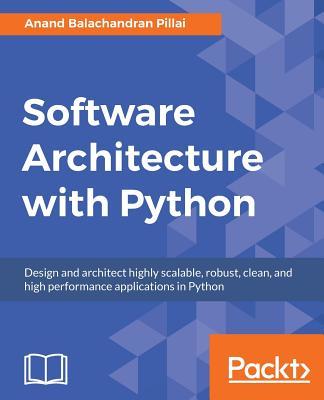
Software Architecture with Python
This book starts off by explaining how Python fits into an application architecture. As you move along, you will understand the architecturally significant demands and how to determine them. Later, you'll get a complete understanding of the different architectural quality requirements that help an architect to build a product that satisfies business needs, such as maintainability/reusability, testability, scalability, performance, usability, and security. You will use various techniques such as incorporating DevOps, Continuous Integration, and more to make your application robust. You will understand when and when not to use object orientation in your applications. You will be able to think of the future and design applications that can scale proportionally to the growing business. The focus is on building the business logic based on the business process documentation and which frameworks are to be used when. We also cover some important patterns that are to be taken into account while solving design problems as well as those in relatively new domains such as the Cloud. This book will help you understand the ins and outs of Python so that you can make those critical design decisions that not just live up to but also surpass the expectations of your clients. Anand Balachandran Pillai is an Engineering and Technology professional with over 18 years of experience in the software industry in Product Engineering, Software Design & Architecture and Research. He has a Bachelor's degree in Mechanical Engineering from the Indian Institute of Technology, Madras. He has worked at companies such as Yahoo!, McAfee, and Infosys in the roles of Lead Engineer and Architect in product development teams, to build new products. His interests lie in Software Performance Engineering, High Scalability Architectures, Security and Open source communities. He often works with startups in lead technical or consulting role. He is the founder of the Bangalore Python Users Group and a Fellow of the Python Software Foundation (PSF). Anand is currently working as Senior Architect of Yegii Inc.
- GenresProgrammingNonfiction
556 pages, Paperback
Published April 28, 2017
Ratings & Reviews
Friends & Following
Create a free account to discover what your friends think of this book!
Community Reviews
Displaying 1 - 1 of 1 review

May 9, 2017
The book Software Architecture with Python explains various aspects of software architecture like testability, performance, scaling, concurrency and design patterns.
The book has ten chapters. The first chapter speaks about different architect roles like solution architect, enterprise architect, technical architect what is the role of an architect and difference between design and architecture. This chapter is a theory but worth to know the differences as a software developer.
The book covers two lesser spoken topics debugging and code security which I liked. There is very few literature available on debugging. The author has provided real use cases of different debugging tips and tools for Python without picking sides. The book has some good examples of overflow errors in Python.
My favorite chapter in the book is 'Writing Applications that scale'. The author explains all the available concurrency primitives like threading, multiprocess, eventlet, twisted, gevent, asyncio, queues, semaphore, locking etc . The author doesn't stop by explaining how to use them but paves the path to figuring out how to profile the code, find out where the bottleneck lies and when to use which concurrency primitives. This chapter is the longest in the book and deluged with examples and insights. The author's approach of using `time` command to measure the performance rather than sticking with wall-clock time gives the developer understanding of where programming is spending most of the time.
The book covers vital details on implementing Python Design Patterns and how Python's dynamic nature brings joy while creating the creational, structural and design pattern. The showcased examples teach how Python metaclass works and it's simplicity.
The book is indeed a long read and solid one in size and content. Having said that book is pretty hands on and loaded with trivial and non-trivial examples. I won't be surprised if half the book covers the code snippets. The author hasn't shied away from skipping code snippets while explaining any concept. The book introduces a plethora of tools for developing software, and at the same time references required literature and resources.
The book has ten chapters. The first chapter speaks about different architect roles like solution architect, enterprise architect, technical architect what is the role of an architect and difference between design and architecture. This chapter is a theory but worth to know the differences as a software developer.
The book covers two lesser spoken topics debugging and code security which I liked. There is very few literature available on debugging. The author has provided real use cases of different debugging tips and tools for Python without picking sides. The book has some good examples of overflow errors in Python.
My favorite chapter in the book is 'Writing Applications that scale'. The author explains all the available concurrency primitives like threading, multiprocess, eventlet, twisted, gevent, asyncio, queues, semaphore, locking etc . The author doesn't stop by explaining how to use them but paves the path to figuring out how to profile the code, find out where the bottleneck lies and when to use which concurrency primitives. This chapter is the longest in the book and deluged with examples and insights. The author's approach of using `time` command to measure the performance rather than sticking with wall-clock time gives the developer understanding of where programming is spending most of the time.
The book covers vital details on implementing Python Design Patterns and how Python's dynamic nature brings joy while creating the creational, structural and design pattern. The showcased examples teach how Python metaclass works and it's simplicity.
The book is indeed a long read and solid one in size and content. Having said that book is pretty hands on and loaded with trivial and non-trivial examples. I won't be surprised if half the book covers the code snippets. The author hasn't shied away from skipping code snippets while explaining any concept. The book introduces a plethora of tools for developing software, and at the same time references required literature and resources.
Displaying 1 - 1 of 1 review