Jump to ratings and reviews
Rate this book

שלום לקנאים

Rate this book
הדפים האלה נכתבו גם, ואולי בעיקר, אל קוראים שדעותיהם שונות מדעותיו של עמוס עוז.
הם נכתבו מתוך תחושת דחיפות, מתוך דאגה, ובמיוחד מתוך אמונה בכך שעתיד טוב יותר עדיין אפשרי.

מה היא הקנאות, והאם יש גרעין של פנאטיות בכל אחד מאתנו? מה היא הליבה הפנימית של היהדות מתחילתה ועד היום? האומנם יש סתירה בין יהדות לבין הומניזם ודמוקרטיה? למה מנסים לשכנע אותנו שהמצב ״בלתי הפיך״? מה היא בכלל ״זכות על הארץ״ ומדוע בעצם חייבים לממש אותה?

שלוש מחשבות הנוגעות בגרעין הוויכוח על הקיום הישראלי, היהודי והאנושי. עמוס עוז שופך אור בהיר ומפתיע על סוגיות היסטוריות ופוליטיות בוערות, ומעז להציע פתחים חדשים מתוך מציאות שלכאורה אין ממנה מוצא.

131 pages, Paperback

First published January 1, 2017

146 people are currently reading
955 people want to read

About the author

Amos Oz

162 books1,652 followers
Amos Oz (Hebrew: עמוס עוז‎; born Amos Klausner) was an Israeli writer, novelist, journalist and intellectual. He was also a professor of literature at Ben-Gurion University in Beersheba. He was regarded as Israel's most famous living author.

Oz's work has been published in 42 languages in 43 countries, and has received many honours and awards, among them the Legion of Honour of France, the Goethe Prize, the Prince of Asturias Award in Literature, the Heinrich Heine Prize and the Israel Prize. In 2007, a selection from the Chinese translation of A Tale of Love and Darkness was the first work of modern Hebrew literature to appear in an official Chinese textbook.

Since 1967, Oz had been a prominent advocate of a two-state solution to the Israeli–Palestinian conflict.

Ratings & Reviews

What do you think?
Rate this book

Friends & Following

Create a free account to discover what your friends think of this book!

Community Reviews

5 stars
328 (34%)
4 stars
404 (42%)
3 stars
181 (18%)
2 stars
35 (3%)
1 star
7 (<1%)
Displaying 1 - 30 of 138 reviews
Profile Image for Greta G.
337 reviews320 followers
April 21, 2019
Dear Zealots: Letters from a divided land

‘Dear Zealots’ (2017) is a little non-fiction book containing three updated and revised essays based on lectures which Amos Oz gave in 2002 and which were already published in the book How to Cure a Fanatic, originally published in 2002.
I read the Dutch translation, ‘Beste Fanatici’.

Amos Oz is clearly a good person, and a good writer, but I was underwhelmed by his essays. These essays struck me most of all as deprived of any pragmatic value.

In his first essay on ‘How to cure a fanatic’, Amos Oz proposes imagination, curiosity, and a healthy dose of humour to oppose fanaticism. But he fails to discuss how to do this. He doesn’t even touches on the subject of education, which in my view is the only way to reach such goals; instead he fantasizes for instance about inventing a pill that can make people humorous.

The second and longest essay is a reflection on the essence of Jewish culture. I didn’t enjoy reading this essay because it was hard for me to understand due to the many Jewish concepts and terminology (and no footnotes).

In the third essay, ‘Dreams Israel should let go of soon’, Amos Oz proposes a two state solution for the Israeli-Palestinian conflict. The essay is very short so obviously it’s rather an (mainly one-sided) opinion than a thorough essay, and therefore I think it has little practical value.

I expected more, but Amos Oz already warns his readers in his Preface about the limited scope of his essays.
Profile Image for Bill Kerwin.
Author 2 books84.4k followers
July 7, 2019

The Israeli novelist Amos Oz succumbed to cancer on December 28, 2018, at the age of 78. This small book of essays—three essays, to be precise—is the last book that he published before he died, and this little book—and their author—represent a more secular, liberal approach to being Jewish, something less and less common in the Israel of today.

The book’s first short essay, “Dear Zealots,” is an open letter to fanatics in general and Israeli fanatics in particular. Fanatics, Oz believes, are primarily people who see things in terms of black and white and wish to make others more like themselves. At the same time, their selves are extraordinarily precarious, filled with great anger and sentimentality, always ready to bow to the will of a charismatic leader who will unburden them of all moral decisions. The best way to avoid fanaticism, Oz says, is to respect other’s differences, learn to distinguish between shades of gray, and develop a sense of humor. The following excerpt sums things up pretty well:
The poet John Donne gave the world this wondrous line: No man is an island.” To this I dare to add: “No man is an island but each is a peninsula.” We all are partially joined to the land that is our family, our language, society, faiths and opinions, state and nationality, while the other side of each of us has its back to all those and its face to the sea, to the mountains, to the timeless elements, secret desires, loneliness, dreams, fears and death. . . . [E]very bond between people . . . is perhaps best when it exists as an encounter between peninsulas: close, sometimes extremely close, but without being erased. Without being assimilated. Without revoking one’s selfhood.
In the second essay, “Many Lights, Not One Light,” Oz speaks of Judaism as a culture, not just a religion, and makes it clear that there is a profoundly contrarian, anarchistic streak in Jewish thought:
It would be difficult to find two Jews who can agree on which is the most important [imperative], and it might be even hard to find one Jew who agrees with him- or herself about what came first, what subject has priority, how values should be ranked, and who is authorized to rank them . . . .

It is no accident of history that the Jews do not have a pope. If someone were to stand up and declare himself, or herself, “the Jews’ pope,” each of us would go up and tap him or her on the shoulder and say, “Hey, Pope, you don’t know me, but my grandma and your aunt used to do business together in Minsk, or Casablanca, so please sit down for five minutes—just five—while I explain to you once and for all what God wants us to do.”
Precisely because of its contrarian nature, Jewish culture must be democratic, open to many different approaches and ideas, and therefore is contrary to “Halachic Judaism,” that is, the most Orthodox, exclusionary elements:
What does Jewish culture comprise? It comprises everything we have amassed over the generations. Elements born inside it, as well as those absorbed from the outside, which become part of the family. Things that are customary, or used to be; things we all accept, as well as things only a few accept. Things accepted today, and things accepted in previous generations. Aspects that I accept, and ones I find annoying and distasteful. They are all included in Jewish culture. . . A certain type of humor and a tendency to wisecrack, which I cannot define but which I easily recognize whenever I encounter them. A blatant inclination to be critical and skeptical, to be ironic, self-pitying, and sometimes self-righteous. . . Ecstasy diluted with doubt. Euphoria blended with pessimism. Melancholy cheerfulness. And a profound, healthy suspicion of authority. A measure of stubborn resistance to injustice.
All of this, Oz says, is antithetical to the right-wing politics and Halachic Judaism that dominate the current Jewish state.

In the third and last essay, “Dreams Israel Should Let Go of Soon,” is Oz’s vigorous defense of the two-state solution—no longer considered achievable in some quarters—as the only possible road to the preservation of Israel.If there are not two states here, very soon, there will be one. If there is one state, it will be an Arab one that stretches from the Mediterranean to the Jordan River. . . If we don’t have two states, it is likely that in order to thwart the establishment of an Arab state from the Mediterranean to the Jordan, a temporary dictatorship will be instituted by fanatic Jews, a racist regime that uses an iron fist to oppress both Arab residents and its Jewish opponents. That sort of dictatorship will not last long. Oz says that he word he hates most these days is “irreversible,” used by both the right-wing Orthodox settlers and the left-wing anti-Zionists to describe the Israeli settlements in the occupation territories and thus crush the two-state dream of the Zionist left. But Oz makes it clear that he will not despair and will not leave his home.
And now comes a little confession: I love Israel even when I cannot stand it. If I have to fall over in the street one day, I would like it to happen on a street in Israel. Not in London, not in Paris, not in Berlin or New York. Here people will come over immediately and pick me up. (Granted, once I’m back on my feet there w2ill probably be quite a few who will be happy to see me fall down again.
Amos Oz got his wish—sort of. He died—not on the street, but—in the Rabin Medical Center at Petah Tikva, about 10 kilometers east of Tel Aviv.
Profile Image for Kuszma.
2,855 reviews288 followers
February 22, 2020
Az író meg a könyve, tudjuk, kettő. Lehet az író akármilyen pöszmöt ember, aki szabadidejében mókusokat vegzál, kollégáinak kávéscsészéjébe bencepoloskát (Rhaphigaster nebulosa) csempész, diktátorokkal paroláz, orrát túrja, könyvbe szamárfület hajt, sorolhatnám még, szóval az író bármilyen ember, műve ettől függetlenül lehet éppenséggel jó. De azért szívet vidít a tudat, hogy vannak fároszok, olyan írók, akik valamiféle bölcs önironikus öntudattal viselik saját szerepüket, akikre fel lehet nézni, akiket az olvasó – legyen amúgy bármilyen gyanakvó minden autoritással szemben – mélységesen tisztel és erkölcsi iránytűnek tart. Ilyen író (és ide azért se rakok „volt”-ot) nekem Eco, Esterházy és Oz. Egy ilyen író akár szarul is írhat, mégis szeretjük. Szerencsére nem írnak szarul. Sőt.

Persze aki olvasott már Oz-t, arra azért nem hat majd az újdonság erejével ez a kötet. Zsidóságról, fanatikusokról, empátiáról és kompromisszumokról beszél – hallottam már tőle ilyesmit, azt hiszem. És azért szerettem meg, mert ezt hallottam. Hát most hallottam még egyszer, ettől nem szeretem kevésbé.
Profile Image for Quo.
344 reviews
September 7, 2021
Dear Zealots: Letters from a Divided Land by the late Amos Oz stands as a kind of epilogue, a rounding out of the author's thoughts on many things via 3 essays; however, more than anything else it attempts to examine the essence of zealotry, intractability, the failure to listen & to allow for even a minimal outreach to those whose religion, political positions & lifestyles are different.


While the book is a summary statement & in places a restatement of ideas Amos Oz had previously expressed, it offers the reader a clear image of the principles Oz had spent a lifetime longing for & fighting for during his life in Israel, having grown up during the time prior to independence in British-mandated Palestine. Oz indicates that at one point he was himself a bit of a zealot, taunting & even tossing rocks at British soldiers in what later became Israel.

It takes a rare kind of intelligence to be mindful of flaws in one's own homeland and even more, a rare kind of courage to be outspoken about them. A trait that always bothered Amos Oz is that of blind obedience & he commented that "Jewish culture has frequently had large pockets of blind obedience, particularly among those who see Judaism only as a religion & not a culture." The author goes on to suggest that "blind obedience can never be moral".

To counter blind obedience in Israel or elsewhere on the face of the globe, Amos Oz narrows down his philosophy of humanism & pluralism to one simple formula: "Recognize the equal right of all human beings to be different."

Regarding the history of his own homeland, he goes on to say:
The truth is that the uprising against the Romans, which led to the destruction of the Second Temple, just like the earlier war against Babylonia, which had caused the destruction of the First Temple, did not fail because of "brotherly strife" or "unjustified hatred" among Jews but because of nationalist & religious fanaticism, because of the delusions of grandeur suffered by both leaders & subjects who had lost all sense of reality. The destruction of both temples was the fault of zealots.
Oz intones that "in addition to curiosity & imagination, another antidote to fanaticism might be humor & especially the ability to make fun of ourselves." He comments further that fanaticism begins at home, is contagious & can at times even be caught by those fighting to cure other people of it, i.e. "the anti-fanaticism fanatics of the world."


In dealing with fanatics, Oz offers that "united we stand" is a noxious & overworked principle if it demands that each of us be of like mind. In fact, he contends that our strength is in being united around our right to be different from each other.

And in speaking of humor, here is a wonderful example of the way Oz learned to look at the world as a young boy when his grandmother explained to him the difference between a Jew & a Christian:
The Christians believe that the Messiah was already here & that one day he will return. We Jews believe that the Messiah has not yet come but he will one day. This disagreement has brought the world so much hatred & anger, persecutions of the Jews, inquisitions, pogroms, mass murders. But why?

Why not just agree, all of us, Jews & Christians, to wait patiently & see what happens? If the Messiah comes one day & says, "I haven't seen you for a long time & I'm so happy to see you again," the Jews will have to acknowledge their mistake. But if, when he comes, the Messiah says, "How do you do? Very pleased to meet you", then the Christian would have to apologize to the Jews. Until then, Grandma concluded, until the coming of the Messiah, why can't we just live & let live?

Amos Oz felt that fanaticism is not reserved for Al-Qaeda & ISIS, Hamas & Hezbollah, Neo-Nazis & anti-Semites, White supremacists & Islamophobes, the Ku Klux Klan & Israel's "hilltop thugs" in the settlements, among others who shed blood in the name of their faith. Rather, it also extends to those who vilify LGBTQ people & even some anti-smoking fanatics. He was fond of saying, "fundamentalists live life with an exclamation point, while I prefer to live my life with a question mark."

I began reading the thoughts of Amos Oz with his splendid autobiographical work, A Tale of Love and Sadness, a book I continue to reread portions of. I've also enjoyed Jews & Words, a book he coauthored with his daughter, Fania Oz-Salzberger. In every book, Amos Oz has represented a champion of liberty & fraternity among all people.

In his own homeland, Oz seemed to become dispirited at times by what he took to be fanatic nationalism, calling it "a moving further away from my own ideal of a a Jewish state". He saw Israel as "the child of a mixed marriage, born of a merger of the Bible & the Enlightenment." This represents the conjoined spirit that the late Amos Oz wished to see continue to be compatible among the people he loved for their differences.


I recommend the little book, Dear Zealots: Letters from a Divided Land, very highly. Nothing so summarizes the thoughts of Amos Oz as the following passage:
The poet John Donne gave the world this wondrous line: "No man is an island." To this I dare to add: "No man is an island but each of us is a peninsula." We are partially joined to the land that is our family, our language, society, faiths & opinions, state & nationality, while the other side of each of us has its back to all those & its face to the sea, to the mountains, to the timeless elements, secret desires, loneliness, dreams, fears & death.
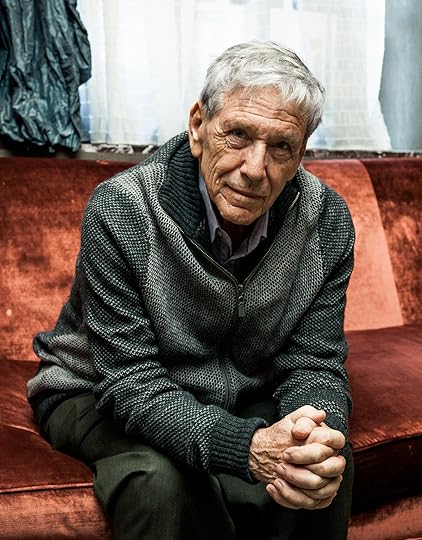
*Within my review are 3 photo images of the late Amos Oz. **The book was translated into English by Jessica Cohen.
Profile Image for Jovi Ene.
Author 2 books290 followers
December 30, 2018
”Un tată bătrân îi poruncește fiului lui:
-dacă vrei un adăpost de ploaie și vânt, înalță-ți un cort sau o colibă;
-dacă vrei un loc în care să-ți petreci toată viața, clădește-ți o casă de piatră;
-dacă vrei să ai grijă și de fiii tăi, și de fiii fiilor tăi după tine, clădește un oraș înconjurat de ziduri;
-dar dacă vrei să înalți o clădire pentru generațiile următoare, atunci scrie o carte.”
Trei eseuri de Amos Oz: unul despre fanatism, nu neapărat religios, nu neapărat dominat de violență; unul despre iudaism, moștenire religioasă și culturală; cel de-al treilea, despre viitorul statului Israel, respectiv împărțirea țării și transformarea ei într-o casă pentru două familii, una evreiască, alta arabă.
Amos Oz, o voce puternică și pertinentă.
Profile Image for Siv30.
2,787 reviews192 followers
January 25, 2019

"הנה, לדוגמה, הרעיון אשר לפני כחצי מאה הופיע כרעיון חדשני ומסעיר, רעיון הרב־תרבותיות והפוליטיקה של הזהויות, נהפך עד מהרה, במקומות רבים, לפוליטיקה של שנאת זהויות: מה שהתחיל בהתרחבות האופק התרבותי והרגשי הולך ומידרדר למציאות של חסימת האופק, של סתגרנות, של שנאת האחר, ובקצרה: גל חדש של תיעוב הזולת ושל קנאות הולכת וגואה מכיוונים שונים."


המאמר הראשון בספר עוסק בפאנטיות ובפנאטים, במאפיינים שלהם ובאופן שבו הפאנטיות תופסת מקום בשיח החברתי ובמרחב החברתי עד שהיא מכלה את המתנגדים לה תוך שהיא חונקת את האחר גם באמצעים אלימים, ולא מאפשרת לו מקום. הרב גוניות הופכת לחדגוניות מונוטונית.


"סיפורה של תרבות ישראל הוא מעין משחק עתיק יומין של אינטרפרטציה, רה־אינטרפרטציה, קונטרה־אינטרפרטציה."


המאמר השני בקובץ עוסק בתרבות היהודית והישראלית ובזהות העכשווית שלה. האופן שבו היהדות הדתית מנכסת לעצמה את הבעלות על ההישגים ועל התכנים הרוחניים מבלי שבאמת תהיה לכל הצדקה. האופן שבו עוז רואה במגוון את השרידות והצמיחה של התרבות היהודית והישראלית. והאופן שבו היהדות הדתית המסתגרת ב ד' אמותיה מרחיקה את הציבור מהיעוד שלו, מפלורליזם ומצמיחה.

עוז מתקומם בעיקר כנגד העיסוק בגבולות ולא במהות וכנגד ההתרחקות מהצווים האנושיים הבסיסיים של היהדות באמתלות שונות. ביחס למאמר הראשון הוא מצביע כיצד הפאנטיות והקנאיות מובילות את ישראל לחורבן, כאשר קבוצות של דתיים קנאים מסרבים לקבל את המרות של המדינה, את הפלורליזם והמגוון ובכך לא רק שמייצרים קרע אלא גם מרחיקים יהודים למחוזות אחרים שמוכנים לספוג את השונות הזו.

המאמר האחרון בקובץ עוסק בסיכסוך הישראלי פלסטינאי ובפתרון האולטימטיבי לסיכסוך לדעת עוז. עם חלק מהדברים שהוא כותב אני מסכימה, עם חלק פחות. לצערי החלק הזה פחות נקשר לשני החלקים הקודמים בספר. וחבל.

אני חושבת שאם עוז היה מנסה לקשור את הקצוות, הוא אולי היה רואה ביתר בהירות שבמקום שבו מתקיימים פנאטיים וקנאים, שלא מוכנים אפילו להכיר בפלורליזם בתוך עמם, קשה יהיה לממש ולשכנע את הציבור לפעול להשגת הפיתרון שהוא מציע. שלא לדבר על פקטור הפחד וההפחדה שעליו הוא כן עומד אבל לא מספיק. לפקטור הזה יש משקל מהותי בהכרעות, הוא מטשטש כל רציונליזציה שאפשר לחשוב עליה.

סה"כ מקבץ מאמרים טוב מאוד. המאמר הראשון בעיניי היה המשמעותי ביותר. המאמר השלישי הכי פחות משמעותי- אנחנו כלואים בתוך סחרחרה ולא רק במערכת היחסים עם הפסטינאים, אלא בכלל כחברה שאיבדה את דרכה.
Profile Image for Patty Smith.
226 reviews87 followers
November 25, 2018
Many thanks to Netgalley, Houghton Mifflin Harcourt, and Amos Oz for an ARC in exchange for an honest review. My opinions are 100% my own and independent of receiving an advanced copy.

One thing is clear, Amos Oz loves Israel. It is his home, his ancestors’ homeland and it figures that he has very strong views on where its future lies. Amoz Oz is a well known, award winning, Israeli author whose works have been translated all over the world. I am a fan, having read several of his novels, so I was really excited to find this latest work. Dear Zealots is a collection of three essays that explore his views on fanatics, Judaism and a solution for Israel. The first essay looks at fanaticism and how to handle “the little fanatic who hides, more or less, inside each of our souls”. Zealots have been around since the beginning of time. Their seduction is their overwhelming interest in you, the desire to make you at one with his world, to lift you up and help you from the low place you are in. Their level of self sacrifice and knowledge of what is best for you is similar to how a parent is with their child. Oz recognizes that everyone, every race, every religion, can create these zealots, by shrinking their world and removing the ability to see things from another perspective or step in someone else’s shoes, and offers that through creativity, imagination and a little humour we might diminish the creation of fanatics.

The second essay Oz discusses his thoughts on Judaism. He feels the religion should not just be for the Orthodox and there is a need for secular pride. He feels that Judaism and humanism are one and the same. By reaching back in history he illustrates the idea (that, by the way, all Jews know very well and that is) that no two Jews will agree, or have the same interpretation of what it means and every one is valid. There isn’t a hierarchical system of cardinals and bishops that all defer to one man, the pope, who decides how each law should be expressed. He searches for an answer to the question “What is the heart of Judaism?”, really he is asking what is a Jew. He attempts to find the answer by looking back into our history and finding out that we are, as the title for this essay. says, “many lights, not one light, many beliefs and opinions, not one”.

The third essay is Oz’s argument of a two state solution. He has long been a proponent of this idea and has written about it many times before. Whether you agree with him or not (and there is plenty I don’t), this is an important book to read for problems that are current, a threat and difficult to discuss without people getting very heated. Well written, thoughtful commentary that is easy to read and definitely worth your time.
Profile Image for Maria Carmo.
2,056 reviews51 followers
January 3, 2019
I absolutely loved getting to know this Author who recently died. His attempt at being totally fair, yet utterly passionate about Israel and the Jewish culture, enchanted me. I know that for many, who are fanatical in one sense or another, his thesis may be complex to digest or accept. Yet, for someone looking with caring attention from the outside, he seem to hit the nail and strike a balance. His defense of culture as being as important as religious orthodoxy strikes a point with me. I also believe that there are many ways to honor God, one of them being the creativity of human spirit and its benevolent creations.
I loved the book with its three essays and I am only sorry that I will not be able to meet this Author, may he rest in peace.
I intend to find other books by him and read them as well and I strngly recommen this one.

Maria Carmo,

Lisbon 3 January 2019.
Profile Image for Lauren .
1,835 reviews2,550 followers
June 20, 2019
"Self-sacrifice does not always represent an erasing of the 'I'. Self-sacrifice can sometimes be a well-honed weapon that the fanatic wields for destructive emotional purposes. Moreover, those who are eaget to sacrifice themselves will not find it difficult to sacrifice others."
--From "Dear Zealots" essay from Dear Zealots: Letters from a Divided Land

This was my introduction to Amoz Oz, the well-known and prolific Israeli writer who passed away in late 2018. I often life to start with essays and poetry and "selected writings" before digging into an author's oeuvre. This was a powerful collection of three essays, the first "Dear Zealots" being my favorite one, a larger polemic on fundamentalist/fanatic psyche, and its permutations. "Many Lights, Not One Light" is the longest essay, regarding Jewish culture with Biblical and Talmudic discourse. The last "Dreams Israel Should Let Go of Soon" reiterates Oz's political stance on the two-state solution for Palestine and Israel.
Profile Image for Rachel.
1,291 reviews59 followers
October 13, 2019
This has gotten mixed reviews in the professional reviewing world, but unsurprisingly I loved it.

Oz's "letters" are really three essays. Two are on fanaticism: Islamic fanaticism and Israeli/Jewish fanaticism. The third, smallest essay is titled "Dreams Israel Should Let Go Of Soon." Here, Oz sounds the most like a biblical prophet, predicting the end of the world if people don't shape up (namely, the Jewish state will ultimately cease to exist if there's not acceptance soon of the two state solution.) I'm a cynic. I believe it. It's scary to feel such clarity (and it maybe even goes against the major tenants of the other two essays: to embrace doubt and ambiguity. But war and fanaticism in real time bring their own rules.)

Is it fair to say that in large part, Oz was preaching to the choir with me? Probably. But I still appreciated his overall theme. Fanatics are people who accept black and white views. In order to embrace a less volatile world, one must embrace more ambiguity. This particularly comes out in his Israeli/Jewish fanaticism essay, where he criticizes the "post-Zionist" West Bank settlers and the "Halachic" or religious Jews. His view of Judaism, even religious Judaism, is that it's bigger than Halacha: "Jewish culture has been built, generation upon generation, with the creative energy arising from tension between Kohen and the prophet, between Pharisees and Sadducees, between the House of Hillel and the House of Shammai, between Sephardic and Ashkenazi prayer services, between Hasidim and their opponents (Misnagdim), between the devout and the proponents of Jewish Enlightenment (Haskalah), between Zionists and anti-Zionists, between the Bialik school and the Berdyczewski school of poetry, between religious and secular, between hawks and doves--to this very day.

Jewish culture at its finest is a culture of give and take. Of negotiating. Of cutting both ways. Of acuity and powers of persuasion. Of 'both these and those are the words of the living God.' And sometimes of ties: when the greatest minds were unable to agree on a solution, they would declare a tie, or in Hebrew, teko, [I suppose this phrase is singular to translations of this book?], a term still used in colloquial Hebrew, and which, according to one derivation, is the acronym of an Aramaic phrase meanting 'the Tishbite [Elijah] will settle the question when he comes.' In other words, never mind, we'll agree to disagree until Elijah the prophet turns up to make the call."

In the spirit of not being a blind Oz follower, here are some things that I questioned as I read them: He talks about European fanaticism "erasing the moderation of Middle Eastern Jews." Presumably Mizrahi Jews are now responding more defensively because of rising anti-Semitism. Politically I hear such mixed things about Mizrahi Jews as a group. There's this "moderation" argument, but then there's also the argument that they are generally more right-wing and anti-Arab, in contrast to Ashkenazi "bourgeois" theater going, peace seminar attitudes. (Further complicating matters is that the Labor movement--supposedly liberal but also incredibly European-centric, especially back in the early days, made life very difficult for Mizrahi Jews, to put it mildly.)

Oz also talks about varying fanaticisms--the big ones being the violent ones--but there's also the environmental fanatics and anti-smoking fanatics. I think I understand his point, about how you diminish the smokers or the less environmentally friendly by seeing them in just that cast, and yelling and terrorizing them all day similarly casts you in a one dimensional (and bullyish) light. But on the other hand, what Oz doesn't get into, is that smoking and anti-environmentalism have proven adverse consequences for society. Religious and cultural fanaticism doesn't have so much of an "up" side.

Here's a geeky uptick to reading this book during Yom Kippur: in his essay about embracing doubt and ambiguity within religious Judaism, Oz pointed to a Talmudic rabbi, Elisha ben Abuya, who rode his horse on Shabbat (big no no) and was called "the Other One," and yet his writings are still included in one of our most important religious texts. One of my rabbis mentioned Elisha ben Abuya directly in her Kol Nidre sermon about embracing "Othered" Jews (which is not online yet, but hopefully Oz would have liked it! :P)

Reading these essays was feeling like a drop in the Jewish consciousness, identifying deeply with these issues that are of paramount import to the Jewish community today. Quite different from the Jewish audiobook I still "reading": INHERITANCE by Dani Shapiro, which I'm responding to much personally about my own Jewish journey. More on that later. For now, I remain committed to ultimately reading all of Oz's works. I may end up liking his nonfiction better than his fiction even! :0

Jessica Cohen's translation is precise and to the point, which I should say is different than how I experienced the Nicholas de Lange, Oz's primary English translator. But then again, it could be the subject matter.

It's dangerous--or at least highly significant--to follow prophets in the Jewish tradition. But if anyone is parsing through the world in the way I think Gd (or whatever higher powers that be) laid it down for us, then it's Amos Oz, of blessed memory.
Profile Image for Venky.
1,047 reviews420 followers
December 27, 2019
In his latest work representing a collection of three essays (two short and rousing pieces punctuated by a long and complicated socio-cultural-philosophical didactic), the prolific Israeli author Amos Oz regales us on the topics that have been close to his heart and in relation to which he nurses deep seated beliefs. Thought provoking, controversial and engaging, “Dear Zealots” (“the book”) reinforces Mr. Oz’s perceptions revolving around the perpetual unrest that the nation state of Israel finds itself in, and in the process also reinstates him as one of the most relevant and important writers of our times.

The first essay bearing the same title as the book, deals with the insidious trait of fanaticism or zealotry that has brought wanton misery to mankind and the deep rooted ideologies of which have been extremely successful in keeping an entire civilization on tenterhooks. Posing the quintessential question, “how does one cure a fanatic?”, Mr. Oz expounds on the reasons underlying the birthing of the attribute of fanaticism and the attendant terrifying implications. Negating the prevalent sentiments undergirding fanaticism, Mr. Oz bemoans the distorted spin accorded by the world to the political scientist, Samuel Huntington’s famous remark, “a war of civilization”. This term has been abused beyond redemption to denote an existential battle between “savage terrorist” Easterners and “cultured Westerners”. As Mr. Oz takes pains to elucidate, “fanaticism dates back much earlier than Islam. Earlier than Christianity and Judaism. Earlier than all the ideologies in the world”. Citing his own experience of having been brought up in Israel in the 1940s, the author confesses having nurtured a strong Zionist sentiment within himself prior to undergoing a transformation triggered by a chat with a British soldier. Bemoaning the rise of fanaticism in Israel, Mr. Oz dwells on what he terms, the “Jerusalem Syndrome”. In his own words, “no sooner do people breathe in the crisp mountain air (“clear as wine”, in the words of one famous Hebrew song) than they set off to burn a mosque or blow up a church or destroy a synagogue, to kill heretics or believers, to “eradicate evil from the world.”” Employing the novel term “comparative fanaticism”, Mr. Oz informs us that a fanatic invariably comes to learn that blind hatred often turns the hater on either side of the fence into almost identical personas. For, “it is not the volume of your voice that defines you as a fanatic, but rather primarily your tolerance – or – lack thereof – for your opponent’s voices.” As effective antidotes to fanaticism, Mr. Oz prescribes a healthy dose of curiosity, imagination and humour. He contends that, “humour engenders a curvature that allows one to see, at least momentarily, old things in a new light.” He concludes the essay with a persona take on John Donne’s immortal quote “no man is an island.” Mr. Oz extends this quote to read, “no man is an island but each of us is a peninsula.” And similar to such a geological terrain, he contends that each family, association, society and state is at its best when existing as an encounter between peninsulas: “close, sometimes extremely closed, but without being erased. Without being assimilated. Without revoking one’s selfhood.”

The second and the longest essay forming part of the book, and titled, “Many Lights, Not One Light” is a lengthy, challenging and discursive read on the author’s reminiscences on Judaism. Extensive in its sweep and lapidary in its scope, the essay attempts to pierce the narrow minded veils of perceptions and dogmas that are currently grappling with one another to gain ascendancy as the torch bearer of Judaism and the beacon of Jewish civilization. The essay has it its very edifice, an inscription on a small potsherd found several years ago at the Khirbet Qeiyafa archeological site. Decrypted by Professor Gershon Galil of Haifa University to read, “you shall not do it, but worship God. Judge the slave and the widow. Judge the orphan and the stranger. Plead for the infant, plead for the poor and the widow. Rehabilitate the poor at the hands of the king. Protect the poor and the slave. Support the stranger.” Mr. Oz contends that the very quintessence edifying Jewish ethos, philosophy and culture can be found embedded in this inscription on the humble potsherd. Accordingly, there cannot be any contradiction whatsoever between Judaism and humanism. The very tenet and spine of Jewish culture has been the presence of a creative energy, courtesy strong tensions between beliefs and a rebellious streak to oppose and question. As elucidated by Mr. Oz, myriad examples of such conflicts exist between “Kohen and the prophet, Pharisees and Sadducees; the House of Hillel and the House of Shammai; Sephardic and Ashkenazi prayer services; Zionists and anti-Zionists; the Bialik school and the Berdyczewski school of poetry; religious and secular and hawks and doves.” This seraphic feature of agreeing to disagree is what makes a culture redeeming and bestows upon its proponents, powers of acuity and acceptance. However, as Mr. Oz strives to explain, this wonderful albeit necessary and vital contrast is being put to the test by the obstinate and stifled practices of practices such as Halachic Judaism or Shulchan Aruch Judaism. Reiterating that agnosticism is also an integral part of Jewish culture, Mr. Oz, draws us to the observation of the writer Shlomo Zemach, who famously quoted, “a person does not curse God if there is no God in his heart.” The essay concludes with a passionate plea to the Jewish populace to “pause and ponder” the question of “Who is a Jew?” For “it is not possible to renew without days of old, and days of old cannot exist without renewal.”

The final essay (also the most thought provoking and controversial one) bearing the title “Dreams Israel should let go of soon” advocates a fervent call for embracing a two state solution to the vexed problem plaguing Israel and Palestine. This topic, which is close to the author’s heart and for his ferocious views surrounding which he is so well renowned, is addressed here in a manner which is anticipated. Warning the reader that in the event there is just one state, such a state, “will be an Arab one that stretches from the Mediterranean to the Jordan River”, Mr. Oz makes an impassioned case for the quick implementation of a two state solution. Pooh poohing the various and intermittent “conflict management” strategies that intersperse intifadas, Mr. Oz opines that such futile measures might in the long run lead to a collapse of the Palestinian Authority and the rise of Hamas, or even a more radical and dangerous outfit. Berating the intransigence of the Israeli authorities and the insouciance of its citizens, Mr. Oz controversially (by his own admission) claims that since the six-day war in 1967, Israel, “has not won a single war, including the Yom Kippur War. War is not a basketball game in which whoever gets more points wins the trophy and a handshake.” Warning that Israel’s security is inevitably based on securing the wholesome support of a superpower (alternating between Britain, France, Stalinist Russia and currently the USA), Mr. Oz suggests that underestimating the capability of Israel’s current and potential rivals might be a dire mistake. While Palestine might be too small a nation to hold up a stubborn fist to the rampant settlement measures being implemented by Israel, a nuclear enabled Pakistan, Indonesia, Malaysia and Saudi Arabia might form a strong cohesive force that brooks no response. Moreover, the support proclaimed by the United States may turn out to be an exercise in transience, for even though, the demagogue (my own term), Donald Trump has espoused his fervent support towards Israel, a majority of the American population are those who did not in the first place, even vote for him! Hence Israel cannot bank on a person whose rise to power has been both characterized and marred by political chicanery and personal chaos. Mr. Oz also exhorts us to fathom the difference between a “demand” and a “right”. “A right is what others recognize as such. If others do not acknowledge my right, or if only some of them acknowledge it, or only partially acknowledge it, then what I have is not a right, but a demand.” Hence, “that is exactly the difference between Ramleh, and Ramallah, between Haifa and Nablus, between Be’ er Sheva and Hebron.” Mr. Oz finally concludes by asserting that nothing is “irreversible”, including the potential for a two state solution.

“Dear Zealots” is an invigorating exercise for the mind, heart and soul!
Profile Image for Amabilis.
114 reviews14 followers
June 4, 2019
Volim kod Amosa Oza, kako poput svojeg oca (kako ga je predstavio u "Priče o ljubavi i tmini") voli igru riječima, korijen riječi i značenja. Pa tako kaže da u hebrejskom riječi cadaka (milostinja) i cedek (pravda) su toliko bliske kao u niti jednom drugom jeziku. U ovom eseju se može saznati dosta o odnosu Izraelaca i Palestinaca, te autorovo gledište na sukob i moguća rješenja.
Profile Image for Tymciolina.
242 reviews92 followers
December 31, 2022
Mądrego człowieka to i posłuchać ciekawie.

W reportażu "Na ziemi Izraela" Oz oddał głos innym. Tutaj postanowił wyłożyć swoje zapatrywania na fanatyzm i państwowość Izraela. Mnie nie musiał do niczego przekonywać, bo poglądy mamy zbieżne. Tak bardzo, że momentami nieco za szybko przerzucałam kolejne kartki. Cenię sobie jednak bardzo tę cienką książkę, bo poszerzyła moje horyzonty i wyposażyła w kolejne argumenty w tym sporze. Oz zakłada bowiem, że niezgodności poglądów nie należy zwalczać. To jednomyślność jest szkodliwa, bo w prosty sposób prowadzi do fanatyzmu i totalitaryzmu. Tam gdzie wszyscy się zgadzają, nie ma pola do dyskusji. Dlatego mimo tego, że Oz nie zgadzał się z rządzącymi Izraelem w kwestiach pryncypialnych pisał:

Dobrze mi być Izraelczykiem. Dobrze mi być obywatelem państwa, w którym żyje 8.5 mln premierów ;)
Profile Image for Luciana.
516 reviews161 followers
July 16, 2022
Como a questão do fanatismo é cara a Amos Oz, tanto em Como Curar um Fanático, como aqui, o escritor aborda as causas, a história e a maquiagem que reveste o fanatismo e como ele se incorpora nos dias atuais passando despercebido pela maioria do povo. Se anteriormente era imaginado que sua figura advinha majoritariamente de grupos extremistas, como Al-Qaeda, Hezbollah, ou, do antissemitismo e neonazismo, hoje o outro, dentro mesmo do mesmo lar pode estar cultivando o vácuo de ideia e de imaginação tão característico do fanatismo.

No entanto, apesar de novamente tocar nesse tema, Amos Oz aborda na obra principalmente a questão relacionada ao judaísmo israelense e o conflito de identidade para com os muçulmanos palestinos e claro, o substancial ponto de conflito entre os dois povos, defendendo, assim, tanto aos judeus como aos muçulmanos o direito de pertencer a um território independente e ali praticar seu credo de forma pacífica.
Como a questão não é nova, a abordagem de Amos Oz também não o é, repete o que vem dizendo a mais de 50 anos, quanto a necessidade de concessões e criação de dois Estados, para que assim "o que hoje floresce talvez fertilize o que vai florescer amanhã, e o que vai florescer amanhã talvez se pareça com o que floresceu anteontem, já que, a cultura de Israel tem absorvido sementes de frutos de outras culturas e também possa aspergir seus pólens em culturas alheias." , a fim de poupar ao outro o que não se deseja para si. A mim, excelente.
Profile Image for Aggeliki.
341 reviews
September 28, 2023
Ο Amos Oz βάζει κάτω και κομματιάζει σχεδόν χειρουργικά στα 3 αυτά κείμενά του τον φανατισμό, τον εβραϊσμό και το δικαίωμα του κάθε ανθρώπου σε αυτό τον κόσμο προσπαθώντας να παραμείνει δίκαιος, αν και Εβραίος ο ίδιος. Για να πει κανείς αν το κατάφερε, νομίζω ότι θα πρέπει να εμπλέκεται άμεσα, τουλάχιστον στα δύο πρώτα. Θεωρώ όμως ότι κατάφερε να κρατήσει μια ισορροπία, χρησιμοποιώντας έξυπνο λόγο και ενίοτε χιούμορ.
Πρώτη μου γνωριμία μαζί του. Σίγουρο το ότι θα διαβάσω και άλλα βιβλία του.
Profile Image for Yiannis.
158 reviews94 followers
May 27, 2018
Τρία ευκολοδιάβαστα δοκίμια.
Profile Image for Alex.
507 reviews123 followers
Read
May 2, 2024
Very interesting, very actual.
The first essay was very good. about fanatismus. The other two, one week later, i don't remember what were they about.
Profile Image for Berit Lundqvist.
696 reviews25 followers
June 26, 2019
Three and a half stars, rounded up.

The book consists of three essays about Israel in the modern world. The first one is an update of the messages about fanaticism in How to Cure a Fanatic. The second one is about Jewish culture, and the third one is about the future of Israel, and the author’s preferred two-state solution.

I especially liked the second essay, which painted a broad picture of how different Jewish culture can be, depending on geographical position as well as wether it’s secular or orthodox.
Profile Image for Dario Andrade.
733 reviews24 followers
October 15, 2019
Neste breve livro estão três ensaios escritos pelo falecido escritor israelense Amos Oz. Há poucos dias acabei de ler “De Amor e Trevas” e esse Mais de uma luz foi excelente complemento.
Aqui, ele expressa as suas ideias políticas sobre Israel, mas também sobre o que é ser judeu e ainda sobre o que é ter um padrão ético, coisa que inclui, é claro, a capacidade – algo que não é fácil – de conviver com os outros.
O primeiro texto, “Caro fanático”, tenta compreender o que é exatamente o fanatismo. Há diversos insights bastante interessantes. Eis um: “O fanático nunca entra em um debate. Se ele considera que algo é ruim, se para ele está claro que algo é ruim aos olhos de Deus, seu dever é liquidar imediatamente aquela abominação, mesmo que, para isso, tenha de matar seus vizinhos ou quem mais por acaso estiver por perto”.
E o fanático não é só aquele estereótipo que está fixado em nossa mente. É alguém que é tem essa característica de ver o mundo só em preto e branco e que pode estar presente até, digamos assim, nas ‘boas causas’, como o anti-tabagismo ou o veganismo. É alguém imbuído dessa vontade de ‘...purificar o mundo, para nos livrar de toda essa imundície que grudou em nós”.
E ele diz algo que lembrou de uma observação do Kundera: “Eu nunca deparei com fanáticos que tivessem senso de humor”. Isso é verdade.
Mas o pior é que o ‘fanatismo’ é uma doença contagiosa. Nós não estamos livres dele ou talvez até seja um ‘gene’ presente em nossa essência.
Talvez a cura para o fanatismo é perceber que nós mesmos podemos ser ou nos tornar um. Só o auto-exame permanente de nossas ideias é – senão uma vacina – pelo menos tentativa de manter a sanidade.
Ele termina o texto, citando o poeta – que não conheço – Iehuda Amichai:
Do lugar no qual temos razão
jamais nascerão
flores na primavera.
O lugar no qual temos razão
é duro e pisoteado
como um quintal.
O segundo texto é ao mesmo tempo uma mirada sobre o que é ser judeu e sobre o que é ter percepção de si próprio.
Achei instigante, por exemplo, quando ele afirma que “Jesus com frequência atribui a toda a humanidade uma condição de infantilidade moral, de quem pratica o mal só porque não sabe que o que está fazendo é mau. Trata-se de um engano e é enganador: quando causamos dor a outra pessoa, ou a um animal, sabemos muito bem o que estamos fazendo”. Belo, não?
Daí, para ele, o grande mandamento moral é: “não causarás dor”, que resume todos os mandamentos.
Da mesma forma, o humanismo e o pluralismo podem ser resumidos, para ele no “reconhecimento do direito igual de todos os seres humanos de serem diferentes uns dos outros”.
E a beleza do judaísmo, para ele, está justamente na pluralidade, na incessante discussão de ideias, no confronto permanente de pensamentos dissonantes. E quando essas ‘luzes’ diversas foram trocadas por uma única ‘luz’ foram os momentos de destruição vividos por Israel no passado: “as destruições do passado foram provocadas por fanáticos, que perderam o senso de medida e o da realidade e arrastaram o povo de Israel para um confronto catastrófico com forças muitas vezes superiores às suas”, como foi o caso do enfrentamento contra Babilônia ou Roma.
A discórdia não é necessariamente um problema. É até saudável que situações permaneçam em discussão permanente, desde, é claro, que não haja violência. “Luzes e não uma [só] luz. Crenças e ideias, e não uma crença e uma ideia”. Assim, para ele, os judeus são o povo dos livros. Sacada interessante, não?
E ele termina com uma bela reflexão: “o nosso passado nos pertence ou estamos submetidos a ele?” Ele pensa em Israel e nos judeus, mas a reflexão é válida para todos nós.
O terceiro e último texto é, digamos assim, aquele mais próximo de um texto de ação política, na medida em que busca vislumbrar o que, segundo ele, Israel pode sonhar ou não no futuro. Aqui ele trata de questões políticas concretas ao mesmo tempo em que as relaciona com as ideias que defendeu nos textos anteriores.
Enfim, é um belíssimo livro, com reflexões instigantes. A despeito de tratar de alguns temas mais concretos da realidade israelense não é de modo algum um livro destinado apenas aqueles que se interessam pelo país. Traz elementos que são utilíssimos para nós, que nos defrontamos nas nossas próprias espécies de fanatismos.
Leitura que vale muito!

Profile Image for Arianne Goncalves.
26 reviews10 followers
December 14, 2022
Meu primeiro Amós Oz, mas depois de assistir a tantas entrevistas, parecia que já o conhecia um pouco.

Este livro é composto por três artigos escritos por um homem que tem sentimentos além de inteligência e acho que isso é o mais bonito em seus textos de não ficção.

O primeiro sobre fanatismo deveria ser leitura obrigatória em todo o mundo, infelizmente.
O segundo confesso que tive bastante dificuldade, pois sou ignorante nos assuntos judaísmo.
Já o terceiro achei mais digerível, aprendi muitas coisas e ainda tenho outras tantas a aprender.
Todos eles abordam as questões de Israel, as diferentes facetas e ideias em torno dos conflitos e como é difícil encontrar uma solução, pois não há certo e errado. Há mais de uma luz.
Apesar de ser um livro focado nessa questão, há muito que pode ser pensado e aplicado em tantas outras.
Profile Image for Therese.
Author 2 books164 followers
July 5, 2020
I only read the first essay in this very short collection of three essays by the late Israeli novelist Amos Oz, "Dear Zealots." (The book's title in Hebrew is Shalom la-Kana'im.) I hope to get to the other two essays at some point, but the first essay alone is well worth buying the whole book. It is incredibly timely for our present moment, written with warmth, eloquence, and a profoundly humane sensibility. His discussion of the "type" of the fanatic, the mindset of zealotry and extremism, is important to philosophy, political theory, psychology, and literary studies; anything that Oz might lack in terms of the specialist's depth, he makes up for in the engaging clarity of his writing and thinking, and in his broadly cosmopolitan perspective combined with intellectual humility. Superb, essential, and highly recommended.
Profile Image for Tami.
103 reviews8 followers
December 31, 2018
Three essays. First one is excellent about fanatics and fanaticism, its characteristics and how to deal with it. Has fresh insights. Second is the weakest about Judaism in Israel, claiming it must change and that it does not continue the true Jewish tradition who isn’t afraid of asking questions. The third claims for the two state solution as the only feasible option for Israel. I found it lacking true answers to the main claims against this solution, instead of suggesting practical steps to deal with them it goes in the line of: we made even less possible things, we can do that too. All in all an interesting book of a very clever man who writes beautifully.
Profile Image for Milly Cohen.
1,442 reviews506 followers
September 4, 2018
Me encanta la gente inteligente (y no fanática ni ortodoxa).
Me quedé con ganas de más.
Profile Image for Mircea.
Author 2 books20 followers
June 7, 2024
„Dragi fanatici” de Amos Oz este o colecție de eseuri ce abordează cu o claritate remarcabilă fanatismul și efectele sale devastatoare asupra societății contemporane.

În centrul acestei cărți se află o distincție crucială între două categorii de oameni: fanaticii care cred că scopul scuză mijloacele și cei care consideră că viața însăși este un scop, nu un mijloc. Aceasta este o luptă între cei care pun „dreptatea” mai presus de viață și cei pentru care viața are valoare supremă.

Oz subliniază tendința contemporană de a căuta răspunsuri simple la întrebări complexe. Mulți oameni doresc soluții într-o singură propoziție și caută vinovați clari pentru suferințele lor. Această sete de simplificare alimentează fanatismul, transformând mulțimile în victime ușoare ale manipulării.

Autorul explorează rădăcinile fanatismului în societatea evreiască israeliană, arătând cum diverse forme de fanatism - revoluționar, naționalist, religios - au fost importate din Europa. Acești fanatici tind să vadă lumea în alb și negru, incapabili să perceapă complexitatea și nuanțele vieții.

Oz avertizează asupra pericolului de a pune diverse forme de rău pe același plan, subliniind că acest lucru poate duce la o servitute față de rău. Fanaticii, spune el, trăiesc într-o lume simplistă de tip western, unde totul se împarte între „buni” și „răi”.

Un alt punct de reflecție al autorului este infantilizarea societății moderne, susținută de interesele comerciale și politice. Într-o „grădiniță globală”, unde politica și divertismentul se confundă, fanaticii prosperă, iar umorul și autoironia lipsesc cu desăvârșire.

Oz critică și conceptul de „administrare a conflictului”, pe care îl vede ca pe o rețetă pentru nenorocire continuă. În contextul israeliano-palestinian, el subliniază că forța militară nu poate aduce o victorie reală, deoarece nu există scopuri naționale clare care să poată fi atinse prin violență.

Autorul prevede un viitor sumbru pentru Israel, marcat de boicoturi economice și izolarea internațională, avertizând asupra fragilității alianțelor politice. David Ben Gurion a subliniat importanța sprijinului unei mari puteri pentru supraviețuirea Israelului, iar Oz reiterează că alianța cu America nu este garantată și poate fi supusă schimbării.

„Dragi fanatici” este o carte esențială pentru înțelegerea fanatismului și a impactului său asupra societății. Amos Oz ne oferă nu doar o analiză istorică și politică, ci și o reflecție profundă asupra valorilor umane fundamentale.
Profile Image for Bob H.
467 reviews41 followers
February 26, 2019
This is a succinct, clearly-written (and well-translated) and thoughtful book, a gathering of three essays, in which he meditates on fanaticism, Israeli Judaism and the future of Israel/Palestine.

"Dear Zealots" is a reflective, wide-ranging essay on the nature of zealotry -- fanaticism, and while centered on the present day and on the Middle East, does consider its currency in the world at large. It's generalized, and intriguing.

"Many Lights, Not One Light" is the central essay in a number of facets. It's lengthier than the other essays and ponders what he keeps calling "Halachic" Judaism. He ranges from New York to Israel, from ultra-Orthodox to secular, from religious to nationalist. To an outsider it might at least be the start of a wider appreciation.

"Dreams Israel Must Let Go Of Soon" is more controversial and emotional. It's a short essay, only about 25 pp. in this edition. He wants a two-state solution, but seems to believe it's nearly impossible in the current situation, thinks that the Palestinian Authority will fail and Hamas will takes its place, though he ends up asserting that nothing is inevitable -- including possibly the alliance with the US. It's a dark and somewhat confusing view, but suggests that at the end of his life he was feeling beset.

In all, a brief but worthwhile snapshot of the situation, in one man's view, but a thoughtful one.
Profile Image for أحمد ناجي.
Author 13 books1,116 followers
June 13, 2021
This was ludicrous/ and wretchedness read
Like most of the writers from his generation (Arabs and Israelis), the guy is incapable of imaging a future that is deferring from the past. He thinks of the history as a video games were no Exit of it.
He understands that there so no solution to the conflict other than the ONE STATE SOLUTION.
He convinces and confirms that as long as Isreal continues its robbery and land stealing the end will be one state. He insists that is the only logical and justice solution is the ONE STATE SOLUTION , However, he refuses it because he thinks it will be an Arab state where Jews will be mionrity...
well, guess what there is no such thing as called Arab state, Arabic nationalism was first created and crafted as an ideology as a reaction to Turks/ Ottman occupation and isreal creation.
Without Isreal, there is no Arab nationalism.
My generation and your grandchildren's generation will be forced to create another world beyond the zionist/ Arab nationalism shit that your generation created..
And who knows. maybe the climate change will wake up us as human and force us to move to another society structure where it's not any more about national state identity
Profile Image for Schleiereule.
42 reviews1 follower
June 28, 2021
È tanto semplice riconoscere il fanatismo nelle parole o nei gesti di qualcuno, quanto è difficile ammettere di scovarne dei tratti nel proprio carattere. La prima parte di questo saggio delinea la figura del fanatico scendendo in dettagli che possono passare inosservati perché largamente diffusi, ma non per questo meno preoccupanti.
Nelle due parti successive vengono invece affrontati argomenti riguardanti in modo più diretto Israele e Palestina.
Ho trovato questo saggio per certi versi davvero toccante, e ho ritrovato una parte di me in vari concetti espressi dall'autore.
Consiglio questo libro a tutti coloro che amano mettersi in gioco anche attraverso la lettura, per imparare qualcosa in più sul mondo, ma anche su di sé.

«Siamo diversi gli uni dagli altri non perché alcuni di noi ancora non vedono la luce ma perché al mondo di luci ce ne sono tante, non una sola»

«amo Israele anche quando non lo sopporto. Se un giorno mi dovesse capitare di cascare per strada, vorrei cadere in una strada d'Israele. Non a Londra, non a Parigi, non a Berlino o a New York. Qui arriverebbero subito degli estranei che mi tirerebbero su (anche se, pur avendomi rimesso in piedi, so bene che non pochi sarebbero contenti di avermi visto ruzzolare)»
This entire review has been hidden because of spoilers.
Profile Image for Jesse.
797 reviews10 followers
June 8, 2024
Amos Oz has always been my lodestar in thinking about Israeli politics and history, whether it's the Steinbeck-esque populism of The Slopes of Lebanon, the plangent self-awareness of Under This Blazing Light, or his novels, which frankly I need to read more of, he's a sober, rational, generous, and realistic voice that noted, from the first, some of the dangers Israel's victory in 1967 posed for the country's soul (see his essay, "An Alien City," which I've taught, where he enters Jerusalem as a soldier and realizes he has now become, for the city's residents, the Cossack who terrified him in his youth). This one starts off a little generic in its indictment of zealotry: the first lecture honestly feels like one of those bland politicians' op-eds that bravely comes out against, you know, bad stuff and in favor of agreeing. The spiritual indictment of zealotry is better, but things kick up with the second and third lectures, the second of which highlights his usual vision of Judaism as radically impure, in the doctrinal sense, open to, and really built on, compromise and coexistence and argument and debate--he celebrates the baked-in tolerance and acceptance Mizrahim had to learn, as opposed to the zealots' notion of only Jewish specialness, which he points out is much outweighed in the Torah by broadly humanistic injunctions. And then the shortish concluding lecture argues for a two-state solution, as he has for fifty years or so, rejecting the notion that, at this point, any kind of multinational state is not realistic.
Is this the last cry of a now-obsolete humane vision? I sure hope not.
Profile Image for Gal gilboa.
21 reviews4 followers
January 6, 2019
The best review for this book is to simply write selected quotes from the book.

"it is not your voice that defines you as a fanatic, but rather your tolerance or lack of tolerance for the voices of your opponents"

"Righteousness without windows and doors is probably the hallmark of this disease"

"A person who is unable or unwilling to rank the evil may become the servant of evil. Those who "tuck in one basket" Apartheid and colonialism and isis and Zionism and the breach of political correctness and the gas chambers and sexes and the capital of tycoons and air pollution serves the evil by refusing to rank"

"Identification has meaning only when the exit door is wide open. Only when the authority is given. Only when each individual voluntarily chooses to maintain his identity and not to convert it."

Whoever loved the book: In the Name of the Other: Reflections on the Coming Anti-Semitism
by Alain Finkielkraut or the existentialism is a humanist by Jean-Fence Sartre
will also enjoy this book
Displaying 1 - 30 of 138 reviews

Can't find what you're looking for?

Get help and learn more about the design.