Jump to ratings and reviews
Rate this book

Царство на маслини и пепел

Rate this book
Обетованата земя!

Този къс от източния бряг на Средиземно море е с хилядолетна история и е смятан за свещен от трите големи монотеистични религии – юдаизъм, християнство и ислям. В продължение на векове това парче земя е било арена не само на въоръжени стълкновения между различните населяващи я народи, но и на ожесточени битки на духа и на ума, върху чиито постижения се градят основите на днешната ни цивилизация.

В търсене на истината и на решение за проблемите в този регион, белязан едновременно от жестокост и богочовешка милост, Айлет Уолдман и Майкъл Шейбон канят двайсет и шестима от най-добрите майстори на перото в света да предложат своя поглед за миналото и за бъдещето на това „царство на маслини и пепел”. Защото само писателите, по думите на Хенри Джеймс, могат да видят целия спектър на даден проблем, да доловят всички нюанси в конфликта, да надзърнат в душата на човека и да разкажат на другите най-добре онова, което до този момент е оставало скрито за окото.

352 pages, Paperback

First published May 30, 2017

197 people are currently reading
2585 people want to read

About the author

Michael Chabon

143 books8,872 followers
Michael Chabon is an American novelist, screenwriter, columnist, and short story writer. Born in Washington, D.C., he spent a year studying at Carnegie Mellon University before transferring to the University of Pittsburgh, graduating in 1984. He subsequently received a Master of Fine Arts in creative writing from the University of California, Irvine.
Chabon's first novel, The Mysteries of Pittsburgh (1988), was published when he was 24. He followed it with Wonder Boys (1995) and two short-story collections. In 2000, he published The Amazing Adventures of Kavalier & Clay, a novel that John Leonard would later call Chabon's magnum opus. It received the Pulitzer Prize for Fiction in 2001.
His novel The Yiddish Policemen's Union, an alternate history mystery novel, was published in 2007 and won the Hugo, Sidewise, Nebula and Ignotus awards; his serialized novel Gentlemen of the Road appeared in book form in the fall of the same year. In 2012, Chabon published Telegraph Avenue, billed as "a twenty-first century Middlemarch", concerning the tangled lives of two families in the San Francisco Bay Area in 2004. He followed Telegraph Avenue in November 2016 with his latest novel, Moonglow, a fictionalized memoir of his maternal grandfather, based on his deathbed confessions under the influence of powerful painkillers in Chabon's mother's California home in 1989.
Chabon's work is characterized by complex language, and the frequent use of metaphor along with recurring themes such as nostalgia, divorce, abandonment, fatherhood, and most notably issues of Jewish identity. He often includes gay, bisexual, and Jewish characters in his work. Since the late 1990s, he has written in increasingly diverse styles for varied outlets; he is a notable defender of the merits of genre fiction and plot-driven fiction, and, along with novels, has published screenplays, children's books, comics, and newspaper serials.

Ratings & Reviews

What do you think?
Rate this book

Friends & Following

Create a free account to discover what your friends think of this book!

Community Reviews

5 stars
283 (48%)
4 stars
210 (36%)
3 stars
66 (11%)
2 stars
12 (2%)
1 star
8 (1%)
Displaying 1 - 30 of 109 reviews
Profile Image for Trish.
1,422 reviews2,711 followers
September 29, 2017
These collected essays about the writers’ separate experiences in the occupied territories of Israel/Palestine have a kind of cumulative bludgeoning effect. The reader passes through stages of rage and resistance to the kind of stupefaction one encounters in a bombing war. Why on earth would anyone do such things? They’ve been led to it slowly, gradually, until the ‘enemy’ is ‘other’ and normal human rights rules do not apply.

In a very short introduction, Michael Chabon and Ayelet Waldman admit they’d not paid attention to the Israeli-Palestinian conflict for many years because it was such a dispiriting subject. But in 2014 Ayelet attended a conference organized by Breaking the Silence, a nonprofit organization composed of former Israeli soldiers who had worked in the occupied territories and who opposed Israel policies there as a result.

When Ayelet related to Chabon what she had learned and seen during and after the conference in 2014,
“…we both began to realize that storytelling itself—bearing witness, in vivid and clear language, to things personally seen and incidents encountered—has the power to engage the attention of people who, like us, have long since given up paying attention, or have simply given up.”
The stories are absorbing and diverse and really give us an idea what life has been like, and is like now, for Palestinians. An international cast of writers, Geraldine Brooks, Colm Tóibín, Madeleine Thien, Dave Eggers, Anita Desai, among many others, have each looked, thought, and written their experience. It is exhilarating, infuriating, surprising, and meaningful. We learn new things. We see what they have seen. Injustices are recognized, spoken, acknowledged. And the writing, well, it is everything we anticipated.

Reading this book all at once puts pressure on one’s peace of mind. Read it in pieces if you like, one or two by authors you admire, or by authors you’d never heard of. Just read a couple to get a sense of the crisis again, to see how it has evolved. Just bear witness a little while. This is something happening right now, as we sit down to a plentiful dinner in a comfortable chair. Just a moment to recognize that this is something we can actually do something about. This isn’t a natural disaster. It is policy grown gnarly and twisted over years.

Mario Vargas Llosa has an essay in the collection and his view is long and wide. “…I feel that the ever more colonialist bias of recent governments—I am referring to the governments of Sharon and Netanyahu—may be terribly prejudicial to Israeli democracy and the future of their country.” He, like most of us in the U.S., love Israelis for being irrepressible, but we do not love what they have done in this case. They are losing their national identity, not enhancing it.

My two three favorite essays in the bunch are written by Michael Chabon, Rachel Kushner, and Helon Habila. In “Giant in a Cage,” Chabon visits with a Palestinian businessman who set up some mini-malls anchored by a grocery store in Ramallah. There is something Chabon did that made me feel like I was sitting in that car that was forced to go the long way around an arbitrary checkpoint: he left the uncomfortable silences in his story. His host stopped speaking for a time after encountering the soldiers manning the checkpoint and Chabon points to it.
“The soldier roused himself from his torpor long enough to shrug one shoulder elaborately and give Sam Bahour a look in which were mingled contempt, incredulity, and suspicion about the state of San’s sanity. It appeared to have been the stupidest, most pointless, least answerable question anyone had ever asked the soldier…[he] had no idea why he had been ordered to come stand with his gun and his somnolent young comrade at this particular fork in the road on this particular afternoon, and if he did, the last person with whom he would have shared this explanation was Sam…”
Encountering the young soldiers completely derailed Sam Bahour and Chabon’s plans, apparently so common an occurrence that another incident of it just added to the indignities and humiliations suffered daily by Palestinians, even Palestinians who have gained some stature in the community. But look also what the circumstance has done to the Israeli soldiers. They are stupid with boredom at their post, and have learned to treat Palestinians as lesser beings. They are likewise suppressing their natural human dignity and are trashing the social contract humans have with one another. This isn't war, remember, or so they've told us.

Occasionally when reading these pieces, one gets a glimpse of what the policies surrounding the illegal occupation are doing to the children, our future. Rachel Kushner’s story, “Mr. Nice Guy,” centered on her visit to the Shuafat Refugee Camp in East Jerusalem. Her description of the high-rise buildings there evoke an involuntary embarrassed laugh, they sound so…unsound. The young boy following her around as she looks up at the structure says, “This building is stupidly built. It’s junk.” He and his family live there. See what I mean about infuriating?

And Habila's "The Separation Wall" gives us a honest man's incredulity. Just read it.

Each story gives a different aspect of living in the occupied territories that you’d never thought of. Read one or two three just to get a sense. A brief interview with the editors Chabon and Waldman gives a sense of what they intended by writing this book.
Profile Image for Christy Hammer.
113 reviews302 followers
September 30, 2017
I was happy when my partner bought this home for me week before last off the “new books” table at the U. of New Hampshire, as he knew I’d be since I’m off next month for two weeks in Israel and Palestine with an group organized by the YMCA of Palestine and the YWCA of East Jeruselum. (Information is here: http://www.jai-pal.org/en/campaigns/o...). After over 30 years of studying the situation, I cannot wait to see it with my own eyes, although I know my lenses are thick with influence including from the tutelege of a Palestinian dissertation adviser. After reading this book, I’ll order my own copy after finding that proceeds go to Youth Against Settlements, a nonviolent civil disobedience group led by Issa Amros, more recently in the news, although I somehow had read about him but hadn’t connected his name to this organization.

How many more Issa Amros will it take, anyway? This is what I’d wondered when he was in the news recently. How many activists like him, whether Palestinian- or Israeli-identified, that are arrested by both Israeli and Palestinian forces? This is the insanity of the situation – where Amro as a brave social activist documented Israeli soldier abuses of Palestinians that got him in trouble, and then recently arrested for a Facebook post providing support for a journalist who criticized Hamas. I’m already convinced that nonviolent civil disobedience by Israel Jews and Arabs living in both Palestine and Israel is what it is going to take for any kind of movement or even respite of the situation, much less a lasting resolution. I also learned here of another organization that is hopeful to me. Breaking The Silence (BTS) is a group of ex-Israel soldiers who through their experiences knew they had to fight against Palestinian repression by the ongoing occupation they helped enforce in mandatory service. This organization, like Veterans for Peace, must know that military enforcement often leaves deep scars on both sides – occupied citizenry and the soldiers.

The book’s setup was wonderful of finding great writers/storytellers, period, regardless of their activism or even knowledge of the Israel-Palestine, and having them visit the area and meet with a wide variety of people in different places and having different experiences. The diversity of authors created an interesting split between stories. Some who hadn’t known much were shocked and admitting naive perceptions of Arab realities, such as one who shared her knowledge of all things Arab by wondering whether Yemenis aren’t the ones that kill each other as well as others? (Yemen may have the most persecuted people in the current memory on some levels) and those that long knew the situation had anger and despair boiling up through the pages.

One similarity among three writers was to compared seeing what current, occupied life were like for Palestinians to what they’d seen or imagined a prison looks like, including an entire essay dedicated to prisons and what happens to Palestinians to get there and once there. Metal and wire. Regimentation. Curfews and checkpoints. A literal overkill of weaponry. IDs and and permits. The stories of a Gaza prison are mixed with a good number of essays by Palestinians living in Israel, including in “mixed” neighborhoods both before and after land grabs in ’67. This is a group that we have not studied enough. The set of essays starts with a powerhouse that links impressions of Palestinians with what is happening to Black (mostly male) lives in the US the last couple of years that has finally caught our attention like never before.

One thread across a number of these essays, including in the clear, brief introduction, was that we look away at what is happening to “millions are living and dying under oppressive military” in Gaza a short drive from Tel Aviv, as is noted. We all look away: Israelis do all the time, both Jewish and Palestinians living out of Gaza, and Jews across the diaspora. Many of the 60K Jewish Americans who settled post-’67 in occupied lands look away. Non-Jews, also, look away, and think of Palestine as with troubles primarily brought on by their own doings or in any case in an insurmountable, hopeless predicament. These essays together made me think that we all have to look away in order to stand ourselves, and this clearly includes Palestinian activists in Israel and the US. Chabon and Waldman readily admit they'd turned away, didn't look. Realizing the “dehumanizing rhetoric prevalent on both sides” had grown so much worse from early 90s, and feeling some good Jewish guilt (my phrase) for ignoring the escalation of the settlements and concurrent militarlization fo the entire area that accompanies that, as well as the "bloody" second intafada, they redeemed themselves by giving us a big look at the situation through expert storytelling. Yes, there is plenty here about the hatred and violence of Palestinians towards Israelis, as well as the other way around, and I've already studied the school curriculum of each to see how children on both sides are taught to discredit the others' stories and claims. This is the step in socialization that starts dehumanizing the Other, and I truly don't think Israel children are taught to dispise or distrust Palestinian children (or those from certain, non-integrated neighborhoods) any more or less against than Palestinians are taught the same against Israels, especially the American settlers that seem set up to have tense and contentious relationships with them.

This set of essays, like the excellent qualitative research on the American Jewish settlers by Sara Yael Hirschhorn (City On A Hill), include revelations of both the deep ambivalence and swing of attitudes towards the defense of the actions of Israel towards Palestinians. I’ve seen this among academic Jewish Americans, who criticized the pace of growth of the settlements but became Zionist defenders during the genocide of the summer of ‘14 of 5000 (including 1000 children.) The situation is changing with our increased focus, and that includes younger generations of Jewish Americans. One colleague’s daughter visiting a couple years ago and came back enraged at her father who as a successful lawyer gives handsomely each year through his synagogue to Israel. “We keep them like animals!” the mother told me she kept saying, and agitating for her father to stop contributing to the repression. He conceded that he’d cut contributions if he found out they were going to the settlements, that he finally agreed were illegal and likely immoral. Last I heard, he was annoyed and regretted promising his daughter, as his rabbi could not tell him his funds weren’t being used to expand settlements.

One of my favorite essays was near the beginning was powerfully about time - how time is robbed from the Palestinians every day in most every way, and how robbing time is not just standing in long lines at checkpoints, but also not able to have any kind of schedule or any regularity or predictability that is a hallmark of a civilized life. This essay (as others) have wonderful metaphors of the military bureaucracy that rules the occupied territories and defends settlements, saying the size and power and function of the militarized existence that it’s hard to know “who drives whom? Do the settlements drive the government or visa versa? Do financial resources drive the ideology, or it is the other way around? Does the army drive the security justifications, or it is the other way around? Do the bypass roads drive settlement population growth, or is it the other way around?” Hlehel writes of time in a way that is both lyrical and emotive but also deadening and depressing to imagine the lives without any of its’ privilege.

Madeleine Thien provides the most data in her excellent essay about geographic time, space, and place. I also appreciated the telling interview with Arafat shared by Toibin, and learning of the “Swiss cheese” strategy of the settlements, placing them in “holes” across the landscape, cutting up and into populations of Palestinian homes quite deliberately. I was delighted to recognize the last name of the son of the author Sabri Jiryis who wrote the classic The Arabs in Israel. The son wrote about his young life including a shocking mention that his mother was killed about five years before the time I’d read the elder Jirayis, when the “PLO Research Center” in Beirut in ’83 was bombed, as part of the destruction of the “Paris of the East” by Israelis funded primarily by the US.

I’ve read all of Salim Tamari’s books on Palestine and it’s role in the Middle East, and highly recommend them, but do admit a bias since I know him and he was one of my husband’s prize students as an undergraduate. He speaks in the US (when they allow him in – not always) and is the director of the Institue of Jeruselum Studies. (The first time he visited us in the early 90s he gave me his card and told me that if anybody asked the @plo.org of his email was for Polish Liberation Organization. It was Thanksgiving, and I was surprised when he said he’d never had turkey as I knew he’s lived in the US a number of years, and he looked down at what he said was sometimes called an “Ethopian hen” or “Egyptian fowl” by Israelis, the holiday turkey, then looked up and said “you must understand – I’m from the Ottoman Empire!” as we started the carving.

As Hirschhorn noted in her recent set of terrific interview data with American Jewish settlers, even if it was the “67 moment” that triggered the rise of the American Jewish 60K migration to the settlements, now it’s more the legacy of “48 that appears in question and with sharper optics on how to deal with the bad hand Palestinians received, and not of their own doing. Many of Chabon and Waldman’s recent storytellers, through their focus on the occupation, are likewise more concerned than before with how to reconcile and move beyond ’48 than ’67 at this point.

A new book that should contribute to our knowledge of what life has long been like for Palestinians is Adel Manna’s “Nakba and Survival: The Story of the Palestinians Who Remained in Haifa and the Galilee, 1948-1956,” where 120K stayed after 700K fled and are sometimes derisively considered as becoming “Jew’s Arabs”, those that Jewish Israelis can point to as evidence that they do share some space with Palestinians. (More on this book here: https://www.haaretz.com/israel-news/....). After the 10 day program in Bethlehem as the home base, I’m off for a couple days in Haifa so I hope to talk to some of “those that stayed” there. Since receiving an aware from the Baha’is for anti-racism work in the schools decades ago (and not hearing of Baha’is at the time!) I’m anxious to visit the world famous Baha’i Gardens in Haifa, as well as to see some museum displays in Tel Aviv for a quick day before returning home. I’m told people across the Israeli-Palestinian divide believe Contested Land, Contested Memory: Israel’s Jews and Arabs, and the Ghosts of Catastrophe (Roberts, ’13) is considered the most “fair and balanced” (like FOX News) account. That is on my TBR list to take along with Mapping Israel, Mapping Palestine: How Occupied Landscapes Shape Scientific Knowledge (Bier, ’17) which is a political-historical geography of Palestine.
Profile Image for Sleepless Dreamer.
897 reviews400 followers
April 24, 2020
I can't move my wrist without waking up my cat so yeah, I'm totally just going to type out this review now. This is a perfect excuse for not working on my Logic homework.

In any case, Kingdom of Olives and Ash is interesting because you have various authors from different backgrounds, each one writing short parts. In that sense, this book manages to show more diversity of thought than other books I've read about the conflict.

However, I think this book would have been better if there would have been some communication between the authors as some of the stories were very similar. We don't need to be introduced to Yehuda Shaul 4 different times. It seems like the vast majority of the authors here were going into very similar spaces and writing down similar experiences.

Of course, this meant that the stories that broke this mold stood out even more. There's a part of someone who writes about his experiences in Gaza or a story about the organization that connects between Israeli terror victims and Palestinian deaths. However, I can't help but wish there was even more variety. Where are the stories about the Druze and how they feel? When do you talk about the different sects of Palestinians? At what point do you dig deep into what the army actually means and who are these soldiers that keep getting described as children? Where's my story about the people like me, the centerist Israelis who are Zionist and peace-loving?

Since I feel very strongly that certain thoughts aren't worded in this book (or are said in brief sentences), I'd like to add my input. I've split this into topics that repeated themselves throughout the book.

Occupation
As an Israel, I'm hesitant to use the word "occupation" because I've heard the slogan "from the river to the sea, Palestine will be free" which implies that the entirety of Israel is an occupation. Now, not only is this claim incorrect and misleading, it's also fairly antisemitic. So, when I hear people use the word occupation, I have to ask them if they're talking about the West Bank or the entire country. And, more often then not, when it comes to foreigners, some of them don't even know enough to answer this question. 

Beyond this, occupation implies that (a) there was a Palestinian country before the occupation and (b) that Israel has a different piece of land, beyond what it's occupying (i.e. Germany occupied Denmark). Neither of these are true and so I feel like the usage of the word "occupation" is a little misleading. 

However, I do use the word occupation for the West Bank but I think this occupation is a result of so many other aspects so the entire title of this book strikes me as kind of misleading.

Foreignness in Israel- Palestinian 
There's a sense of privilege that comes with being in this region and not being a local. Being able to walk both in Tel Aviv and in the streets of Ramallah is privilege. Waving your EU passport, talking to natives of each area, being able to pretend to be neutral, all of these are things that Israelis and Palestinians can't do and there is something so arrogant about the way a lot of these authors communicate.

Not all of them. Lars Saabye Christensen's part totally restored my faith in humanity. But a lot of these people just don't seem to realize that this is our identity, this is emotional, this is painful, this entire thing isn't just something that you can pop in, feel like you're so influential and enlightened, and then pop out. We don't have that privilege and so, when you voice an opinion, as an outsider, there's room to consider that you are not the one that will pay the price for the implications of it.

Pragmatism
A few weeks ago, I was asked what I think is the biggest question in the Israeli-Palestinian conflict. It took me a while to answer but I realized that my answer is that there is a clash of narratives. This is a clash of culture, beliefs, world views, and history.

And I will insist that the majority of Palestinians support terror and they will continue to insist that the majority of Israelis support getting rid of all of the Arabs in the region and we will argue and argue and no matter how much we will both practice active listening and empathy, we have solved nothing.

If these authors wish to be helpful, they should jump in and be willing to get their hands dirty. I want someone to ask the hard questions. Someone who's willing to facilitate conversations that don't end with "so the Palestinians are oppressed and the Israelis are the oppressors". Let's dig deeper than that and figure out how we can actually live together, despite our deep narrative clash. Of this very long book, there is one author who does this.

So, I do have more to say but my cat left me and my homework awaits, I will hopefully continue this review later.
It's been a few weeks and it doesn't seem like I am going to finish this review. So, I'll wrap it up by saying that this book didn't have almost any Palestinian or Israeli authors. This book could have been a chance to hear perspectives of people from here and understand their own experiences. That would have been incredible.

And you know, it makes sense that the organizers didn't do that because Breaking the Silence, the organization that helped create this book, is not actually invested in creating changes locally. I think this video
really sums up my feelings about them but it's in Hebrew so I will say that they focus on creating an international buzz around the injustice in the West Bank. It's so important that we will know what's going on in the West Bank but when Breaking the Silence create demonstrations (and write books) that are for people outside of Israel, they're causing antagonism towards them.

As an Israeli, I am more than happy to acknowledge that sometimes soldiers behave against the law and that when that happens, there absolutely needs to be an Israeli response. And that's why the media and our courts exist. If a soldier feels that what they did was immoral, they should speak up and they will get support from the mechanisms that exist. However, Breaking the Silence don't do this, instead they focus on sharing these misdemeanors around the world, without any context and without clarification that they aren't the majority.

In the same vein, this book does the same by introducing these people to a specific shade of the conflict. I mean, we have two descriptions of Jerusalem Day and neither one attempt to engage with anything but a very similar mindset. (And that's just Jerusalem Day, a day where it's obvious that way too many people in this conflict are aggressive and violent.)

To conclude, some stories here were fantastic. However, for the most part, they weren't enough. They didn't attempt to engage with the diversity within this conflict. The fact that this didn't have enough Palestinian and Israeli voices is just a shame.
Profile Image for Sofia.
1,350 reviews293 followers
October 14, 2024
‘In the end we will remember not the words of our enemies, but the silence of our friends.’
Martin Luther King

This was a hard book to read, to finish, not because of the writing but because of the subject matter. Sometimes I just wanted to turn my face away and just forget about it. But if I can't make myself continue reading it then imagine living in this kind of situation for years and years on end. The occupation has now had it's 50th anniversary this year 2017, and hurray to that :(

I think that the occupation and the land grabbing is wrong. The 'situation' needs to be solved so that all parties have safety, freedom and peace. The sins of the past cannot continue to dominate our present and future. One might say that I am an outsider to this and should not have an opinion. But the thing is that turning my face away and keeping silent is not an option. History teaches me that. Also the collateral effect of 'the situation' effects me personally with the tension in the Mediterranean where I live too and also with that ugly tangent terrorism which has no outsiders.

“I am speaking as a son of an Auschwitz graduate,” says Rami. “Seventy years ago they took my grandparents to the ovens in Europe. And the world did not lift a finger. And today, seventy years later, while we are massacring each other, the world keeps standing aside. This is a crime! I cannot say it loud enough. This war is a crime against humanity. And standing aside while this crime is being committed is also a crime. Now I don’t ask of people to be pro-Israeli, or to be pro-Palestinian. I demand of them to be pro-peace, to be against injustice, and against this ongoing situation in which one people is dominating another. My personal message is that as a Jew—a Jew with the utmost respect for my people, for my tradition, for my history—ruling and oppressing, and humiliating, and occupying millions and millions of people for so many years, without any democratic right, is not Jewish. Period. And being against the war is not anti-Semitism of any shape or form.”
Profile Image for piperitapitta.
1,050 reviews466 followers
November 28, 2023
Breaking The Silence


Breaking the Silence
@BtSIsrael
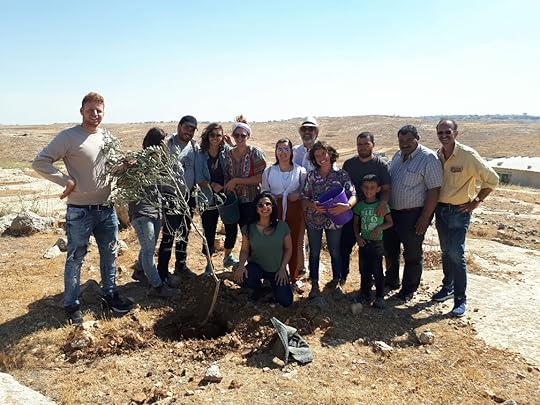
With @ayeletw Michal Chabon and accomplished Israeli writers planting trees in #susiya and launching arabic tran "Kingdom of Olives and Ash" · 21 giu 2017


Mi chiedo come sia stato possibile “nascondere “ un libro così bello, non raccontare a tutti (Rizzoli, ma che li stampi a fare se poi non ne parli?) quanto lo fosse per convincere quante più persone possibile a leggerlo. Lo scopro a sei anni dalla sua pubblicazione, annidato fra le pagine di Palestina The Passenger di Iperborea.
Che poi la mancata promozione di questo libro, nato da un progetto di Michael Chabon e sua moglie Ayelet Waldman, tradisce l’intento del libro stesso, il progetto con cui l’opera è nata, ovvero quella di far conoscere la situazione dei territori occupati, la vita dei palestinesi in Cisgiordania, nella Striscia di Gaza e in Israele fra territori occupati, coloni e checkpoint, attraverso il racconto di un gruppo di autori di nazionalità diversa (non solo statunitensi, dunque, e non solo di lingua inglese e non tutti ideologicamente ostili a Israele, molti di loro di origine ebrea, alcuni palestinesi, altri ancora israeliani) che si sono recati nei Territori palestinesi, a Gaza e in Israele, per testimoniare e incontrare non solo la popolazione, ma anche i responsabili dell’associazione Breaking the Silence, formata da ex soldati israeliani che dal marzo 2004 hanno scelto di combattere, da civili, in difesa dei diritti del popolo palestinese.

Non una di queste testimonianze è superflua, perché ogni sguardo è diverso dall’altro, non una di queste testimonianze è ripetitiva anche quando sembra esserlo nel susseguirsi di nomi di luoghi o persone, perché ogni punto di osservazione è differente, ogni voce lo è, così come è differente l’impatto che il guardare con i propri occhi e vivere sulla propria persona quello che altri esseri umani vivono quotidianamente da anni, da decenni sulla propria pelle.

Se Palestina della collana The Passenger di Iperborea è di una bellezza dolorosa e un libro necessario per cercare di comprendere, Cenere e ulivi diventa imprescindibile anche per la qualità letteraria.
Sul progetto di Breaking the Silence, unito a quello di Chabon e Waldman, lascio spazio alla essenziale, tanto quanto precisa e incisiva, postfazione.


«Breaking the Silence è formata da soldati israeliani che hanno prestato servizio nei territori occupati. Siamo combattenti che negli ultimi cinquant’anni hanno applicato le politiche dei vari governi israeliani nei territori occupati. Abbiamo messo in atto tecniche militari aggressive per controllare la popolazione. Abbiamo costretto con la forza milioni di persone a sottomettersi. Le abbiamo private dei loro diritti fondamentali, della loro libertà e della possibilità di decidere del proprio destino.

Rompere il silenzio è per noi una reazione inevitabile di fronte alla violenza e all’immoralità di cui siamo stati testimoni e protagonisti. È una protesta etica personale, una protesta civile. Rompere il silenzio, per noi, significa assumerci la responsabilità delle nostre azioni, significa chiedere a gran voce che le cose cambino. Ed è un’espressione di amore per la nostra patria e di profondo timore per il suo futuro.
La nostra lotta è iniziata nel giugno del 2004, quando più di sessanta ex soldati hanno organizzato una mostra di foto e di testimonianze che raccontavano il loro servizio nei territori palestinesi occupati, in particolare nella città di Hebron. La mostra suscitò una bufera in Israele e portò alla nascita dell’organizzazione Breaking the Silence, impegnata a combattere l’occupazione mediante la pubblicazione di testimonianze degli stessi soldati israeliani incaricati di gestirla sul campo. Si tratta sempre di esperienze in prima persona. Descriviamo le cose che abbiamo visto, le cose a cui abbiamo preso parte e la realtà quotidiana a cui abbiamo assistito, una realtà fatta di continue violazioni dei diritti umani e della libertà dei palestinesi residenti in Cisgiordania e a Gaza.

Negli ultimi dodici anni Breaking the Silence ha intervistato più di mille soldati che hanno prestato servizio nei territori occupati e ha pubblicato le loro testimonianze.*
Il silenzio riguardo all’immoralità congenita al regime di occupazione – che opprime la società palestinese e al contempo inquina la società israeliana – è diffuso in Israele israeliana e, in una certa misura, in tutta la comunità internazionale. Attraverso questo libro, scrittori di tutto il mondo hanno unito le mani e i cuori con Breaking the Silence in un atto di testimonianza, da una posizione di impegno condiviso rispetto ai valori di giustizia, moralità, uguaglianza e diritti umani. I saggi di questo volume si possono quindi considerare una collezione di testimonianze, storie sulla realtà dell’occupazione raccolte da chi l’ha vista di persona e ha scelto di non restare in silenzio.
Le testimonianze di questi autori e delle persone incontrate durante il loro soggiorno nei territori occupati sono naturalmente molto diverse da quelle che Breaking the Silence pubblica di solito.
Il progetto di Breaking the Silence di raccogliere anno dopo anno le testimonianze, e il tema della condivisione dei vissuti che percorre le pagine di questo libro, vengono da direzioni differenti: i testimoni della nostra associazione descrivono innanzitutto e soprattutto le loro esperienze personali di soldati incaricati di mantenere e applicare sul campo l’occupazione. Tramite queste voci facciamo luce sui metodi di azione delle Forze di difesa israeliane, l’istituzione che realizza la politica del governo di Israele nei territori occupati. Nel nostro libro, Our Harsh Logic: Israeli Soldiers’ Testimonies from the Occupied Territories, 2000-2010, abbiamo raccolto un’ampia serie di testimonianze, oltre a un’analisi dei metodi delle Forze di difesa e dei meccanismi per sostenere e consolidare l’occupazione.

I saggi raccolti in questo libro hanno natura diversa dalle testimonianze presenti in Our Harsh Logic. Sono opera di scrittori, personalità letterarie perlopiù estranee alla regione, molte delle quali avevano trascorso poco tempo nei territori occupati prima di questa visita, o che non ci erano mai state. Inoltre, durante la loro permanenza, gli autori si sono concentrati innanzitutto sulle storie delle persone che vivono sotto l’occupazione, anziché di quelle inviate per mantenerla. Ma questi saggi e le testimonianze di Breaking the Silence condividono l’obiettivo di raccontare la verità su ciò che sta accadendo nei territori occupati, di opporsi all’occupazione denunciando – attraverso un filo narrativo diretto e personale – le ingiustizie che stanno accadendo laggiù.
Come per le testimonianze raccolte da Breaking the Silence, consideriamo le storie comprese in queste pagine non come semplici resoconti, ma piuttosto come azioni a tutti gli effetti, azioni che hanno il potenziale per cambiare la realtà politica.
Non siamo degli ingenui. Ci rendiamo conto che l’occupazione israeliana è ben documentata fin dal principio o quasi e che l’informazione – comprese le migliaia di dichiarazioni rilasciate dai testimoni della nostra organizzazione – è disponibile a qualunque esponente della comunità internazionale dotato di un accesso a Internet. Eppure speriamo che questo libro e la raccolta di testimonianze che ne è il fondamento possano toccare e mobilitare i lettori, nella società israeliana e in tutto il mondo, per fare quanto necessario a na collezione di testimonianze, storie sulla realtà dell’occupazione raccolte da chi l’ha vista di persona e ha scelto di non restare in silenzio.
Le testimonianze di questi autori e delle persone incontrate durante il loro soggiorno nei territori occupati sono naturalmente molto diverse da quelle che Breaking the Silence pubblica di solito.
Il progetto di Breaking the Silence di raccogliere anno dopo anno le testimonianze, e il tema della condivisione dei vissuti che percorre le pagine di questo libro, vengono da direzioni differenti: i testimoni della nostra associazione descrivono innanzitutto e soprattutto le loro esperienze personali di soldati incaricati di mantenere e applicare sul campo l’occupazione. Tramite queste voci facciamo luce sui metodi di azione delle Forze di difesa israeliane, l’istituzione che realizza la politica del governo di Israele nei territori occupati. Nel nostro libro, Our Harsh Logic: Israeli Soldiers’ Testimonies from the Occupied Territories, 2000-2010, abbiamo raccolto un’ampia serie di testimonianze, oltre a un’analisi dei metodi delle Forze di difesa e dei meccanismi per sostenere e consolidare l’occupazione.

Siamo grati ai curatori di questo libro, Ayelet Waldman e Michael Chabon, a Mario Vargas Llosa, che ha dato il suo sostegno al progetto nella sua fase nascente, a tutti gli autori che vi hanno partecipato e alle molte persone – palestinesi e israeliane – che vi hanno contribuito, alcune delle quali sono citate nei saggi stessi o nei ringraziamenti, mentre altre no. Siamo grati a tutti coloro che si sono impegnati a testimoniare questa realtà, da vicino o da lontano, a rompere insieme a noi il silenzio, a sfidare l’occupazione e a lottare per un futuro migliore per israeliani e palestinesi.»

Breaking the Silence


*Si possono leggere all’indirizzo http://www.breakingthesilence.org.il/....

Gli autori presenti (e scoprire che è da questo progetto che è nato Apeirogon, il capolavoro di Colum McCann, mi ha emozionata):

Lorrain Adams
Geraldine Brooks
Michael Chabon
Lars Saabye Christensen
Maylis De Kerangal
Dave Eggers
Assaf Gavron
Arnon Grunberg
Helon Habila
Ala Hlehel
Fida Jiryis
Porochista Khakpour
Hari Kunzru
Rachel Kushner
Eimear McBride
Colum McCann
Eva Menasse
Emily Raboteau
Taiye Selesi
Raja Shehadeh
Madeleine Thien
Colm Tóibín
Mario Vargas Llosa
Ayelet Waldman
Jacqueline Woodson
Profile Image for Lolly K Dandeneau.
1,933 reviews252 followers
April 26, 2017
via my blog https://bookstalkerblog.wordpress.com/
“When laws are irrational, and paranoia is rampant, and ancient hatreds undergird both, life becomes a series of frustrations and humiliations, and humiliated people are either broken spiritless or, with nothing to lose, are driven to acts of violent desperation. The young people tasked with enforcing these dehumanizing laws and regulations become, too, less human- they become callous, irrational, finding perverse pleasure in the willful exercise of power.”

As someone that grew up in America, I can’t begin to scratch the surface of understanding the conflict between Israel and Palestine. That former Israeli soldiers break their silence, speaking up about injustices they witnessed while serving in occupied territories is nothing short of moving and of vital importance in understanding what is going on. I had to read these stories in spurts because it was too disturbing, and how lucky for me that I can remove myself, unlike the people living under occupation. The closest I have come to understanding how occupation affects people is through my own father and his family, who fled communism. What happens when you’re on the land that is occupied, simply by the happenstance of your birth and the world doesn’t listen, or if they do, doesn’t seem to be able to change much? How do we get to the point where we dehumanize each other? At the heart of all human beings, we want to build families, to see our children educated, healthy… simply to thrive, to worship as we see fit and yet, we deny others that human right.

I was shocked, nothing short of shocked and horrified by what I read. It truly is grim, and who better to give voice than those living within’ the chaos? I felt numb, but I feel it’s vital to try and listen to people, to understand, to open our eyes. What good are words if we cannot speak them, our stories are witness to all human experience, there isn’t a story in the world that doesn’t have something to teach us about ourselves, and each other. That on both sides there are people that want peace, that see the wrong and are willing to stand up for what they believe is right gives me hope for humanity as a whole. There was so much I didn’t know, and putting myself, my family in the stories of the people within, I spent quite a few sleepless nights wondering how do they survive? Resilience is a necessity, one even children seem to have. Children for me is always the gut punch, I had to catch my breath at times. I don’t want to dissect any of the essays in this collection, I feel people need to experience what they read in their own way. I am reeling, and wondering what is the answer? What can be done? What role does the Western World have in all of this? It’s an incredibly detailed insight into the occupation. In The End Of Reason by Eimear McBride, this really stood out to me. ‘But “I don’t need your tears” a woman in Nabi Saleh said, after I’d watched a home video of one of her relatives dying horribly, bloodily, from a tear gas canister being fired in his face. And it’s true, the emotion of well meaning outsiders like me is of no worth.” It’s something that can be applied to so much of the world, what good are tears? It won’t fix anything. This is heavy reading, it weighs on me still though I am a fast reader, I found myself at times needing a break, luckily for someone far removed from the realities others live with I could put the reading down and tune out. Writers that contributed to Kingdom of Olives and Ash: Colum McCann, Jacqueline Woodson, Colm Toibin, Geraldine Brooks, Dave Eggers, Hari Kunzru, Raja Shehadeh, Mario Vargas Llosa and Assaf Gavron, editors Chabon and Waldman

Publication Date May 30, 2017

Harper Perennial
Profile Image for Suzanne.
1,846 reviews41 followers
June 27, 2017
This book calls us to stand up and bear witness. These authors offer us views into the Israeli Occupation that most Americans don't wish to acknowledge. Who would want to own this occupation? Surely no enlightened democracy in any era since 1948. Our question now should be why we are financially supporting it- the Occupation. This isn't about Zionism, it's about human decency. I received my copy from the publisher through edelweiss.
Profile Image for Daniel Sevitt.
1,426 reviews137 followers
November 1, 2020
Predictably uneven collection of essays. I went to the Jerusalem book launch for this a few weeks ago and found myself in the audience at the Q&A yelling at Michael Chabon, one of my favourite authors and his wife. Not my finest hour. Now that I have read all the essays in this collection, I'm still a bit conflicted about the potential impact of this project. Saying that the Occupation is bad seems as redundant as saying that Trump's Presidency is bad. No one intelligent is going to argue with you. If anything some of the essays here are a little too even-handed because if the soldiers who maintain the occupation are partly victims too, then what exactly are the authors confronting? There's also a fair amount of repetition which I guess is to be expected given that some of these writers traveled together, but there are also some gems here including Assaf Gavron's piece about football and Colum McCann moving story about Combatants for Peace. I went into this concerned that it might be a fruitless exercise and finished it finding it mostly toothless.
Profile Image for Christopher Moltisanti's Windbreakers fan.
96 reviews2 followers
August 15, 2017
After reading "Letters to Palestine: Writers Respond to War and Occupation" edited by Vijay Prashad (He is so underrated!), I was eagerly looking forward to read "Kingdom of Olives and Ash" by Michael Chabon and Aylet Waldman. This book is not for everyone. It weighs you down mentally through one tragic stories after another. It exposes the horrors and shocks that were unknown, even to those who have dedicated good chunk of their lives in ending the apartheid. Some of the stories, specially the one by Hari Kunzru (Husband of Katie Kitamura. Though he doesn't need any introduction haha!), so tragic that it will bring tears even into the eyes of Lucifer. It breaks your heart with tragic story, with anger, with frustrations. Then it quickly mends your heart through the images of daily lives of brave and hopeful Palestinians. It's pure, unfiltered. Just some writers doing what they do best- Telling their stories
Profile Image for F V Mansour.
114 reviews21 followers
July 13, 2017
The single most important factor of this work is that it is a compilation of different voices. So many writers from so many backgrounds, witnessing their own truth. Palestinians are not a monolith, and we all experience the brutality of the Israeli occupation on our own terms. Yet the shared and collective suffering of a people is punctuated by an indelible spirit to steadfastly resist. Chabon and his comrades catch those moments.
Profile Image for Ali.
566 reviews
April 12, 2018
This is one of those books that I am going to be returning to in my head for days for a long, long time...
I am normally not a big fan of essay collections. There's always one or two that you like and the rest drag along... but this time I enjoyed every single one! They are very different, different views, experiences, stories... but every essay had something that I could relate to, or something that send me off thinking and question my own views and perceptions... This is a very thought provoking book.

No matter which way you dress it, it is a sad book. Occupation and confrontation have no bright side, no silver lining. They only have failures, tragedy and fear all around them. And this book proves it.

My favourite essay in this book is perhaps Love in the Time of Qalandiya, by Taiyo Selasi. It is the one that is for me a quintessential portrayal of the situation. Above all things, love seems to survive and overcome so much, yet how often does it not get through the check points...
how often the eyes that destined for each other never meet? How many smiles have not been shared, how many embraces and kisses never happened, how many dreams never got to come true... how many beautiful romances, life-long love stories never meant to be... how many families never got to be created because... because there are sides to take, check points to get through, riots to raise and riots to defeat, neighbourhoods to uproot and settlements to put in place...


Profile Image for J.A..
Author 1 book67 followers
June 13, 2017
"The Occupation is about time." Something similar - but not heinous - could be said of quality writing that occupies time and mind. I would have liked more time to really pore over these finely written, searing essays. My own introduction to the strife between Israel and the Palestinian "problem" came by way of Leon Uris novels. That is why it is imperative that respected writers from within the Jewish community, such as Michael Chabon and Ayelet Waldman, and those of disparate communities, such as Colum McCann, Mario Vargas Llosa and Colm Tóibín (among equally esteemed others), have combined their unique insights into a personal and political violation that has gone on for fifty years. When the President of the United States spouts misinformation like “Do walls work? Just ask Israel about walls....” we need actual intellectuals with actual consciences who have witnessed the actual atrocities of the Occupation to speak up. We need books like this to combat the ignorance and the indifference.
27 reviews
July 25, 2017
This book is heartbreaking. And necessary. The sense of hopelessness is overwhelming. Take the entire area, from Jordan to the sea, from Lebanon and Syria down to Egypt, and toss it all into a garbage can, because surely both sides are in a death grip as they plummet to hell. And I'm pro-Zionist! But if this is the product of entrenched opposing sides, then both sides lose. Yes, both sides lose. You can walk the streets of Hell with this book. I highly recommend this book because it offers a slim ray of hope for change, for security, for peace for both sides.


Profile Image for Kirsty.
2,792 reviews190 followers
February 12, 2019
I had not heard of Kingdom of Olives and Ash: Writers Confront the Occupation before spotting it in my local Fopp store.   I felt as though this collection of essays, which all revolve around the Israeli military's occupation of Palestine, was worthy of an extended review.  Whilst I knew quite a bit about the situation and its history before picking the book up, I am always eager to learn, and hoped that it would fill in the gaps which I was certain I had.

Edited by husband and wife team Michael Chabon and Ayelet Waldman, who also contribute an essay each, Kingdom of Olives and Ash brings together twenty-six pieces by a variety of celebrated authors, most of them novelists, from all over the world.  Each was offered a trip to the occupied zone, and was invited to write about whatever it was that struck them the most on their travels.  Their work, viewed both separately and collectively, 'shows the human cost of fifty years of Israeli occupation of the West Bank and Gaza.'  These 'perceptive and poignant essays', says the book's blurb, 'offer unique insight into the narratives behind the litany of grim destruction broadcast nightly on the news, as well as a deeper understanding of the conflict as experienced by the people who live in the occupied territories.'

Chabon and Waldman are frank in their introduction.  They write: 'We didn't want to edit this book.  We didn't want to write, or even think, in any kind of sustained way, about Israel and Palestine, about the nature and meaning of occupation, about intifadas and settlements, about whose claims were more valid, whose suffering more bitter, whose crimes more egregious, whose outrage more justified.  Our reluctance to engage with the issue was so acute that for nearly a quarter of a century we didn't even visit the place [Jerusalem] where Ayelet was born.'  1992, they go on to discuss, was the first time in which they visited Israel together.  This was a 'time of optimism, new initiatives, relative tranquility.'  

Despite enjoying their trip, and believing that they would often return, they did not get the opportunity to do so for over twenty years.  As violence escalated following their visit, they remark: 'Horrified and bewildered by the blur of violence and destruction, of reprisal and counter-reprisal and counter-counter-reprisal, put off by the dehumanizing rhetoric prevalent on both sides, we did what so many others in the ambivalent middle have done: we averted our gaze.  We opted out of the debate, and stayed away from the country.'  Following an invitation to a writers' festival, Ayelet returned to Israel by herself in 2014, where she also visited Hebron and Tel Aviv: 'The city sparkles, it hums.  And it averts its gaze.  One would never know, on the streets of Tel Aviv, that an hour's drive away, millions of people are living and dying under oppressive military rule.'  

As the project for Kingdom of Olives and Ash began to take shape, the editors speak of how they selected a vast array of contributors for the volume, in order to make the collection as far-reaching as was possible.  The core idea was this: 'Conscious of the imminence of June 2017, the fiftieth anniversary of the occupation, we put the word out - to writers on every continent except Antarctica, of all ages and eight mother tongues.  Writers who identified as Christian, Muslim, Jewish, and Hindu, and writers of no religious affiliation at all.  Some had already made clear and public their political feelings on the subject of Palestine-Israel, but most had not, and many acknowledged from the outset that they had never really given the subject more than a glancing consideration.'

I had heard of a lot of the authors collected here, and was familiar with some of their work.  I was particularly excited to read essays by Anita Desai, Eimear McBride, and Geraldine Brooks, all writers whose novels I admire.  There were a few writers who were new to me, too.  Some of these authors were invited to stay at houses in Palestinian refugee camps and villages, and some spoke to civilians about their experiences.  Others explored cities, some tried to cross the many checkpoints strewn over a small area, and still others interviewed those working in factories or on archaeological sites.  There are many tragic stories told here, as one might expect given the circumstances.  The contributors variously meet advocates for peace and change, artisans cultivating ancient practices (soap making, for instance), students, bereaved parents, non-conformists, and taxi drivers who have to navigate the checkpoints many times each day.

I enjoyed and engaged with several of the essays in Kingdom of Olives and Ash, but others did not capture my attention in the same way.  The pieces which I particularly enjoyed tended to be written by the authors which I wasn't already overly familiar with.  Jacqueline Woodson's essay, 'One's Own People', in which she contrasts her privileged, shielded life in New York with those she sees lived in occupied territory, was particularly striking.  She writes: 'I knew the Palestine-Israel of newspaper articles and television journalism.  This Palestine-Israel was as foreign to me as Yemen, a place somewhere out there where people who had no connection to me fought among themselves - and killed others.  People who were not 100 percent people...  how could they be?  They were outside my very comfortable America.  Outside anything I could - or needed to - imagine.'  I also very much enjoyed Norwegian author Lars Saabye Christensen's 'Occupied Words', which considers the language which we use: 'And when our language is occupied, attitudes change too, and sometimes the distance from attitude to action is short.  The front lines move quicker than the thought.  We can't keep up.'

Of course, there are elements of interest in each and every essay here, but I found some of the writing styles a little awkward in their choice of prose, overly and unnecessarily sensationalised, or not to my taste.  I found the essays which focus on one individual, or one family, particularly intriguing and accessible.  Others, like Madeleine Thien's, are overly fact-heavy, and took far longer to read and consider.

Kingdom of Olives and Ash is certainly not an easy read, but it is a challenging and important one.  A lot has been explored here.  I had intended to read the book all in one go, but it proved far better to read and consider one or two essays each day over an extended period.  Much of the information here needed time to settle.  I found this varied collection a little uneven at times, but overarchingly, the pieces are interesting and informative, and form rather an essential whole.
Profile Image for Dee.
735 reviews18 followers
August 14, 2017
I've been looking for a new book to explain the Palestine/Israel "situation" to others and I think this is it! "Kingdom..." is a series of essays by respectable writers from across the globe (US, Ireland, France, South America... - as well as local Palestinian and Israeli writers) who were "recruited" by the editors to spend a week in Palestine/Israel, to take a "tour" with members of Breaking the Silence (a group of former Israeli Defense Forces - IDF - soldiers who "broke the silence" of their experiences serving in the West Bank to campaign against the [illegal Israeli] Occupation [of Palestine].) They were free to write about anything that they saw and their breadth of experience and scope is stunning. From imprisoned children to the horrendous human rights disaster that is Hebron to an organization of Palestinian and Israeli parents who have lost children to the violence of the Occupation, "Kingdom..." sheds an honest, contemporary light on what is really happening in Palestine/Israel. Sadly, they offer much sadness and little hope that things will improve - factors that I have already concluded from my "immersion" in this issue
Profile Image for Catherine.
110 reviews
May 10, 2017
I particularly liked Hari Kunzru's essay in this anthology.
Profile Image for Bryce Van Vleet.
Author 4 books18 followers
December 31, 2017
Kingdom of Olives and Ash is a grab bag in terms of quality. The collection is bookended beautifully - the first and last essays are among some of the finest writing produced. The middle wanes between good and mediocre. Chabon and Waldman could have perhaps done a more thorough job in editing, being less afraid to exclude certain essays from their collection. This would have helped on multiple fronts, as the collection was far too long. I do think the collection is important though, and should be widely read. I was completely ignorant to the occupation and am glad to have such human faces to put on it as I learned about it. I absolutely recommend this collection, but I would advise not reading each of the essays. Below I have reviewed each essay briefly.

"I cannot say it loud enough. This war is a crime against humanity. And standing aside while this crime is being committed is also a crime. Now I don't ask people to be pro-Israeli or pro-Palestinian. I demand them to be pro-peace, to be against injustice, and against this ongoing situation in which one people is dominating another." - Colum McCann, quoting two interview subjects.
-

The Dovekeepers - Geraldine Brooks (5/5) - A powerful first essay, well constructed and illuminating

One's Own People - Jaqueline Woodson (6/5) - It is a miraculous gift to personalize atrocities across cultures and continents without coming off as selfish or pretentious. It is also a gift to paint so broadly in such few strokes.

Bloated Time and the Death of Meaning - Ala Hlehel (translated by Peter Theroux) (3/5) - Perhaps Hlehel's meaning was lost in translation, but this came off as very disorganized to me. I was hooked in the beginning but quickly found myself lost.

Giant in a Cage - Michael Chabon (3/5) - Much too long, interesting symbology but too convoluted

The Land In Winter - Madeline Thien (4/5) - I do wish Thien had relied less on other texts but her impact was powerful. This is more historically detailed and I wished it were first.

Mr. Nice Guy - Rachel Kushner (5/5) - My heart hurts.

Sami - Raja Shehadeh (5/5) - Interesting to hear a first person account and sobering to think of something so basic being so complex

Occupied Words - Lars Saabye Christensen (Translated by Dana Caspi) (5/5) - Perhaps I am biased by the Norwegian author but I loved this. Thought provoking, humorous, devastating.

Prison Visit - Dave Eggers (5/5) - I figured this would be long. But Eggers knows how to fill it - and, geez, that ending!!

Sumud - Emily Raboteau (3/5) - I appreciated the perspective this brought but didn't feel Raboteau enhanced the conversation

Journey to the West Bank - Mario Vargas Llosa (Translated by John King) (3/5) - Again, enjoyed this but nothing special for me.

Playing for Palestine - Assaf Gavron (4/5) - An interesting look at the intersection of soccer and politics, both as it pertains to the occupation, and the world.

Love in the time of Qalandiya - Taiye Selasi (3/5) - Perhaps it's just because I finished Nothing to Envy, but this essay felt familiar and obvious

ImaginingJericho - Colm Tóibín (3/5) - This was a little too dry for me

The End of Reasons - Eimear McBride (5/5) - I really enjoyed McBride's writing style and her overall perspective.

High Places -Hari Kunzru (3.5/5) - I really appreciated what Kunzru tried to do with this piece but felt like the net was cast a bit too wide and convoluted.

Storyland - Lorraine Adams (5/5) - Thus piece felt fresh to me and I loved the flow. Her choice to build her essay around the idyllic Bethlehem was really effective and I just loved this whole essay.

The Separation Wall - Helon Habila - (3.5/5) - The choice to make this essay all about the wall was a good one. The wall is a perfect symbol for the occupation. I did feel like this was too long and a bit too dry in implementation, however.

A Hundred Children - Eva Menasse (Translated by Isabel Fargo Cole) - (1.5/5) - While I enjoyed this essay, I found it troublesome and unethical. This book was assembled through the NGO Breaking the Silence, designed to give writers access to human stories, and yet Menasse fabricated most of her examples. This raises the question of whether or not her whole perspective was decided in before she went, and she only paid attention to the facts that fit her narrative, and fabricated the rest. Or perhaps her essay was grounded in truth, but because it begins in fiction, she loses all of her journalistic integrity and I'm skeptical to believe anything she says. And I'm also curious as to why Menasse traveled all the way to not pick up a single story. This was disappointing and seemed at odds with the rest of the collection.

Visible, Invisible: Two Worlds - Anita Desai (4/5) - This was an interesting comparison essay and I appreciated what Desai was going for. I wished for a stronger conclusion, but overall this was a strong piece with a fresh perceptive.

Hip-Hop Is Not Dead - Porochista Khakpour (6/5) - Khakpour has an inherently interesting perspective so it's little wonder her essay is so god. The narrative is powerful, her themes are well established, and, like Woodson earlier, she is able to establish a macro narrative from the finite. Really well done.

Occupation's Untold Story - Fida Jiryis (4/5) - A bit too dry for me, but overall a wonderful essay on real life under occupation.

An Unsuitable Place for Clowns - Arnon Grunberg (Translated by Sam Garrett) 4/5) - Again, Grunberg's perspective is inherently interesting. His essay is perhaps a bit empty in some places but overall feels fresh and raises good questions.

Justice, Justice You Shall Pursue - Ayelet Waldman (3.5/5) - Good bones but I again wished it to be shorter. Waldman drags on slightly and casts too wide of a net.

Two Stories, So Many Stories - Colum McCann (6/5) - This is the best essay in the collection full stop, perhaps the best piece of writing I have ever read. Read it. Memorize it. Apply it.

H2 - Maylis De Kerangal - 5/5 - a good end to the collection and a stunning voice.
Profile Image for Kathy.
3,869 reviews290 followers
September 15, 2018
Hard realities to read from the comfort of my own freedom. Several authors give voice to experiences, interviews and thoughts after visits to West Bank. There is a very fair and balanced mix in my opinion.
Profile Image for Federico Escobar Sierra.
302 reviews118 followers
May 19, 2019
Esta es una colección de testimonios hermosos y dolorosos para entender mejor el absurdo conflicto de palestinos e israelíes. Las vidas de muchos hechas historias. Una nueva forma de protestar y un llamado a gritos a la no violencia como única salida.
151 reviews15 followers
August 4, 2020
26 писатели описват истории случващи се в Израел, Палестина, Западният бряг, ивицата Газа, Хеброн, Рамала.....защото проекта Израел, стартирал като убежище за преследван от векове народ се е извратил в нещо смртоносно, грозно и ужасно.

Човешките истории трябва да се разказват, това е начинът да се промени мислене, да се обърнат погледите на хората по света към този район - свещен за всички религии, но в момента под контрола на по-равните.

Крайният фанатизъм за предопределеност на еврейския народ, за свещенна земя, за чиста еврейска държава е близо седемдесет годишен тормоз върху местното население чрез убийства и репресии, арести на деца, отравяне на кладенци, заграбване на земи (за срам в това е участвал и Ели Визел), забрана за свободно придвижване, ползване на нееврейското население като трудови роби (еврейските предприемачи не искат китайци, скъпи са им....)

Трябва да излизат повече такива книги, за да знае света какво се случва. Израел слага напред някаква измислена уникалност на еврейския народ и си позволява да прекрачва морални/човешки граници. Използват се класическите националистични практики - мощна пропаганда, създаване на измислена колективна памет, създаване на исторически артефакти, етническо прочистване, заграбване.


Profile Image for Dara Dem.
62 reviews14 followers
May 18, 2019
Една страхотна книга, описваща събитията и безобразията на страната Израел с помоща на Америка към палестинският народ. Има много истина в нея, както и защо палестинците се превръщат в камикадзета и от къде се заражда злото, представена от всепризнати именити писатели и техните гледни точки.
Profile Image for Julia O'Connell.
417 reviews18 followers
February 28, 2018
This book was a powerful and difficult read. Before going into it, I was embarrassingly uninformed about Israeli occupation in Palestine, but I knew I wanted to read up on the subject before going to Israel for the first time last month. Reading a few of the essays before my trip definitely helped me to have a more informed experience.

This collection presents a nuanced, personalized, and multi-faceted view of Palestinian life under Israeli occupation. Each of the twenty-six authors comes at the subject from a different angle. A handful of the authors are Palestinian, one is Israeli, several are members of the Jewish Diaspora, and the rest are third-party observers from countries around the world that do not necessarily have a dog in this fight.

The collection starts strong with the essay "The Dovekeeper" by Geraldine Brooks, in which she follows the story of a 13-year-old Palestinian boy in East Jerusalem who joins his cousin on a mission to attack their neighboring Jews with kitchen knives. His cousin stabs a 13-year-old Jewish boy and is subsequently shot by Israeli soldiers. The essay asks difficult questions like, how do young children and teens become radicalized? Can children be considered terrorists? How should they be treated if they commit an act of violence?

Other authors come at the conflict from unique perspectives, such as Taiye Selasi, who investigates the taboo topic of Israeli-Palestinian romance in "Love in the Time of Qalandiya," and Porochista Khakpour, who reports on Palestinian hip-hop in "Hip-Hop Is Not Dead."

One perspective I found particularly interesting was that of Irish writer Colm Toibin. In his essay "Imagining Jericho," Colm discusses the sympathy he feels for Israel, born partly from guilt over the fact that Ireland stood by, doing essentially nothing while 6 million Jews were murdered during the Holocaust. But Colm can also identify with the Palestinians, relating their situation to Irish Catholics were driven from their land and controlled by the English. His essay goes on to compare his first visit to Israel, during the election of Yitzhak Rabin in 1992, to the Israel-Palestine that he finds in 2016.

One of the most moving, and most hopeful, essays is "Two Stories, So Many Stories" by Colum McCann which highlights two fathers in the Parents Circle for bereaved Israeli and Palestinian families, and their hope that they can end the violence by sharing their pain.
247 reviews
September 29, 2017
This eye-opening collection helped me understand the Occupation in a way that I hadn't before. It focuses less on the broad political issues and more on the personal stories about what life is like on a daily basis in the occupied territories. While there are some uplifting and hopeful characters, the overarching theme is systematic dehumanization of a people with little relief in sight. There are few heroes in these stories. Israel is a ruthless oppressor, and Hamas does not treat their own people a whole lot better. The task of life seems to be simply to survive and achieve some sense of normalcy. Solutions are hard to come by, and seldom offered by these narratives. But they do shine a light on the stories that can help personalize an "over there" problem.
Profile Image for Luise.
92 reviews
July 3, 2024
not sure what lars saabye christensen was smoking to submit an essay this tone-deaf, but the rest of this anthology is essential reading.
personal standouts:
- dave eggers on music and life in gaza
- asssaf gavron on palestinian football
- michael chabon on new and old palestinian businesses
- rachel kushner on life in shuafat
- fida jiryis on the discrimination of palestinians with israeli citizenship
- porochista khakpour on palestinian hip hop
also: the contributions by eimar mcbride and eva menasse, less for what they said but how they said it, with intense emotion and powerful imagery; as well as the ones by ayelet waldman and colum mccann for amplifying others’ stories without centering their own voices.
Profile Image for Elliya.
51 reviews2 followers
January 7, 2024
This is a wonderful collection of essays in a small range of perspectives — all broadly anti-occupation, though each author focuses on a slightly different facet of what they experienced while on a trip to the West Bank with Breaking the Silence. Some of the details in the essays are repetitive, because the authors traveled as a group and had many of the same experiences — but it’s always poignant and heartbreaking to hear stories bearing witness to the atrocities of the occupation. 4.5 ⭐️
Profile Image for Anne.
115 reviews4 followers
December 1, 2024
I cannot recommend this book strongly enough. It is a series of human chronicles of everyday life that flesh out our understanding of Israel and Palestine beyond what headlines and news stories tell us about the numbers dead, the failed attempts at diplomacy and continued tension and violence. These are the stories of people and communities.

The essays are by some of my favorite American, Australian and Irish authors, along with many more I have newly discovered. Writers from Palestine, Israel, Netherlands, Holland, Nigeria, India, Pakistan and other countries.

They witnessed life in the West Bank and Gaza, and in settlements and Jerusalem. And they reported what they witnessed. We should all read it.
Profile Image for Pip Snort.
1,467 reviews7 followers
December 20, 2024
This was a challenging book to read. The writers and styles were diverse, but their subject matter was unrelentingly similar. It is difficult to escape the idea that Israel has become that which it most despises, a Nazi state, and the Palestinians are the Jews which must be eradicated. It is an awful conclusion, to fit an awful reality.

There is no moral justification for murder, or for the dehumanisation of another. And a state based on race, is inevitably racist.
Profile Image for nix.
31 reviews
June 29, 2025
Con l'eccezione di due pezzi che ho trovato inutili e vagamente paraculi e insofferenti, consiglio questo libro a chi non ha ancora capito cosa significhi, l'occupazione della Palestina, in che misura e da quanto vada avanti.
Displaying 1 - 30 of 109 reviews

Can't find what you're looking for?

Get help and learn more about the design.