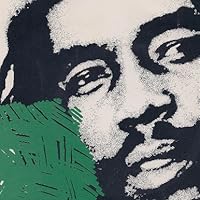
Antiblack racism avows reason is white while emotion, and thus supposedly unreason, is black. Challenging academic adherence to this notion, Lewis R. Gordon offers a portrait of Martinican-turned-Algerian revolutionary psychiatrist and philosopher Frantz Fanon as an exemplar of "living thought" against forms of reason marked by colonialism and racism. Working from his own translations of the original French texts, Gordon critically engages everything in Fanon from dialectics, ethics, existentialism, and humanism to philosophical anthropology, phenomenology, and political theory as well as psychiatry and psychoanalysis. Gordon takes into account scholars from across the Global South to address controversies around Fanon's writings on gender and sexuality as well as political violence and the social underclass. In doing so, he confronts the replication of a colonial and racist geography of reason, allowing theorists from the Global South to emerge as interlocutors alongside northern ones in a move that exemplifies what, Gordon argues, Fanon represented in his plea to establish newer and healthier human relationships beyond colonial paradigms.
Lewis Ricardo Gordon is an American philosopher who works in the areas of Africana philosophy, philosophy of human and life sciences, phenomenology, philosophy of existence, social and political theory, postcolonial thought, theories of race and racism, philosophies of liberation, aesthetics, philosophy of education, and philosophy of religion. He has written particularly extensively on race and racism, postcolonial phenomenology, Africana and black existentialism, and on the works and thought of W. E. B. Du Bois and Frantz Fanon.
I'm new to critical theory and philosophy that pertains to social/political issues; I've never read Fanon before, or texts that cite him. That skews my understanding and evaluation of this text. Overall, Fanon's ideas that Gordon raises are extraordinary; they get to the heart of just how dehumanizing and horrendous oppression is, and of how such dehumanization comes about. Moreover, Gordon is a very good writer. It was gripping to read. But there are few ideas laid out in Gordon's book; and these ideas are not given especial explanatory treatment, but are only presented in terms of series of examples. I'm pretty sure this is typical of books written in this area of thought; the purpose of critical theory isn't to explain the nuances regarding cognitive mechanics that underpin macroscopic effects of oppression. So, this isn't a criticism of Gordon, but rather reflects a dissatisfaction purely based on my tastes and interests.
The main idea is that racial oppression consists of whites refusing to see blacks as equals; and even more than that, whites positively seeing blacks as sub-human and wishing that blacks would remain like tools or objects in the whites' world, which whites can use to benefit themselves, or can simply ignore. According to Gordon, Fanon examines what this does to an individual black psyche. Overall, it forces the black individual into a place with few options, none of which can possibly let them achieve equality and even a personal sense of self-respect and dignity.
Fanon draws on the Hegelian insight that an individual's subjectivity is constituted by and depends on ways others perceive or recognize them. Since whites are the majority and perceive blacks as sub-human, blacks are forced into the condition of understanding themselves in these terms. Blacks can reject this understanding; but even so, this understanding shapes their sense of self at a preconscious level, and the struggle to reject it itself comes to shape their identity and how they experience themselves as positioned in the world. Moreover, whiteness becomes the standard of humanity; blacks, in rejecting the understanding that they are sub-human, must try to become white. This is absolutely horrible and tragic; it is impossible to ever become white. Whether one tries or refuses to strive towards whiteness, the black individual cannot escape this white's conception of them.
A good portion the book is either filled with biographical detail about Fanon; descriptions of political events that exemplify these points; or Fanon's autobiographical descriptions that exemplify these points. These examples and descriptions are very powerful and gripping to read. They are certainly necessary and important for the purposes of critical theory. But the book is very slim in substantive points and explanation. This might be dissatisfying only for readers keen on more detailed explanation or analysis regarding how oppression exactly puts individuals in this tragic position, or how the recognition of others shapes identity.
In particular, I was dissatisfied with the lack of details about Fanon's views on psychiatric diagnoses and psychotherapeutic practice. Gordon briefly mentions that Fanon produced work on how certain psychosomatic conditions blacks in France manifested were not organic illnesses, but were driven by this situation of futility and tragedy regarding one's possibilities of being human. I would really like to have read more details on this. Maybe Fanon himself doesn't have detailed explanations on how existential and social situations factor into the development of psychiatric symptoms, so this isn't Gordon's issue? I look forward to turning to Fanon's own works and to read more.
The book is amazing, but I have to say that Lewis Gordon is way too abstract. One can tell that Gordon has dedicated a lot of years trying to decipher every single sentence, word and concept that came out of the books and clinical studies of the great revolutionary doctor, Frantz Fanon. Definitely difficult to read and some concepts are not explained fully, they assume already a lot of extensive reading and demand lots of concentration from the reader (it took me 2 weeks to read this book).
Gordon provides a much more expansive overview of the progression of Fanon's thought, giving a nuanced account of his phenomenological arguments. "The Zone of Non-Being" and lived experience chapters were definitely the most illuminating for my own work. Biggest criticism: Gordon's complicity with Fanon's sexism and failure to fairly critique Fanon's shortcomings.
Full of academic jargon that makes it a jagged read, it was still good to touch base with the ideas of Frantz Fanon. I am at the age at which he died, which makes his passion relatable to me. He was struck down by leukaemia while being hunted by assassins. Also, he could’ve died in battle. For the black body death is always with us, meaning time often is not.
For such bodies, the ordinary is an extraordinary achievement, so we push ourselves in the limited time we have to usher in a reality where Europeanness is irrelevant. Waiting will not bring about the conditions of possibility and we may not taste victory but dignity is won in the fight.
The struggle is no less than Promethean but Black consciousness must not hold itself out as a lack; it must be its own follower. Each stage of Fanon’s life was decisive in a historic way, which reminds me to make my daily actions consequential. In all circumstances I must call forth the man who is in me.
This was an absolutely impeccable reading of Fanon. I have always struggled with Fanon's lyricism and his place as this pillar of postcolonial thought. Gordon interwove the gender dynamics, the psychological and psychoanalytic sides, and the sense of writing into a philosophical community of thought as it was unfolding. And you can understand the thing. I came out on the other side having so much respect for the feat he had just done so dextrously. You won't be disappointed.