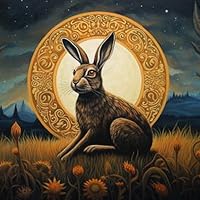
Ústřední postavou této novely je děvčátko, které se probouzí v dívku. Dějem zde však mnohem více než skutečné dění je vnímání světa dětskou obrazotvorností a tímto vnímáním vznikající svár dětských snů a objevované reality světa.
Boris Leonidovich Pasternak was born in Moscow to talented artists: his father a painter and illustrator of Tolstoy's works, his mother a well-known concert pianist. Though his parents were both Jewish, they became Christianized, first as Russian Orthodox and later as Tolstoyan Christians. Pasternak's education began in a German Gymnasium in Moscow and was continued at the University of Moscow. Under the influence of the composer Scriabin, Pasternak took up the study of musical composition for six years from 1904 to 1910. By 1912 he had renounced music as his calling in life and went to the University of Marburg, Germany, to study philosophy. After four months there and a trip to Italy, he returned to Russia and decided to dedicate himself to literature.
Pasternak's first books of verse went unnoticed. With My Sister Life, 1922, and Themes and Variations, 1923, the latter marked by an extreme, though sober style, Pasternak first gained a place as a leading poet among his Russian contemporaries. In 1924 he published Sublime Malady, which portrayed the 1905 revolt as he saw it, and The Childhood of Luvers, a lyrical and psychological depiction of a young girl on the threshold of womanhood. A collection of four short stories was published the following year under the title Aerial Ways. In 1927 Pasternak again returned to the revolution of 1905 as a subject for two long works: "Lieutenant Schmidt", a poem expressing threnodic sorrow for the fate of the Lieutenant, the leader of the mutiny at Sevastopol, and "The Year 1905", a powerful but diffuse poem which concentrates on the events related to the revolution of 1905. Pasternak's reticent autobiography, Safe Conduct, appeared in 1931, and was followed the next year by a collection of lyrics, Second Birth, 1932. In 1935 he published translations of some Georgian poets and subsequently translated the major dramas of Shakespeare, several of the works of Goethe, Schiller, Kleist, and Ben Jonson, and poems by Petöfi, Verlaine, Swinburne, Shelley, and others. In Early Trains, a collection of poems written since 1936, was published in 1943 and enlarged and reissued in 1945 as Wide Spaces of the Earth. In 1957 Doctor Zhivago, Pasternak's only novel - except for the earlier "novel in verse", Spektorsky (1926) - first appeared in an Italian translation and has been acclaimed by some critics as a successful attempt at combining lyrical-descriptive and epic-dramatic styles.
Pasternak lived in Peredelkino, near Moscow, until his death in 1960.
A minor disappointment, but only because it is so short and so unlike the cristal clear clarity of the presentation in Dr Zhivago. Maybe it’s not the best translation, or maybe the absence of plot and the rambling musings are intentional, as told from the point of view of an introverted young girl as yet unable to make sense of the big real world outside.
Life lets but a few people in on what it is doing to them.
Zhenya Luvers is thirteen years old, from a middle upper class family in the provinces, home schooled by foreign governesses and almost mute in company of her elders. Her journey from childhood innocence and fancyful imagination to adult anxiety and cold realism is marked, like one of the most memorable scenes in Pasternak’s late masterpiece, by a train journey through the Urals. Pasternak is at his best when he lets his lyrical side take over, reminding me that he was first of all a poet and only later turned his attention to prose.
What she saw could not be described. The swaying forest of hazelnut trees, through which the train was winding, became a sea, the world, anything one wished it to be. The sunlit, murmuring forest ran down sloping hills, the trees becoming smaller, denser and gloomier, until it fell away steeply into a black emptiness. And what hung on the other side of the chasm was like a greenish-yellow storm cloud, twisted and convoluted, but frozen, turned to stone. Zhenya held her breath and suddenly felt the speed of this limitless, unself-conscious air, and saw that the storm cloud was a great mass of earth, that it had the name of a famous mountain, which rolled down like thunder and was hurled with sand and rocks into the valley, that the hazelnut forest knew the name and whispered it ceaselessly, here, there, everywhere. “Is this the Urals?” she asked the whole compartment and leaned out of the berth.
I am of the opinion that critics of the author’s work insisted too much on political commentary, while his real message may be that a lot of the modern man’s problems come from a disconnect with the natual world, with a loss of the sense of wonder and the majesty of the limitless landscapes of his beautiful country. yet, towards the final chapters of this novella, I could not help thinking that he uses his poetry as a weapon against the dictates of the state approved neo-realism current. A current that is curiously not what made me a fan of Russian cinema, so rich in its own forms of poetry (The Cranes are Flying, Ballad of a Soldier, A Railway Station for Two, Letters Never Sent, etc) . Zhenya Luvers comes down from her train in a proaic new town, where she has to become like everybody else, serious and responsible:
But when everything was explained to her, life ceased to be a poetic whim; it billowed around her like a gloomy, dark tale and became hard, factual prose. Dull, painful and dim, like a state of perpetual sobering up, the elements of the day’s routine fell into her awakening soul. They sank to the bottom, real, hard and old, like sleepy tin spoons. There, in the depths, the tin began to melt, became lumy and turned into pressing thoughts.
Maybe with a re-read I will give a higher rating. There is some vein of gold in here, and I might have passed over it too quickly.
این کتاب با عنوان کودکی لیوِورس به ترجمه عبدالمجید احمدی و نشر چام و از روسی ترجمه شده است. میخواستم قبل از خواندن دکتر ژیواگو ،بغیر از شعر چیزی از پاسترناک خوانده باشم که این اثر رو دیدم و خواندم. این کتاب بیشتر توصیفی هست و شاعر بودن مولفش رو فریاد میزند. طرح جلد ترجمه فارسی هم با روسی یکی هست که خیلی مقبول است.
This was, for me, a rather strange book. After reading Dr. Zhivago last year I went searching for some other books about or written by Pasternak. I do not remember where I purchased this copy but it was very reasonably priced and I felt it would give me a good example of Pasternak's other writing. This was first published in 1925. He was very well known for his poetry, but I'm not that into poetry... This is actually a discarded library hardcover edition not listed in Goodreads, and is especially unique given it still has the check-out card in the paper holder glued to the back cover. :)
This was evidently very typical of Pasternak's imagery utilized in his poetry. It does read lyrically and much like poetry intermittently throughout, particularly with regard to his descriptions of nature and the surrounding landscape. It definitely had a similar and yet slightly different flow and feeling to it as Doctor Zhivago. I will probably reread it as some point in the near future. It feels dense enough in the aftermath that I would benefit from a second reading.
This novel is a brief look into the pangs of adolescene just before a time of great change (The Communist Revolution). The changes in Zhenya Luvers and her Russia are immense and extreme, but really nothing new to the well read. However, the descriptions in this book are something near genius. If you take your time and savour each word in this book your senses will come alive with what Russia was so long ago.
Märks att Pasternak började som poet, för den här 'lilla historien' som saknar intrig, är för mig en prosadiktad långnovell, om en flickas pubertet, en bit på vägen genom tonåringens känslor, fragment på vägen till vuxet liv. Det står inte 'när' det utspelar sig, men Zjenja Ljuvers verkar tillhöra en tid när flickor skulle veta så lite som möjligt.
Prosadikt, genom att bildspråket är kreativt, ovanligt, och meningsbyggnaden tar sig moderna friheter, så att det känns som om Zjenjas tankar flyger fritt mellan associationer, som om hon inte tänker en tanke till punkt innan nästa tar över.
Pasternak fick Nobelpriset 1958, och det verkar som om de flesta översättningarna till svenska skedde samma år. Så även den upplaga jag läst. Så bitvis känns det svenska språket lite dammigt idag.
i felt most at home with the narrating voice, it's almost like he had keys to the doors that lead to truths I cant name. the poetry in description was silky smooth and so big i would comfortably get wrapped around it for whole evenings. the story was fragmented and hard to follow, the chapters represented moments in zhenya's adolescnece and watching her grow into a woman was captivating, it was also a revisit to my childhood.
"These circumstances molded the children. They never knew this, for even among grownups there are few who know and feel that shapes them, forms them and links them with one another. Life lets but a few people in on what it is doing to them."
This is a poetic coming-of-age novel, more of a series of impressions than a plot-focused work. Having read it in an English translation, I can only imagine what the original Russian must be like, but even so, I was able to appreciate the astonishingly evocative imagery in similes such as the following: "shrill swallows tore the air, as a seamstress tears linen with her teeth," "giant, panting soldiers, with sweat like the red stuff that comes from the faucet of a damaged water main," and "Their faces, scented and cool, reminded one of fresh pieces of soap, just unwrapped."
i know it's supposed to be 'through the eyes of a young girl' etc but a lot of it was just. purely difficult to follow (and not even in a Hip n Trendy, stream of consciousness way).
i usually really Dig pasternak but this book wasn't for me i guess ? (not that you lose out on much by reading it considering how short it was)
il tono dello scritto è drammatico, con lo stile narrativo di paternak che non fauna grinza, lineare, curato ed elegante. inoltre, trattandosi di luoghi e culture per noi esotici, ciò desta una naturale curiosità in chi legge. anche se, alla fine della fiera, la fanciullezza di zenja ljuvers di boris pasternak non cattura, e anzi tende ad annoiare, da cui il voto mediocre.
Ho trovato il libro un po' lento, tratti dove non capivo cosa stesse accadendo e con linguaggio abbastanza ricercato, ho invece apprezzato le brevi descrizioni quasi poetiche e la natura psicologica dell'adolescenza di Ženja.
I wanted to love this book but I did not. Perhaps it was the translation, or the poetry or the story...perhaps it's all of the above. The story was hard to follow and difficult to understand.
Racconto delizioso, dove con grazia si narra del passaggio dall'infanzia all'adolescenza di Zenja Ljuvers descrivendo le impressioni della fanciulla agli accadimenti della vita. Delicato e poetico.
Un breve testo che non racconta semplicemente la crescita ma la fa accadere sulla pagina. Pasternak, con “La fanciullezza di Ženja Ljuvers”, trasforma il passaggio dall'infanzia all'adolescenza in pura percezione, con descrizioni fini e frasi poetiche che rendono la lettura delicata (anche se, a tratti, rischiano di astrarla un po' troppo).
È un racconto breve ma richiede molta attenzione: non racconta la vita, ma fa esperire al lettore stesso il peso del diventare consapevoli. È come se Pasternak volesse dire che l'infanzia non è sempre innocenza, ma anche una condizione esistenziale violenta, fatta di scoperte che feriscono e illuminano allo stesso tempo.
“La vita, che non era più una favola piena di poesia, cominciò a diventare una feroce favola nera, man mano che diveniva prosa e si trasformava in realtà”.