“The most empowering OCD book I have ever read.” —Reid Wilson, PhD, author of Stopping the Noise in Your Head
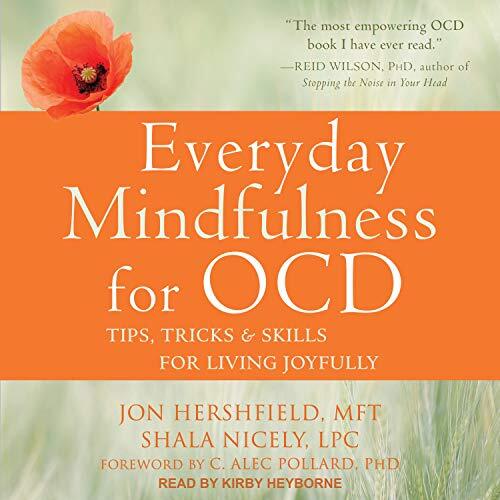
Don’t just survive—thrive. In Everyday Mindfulness for OCD, two experts in obsessive-compulsive disorder (OCD) offer a blend of mindfulness, humor, and self-compassion to help you stop dwelling on what’s wrong and start enhancing what’s right—leading to a more joyful life.If you’ve been diagnosed with OCD, you already understand how your obsessive thoughts, compulsive behavior, and need for rituals can interfere with everyday life. Maybe you’ve already undergone therapy or are in the midst of working with a therapist. It’s important for you to know that life doesn’t end with an OCD diagnosis. In fact, it’s possible to not only live with the disorder, but also live joyfully. This practical and accessible guide will show you how.In Everyday Mindfulness for OCD, you’ll discover how you can stay one step ahead of your OCD. You’ll learn about the world of mindfulness, and how living in the present moment non-judgmentally is so important when you have OCD. You’ll also explore the concept of self-compassion—what it is, what it isn’t, how to use it, and why people with OCD benefit from it. Finally, you’ll discover daily games, tips, and tricks for outsmarting your OCD, meditations and mindfulness exercises, and much, much more.Living with OCD is challenging—but it doesn’t have to define you. If you’re tired of focusing on how “hard” living with OCD is and are looking for fun ways to make the most of your unique self, this book will be a breath of fresh air.
Wonderful book that emphasizes applications of mindfulness and self-compassion for obsessive-compulsive disorder (OCD). The authors’ writing is clear and kind, understandable to a general audience without sacrificing any intellectual rigor. I especially enjoyed how the authors applied principles of mindfulness and self-compassion to exposure response prevention, the leading treatment for OCD. The authors detail too ERP games for OCD mastery and strategies for long-term mastery of OCD such as tips and tricks for relapse prevention. Big kudos to the authors for sharing vulnerably about their own experiences of OCD – we need more of this destigmatizing behavior in the psychology field!
Two small constructive critiques of the book: first, I wish the authors had more explicitly acknowledged the role of eastern philosophy in the development of Buddhism instead of whitewashing it. Second, at one point the authors write that people with OCD “are considerate, incredibly compassionate, and overflowing with empathy.” While I understand the authors want to reduce the stigma around OCD, I always feel a bit iffy when people make general statements about any group of people, including groups of people with mental illness/mental health difficulties. I feel like people deserve compassionate treatment even if they aren’t necessarily compassionate or extremely empathetic, and I also think it may put negative pressure on people to live up to those ideals as well (e.g., someone with OCD may feel a lot of pressure to be extremely empathetic after having been described as such).
Still, a worthwhile book for those with OCD, those who know care about someone with OCD, or someone generally interested in the topic.
I found this book to be very informative, well written, and easy to understand. Someone I love has been diagnosed with OCD (compulsive-with intrusive thoughts) and has undergone therapy to learn to live with this disorder. This book, however, teaches extra tools to be "mindful" to live in the present non-judgementally. It also teaches meditation techniques and tricks to help stay ahead of the OCD so the person living with it doesn't feel paralysed by the disorder. I learned a lot from this book.
What an absolute gem of a book. Everyday Mindfulness for OCD is written by two therapists with lived experience with OCD - Jon Hershfield and Shala Nicely. This book is compassionate without being enabling and manages to provide excellent advice to the reader while not being overly rigid in the expression of this advice. Highly, highly recommended for people living with OCD, their loved ones, and the people who work with OCD in a professional role.
this book is well-structured and is written with a lot of kindness. sometimes the generous tone feels a bit over the top (contrary to the authors' affirmations, not every person who suffers from ocd is a good-hearted, sensitive, thoughtful, observant person)! but i can't fault it for that too much, since most folks need some warmth while seeking guidance.
big emphasis on mindfulness, self-compassion, and yielding to uncertainty. the book also strikes a good balance between informative chapters and sections with exercises and games. it seems like it would be good to flip through and revisit helpful areas as needed.
In all honesty, I entered this contest in hopes of winning this book for my daughter and I did. I must confess that I didn't read it, but just gave it straight away to her. At age 40 her OCD tendencies and anxiety issues are becoming more prominent. One of her daughters, age 8, is already showing great signs of OCD. My daughter was SO excited to receive this book in hopes that she and her daughter can both receive some helpful and positive tricks to leading a more stress free life and ease the anxiety of stepping outside their comfort zone.
Thanks you for this ARC and the hope of calmness and tranquility in a world that to some seems to be slightly out of sequence or balance.
Overall a good book that provides helpful insights, tools, and reminders. I think it's worth the read if you're someone who lives with OCD. The writing however was a little corny at times, I almost rated this 2 stars because of that. I was able to get past it because of the takeaways I got from the book. There was however 1 page that was really disturbing (in terms of the author giving advice); it could have merit and I would have to do more research, but I'm curious to know if anyone else felt the same way (pg 129).
Took forever to finish this book, even though it's such a short book. At first (4 years ago when I bought this book), I didn't want to read about OCD. I guess that's why it took me so long to finally finish it.
Made me cry. This was a lovely book and I will revisit it and the 4 questions during a compulsive episode I think probably forever. Not an intro to ocd. This is a “boss around” your ocd method and there’s discourse out there on its effectiveness but I believe no approach is right or wrong. Sometimes I need to bring in that lightness to ground myself too, because it is all a little bit silly. Forgiveness, self compassion, acceptance = my holy grail!!!!
I loved reading this book. I found it to be extremely helpful. However, as the authors point out, it is important to read this after having done a bit of ERP therapy or have read introductory books about ERP and OCD treatment, as you'll be able to understand it better. Nonetheless, this is a must-read for anyone struggling with OCD.
A Wonderful book about the important healing connection between mindfulness and self-compassion and OCD, a connection that can’t be emphasized enough. it’s short, clear, and to the point, not without some humor. it’s also a very good complimentary read for other books in the same subject.
I could see this being more helpful for someone with contamination or checking OCD. Doesn’t really address pure O or tourettic. Not bad, just not right for me.
This is a really good book. I'm back in the muck of OCD after having gone off the medication I had been on for years. It's the familiar story: feeling you've grown a lot and you can better handle OCD; fearing that being on medication indefinitely is unhealthy; fearing you're not experiencing the emotional highs and lows"normal" people do. Anyway, surviving trumps these concerns, so I'm back on the meds. Reviewing some of my old OCD books, I decided to reread this one.
It's good. One thing that struck while reading it, or rather I remembered what I discovered years ago, is one (the OCD sufferer) has to put it all together in their own minds and tell themselves their own stories about how to tackle OCD ("it all together" meaning the lessons one learns from the books). What I mean is one has to consolidate and synthesize and make their own the information about CBT/ERP, medication, strategies, and so on. Alternately, one constantly refers back to books, searches out new books, wonders which books are the best and which book has the true secrets for success. In other words, one gets caught in a pattern of compulsions vis-a-vis books about OCD. Then again, I'm not a very systematic or organized thinker, so perhaps I haven't been as good at journaling and note-taking in these books regarding strategies for tackling my own OCD tendencies as I could have. As a result, I rely on my own thinking about OCD and less on ideas in books.
Anyway, this is a fine book. I'm going to the bookstore tomorrow to pick up Hershfield's OCD mindfulness workbook. I'll try to a implement a more organized, regimented approach to ERP this time around.
This is an informative, uplifting, and straightforward resource for those with OCD.
This is a book I wish I had had at the beginning of my OCD journey, back when I really didn't understand what was going on with my mind. However, I am currently over two years into my own recovery, comfortably medicated, and with an awesome therapist (as needed), and this book was still amazingly helpful. The authors write in a way that isn't too clinical for the average Joe but is still professional and well-cited. The chapters are well set-up and each topic of healing is thoroughly and clearly explored, in my opinion.
I also really appreciated how uplifting and hopeful the general tone of this guide was; Hershfield and Nicely acknowledge how incredibly difficult living with OCD is while still encouraging a positive mindset in order to live joyfully. They don't beat around the bush but they do remind readers that maintaining a positive attitude can only help OCD symptoms.
All in all, an excellent read and resource. I highly recommend this as solid introduction to coping with OCD for those newly diagnosed, but those of us who are a bit further into our recoveries will also find lots of wisdom here.
I borrowed this from Libby but will be purchasing my own physical copy for future reference.
My husband has obsessive compulsion disorder and it really affects him mentally. He has his rituals and compelling behaviors and repeating them over and over. I found this book to be very informative in explaining OCD but also giving an in depth study of the disease and how to overcome it. It will not be overcome in a week, month or even a year. It will be a continuous process. This book contains many tips and tricks in overcoming OCD. It also explores self compassion, mindfulness and meditation and how they relate to the cure. I recommend this book not only for the person suffering but also family members. It is also a great mental health reference due to the tie in to Dialectal Behavioral Therapy.
One of the best books I've read on managing OCD. It contains a lot of practical, mindfulness-based tools that I personally have implemented, especially for intrusive/unwanted thoughts. If you are experiencing OCD - please know you are not alone. I am rooting for you and there are so many others doing the same. Sending love.
Nice book to accompany Jon Hershfield's first book but id not a stand alone resource. I found the most useful section to be the last section "Long Term Mastery..." This book is not as good as "The Mindfulness Workbook" but a good read for those wanting a quick refresher.
For my first book that I have read this year, I read Everyday Mindfulness for OCD, by John Hershfield. Hershfield is a legend in the OCD self-help space as far as I’m concerned, as he is the one who first introduced me to the disorder, and led me to getting the help I needed to, frankly, survive to see 2025 in the first place. His writings are concise and easy to understand, and whether you have OCD or know someone who does, this book is a necessity.
The first part of the book speaks about mindfulness. Mindfulness is essential to disarming OCD. OCD makes you want to live in either your past or your future, but never in the present. By using mindfulness skills, you can bring yourself back to the present, and realize that OCD is just playing a big trick on you, even if it doesn’t feel like it sometimes. He also speaks about self compassion. Self compassion is one of the hardest things to express during your battle with OCD. You’ll feel hopeless, fearful, and often hateful towards yourself for doing these things that you can’t control, and for fearing or having urges to do things that you never wanted to fear in the first place. His tools for both mindfulness and self compassion are essential tools and your toolbox for battling even basic generalized anxiety.
In the second portion of the book, he gives you a toolbox to strengthen your everyday skills in the earlier discussed concepts. If you’re wondering how to apply mindfulness and self compassion, he gives you a number of ways to do your best. In addition, he provides some ERP (Exposure Response Prevention) games to help enhance your experience doing exposures. Exposures are the hardest part of OCD treatment, as they force you to put down the safety behaviors that you previously thought were keeping you safe, and embracing the anxiety that OCD brings. For example, he talks about how people with harm or sexual harm varieties of OCD should walk through a public place, forcing themselves to imagine all the ways they could hurt or assault every single person they see. That is what ERP is like. It is what I, myself, have to do. It SUCKS!!! I appreciate him trying to make it a little more manageable for us. It’s not the seventh most debilitating disorder for nothing.
In the last section, he details how you can master of OCD on a more long-term basis. OCD is chronic, but it’s not terminal. You’re always going to have it, so you have to live with it. He teaches you strategies to own your OCD, and how to prevent relapses after you’ve overcome certain triggers of OCD. He also speaks about unwanted effects of medication, where to reach out for support, and some of the more unhelpful OCD side effects, like depression.
All in all, this book is a must for anyone with OCD, have family with OCD, or even have severe generalized anxiety disorder. I thought I had just really bad generalized anxiety for my whole life, but turns out, it was OCD with a Scooby-Doo mask on the whole time. Anxiety was just the effect of OCD, not the actual root of the problem. So I recommend anyone who struggles with anxiety to look into it. It’ll help you understand OCD more, something that so many people struggle with, and maybe even yourself.
“OCD is a disorder of ideas. How we experience the world in the context of our personal narrative…OCD is a paragon of meanness…akin to feeling you suffer from ‘terminal uniqueness’...OCD sufferers are people who see…the fine print of the human experience.”
OCD is a relationship, not a series of awkward dates or hook-ups. Relationships require commitment to a rollercoaster of ups and downs, knowing the ride is worth it in the end. A rollercoaster produces anxiety in the unknown twists and plummets, but that’s part of the excitement! We feel stronger and more invigorated, knowing we’ve survived.
“Perfection is actually the terrible state of being on the edge of disaster…‘The body protects itself against danger through flight, fight, or freeze…these reactions become an unholy trinity of self-criticism, self-isolation, and self-absorption’” (Christopher Germer). “When the glue that binds you to your obsession is stronger than your drive to come back from it, you get stuck…ERP is essentially a meditation on a trigger. The trigger is the anchor, and the distractions…are exactly that–distractions.”
“Many have found temporary relief from the cacophony of their minds by checking out and immersing themselves in alcohol or drugs.” However, “The aim of mindfulness is to be aware that you are thinking instead of being lost in thought…Mindfulness is exposure to not taking your thoughts, feelings, and sensations seriously enough…Mastery is found in eliminating OCD’s ability to surprise you.” Think Britney Spears’ lyric, “That is just so typically me!” Roll your eyes and move on.
“When you choose to view your stress response as helpful, you create the biology of courage… ‘Let fear soften us rather than harden into resistance’” (Pema Chodron). “Keep our arms open to the future, which is constantly arriving…positions us as caretakers of the moment, not slaves to it.” By exchanging slavery for service–“any way in which your efforts improve the lives or experience of others”--we affirm that “we are all stronger than we give ourselves credit for. We are the ones with the credit to give.”
Part one: Mindfulness and Self Compassion for OCD ·Mindfulnes ·Self Compassion
Part Two: The Daily Joyful Toolbox ·Everyday ways to strengthen your mindfulness and Self Compassion skills ·ERP games for OCD
Part Three: ·Owning your OCD ·Relapse prevention ·The OCD Ecosystem References
The mindfulness workbook was amazing. Hands down one of the best books on dealing with OCD that I have came across, so when I saw this little book by Jon I jumped to get it. It is 196 pages but about half the size of the mindfulness workbook. Which I personally like because I can pack it in my purses.
I really like the fact that this book reframe so to speak meditation, in that your not trying to clear your mind as much as observe it. As noted in the book having the goal to clear your mind can be futile for those wIth thought disorders.This is a great guide to go along with the mindfulness book and also as a stand alone text. Some of the exercise presented may be a little difficult for those who haven't meditated before to grasp. For me personally when learning to meditate it was always more helpful to have an actual voice recording or live person to help guide me and provide gentle reminders.But I think Jon and Shala did a very thorough job in communicating posture and what an overall meditation session should be.
I love the compassion section as well. For those dealing with mental disorders self compassion can be overlooked even when seeking therapy. But it is crucial to Practice compassion. I feel a book like this is needed because it helps you deal with the other issues of guilt, and low self esteem that may come along with mental disorders.As most books help you deal with the disorder itself and not the (collateral damage)so to speak, it can cause in its presence.
Overall this book IMHO is not just for those with OCD but can be used for a wide range of mental disorders. And for those without a disorder but is easily anxious, and stressed
Everyday Mindfulness for OCD is a very good self-help book designed for people experiencing obsessive-compulsive disorder (OCD). It was written by two experts in the field who have OCD themselves and I read it to improve my work as a therapist. Hershfield & Nicely’s work is compassionate while expertly avoiding “enabling” obsessive thoughts and compulsive behaviors. They are true to the maxim I base my practice around: it is not your fault that you have this condition, but it is your responsibility to do something about it. I found Chapter 4, which is filled with examples of Exposure and Response Prevention (ERP) games that can be used to gain mastery over OCD, to be particularly useful.
**
Citation: Hershfield, J., & Nicely, S. (2021). Everyday mindfulness for ocd: Tips, tricks & skills for living joyfully. Tantor Audio. https://www.audible.com/pd/Everyday-M... (Original work published 2017)
Title:Everyday Mindfulness for OCD: Tips, Tricks & Skills for Living Joyfully Author(s): Jon Hershfield, MFT & Shala Nicely, LPC Year: 2017 Genre: Nonfiction - Psychology, self-help Page count: 200 pages Date(s) read: 4/2/24 - 4/4/24 Book #75 in 2024 **
The structure of Everyday Mindfulness for OCD:
Introduction
Part One: Mindfulness and Self-Compassion for OCD
Chapter 1: Mindfulness Chapter 2: Self-Compassion
Part Two: The Daily Joyful Toolbox
Chapter 3: Everyday Ways to Strengthen Your Mindfulness and Self-Compassion Skills Chapter 4: ERP Games for OCD Mastery
Part Three: Long-Term Mastery Over OCD
Chapter 5: Owning Your OCD Chapter 6: Relapse Prevention Chapter 7: The OCD Ecosystem
My obsessive-compulsive tendencies have been flaring up, and this has been such a wonderful tool! I loved how it didn't focus on overly explaining OCD or all on the tedious science behind it as many other books do. (Some of those are exhausting, because I already understand what the root of my anxieties are; I want to focus on creating positive change!) Instead, this jumped right in to helpful exercises and reflections. I've been working to incorporate a lot of the "games" and mindsets, and I found many of them to be a unique spin on other exercises I've tried. Of course, I already know that mindfulness is key to combatting these anxieties, but I felt like the approach here was more eclectic and helpful than other books I have tried. I truly appreciated the reflection about self-compassion and how we can work to reframe our thoughts to appreciate both sides of the anxiety coin; perhaps the part of my brain that makes me obsessively worry also makes me the observant, compassionate, hard-working person that I am. I appreciated this book so much that I bought myself a copy, as I want to make some of these practices part of my daily mental health exercises. Definitely recommend if you're looking for a "tune-up!"
True to OCD form, I read a lot about OCD. And I have to say that this is some of the best material I’ve read on the topic. It is probably geared a bit more toward people who have read a fair bit about their condition, but anyone would benefit a lot I think.
I picked up a good number of tips I hadn’t learned before. They’ve already been pretty helpful. I will warn, though, that to get something out of this book you should plan to work on the exercises, and schedule out for yourself time to do them.
A major plus is that a good bit of time is spent on that element that is so often present with OCD: self-criticism. A running mental track of self-condemnation.
The writers are respected “superstars” in the world of OCD treatment and they write intelligently and with a great tone/style. As one of the book reviews in the cover says, it is a great bedside book - definitely a good one to buy, and come back to as you try the exercises out to see which help your specific brand of OCD. Good stuff!
Very good, real and helpful. So many of the examples are so true and presented with good humor (and respectfully), that I found myself cracking up aloud while reading. The experience of being able to learn about one's very difficult situation, while laughing at it, made it easier to remember and practice the fun tricks and solutions they offer to overcome the hardest parts of it. I also greatly appreciated how they emphasized that some of the qualities that cause difficulties for people with OCD, are the same qualities that make those people very considerate, detail-oriented, creative, and caring. It was nice to have a moment to cherish these positive qualities, that come with the territory, too.
Good, solidly helpful stuff that managed to make me laugh a ton. After reading the book, I checked out the authors' other works, websites, and newsletter. Thank you for writing this book and for all your work on this topic.
I’ve not been diagnosed with OCD, but I do have anxiety. I recently became interested in OCD when I realized that I was thinking/worrying/*obsessing* about my anxiety all the time. I’ve also become interested because I’ve noticed in times of stress, like, say, a pandemic, that I do actually engage in what I believe could be classified as compulsive behaviors. Like repeatedly checking that my door is locked, even though I know I locked it, or turning the car around to make sure the oven isn’t on, even though I haven’t baked anything in a week. Anyway, I’m not here to diagnose myself with OCD, but I read this book and found it illuminating and really helpful.
Most of what’s in this book could also be applied to generalized anxiety. And if nothing else, I learned a lot about OCD and hope we can begin to destigmatize it as we have other mental health conditions like anxiety and depression.
For those suffering with OCD, this is a great companion to combatting the rituals of the disorder, by developing mindfulness over your condition and learning how to recognise signs of relapse. It has several different stand-alone sections, which can either be read in order or as and when you need, including mindfulness, self-compassion. I would recommend this book to sufferers who have sought other treatment primarily, whether that is medication and / or therapy such as CBT, as mindfulness alone will unlikely challenge and prevent the rituals that OCD brings. It may however be a good book for friends and family of sufferers to read, as it lends a good insight into the condition and how others can be compassionate with you.
در کتاب ذهن آگاهی روزمره برای اختلال وسواسی اجباری، نویسنده ها سعی کرده اند با توضیح اثرات مثبت به کار بردن ذهن آگاهی، شفقت بخشی به خود و مواجهه با بیماری، مبتلایان را راهنمایی کنند. در طول کتاب مثال های واضحی برای کمک به درک مطالب زده شده و از نقاط قوت کتاب، داشتن تمرینها، توضیح ابزارها و حتی بازیهای عینی است که ذهن خواننده را درگیر می کند. از نکات منفی کتاب، ترجمه غیر روان و نا مرتبط بودن مثال ها با جامعه ایران بوده ضمن اینکه مثل بیشتر کتاب های روانشناسی تکرار به شدت در مطالب به چشم می خورد.
My therapist, who is an OCD specialist, highly recommended this book. It offers a lot of everyday tips and tricks to supplement a CBT/ERP treatment plan.
I found this book very interesting and plan on using some the ERP games and self-kindness techniques in my daily life. To be honest, I often let maintenance of my ERP skills slip when I am going through low symptom periods. This offers some great techniques for that everyday maintenance.
A great self-help book for people experiencing OCD, their families, and the therapists who work with them. The authors both have been diagnosed with OCD and offer personal insights into those techniques that have worked for them. This book is focused on strategies for coping with OCD, specifically through Exposure with Response Prevention (ERP), rather than understanding the etiology behind it. This book provides a great hands-on approach, is very readable and engaging.