

What do you think?

Raven Son #1
The Song of the Sirin
An evil omen clouds the sky. A song of lore returns. Can one man’s quest save the world?
Voran can’t help but believe the rumors. As blight ravages the countryside and darkness covers the sun, the young warrior of Vasyllia hears of an ancient spirit that devours souls. He feels powerless to fight the oncoming devastation until a mythical creature entrusts him with a long-forgotten song. Legend has it that such a song can heal the masses, overthrow kingdoms, and raise humans to divine beings…
Armed with the memory of the song, Voran must hunt down a dark spirit before it achieves its goal of immortality. His quest takes him through doorways to other worlds and puts him on a collision course with seductive nymphs and riddling giants. With each step of the journey, the strength of the villainous spirit grows, as does Voran’s fear that the only way to save his world… is to let it be destroyed.
The Song of the Sirin is an epic fantasy retelling of the Russian fairy tale Prince Ivan and the Grey Wolf.
Voran can’t help but believe the rumors. As blight ravages the countryside and darkness covers the sun, the young warrior of Vasyllia hears of an ancient spirit that devours souls. He feels powerless to fight the oncoming devastation until a mythical creature entrusts him with a long-forgotten song. Legend has it that such a song can heal the masses, overthrow kingdoms, and raise humans to divine beings…
Armed with the memory of the song, Voran must hunt down a dark spirit before it achieves its goal of immortality. His quest takes him through doorways to other worlds and puts him on a collision course with seductive nymphs and riddling giants. With each step of the journey, the strength of the villainous spirit grows, as does Voran’s fear that the only way to save his world… is to let it be destroyed.
The Song of the Sirin is an epic fantasy retelling of the Russian fairy tale Prince Ivan and the Grey Wolf.
420 pages, Paperback
First published January 24, 2014
About the author
Nicholas Kotar
41 books383 followersNicholas Kotar is a writer of epic fantasy inspired by Russian fairy tales, a freelance translator from Russian to English, the resident conductor of the men's choir at a Russian monastery in the middle of nowhere, and a semi-professional vocalist. His one great regret in life is that he was not born in the nineteenth century in St. Petersburg, but he is doing everything he can to remedy that error.
Ratings & Reviews
Friends & Following
Create a free account to discover what your friends think of this book!
Community Reviews
Displaying 1 - 30 of 153 reviews

July 12, 2017
Read my Q&A with author Nicholas Kotar and full review at www.readrantrockandroll.com
*This review may contain a few very mild spoilers*
Fantasy isn’t one of my favorite genres and when it comes to epic fantasy’s like The Song of the Sirin, it takes me extra time to read it along with some concentration. After reading the blurb for this one and finding out that it was inspired by a Russian fairy tale, I couldn’t resist. I rushed to Amazon and picked it up at sale price. I believe it was an exceptional reading choice for me.
The story begins with Voran and Lebía, a brother and sister living in Vasyllia. Their father Otchigen and mother Aglaia have vanished and no one knows where they are. Some say Otchigen vanished after killing many people and stories abound claim him to have beaten his wife Aglaia. Voran doesn’t know what to believe, but he trusts in his heart that his father didn’t commit these crimes. He meets a pilgrim in the wilderness and discovers that everything may not be how it seems.
“You surprise me, young Voran,” said the Pilgrim. “How quickly you pierce to the heart of things. Whatever happens, my falcon, do not forget this. Vasyllia is everything. You must never let Vasyllia fall. She is everything.”
Voran begins to realize that Vasyllia is on the brink of destruction and he’s told that he must locate Living Water to save Vasyllia. At this point, everyone in Vasyllia and the outer lands is in danger. The Covenant Tree is fading, the Sirin sings for Voran, and the adventure unfolds…
There’s so much going on in the story and I was thoroughly surprised throughout the entire book. Even with each chapter having an excerpt from other tales, there was no way I could predict what was ahead. Every chapter had something new happening with separate plots taking place. New characters and events come into the story and they literally leave you aghast. The plot and the characters were so complex with a few of my favorites being Voran, Tarin, and Leshaya. Nicholas Kotar writes beautifully and his writing is very detailed and descriptive. With that said, I have to admit that there were times when I found the reading to be a tad difficult. I ended up with 235 notes and highlights by the time I was done. This may not be a book that you sail through quickly, but it’s very enjoyable to take the time and relish in the beautiful prose.
Overall, I enjoyed the book very much. This epic fantasy has a lot of what fantasy readers expect including shapeshifters, giants, wolf-like monsters, weird creatures, good and evil, magic, and mystery. The ending was heartwarming for me which was not expected with the events that were taking place throughout the book. I'm definitely going to recommend this one and I'm looking forward the other installments.
Anyone who enjoys fantasy will love this book.
4.5*****
*This review may contain a few very mild spoilers*
Fantasy isn’t one of my favorite genres and when it comes to epic fantasy’s like The Song of the Sirin, it takes me extra time to read it along with some concentration. After reading the blurb for this one and finding out that it was inspired by a Russian fairy tale, I couldn’t resist. I rushed to Amazon and picked it up at sale price. I believe it was an exceptional reading choice for me.
The story begins with Voran and Lebía, a brother and sister living in Vasyllia. Their father Otchigen and mother Aglaia have vanished and no one knows where they are. Some say Otchigen vanished after killing many people and stories abound claim him to have beaten his wife Aglaia. Voran doesn’t know what to believe, but he trusts in his heart that his father didn’t commit these crimes. He meets a pilgrim in the wilderness and discovers that everything may not be how it seems.
“You surprise me, young Voran,” said the Pilgrim. “How quickly you pierce to the heart of things. Whatever happens, my falcon, do not forget this. Vasyllia is everything. You must never let Vasyllia fall. She is everything.”
Voran begins to realize that Vasyllia is on the brink of destruction and he’s told that he must locate Living Water to save Vasyllia. At this point, everyone in Vasyllia and the outer lands is in danger. The Covenant Tree is fading, the Sirin sings for Voran, and the adventure unfolds…
There’s so much going on in the story and I was thoroughly surprised throughout the entire book. Even with each chapter having an excerpt from other tales, there was no way I could predict what was ahead. Every chapter had something new happening with separate plots taking place. New characters and events come into the story and they literally leave you aghast. The plot and the characters were so complex with a few of my favorites being Voran, Tarin, and Leshaya. Nicholas Kotar writes beautifully and his writing is very detailed and descriptive. With that said, I have to admit that there were times when I found the reading to be a tad difficult. I ended up with 235 notes and highlights by the time I was done. This may not be a book that you sail through quickly, but it’s very enjoyable to take the time and relish in the beautiful prose.
Overall, I enjoyed the book very much. This epic fantasy has a lot of what fantasy readers expect including shapeshifters, giants, wolf-like monsters, weird creatures, good and evil, magic, and mystery. The ending was heartwarming for me which was not expected with the events that were taking place throughout the book. I'm definitely going to recommend this one and I'm looking forward the other installments.
Anyone who enjoys fantasy will love this book.
4.5*****

Read
July 9, 2017Russian fairy tales are a fascinating blend of the beautiful, the macabre, and the bizarre. If you read them, you’ll encounter fantastical creatures like firebirds, dragons with many heads, shape-shifters, paradise birds with the heads of beautiful women and the bodies of eagles, hags with dubious loyalties, and nature spirits that sometimes help the hero, but sometimes want to eat them alive.
But underneath all the arresting strangeness, there’s a well of profound and even spiritual meaning that makes these stories worth returning to again and again. In fact, as Russian philosopher Ivan Ilyin suggests in his wonderful lecture “The Spiritual Meaning of Stories,” they are indispensable for those of us who have lost our ability to see and appreciate the beautiful and transcendent in life.
I take these fairy tale settings and tropes as inspiration for new explorations of both epic and intimate battles of good against evil. The authors that inspire me the most are J. R. R. Tolkien, C. S. Lewis, George MacDonald, Gene Wolfe, N. K. Jemisin, and Catherynne M. Valente.
If you’re interested in why I prefer to write in both the fantasy and fairy tale genres, read my writer’s manifesto at my author website.
But underneath all the arresting strangeness, there’s a well of profound and even spiritual meaning that makes these stories worth returning to again and again. In fact, as Russian philosopher Ivan Ilyin suggests in his wonderful lecture “The Spiritual Meaning of Stories,” they are indispensable for those of us who have lost our ability to see and appreciate the beautiful and transcendent in life.
I take these fairy tale settings and tropes as inspiration for new explorations of both epic and intimate battles of good against evil. The authors that inspire me the most are J. R. R. Tolkien, C. S. Lewis, George MacDonald, Gene Wolfe, N. K. Jemisin, and Catherynne M. Valente.
If you’re interested in why I prefer to write in both the fantasy and fairy tale genres, read my writer’s manifesto at my author website.

April 6, 2019
.
Vasyllia had become forgetful of the covenant they were built upon and now their world is dying. This sweeping tale based encompassing legends long past results in a painfully soul searching journey after an evil omen is presented.
The Pilgrim looked briefly uncomfortable at the mention of Adonais, but he laid two hands on Voran's head and said, "Sometimes the Heights are moved by our fervent supplication, sometimes they are silent for our hidden good. I wish that Voran will find the strength to choose the right way among all ways, though it be the most painful"
This spiritual journey, religious experience, will change everything . . . .
"'Joy comes from only one source. Pain. " So a human being can only become truly human if he lives for others. That way, the way of love, is by necessity the way of pain. Shared pain."
A quest lead by a young man, Voran, who had been forced to live under the dark shadow of his disgraced father, who now follows the song of his sirin (not to be confused with a siren).
"Seek the weeping tree, my falcon, before it is found by one who has sought it for ages." Lyna, his sirin, shimmered and began to fade.
This is a very intense, complex, and profound telling of A Russian fantasy through symbolism. The plot was filled with symbolism. The landscapes are described so vividly that the image is clear and concise. The creatures and powers mesmerize and hypnotize the reader due to their complexity and their overwhelming danger. This epic version of the Russian fable is a delightful mix of song and myth. Fantasy lovers will be enthralled with this series. It was just a bit overwhelming for me.
Vasyllia had become forgetful of the covenant they were built upon and now their world is dying. This sweeping tale based encompassing legends long past results in a painfully soul searching journey after an evil omen is presented.
The Pilgrim looked briefly uncomfortable at the mention of Adonais, but he laid two hands on Voran's head and said, "Sometimes the Heights are moved by our fervent supplication, sometimes they are silent for our hidden good. I wish that Voran will find the strength to choose the right way among all ways, though it be the most painful"
This spiritual journey, religious experience, will change everything . . . .
"'Joy comes from only one source. Pain. " So a human being can only become truly human if he lives for others. That way, the way of love, is by necessity the way of pain. Shared pain."
A quest lead by a young man, Voran, who had been forced to live under the dark shadow of his disgraced father, who now follows the song of his sirin (not to be confused with a siren).
"Seek the weeping tree, my falcon, before it is found by one who has sought it for ages." Lyna, his sirin, shimmered and began to fade.
This is a very intense, complex, and profound telling of A Russian fantasy through symbolism. The plot was filled with symbolism. The landscapes are described so vividly that the image is clear and concise. The creatures and powers mesmerize and hypnotize the reader due to their complexity and their overwhelming danger. This epic version of the Russian fable is a delightful mix of song and myth. Fantasy lovers will be enthralled with this series. It was just a bit overwhelming for me.

August 1, 2017
Caution, I’m usually not a lover of fantasy. Now, fiction books that elucidate the magic of nature (real or not) and move continuously in a quest win me over. Give me contempt and love and I’m enthralled. Thus, Kotar’s SOTS fantasy makes me a less-reluctant fan of the genre.
There are creatures and powers that I had not imagined, that personify the good and evil in humans. Already, animals of the sky and ground thrill me and teach me how basic I am in their world. Nonetheless, the winged and furry four-footers in SOTS gave me wondrous feelings about the possibilities outside of the real.
Further grounding me were the lower caste. Their deprivation and hunger gave nothing to their cherished values. How they held on to the traditions and knowledge of their world that eluded the upper caste!
Well-balanced, the good and evil characters take the reader on a dark and loathsome journey. Their propensity to do the wrong things, either unknowledgeable of the outcomes or damned to fall, creates a tension that drives the story.
Although the writing is pure and charged, at times I wished it could have been tighter, less fawning, rarer. On the other hand, the myth is rich and fantastic. I look forward to reading the next book in the series.
Observations
• Light. There was so much at times, I had to wear sunglasses.
• Pronunciation. To confirm my assumption that Sirin is pronounced sear-en, I searched Google and found I am in good company. Apparently, many in the U.S. say sigh-ren. You can be assured no sailors were lured to their death in this story.
There are creatures and powers that I had not imagined, that personify the good and evil in humans. Already, animals of the sky and ground thrill me and teach me how basic I am in their world. Nonetheless, the winged and furry four-footers in SOTS gave me wondrous feelings about the possibilities outside of the real.
Further grounding me were the lower caste. Their deprivation and hunger gave nothing to their cherished values. How they held on to the traditions and knowledge of their world that eluded the upper caste!
Well-balanced, the good and evil characters take the reader on a dark and loathsome journey. Their propensity to do the wrong things, either unknowledgeable of the outcomes or damned to fall, creates a tension that drives the story.
Although the writing is pure and charged, at times I wished it could have been tighter, less fawning, rarer. On the other hand, the myth is rich and fantastic. I look forward to reading the next book in the series.
Observations
• Light. There was so much at times, I had to wear sunglasses.
• Pronunciation. To confirm my assumption that Sirin is pronounced sear-en, I searched Google and found I am in good company. Apparently, many in the U.S. say sigh-ren. You can be assured no sailors were lured to their death in this story.

January 28, 2014
The novel Raven Son by Nicholas Kotar belongs to the high fantasy genre. From the very first page, the reader is intrigued and swept up by the Syrin’s song into the glorious land of Vasyllia. The central figure is Voran, a restless young nobleman that goes through adventures and battles to protect those he loves, meeting both beauty and monstrosity along the way. Voran’s experiences lead him to understand that our inner dark passions and emotions are far more deadly than the Darkness that comes from the outer world. Every character in the novel is deeply portrayed; each character has its own vital mission to fulfill. Through the high art of storytelling, the author in an involving and acutely personal manner leads us to believe that regardless of our individual missteps, we can always draw strength from our faith in order to become the people we were created to be.
“Whatever happens, do not lose hope. There is always hope”.
Entwined with motives from ancient Russian fairy tales and legends, the novel is not simply a fantasy book filled with striking descriptions of Nature, raging battles and insuperable foes, it strikes the deepest chords of our hearts, sweeping the reader through Voran’s victories and defeats, and gently guiding us to analyze our own life path and choices.
“Whatever happens, do not lose hope. There is always hope”.
Entwined with motives from ancient Russian fairy tales and legends, the novel is not simply a fantasy book filled with striking descriptions of Nature, raging battles and insuperable foes, it strikes the deepest chords of our hearts, sweeping the reader through Voran’s victories and defeats, and gently guiding us to analyze our own life path and choices.
June 20, 2017
Before I delve into a review of this most excellent book, I would like to put my thoughts into context. I grew up on Tolkien and Lewis. By the time I was eight or nine, my father had ready The Hobbit, The Lord of the Rings Trilogy, and most if not all of The Chronicles of Narnia to my younger brother and I. Since that time I have read very few fantasy novels that I thought were really good. I enjoyed The Prydain Chronicles by Lloyd Alexander in my youth, and eventually my Dad discovered Jack Vance, whose writing I consider excellent. George MacDonald’s Lilith is another excellent work. For me the very best fantasy has a depth that stems from real life struggles that is steeped in authentic mythology and fairytales. I felt for a long time that much of the Fantasy genre that is available lacks depth, in that department and has been reduced to a mere exercise in form—it has wizards, it has dragons—whatever. All of this so often becomes an end in itself—so much so that I had altogether given up on Fantasy as a genre. Instead I’ve been reading Mythology, fairytales, classics, etc. I hold a Bachelor’s degree in English Literature with an emphasis in Medieval Literature, during which time I read Beowulf in Old English, Chaucer in Middle English, and became acquainted with Norse Mythology which has given me a much deeper understanding of what people like Tolkien set out to do and their influences both in terms of story and language.
The Song of the Sirin is the first new Fantasy novel I have read in at least fifteen that I thought was truly excellent. This review will contain no spoilers of the book—I would not rob any potential reader of the full experience of this fine novel. There are a number of criteria upon which I judge Fantasy novels: Plot, Pacing, Characters, Mythological/Fairytale/Historical Connections, Profundity, Writing Style.
The plot in this novel is excellent. I was delighted by all the many twists and turns. There was nothing predictable in this book. I was continually delighted by new revelations. One thing that Mr. Kotar does excellently is to give the reader just enough information to understand what is going on, unfolding the backstory naturally throughout the course of the book so that one discovers the lore along with the characters. There are many times when I felt completely hopeless thinking there was no way for the characters to get out of whatever situation they were in. In every case the answer was a surprise, believable—not easy. The creativity of this author is of the highest caliber.
The pacing is perfect. Mr. Kotar throws the reader right into it and hooks him or her in the first chapter. I had a hard time putting this book down once I got going with it. It is a true page turner. It did not feel rushed and it was never slow.
The characters are complex and believable. Even some of the more minor characters are very deep and well fleshed out. This adds a very realistic dimension to the story. Not only that, but I found that I could relate to the characters and their struggles and that I cared deeply about what happened to them. Mr. Kotar demonstrates a very deep understanding of human nature and personal struggle and this come through in his characters.
One of the things that really sets this novel apart from much of the Fantasy that is out there is that it is informed by and draws a lot of depth from mythology, history, and folk lore. I will let the reader discover these aspects for him or herself, but even for someone like me who is not well versed in the particular mythology upon which Mr. Kotar draws it adds immense depth to the story. The references I was familiar with gave me goose bumps as they are applied masterfully.
All of these elements make for a very profound book which has much to say to this generation and this world. I found it a very relevant book that explores many issues people face today without being preachy or offering pat answers. The issues it explores are deep and are explored deeply on many different levels.
Last of all, the icing on the cake, but for me one of the essential elements of anything I read: style. I was delighted throughout this novel by Mr. Kotar’s beautiful style. His descriptions of scenery, events, people, his turns of phrase, are all vivid, alive. The reader touches, tastes, smells, hears and beholds in full vibrant vivid color the most incredible places, people, and events. This is a delight for the poet or anyone who cares about language. But do not be put off, for his style is by no means stuffy or unapproachable. His style is accessible to all.
I would not hesitate to recommend this book to anyone and everyone. This is the best piece of Fantasy, if not the best novel I have read in over fifteen years. This book proudly joins Tolkien, Lewis, Alexander, and MacDonald on my bookshelf and holds its own as an equal among them. A modern Fantasy with deep classic roots that took me to a new world that is unlike any I have encountered before. This book receives my very highest recommendation.
The Song of the Sirin is the first new Fantasy novel I have read in at least fifteen that I thought was truly excellent. This review will contain no spoilers of the book—I would not rob any potential reader of the full experience of this fine novel. There are a number of criteria upon which I judge Fantasy novels: Plot, Pacing, Characters, Mythological/Fairytale/Historical Connections, Profundity, Writing Style.
The plot in this novel is excellent. I was delighted by all the many twists and turns. There was nothing predictable in this book. I was continually delighted by new revelations. One thing that Mr. Kotar does excellently is to give the reader just enough information to understand what is going on, unfolding the backstory naturally throughout the course of the book so that one discovers the lore along with the characters. There are many times when I felt completely hopeless thinking there was no way for the characters to get out of whatever situation they were in. In every case the answer was a surprise, believable—not easy. The creativity of this author is of the highest caliber.
The pacing is perfect. Mr. Kotar throws the reader right into it and hooks him or her in the first chapter. I had a hard time putting this book down once I got going with it. It is a true page turner. It did not feel rushed and it was never slow.
The characters are complex and believable. Even some of the more minor characters are very deep and well fleshed out. This adds a very realistic dimension to the story. Not only that, but I found that I could relate to the characters and their struggles and that I cared deeply about what happened to them. Mr. Kotar demonstrates a very deep understanding of human nature and personal struggle and this come through in his characters.
One of the things that really sets this novel apart from much of the Fantasy that is out there is that it is informed by and draws a lot of depth from mythology, history, and folk lore. I will let the reader discover these aspects for him or herself, but even for someone like me who is not well versed in the particular mythology upon which Mr. Kotar draws it adds immense depth to the story. The references I was familiar with gave me goose bumps as they are applied masterfully.
All of these elements make for a very profound book which has much to say to this generation and this world. I found it a very relevant book that explores many issues people face today without being preachy or offering pat answers. The issues it explores are deep and are explored deeply on many different levels.
Last of all, the icing on the cake, but for me one of the essential elements of anything I read: style. I was delighted throughout this novel by Mr. Kotar’s beautiful style. His descriptions of scenery, events, people, his turns of phrase, are all vivid, alive. The reader touches, tastes, smells, hears and beholds in full vibrant vivid color the most incredible places, people, and events. This is a delight for the poet or anyone who cares about language. But do not be put off, for his style is by no means stuffy or unapproachable. His style is accessible to all.
I would not hesitate to recommend this book to anyone and everyone. This is the best piece of Fantasy, if not the best novel I have read in over fifteen years. This book proudly joins Tolkien, Lewis, Alexander, and MacDonald on my bookshelf and holds its own as an equal among them. A modern Fantasy with deep classic roots that took me to a new world that is unlike any I have encountered before. This book receives my very highest recommendation.

February 1, 2018
How many Westerners have ever heard of a fantastic creature like a Sirin? I never heard of them until encountering this book. In The Song of the Sirin we are introduced to many strange creatures who populate Russian folklore, as well as the stories and culture surrounding these tales. The world of Russia has just not seemed like a very accessible place to us in the far West. Nicholas Kotar in the Raven Son series bridges this gap for us and gives us a rich story set in medieval Russia.
The thing I love most about this series though is that it comes out of an Orthodox Christian worldview. Nicholas (who is a Russian Orthodox deacon) weaves the Orthodox mindset all through these stories, but in a beautiful and subtle way, like gold thread that just illumines a tapestry. This is Christian fiction at its best because it isn't like much of modern, obviously proselytizing, Christian fiction. Orthodox readers will recognize many concepts and characters that come out of the rich world of old Russian Orthodoxy, woven together with Russian mythology.
Here is an example of a creature Christians are all familiar with but in the context of Epic Russian Orthodox fantasy. It was summoned through the breastplate prayer:
"It was a giant n the form of a man of light and fire. His eyes were suns, his teeth were moons. Six tapered wings of gold, lapis, emerald, ruby, silver, and topaz flickered in constant movement about his body. He had four faces turned in each direction--a man of searing beauty, and eagle, a lion, and a Sirin. As monstrous as such a creature should be, Voran could hardly keep from worshiping him right there on the field of battle, so beautiful he was. In his outstretched right hand, he held a sword of fire that was at once the sharpest metal and the hottest flame. In his left was a war hammer the size of a small mountain."
I feel strongly that fiction, especially speculative fiction, is a powerful vehicle for communicating, and making come alive, spiritual truths in a way that reaches beyond the mind and into the heart. In reading these books one is given a view of the transcendent and holy, while also warned to protect the spiritual gifts and relationships we are given, and not to forget the truth and power that has been handed down to us.
The thing I love most about this series though is that it comes out of an Orthodox Christian worldview. Nicholas (who is a Russian Orthodox deacon) weaves the Orthodox mindset all through these stories, but in a beautiful and subtle way, like gold thread that just illumines a tapestry. This is Christian fiction at its best because it isn't like much of modern, obviously proselytizing, Christian fiction. Orthodox readers will recognize many concepts and characters that come out of the rich world of old Russian Orthodoxy, woven together with Russian mythology.
Here is an example of a creature Christians are all familiar with but in the context of Epic Russian Orthodox fantasy. It was summoned through the breastplate prayer:
"It was a giant n the form of a man of light and fire. His eyes were suns, his teeth were moons. Six tapered wings of gold, lapis, emerald, ruby, silver, and topaz flickered in constant movement about his body. He had four faces turned in each direction--a man of searing beauty, and eagle, a lion, and a Sirin. As monstrous as such a creature should be, Voran could hardly keep from worshiping him right there on the field of battle, so beautiful he was. In his outstretched right hand, he held a sword of fire that was at once the sharpest metal and the hottest flame. In his left was a war hammer the size of a small mountain."
I feel strongly that fiction, especially speculative fiction, is a powerful vehicle for communicating, and making come alive, spiritual truths in a way that reaches beyond the mind and into the heart. In reading these books one is given a view of the transcendent and holy, while also warned to protect the spiritual gifts and relationships we are given, and not to forget the truth and power that has been handed down to us.

July 1, 2017
The Song of the Sirin is a wonderfully epic take on a Russian fairy tale. Nicholas Kotar writes a tale that goes beyond the magical land of Vasyllia and delves into the human heart. It not simply the tale of a quest, but of the struggle between good and evil in the human heart and the search for beauty. I enjoyed the emotional depth of the characters and seeing them make their choices, both good and bad. The novel grew into an intense, epic ending, of the type that I rarely find in books anymore. If you like epic fantasy, J.R.R. Tolkien, or fairy tales, you will enjoy this book!
I think one of the great strengths of this novel is the variety of viewpoints and the quartet of main characters, as opposed to remaining with Voran the entire time. This allows the readers to understand the world as a whole, and the changing viewpoints were never jarring or out of place. I found myself preferring the other three members of the main quartet to Voran, a testament to how well-rounded his other characters were. I also really enjoyed the Russian folk and fairy tale elements that came up throughout the book. If you know Russian or Russian culture, there will be a number of familiar and amusing elements, but you will not miss much if you don’t. And knowing the fairy tales won’t spoil the ending of the book.
That being said, I did have a couple problems with the book. I found the beginning and set up a bit rushed and the characters’ feelings, especially Voran’s, a bit heavy handed at points. To be fair, I’ve been reading 1000 pages epics recently, so my problems with the pacing may only be reflecting that. At times I found the writing a little patchy, but once he settles into the story properly, Kotar’s writing evens out and I really enjoyed his narration and writing style. Overall I really enjoyed the book and am looking forward to the sequel.
I think one of the great strengths of this novel is the variety of viewpoints and the quartet of main characters, as opposed to remaining with Voran the entire time. This allows the readers to understand the world as a whole, and the changing viewpoints were never jarring or out of place. I found myself preferring the other three members of the main quartet to Voran, a testament to how well-rounded his other characters were. I also really enjoyed the Russian folk and fairy tale elements that came up throughout the book. If you know Russian or Russian culture, there will be a number of familiar and amusing elements, but you will not miss much if you don’t. And knowing the fairy tales won’t spoil the ending of the book.
That being said, I did have a couple problems with the book. I found the beginning and set up a bit rushed and the characters’ feelings, especially Voran’s, a bit heavy handed at points. To be fair, I’ve been reading 1000 pages epics recently, so my problems with the pacing may only be reflecting that. At times I found the writing a little patchy, but once he settles into the story properly, Kotar’s writing evens out and I really enjoyed his narration and writing style. Overall I really enjoyed the book and am looking forward to the sequel.

February 5, 2014
Nicholas Kotar's writing has the elegance, lyricism, and attention to detail that all fantasy readers eagerly hope for. With these skills he crafts the beautiful setting of Vasyllia which comes to life before the reader's eyes, and we are introduced to a refreshingly new scene for the contemporary fantasy/adventure genre. After I finished readingRaven Son, it took me some time to narrow down the specific elements of the novel that raised it from great to masterful. The answer is not in the previously mentioned components, but in the seamlessly incorporated philosophical questions raised by the author. Kotar uses the train of the thought of the protagonist, Voran, to ask the reader a very important question: what happens to society when there is no longer a need to strive towards perfection and betterment, when beauty can be cheaply imitated? Kotar avoids preaching to the reader instead choosing to point the reader eloquently towards an answer through Voran's internal and external conflicts. It is impossible to read Raven Son and not see the parallels between Vasyllia and the twenty-first century. I look forward to more from Nicholas Kotar, and know that he will not disappoint.

March 19, 2018
Once I was hooked by the plot, I read this novel compulsively. I am, admittedly, not a connoisseur of fantasy as a genre, but I really enjoyed the (all-too) human grounding that Kotar has given the main characters; the more their weaknesses were revealed, the more I identified with them.
What impressed me even more was the way Kotar allows the reader to truly inhabit the world of the novel, a place where the physical and the spiritual interact in such a way that the latter permeates the former seamlessly. To the extent that I slowed down my usually racing mind, I was able to not only read about, but sense some of the wonder the characters had in their meetings with the sublime and the numinous. I look forward to reading the next books in this series.
What impressed me even more was the way Kotar allows the reader to truly inhabit the world of the novel, a place where the physical and the spiritual interact in such a way that the latter permeates the former seamlessly. To the extent that I slowed down my usually racing mind, I was able to not only read about, but sense some of the wonder the characters had in their meetings with the sublime and the numinous. I look forward to reading the next books in this series.

January 14, 2021
Looking through the history of this book, I read a previous iteration and didn't love it. I appreciate Dn. Nicholas' rewrite, though, and found it to be much easier to follow and enjoy, but I still find it to be harder fantasy (is that the right phrase?) than I really enjoy, but I would be interested in continuing the series.

Read
February 16, 2021Fell in love with the first quarter of the book, fell out of love with the rest of it. It had so much potential to become a favourite book, alas! I guess it's me and my defective relationship with Russian fairytales, gore, fast-moving action and my high expectations of perfect prose, or J.R.R. Tolkien prose. I did love Orthodox Christian themes and symbolism, the Sirin, how the story wrapped itself up so maybe I will, one day, pick up the rest of the books in the series. Maybe.
March 6, 2018
Kotar has developed a fascinating world, but this novel didn't quite hit the mark for me. The influences of Lewis and Tolkien are sometimes too clear (along with a number of other literary or religious allusions), but the book is let down by an overcomplicated cosmology, a tendency to tell rather than show, and preachiness. Although there is nothing wrong with discomforting the rich, there are some problematic moments of poverty glorification. The book could almost be written for young adults (dancing very lightly around sexual encounters), but also has some fairly brutal violence.
My biggest concerns were the characters, who (particularly early in the novel) spent all their time experiencing the strongest emotions they'd ever felt, and rapidly switching between emotional states. One moment two characters would be about to murder each other, and then instantly they'd both be heartily laughing. A solemn emotional moment would be interrupted by a snicker - not from a side character, but the central figure in the ceremony. Sometimes whimsy was used in place of character development, but (for me at least) this gimmick failed. Other times people would behave completely out of character - I had trouble believing that Voran would have fallen for one trap, but there was no possible way his wise companion would not have seen through the ruse.
All that said, Kotar is at his best when describing the world he has conjured up - the natural and urban landscapes and the creatures that fill them. Additionally, his emotion-filled descriptions of music and song are quite beautiful - you can tell he has a musical background.
My biggest concerns were the characters, who (particularly early in the novel) spent all their time experiencing the strongest emotions they'd ever felt, and rapidly switching between emotional states. One moment two characters would be about to murder each other, and then instantly they'd both be heartily laughing. A solemn emotional moment would be interrupted by a snicker - not from a side character, but the central figure in the ceremony. Sometimes whimsy was used in place of character development, but (for me at least) this gimmick failed. Other times people would behave completely out of character - I had trouble believing that Voran would have fallen for one trap, but there was no possible way his wise companion would not have seen through the ruse.
All that said, Kotar is at his best when describing the world he has conjured up - the natural and urban landscapes and the creatures that fill them. Additionally, his emotion-filled descriptions of music and song are quite beautiful - you can tell he has a musical background.
August 18, 2017
As a fan of the epic fantasy genre, I was excited to see one written with the new type of hero that Nicholas describes in his writers manifesto on his website (nicholaskotar.com) -- that is a hero who doesn't seek power but finds it "only in the abandonment of control and power over others" and overcoming the evil in himself (a battle in which there is no certainty of victory). The book did not disappoint. These heroic qualities were certainly on display as the main characters undertake their various quests in the search for and restoration of grace for service. The world in which all of this takes place is masterfully created. One gets the sense that we only know as much as we need to know at any given moment, but that doesn't prevent the underlying depth of the world from bursting forth in subtle passages that hint at a long history, religion, and culture -- the characters of the book may have forgotten about it, but it certainly hasn't forgotten about them. The timely revelation of this greater reality causes the book to be pervaded with a sense of awakening that it is at the same time invigorating and disorienting in the best possible way for both characters and the reader. I can't wait to read more and am confident that each offering will continue to build on the richness that is already apparent in this, Mr. Kotar's, initial offering. I humbly offer my highest and most sincere recommendation. Please read it and tell your friends about it!!!

August 9, 2020
1.5(?) stars because I enjoyed the folklore. However, I honestly felt a bit sick reading about a race of people associated with purity who all seem to be white and monotheistic and who are then attacked by Evil Threatening Darkness represented by an army of dark-skinned foreigners who eat horses, transform into monstrous animals, engage in brutal violence, and speak stereotypically "choppy" English. I know that "Light VS Darkness" is a staple of epic fantasy, but way the theme is presented is entrenched in racial bias.
I also did not connect with any of the characters emotionally. Kotar writes eloquently and describes various characters weeping with sorrow or bursting with joy, but it still felt like there was a wall between myself and them, so I was not particularly invested in the outcome. It felt like the narration held me at a distance.
I also did not connect with any of the characters emotionally. Kotar writes eloquently and describes various characters weeping with sorrow or bursting with joy, but it still felt like there was a wall between myself and them, so I was not particularly invested in the outcome. It felt like the narration held me at a distance.
February 28, 2021
It grew on me.
That first half I was getting ready to give is a comfortable two stars, not write a review, and move on. But meh. I guess it warrants an honest review.
This book is fine. That's all it is, really. It isn't written in any sort of memorable style, the characters go from passable in the beginning to unabashed allegories by the end of the book. The worldbuilding is fine. In truth I would have liked it if more creative liberties were taken with the actual setting and inspiration. This book is lauded on the back for being bold in its use of Russian folklore...but tbh in my opinion it was severely lacking. The only reminder I had that this book was supposed to be Russian was the characters constantly donning "furs," which was very jarring, because I never got a sense of this (supposedly) cold and barren Russian-inspired wasteland here, so it just smacked me like a rock every time "furs" were mentioned cause I was like "oh yeah, Russia." That isn't to say the author doesn't include elements of Russian folklore. He does. But they never move beyond traditional tropes for fantasy races: they simply just have different names. There was also a blatantly annoying section where the author literally just gives an encyclopedia entry of all the mythical creatures you're about to meet in the next chapter...instead of letting you discover these creatures on your own. It's super annoying, because it takes away a lot of the wonder by having a literal encyclopedia before the beginning of the chapter. Let your readers do the heavy lifting, Kotar.
The plot is fine. Nothing original about it, especially once the author just gives up all pretense.
And he DOES give up all pretense, mind you. I wasn't struck by the Christian theming immediately in the story. I mean, since its (very) Tolkien-inspired fantasy, there's those themes of light vs darkness...ya know, the usual (again, nothing original about the plot). But then in that second fourth I got a little annoyed, because the theming became more profound, but not in a clever sort of way, more just cheesy. That lessened the experience a little. As a rule I don't like the author's hand to be so present.
Then he just drops the pretense all together. There's these little blurbs before each chapter which are supposedly from, like, history textbooks in this world, books of wisdom, old storybooks in this world, etc. You've seen it done before in fantasy dozens of times, right? But whereas in the first half all these little selections have little inklings of Christian theming in them, the second half blatantly takes from Biblical scripture and pours it out to you.
I have read the Song of Solomon. I have read the Book of Luke. I have read Ecclesiastes. I have read the Book of Proverbs. At first I was like, oh isn't that nice, that passage looks like (and uses the language of) the Song of Solomon? Clearly inspired, pretty cool. Then the author literally retells Jesus' parable of the persistent widow, but changes the widow and judge to "novice" and "monastic leader." Then he repeats word for word a proverb:
"Trust in the Heights with all your heart; lean not on your own understanding."
I mean, it's "LORD your God," not "Heights" but still.
Then he turns a perfectly legitimate mentor character quite literally into Jesus by having him completely change personalities, repeat, nearly word for word, what God has promised his chosen, and then, not only that, asks for the "cup to be taken from him."
This wouldn't bother me if it wasn't so heavy-handed. I am a Christian. Therefore I do not mind, and quite enjoy, Christian theming. In fact I recommend this very highly to people who enjoyed the Chronicles of Narnia.
Because this book, like Narnia, has a very clearly defined allegorical nature by the end. That wouldn't be a problem, except that the tone of what I'm reading needs to be consistent throughout. Narnia very clearly establishes its allegorical nature...very early on. This book takes 200 pages to do it, and by the time it does, it provides a feeling of disconnection because you got invested in the tone of the first half...and then get to the second half and suddenly the author starts getting very, very heavy-handed with what he's trying to get across. What's worse is that this forceful nature of making sure we all know EXACTLY what everything is supposed to represent, completely destroys what character there is to begin with. Voran is a boring protagonist, but at least he has a bit of a personality. That personality vanishes once Kotar wants him to be an allegorical symbol. And that happens with every character. So my investment in them, what little there was, fades because suddenly these characters are not people any more. Instead they are symbols. And I could care less about symbols.
That's the main gripe I have with the book. You don't have to say literal scripture (and lots of it) in your book to show Christian themes. Even Lewis didn't do that. There are lots of books that have Christian theming (LotR and Wheel of Time come to mind) that can be really impactful in a Christian's life...seeing how beautiful Christianity really is, without forcing it this hard.
Also. Like. Dude. Romance is not this author's strongpoint. Just going to put that out there. It's weird, because when he's using a female perspective she's perfectly fine as a character. Then suddenly the minute she talks to a man she suddenly feels super protected and safe. I mean, okay. This is based on Russian society after all so...I mean so be it. But also the romantic dialogue is...um...not good. At all. Two characters just up and get married. Why? Not sure. I was reading along and my eyes widened when the MC just suddenly up and sleeps with a random girl. Like. I read the previous three pages. Besides the fact that he saw the tops of her breasts there was no indication...no flirting...no...oh whatever. Anyway I was like, did I miss something? And it didn't fit with what we previously knew about his character at ALL lol. But okay. Anyway so don't read this book for the romance.
Also that twist at the end was so 'Kubo and the Two Strings' that I laughed outloud. Don't know when that movie came out but this book was 2017. It was just hilarious. It was like copy and pasted.
But yeah. I mean, the second half of the book, for its sudden allegorical turn...is actually a good allegory if you forget the first half existed. Like there's a lot of fine attention to detail here and it was so different from the Narnia allegory that I was kind of impressed. Originality points there, I guess.
Anyway. This book is fine.
That first half I was getting ready to give is a comfortable two stars, not write a review, and move on. But meh. I guess it warrants an honest review.
This book is fine. That's all it is, really. It isn't written in any sort of memorable style, the characters go from passable in the beginning to unabashed allegories by the end of the book. The worldbuilding is fine. In truth I would have liked it if more creative liberties were taken with the actual setting and inspiration. This book is lauded on the back for being bold in its use of Russian folklore...but tbh in my opinion it was severely lacking. The only reminder I had that this book was supposed to be Russian was the characters constantly donning "furs," which was very jarring, because I never got a sense of this (supposedly) cold and barren Russian-inspired wasteland here, so it just smacked me like a rock every time "furs" were mentioned cause I was like "oh yeah, Russia." That isn't to say the author doesn't include elements of Russian folklore. He does. But they never move beyond traditional tropes for fantasy races: they simply just have different names. There was also a blatantly annoying section where the author literally just gives an encyclopedia entry of all the mythical creatures you're about to meet in the next chapter...instead of letting you discover these creatures on your own. It's super annoying, because it takes away a lot of the wonder by having a literal encyclopedia before the beginning of the chapter. Let your readers do the heavy lifting, Kotar.
The plot is fine. Nothing original about it, especially once the author just gives up all pretense.
And he DOES give up all pretense, mind you. I wasn't struck by the Christian theming immediately in the story. I mean, since its (very) Tolkien-inspired fantasy, there's those themes of light vs darkness...ya know, the usual (again, nothing original about the plot). But then in that second fourth I got a little annoyed, because the theming became more profound, but not in a clever sort of way, more just cheesy. That lessened the experience a little. As a rule I don't like the author's hand to be so present.
Then he just drops the pretense all together. There's these little blurbs before each chapter which are supposedly from, like, history textbooks in this world, books of wisdom, old storybooks in this world, etc. You've seen it done before in fantasy dozens of times, right? But whereas in the first half all these little selections have little inklings of Christian theming in them, the second half blatantly takes from Biblical scripture and pours it out to you.
I have read the Song of Solomon. I have read the Book of Luke. I have read Ecclesiastes. I have read the Book of Proverbs. At first I was like, oh isn't that nice, that passage looks like (and uses the language of) the Song of Solomon? Clearly inspired, pretty cool. Then the author literally retells Jesus' parable of the persistent widow, but changes the widow and judge to "novice" and "monastic leader." Then he repeats word for word a proverb:
"Trust in the Heights with all your heart; lean not on your own understanding."
I mean, it's "LORD your God," not "Heights" but still.
Then he turns a perfectly legitimate mentor character quite literally into Jesus by having him completely change personalities, repeat, nearly word for word, what God has promised his chosen, and then, not only that, asks for the "cup to be taken from him."
This wouldn't bother me if it wasn't so heavy-handed. I am a Christian. Therefore I do not mind, and quite enjoy, Christian theming. In fact I recommend this very highly to people who enjoyed the Chronicles of Narnia.
Because this book, like Narnia, has a very clearly defined allegorical nature by the end. That wouldn't be a problem, except that the tone of what I'm reading needs to be consistent throughout. Narnia very clearly establishes its allegorical nature...very early on. This book takes 200 pages to do it, and by the time it does, it provides a feeling of disconnection because you got invested in the tone of the first half...and then get to the second half and suddenly the author starts getting very, very heavy-handed with what he's trying to get across. What's worse is that this forceful nature of making sure we all know EXACTLY what everything is supposed to represent, completely destroys what character there is to begin with. Voran is a boring protagonist, but at least he has a bit of a personality. That personality vanishes once Kotar wants him to be an allegorical symbol. And that happens with every character. So my investment in them, what little there was, fades because suddenly these characters are not people any more. Instead they are symbols. And I could care less about symbols.
That's the main gripe I have with the book. You don't have to say literal scripture (and lots of it) in your book to show Christian themes. Even Lewis didn't do that. There are lots of books that have Christian theming (LotR and Wheel of Time come to mind) that can be really impactful in a Christian's life...seeing how beautiful Christianity really is, without forcing it this hard.
Also. Like. Dude. Romance is not this author's strongpoint. Just going to put that out there. It's weird, because when he's using a female perspective she's perfectly fine as a character. Then suddenly the minute she talks to a man she suddenly feels super protected and safe. I mean, okay. This is based on Russian society after all so...I mean so be it. But also the romantic dialogue is...um...not good. At all. Two characters just up and get married. Why? Not sure. I was reading along and my eyes widened when the MC just suddenly up and sleeps with a random girl. Like. I read the previous three pages. Besides the fact that he saw the tops of her breasts there was no indication...no flirting...no...oh whatever. Anyway I was like, did I miss something? And it didn't fit with what we previously knew about his character at ALL lol. But okay. Anyway so don't read this book for the romance.
Also that twist at the end was so 'Kubo and the Two Strings' that I laughed outloud. Don't know when that movie came out but this book was 2017. It was just hilarious. It was like copy and pasted.
But yeah. I mean, the second half of the book, for its sudden allegorical turn...is actually a good allegory if you forget the first half existed. Like there's a lot of fine attention to detail here and it was so different from the Narnia allegory that I was kind of impressed. Originality points there, I guess.
Anyway. This book is fine.

December 31, 2023
Voran meets a mysterious Pilgrim while on a hunt for the white stag, and is sent on a quest to save his country. There is magic in the song of a Sirin that could heal his nation, but at a terrible cost.
I only read through page 85 of this book and then DNF'd it. I just wasn't in the mood to continue, and I've seen in other reviews that it gets really violent later on. Not my cup of tea.
The writing was very dense. Every scene had the same dramatic intensity, even if the characters were doing something simple like eating breakfast. Everything has a secret symbolism. A loaf of bread can't just be a simple loaf of bread; it has to have a deeper meaning. After awhile, that constant symbolism became oppressive. I felt like I had to remember every little detail, because it might be important later on.
I did not connect with the characters. They have interesting personalities, and it looked like there was some good setup for character development later in the story. But somehow I just didn't care about them.
The world building is very rich and imaginative. You can really feel the weight of history in Voran's country. Part of the story is about how the people have forgotten their true heritage, and the song of the Sirin should help them rediscover their national heritage again. However, it felt like too much information all at once. I couldn't keep track of all the symbolic beliefs and rituals and historic monuments. Once again, it became oppressive.
I think other people might like this book better. I just wasn't in the mood for such a dense story.
I only read through page 85 of this book and then DNF'd it. I just wasn't in the mood to continue, and I've seen in other reviews that it gets really violent later on. Not my cup of tea.
The writing was very dense. Every scene had the same dramatic intensity, even if the characters were doing something simple like eating breakfast. Everything has a secret symbolism. A loaf of bread can't just be a simple loaf of bread; it has to have a deeper meaning. After awhile, that constant symbolism became oppressive. I felt like I had to remember every little detail, because it might be important later on.
I did not connect with the characters. They have interesting personalities, and it looked like there was some good setup for character development later in the story. But somehow I just didn't care about them.
The world building is very rich and imaginative. You can really feel the weight of history in Voran's country. Part of the story is about how the people have forgotten their true heritage, and the song of the Sirin should help them rediscover their national heritage again. However, it felt like too much information all at once. I couldn't keep track of all the symbolic beliefs and rituals and historic monuments. Once again, it became oppressive.
I think other people might like this book better. I just wasn't in the mood for such a dense story.
August 13, 2019
I don't usually review the books I read, but it is the author's request. If you like Tolkien's style, are interested in Russian folklore (or think you might be!), and enjoy writing that proceeds from a baptized imagination, this series is for you.

Want to Read
March 27, 2019🎁 FREE on iBooks today (3/27/2019)! 🎁

September 23, 2023
What a disappointment. This is an attempt at epic fantasy, full of ominous portentousness, or maybe portentous ominousness. But the villains are caricatures and the heroes are 21st-century Americans wandering through a magical-medieval theme park. Everyone wants to imitate Tolkien's' subcreative magic, but no-one can do it.
June 19, 2017
Song of Sirin was an excellent read! I enjoyed every page and was thoroughly impressed with the caliber of of this work. Not only was the story itself filled with thoughtfulness and wonderful allusions; also within the story the characters engaged in poetry, song, and storytelling of their own that was no less intriguing and thoughtful. The character development and portrayal of their personal struggles, not to mention the characters themselves, throughout the book were very well executed. There are so many surprises and unforeseen adventures in every chapter of Song of Sirin that it was very difficult to put it down.
I thank Nicholas for having had the opportunity to be an advanced reader, and I greatly look forward to reading Song of Sirin again as soon as my paperback copy arrives!
I thank Nicholas for having had the opportunity to be an advanced reader, and I greatly look forward to reading Song of Sirin again as soon as my paperback copy arrives!
July 11, 2023
My rating and this review is for the Raven son series as a whole. There are no spoilers.
There’s a principle in authentic Thai cooking. In order for a dish to be what it should be, the five tastes (salty, sweet, spicy, sour, and creamy) must be in balance. It’s that principle that surfaced in my mind when I finished reading the Raven Son series, to which this book belongs.
We’ve likely all read books that were poor mashups of epic fantasy, folk lore, and fairy tales. It’s a kitchen sink, easter eggs galore approach that rewards readers with little dopamine hits every time they find themselves saying ‘Ah! I recognize!’, or ‘Oh! I remember!’, or ‘Hah! Clever me! I caught the subtle allusion!’ and sells books – eminently forgettable books, because they’re not conscientiously crafted balanced dishes, but it does sell them.
This is where Nicholas Kotar’s Raven Son series earned its five stars from me. He incorporated Russian folk lore, fairy tales, and epic fantasy in an intentional and balanced way, and it worked. Further, he incorporated themes worth thinking about, the kinds of themes from the best old fairy tales that can help form the moral imagination. He did that without becoming overbearingly preachy, keeping the story the sort of story that a reader could enjoy sitting in a chair by the stove on a cold Russian night (even if that particular reader was reading in the triple digit temperatures of a central California summer).
Five flavors: folk lore, fairy tales, epic fantasy, fuel for the moral imagination, and genuine good story – Kotar hit his balance, and it’s that balance that earned these five stars. I don’t know if anyone will be reading the Raven Son series in 200 years, but I know that I will read it more than once.
Notes on series structure: Five books, the second and fourth of which are novella length works that serve as passageways of a sort from one part of the series to the next. Passageways are, after all, important in fairy tales. Don’t think of them as skippable, though, the second book was my personal favorite of the series and introduced the character I liked (or maybe just understood) best.
Notes on the audiobooks: I went back and forth between print and audio throughout the series depending on my reading circumstances. At first it was a little jarring to me that the text was so deeply Russian and the narrator was so obviously … not. If I had not been on a long car trip when I was starting the first book, I probably would not have continued with the audio, but the narrator gradually won me over with good characterization and excellent consistency and I ended up going back and forth between the print and audio versions through all five books.
There’s a principle in authentic Thai cooking. In order for a dish to be what it should be, the five tastes (salty, sweet, spicy, sour, and creamy) must be in balance. It’s that principle that surfaced in my mind when I finished reading the Raven Son series, to which this book belongs.
We’ve likely all read books that were poor mashups of epic fantasy, folk lore, and fairy tales. It’s a kitchen sink, easter eggs galore approach that rewards readers with little dopamine hits every time they find themselves saying ‘Ah! I recognize!’, or ‘Oh! I remember!’, or ‘Hah! Clever me! I caught the subtle allusion!’ and sells books – eminently forgettable books, because they’re not conscientiously crafted balanced dishes, but it does sell them.
This is where Nicholas Kotar’s Raven Son series earned its five stars from me. He incorporated Russian folk lore, fairy tales, and epic fantasy in an intentional and balanced way, and it worked. Further, he incorporated themes worth thinking about, the kinds of themes from the best old fairy tales that can help form the moral imagination. He did that without becoming overbearingly preachy, keeping the story the sort of story that a reader could enjoy sitting in a chair by the stove on a cold Russian night (even if that particular reader was reading in the triple digit temperatures of a central California summer).
Five flavors: folk lore, fairy tales, epic fantasy, fuel for the moral imagination, and genuine good story – Kotar hit his balance, and it’s that balance that earned these five stars. I don’t know if anyone will be reading the Raven Son series in 200 years, but I know that I will read it more than once.
Notes on series structure: Five books, the second and fourth of which are novella length works that serve as passageways of a sort from one part of the series to the next. Passageways are, after all, important in fairy tales. Don’t think of them as skippable, though, the second book was my personal favorite of the series and introduced the character I liked (or maybe just understood) best.
Notes on the audiobooks: I went back and forth between print and audio throughout the series depending on my reading circumstances. At first it was a little jarring to me that the text was so deeply Russian and the narrator was so obviously … not. If I had not been on a long car trip when I was starting the first book, I probably would not have continued with the audio, but the narrator gradually won me over with good characterization and excellent consistency and I ended up going back and forth between the print and audio versions through all five books.
March 12, 2014
Russian Orthodox Literary Concern Rekindled:
Nicholar Kotar Pens Russian Fantasy
A Review of
Nicholas Kotar "Raven Son" (Conquering Time Pubs., 2014)
$16.95 282 pp ISBN: 978-0-61596-02702
Reviewer: Forrest W. Schultz
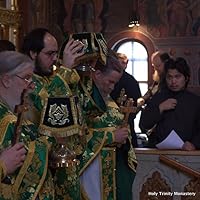
The examples set by C. S. Lewis and J. R. R. Tolkien are producing concern for literature among Protestants and Roman Catholics, but there has been no such example for Russian Orthodox believers since Fyodor Dostoevsky. Nicholas Kotar belongs to a Russian Orthodox community based in California which intends to do something about this, and his book under review here is a means toward that end. One of the attached photos shows him speaking on the subject to the "Prav Mir" group, and the other one shows the cover of his book, which is a fantasy based on traditional Russian legends and fairy tales.
I recommend this book for anyone who likes fantasy, and I especially recommend it to those who would like to read a fantasy placed in a traditional Russian milieu and incorporating Russian fantasy elements. The story is like Dostoevsky in grabbing and holding your interest but its characters, plot, and settings are very different -- it occurs in days of yore, not in the late 19th century! This story and these characters and these fantasy beings are quite memorable and attract your concern and are full of puzzles and surprises and mysteries, which call to mind the famous saying of Churchill about the mystery that is Russia!
For further information you can visit these sites: http://www.raven-son.org/,
http://www.conquering-time.org/, and www.pravmir.com/conquering-time-an-or...
January 27, 2014
Nicholas Kotar's debut novel has the enviable quality of becoming increasingly difficult to put down as one reaches all the way to the last page. The flip side of this is that the first chapter almost turned me off the whole book. There were just too many concepts and characters with their backstories introduced at breakneck speed. The author seemed to forget that this world, which has been swirling around in his head for years, is still completely new to the reader. Fortunately, the confusion I was left with after the first chapter quickly dissipated as the plot developed and the various characters and ideas were flushed out and further explored.
One of the highlights of the book was the author's masterful use of detailed imagery, especially when describing the geographic surroundings of the Three Lands. Kotar's skillful incorporation of musical themes into the story is also worth noting, although not at all surprising given his background. I would have appreciated a more sparing use of the effect whereby at certain points we were given the characters' thoughts in italics. The story would have been better served by using the same approach to descriptive imagery and dialog to point to those thoughts as subtext.
Raven Son is a valiant first effort, yes. But this book also stands on its own as a clarion call to a world that has either forgotten the meaning of beauty or denied its very existence as an objective principle. I look forward to reading the promised sequel.
One of the highlights of the book was the author's masterful use of detailed imagery, especially when describing the geographic surroundings of the Three Lands. Kotar's skillful incorporation of musical themes into the story is also worth noting, although not at all surprising given his background. I would have appreciated a more sparing use of the effect whereby at certain points we were given the characters' thoughts in italics. The story would have been better served by using the same approach to descriptive imagery and dialog to point to those thoughts as subtext.
Raven Son is a valiant first effort, yes. But this book also stands on its own as a clarion call to a world that has either forgotten the meaning of beauty or denied its very existence as an objective principle. I look forward to reading the promised sequel.
Did Not Finish
July 9, 2023DNF
I felt like I gave this title sufficient time to establish itself (stopping at 37%). But after the first third, I realized that I had almost no idea what was really going on. The worldbuilding continually added more information but none of it seemed to congregate in a way that contributed to a greater understanding of the characters or plot. A quest had begun but the quest was the only thing that was somewhat clear to me. The main character's motivations felt incredibly muddled and aimless at best. While the side characters introduced produced a sense of conflict, they served little purpose other than just being a hindrance to Voran's goals.
The Song of the Sirin reads like a common fairy tale often with interesting entities and unexpected events around every corner, but then switches to aspects of epic fantasy without warning or natural conversion. Initially I welcomed this interesting blending of genres because I believed that the aspects of epic fantasy would help ground or flesh out the confusing aspects of the fairy tale side of things. Unfortunately, it was too unclear for me to truly invest in the story. I had no sense of understanding for the world built, the main character seemed to bounce around between personality styles preventing me from connecting with him, and the lack of understanding of the overall plot made it too difficult for any tension to be maintained. The writing itself is often very sufficient in building a scene or getting an image across but these other elements kept me from continuing.
I felt like I gave this title sufficient time to establish itself (stopping at 37%). But after the first third, I realized that I had almost no idea what was really going on. The worldbuilding continually added more information but none of it seemed to congregate in a way that contributed to a greater understanding of the characters or plot. A quest had begun but the quest was the only thing that was somewhat clear to me. The main character's motivations felt incredibly muddled and aimless at best. While the side characters introduced produced a sense of conflict, they served little purpose other than just being a hindrance to Voran's goals.
The Song of the Sirin reads like a common fairy tale often with interesting entities and unexpected events around every corner, but then switches to aspects of epic fantasy without warning or natural conversion. Initially I welcomed this interesting blending of genres because I believed that the aspects of epic fantasy would help ground or flesh out the confusing aspects of the fairy tale side of things. Unfortunately, it was too unclear for me to truly invest in the story. I had no sense of understanding for the world built, the main character seemed to bounce around between personality styles preventing me from connecting with him, and the lack of understanding of the overall plot made it too difficult for any tension to be maintained. The writing itself is often very sufficient in building a scene or getting an image across but these other elements kept me from continuing.
February 27, 2018
The Song of the Sirin is a rich fantasy based on Russian folklore. Gone are the wizards and elves and paladins and such that we are all steeped in since Tolkein made them everyday characters. Instead, we have a complex, interwoven world built on three fantasy cities that sit on the cusp between the real world and the planes beyond, a covenant between its human occupants and Adonais, and a new bestiary of shape changers, demi-gods, and legends.
Kotar’s writing is mystical and poetic. The Siren, fantastic flying bird-goddess creatures who bond with humans through song to lift and inspire them to excellence, are the most compelling. The world pulses and glows when they show up, and their human is driven to rise above the pull of ordinary desires and seek greatness of spirit.
The principal characters are well-rounded and complex. Torn between the responsibilities of their noble births and the insipid pettiness that their city has devolved into, they are not always heroic. But their journeys are heroic. Their fight against The Raven, the evil creature of Russian mythology whose time has come, to save their city of Vasyllia and by extension their world and way of life, carries all of the joy and despair that we’ve come to love in fantasy at its best.
A very satisfying read.
I am voluntarily reviewing this book; thanks to the author for sharing a copy with me. I am voluntarily reviewing this book; thanks to the author for sharing a copy with me.
Kotar’s writing is mystical and poetic. The Siren, fantastic flying bird-goddess creatures who bond with humans through song to lift and inspire them to excellence, are the most compelling. The world pulses and glows when they show up, and their human is driven to rise above the pull of ordinary desires and seek greatness of spirit.
The principal characters are well-rounded and complex. Torn between the responsibilities of their noble births and the insipid pettiness that their city has devolved into, they are not always heroic. But their journeys are heroic. Their fight against The Raven, the evil creature of Russian mythology whose time has come, to save their city of Vasyllia and by extension their world and way of life, carries all of the joy and despair that we’ve come to love in fantasy at its best.
A very satisfying read.
I am voluntarily reviewing this book; thanks to the author for sharing a copy with me. I am voluntarily reviewing this book; thanks to the author for sharing a copy with me.
October 21, 2014
This is the Russian Orthodox "Lord of the Rings" - an excellently done fable that weaves in Russian folklore characters and beautiful writing that echoes the hymnography of the church.
However, it's me not the book. My feeling about it is about the same as my feeling about the Catholic original. It's well done and not my favorite.
However, it's me not the book. My feeling about it is about the same as my feeling about the Catholic original. It's well done and not my favorite.
May 31, 2025
Great book for teenage boys. Interesting premise and lots of action. Very male and Orthodox coded. Although, it is obvious that the writer was still learning his style when he wrote this. Awkward pacing, weak dialogue, and the characters need more fleshing out. If I hadn't read the first book in the sequel series and knew Kotar's writing improved, it would've been rought to get through.
April 9, 2018
Retelling of Prince Ivan and the Grey Wolf. It was a fascinating world that Kotar crafted but I realized after the main character grew some turnips that I didn't care one way or another if he saved everyone.
November 7, 2022
Disconnected
Skipped many pages, the story has so many things happening without any background or explanation, easy to follow asleep while reading. Just plain confusing.
Skipped many pages, the story has so many things happening without any background or explanation, easy to follow asleep while reading. Just plain confusing.
Displaying 1 - 30 of 153 reviews