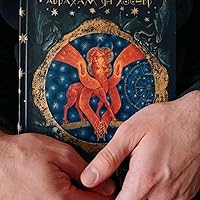
I due adattamenti manga di Dagon e L'Abitatore del Buio ad opera di Gou Tanabe, contenuti in questo volumetto, sono da cinque stelle. Purtroppo piccolo formato e font a volte quasi illeggibili hanno abbassato a quattro il voto finale, decisamente migliore il volume precedente dedicato a Il colore venuto dallo spazio.
Take my word, Gou Tanabe is the messiah for all the Lovecraft fans out there. XD
(1) Dagon, manga adaptation!
(2) The Haunter of the Dark, manga adaptation!
(3) I like both adaptations, the atmosphere is strong and the artwork is detailed and exquisite, I can't wait for more works from Gou Tanabe!!!!! A must-read for H P. Lovecraft fans!
Tanabe maneja la expectativa con maestría; se recrea en la demora, acumula tensión en el resorte, y cuando llega esa aparición esperada te detiene en viñetas que te abren las puertas de la locura, lo imposible, lo maravilloso. En estos cuentos (además de El morador, aquí hay una adaptación de Dagón), lo abismal puede saber a poco después de los tomos anteriores publicados por Planeta. Sin embargo, la representación de la criatura cuando irrumpe de la torre, o la doble página con el rayo negro dirigéndose hacie él, compensan la escasez de elementos fantásticos. Y mientras, pasas páginas como un condenado, cautivado por los enigmas que atrapan a los protagonistas.
A competent adaptation of my favourite Lovecraft story, though the main character's expressions did not often reflect the horror he was living through. He seemed much too blank, almost bored.
Non è il migliore dell’artista giapponese perché purtroppo il formato non si adatta al tipo di disegno e alle tavole. Font illeggibile (praticamente nero su nero in molti punti) e dimensioni davvero minute rendono la lettura un esercizio oftalmico... però nel complesso è sempre positivo.
В післямові до цього тому Ґо Танабе написав наступне: "Надіюсь коли-небудь знову намалювати Дагона і Зачаєного в пітьмі". Цікава, неоднозначна фраза, яка насправді має безпосереднє відношення до Лавкрафтівського: "Не смертне те, що у Відвіччі пролягає І з смертю часу, сама Смерть вмирає" Це нагадування про вічне повернення, в яке в особливій формі вірив Лавкрафт. Повернення не шляхом реєнкарнації, а шляхом повторного перезбирання Всесвіту з піщинок матерії. Отже, в цьому томі зібрані дві адаптації двох оповідок Лавкрафта. Дуже особливих оповідок, бо "Дагон" - це його перше опубліковане оповідання, а "Той, хто чаїться в темряві" - останнє написане за життя. В обидвох головні герої помирають дивлячись у вікно. "Той, хто чаїться в темряві" - одне з улюблених оповідань Лавкрафта, які я читав за життя. Тому я тим більше мав великі очікування. Але геніальний Танабе не підвів! Він все ще залишається найкращим ілюстратором лавкрафтівських світів у історії людства. Всі його манги масштабні, циклопічні, деталізовані і з притаманною ноткою Доре.
Okay, confession time: I liked Gou Tanabe’s The Haunter of the Dark manga way more than H.P. Lovecraft’s original story 👀.
Lovecraft’s version is all atmosphere, endless adjectives, and vague “unspeakable” horrors—which is fine, but it can feel like wading through word soup. Tanabe, on the other hand, makes it pop. The creepy church, the shadows creeping in the corners, the cursed artifact… all drawn with such detail that you can practically hear the silence and feel the dread.
The pacing is tighter too. Instead of slogging through long paragraphs about indescribable terror, you actually see the terror unfold. And let me tell you, some panels genuinely gave me chills (and I don’t spook easy).
Of course, it’s still Lovecraft at the core—meaning flat characters and a “plot” that’s more about vibes than action. But the art elevates it, turning a solid short story into an experience.
If you’ve ever wanted to read Lovecraft but couldn’t survive the heavy prose, Tanabe’s manga is the perfect gateway. Creepy, atmospheric, and way more fun than squinting at the original text.
Nach „Der Hund und andere Geschichten“ und meinem ersten Ausflug in die Welt des Cthulhu-Mythos wollte ich mich nun auch an diesem Manga wagen. Die Geschichte klang für mich sehr vielversprechend, auch wenn ich gestehen musste das der Titel mir erst einmal sehr wenig sagte.
Ich stieg somit ohne große Vorkenntnisse in diesem Manga und muss sagen das ich recht gut durch die Handlung kam. Schon der erste Abschnitt „Dagon“ beeindruckte mich sehr, da man hier schon mit Mystik und Horror spielte und Gou Tanabe, wirklich alles eindrucksvoll inszenierte. Nicht nur das Wesen an sich hatte es mir dabei angetan, sondern das man mit dem unbekannten Hauptcharakter mitfühlte. Angst und Schrecken waren ihm förmlich ins Gesicht geschrieben.
Diese Qualität behielt man auch im weiteren Verlauf des Mangas bei. Mit Robert Blake begann dann auch die Haupthandlung rund um den leuchtenden Trapezoeder. Allerdings musste ich davor erst den Begriff „Trapezoeder“ nachschlagen, da ich nicht wusste, was ich mir darunter vorzustellen hatte. Mit einer Erkenntnis mehr machte ich mich schließlich auf in die Geschichte und wurde so gleich von ihr verschlungen.
Selbst für mich als Nichtkennerin der eigentlichen Geschichte war es absolut fesselnd zu sehen, was alles geschah. Bzw was nicht geschah, denn die Handlung spielte damit das man nicht genau wusste wovor man sich da überhaupt fürchtete. Man bekam durch den Trapezoeder zwar kleinere Einblicke, aber das große Ganze erhielt tatsächlich nur eine kurze Szene. Danach war wenigstens klar wovor man sich zu fürchten hatte.
Und ja, ich selbst hätte wohl mächtig Angst, wenn ich wüsste das dieses Wesen hinter mir her wäre. Ich persönlich fand es nur schade, das Robert Blake tatsächlich wie eine Manga-Figur aussah. Natürlichere Züge wie beim unbekannten Charakter in „Dagon“ wären mir in vielen Szenen deutlich lieber gewesen, da sie Angst und Panik deutlich besser darstellten. Viele Szenen verloren dadurch bei mir an Schrecken. Gerade wenn Blake schrie oder im Umfeld anderer Bewohner war, fiel einfach zu sehr auf, wie anders sein Charakter geformt war. Das mag zwar Ansichts- und Geschmackssache sein, aber für mich war es ein kleiner Knackpunkt.
Fazit:
Auch ohne das Buch aus der Feder von H.P. Lovecraft zu kennen, schaffte es mich Gou Tanabe in die packende Welt rund um den leuchtenden Trapezoeder zu befördern. Ich bin zwar mit der Darstellung Robert Blake nicht ganz so zufrieden, muss aber sagen, dass mich die restlichen Zeichnungen einfach nur begeisterten.
Sono un'estimatrice di Lovecraft da quando avevo 13 anni, e ho continuato a rileggerlo e amarlo attraverso le citazioni cinematografiche e letterarie. Quando sono stata introdotta da mio marito a questa collana di manga, ho storto inizialmente il naso: niente può eguagliare l'originale. Con la discrezione e l'umiltà caratteristici dei giapponesi, Gou Tanabe si definisce un "comune appassionato di Lovecraft, nonché suo debitore per la vita" e con passione e "sottomissione", come la definisce, trasforma in suggestive tavole due racconti del suo maestro, "Dagon" e "L'abitatore del buio". Il mistero, l'inquietudine e l'impalpabile ma percepibile orrore che permeano i lavori di H.P. Lovecraft sono qui espressi attraverso diverse gradazioni di bianco (pochissimo) e nero: tenebre dalle forme spaventose, creature mostruose, abissi "liquidi" e dimensioni spazio-temporali paralleli. Sembrava impossibile disegnare questi racconti, ma Gou Tanabe ci è riuscito senza tentennamenti, amplificando e superando gli incubi di un altro artista dell'orrore, H.R. Giger. L'unico difetto di questo volume è il formato, troppo piccolo per essere apprezzato davvero e, a mio parere, alcuni testi sono talmente piccoli e fitti che coprono i disegni e si leggono a fatica. Per intenditori.
Al hojear este volumen que adapta tres historias de Lovecraft me echó un poco para atrás el aspecto "clasicote" del grafismo de Tanabe y el empleo de los textos de apoyo, rollo copia/pega de los relatos originales. Qué equivocado estaba. Si, Tanabe es clasicote en apariencia, pero maneja perfectamente el ritmo del suspense y la tensión, recrea escenarios y atmósferas inquietantes con mucha habilidad y la imponente presencia física de su mostros lovecraftianos irrumpiendo en el relato funciona estupendamente. La única pega es que se hace corto, sólo vienen tres relatos y dos de ellos son del ciclo "Robert Blake", que no son precisamente mis preferidos, aunque la adaptación me ha parecido estupenda. Que alguien le pase a Tanabe un ejemplar de "Al otro lado de la montaña" de Bernanos pero ya.
"Dagon", il primo dei due racconti di questo albo, non è reso male, anzi, ma ho letto trasposizioni in fumetto migliori. Invece "L'Abitatore del Buio" è già meglio, per via dei molti sforzi che Tanabe-san fa per rendere al meglio l'atmosfera di timore prima e paura poi che attanaglia gli abitanti della collina su cui sorge il tempio sconsacrato dell'Ordine Stellare. C'è da dire che la sua resa del trapezoedro non è molto fedele al nome, come la resa dell'Infestatore, ma nel complesso i disegni sono molto buoni e la trasposizione decisamente ben riuscita, migliore di altre che ho letto. Darei 3 stelle e mezza all'opera.
Another excellent HP Lovecraft adaptation. This time taking on the short Dagon and The Haunter of the Dark. Good pairing since they both share similar themes - a person uncovers some mystery and gets hunted by a beast.
Robert Blake is drawn to this mysterious black abandoned church on the edge of town. In it he discovers the necronomicon and a stone artifact that unleashes a beast that can only go out in the dark. Unfortunately the town's power isn't very reliable.
Gou draws a really wild Haunter. It's hard to even tell what's going on with this creature. Some sort of dragon but with more appendages like a squid.
Une très belle découverte qui permet de découvrir un classique de l'horreur/Sciences-fiction. Rapide et efficace, le suspens et l'athmosphère suffocante sont au rendez-vous!
Die originale Geschichte von Lovecraft ist schon stark, aber Gou Tanabe ist noch einmal ein emotionaler Booster! Selten hat für mich ein Künstler die Stimmung Lovecrafts so gut eingefangen.
La única pega que le pondría a las adaptaciones de Gou Tanabe es lo poco que me duran en las manos, una no puede dejar de leer. No le doy las cinco estrellas a pesar de que me ha encantado, considero que, aunque no me guste entrar en comparaciones (ni las merece), no llega a estar en el mismo puesto que otras de sus obras. Aún así, ha sido una lectura muy sólida con un dibujo más que espectacular, como siempre.
Con questo volume, inizio la collezione delle opere di Lovecraft illustrate da Gou Tanabe.
I disegni danno una possibile interpretazione all'orrore descritto da Lovecraft, lasciando però spazio all'interpretazione dell'inimmaginabile che tanto amo in questi racconti.
Otra buena adaptación de Gou Tanabe. Dibujo excelente y con un añadido que no me esperaba en el interior del tomo: incluye la adaptación del relato "Dagon".
Mi ritrovo a dare solo quattro stelle a uno dei miei autori preferiti, il maestro Tanabe, a causa del formato pensato per questo volume che racchiude due racconti: Dagon e L'abitatore del buio. Spero che jPop possa pensare a una racconta simile a Le montagne della follia e Il richiamo di Chtulu, perché il font dei caratteri e la grandezza ridotta delle tavole danneggia la bellezza del prodotto. Tuttavia si tratta sempre di un'opera magistrale che mantiene una viva fedeltà ai racconti lovecrafiani, in cui è palpabile la discesa che attrae verso l'ignoto e l'occulto e che, invariabilmente, condanna alla pazzia e la morte.
"Dagon" e "L'abitatore del buio" sono 2 storie fantastiche. Gou Tanabe è un disegnatore straordinario, non solo per la perizia dei dettagli (ricorda a tratti Sinichi Sakamoto molto in voga in questi anni) ma perché rappresenta il buio e l'angoscia in modo eccelso. Inoltre è un sincero devoto fan di Lovecraft, di quella devozione così rispettosamente giapponese che fa si che tutto sia eccellente. Ogni volume di questa collana dedicata a Lovecraft non delude. Tutti consigliati.
Terminado esta mañana. Me ha encantado esta aproximación artística hacia los relatos del autor emblema de Providence. Los monstruos están muy bien dibujados y transmiten el horror cósmico que se intuye en las parcas descripciones que plasmaba el autor original en sus relatos. Me gustan mucho este tipo de fábulas donde se castiga la soberbia del ser humano. La hibris es un tema fascinante.