Jump to ratings and reviews
Rate this book

Death, Sleep & the Traveler: Novel

Rate this book
The author of seven full-length novels, several plays, and numerous short fictions, John Hawkes over the course of two and a half decades has won international acclaim. His most recent novel, Death, Sleep & The Traveler is about a middle-aged Dutchman, his dissolving marriage, his involvement in two sexual triangles, his obsession with the murder he is accused of having committed on a pleasure cruise.

179 pages, Paperback

First published January 1, 1974

8 people are currently reading
360 people want to read

About the author

John Hawkes

109 books191 followers
John Hawkes, born John Clendennin Talbot Burne Hawkes, Jr., was a postmodern American novelist, known for the intensity of his work, which suspended the traditional constraints of the narrative.

Born in Stamford, Connecticut, and educated at Harvard University, Hawkes taught at Brown University for thirty years. Although he published his first novel, The Cannibal, in 1949, it was The Lime Twig (1961) that first won him acclaim. Later, however, his second novel, The Beetle Leg, an intensely surrealistic western set in a Montana landscape that T. S. Eliot might have conjured, came to be viewed by many critics as one of the landmark novels of 20th Century American literature.

Hawkes died in Providence, Rhode Island.

Ratings & Reviews

What do you think?
Rate this book

Friends & Following

Create a free account to discover what your friends think of this book!

Community Reviews

5 stars
42 (18%)
4 stars
110 (48%)
3 stars
52 (22%)
2 stars
17 (7%)
1 star
7 (3%)
Displaying 1 - 26 of 26 reviews
Profile Image for Greg.
1,128 reviews2,148 followers
March 31, 2010
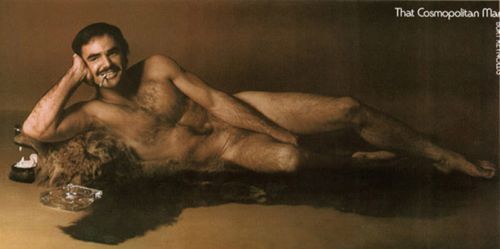
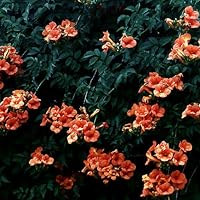
Do you find this picture a little creepy?


If you don't, why not?

If I had an Icky-Sex shelf like Karen does, I'd put this book on it. Sort of for the same reason I find the picture above incredibly icky.

The strength of the writing is evident for the two Hawkes books I've read so far, because the 'intimate' scenes in both books were almost nausea inducing. And it wasn't like VC Andrews Flowers in the Attic icky sex, where it just sort of happens once near the end of the book. No, in this book (and in Blood Oranges), the ickiness just keeps on rolling.

If Blood Oranges was icky in the 'holy shit this is gay, in a wrapping flowers in our pubic hair and prancing down a beach while holding hands kind of way', then this book is icky in the 'ewwww swinger sex in the seventies, with middle aged men sharing a woman and drinking brandy out of a snifter' kind of way. Or sort of the reason why this is kind of creepy and icky:


When in the past I've read the 'ewwww' parts of John Updike novels for some reason him as some kind of weird 70's swinger pops into my head, maybe it's the turtlenecks and that creepy look on this face that looks good natured but any reader of his knows that the smile isn't a grandfatherly good natured, but the look of a man who knows he's going to get his knob shined because he's John 'fucking' Updike.

If I was really interested in making his book shine, and get people to read it then I'd probably write about the non-ewww parts of the book, like maybe how the juxtaposition of the erotic and the dark regions of the psyche are intertwined and blah blah blah, but I just can't, right now my head is just stuck on the icky side of the book.... and whats worse, i'm like 99.99999999% certain that my parents weren't ever swinger types, or creepy 1970's people, but there is that one/trillionth of doubt that remains and that means that it's possible I could have been conceived in some key-party meets in a hot tub (that is just floating with all of that excess body hair that people in the 1970's seemed to grow) and there were bear skin rugs and people watching as other overly hairy people were doing it, and the one/trillionth of a percent chance that this could have been how I was conceived makes me want to throw up, and actually I can taste the bile a little in my mouth now, so I'm just going to wrap up this review, and I offer this whole review as a gift to Karen to makes as many off-color jokes as she wants.....

Profile Image for Nate D.
1,654 reviews1,254 followers
April 16, 2013
We spend most of our lives attempting in small ways to know someone else. And we hope that someone else will care to peek into our darkest corners, without shock or condemnation. We even hope to catch a glimpse of ourselves, and in this furtive pursuit, we hope for courage. But on the brink of success, precisely when a moment of understanding seems nearest at hand, and even if thew moment is a small thing and not particularly consequential, it is then that that the eyes close, the head turns away, the voice dies, the surface of the bright ocean becomes a sea of lead, and from the very shape we know to be our own there leaps a man-sized batlike shadow that flees or crouches to attack, to drive us away. Who is safe?


Loneliness and disconnection amidst the sensuality and sometimes hollow promise of 70s polyamorism. Eras and mores shift, but people do not. A companionless boat trip, several saunas, the twinned oblivions of snow and sleep, a murder, the sea, the end of a marriage. A series of isolated fragments licked by the hot black breath of an eventual out-of-frame total oblivion. A poetic reconstruction of a life from the pieces that are inadequate to the job but all we get. (ever get). Strangely European in sensibilities, but American. Sumptuous, beautifully phrased and elegantly composed, but overridingly a sad book. One of the best I've read in a while, even. A compact and clear-burning flame giving off obscure and enticingly-scented-but-hazardous vapors.

Incidentally, I've been meaning to read some John Hawkes ever since Eric Basso cited him as key inspiration. Finally the staff picks shelf at Book Thug Nation made it happen. I wonder which of the staff earmarked this. (Later: of course: thank you Troy S.)
Profile Image for Jamie Grefe.
Author 18 books61 followers
July 12, 2012
Second time read: gorgeous writing. At one point I found myself just slowly savoring EVERY sentence on the page.
Profile Image for Descending Angel.
816 reviews33 followers
March 8, 2024
Hawkes doesn't hold your hand and his books don't really explain what exactly happened or what they mean. But for me at least, I find myself thinking days after finishing one of his books and make connections that I didn't really think about or almost got past me. I love that and I love that about a hawkes novel.
Profile Image for Cody.
993 reviews302 followers
October 11, 2025
ATT: You are reading a pro forma Transmission from the Godhead of Retroactive Reviews 2025

I have no idea why I didn’t write anything about ______. It was so fucking _________ and _________ that, possibly, I was at a rare loss for words. Or maybe I was on the lam. I can’t remember; hey, it’s been a few since ___________ and I crossed paths.

(If you’re reading this, this is a form letter—a placeholder, if you must—done retroactively as a stop-gag corrective of historical wrongs I committed by failing to uphold my end of the book-reader compact. That compact, my own, dictates that I record SOMETHING/ANYTHING (not a Rundgren reference, but…) to mark my engagement with a given novel/work/etc. at a fixed time in my personal life history. These ‘reviews’ are not really reviews (no shit, I know) at all; their purpose is that they act as pretty accurate reflections of where my head/heart was at the time of engagement. It’s something between the book and I, and a good way to check your hubris from time-to-time. If you find any part of it enriching, that’s a wild compliment. If not, you can just feel free to move along—I can almost guarantee that no offense was genuinely intended. Almost.)

So, clearly, __________ pretty much made me revaluate my entire ____________ and ________edifices, those false shells I’d enacted over years to protect whatever core ‘me’ I felt uncomfortable exposing. And it is so fucking _______! The _______? Unbelievable, right? Good/bad times…Ahhhh. Anyhow, __________ by ____ _________ obviously deserves a reread to inform a proper write-up. In between now and whenever that reread happens (foregoing death or living on the lam again), all I can say is ___________________.

I know. That’s why I’ll be back.

X Cody
10.25
Profile Image for Lemma.
73 reviews7 followers
December 21, 2024
In my pajamas and bare feet I entered the bathroom which was wet with steam and filled with Ursula’s perfume and with another still richer smell that made me imagine Ursula milking herself into the bathroom sink. I sniffed the humidity. I gripped the edge of the sink and smelled her hair. I did not know the hour and had not even glanced out the bedroom window at the world of white snow, as was my habit. The bathroom was dark and wet and smelled of Ursula— her hair, her skin, her soap, her scent of flowers, her thin passionate jets of milk.

If anyone out there is seeking a gentle introduction to John Hawkes, here is a fine option. Death, Sleep & the Traveler explores territory his other books get into, but in a manner that’s stripped-down and approachable compared to e.g. The Cannibal or The Lime Twig. The structure of this book is classic Hawkes: two similar but different worlds, twinned or mirrored and neither quite like reality though one is typically closer, are bounced between in a manner that scoffs at linearity by a first-person “likable loser” narrator, a man who is at the various mercies of those strange worlds. As usual the actual substance of the narrative is quite simple, and excitement comes from the eerie beauty of its telling. The potent imagery- here, snowy, cold, dark, heavy, lonely, maritime, of bats and goats and octopi- and the quality of individual sentences are the selling points. Hawkes was an alchemist, transmuting the dark sides of life and the seemingly ugly elements into the clearest brightest tinctures, and this is one of the most successful of his mid-career (his pornographic years, you might say) alchemical projects- stronger than Virginie or The Passion Artist and comparable to Travesty.
The zoo scene is hilarious and is one of Hawkes’s best. It just says it all!
Profile Image for Josh Doughty.
97 reviews
August 21, 2024
Everything happens in and out of a dream state and it’s up to the reader to pave through the seemingly scattered but linear path of the novel.

Not much happens outside of the number 3 (triangles in numerous descriptions, Allert and two instances of 2 different men/women).

I didn’t think horses would be involved in a psychological thriller pleasure cruise, but I was pleasantly corrected.

There are similarities to Innocence In Extremis (use of grapes and nubile chested descriptions) and The Passion Artist (dreams, the power of women over men, and sexual equestrian awakening).

Two deaths occur in the novel and Hawkes is excellent at leaving the literary breadcrumbs where he chooses.

It could even be a nice commentary on pornography as in a video interview you can google he talks about how he enjoys that. Also in this novel (others I’ve read as well).

Hawkes prose alone is worth diving into, but I can understand that this is possibly a squires taste. In this instance specifically, it’s schnapps.

Fuck North Face. North Penis forever.
Profile Image for Sydney.
4 reviews5 followers
Read
April 12, 2023
Hawkes used the word ‘coil’ about five times in this novel which doesn’t seem like much but my little ears perked up every time. Hell yeah
Profile Image for Bill.
79 reviews9 followers
May 10, 2013
Sex Without Feeling

Hawkes, John (1974). Death, Sleep, & the Traveler. New York: New Directions.

Main character Allert (accent on the first syllable) is an overweight, middle-aged Dutchman with a younger, beautiful wife, Ursula. Their neighbor, Peter, a psychiatrist and trim, younger man, is attracted to Ursula, and Allert likes to watch the two of them have sex on the living room floor. For Peter, watching Allert and Ursula having sex makes him just a tiny bit jealous. Ursula is indifferent to everything.

The sexual scenes are explicit, but indirect, using euphemisms for body parts, so it is not pornography. The focus is on the psychologies of the three characters. And what is that psychology? I would say, “numb.” Allert and Ursula especially, seem disconnected, almost zombie-like. They have no lives beyond their hypersexuality, and they don’t even care about that.

Ursula says to Peter, “For you and me,” Ursula said quickly, though in a mild and somewhat unthinking voice, “…pornography would be intolerable. You and I do not filter life through fantasy. But it is otherwise with Allert. You cannot tear him away from a picture of a bare arm, let alone an entire and explicit scene of eroticism” (p. 150).

Her idea seems to be that sex is just meaningless sex, so pornography is a pointless fantasy beyond meaningless. Notice that Ursula speaks in a mild and unthinking voice, whatever that is. Even when she expresses a rare opinion about anything, she is distant, bloodless, not present even to herself.

But she is right about Allert, who is the first-person narrator of the novel. Via his musings, we know that he does find sex in some way exciting, though exactly in what way, we never quite learn. Certainly it is not through any lens of possessiveness, for he has not a shred of jealousy in him. He too, seems numb to sex, and to life, but perhaps slightly less so than Ursula, since he is at least interested in sex.

Allert muses, “To me, it has always been curious that Peter, who never married, should have lived a life that was unconditionally monogamous, thanks to the power of Ursula’s dark allure and her strength of mind, whereas I, who became married to Ursula…have lived my life as sexually free as the arctic wind. …But during all this time …Ursula must have thought of me as a Dutch husband who had been lobotomized – but imperfectly” (pp 134-135).

Sexually free as the arctic wind! Free, but forever cold, not passionate, blowing over a bleak terrain. All three of the main characters have this detached attitude toward sex, attitudes that would not be shared by most readers, and that’s what makes them interesting.

As the perfunctory story develops, Ursula becomes bored with Allert and vows to leave him. Allert goes alone on a cruise, and on board, strikes up a sexual relationship with a much younger woman, a girl really, and that develops into a three-way with an obnoxious ship’s officer. But somehow, we gather through comments and snippets, the girl went overboard and died. Allert was implicated in her death, and questioned, but exonerated. The death occurs entirely off page, and we never learn what actually happened.

So the book is not, as usually described, a “mystery” in any traditional sense, since there is next to no plot or even a coherent narrative through-line. In fact, time is cut up so severely, the present mixed with the past, that it is next to impossible to discern any narrative thread. Allert’s dreams are also intercut, along with brief images and aphorisms, to create a woozy, kaleidoscopic feeling, which seems to be how the characters experience the world and their own lives.

The book is a literary exploration of some characters who have interesting and unusual attitudes about sexuality and life in general. It is well written, with elevated and thoughtful language that maintains that dream-like quality. Allert, the narrator, seems barely present, and his voice has a disembodied, otherworldly tone, and that is consistent with all the characters' diffidence about life, sex, and death.

The mood and tone reminded me of several post-WWII books that enacted the feeling that the values of civilization had been so totally destroyed by the war that human beings could now live authentically only as unthinking animals. Hawkes’ version here, coming a little later, folds in a dose of Freudian ideas and symbols, which were influential in America during that time, but are stale now. For 150 pages, it is a worthwhile read.
Profile Image for aya.
217 reviews24 followers
August 1, 2011
This book really reminded me of Alain Robbe-Grilet's The Voyeur, which I love-- there are similarities in tone, subject matter, and the geometric structures. I kind of wish i hadn't thought of the similarities while I was reading it, because it made me compare the two books, and this one did not hold up under the weight of comparison.
There was so much I loved in this book--some really amazing sentences, and at times it is so beautiful and natural in its structure. Which is what made the bad even worse. Often the dialogue and sometimes even the description was stunted and too self-aware. It made me wish that Hawkes had chosen not to include dialogue at all. As it is, the dialogue interrupts the flow and took me out of the book.
Overall, though, looking forward to reading another of his books.
Profile Image for Joey Shapiro.
342 reviews5 followers
February 19, 2021
John Hawkes’ other books Second Skin and The Lime Twig are two of my favorite books ever and the archetypes for what I wanna read when I seek out ~experimental novels~, but this mostly just held my attention while leaving me a lil cold at the end. Less weird than those two and much more accessible to someone who isn’t used to his hazy surreal storytelling, but also kinda feels more like a Serious Male Novelist writing about sex in a way that isn’t overtly misogynistic but still feels vaguely misogynistic? Maybe that is a stupid comment but the way he writes women here feels like the Ivy League equivalent of when Stephen King wrote “she had the most delectable set of jahoobies I’d ever laid eyes on” in Salem’s Lot (a real quote).
Profile Image for PaddytheMick.
484 reviews17 followers
July 16, 2019
well written; deftly constructed - Hawkes is a bad, bad man.

he seems like such a hidden treasure - without goodreads i never would have read this. thanks guys!

gift for readers - a truly sensual and amazingly focused “rendering” of DRINKING WATER on page 58 of this edition. (too long to quote right now).

enjoy!
Profile Image for Joyce.
816 reviews22 followers
July 31, 2023
the opening is astonishing, although that level isn't entirely maintained throughout. there seemed to be not a lot going on under the surface of this one, but what a surface
Profile Image for Cooper Cooper.
Author 497 books400 followers
July 24, 2009
This is the second volume in Hawkes’ trilogy that also includes The Blood Oranges and Travesty. Death, Sleep and the Traveler concerns the existential predicament of a big lumpy unemotional middle-aged Dutchman who is obsessed with sex. Having inherited a small estate and not needing to work, he has been able to devote his life to womanizing and to amassing a connoisseur’s collection of pornography. In mid-life he marries a very sensual woman, and they soon form a voluptuous menage à trois with an unmarried psychiatrist. The book switches back and forth between episodes from this longterm relationship (which culminates in the death of the psychiatrist by heart attack and the departure of the narrator’s wife), and incidents during an ocean cruise on which his wife sent the reluctant narrator, and where he hooked up with a young single woman who mysteriously disappeared overboard—an incident for which the narrator was brought to trial.
What is this book really about? About the fundamental emptiness of the obsessively sexual life? About repression not of sexuality but of the jealousy occasioned by it, leading to an unexpected outbreak of violence? (The narrator apparently enjoys the relationship between his wife and the psychiatrist, but the girl on the ship goes overboard while dressed in a masquerade as the obnoxious ship’s officer with whom she and the narrator formed a triangle.) Or is the book another take (a trilogy theme?) on what happens to people who are completely “free”—i.e., have no obligations and the money and time to do whatever they please?
Or all of the above?
Death, Sleep and the Traveler is ingeniously constructed, moves right along, and is very well written line-for-line, though there are occasional “centrifugal” metaphors—metaphors that obscure rather than illuminate.

Ursula was to me one woman and every woman. I was more than forty years old when we married, quite experienced enough to realize early in our relationship that Ursula was practical, physical, mythical, and that all the multiplicities of her natural power were not merely products of my own projections or even of the culture into which she was born—like a muted wind, a fist through glass—but to start with were engendered most explicitly in her name alone. Uterine, ugly, odorous, earthen, vulval, convolvulaceous, saline, mutable, seductive—the words, the qualities kept issuing without cessation from the round and beautiful sound of her name like bees from a hive or little fish from a tube.

The birch trees were slender and girlish in the evening light, the hillside was muffled in green leaves, the birds in the wood were singing to the fish at sea, the smell of the flowers beyond the hill was mingling with the smell of dead crabs at our feet. And down the path came Peter, dressed in his undershirt and athletic shorts and burdened with a charcoal burner which he carried laboriously but with evident pleasure.
Profile Image for Vel Veeter.
3,597 reviews64 followers
Read
May 6, 2023
I don’t have a lot of experience reading John Hawkes, and you should know right now, of course this is not John Hawkes the actor (aka Saul Starr from Deadwood). Instead, we are looking at an experimental (postmodern?) American writer.

This is a book of minimalist representation. We follow a Dutchman coming to terms with the dissolution of his marriage. He starts the novel off believing that his nationality is the cause of his divorce, and as he learns more, changes his mind, and talks to and about his wife, he begins to amend his memory and understanding. We are treated to reversions and circling back of his initial conceptions. It’s an interesting, but relatively anemic version of marriage in which the mythological sense of sexuality in cast onto his wife. I feel this like is a very early version of a kind of novel we’ve seen in novel and tv and movies as sexuality has been not…understood better, but considered more so through the years and through different ways of looking at our impulses and passions.
Profile Image for destinee.
1 review
March 5, 2010
Definitetly a good book to get away. If you want something off the dark end with a little bit of sexuality, it's a pretty good book. My favorite part of Hawks story is that splits the story back and forth throught time and emotion. There isn't necessary a plot or climatic point, but an aggressive story slope to climb down. The artistic writing and metaphorical use makes up for the fact that it's a very short book. But definetly worth it.
41 reviews4 followers
April 1, 2007
not his best work but definately obscure interesting with unique use of language
Profile Image for stacy.
120 reviews17 followers
October 14, 2007
john hawkes was a brilliant, beautiful freak. so's this book. caveat: it's dark, dark, dark. don't be on a cruise ship when you read this story.
69 reviews3 followers
March 27, 2009
In my twenties, I was gaga over this author. Today I can barely recall a single detail of anything of his that I've read, and this novel I found tiresome.
Profile Image for Gary McDowell.
Author 17 books24 followers
December 3, 2010
A little TOO post-modern for me. Still, it's a great piece of prose...but the story? Come on.
Profile Image for Scott.
Author 8 books54 followers
November 23, 2011
For some reason Hawkes has fallen under my radar for my entire reading life. I picked up this and was hooked. Dreamy, poetic, suspenseful, ugly, and sexy, all at the same time. THE LIME TWIG is next.
Profile Image for William Adams.
Author 12 books22 followers
March 26, 2017
Main character Allert (accent on the first syllable) is a large, overweight, middle-aged Dutchman who lives with his younger, beautiful wife, Ursula. What she sees in him is unknown. Their neighbor, Peter, a psychiatrist and trim, younger man, is attracted to Ursula, and Allert likes to watch the two of them have sex on the living room floor. He has no particular feelings about it. But Peter watching Allert and Ursula having sex makes him just a bit jealous. Ursula is indifferent to everything.

The sexual scenes are explicit, but indirect, described modestly, using euphemisms for body parts and so on, so it is not a pornography. The focus is on the psychologies of the three characters. And what is that psychology? I would say, “numb.” Allert and Ursula are almost zombie-like. They have no lives beyond their hypersexuality, but they don’t even care about that.

“For you and me,” Ursula said quickly, though in a mild and somewhat unthinking voice, “…pornography would be intolerable. You and I do not filter life through fantasy. But it is otherwise with Allert. You cannot tear him away from a picture of a bare arm, let alone an entire and explicit scene of eroticism” (p. 150).

She is right about Allert, the first-person narrator. Via his musings, we know that he does find sex in some way exciting and fascinating, though exactly why, or in what way, we never learn. Certainly it is not through any lens of possessiveness, for he has not a shred of jealousy in him.

As the perfunctory story develops, Ursula becomes bored with Allert and vows to leave him. Allert goes alone on a cruise, and on board, strikes up a sexual relationship with a much younger woman, a girl really, and that develops into another three-way with an obnoxious ship’s officer. But somehow, we gather through comments and snippets, the young girl apparently went overboard and died. Allert was implicated in her death, and questioned, but exonerated. The death occurs entirely off page, and we never learn what actually happened. So much for the murder mystery.

Allert’s dreams are intercut, along with brief images and aphorisms, to create a woozy, kaleidoscopic feeling, which seems to be how the characters see the world and their own lives.
Allert's voice has a disembodied, otherworldly tone, and that is artistically an excellent choice, consistent with the characters’ diffidence about life, sex, and death.

So I enjoyed the book a lot for its mood and tone reminiscent of several post-WWII books that enacted the feeling that the values of civilization had been so totally destroyed by the war that human beings could now live authentically only as animals. Hawkes’ version here folds in a dose of Freudian ideas and symbols, which were also very influential in America during that time, but without new insight.

Strange book, interesting read,
Displaying 1 - 26 of 26 reviews

Can't find what you're looking for?

Get help and learn more about the design.