

What do you think?
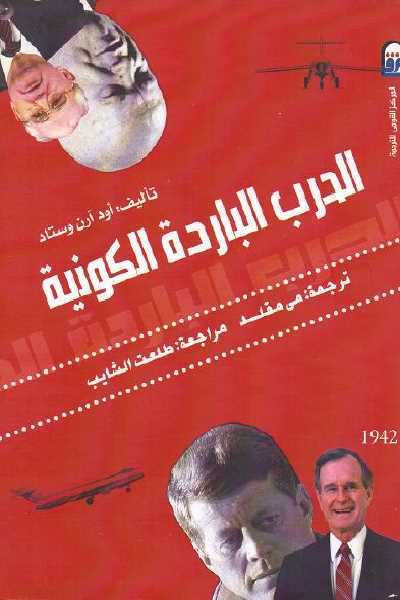
الحرب الباردة الكونية
ينبع الكتاب من شغف المؤلف بالدوافع والقرارات لدى قوتى الحرب الباردة العظميين فى سياساتهما فى العالم الثالث، والتى رأى أنها بحاجة إلى إعادة تفحص بعد أن أصبحت المادة الأرشيفية متوفرة من الجانبين لأول مرة، إلا أنه أثناء البحث تحول موضوع الكتاب إلى ما هو أوسع، فقد وجد أنه من المستحيل فهم قرارات موسكو أو واشنطن دون الخوض فى الجذور الأيدلوجية للتدخل أثناء الحرب الباردة لدى كل منهما، والتحولات فى سياسات العالم الثالث التى عجلت بتدخلهما، فتحول العمل الذى بدا بوصفه كتابًا عن التدخلات إلى كتاب عن عمليات التغيير فة العالم الثالث.
يتضمن الكتاب مناقشة موسعة لجذور الثورات فى العالم الثالث، وسياقها وتدخلات القوى العظمى التى صاحبتها، حيث يهتم الكتاب بفترة السبيعينيات، وأوائل الثمانينيات عندما كان صراع القوى العظمى فى العالم الثالث أبلغ الأثر على الحرب الباردة،كما يُعنى الكتاب بفهم الحرب الباردة فى ضوء التجربة الاستعمارية.
يتضمن الكتاب مناقشة موسعة لجذور الثورات فى العالم الثالث، وسياقها وتدخلات القوى العظمى التى صاحبتها، حيث يهتم الكتاب بفترة السبيعينيات، وأوائل الثمانينيات عندما كان صراع القوى العظمى فى العالم الثالث أبلغ الأثر على الحرب الباردة،كما يُعنى الكتاب بفهم الحرب الباردة فى ضوء التجربة الاستعمارية.
739 pages, Paperback
First published February 19, 2005
About the author
Odd Arne Westad
43 books201 followersOdd Arne Westad, FBA, is a Norwegian historian specializing in the Cold War and contemporary East Asian history. He is currently the ST Lee Professor of US-Asia Relations at Harvard University, teaching in the John F. Kennedy School of Government.
Ratings & Reviews
Friends & Following
Create a free account to discover what your friends think of this book!
Community Reviews
Displaying 1 - 30 of 69 reviews

July 26, 2021
A purely idealistic, bourgeois history of the Cold War, which attempts to cloak its reactionary analysis in "neutrality". Westad repeatedly cites now discredited anticommunist sources like Conquest, and makes extremely ideological assertions without citation or justification.
His overall analysis attempts to equate the actions of the US and USSR in the Global South during the Cold War by picking through meeting notes and quotes from Gorbachevs right wing capitalist advisors, while preferring to ignore a materialist analysis of the impact and aims of the policies of the US and USSR. While the US' policies universally resulted in the imposition of unpopular repressive regimes amenable to US monopoly capitalist extraction of raw materials at artificially suppressed prices, the Soviets' engagements, problematic and ideological as some of then may have been, none were aimed at or resulted in the creation of neocolonies.
This idealistic flattening serves only one purpose, the legitimation of US Empire and the demonization of those who attempt to break free from the global capitalist system. The ultimate unstated thesis of this book is "Better things aren't possible, and any attempt to break the stranglehold of US imperialism and forge a new path of true freedom for their people are misguided at best, evil at worst."
Terrible book, there are plenty of others on the topic, specifically I'd recommend Vijay Prashad's The Darker Nations, for a much better view of the history of the global south in the Era of decolonization.
His overall analysis attempts to equate the actions of the US and USSR in the Global South during the Cold War by picking through meeting notes and quotes from Gorbachevs right wing capitalist advisors, while preferring to ignore a materialist analysis of the impact and aims of the policies of the US and USSR. While the US' policies universally resulted in the imposition of unpopular repressive regimes amenable to US monopoly capitalist extraction of raw materials at artificially suppressed prices, the Soviets' engagements, problematic and ideological as some of then may have been, none were aimed at or resulted in the creation of neocolonies.
This idealistic flattening serves only one purpose, the legitimation of US Empire and the demonization of those who attempt to break free from the global capitalist system. The ultimate unstated thesis of this book is "Better things aren't possible, and any attempt to break the stranglehold of US imperialism and forge a new path of true freedom for their people are misguided at best, evil at worst."
Terrible book, there are plenty of others on the topic, specifically I'd recommend Vijay Prashad's The Darker Nations, for a much better view of the history of the global south in the Era of decolonization.

March 2, 2017
I've actually corresponded with Odd Arne Westad, the author of this book, and this book provided some of the supporting research used in my novel, Eteka: Rise of the Imamba. This is a great book that dives into many of the events that transpired during the Cold War, offering great views into regions like Africa, Asia and Latin America. I definitely recommend this book if you are a serious history lover with an interest in the Cold War.

November 2, 2010
A truly amazing look at dozens of American and Soviet interventions in the Third World throughout the Cold War. The exciting part of the book is the in-depth look at the Soviet perspective, all thanks to the (intermittent) opening of their archives. The takeaway is that the Communist world could not agree on ANYTHING. The Chinese HATED the Soviets, who hated the Cubans, who suspected the Eastern Europeans, who distrusted the "Euro-Communists" of the Western democratic countries. Moscow tried to prevent Ho Chi Minh from attacking South of the DMZ so it could maintain its detente with the US (to no avail). In Indonesia the Soviets fought against the local Communist party, the PKI, and allied itself with an Islamic nationalist party because it distrusted the PKI leadership. The communists also often hewed to an ideological Marxist straitjacket, in which development could only take place in feudal-capitalist-communist phases. They therefore urged numerous communists parties, such as the Tudeh in Iran, to ally with dictators who despised them because they distrusted their ability to control an undeveloped country. For local parties the result was overall disastrous.
Though Westad has a clear ideological slant, it doesn't interfere with much of the book, which will provide you with more than you wanted to know about everything from the Angolan MPLA to the Ethiopian PMAC.

November 29, 2014
When it comes to Cold War history, this is as good as it gets. When I was discussing this text with my colleagues, it received near-unanimous praise from everyone. There was certainly a feeling that Westad has irrevocably 'shaken up' the historiography of the Cold War with this text's innovative, multifocal, contextual approach to the subject. As one of my colleagues remarked, this text has 'a little something for everybody' in its contents just by virtue of its comprehensiveness. It is a toolkit, as it were, for historians, and a valuable reference text for academics.
Here is what Westad does:
In a nutshell, while most historical studies of the Cold War bifurcate the world into the humdrum 'East-West' polarity, Westad invests much more explanatory power for Cold War developments in the Third World theatre of the conflict. He does not dispute the conventional wisdom that Washington and Moscow represented the superpower epicentres of the two preeminent but mutually-exclusive globalizing ideologies of the twentieth century - free-market liberalism and communism, respectively. But he challenges the popular conception of the United States and the Soviet Union as ideological hypostases that projected their power and influence over a more or less passive Third World. In other words, the two superpowers reacted to, and formulated policy in response to, developments in the Third World that often came about spontaneously, or as the unforeseen result of some other superpower's policy in the region. Washington and Moscow were hardly the omnipotent agents of history that they are often construed to have been (or to still be); they were carried along with the winds of change even though they might channel them for their own purposes from time to time. None of this is to downplay the unprecedented economic, military, and state power of these two nuclear colossi. It is only to suggest that 'running the world' is a much more intractable pursuit than one might think.
Westad's line of argument is essentially this: Both the United States and the Soviet Union had more in common with one another than meets the eye. In this sense, they may be considered two sides of the same coin. Most importantly, both had teleological views of history. Both believed that they represented instantiations or examples in the present of what the rest of the world would look like in the future. Both believed that the inexorable momentum of history was on the side of their respective society, its ideology, and its structure. They believed in its universal applicability.
And the roots of these beliefs go back pretty far. The United States, beginning with Jefferson's generation, has had tremendous antipathy for collectivized societies and any political system that constrains the individual's freedom - freedom to prosper, freedom to worship, freedom to live as one sees fit. American Revolutionary principles are fundamentally Lockean, centred as they were on man's rights to life, liberty and property (words virtually expropriated from Locke by Jefferson in his draft of the Declaration of Independence). However, as modern scholarship has shown, Locke did not believe in the uber-literal applicability of these rights to "all" men. Only men of property, refinement and enlightenment were considered 'mature' enough to wield the rights of liberty properly. And this indeed was the opinion of the American Founding Fathers. Only under proper tutelage could men from other classes (and then, other races) be raised to a plane of development that would warrant their investment with the rights and responsibilities that came with liberty. This belief was, in turn, translated to the national level. The United States was taken axiomatically by Americans to represent the paragon of "modernity" - enlightenment, liberty, economic dynamism, technological advancement, and scientific progress. And indeed it was the job of the United States - going back to the idea of the 'City upon a Hill' theme of its national provenance - to bestow the fruits of this modernity on the rest of the world by leading it through example to mimic American institutions. The rising tide of American influence and power was expected to 'lift all boats' and bring the rest of the world into the American fold. This is the basic ideology that reached its apotheosis in the form of Woodrow Wilson's "liberal-internationalism".
This basic assumption undergirding the American psyche is what made the debut of the Soviet Union to global prominence the unprecedented existential threat to the United States: the Soviets pulled the rug out from under the United States by positing an ALTERNATIVE MODEL OF MODERNITY. I emphasize that terminology because it is the single, most important point of Westad's argument. The Bolsheviks claimed to have discovered the 'scientific' secret to predicting the future by relying on the Hegelian philosophy of Karl Marx. Utilizing historical arguments based on the framework of dialectics, the Soviets predicted an inevitable collapse of American-style market capitalism under the weight of its internal 'contradictions' and the concomitant triumph of socialism. The world would go the way of communism, not capitalism, it was alleged.
This set the stage for the world-wide competition between the USA and the USSR, and most importantly, interventions in the Third World. Both states were eager to prove the viability and universal applicability of their respective regimes and ideologies by treating the Third World nations as hosts in which those superpower regimes and ideologies could be transplanted and demonstrated to work effectively. Thus, the United States sought to 'prove' that liberal-capitalism could be made to work in South Vietnam, despite its cultural and historical dissimilarity to America; the Soviet Union sought to 'prove' that Soviet socialism could be made to work in Afghanistan, despite its abject lack of development.
It is important to note that Westad claims that none of these interventions by the United States or the Soviet Union were intended to be exploitative. It is on this point - that of motive - that Westad draws a distinction between superpower interventionism in the Third World during the twentieth century and European colonialism in the Orient and Africa in the previous century. The latter was predicated, he suggests, on the cynical desire to poach the natural resources of non-European lands for the national aggrandizement of the metropole. The former, Westad provocatively argues, was based on the Americans' and Soviets' altruistic belief in the righteousness and inalienability of their respective causes, and the liberties of which they considered themselves the guardians and dispensers. Both states, to a certain extent, arrogated unto themselves the identity of, to borrow Abraham Lincoln's phrase, the 'last best hope for mankind'. Thus, Westad argues that American and Soviet intervention was invariably 'defensive' in character; it did not represent avaricious "conquest".
This sets the stage for the rest of Westad's book, which is a systematic treatment of American and Soviet intervention in the three 'Third World' continents: South America, Africa and Asia. I will not go into detail about these various case studies here, as that would require an extremely long review, and the reader is best advised to read the book for the wealth of information on these cases that Westad provides. But suffice it to say that American and Soviet interventionisms were both rife with contradictions.
The fundamental contradiction in American interventionism was that, traditionally, Americans had shied away from intervention in foreign parts of the world and instead relied on the profusion of American INFLUENCE through open-door trade and the exportation of American popular culture to reshape the world in its image. The problem, for the United States, was that in the aftermath of the Second World War, many countries of the world opted out of the international capitalist system that the United States had constructed through the World Bank, the IMF, and the dollar. It became clear to Americans that political parties in Third World lands could purposely steer their countries out of the American orbit, particularly toward the Soviet Union. This necessitated the American policy of intervention for the sake of overthrowing regimes that were hostile or inimical to the American economic model, bringing with it a train wreck of geopolitical contradictions that still plague the United States' foreign relations to this day. The case of the overthrow of the democratically-elected government in Iran in 1953, and its replacement by the tyrannical shah regime, is a quintessential case in point.
The Soviet Union, for its part, was an ideological contradiction from the word 'go'. Karl Marx himself had virtually written off the notion of Russia ever falling to socialist revolution anytime soon. The simple reason for this was the fact that Russia was an undeveloped, pre-industrial peasant nation up until the time of Stalin, lacking the contradictory social conditions that Marxism had proclaimed to be necessary before a social revolution could even take place. The stunningly unorthodox variant of Marxism propounded by Vladimir Lenin - with its notions of a a "vanguard" party leading the proletariat through revolution - led to a socialist state in the aftermath of the Russian Revolution that had basically 'skipped' the stages of historical development that the entire Marxist theory was predicated on. The Bolsheviks had forced a peasant society to overthrow an aristocratic tsarist state that had more in common, economically, with medieval European feudalism than the bourgeois capitalism of England, Germany, or the United States. Thus, the irony is that the Soviet Union's very existence was ipso facto an argument against the supposed 'infallibility' of the Marxist theory the Soviet state was allegedly based upon! The Kremlin's response to this massive contradiction in its ideology was denial: Stalin and his cronies were forced to cultivate the myth that a Russian urban proletariat had overthrown a bourgeois capitalist government in Petrograd in 1917. This was nonsense.
A consequence of the official, dogmatic adherence to this myth, however, was that the USSR became very doctrinaire, very soon into its history. Soviet leaders - Stalin being among the worst - came to insist that EVERY society on the planet had to go through the immutable 'stages' of history demanded by Marxist theory that Russia had "gone through" (wink wink!) before it would be ripe for revolution. This rigid dogmatism meant that Moscow was often slow to react and dragged its feet when it came to Third World nations that fell to revolution on their own. In places like Angola and Chile, Moscow was often very skeptical that socialist revolution could even take place, given the lack social and economic historical development in those places. Only when its interests in its own security and control were perceived to be threatened did Moscow react. What this meant is that other communist revolutionaries, among them Fidel Castro, were often immensely annoyed at their Soviet benefactor's stodginess and lack of enthusiasm for revolutions in remote corners of the world. This image of the USSR certainly contradicts the US Reaganite Cold Warriors' propaganda that the Kremlin allegedly had its tentacles extending into every 'hot spot' in the world, omnipotently pulling the strings of its vassals with occult power. On the contrary, the Soviet Union could be very sluggish in its support for revolutionary movements worldwide, skeptical of their success, and even when it did intervene on behalf of a figure, party or nation with which it felt sympathy, it did not have absolute influence over its protege.
Now, this point does represent a slight contradiction in Westad's argument, at least temporally. The Soviets may have believed in the universal applicability of their model of modernity, however they did not seem to believe that it was applicable everywhere in the world AT THE SAME TIME.
Westad's book ends with the rise of political Islam as it was represented by the Iranian Revolution. In many ways, Islamism represented a third model of modernity at variance with the modernity espoused by the United States, and that propounded by the Soviet Union. As Westad somewhat obviously points out, it was only with the eventual collapse of the Soviet Union that the United States began to consider political Islam the new existential threat to the American model of modernity.
In perhaps the most profound conclusion of the text, Westad argues that while both the United States and the Soviet Union claimed to be anti-imperialistic successors to the exploitative European colonial powers, their intervention into these former colonies virtually recreated the old imperialist structures of their predecessors. Probably the most imperialistic aspect of Soviet and American intervention was that both were undertaken in order to foist "development" on "undeveloped" nations when the very notions of "development" espoused by both the United States and the Soviet Union were decidedly Eurocentric. Neither side ever questioned the unqualified good or universalism of their visions of "progress".
Conclusion:
Despite my fond feelings for this book, I think Westad makes some missteps, which I would quickly like to outline.
(1) The first is more of a suggestion for improvement rather than a criticism. First, although Westad is right in pointing out that the USA and the USSR both had a manichean worldview that separated their respective cause from that of their opponent, and that both could be said to have had a code of 'morality' or moral system that undergirded their worldview, I think it is important to note the difference between how this was articulated by the United States and by the Soviet Union. The United States, it seems to me, has always articulated its national cause as one of "good versus evil", light versus darkness, God versus the devil. American national ideals and morality are decidedly abstract and cosmological in this sense. Although some of my colleagues disagree, I do not believe that the Soviets ever conceptualized their national struggle in an equally 'spiritual' way. Although they certainly believed that they were doing 'right' by opposing the oppression of the masses and ending the 'exploitation' of workers and peasants by restoring their control over the means of production, this was never articulated in any other way than through that of the discourse of dialectical materialism and 'scientific socialism'. For the Soviets - based on their atheistic worldview - theirs was a CLASS struggle that allegedly HAD to happen according to the contradictions inherent in capitalism and dictated by the laws of Marxist historical analysis. The Soviets did not do what they did because they believed in abstract notions of rights bestowed on mankind by a Creator and the supposed sanctity of the human being. Americans, at least on a national discursive level, espouse this. It would be beneficial for Westad to underline this key difference between the competing regimes of the United States and the Soviet Union, especially as his text concerns so much of the commonality between the two. Distinction is a valuable counterbalance to this.
(2) I think Westad makes frankly sweeping assertions about the motives of Americans and Soviets as it concerns their interventions in foreign lands, especially in the Third World. To say that these were all altruistic or defensive adventures is to be too facile. Although maybe in a rhetorical or discursive sense these interventions were undertaken for "liberating" the oppressed and bestowing the gifts of liberty on the disenfranchised and exploited, it cannot be that certain vested interests in the United States and Soviet power establishments did not seek to intervene in certain lands predominantly for the purposes of national aggrandizement and/or in order to fill their own pockets. Although I do not think Westad closes his argument to this possibility, it certainly isn't seriously entertained in his analysis. Westad has a tendency to uncritically accept the words of Soviet and American public officials, as they exist in speeches and documents, at face value as representing the unvarnished sincerity of their speaker or author.
(3) Finally, (and for this reason I have given Westad's text four instead of five stars) Westad oversteps the line in his excoriation of the United States at the end of his text. Although I have no problem with, but indeed applaud, the idea of calling American foreign policy to account for its deleterious effects in the Third World over the past 70 years, especially as the triumph of the United States over the USSR reinforces the idea that 'good' ultimately triumphed over 'evil', Westad is way, way off the mark for bringing 9/11 into the picture. In a nutshell, Westad implies that 9/11 was the result of "impoverishment" in the Third World, conditions which he alleges were engendered by US foreign policy. This 'argument' is simply fatuous. It completely ignores the fact that millionaires, and those reared in cradle-to-grave subsidized conditions in Saudi Arabia, carried out the attacks, and that there is not a shred of evidence that their actions were in any way inspired by disenfranchisement or economic disadvantage. In fact, it completely contradicts the words of the orchestrators of the attacks in the Osama bin Laden letter to the American peoples of November 24, 2002, which ascribes religious motives to the attacks (economic grievances are mentioned peripherally, and only secondarily). Westad's implication completely ignores the power of ideology to greatly transcend any economic conditions and animate human action. Blaming the attacks on economic conditions rather than religious ideology is liberal wishful thinking. I am frankly shocked that Westad would make this ridiculous claim, and it desperately needs to be expurgated from his text.
Here is what Westad does:
In a nutshell, while most historical studies of the Cold War bifurcate the world into the humdrum 'East-West' polarity, Westad invests much more explanatory power for Cold War developments in the Third World theatre of the conflict. He does not dispute the conventional wisdom that Washington and Moscow represented the superpower epicentres of the two preeminent but mutually-exclusive globalizing ideologies of the twentieth century - free-market liberalism and communism, respectively. But he challenges the popular conception of the United States and the Soviet Union as ideological hypostases that projected their power and influence over a more or less passive Third World. In other words, the two superpowers reacted to, and formulated policy in response to, developments in the Third World that often came about spontaneously, or as the unforeseen result of some other superpower's policy in the region. Washington and Moscow were hardly the omnipotent agents of history that they are often construed to have been (or to still be); they were carried along with the winds of change even though they might channel them for their own purposes from time to time. None of this is to downplay the unprecedented economic, military, and state power of these two nuclear colossi. It is only to suggest that 'running the world' is a much more intractable pursuit than one might think.
Westad's line of argument is essentially this: Both the United States and the Soviet Union had more in common with one another than meets the eye. In this sense, they may be considered two sides of the same coin. Most importantly, both had teleological views of history. Both believed that they represented instantiations or examples in the present of what the rest of the world would look like in the future. Both believed that the inexorable momentum of history was on the side of their respective society, its ideology, and its structure. They believed in its universal applicability.
And the roots of these beliefs go back pretty far. The United States, beginning with Jefferson's generation, has had tremendous antipathy for collectivized societies and any political system that constrains the individual's freedom - freedom to prosper, freedom to worship, freedom to live as one sees fit. American Revolutionary principles are fundamentally Lockean, centred as they were on man's rights to life, liberty and property (words virtually expropriated from Locke by Jefferson in his draft of the Declaration of Independence). However, as modern scholarship has shown, Locke did not believe in the uber-literal applicability of these rights to "all" men. Only men of property, refinement and enlightenment were considered 'mature' enough to wield the rights of liberty properly. And this indeed was the opinion of the American Founding Fathers. Only under proper tutelage could men from other classes (and then, other races) be raised to a plane of development that would warrant their investment with the rights and responsibilities that came with liberty. This belief was, in turn, translated to the national level. The United States was taken axiomatically by Americans to represent the paragon of "modernity" - enlightenment, liberty, economic dynamism, technological advancement, and scientific progress. And indeed it was the job of the United States - going back to the idea of the 'City upon a Hill' theme of its national provenance - to bestow the fruits of this modernity on the rest of the world by leading it through example to mimic American institutions. The rising tide of American influence and power was expected to 'lift all boats' and bring the rest of the world into the American fold. This is the basic ideology that reached its apotheosis in the form of Woodrow Wilson's "liberal-internationalism".
This basic assumption undergirding the American psyche is what made the debut of the Soviet Union to global prominence the unprecedented existential threat to the United States: the Soviets pulled the rug out from under the United States by positing an ALTERNATIVE MODEL OF MODERNITY. I emphasize that terminology because it is the single, most important point of Westad's argument. The Bolsheviks claimed to have discovered the 'scientific' secret to predicting the future by relying on the Hegelian philosophy of Karl Marx. Utilizing historical arguments based on the framework of dialectics, the Soviets predicted an inevitable collapse of American-style market capitalism under the weight of its internal 'contradictions' and the concomitant triumph of socialism. The world would go the way of communism, not capitalism, it was alleged.
This set the stage for the world-wide competition between the USA and the USSR, and most importantly, interventions in the Third World. Both states were eager to prove the viability and universal applicability of their respective regimes and ideologies by treating the Third World nations as hosts in which those superpower regimes and ideologies could be transplanted and demonstrated to work effectively. Thus, the United States sought to 'prove' that liberal-capitalism could be made to work in South Vietnam, despite its cultural and historical dissimilarity to America; the Soviet Union sought to 'prove' that Soviet socialism could be made to work in Afghanistan, despite its abject lack of development.
It is important to note that Westad claims that none of these interventions by the United States or the Soviet Union were intended to be exploitative. It is on this point - that of motive - that Westad draws a distinction between superpower interventionism in the Third World during the twentieth century and European colonialism in the Orient and Africa in the previous century. The latter was predicated, he suggests, on the cynical desire to poach the natural resources of non-European lands for the national aggrandizement of the metropole. The former, Westad provocatively argues, was based on the Americans' and Soviets' altruistic belief in the righteousness and inalienability of their respective causes, and the liberties of which they considered themselves the guardians and dispensers. Both states, to a certain extent, arrogated unto themselves the identity of, to borrow Abraham Lincoln's phrase, the 'last best hope for mankind'. Thus, Westad argues that American and Soviet intervention was invariably 'defensive' in character; it did not represent avaricious "conquest".
This sets the stage for the rest of Westad's book, which is a systematic treatment of American and Soviet intervention in the three 'Third World' continents: South America, Africa and Asia. I will not go into detail about these various case studies here, as that would require an extremely long review, and the reader is best advised to read the book for the wealth of information on these cases that Westad provides. But suffice it to say that American and Soviet interventionisms were both rife with contradictions.
The fundamental contradiction in American interventionism was that, traditionally, Americans had shied away from intervention in foreign parts of the world and instead relied on the profusion of American INFLUENCE through open-door trade and the exportation of American popular culture to reshape the world in its image. The problem, for the United States, was that in the aftermath of the Second World War, many countries of the world opted out of the international capitalist system that the United States had constructed through the World Bank, the IMF, and the dollar. It became clear to Americans that political parties in Third World lands could purposely steer their countries out of the American orbit, particularly toward the Soviet Union. This necessitated the American policy of intervention for the sake of overthrowing regimes that were hostile or inimical to the American economic model, bringing with it a train wreck of geopolitical contradictions that still plague the United States' foreign relations to this day. The case of the overthrow of the democratically-elected government in Iran in 1953, and its replacement by the tyrannical shah regime, is a quintessential case in point.
The Soviet Union, for its part, was an ideological contradiction from the word 'go'. Karl Marx himself had virtually written off the notion of Russia ever falling to socialist revolution anytime soon. The simple reason for this was the fact that Russia was an undeveloped, pre-industrial peasant nation up until the time of Stalin, lacking the contradictory social conditions that Marxism had proclaimed to be necessary before a social revolution could even take place. The stunningly unorthodox variant of Marxism propounded by Vladimir Lenin - with its notions of a a "vanguard" party leading the proletariat through revolution - led to a socialist state in the aftermath of the Russian Revolution that had basically 'skipped' the stages of historical development that the entire Marxist theory was predicated on. The Bolsheviks had forced a peasant society to overthrow an aristocratic tsarist state that had more in common, economically, with medieval European feudalism than the bourgeois capitalism of England, Germany, or the United States. Thus, the irony is that the Soviet Union's very existence was ipso facto an argument against the supposed 'infallibility' of the Marxist theory the Soviet state was allegedly based upon! The Kremlin's response to this massive contradiction in its ideology was denial: Stalin and his cronies were forced to cultivate the myth that a Russian urban proletariat had overthrown a bourgeois capitalist government in Petrograd in 1917. This was nonsense.
A consequence of the official, dogmatic adherence to this myth, however, was that the USSR became very doctrinaire, very soon into its history. Soviet leaders - Stalin being among the worst - came to insist that EVERY society on the planet had to go through the immutable 'stages' of history demanded by Marxist theory that Russia had "gone through" (wink wink!) before it would be ripe for revolution. This rigid dogmatism meant that Moscow was often slow to react and dragged its feet when it came to Third World nations that fell to revolution on their own. In places like Angola and Chile, Moscow was often very skeptical that socialist revolution could even take place, given the lack social and economic historical development in those places. Only when its interests in its own security and control were perceived to be threatened did Moscow react. What this meant is that other communist revolutionaries, among them Fidel Castro, were often immensely annoyed at their Soviet benefactor's stodginess and lack of enthusiasm for revolutions in remote corners of the world. This image of the USSR certainly contradicts the US Reaganite Cold Warriors' propaganda that the Kremlin allegedly had its tentacles extending into every 'hot spot' in the world, omnipotently pulling the strings of its vassals with occult power. On the contrary, the Soviet Union could be very sluggish in its support for revolutionary movements worldwide, skeptical of their success, and even when it did intervene on behalf of a figure, party or nation with which it felt sympathy, it did not have absolute influence over its protege.
Now, this point does represent a slight contradiction in Westad's argument, at least temporally. The Soviets may have believed in the universal applicability of their model of modernity, however they did not seem to believe that it was applicable everywhere in the world AT THE SAME TIME.
Westad's book ends with the rise of political Islam as it was represented by the Iranian Revolution. In many ways, Islamism represented a third model of modernity at variance with the modernity espoused by the United States, and that propounded by the Soviet Union. As Westad somewhat obviously points out, it was only with the eventual collapse of the Soviet Union that the United States began to consider political Islam the new existential threat to the American model of modernity.
In perhaps the most profound conclusion of the text, Westad argues that while both the United States and the Soviet Union claimed to be anti-imperialistic successors to the exploitative European colonial powers, their intervention into these former colonies virtually recreated the old imperialist structures of their predecessors. Probably the most imperialistic aspect of Soviet and American intervention was that both were undertaken in order to foist "development" on "undeveloped" nations when the very notions of "development" espoused by both the United States and the Soviet Union were decidedly Eurocentric. Neither side ever questioned the unqualified good or universalism of their visions of "progress".
Conclusion:
Despite my fond feelings for this book, I think Westad makes some missteps, which I would quickly like to outline.
(1) The first is more of a suggestion for improvement rather than a criticism. First, although Westad is right in pointing out that the USA and the USSR both had a manichean worldview that separated their respective cause from that of their opponent, and that both could be said to have had a code of 'morality' or moral system that undergirded their worldview, I think it is important to note the difference between how this was articulated by the United States and by the Soviet Union. The United States, it seems to me, has always articulated its national cause as one of "good versus evil", light versus darkness, God versus the devil. American national ideals and morality are decidedly abstract and cosmological in this sense. Although some of my colleagues disagree, I do not believe that the Soviets ever conceptualized their national struggle in an equally 'spiritual' way. Although they certainly believed that they were doing 'right' by opposing the oppression of the masses and ending the 'exploitation' of workers and peasants by restoring their control over the means of production, this was never articulated in any other way than through that of the discourse of dialectical materialism and 'scientific socialism'. For the Soviets - based on their atheistic worldview - theirs was a CLASS struggle that allegedly HAD to happen according to the contradictions inherent in capitalism and dictated by the laws of Marxist historical analysis. The Soviets did not do what they did because they believed in abstract notions of rights bestowed on mankind by a Creator and the supposed sanctity of the human being. Americans, at least on a national discursive level, espouse this. It would be beneficial for Westad to underline this key difference between the competing regimes of the United States and the Soviet Union, especially as his text concerns so much of the commonality between the two. Distinction is a valuable counterbalance to this.
(2) I think Westad makes frankly sweeping assertions about the motives of Americans and Soviets as it concerns their interventions in foreign lands, especially in the Third World. To say that these were all altruistic or defensive adventures is to be too facile. Although maybe in a rhetorical or discursive sense these interventions were undertaken for "liberating" the oppressed and bestowing the gifts of liberty on the disenfranchised and exploited, it cannot be that certain vested interests in the United States and Soviet power establishments did not seek to intervene in certain lands predominantly for the purposes of national aggrandizement and/or in order to fill their own pockets. Although I do not think Westad closes his argument to this possibility, it certainly isn't seriously entertained in his analysis. Westad has a tendency to uncritically accept the words of Soviet and American public officials, as they exist in speeches and documents, at face value as representing the unvarnished sincerity of their speaker or author.
(3) Finally, (and for this reason I have given Westad's text four instead of five stars) Westad oversteps the line in his excoriation of the United States at the end of his text. Although I have no problem with, but indeed applaud, the idea of calling American foreign policy to account for its deleterious effects in the Third World over the past 70 years, especially as the triumph of the United States over the USSR reinforces the idea that 'good' ultimately triumphed over 'evil', Westad is way, way off the mark for bringing 9/11 into the picture. In a nutshell, Westad implies that 9/11 was the result of "impoverishment" in the Third World, conditions which he alleges were engendered by US foreign policy. This 'argument' is simply fatuous. It completely ignores the fact that millionaires, and those reared in cradle-to-grave subsidized conditions in Saudi Arabia, carried out the attacks, and that there is not a shred of evidence that their actions were in any way inspired by disenfranchisement or economic disadvantage. In fact, it completely contradicts the words of the orchestrators of the attacks in the Osama bin Laden letter to the American peoples of November 24, 2002, which ascribes religious motives to the attacks (economic grievances are mentioned peripherally, and only secondarily). Westad's implication completely ignores the power of ideology to greatly transcend any economic conditions and animate human action. Blaming the attacks on economic conditions rather than religious ideology is liberal wishful thinking. I am frankly shocked that Westad would make this ridiculous claim, and it desperately needs to be expurgated from his text.

May 29, 2018
EN / TR
A comprehensive history of the global struggle between USA and USSR between 1945-1990. The revolutions and counter-revolutions in South America, Africa and Asia are explained within the framework of the role played by the socialist countries and US. The author presents plenty of new documents from American, Soviet and East German archives.
Another historian of the Cold War, David Engerman, criticises the book for focusing too much on the conflicts. He says the impact of US and USSR interventions went beyond the provision of arms and military equipment and presented itself in the form of political doctrines, administrative structures, economic relations and technology as well. This part and the role played by China are the shortcomings of the book.
The main shortcoming of the book, however, lies in its treatment of US and USSR as the two sides of the same coin in the name of a “balanced” approach. Nevertheless, the social scientists of the West has been so merciless against the USSR since 1990s that I thought to myself “at least the author is not an anti-communist cold warrior.”
A well-written, comprehensive book. Recently it has been published as an even larger volume and it has to be translated into Turkish, hopefully by me :).
TR
1945-1990 yılları arasında tüm dünyaya yayılan ABD-SSCB mücadelesinin kapsamlı bir tarihi. Latin Amerika, Afrika ve Asya'daki devrimleri, darbeleri sosyalist ülkelerin ve ABD'nin oynadığı rol çerçevesinde değerlendiriyor. Yazar Amerikan, Sovyet ve Doğu Almanya arşivlerinden pek çok yeni belgeyi sunmuş.
Bir başka Soğuk Savaş tarihçisi, bu kitabı yalnızca çatışmalı coğrafyalara ve anlara odaklandığı için eleştirmiş. ABD ve SSCB iç savaş yaşanan yerlere silah ve askeri eğitim sağlamakla sınırlı bir etkide bulunmadı. İlişki kurdukları rejimlere siyasal doktrin, idari yapı, ekonomik ilişkiler, teknoloji de götürdüler. Kitapta bu kısım ve Çin'in oynadığı rol biraz eksik.
Kitabın asıl eksikliği, yazarın 'dengeli' bir yaklaşım ortaya koyma adına ABD'yi ve SSCB'yi bir tutması. Fakat sosyalizmin mirasına öyle pervasızca saldırılan bir süreçteyiz ki, 'hiç değilse anti-komünist değilmiş' diyerek avundum.
Etraflı, iyi yazılmış bir kaynak. Birkaç sene önce yayımlanan daha kapsamlı versiyonu mutlaka Türkçeye çevrilmeli.
A comprehensive history of the global struggle between USA and USSR between 1945-1990. The revolutions and counter-revolutions in South America, Africa and Asia are explained within the framework of the role played by the socialist countries and US. The author presents plenty of new documents from American, Soviet and East German archives.
Another historian of the Cold War, David Engerman, criticises the book for focusing too much on the conflicts. He says the impact of US and USSR interventions went beyond the provision of arms and military equipment and presented itself in the form of political doctrines, administrative structures, economic relations and technology as well. This part and the role played by China are the shortcomings of the book.
The main shortcoming of the book, however, lies in its treatment of US and USSR as the two sides of the same coin in the name of a “balanced” approach. Nevertheless, the social scientists of the West has been so merciless against the USSR since 1990s that I thought to myself “at least the author is not an anti-communist cold warrior.”
A well-written, comprehensive book. Recently it has been published as an even larger volume and it has to be translated into Turkish, hopefully by me :).
TR
1945-1990 yılları arasında tüm dünyaya yayılan ABD-SSCB mücadelesinin kapsamlı bir tarihi. Latin Amerika, Afrika ve Asya'daki devrimleri, darbeleri sosyalist ülkelerin ve ABD'nin oynadığı rol çerçevesinde değerlendiriyor. Yazar Amerikan, Sovyet ve Doğu Almanya arşivlerinden pek çok yeni belgeyi sunmuş.
Bir başka Soğuk Savaş tarihçisi, bu kitabı yalnızca çatışmalı coğrafyalara ve anlara odaklandığı için eleştirmiş. ABD ve SSCB iç savaş yaşanan yerlere silah ve askeri eğitim sağlamakla sınırlı bir etkide bulunmadı. İlişki kurdukları rejimlere siyasal doktrin, idari yapı, ekonomik ilişkiler, teknoloji de götürdüler. Kitapta bu kısım ve Çin'in oynadığı rol biraz eksik.
Kitabın asıl eksikliği, yazarın 'dengeli' bir yaklaşım ortaya koyma adına ABD'yi ve SSCB'yi bir tutması. Fakat sosyalizmin mirasına öyle pervasızca saldırılan bir süreçteyiz ki, 'hiç değilse anti-komünist değilmiş' diyerek avundum.
Etraflı, iyi yazılmış bir kaynak. Birkaç sene önce yayımlanan daha kapsamlı versiyonu mutlaka Türkçeye çevrilmeli.

March 4, 2023
If Fukuyama's End of History is today's functional metanarrative, the Cold War was conducted to the tune of Walt Whitman Rostow's Stages of Economic Growth: a Non-communist Manifesto. And the Third World wasn't a passive bystander or victim in this, but picked and fought for its own chosen melodies, the superpowers often playing the loudest but never determining the outcomes by themselves. This is Odd Arne Westad's convincing reading, which grants the Third World its due autonomy, valorizes the struggle for countries to develop economically and hence also gain political independence, and shape their states to their interests.
The US saw its policing the world as a necessary corrective to its post-WW1 isolationist stance. Its anti-colonial stance was sincere if hypocritical. Their encouragement of European states to let go of their colonies (and in the case of Portugal, material support for (some) of the forces fighting for independence) was both an idealistic striving and a tactical choice, believing that the more amicable the retreat, the easier diplomacy would be further down the line. This also explains the good relationships the US kept with Arab states, interrupted but not broken by the choices forced upon the region by the Yom Kippur War.
The USSR was initially wary of reaching out to the Third World. Revolutions seemed to end in failure or despotism for its own sake, Cuba being one of the few exceptions to the rule. Neither did its economic resources allow it to go toe-to-toe with the US. But its assumption that the Western path of development, within the globalized capitalist system, was shut to the postcolonial states, convinced its leaders that at some point or other, emerging nations would need to break with the capitalist world system and turn to another social model.
Rostow disagreed fundamentally. According to his theory, development from agricultural poverty could go through different stages, which could be more or less democratic. Authoritarian systems might be unpleasant but would unleash economic forces that at some point would by itself force democratization upon the system. "Totalitarian" systems, however, would freeze development, which could only resume after a counterrevolution. This very neatly fit the US foreign affairs agenda.
Real developments gave both theories a run for their money, but confirmed neither. Postcolonial capitalist growth was so inequitable to make left-wing revolution all but inevitable, but African socialism created fiscal troubles down the line which forced accomodation with global capital. The 80s recession restructured the macro-environment, making foreign credit prohibitively expensive, and if that wasn't enough, the challenge of withstanding US-sponsored terrorism suffised to bankrupt any state, from Nicaragua to Angola. South Africa (and Rhodesia) played a special role in this, even going against US wishes in terrorizing Mozambique, driven by its own internal apartheid imperatives [intriguingly, Westad locates the end of Apartheid in the decreased leverage South Africa had over the US in a post-Cold War world]. But even states that were spared US wrath, such as Ethiopia or Egypt, eventually succumbed to their own contradictions or quietly reintegrated.
Westad's breadth and depth makes this the go-to book on the subject. I found the discussion of Afghanistan and Iran particularly revealing, showcasing the difficulties of stimulating development in both camps. South East Asia is a bit of a blind spot. [to be completed]
The US saw its policing the world as a necessary corrective to its post-WW1 isolationist stance. Its anti-colonial stance was sincere if hypocritical. Their encouragement of European states to let go of their colonies (and in the case of Portugal, material support for (some) of the forces fighting for independence) was both an idealistic striving and a tactical choice, believing that the more amicable the retreat, the easier diplomacy would be further down the line. This also explains the good relationships the US kept with Arab states, interrupted but not broken by the choices forced upon the region by the Yom Kippur War.
The USSR was initially wary of reaching out to the Third World. Revolutions seemed to end in failure or despotism for its own sake, Cuba being one of the few exceptions to the rule. Neither did its economic resources allow it to go toe-to-toe with the US. But its assumption that the Western path of development, within the globalized capitalist system, was shut to the postcolonial states, convinced its leaders that at some point or other, emerging nations would need to break with the capitalist world system and turn to another social model.
Rostow disagreed fundamentally. According to his theory, development from agricultural poverty could go through different stages, which could be more or less democratic. Authoritarian systems might be unpleasant but would unleash economic forces that at some point would by itself force democratization upon the system. "Totalitarian" systems, however, would freeze development, which could only resume after a counterrevolution. This very neatly fit the US foreign affairs agenda.
Real developments gave both theories a run for their money, but confirmed neither. Postcolonial capitalist growth was so inequitable to make left-wing revolution all but inevitable, but African socialism created fiscal troubles down the line which forced accomodation with global capital. The 80s recession restructured the macro-environment, making foreign credit prohibitively expensive, and if that wasn't enough, the challenge of withstanding US-sponsored terrorism suffised to bankrupt any state, from Nicaragua to Angola. South Africa (and Rhodesia) played a special role in this, even going against US wishes in terrorizing Mozambique, driven by its own internal apartheid imperatives [intriguingly, Westad locates the end of Apartheid in the decreased leverage South Africa had over the US in a post-Cold War world]. But even states that were spared US wrath, such as Ethiopia or Egypt, eventually succumbed to their own contradictions or quietly reintegrated.
Westad's breadth and depth makes this the go-to book on the subject. I found the discussion of Afghanistan and Iran particularly revealing, showcasing the difficulties of stimulating development in both camps. South East Asia is a bit of a blind spot. [to be completed]

September 14, 2026
This book got better at the end, and it ended as a truly ground-breaking book to understand how the 70s and 80s Cold War – which was a “hot war” in the former colonies - gave way to the new “clash of civilisations” situation. The beginning of this book lacked structure, and honestly, an interesting point. So, allow me to end with the conclusion, and make my way through the book from there.
Westad argues that the Cold War is best understood as a war occurring in the Third World, instead of overtly American-Soviet relationships, or a European centric view. In this sense, the Cold War was a continuation of colonialism in ideological terms. It centered on domination and control in similar ways to the former European empires: giant social and economic projects bringing promises of modernity. The sad thing is: during the Cold War, it was executed by those two powers who were, for different reasons, opposed to European imperialism. Moscow and Washington remained anticolonial until the end of the war, but in their push for their versions of modernism, took over the European role. There was a key role for local elites as well. Interestingly, much of their local battle can be understood in a war waged against their own peasants, to accept their plans for centralised modernisation, which put them in a state of semipermanent civil war. And how foolish their plans often were, they could get endorsement by either of the two world powers. When peasants fought back, it could take the form of something quite new and non-comprehensible in the framework of Cold Warists: it could take the form of “identitarianism”, or a discourse not entirely framed in modernity. Religion and ethnicity could take over, which both forms of modernity wanted to deny. For the superpowers, the moral bill is large. From the point of view of the Thirld World, their behaviour has been disastrous, even if the US – as victorious combatant – could claim all evil was necessary to create the global market of the 1990s. For the anti-interventionist movement in the US, Westad has only one message: keep fighting.
Westad starts his argument with two chapters on the ideological underpinnings of American and Soviet interventionism in the Thirld World. These chapters are not the best. Both had their own mission to convert the world, not in colonial ways, but in an ideological way, as two versions of modernism. The Americans have an anticollectivist ideology, reluctant to accept centralised political power. It did have its own imperialist projects – the Westward expansion, and late 19th century naval presence – although in their own way (for example, they had quick plans to decolonise the Philipines in the 1930s). Foreign control and domination only became central in its competition with the Soviet ideology. That Soviet ideology gave lip service to the idea of nationalism in its inherited great Russian empire, but when it bust into conflict with the strategic needs of the new Soviet state, the party opted for the latter. Lenin knew that it had to dominate Ukraine if it would have turned into a bourgeois independent republic, for example. But still, Lenin condemned Stalin’s quick urge to include all into one Russian state, saying it would drown Sovietised workers in chauvinistic Great-Russian riffraff. As Stalin took over, Soviet tactics hardened into preparation for a European War, and gave orders not to engage in anti-imperialist, defend the allies, in the war against Germany. Stalin afterwards pursued state-objectives for the Russian state in its foreign policy. Khruschev, on the other hand, returned to an anti-imperialist and anticolonialist foreign policy. He mostly focused on achieving a good Soviet-Sino relationship, but this stranded at the end of the 1950s with Mao Zedong going for faster and better pushes forward, with the 1958 “Great Leap Forward”, instead of the cautious Soviet “stages of history”-vibes. By 1959, the relationship was in crisis. Zedong saw Khruschev’s “peaceful competition” with the West as class treason. Khruschev had to rethink his relationship with the Third World, and underpinned its view as the liberator of capitalist exploitation for the world at large.
The third chapter, crucially, analyses the ideology of the third world elites and revolutionaries. Anticolonial resistance took two forms: communist, and nativist. The communist were ruthlessly modernist, and saw nothing to admire in the precolonial past and culture. Nativist, on the other hand, looked for precolonial culture as part of their inspiration for current anticolonial agitation. Colonialism had created the modern conditions for anticolonial resistance. It had created a subject – the nation – and their primary object – the nation state. Both to be seized by their colonial oppressors. But they also inherited one sided national economies, rigid social stratification, and racism. For example: the most contested area of policy making was land reform. Peasants were mobilised by promises for a “national” struggle for land reform, but such modern implementations had great effects on local populations. Moreover, the colonial state had not been an effective and integrationist state, which the postcolonial elites now had to build, and force through on their peasants, if they wished to modernise. Decolonisation, at first, was greatly helped by the rise of two superpowers who were both opposed to colonialism: there was help enough! Still, there was a strong “non-alligned movement”, especially built in 1955 in Bandung, and which became strong in those instances where Europe tried to hang on to its empires while the US was sketchy about its loyalties. But this movement received a devastating blow in 1962, as the Third World countries were now battling each other – the Sino-Indian War and Indian tensions with Pakistan over its borders. In 1967, Nasser was defeated by the Israelis. By the late 1960s, most of the nativist, non-alligned postcolonial elites had failed. They had been kicked out by military forces and replaced by dictators, or they had come under pressure from more radical Marxist ideals. This had immense implications: while the Soviets, rediscovering their role in the Third World at the of the 1950s, still relied on the strategic importance of alliances with nationalist forces, in the 1970 increasingly built alliances solely with Marxists having a common political perspective. With the disappointment of the first wave of postcolonial elites, such new power holders resorted increasingly to Marxist theory and Soviet help.
Chapter four discusses US interventions between roughly 1945 and 1960. While the US conceptualised them as “defensive” interventions, they were done because 1) they could do, and 2) they wanted to defend the global capitalist market. This was not the same as defending European imperialism initially: the US threatened the Dutch in their colonial violence against Indonesia (threatening to suspend Marshall aid), and Nasser could nationalise the Suez channel. But increasingly, the US would support European imperialism if it would align with its ideological stress towards communism: it asked of the French to intervene in Indochina as the communists were building power. It also changed the US’ stance towards Arab secular nationalism, such as the Baath parties in Egypt, Syria, Iraq, and the PLO. Although Moscow was building relationships with them reluctantly (these parties had, in cases, repressed their communist groups in a showdown of who was boss), they had increasingly built relationships as the US was tying itself to Israel, and therefore eventually against the arab states. In Africa, anticommunism was quick to become the main target of the US, as it blended with their racism that they might not be ready for modernism after all. Congo’s case proves the point, with Kennedy saying in 1963 “Nobody in the world had done more than the General to maintain freedom against the Communists” to Mobutu (p. 141).
Chapter 5 discusses the cases of Cuba and Vietnam as having a special influence in both Washington and Moscow. They did not only challenge Washington’s power, they also challenged the course set by the Soviets. The revolutions would not have been possible without the Sino-Soviet split, which put Mao in a spot where he could criticise Moscow from the left for not pushing revolutionary spirit. Khruschev explained again and again to Mao why he thought that a détente with the US was a good tactical choice, to no avail. Castro had the same opinion as Mao. In 1963, Khruschev even recounted a conversation with Castro to the Central Committee: “He is getting upset. He says: They [Americans] are such sons of bitches. I told him: Listen, they are not sons of bitches, they are simply capitalists, they carry out a policy of their class.” (160) Cuba was disappointed over Soviet’s standdown after the Cuba Crisis, and had a way more assertive Third World policy. Vietnam and Cuba showed how a more comprehensive and quicker victory over imperialism was possible. It also created the conditions for a détente: America had been made unsure of its hegemony. For the Soviets, the new situation created in the 1960s meant they could take on a more assertive Third World policy, while simultaneously pursuing détente with the US. It reminded me of the pre-1914 situation, where European imperialists upheld European power balance while fighting out imperialist wars in the rest of the world. The 1960s now created the same situation with the two superpowers. Only the 1970s would prove this situation to be unstable.
Chapter 6 then moves to Southern Africa, with a special focus on decolonisation of Angola from 1974 on. From here on, the book gets analytically stronger, with an overarching view on the dynamics of the Cold War, leading to its own dissolution with the fall of the Soviet Union, but in its path creating a new enemy the US had to deal with afterwards: political Islamism.
As the Portuguese could no longer fund its colonial wars (eating 40% of the budget and 5% of GDP), and the dissolution of the dictatorship and integration in the European Union undermined its imperialist character, anticolonial struggles increased. In 1974, both the US and the SU became involved in who would take over after the Portuguese left. Interestingly, and shockingly, by then China had created bonds with the US, and pushed the US for greater involvement! The US mostly operated through local bulldog Apartheidstate South Africa. The SU mostly operated through Cuba. Eventually the Cuba-Soviet alliance won the war and the communists had taken over in 1976. At the same time, the Americans had to retreat from Vietnam. It increased Soviet hubris to the max at the end of the 1970s: they could defeat the US in local conflicts.
At the same time, two crucial things happened domestically. One, the soviet economy started to decline permanently now. Second, a debate started on whether the Soviet hubris had been worthwhile, if they had not pushed their socialist quest beyond what was feasible in the local contexts, i.e. beyond the stages of history, for example in their support for Ethiopia (see below). In 1979, Sadam Hussein had told the leaders of the Iraqi Communist Party that the relationship was over: the Baath Party’s execution of thousands of communists started, after several decades of Soviet relationships. This was accompanied with a new sense in the US that détente had failed for them: the Soviet Union was outdoing them in the Third World, and they were exploiting the weak spirit of détente. The US had to fight back. In other words: the Soviet position of détente at home while pushing revolution abroad was reaching its expiration date. Kissinger would no longer approve of it, and it would eventually lead to Reagan.
Chapter seven charts the painful consequences of Soviet hubris. Its 1978 intervention in the Ethiopian revolution was its most significant, but also most disastrous, act in Africa. After the revolutionairies had pushed out Haile Selassie – I remember nodding my head to his image on a flag in the West-European dubscene – who had mostly looked to the US for help, but could not handle the 1970s crisis and its increasingly corrupt state machinery. A weird shift of alliances took place after the revolution: the Ethiopian revolutionaries lost their ties to the US after Mengistu had released the “Red Terror” in 1977. Instead, the US started supporting Somalian regime of Mogadishu. Reluctantly, the SU now started to help the Ethiopian elites instead, and started cutting its former ally in Somalia. When Somalia started the Ogaden War in 1977, the Soviet Union and Cuba helped out Ethiopia massively. Détente was now dead.
Chapter 8 charts how both American and Soviet ideologies of modernism came to be contested in Iran and Afghanistan. In Iran, the shah had been building an American backed modernist state up until the 1970s. In alliance with Israel and the US, its main opponents were the Baathist states of Syria and Iraq. But its support had been undermined by extra oil incomes in the 1970s, with rampant inflation and corruption as a consequence. When Islamist opposition started to grow, the US tried to set up links with them, as they did not see them as really forces that could govern (they were not modern!). They could only create chaos which would give the communist party more breathing space. When Khomeini rebuffed US approaches, the US concluded they could only support the shah. American power was now being challenged by another force than communism. The same occurred in Afghanistan for the communists. The Daoud regime (which had purged leftists), was overthrown by a 1978 communist revolution and was now Soviet aligned. However, along the Pakistani borders, Political Islamism had become a major military threat in the political chaos in the aftermath of the revolution. In the chaos, the Soviet Union decided to intervene in 1979. This was seen by the West as proof of aggressive intent, but in the Soviet Union it was seen as a defensive policy of last resort. Since the Iranian revolution of that year and its aggressiveness towards Moscow, Afghanistan had become much more important to the Soviets. At the same time, the Afghan communists had self-destructed: their chaos and destructive policies had no chance against the much more potent force of political Islamism, especially supported by the Americans from the 1980s onwards.
Chapter 9 and 10 maps the Reagan shift of renewed interventionism alongside Soviet decline. Reagan did not act through Kissingerian “regional policemen”, but through new help for all kinds of regimes that, for their own reasons, wanted to make leftist bleed. Reagan had no problem working together with Islamist forces. He saw that the Soviets were bleeding, and wanted to push through.
The Soviet Union hubris after Angola had delivered them messy regional conflicts they could not get out of. At the same time, China had chosen the market reform path (after its alliance with US!), the Soviet Union was in decline and could no longer fund aid (they were ‘overstretched’), and the 1980s had made political subordination of the economy unrealistic. The third World was bound by debt and deflating prices for raw materials. Instead, postcolonial elites had resorted to prenational identities.
Westad argues that the Cold War is best understood as a war occurring in the Third World, instead of overtly American-Soviet relationships, or a European centric view. In this sense, the Cold War was a continuation of colonialism in ideological terms. It centered on domination and control in similar ways to the former European empires: giant social and economic projects bringing promises of modernity. The sad thing is: during the Cold War, it was executed by those two powers who were, for different reasons, opposed to European imperialism. Moscow and Washington remained anticolonial until the end of the war, but in their push for their versions of modernism, took over the European role. There was a key role for local elites as well. Interestingly, much of their local battle can be understood in a war waged against their own peasants, to accept their plans for centralised modernisation, which put them in a state of semipermanent civil war. And how foolish their plans often were, they could get endorsement by either of the two world powers. When peasants fought back, it could take the form of something quite new and non-comprehensible in the framework of Cold Warists: it could take the form of “identitarianism”, or a discourse not entirely framed in modernity. Religion and ethnicity could take over, which both forms of modernity wanted to deny. For the superpowers, the moral bill is large. From the point of view of the Thirld World, their behaviour has been disastrous, even if the US – as victorious combatant – could claim all evil was necessary to create the global market of the 1990s. For the anti-interventionist movement in the US, Westad has only one message: keep fighting.
Westad starts his argument with two chapters on the ideological underpinnings of American and Soviet interventionism in the Thirld World. These chapters are not the best. Both had their own mission to convert the world, not in colonial ways, but in an ideological way, as two versions of modernism. The Americans have an anticollectivist ideology, reluctant to accept centralised political power. It did have its own imperialist projects – the Westward expansion, and late 19th century naval presence – although in their own way (for example, they had quick plans to decolonise the Philipines in the 1930s). Foreign control and domination only became central in its competition with the Soviet ideology. That Soviet ideology gave lip service to the idea of nationalism in its inherited great Russian empire, but when it bust into conflict with the strategic needs of the new Soviet state, the party opted for the latter. Lenin knew that it had to dominate Ukraine if it would have turned into a bourgeois independent republic, for example. But still, Lenin condemned Stalin’s quick urge to include all into one Russian state, saying it would drown Sovietised workers in chauvinistic Great-Russian riffraff. As Stalin took over, Soviet tactics hardened into preparation for a European War, and gave orders not to engage in anti-imperialist, defend the allies, in the war against Germany. Stalin afterwards pursued state-objectives for the Russian state in its foreign policy. Khruschev, on the other hand, returned to an anti-imperialist and anticolonialist foreign policy. He mostly focused on achieving a good Soviet-Sino relationship, but this stranded at the end of the 1950s with Mao Zedong going for faster and better pushes forward, with the 1958 “Great Leap Forward”, instead of the cautious Soviet “stages of history”-vibes. By 1959, the relationship was in crisis. Zedong saw Khruschev’s “peaceful competition” with the West as class treason. Khruschev had to rethink his relationship with the Third World, and underpinned its view as the liberator of capitalist exploitation for the world at large.
The third chapter, crucially, analyses the ideology of the third world elites and revolutionaries. Anticolonial resistance took two forms: communist, and nativist. The communist were ruthlessly modernist, and saw nothing to admire in the precolonial past and culture. Nativist, on the other hand, looked for precolonial culture as part of their inspiration for current anticolonial agitation. Colonialism had created the modern conditions for anticolonial resistance. It had created a subject – the nation – and their primary object – the nation state. Both to be seized by their colonial oppressors. But they also inherited one sided national economies, rigid social stratification, and racism. For example: the most contested area of policy making was land reform. Peasants were mobilised by promises for a “national” struggle for land reform, but such modern implementations had great effects on local populations. Moreover, the colonial state had not been an effective and integrationist state, which the postcolonial elites now had to build, and force through on their peasants, if they wished to modernise. Decolonisation, at first, was greatly helped by the rise of two superpowers who were both opposed to colonialism: there was help enough! Still, there was a strong “non-alligned movement”, especially built in 1955 in Bandung, and which became strong in those instances where Europe tried to hang on to its empires while the US was sketchy about its loyalties. But this movement received a devastating blow in 1962, as the Third World countries were now battling each other – the Sino-Indian War and Indian tensions with Pakistan over its borders. In 1967, Nasser was defeated by the Israelis. By the late 1960s, most of the nativist, non-alligned postcolonial elites had failed. They had been kicked out by military forces and replaced by dictators, or they had come under pressure from more radical Marxist ideals. This had immense implications: while the Soviets, rediscovering their role in the Third World at the of the 1950s, still relied on the strategic importance of alliances with nationalist forces, in the 1970 increasingly built alliances solely with Marxists having a common political perspective. With the disappointment of the first wave of postcolonial elites, such new power holders resorted increasingly to Marxist theory and Soviet help.
Chapter four discusses US interventions between roughly 1945 and 1960. While the US conceptualised them as “defensive” interventions, they were done because 1) they could do, and 2) they wanted to defend the global capitalist market. This was not the same as defending European imperialism initially: the US threatened the Dutch in their colonial violence against Indonesia (threatening to suspend Marshall aid), and Nasser could nationalise the Suez channel. But increasingly, the US would support European imperialism if it would align with its ideological stress towards communism: it asked of the French to intervene in Indochina as the communists were building power. It also changed the US’ stance towards Arab secular nationalism, such as the Baath parties in Egypt, Syria, Iraq, and the PLO. Although Moscow was building relationships with them reluctantly (these parties had, in cases, repressed their communist groups in a showdown of who was boss), they had increasingly built relationships as the US was tying itself to Israel, and therefore eventually against the arab states. In Africa, anticommunism was quick to become the main target of the US, as it blended with their racism that they might not be ready for modernism after all. Congo’s case proves the point, with Kennedy saying in 1963 “Nobody in the world had done more than the General to maintain freedom against the Communists” to Mobutu (p. 141).
Chapter 5 discusses the cases of Cuba and Vietnam as having a special influence in both Washington and Moscow. They did not only challenge Washington’s power, they also challenged the course set by the Soviets. The revolutions would not have been possible without the Sino-Soviet split, which put Mao in a spot where he could criticise Moscow from the left for not pushing revolutionary spirit. Khruschev explained again and again to Mao why he thought that a détente with the US was a good tactical choice, to no avail. Castro had the same opinion as Mao. In 1963, Khruschev even recounted a conversation with Castro to the Central Committee: “He is getting upset. He says: They [Americans] are such sons of bitches. I told him: Listen, they are not sons of bitches, they are simply capitalists, they carry out a policy of their class.” (160) Cuba was disappointed over Soviet’s standdown after the Cuba Crisis, and had a way more assertive Third World policy. Vietnam and Cuba showed how a more comprehensive and quicker victory over imperialism was possible. It also created the conditions for a détente: America had been made unsure of its hegemony. For the Soviets, the new situation created in the 1960s meant they could take on a more assertive Third World policy, while simultaneously pursuing détente with the US. It reminded me of the pre-1914 situation, where European imperialists upheld European power balance while fighting out imperialist wars in the rest of the world. The 1960s now created the same situation with the two superpowers. Only the 1970s would prove this situation to be unstable.
Chapter 6 then moves to Southern Africa, with a special focus on decolonisation of Angola from 1974 on. From here on, the book gets analytically stronger, with an overarching view on the dynamics of the Cold War, leading to its own dissolution with the fall of the Soviet Union, but in its path creating a new enemy the US had to deal with afterwards: political Islamism.
As the Portuguese could no longer fund its colonial wars (eating 40% of the budget and 5% of GDP), and the dissolution of the dictatorship and integration in the European Union undermined its imperialist character, anticolonial struggles increased. In 1974, both the US and the SU became involved in who would take over after the Portuguese left. Interestingly, and shockingly, by then China had created bonds with the US, and pushed the US for greater involvement! The US mostly operated through local bulldog Apartheidstate South Africa. The SU mostly operated through Cuba. Eventually the Cuba-Soviet alliance won the war and the communists had taken over in 1976. At the same time, the Americans had to retreat from Vietnam. It increased Soviet hubris to the max at the end of the 1970s: they could defeat the US in local conflicts.
At the same time, two crucial things happened domestically. One, the soviet economy started to decline permanently now. Second, a debate started on whether the Soviet hubris had been worthwhile, if they had not pushed their socialist quest beyond what was feasible in the local contexts, i.e. beyond the stages of history, for example in their support for Ethiopia (see below). In 1979, Sadam Hussein had told the leaders of the Iraqi Communist Party that the relationship was over: the Baath Party’s execution of thousands of communists started, after several decades of Soviet relationships. This was accompanied with a new sense in the US that détente had failed for them: the Soviet Union was outdoing them in the Third World, and they were exploiting the weak spirit of détente. The US had to fight back. In other words: the Soviet position of détente at home while pushing revolution abroad was reaching its expiration date. Kissinger would no longer approve of it, and it would eventually lead to Reagan.
Chapter seven charts the painful consequences of Soviet hubris. Its 1978 intervention in the Ethiopian revolution was its most significant, but also most disastrous, act in Africa. After the revolutionairies had pushed out Haile Selassie – I remember nodding my head to his image on a flag in the West-European dubscene – who had mostly looked to the US for help, but could not handle the 1970s crisis and its increasingly corrupt state machinery. A weird shift of alliances took place after the revolution: the Ethiopian revolutionaries lost their ties to the US after Mengistu had released the “Red Terror” in 1977. Instead, the US started supporting Somalian regime of Mogadishu. Reluctantly, the SU now started to help the Ethiopian elites instead, and started cutting its former ally in Somalia. When Somalia started the Ogaden War in 1977, the Soviet Union and Cuba helped out Ethiopia massively. Détente was now dead.
Chapter 8 charts how both American and Soviet ideologies of modernism came to be contested in Iran and Afghanistan. In Iran, the shah had been building an American backed modernist state up until the 1970s. In alliance with Israel and the US, its main opponents were the Baathist states of Syria and Iraq. But its support had been undermined by extra oil incomes in the 1970s, with rampant inflation and corruption as a consequence. When Islamist opposition started to grow, the US tried to set up links with them, as they did not see them as really forces that could govern (they were not modern!). They could only create chaos which would give the communist party more breathing space. When Khomeini rebuffed US approaches, the US concluded they could only support the shah. American power was now being challenged by another force than communism. The same occurred in Afghanistan for the communists. The Daoud regime (which had purged leftists), was overthrown by a 1978 communist revolution and was now Soviet aligned. However, along the Pakistani borders, Political Islamism had become a major military threat in the political chaos in the aftermath of the revolution. In the chaos, the Soviet Union decided to intervene in 1979. This was seen by the West as proof of aggressive intent, but in the Soviet Union it was seen as a defensive policy of last resort. Since the Iranian revolution of that year and its aggressiveness towards Moscow, Afghanistan had become much more important to the Soviets. At the same time, the Afghan communists had self-destructed: their chaos and destructive policies had no chance against the much more potent force of political Islamism, especially supported by the Americans from the 1980s onwards.
Chapter 9 and 10 maps the Reagan shift of renewed interventionism alongside Soviet decline. Reagan did not act through Kissingerian “regional policemen”, but through new help for all kinds of regimes that, for their own reasons, wanted to make leftist bleed. Reagan had no problem working together with Islamist forces. He saw that the Soviets were bleeding, and wanted to push through.
The Soviet Union hubris after Angola had delivered them messy regional conflicts they could not get out of. At the same time, China had chosen the market reform path (after its alliance with US!), the Soviet Union was in decline and could no longer fund aid (they were ‘overstretched’), and the 1980s had made political subordination of the economy unrealistic. The third World was bound by debt and deflating prices for raw materials. Instead, postcolonial elites had resorted to prenational identities.

July 28, 2007
This is so good that I actually emailed the author after finishing it.
Our world is shaped by the cold war, just as surely as Ithaca and Cayuga Lake is shaped by glaciers. Read how the US and the USSR treated the 3rd world like a chess board. The author is a bit of a liberal but the relentlessness of his pursuit of concrete living details is clean fresh air.
The role of Cuba in Africa (a small portion of the book) was quite the revelation to me.
Our world is shaped by the cold war, just as surely as Ithaca and Cayuga Lake is shaped by glaciers. Read how the US and the USSR treated the 3rd world like a chess board. The author is a bit of a liberal but the relentlessness of his pursuit of concrete living details is clean fresh air.
The role of Cuba in Africa (a small portion of the book) was quite the revelation to me.

March 20, 2021
Well written, well sourced, clear for a non-academic, but thorough and very neutral in ideology while understanding it deeply. A joy to read.

November 22, 2014
Note: Kicked the rating up a star after a very useful conversation with Wyl Schuth. Westad is European, so I'm ratcheting down my irritation with the style a bit.
Difficult book to evaluate fairly. On the one hand, the subject matter is critical. The Cold War, which Westad traces back to its roots in the late 19th and early 20th century, wasn't just the US vs. the USSR or the West vs. the East or any other set of events that can be adequately explained in bipolar terms. So, by giving extended attention to events in Asia, Africa and Latin America, Westad performs a useful service. In the course of reading the book, my sense of the complexity of the Cold War came into a much sharper focus than it had previously. Often, he offers valuable phrasings, as in the distinctions he makes between Nativist and Marxist revolutionaries. He untangles the chaos in the Congo and Indonesia very clearly. And he's consistently excellent when he demonstrates how a large number of important decisions were made in blissful ignorance of crucial facts.
On the other hand, I'm not convinced Westad really views the other actors in the story as important in themselves. The structure of the book and the choice of stories circle around the decisions being made in Washington and Moscow and, to a lesser extent, Beijing. Ultimately, it feels like what happened in Cuba or Angola or Indonesia or Afghanistan interests him mostly because of what it reveals about Superpower policy-making (and the shortcoming thereof).
It doesn't help that the book is pretty badly written (and/or edited). Someone should have caught the sentence fragments and subject-verb disagreements. There aren't a lot of them, but they're a real distraction and many sentences aspire to clunkiness. (If Westad's not a native English speaker/writer, I'll offer at least a partial apology.) And I found it extremely annoying that many references to scholars aren't footnoted, including at least a few direct quotes. The book won the Bancroft and on some levels I can see why--I don't know a better introduction to the topic. But it's hard to recommend to anyone other than specialists.
Difficult book to evaluate fairly. On the one hand, the subject matter is critical. The Cold War, which Westad traces back to its roots in the late 19th and early 20th century, wasn't just the US vs. the USSR or the West vs. the East or any other set of events that can be adequately explained in bipolar terms. So, by giving extended attention to events in Asia, Africa and Latin America, Westad performs a useful service. In the course of reading the book, my sense of the complexity of the Cold War came into a much sharper focus than it had previously. Often, he offers valuable phrasings, as in the distinctions he makes between Nativist and Marxist revolutionaries. He untangles the chaos in the Congo and Indonesia very clearly. And he's consistently excellent when he demonstrates how a large number of important decisions were made in blissful ignorance of crucial facts.
On the other hand, I'm not convinced Westad really views the other actors in the story as important in themselves. The structure of the book and the choice of stories circle around the decisions being made in Washington and Moscow and, to a lesser extent, Beijing. Ultimately, it feels like what happened in Cuba or Angola or Indonesia or Afghanistan interests him mostly because of what it reveals about Superpower policy-making (and the shortcoming thereof).
It doesn't help that the book is pretty badly written (and/or edited). Someone should have caught the sentence fragments and subject-verb disagreements. There aren't a lot of them, but they're a real distraction and many sentences aspire to clunkiness. (If Westad's not a native English speaker/writer, I'll offer at least a partial apology.) And I found it extremely annoying that many references to scholars aren't footnoted, including at least a few direct quotes. The book won the Bancroft and on some levels I can see why--I don't know a better introduction to the topic. But it's hard to recommend to anyone other than specialists.

September 27, 2018
I finally finished it! Absolutely one of the best history books I've ever read, if not best books I've ever read. In terms of understanding our current world in a way that my teachers never taught, I'd put this up there with Blum's "Killing Hope", Chamberlin's "Global Offensive", Mamdani's "Good Muslim, Bad Muslim", Mike Davis' "Buda's Wagon", and then like all the Chomsky books lol. It sort of fulfills the promise that Vijay Prashad's "Poorer Nations" and "Darker Nations" weren't really able to fulfill. The chapter on Ethiopia and how much time and resources the USSR poured into the Mengistu regime was especially mind-blowing, so if you only read one chapter make it that one.

September 25, 2016
Fascinating opening chapters, particularly the Soviet-American comparison part!!!
October 1, 2016
This is a review 5 years in the making...
Back in 2011 when I returned to UT to finish my degree in History, my US Foreign Policy professor (Perren Selcer) tossed me a book on the Cold War and recommended I submit a review of it for an undergraduate essay contest. I skimmed through the book between my mandatory readings for other classes and cobbled together the following essay, for which I won an honorable mention and an invitation to a pizza party: https://notevenpast.org/undergraduate...
This book and the review I wrote about it have haunted me ever since. Full disclosure: I didn't read Odd Arne Westad's breathtaking account of the Cold War cover to cover before writing that review. Thankfully, Professor Selcer wrote me a nice recommendation anyway for graduate school.
Had I been more disciplined the first time and actually read the entire book, I probably could have avoided some seriously embarrassing and naive moments in my graduate seminars on US foreign policy. First and foremost, rather than defending imperialist adventures in Libya, Syria, or the South China Sea, I probably would have kept my mouth shut and acknowledged how difficult and deadly regime change actually is.
For reference, here is a list of the major US interventions in the third world between 1945 and the fall of the Soviet Union in 1992, most of which are covered in this book:
1946, Argentina
1947-1949, Greece
1948-1954, Philippines
1950, Taiwan
1950-1953, Korea
1953, Iran
1954, Guatemala
1956, Egypt
1958, Indonesia
1958, Panama
1958, Lebanon
1960-1965, Congo (Zaire)
1960-1975, Vietnam
1961, Cuba
1962, Laos
1965, Dominican Republic
1970, Chile
1970-1973, Cambodia
1974, Angola
1975, Namibia
1975, Laos
1979-1980, Nicaragua
1980-1988, El Salvador
1980-1989, Afghanistan
1983, Granada
1983, Lebanon
1986, Libya
1989, Panama
1991, Iraq
If you look at that list today and think, holy shit, then you should read this book. After spending the first 3rd of the book tracing the roots of US and Russian expansionism, he gives a brief history of colonialism up to the end of the Second World War. Then in an incredible editorial feat, the author provides an almost year by year account of the interventions listed above in the book’s remaining 300 pages.
Now that I've had some time to let the lessons of this book sink in, I'm going to avoid the pitfalls of my hastily written book review from 2011, refrain from further editorializing and paraphrasing, and just let the author pitch the book in his own words:
"The Cold War is still generally assumed to have been a contest between two superpowers over military power and strategic control, mostly centered on Europe. This book, on the contrary, claims that the most important aspects of the Cold War were neither military nor strategic, nor Europe-centered, but connected to political and social developments in the Third World. I have argued that while the dual process of decolonization and Third World radicalization were not in themselves products of the Cold War, they were influenced by it in ways that became critically important and that formed a large part of the world as we know it today. Some of these influences were coincidental, while others were brought about through direct interventions. Together they formed a pattern that had disastrous consequences for today’s relationship between the pan-European states and other parts of the world. In an historical sense – an especially seen from the South – the Cold War was a continuation of colonialism through slightly different means. As a process of conflict, it centered on control and domination, primarily in ideological terms. The methods of the superpowers and of their local allies were remarkably similar to those honed during the last phase of European colonialism: giant social and economic projects, bringing promises of modernity to their supporters and mostly death to their opponents or those who happened to get in the way of progress.” (396)
“As parts of the Third World rebelled against colonial control around the mid-third of the 20th century, the revolutions that followed were often inspired by either the Soviet of the American form of high modernism. In a period of extreme global instability, it is not surprising that highly ideologized regimes such as the United States and the Soviet Union opted for intervention in what seemed to be a zero-sum game, unless there were strong domestic reasons against it… Perhaps even more than the Cold War superpowers to which they were allied, these Third World elites viewed the modernization and ultimate abolition of the peasantry as a supreme aim, the pursuit of which justified the most extreme forms of violence…Cold War ideologies and superpower interventions therefore helped put a number of Third World countries in a state of semipermanent civil war. In some cases there is likely to have been violent conflict at the end of the colonial period anyhow, but the existence of two ideologically opposed superpowers often perpetuated such clashes and made them much harder to settle. There were two main reasons for the perpetuation of war. One was the conviction among local elites that their aims were necessary and moral. Seeing the gulf that separated the lives of their populations from those in the pan-European world, their agendas were fueled by the certainty that change was not just possible but necessary, and that almost any price was reasonable for defeating hunger, disease, ignorance, and injustice. Moreover [second], the moral imperative of progress that they appealed to was one that both superpowers shared, while the specifics for how to implement it were often inspired by one of them.” (397)
So there you have it. If any of this interests you in the slightest, then I strongly recommend you pick up this book and dive right in, because skimming through histories like these may actually be worse than not reading them at all.
Back in 2011 when I returned to UT to finish my degree in History, my US Foreign Policy professor (Perren Selcer) tossed me a book on the Cold War and recommended I submit a review of it for an undergraduate essay contest. I skimmed through the book between my mandatory readings for other classes and cobbled together the following essay, for which I won an honorable mention and an invitation to a pizza party: https://notevenpast.org/undergraduate...
This book and the review I wrote about it have haunted me ever since. Full disclosure: I didn't read Odd Arne Westad's breathtaking account of the Cold War cover to cover before writing that review. Thankfully, Professor Selcer wrote me a nice recommendation anyway for graduate school.
Had I been more disciplined the first time and actually read the entire book, I probably could have avoided some seriously embarrassing and naive moments in my graduate seminars on US foreign policy. First and foremost, rather than defending imperialist adventures in Libya, Syria, or the South China Sea, I probably would have kept my mouth shut and acknowledged how difficult and deadly regime change actually is.
For reference, here is a list of the major US interventions in the third world between 1945 and the fall of the Soviet Union in 1992, most of which are covered in this book:
1946, Argentina
1947-1949, Greece
1948-1954, Philippines
1950, Taiwan
1950-1953, Korea
1953, Iran
1954, Guatemala
1956, Egypt
1958, Indonesia
1958, Panama
1958, Lebanon
1960-1965, Congo (Zaire)
1960-1975, Vietnam
1961, Cuba
1962, Laos
1965, Dominican Republic
1970, Chile
1970-1973, Cambodia
1974, Angola
1975, Namibia
1975, Laos
1979-1980, Nicaragua
1980-1988, El Salvador
1980-1989, Afghanistan
1983, Granada
1983, Lebanon
1986, Libya
1989, Panama
1991, Iraq
If you look at that list today and think, holy shit, then you should read this book. After spending the first 3rd of the book tracing the roots of US and Russian expansionism, he gives a brief history of colonialism up to the end of the Second World War. Then in an incredible editorial feat, the author provides an almost year by year account of the interventions listed above in the book’s remaining 300 pages.
Now that I've had some time to let the lessons of this book sink in, I'm going to avoid the pitfalls of my hastily written book review from 2011, refrain from further editorializing and paraphrasing, and just let the author pitch the book in his own words:
"The Cold War is still generally assumed to have been a contest between two superpowers over military power and strategic control, mostly centered on Europe. This book, on the contrary, claims that the most important aspects of the Cold War were neither military nor strategic, nor Europe-centered, but connected to political and social developments in the Third World. I have argued that while the dual process of decolonization and Third World radicalization were not in themselves products of the Cold War, they were influenced by it in ways that became critically important and that formed a large part of the world as we know it today. Some of these influences were coincidental, while others were brought about through direct interventions. Together they formed a pattern that had disastrous consequences for today’s relationship between the pan-European states and other parts of the world. In an historical sense – an especially seen from the South – the Cold War was a continuation of colonialism through slightly different means. As a process of conflict, it centered on control and domination, primarily in ideological terms. The methods of the superpowers and of their local allies were remarkably similar to those honed during the last phase of European colonialism: giant social and economic projects, bringing promises of modernity to their supporters and mostly death to their opponents or those who happened to get in the way of progress.” (396)
“As parts of the Third World rebelled against colonial control around the mid-third of the 20th century, the revolutions that followed were often inspired by either the Soviet of the American form of high modernism. In a period of extreme global instability, it is not surprising that highly ideologized regimes such as the United States and the Soviet Union opted for intervention in what seemed to be a zero-sum game, unless there were strong domestic reasons against it… Perhaps even more than the Cold War superpowers to which they were allied, these Third World elites viewed the modernization and ultimate abolition of the peasantry as a supreme aim, the pursuit of which justified the most extreme forms of violence…Cold War ideologies and superpower interventions therefore helped put a number of Third World countries in a state of semipermanent civil war. In some cases there is likely to have been violent conflict at the end of the colonial period anyhow, but the existence of two ideologically opposed superpowers often perpetuated such clashes and made them much harder to settle. There were two main reasons for the perpetuation of war. One was the conviction among local elites that their aims were necessary and moral. Seeing the gulf that separated the lives of their populations from those in the pan-European world, their agendas were fueled by the certainty that change was not just possible but necessary, and that almost any price was reasonable for defeating hunger, disease, ignorance, and injustice. Moreover [second], the moral imperative of progress that they appealed to was one that both superpowers shared, while the specifics for how to implement it were often inspired by one of them.” (397)
So there you have it. If any of this interests you in the slightest, then I strongly recommend you pick up this book and dive right in, because skimming through histories like these may actually be worse than not reading them at all.

Read
April 21, 2021Након занимљивих уводних поглавља преостала су теже читљива.
Издвојено из првих поглавља о идеолошкој основи глобалног Хладног рата:
https://istorijskacitanka.wordpress.c...
Издвојено из првих поглавља о идеолошкој основи глобалног Хладног рата:
https://istorijskacitanka.wordpress.c...

April 22, 2023
Kind of disappointing. Detailed case studies of post-1975 interventions in Angola, Nicaragua, Ethiopia, and Afghanistan; but a fairly cursory look at everything else. More errors than I would expect even in a survey this broad, and some wildly bad economic analysis.

October 12, 2022
odd rly ran my life for about a month

May 5, 2025
So. Slow. So. Detailed. Interesting thesis that I completely agree with. But so so detailed.

April 4, 2024
For World History Since 1945 class.

January 24, 2013
Westad's book is a phenomenal display of history scholarship. It is no wonder that the book won the Bancroft Prize. It is an absolutely fascinating piece of world history. It accomplishes the task of telling the story of a time period in world history without seeming too generalizing or too immensely specific. Westad makes no mistake in informing the reader through his immense bibliography that he is well-read in Norwegian, English, French, German, Mandarin Chinese, and Russian sources on the Cold War. He paints a "post-revisionist" narrative of the Cold War, focusing on the 1970s and 1980s period of U.S. and USSR third world interventions. He shows again and again the surprising degree to which third world leaders and peoples and the superpowers went to help each other in achieving mutual aims. Instead of seeing the Cold War as simply a competition between Moscow and Washington for who can build the most advanced weapons the fastest, Westad sees the third world as actually being incredibly pivotal in altering the very nature of the Cold War. More than once, third world countries managed to hold huge amounts of political weight to force the U.S. and USSR to change their tactics, approaches, rhetoric, and theories. Countries like India, Indonesia, Egypt, and Angola are elevated to a status of immensely influential and successful in getting what they wanted to make their countries strong economically, politically, and militarily. The United States is not seen as a mighty winner in some contest of fates, and the Soviet Union is not seen as a horrible losing empire which stretched itself too far. Thanks to access to many governmental archives, Westad presents an interesting and important new approach to Cold War historiography.

June 10, 2012
Interesting perspective on the Cold War, theorizing that the Cold War was truly played out in Third World nations in Africa, Latin America, and Asia, and fought by the two competing ideologies of the United States and Soviet Union.
If you buy into the thesis, you'd probably give it another star, but it was a little on the dry side, so I'm not sure if I can recommend this except to the most studious of Cold War followers.
If you buy into the thesis, you'd probably give it another star, but it was a little on the dry side, so I'm not sure if I can recommend this except to the most studious of Cold War followers.
April 1, 2018
Fantastic survey of the way the Cold War went hot across the Third World, and the way the aspirations of the American and Soviet projects of empire-building clashed with each other and the various contradictory aspirations of local movements. The book does a shocking good job of condensing an enormous amount of material into a very readable and digestible format, that has a ton of interesting stuff for people at all levels of expertise and backgrounds in modern world history. The most interesting chapters for me was the one that compares the history and politics of the USA and the USSR and how this influenced their imperial ambitions, and the one that looked at the way conflicts played out in Africa (specifically Angola, South Africa, and Ethiopia).

May 2, 2021
A weighty tome, with lengthy time-frame and geographically extensive coverage, yet lightly written - there are human beings in there, even though they are mostly politicians and soldiers. The book is far-reaching in its revision of traditional views of Cold War, Soviet and US histories. Importantly, it adds the agency of the 'third-world' countries and their people, adding depth and hues to the overall picture, and to the historical explanations.

Did Not Finish
December 29, 2025read ch1-6
read moreso to train my reading comp. especially with text concerning historical context and I don't think I could have chosen a better book this book will forever have a soft spot in my heart ^__^
despite its long and winding sentences it's pretty understandable and very very rigorously researched unfortunately it still mostly went above my head which is why I think I must give it up for now.. I'd love to come back after reading some more introductory books
read moreso to train my reading comp. especially with text concerning historical context and I don't think I could have chosen a better book this book will forever have a soft spot in my heart ^__^
despite its long and winding sentences it's pretty understandable and very very rigorously researched unfortunately it still mostly went above my head which is why I think I must give it up for now.. I'd love to come back after reading some more introductory books
March 13, 2023
Technical, detailed, comprehensive look at cold War interventions with coverage of both Soviet and American conflicts, with detailed chapters on competing ideologies, East Africa, Cuba and Vietnam, Iran and Afghanistan, etc. Recommended for someone who needs to know more - but sometimes overly detailed.
December 1, 2025
Honestly surprised me how well compiled and thorough the history is given how often Westads biases bleed through. I think this is a valuable book paired with other reading once you get past the interesting way Westad decides to frame the Soviet Union as an interventionist power and inheritor of the Russian empire in values and aims. Would recommend, but certainly not in a vacuum.

May 22, 2017
really good. not a survey, though. if you're looking for a survey of all the conflicts, this isn't it.
if you are looking for a detailed look at a few instructive examples to develop a coherent narrative, it's great.
if you are looking for a detailed look at a few instructive examples to develop a coherent narrative, it's great.

March 6, 2020
Skim-read it, but I wish I had had more time to dive in. Really impressed, especially with Westad’s focus on the “Third World”... I loved his emphasis on their actions and agency and with those nations as the “battleground” for the Cold War. So good!

March 21, 2020
If you're interested in the cold war outside Europe this is an excellent overview of the global shenanigans of the superpowers. I really enjoyed this book and I find Westad's writing style to be both accessible and academic all at the same time.

September 5, 2022
Great treatise on the multi-polar nature of the Cold War, only flaw is that I would have liked a little more on India and its role in the Non-Aligned movement, and its interplay with the Soviet Union and the US.
October 24, 2025
A comprehensive look at how the Cold War was fought in the Third World. While I would not recommend it to a lay person because of sheer density, it is the perfect book to structure a modern world history class around.
Displaying 1 - 30 of 69 reviews