It is 1831, riots and rebellions are widespread . . .
In England, the new government is facing protests against the attempts of the Tory-dominated House of Lords to thwart the passing of the Reform Bill. In India, relations are strained between the presidency of Madras and some of the neighbouring princely states.
Having taken command of the action in Bristol to restore order after one of the bloodiest and most destructive riots in the nation's history, Lieutenant-Colonel Matthew Hervey is out of favour with the new government. But then his old friend, Sir Eyre Somervile, offers him a lifeline. Somervile has persuaded the Court of Directors of the East India Company to approve an increase in the Madras military establishment. Hervey and the 6th Light Dragoons are sent to the princely state of Coorg. The Rajah is in revolt against the East India Company’s terms and Hervey’s regiment is called upon to crush the rebellion. With the stakes raised by an unexpected visitation from his past, for Hervey the question is whether he and his men will get out of this brutal war unscathed?
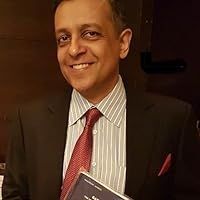
Brigadier Allan Lawrence Mallinson is an English author and was an officer in the British Army.
Mallinson is best known for writing a series of novels chronicling the (fictional) life of Matthew Hervey, an officer serving in the (fictional) British 6th Light Dragoons from the late Napoleonic Wars through subsequent colonial conflicts in India, North America and south Africa.
This very fine book by Allan Mallinson is the 13th volume of the amazing likeable Matthew Hervey series. At the beginning of the book it contains a beautiful phrase by Walt Whitman, as well as a wonderful sketch map of Coorg, India, in AD 1834, while at the end you'll find a very well researched and explained Historical Afternote, where a few facts concerning the riots in Bristol, and a few characters concerning this story are superbly documented. First of all I would like to mention that the author, Allan Mallinson, is an ex-soldier man himself, and his describing of people, situations and surroundings, in this novel just as like all his other novels, are military wise precise and accurate, and all told in a very clear fashion. The author's descriptions of military men within the British Army, whether they are Gentlemen and/or Heroic soldiers as well as Rogues and/or Defaulters, and not to forget the local Indian people, they are all immaculately and truthfully portraited. Storytelling is of a very good quality, for the characters involved in this tale, whether they are real historical or fictional people, come all very much alive, and the surroundings within Bristol, England, and in Coorg, India, are remarkably pictured during the battle scenes. The book starts in the year AD 1831, with the streets of Bristol, England, in turmoil due to the riots there, and it will end in the year AD 1834 due to intervention and war by the East India Company in Coorg, India, so this book has a timespan of about three years. This book is a very astounding and enjoyable military read about Matthew Hervey and his 6th Light Dragoons, and wherever they live they will represent themselves honourably, but they will also fight for King and Country within the ever growing and progressing world of the British Empire in the 19th Century. Highly recommended, for this is another fantastic Matthew Hervey military tale, one that I like to call as: "The Journey to Victory and Honour"!
General thoughts: once again, I love a Matthew Hervey novel. Mallinson's Hervey novels are significantly better than Cornwell's Sharpe Novels and O'Brian's Aubrey novels (Both are series that I like a lot.). The Hervey novels are as good as if not better than Forrester's Hornblower novels. Honestly, Mallinson has created some of my favorite historical fiction ever. I think I will also read his three volume history of World War I.
Specific thoughts: I really loved The Passage to India.The depictions of the civil unrest in Bristol are enlightening, and I find India fascinating, particularly so during the nineteenth century. It is a time and place that I would like to have seen. Hervey's adventures in Coorg are completely engaging, and it is good to follow familiar characters like Corporal Johnson and RSM Armstrong. Plus I am glad to see things working out with Mrs. Hervey.
Such a great book for me...can't wait to read The Tigress of Mysore!
A good read and a must for fans. Hervey is in command of the 6th and at barracks in Hounslow. There the regiment is starting to become bored with HQ living and the defaulters and sick list are growing. Hervey is still estranged from his wife Kezia who remains at her country home. We then had the riots at Bristol and an inquiry into the use of military force and the regiment's posting back to India.
Somehow the writing style has become quite rigid and more like the author's nonfiction style. Not so good for a novel where the more loose, modern style has rather superseded this almost victorian way of delivery. However, having followed Hervey's exploits so far I am not about to give in here.
Due to the style and mixed plots with little ending only 3 stars.
Capital! (To use Col Hervey’s vernacular.) I know I gave the last installment kind of a hard time, but I think Mr. Mallinson made a comeback here. When last we left our main character his personal life was a disaster, but this one put much of that back to right, which, though I usually don’t like nice neat bows, I was glad for it here. Definitely left room open for a 14th book.
I have read every book so far in the series and I have thoroughly enjoyed Matthew Harvey's journey through history and the army. Once again be finds himself in India, this time after suppressing the Bristol riots and once again Allan Mallinson delivers the usual mix of adventure and history lesson with his usual excellent storytelling. I find the way that Hervey is maturing into a high Tory fascinating if jarring, I found with age that My journey has taken me in the opposite direction My only quibble and the reason for a 4 rather than 5 rating is that I felt the second half of the book seemed rushed and abrupt.
Enjoyed it. As with Bernard Cornwell's & Patrick O'Brien's books, full of convincing detail about the operations of the period, which I enjoyed. Again as with those authors, I started with a book set in India. Most (not all) of the historical detail about India is accurate.
Didn't entirely like the portrayals of Indians - especially of Chikka Vira Rajendra as a villainous poltroon. But that's a risk with Western writers on the subject.
This series of books is a joy to read, AM with his personal insight into all thinks 'cavalry' brings these stories to life and I think make him quite unique. Takes you effortlessly back in time and the atmosphere is palpable, great read on its own but so much better when read in series order.
Matthew Hervey's a breveted brigadier, been a while coming, good examples of civil disputes in UK of the time. Also an Indian campaign for good measure, good story building for Hervey, Johnson and Armstrong
This is quite a famous story and I think it's a film. I glazed over the military detail but liked learning a little more of this history, especially in relation to the East India company. And also the attitudes towards groups of people at the time.
The actual narrative is as engaging as the previous entries in the series. The plot on the other hand is bizarre - several major plot strands from the last few books are ended with a one-liner and no explanation. It's as abrupt as a Marvel retcon, and I'm not really sure what the intended goal was in doing it like that.
Loved this. Historical fiction at its worst is just an action-adventure story with some historical scenery and props. At its best, it immerses you in another time and place. Thankfully, this latest entry in a series I have become increasingly fond of does the latter.
Seeing Hervey as a general for the first time allowed Mallinson to explore some fascinating aspects of his character, as the dashing and confident cavalry leader is seen to be anxious, uncertain and altogether human. I was also pleased with the conclusion to the Matthew/Kezia marriage storyline that has rumbled on through the last few books. I found Mallinson's portrayal of this to be sensitive, convincing and satisfying, as he shows how these two proud individuals have grown to respect and ultimately to love one another. I even found Hervey's dutifulness to be quite moving, and the fact that this aspect of the story is not at all melodramatic or tawdry is to be commended.
This further underlines the quality and thoughtfulness of Mallinson's writing, which is an aspect of the series that I have consistently enjoyed. I would characterise his prose style as crisp eloquence, avoiding both ornate language and bloated prose. The result of this is a novel that is delightful to read and which moves forward at a steady pace. It may not quite be literature, but it is certainly more literary than the vast majority of historical fiction written today. The only two authors that I have read whose historical fiction bears comparison are Patrick O'Brien and Robert Graves, so Mallinson is in exalted company (at least in my opinion).
I eagerly await book #14 in the series, and hope there isn't as long a wait until Matthew Hervey kicks on once again.