

What do you think?
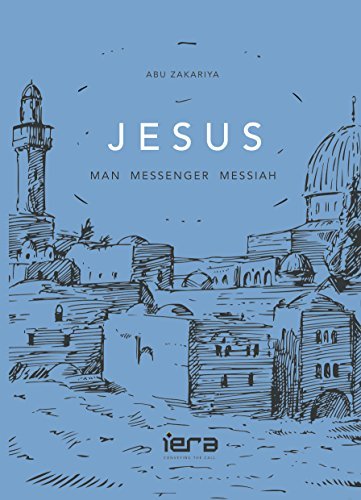
JESUS: Man, Messenger, Messiah
Nearly two billion Christians and over 1.5 billion Muslims believe in him, yet he is perhaps the most misunderstood and misrepresented person in history. This book explores and demystifies Jesus - his life, teachings, personality, and mission. It highlights commonalities but also examines differences between Christianity and Islam. Where and how the Qur’an challenges the traditional Church narrative authored over centuries of Christian myth and innovation, following Jesus. In doing so, it presents the reader with a compelling and clear understanding of Jesus and his true message. The book also demonstrates why the Qur’an is the ‘missing link’, that all important ‘bridge’ connecting Judaism and Christianity, uniting all of the Abrahamic faiths.
255 pages, Kindle Edition
First published May 8, 2017
About the author
Abu Zakariya
6 books48 followersAbu Zakariya has had a life-long interest in comparative religion. Being born in Britain and influenced by his mixed heritage of Arab and European descent, he has had a strong focus on researching Islam and Christianity.
After many years of study, discussions and led by a desire to share his experiences in discussing Islam with people of all religious backgrounds, Abu Zakariya authored the popular comparative religion blog Many Prophets One Message. He has continued his intellectual and academic pursuits by formally studying and learning from academic scholars trained in Islamic thought and theology.
After many years of study, discussions and led by a desire to share his experiences in discussing Islam with people of all religious backgrounds, Abu Zakariya authored the popular comparative religion blog Many Prophets One Message. He has continued his intellectual and academic pursuits by formally studying and learning from academic scholars trained in Islamic thought and theology.
Ratings & Reviews
Friends & Following
Create a free account to discover what your friends think of this book!
Community Reviews
Displaying 1 - 18 of 18 reviews

July 29, 2021
This is a book written to Christians about the divinity of Jesus. It is not a pro-Christian book but a Pro-Islam Book. However, this book is a Pro-Jesus book in his role as a prophet in the Islamic Faith. The book looks at a variety of Christian beliefs and corrects them with Islamic principles. The author is very respectful.
This book may be very convincing to members of the protestant and catholic churches. However, I feel many of the author's claims and arguments can be rebuted with the LDS doctrine. Thus, as a Mormon reader of this book, I can easily agree with the author and many of his claims as many of our beliefs do not align with mainstream christianity.
However, many chapters still caused me to think about what I believed such as those relating to the Apostle Pauls's teachings, the organization of the new testament, and Biblical prophecies about the Prophet Muhammed.
I would be interested to see this author create new arguments and claims directed at the Latter Day Saint community.
This book may be very convincing to members of the protestant and catholic churches. However, I feel many of the author's claims and arguments can be rebuted with the LDS doctrine. Thus, as a Mormon reader of this book, I can easily agree with the author and many of his claims as many of our beliefs do not align with mainstream christianity.
However, many chapters still caused me to think about what I believed such as those relating to the Apostle Pauls's teachings, the organization of the new testament, and Biblical prophecies about the Prophet Muhammed.
I would be interested to see this author create new arguments and claims directed at the Latter Day Saint community.

September 3, 2023
exquisite

August 4, 2017
An astonishing book about Jesus, peace be upon him. It introduces you to the real Jesus. The author uses the Bible to prove that he was not what Christians believe he was. It is the most informative and eye-opening book I have ever read about Jesus, the most misunderstood person in history.

January 15, 2026
I would have preferred if this book summarized all the arguments into one or two short chapters and added the detailed explanations or evidence in the footnotes for whoever was interested in understanding them more deeply. Some of the trains of thought or lines of reasoning were so long winded that I forgot what they were trying to prove. There are a few things I will take away from this book regarding the preservation of the Quran and the discrepancies in the accounts of Isaac and Ishmael in the Bible. But I expected to get more out of this book than I did.

February 23, 2025
Abu Zakariya’s book Jesus: Man Messenger Messiah is an ambitious Islam polemic book that seeks to engage and debate with Christians. The purpose of this book is to convince Christians of why Nicene Christianity is wrong and to lay out why Islam is the correct religion for Christians. It is important to state that this book is a polemic against elements of Nicene Christianity, that Zakariya disagrees with. I must confess that my viewpoint will be altered by the fact that I am liberal-Christian. That means I am going to have a certain bias in my hermeneutical approach to reading this book. I am going to attempt to give this a fair review but you have to understand that everyone has a bias, including myself. Read other reviews alongside this one for a fair assessment.
The first chapters of the book lay out a comparison between the conception of God in Christianity versus the conception of God in Islam. Zakariya lays out how the conceptualisation of God in Christianity has been corrupted by historical developments. Zakariya argues that Christianity as a religion has developed over centuries with multiple beliefs refined by church councils rather than being original to Christianity. He argues the trinity is the worst concept in Christianity as being incoherent and flawed. Zakariya argues that Christianity had multiple versions of belief. The Ebionites, Jews who believed Jesus was the Messiah but fully human. The Marcionites on the other hand represent a version of Gnosticism believing Jesus is divine (Zakariya doesn’t mention much about other forms of Gnostic beliefs such as Valentinianism). Then Zakriya mentions Subordinationism in Jesus being subordinate to the Father which was prevalent in early Christianity. Zakariya lays out how Trinitarianism developed and how it conflicts with belief in a God. The book outlines that Jesus taught pure monotheism and did not believe in trinitarianism and how trinitarianism was influenced by paganism.
Chapter Two contrasts Chapter One in how God is laid out in Islam. Jesus is laid out in Islam as being the Messiah, how beliefs should be developed through divine revelation, reason and Islam, with emphasis on the Kalam cosmological argument, the argument for God’s existence that William Lane Craig likes. There is also how Islam eliminated idolatry in Arabia and the benefits of the Qur’an on humanity. Chapter Three lays out the lives of the prophets in the Qur’an and the Bible. The Qur’an is contrasted with the Bible with its positive views of the prophets. In contrast, the Bible is looked at as having negative views of the prophets. Chapter Four looks at atonement and the problems with the Christian view of atonement, which is viewed as barbaric compared with the Islamic view of forgiveness from Allah/God being a free gift. Chapter Five argues about the historic nature of the crucifixion which is examined and the Islamic view of the crucifixion is outlined.
Chapter Six outlines the preservation of the Qur’an. This includes looking at the problems of different translations of the Bible and contrasting this with the immaculate preservation of the Qur’an, being perfectly preserved by Allah/God. In this regard, the Qur’an is superior to the Bible. There is also a look at how the hadith tradition is superior in its transmission of oral tradition and how it is transmitted from person to person. Chapter Seven looks at how Paul invented Christianity in that Jesus practised Judaism and was Jewish in his interpretation of the law and how he caused two branches of Christianity to emerge, with the argument that Jesus was not sent to the whole world but only for the Jews.
Chapter Eight outlines how Jesus prophesied someone after himself.
This book is part of what I would argue is Christian-Islamic dialectic discourse. There is a subsection of dialectic discourse between Christian and Islamic apologetics online. This book falls into the category of a’ priori reasoning, with the majority of the book using a’ priori argument in discoursing with Christianity. This is to be expected as much of the religious discourse between Christianity and Islam are questions of faith and so a’ priori reasoning is better suited for the discussion.
What does Abu Zakariya get right? Well, I am pleased to say that for someone who is not an expert of early Christian history, Abu Zakariya shows a great deal of knowledge of early Christian doctrine. This is a strong point of the book as Evangelical Protestants who have no awareness of how Christianity developed would find it difficult to respond to Zakariya’s claims. Jesus: Man Messenger Messiah is good at outlining the development of Christian doctrine over some time and does a good job at capturing the element of how tradition developed in refining Christian doctrine. The only disagreement with Zakariya is the claims that trinity developed from pagan influence, in which I would think the evidence is that trinitarianism was more of a philosophical development from Greco-Roman philosophy than paganism per se.
Another thing that Abu Zakariya does well is outlining how Paul had a profound influence on Christianity in how it developed and became a religion of the Gentiles. I think Zakariya is spot on in his analysis of Paul in that Paul developed Christianity from a sect of Judaism into the religion of Gentiles. I think there is a major difference between Pauline Christianity and the Christianity of the Gospels, one which is ignored by Christians. I would say that generally Orthodoxy, Catholicism and Anglicanism are better at their representation of the Gospels; whilst Protestantism is far more Pauline in its orientation. That said, the Gospels originated after Paul’s writings and it is fair to say that the writing of the Gospels was influenced by the Q source. Zakariya also does a good job looking at the development of the New Testament and accurately looks at the dating of various sources of the gospel manuscripts. I think he does a fair assessment criticising source material of the New Testament in that the New Testament manuscripts are centuries from the source.
There are however problems with the book. For starters, the book has highly inconsistent referencing criteria and wider research used. In the section on early Christianity, there was a significant amount of referencing used but this weakens throughout the book and it seems that Zakariya only references things on Christianity discourse. It would have been lovely to see Zakariya use a vast array of Islamic scholarship that has developed over 1400 years. Instead, it seems that there is a lack of referencing in the later stages of the book, with the main focus on a’ priori theological dialectic discourse. I always mark a book down for insufficient referencing and unfortunately, this book falls in that category.
I also think that at times this book resorts to question-begging which is part of the nature of religious debate. Circular reasoning is a likely outcome of religious dialectic debate. I also think that there is a problem with the way he lays out the difference between the Qur’an and the New Testament in that on page 56 there is the claim that the Sunnah was part of the Qur’an interpretation. I don’t think Zakariya is clear enough that the earliest Hadith tradition, Sahih Al’ Bukhari is over 150 years after the Prophet’s death. Zakariya spends a lot of time criticising the development of Christianity and does not acknowledge this fact. Likewise, the book is not clear on the vast array of Qur’an interpretations. The American scholar Samuel Ross argues there are 2700 Qur’an tafsir or interpretations. I also think his criticism of progressive revelation is not entirely fair as I think one of the strengths of Christianity, coming from a liberal-Christian perspective is that it has developed from an earlier period that holds vastly different views on the nature of God. John Burton’s The Sources of Islamic Law outlines progressive theology in Naksh or abrogation.
Overall, the book is an interesting book from the Islamic view of Christianity. This is certainly a useful part of the dialectic debate between Christianity and Islam. I would certainly think it is a useful book for Muslims who engage in dialectic discussion with Christians. Whilst it is not a highly scholarly book, it is easy to read and one that engages in fair and honest criticism.
The first chapters of the book lay out a comparison between the conception of God in Christianity versus the conception of God in Islam. Zakariya lays out how the conceptualisation of God in Christianity has been corrupted by historical developments. Zakariya argues that Christianity as a religion has developed over centuries with multiple beliefs refined by church councils rather than being original to Christianity. He argues the trinity is the worst concept in Christianity as being incoherent and flawed. Zakariya argues that Christianity had multiple versions of belief. The Ebionites, Jews who believed Jesus was the Messiah but fully human. The Marcionites on the other hand represent a version of Gnosticism believing Jesus is divine (Zakariya doesn’t mention much about other forms of Gnostic beliefs such as Valentinianism). Then Zakriya mentions Subordinationism in Jesus being subordinate to the Father which was prevalent in early Christianity. Zakariya lays out how Trinitarianism developed and how it conflicts with belief in a God. The book outlines that Jesus taught pure monotheism and did not believe in trinitarianism and how trinitarianism was influenced by paganism.
Chapter Two contrasts Chapter One in how God is laid out in Islam. Jesus is laid out in Islam as being the Messiah, how beliefs should be developed through divine revelation, reason and Islam, with emphasis on the Kalam cosmological argument, the argument for God’s existence that William Lane Craig likes. There is also how Islam eliminated idolatry in Arabia and the benefits of the Qur’an on humanity. Chapter Three lays out the lives of the prophets in the Qur’an and the Bible. The Qur’an is contrasted with the Bible with its positive views of the prophets. In contrast, the Bible is looked at as having negative views of the prophets. Chapter Four looks at atonement and the problems with the Christian view of atonement, which is viewed as barbaric compared with the Islamic view of forgiveness from Allah/God being a free gift. Chapter Five argues about the historic nature of the crucifixion which is examined and the Islamic view of the crucifixion is outlined.
Chapter Six outlines the preservation of the Qur’an. This includes looking at the problems of different translations of the Bible and contrasting this with the immaculate preservation of the Qur’an, being perfectly preserved by Allah/God. In this regard, the Qur’an is superior to the Bible. There is also a look at how the hadith tradition is superior in its transmission of oral tradition and how it is transmitted from person to person. Chapter Seven looks at how Paul invented Christianity in that Jesus practised Judaism and was Jewish in his interpretation of the law and how he caused two branches of Christianity to emerge, with the argument that Jesus was not sent to the whole world but only for the Jews.
Chapter Eight outlines how Jesus prophesied someone after himself.
This book is part of what I would argue is Christian-Islamic dialectic discourse. There is a subsection of dialectic discourse between Christian and Islamic apologetics online. This book falls into the category of a’ priori reasoning, with the majority of the book using a’ priori argument in discoursing with Christianity. This is to be expected as much of the religious discourse between Christianity and Islam are questions of faith and so a’ priori reasoning is better suited for the discussion.
What does Abu Zakariya get right? Well, I am pleased to say that for someone who is not an expert of early Christian history, Abu Zakariya shows a great deal of knowledge of early Christian doctrine. This is a strong point of the book as Evangelical Protestants who have no awareness of how Christianity developed would find it difficult to respond to Zakariya’s claims. Jesus: Man Messenger Messiah is good at outlining the development of Christian doctrine over some time and does a good job at capturing the element of how tradition developed in refining Christian doctrine. The only disagreement with Zakariya is the claims that trinity developed from pagan influence, in which I would think the evidence is that trinitarianism was more of a philosophical development from Greco-Roman philosophy than paganism per se.
Another thing that Abu Zakariya does well is outlining how Paul had a profound influence on Christianity in how it developed and became a religion of the Gentiles. I think Zakariya is spot on in his analysis of Paul in that Paul developed Christianity from a sect of Judaism into the religion of Gentiles. I think there is a major difference between Pauline Christianity and the Christianity of the Gospels, one which is ignored by Christians. I would say that generally Orthodoxy, Catholicism and Anglicanism are better at their representation of the Gospels; whilst Protestantism is far more Pauline in its orientation. That said, the Gospels originated after Paul’s writings and it is fair to say that the writing of the Gospels was influenced by the Q source. Zakariya also does a good job looking at the development of the New Testament and accurately looks at the dating of various sources of the gospel manuscripts. I think he does a fair assessment criticising source material of the New Testament in that the New Testament manuscripts are centuries from the source.
There are however problems with the book. For starters, the book has highly inconsistent referencing criteria and wider research used. In the section on early Christianity, there was a significant amount of referencing used but this weakens throughout the book and it seems that Zakariya only references things on Christianity discourse. It would have been lovely to see Zakariya use a vast array of Islamic scholarship that has developed over 1400 years. Instead, it seems that there is a lack of referencing in the later stages of the book, with the main focus on a’ priori theological dialectic discourse. I always mark a book down for insufficient referencing and unfortunately, this book falls in that category.
I also think that at times this book resorts to question-begging which is part of the nature of religious debate. Circular reasoning is a likely outcome of religious dialectic debate. I also think that there is a problem with the way he lays out the difference between the Qur’an and the New Testament in that on page 56 there is the claim that the Sunnah was part of the Qur’an interpretation. I don’t think Zakariya is clear enough that the earliest Hadith tradition, Sahih Al’ Bukhari is over 150 years after the Prophet’s death. Zakariya spends a lot of time criticising the development of Christianity and does not acknowledge this fact. Likewise, the book is not clear on the vast array of Qur’an interpretations. The American scholar Samuel Ross argues there are 2700 Qur’an tafsir or interpretations. I also think his criticism of progressive revelation is not entirely fair as I think one of the strengths of Christianity, coming from a liberal-Christian perspective is that it has developed from an earlier period that holds vastly different views on the nature of God. John Burton’s The Sources of Islamic Law outlines progressive theology in Naksh or abrogation.
Overall, the book is an interesting book from the Islamic view of Christianity. This is certainly a useful part of the dialectic debate between Christianity and Islam. I would certainly think it is a useful book for Muslims who engage in dialectic discussion with Christians. Whilst it is not a highly scholarly book, it is easy to read and one that engages in fair and honest criticism.

March 30, 2021
Jesus - Man, Prophet and Messiah.
On hearing his words, some of the people said, “Surely this man is the Prophet.” Others said, “He is the Messiah.” [John 7:40-41]
“Who are you?” they asked.
“Just what I have been telling you from the beginning,” Jesus replied. “I have much to say in judgement of you. But He Who sent me is trustworthy, and what I have heard from Him I tell the world.” They did not understand that he was telling them about his Father. So Jesus said, “When you have lifted up the son of man, then you will know that I am he and that I do nothing on my own but speak just what the Father has taught me. The One Who sent me is with me; He has not left me alone, for I always do what pleases Him.” Even as he spoke, many believed in him... [John 8:25-30]
...Then they turned again to the blind man, “What have you to say about him? It was your eyes he opened.” The man replied, “He is a prophet.” [John 9:17, NIV]
“You heard me say, ‘I am going away and I am coming back to you.’ If you loved me, you would be glad that I am going to the Father, for the Father is greater than I... [John 14:28 , NIV]
On hearing his words, some of the people said, “Surely this man is the Prophet.” Others said, “He is the Messiah.” [John 7:40-41]
“Who are you?” they asked.
“Just what I have been telling you from the beginning,” Jesus replied. “I have much to say in judgement of you. But He Who sent me is trustworthy, and what I have heard from Him I tell the world.” They did not understand that he was telling them about his Father. So Jesus said, “When you have lifted up the son of man, then you will know that I am he and that I do nothing on my own but speak just what the Father has taught me. The One Who sent me is with me; He has not left me alone, for I always do what pleases Him.” Even as he spoke, many believed in him... [John 8:25-30]
...Then they turned again to the blind man, “What have you to say about him? It was your eyes he opened.” The man replied, “He is a prophet.” [John 9:17, NIV]
“You heard me say, ‘I am going away and I am coming back to you.’ If you loved me, you would be glad that I am going to the Father, for the Father is greater than I... [John 14:28 , NIV]

May 28, 2017
The two major religions namely Christianity and Islam rooted from Abrahamic faith are serious believer of Jesus (peace be upon him). Both of these religions have over a billion of followers each side yet the character of Jesus (peace be upon him) is immensely distinct between them. To some he is the son of God but to others he is a Messenger of God. This greatest controversy in faith between Christianity and Islam will be over if the true nature and identity of Jesus (peace be upon him) is revealed. The brilliant piece of work by the author 'Abu Zakariya' with compelling research once again present us without shadow of a doubt who Jesus (peace be upon him) truly was. He was not indeed God or the son of God but he was JESUS: Man, Messenger, Messiah (peace be upon him)

October 18, 2021
At first i thought this book only talking about Jesus either from moslem or christianity perspective.
However the writer gave you more. It discuss the different view of Jesus at early christianity, the contradiction in Bible, how Judaism view Jesus, how Paul preach the gospel & differentiate from mainstream jew until how Quran view all this thing.
As moslem, this book ask us to reflect on & strengthening our faith by examining the evidences, proofs & finally come to logical conclusion that Quran is from Allah then Islam is the truth.
However the writer gave you more. It discuss the different view of Jesus at early christianity, the contradiction in Bible, how Judaism view Jesus, how Paul preach the gospel & differentiate from mainstream jew until how Quran view all this thing.
As moslem, this book ask us to reflect on & strengthening our faith by examining the evidences, proofs & finally come to logical conclusion that Quran is from Allah then Islam is the truth.

Currently Reading
April 26, 2020I have read this book before and started reading it this ramadan. "The Qur’an encourages mankind to ponder, think and contemplate. God wants us to base our faith on intellect and not blind following."
-source: Jesus: Man-Messenger-Messiah, pages 57-58.
I recommend it.
-source: Jesus: Man-Messenger-Messiah, pages 57-58.
I recommend it.
June 11, 2023
The book explains and breaks down the fundamentals of the Christian religion- its view on God, the Trinity, the scriptures and then examines these with historical events, Islam (through the Qur'an) & the old Testament itself, to debunk them. The book explains significant events which have led to the transformation of the monotheistic Religion that Jesus PBUH preached, to modern day Christianity. Overall, the book presents an evidence based approach in disproving the aforementioned fundamentals of Christianity with Islam and presents the lofty status of Jesus and all of the other Prophets in Islam. It provides the reader with the message that the final Messenger indeed was Muhammad, who preached the same message as Jesus PBUH: that there is none worthy of worship except Allah.
May 12, 2020
Some wobbly enough facts, but 95% was an excellent, intriguing read. Would definitely recommend people of any background to read this book

December 12, 2021
Skimmed and scanned parts of it due to having already read the subject matter in other books, but definitely helped my understanding of Christian theology and scripture.

June 14, 2023
A great exploration of Jesus from a Muslim perspective.
January 20, 2025
One of the best books I've read(I've read a lot). I find Abu Zakariya to be a skilled and thoughtful author. A must read for sure.

December 29, 2020
The best book regarding who Jesus was and how he is seen in Islam in contrast to Christianity.

February 21, 2024
A good starting for studying christianity/

October 3, 2017
Un libro que toma varios elementos -agrupados en 8 capítulos - para probar un punto: la biblia no es confiable y hay muchos relatos claves para la religión que no tienen soporte real.
Desde el concepto de Dios en islam y catolicismo, el retrato de Jesús y los otros profetas, la relación entre el hombre y Dios, cómo se escribieron y preservaron las escrituras del nuevo testamento y Corán, la profecía de Jesús anunciando un ultimo profeta o la preservación de la palabra son ejes que articulan el libro. La verdad es que me gusto tener esta suerte de espejo donde las dos religiones se miran cara a cara, pero sí, todo esta construido para demostrar la superioridad del Corán.
Me hubiese gustado escuchar la otra parte para hacer los rounds más equiparados.
Desde el concepto de Dios en islam y catolicismo, el retrato de Jesús y los otros profetas, la relación entre el hombre y Dios, cómo se escribieron y preservaron las escrituras del nuevo testamento y Corán, la profecía de Jesús anunciando un ultimo profeta o la preservación de la palabra son ejes que articulan el libro. La verdad es que me gusto tener esta suerte de espejo donde las dos religiones se miran cara a cara, pero sí, todo esta construido para demostrar la superioridad del Corán.
Me hubiese gustado escuchar la otra parte para hacer los rounds más equiparados.

Want to Read
May 5, 2018iERA Jesus Exhibition at UTM Kuala Lumpur
https://iera.org/jesus/
2018-05-05
Buku diberikan bersama dengan amanah, 'Baca Faham Sampaikan'.
https://iera.org/jesus/
2018-05-05
Buku diberikan bersama dengan amanah, 'Baca Faham Sampaikan'.
Displaying 1 - 18 of 18 reviews