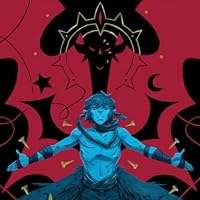
When the Human Torch skips out for the Inhumans' hidden city and his girl Crystal, he doesn't find the reception he planned for when Quicksilver greets him. Meanwhile, the Frightful Four launch a surprise attack with their newest member - Thundra - that pushes Reed and Sue to the breaking point. Once the dust settles, the FF will be one fewer - because the Invisible Girl has quit! Of course, we wouldn't have the makings of an FF/Inhumans epic if Maximus the Mad didn't rear his head and make a power play for the Inhuman throne. By the time all is said and done, the Human Torch will be sporting a fiery new costume, and the Inhuman Queen Medusa will be the FF's newest member. And that's just for starters! Ahead of you are classic battles between the Thing and Thundra; the return of the towering Dragon Man and Gideon; the world's creepiest babysitter, Agatha Harkness; a bizarre trip back to the '50s courtesy of the Shaper of Worlds; and a reunion with Wyatt Wingfoot in a fight against one of the FF's oldest enemies, the Miracle Man! To top it off, we're also including a trip to the Negative Zone and the origin of its truly evil inhabitant, Annihilus. The villain's plan to harness the enormous powers in Franklin Richards will devastate the FF in a story that changed the Marvel Universe forevermore!
Roy Thomas was the FIRST Editor-in-Chief at Marvel--After Stan Lee stepped down from the position. Roy is a longtime comic book writer and editor. Thomas has written comics for Archie, Charlton, DC, Heroic Publishing, Marvel, and Topps over the years. Thomas currently edits the fanzine Alter Ego for Twomorrow's Publishing. He was Editor for Marvel comics from 1972-1974. He wrote for several titles at Marvel, such as Avengers, Thor, Invaders, Fantastic Four, X-Men, and notably Conan the Barbarian. Thomas is also known for his championing of Golden Age comic-book heroes — particularly the 1940s superhero team the Justice Society of America — and for lengthy writing stints on Marvel's X-Men and Avengers, and DC Comics' All-Star Squadron, among other titles.
Also a legendary creator. Creations include Wolverine, Carol Danvers, Ghost Rider, Vision, Iron Fist, Luke Cage, Valkyrie, Morbius, Doc Samson, and Ultron. Roy has also worked for Archie, Charlton, and DC among others over the years.
Marvel Masterworks: The Fantastic Four Volume 13 collects issues 129-141 of The World's Greatest Comic Magazine.
The Fantastic Four has long been one of my favorite Marvel books. I was a subscriber for five years or so in my teens. Lately, I've been intrigued by the era after Jack Kirby left and before John Byrne took the reins. Luckily, I found this for twenty bucks at a comic convention not long ago.
John Buscema handles the art chores on all but two issues in this collection. While I'm not crazy about his depiction of The Thing, I have to say his art is spectacular for the most part. There are some panels I'd like to have blown up and framed. His Medusa and Thundra are easy on the eyes and he even makes Gregory Gideon and Miracle Man seem like world-beaters. Ramona Fradon's fill-in makes me wish she'd done more Marvel work. Ross Andru's, however, isn't great. It's hard to believe he'd be an iconic Spider-Man artist a few years later.
The writing by Roy Thomas and Gerry Conway is some crazy shit. Apart from Annihilus, the threats aren't anything special. It's the turmoil within the Fantastic Four that drives the story. Reed drives Sue and Franklin away by being a Fantastic asshole, leading Medusa to join the team. Thundra joins the Frightful Four and the Frightful Four actually seem competent for a change. Johnny goes to the Great Refuge to find Crystal in the arms of another man. Wyatt Wingfoot returns to the fold. The new Fantastic Four struggles to keep things running smoothly, culminating in a two-parter with Annihilus in the Negative Zone and possibly Reed Richards most dubious decision so far.
I think the addition of Medusa to the lineup was my favorite part of this. She does her best to fill Sue's spot, even though her super power is her wondrous hair. The guys still dump on her like they do Sue, though, which is weird since with Thundra being from a female-dominated future, you'd think someone in the Marvel office was thinking at least a little progressively. I also liked Johnny's new red costume. It's funny how Roy thought minor tweaks like this would boost sales, as per the introduction.
I have to wonder if they were kicking around the idea of phasing Reed and Sue out of the book at this point. The ending of the final issue in this collection is going to be hard for Reed and Sue to come back from. I have a feeling it's never referenced again once Thomas and Conway are off the book.
My initial foray into the post-Kirby, pre-Byrne era of the Fantastic Four was a very enlightening one. It'll be interesting where they go with Reed "Father of the Year" Richards after this. Four out of five stars.
This is a special volume of the FF for me because the issues collected here were my first FF issues back when I was knee high to a grasshopper. Roy Thomas and Gerry Conway wrote some cracking tales, including one of the most devastating moments in the team’s history... anybody who’s read these issues knows what I’m talking about... and it still made me cry on this umpteenth re-read as only a solid kick in the scrote can. Plus, it’s all wrapped in beautiful John Buscema artwork... inked by the late Joe Sinnott, who we lost this year. RIP Joe; you were the best.
The Marvel Masterworks volumes are fantastic reprints of the early years of Marvel comics. A fantastic resource to allow these hard to find issues to be read by everyone. Very recommended to everyone and Highly recommended to any comic fan.
Después de terminar con la etapa de X-Men posterior a Secret Wars y anterior a Inhumanos vs Patrulla-X, y con el Batman de Snyder y Capullo, ha llegado el momento de continuar con Cuatro Fantásticos, que los dejé un poco colgados con el final de la etapa de Stan Lee y el principio de la de Roy Thomas, que llegaba a la serie como reemplazo del guionista y creador de los Cuatro Fantásticos. Roy Thomas ya llevaba algún tiempo como dialoguista de un Stan Lee que más que escribir guiones, había comenzado a escribir "resúmenes", así que era un poco su relevo natural, y llegaba a la serie acompañado por los lápices de John Buscema, aunque a no mucho tardar, Roy dejaría su lugar a uno de los guionistas que a día de hoy llamamos ya "clásicos", el gran Gerry Conway. Realmente, al menos en esta parte de 4F, me parece más interesante la parte de Conway que la de Thomas, y si hay algo que me ha parecido abominable, ha sido el nuevo diseño del uniforme de la Antorcha Humana, que se pasa al rojo como homenaje a la Antorcha Humana original.
Por lo demás, con Thomas y Conway se pierde parte de la originalidad explosiva que habían tenido los 4F en sus primeros números, pero se gana en sensación de continuidad y en tramas, aunque la mayoría de ellas ya demuestran que en Marvel se iba a volver una y otra vez con los mismos personajes. Así, se recuperan varios personajes antiguos como Gideon "nomeacuerdodelapellido" o el Hombre Imposible (en una historia un tanto regulera obra de Gerry Conway y que lleva a tres de los 4F a una reserva india acompañando a Wyatt Wingfoot); pero también tendremos la aparición de personajes nuevos, como el Conformador, un trasunto del Cubo Cósmico con forma de skrull que concederá a un macarra de tres al cuarto sus deseos, convirtiendo el mundo en una de Rebelde con los jóvenes contra los adultos. Por otro lado, será recurrente en esta etapa la trama de la separación entre Reed y Sue, que se marchará de los 4F (lo que permitirá que Medusa ocupe su puesto) llevándose a Franklin, que además empezará a desarrollar aquí ciertas habilidades extrañas, que llevarán a un asfixiante final en el que Richards tendrá que tomar una decisión que le puede costar su familia y el equipo, todo ello mientras se enfrentan a Annihilus en la Zona Negativa...
En fin, seguimos hablando de cómics clásicos, y si bien quizá hoy no nos parezcan demasiado llamativos... siguen siendo clásicos.
First, most stories span two issues. A cheap trick to keep readers hooked, at the cost of pacing. One story is interrupted, and you have to read another book to learn what happened during the interruption.
John Buscema does most of the art, and it is great. I still miss some of Kirby's backgrounds.
My main problem is with the writing. Reed is unrecognizable. He is supposed to be super-smart, but he acts most of the time irrationally. His interactions with Sue made me cringe. Many villains are forgettable, some plotlines go nowhere, and there is at least one deus ex machina resolution. Thundra could be an interesting character, but we get no past history and no follow-up. She just exchanges a few blows with the Thing, and then goes away after Reed does something with no logic at all.
These are some horrible comics. Reed and Sue separating could have been an interesting plotline, but it's horribly handled. Reed is forced to be a misogynistic jerk and Sue is basically ignored. Both of them are wildly out of character and it mars all the stories in this volume.
The early Bronze Age seems downright quaint by today's event driven comics standards. While some of the writing may come off as overly wordy to modern audiences, it is the nuances afforded by the third party narrative which allowed more characterization in far less space. Some of the dialogue is dated and cringe-worthy but that is easily overlooked when one considers how cringe-worthy so much modern comic dialogue is.
There is a lot going on, with appearances by the Inhumans, Miracle Man, Dragon Man, and The Frightful Four. The break-up of Johnny (the Human Torch) and Crystal of the Inhumans is finalized in this book, setting the stage for her eventual marriage to Quicksilver. The Frightful Four get a new member in Titania, who will go on to be a major supporting cast member in the Thing's solo team-up series, Marvel Two-In-One.
#136 and 137 features Roy Thomas 1950s nostalgia porn. I can't condemn the man for it too much, seeing as how everyone eventually looks back to certain eras with fondness. I just don't care much for the popular culture of the 1950s outside of the comic books published in that time.
Gerry Conway takes over the writing of this title, which is crazy when you consider that he was 19 or 20 years old at the time. Can you imagine the suits doing that today? It would be impossible for Conway to do what he did with the umpteen levels of editorial and marketing that each and every thing must get past nowadays. It's one of the main reasons why Bronze Age comics have a breath and life to them that makes them bounce. Modern comics have a sterile, calculated feel to them that feels boring and stale to me. Make Mine (old) Marvel!
This collection features, not one, but two villains with nasty mustaches. There is Gregory Gideon, a forgettable villain from the early issues who is trying to cure his cancer by doing something to the FF while wearing a robot suit. And there is Miracle Man, another forgettable bad-guy who stole his powers from Native American spirit people.
There are the forgettable guest appearances from the Inhumans and Annihilus. They almost ruin the stories by being so predictable. We are also shown depictions of Johnnie Storm and Reed Richards flying off at the handle because they don’t know how to cope with relationships. Seriously, they both suck. Reed sucks because he’s a terrible leader. Johnnie sucks because he flies headfirst into any danger and is not dependable. I think his flame gets “blown out”every issue. This is not an occasional thing. Every issue.
But as trite as these things are, there is some fun writing in almost every issue. Some real drama now that Reed and Sue are separated. A strange issue where radiation changes reality and the world is stuck in the 50s. And we have the introduction of Thundra, who might be the greatest character created in this magazine. Already I am skimming future volumes for her next appearance.
Volume 13 is the first post-Kirby collection of FF where it feels like the book has some direction due to Gerry Conway taking over the scripting (with Roy Thomas still driving a lot of the story, though). However, that direction only comes about half-way through this collection. The first half (129-135) is pretty weak. 129 & 130 are some lazy FF vs Frightful Four stuff. 130 has a great Steranko cover, but it also has a terrible, shocking & out of place limp-wrist Tiny Tim joke. 131 & 132 deal with the Inhumans and their slave race the Alpha Primitives. On the one hand, I'm glad Roy Thomas decided to do something with that concept. On the other hand, what he did was executed terrible and in exceedingly poor taste. I do kinda like the idea of the Inhumans and the FF battling Omega, a weaponized creation made of pure white guilt.
With 133, Gerry Conway starts to take over. The Thing kinda sorta battles Thundra, which is mostly terrible but has a few decent jokes. 134 & 135 are mostly unmemorable except for John Buscema taking over art, which is a very positive change. The story has some terrible gender politics, but it is very well drawn in a romance comic style.
Issue 136 is where Fantastic Four kicks back into high gear. It's not exactly good, but it's pure bonkers and incredibly fun. Thomas, Conway & Buscema come up with a genuinely insane 1950s nightmare fantasy that must be scene to be believed. These two issues are genuinely must-read.
They keep the insanity going at a lower level in 138 & 139, which bring back the Miracleman for some dumb reason only to kill him off at the end. The story is gobbledegook (for example, all the worlds nukes start to explode; this problem is never resolved), but the art is bonkers.
140 & 141 are less crazy, but actually have a pretty compelling story. I'm very partial to Annihilus and these issues manage to give him some reasonable motivations for his villainy.
The original comic books came out just before I started earning any money, so I only had one of the comics collected in here. Of course it was a continuing story so 35 years later, I finished it off. It wasn't worth the wait.
These are rushed, corny stories. The art is competent, but the plots and dialogue are painful. Characters act for no good reason. There are much better FF stories to read.