"A book full of wonders" —Helen Macdonald, author of H Is for Hawk
"Witty, insightful. . . .The story of jellyfish. . . is a significant part of the environmental story. Berwald's engaging account of these delicate, often ignored creatures shows how much they matter to our oceans' future." —New York Times Book Review
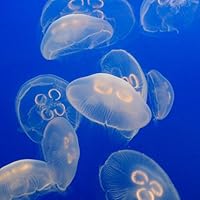
Jellyfish have been swimming in our oceans for well over half a billion years, longer than any other animal that lives on the planet. They make a venom so toxic it can kill a human in three minutes. Their sting—microscopic spears that pierce with five million times the acceleration of gravity—is the fastest known motion in the animal kingdom. Made of roughly 95 percent water, some jellies are barely perceptible virtuosos of disguise, while others glow with a luminescence that has revolutionized biotechnology. Yet until recently, jellyfish were largely ignored by science, and they remain among the most poorly understood of ocean dwellers.
More than a decade ago, Juli Berwald left a career in ocean science to raise a family in landlocked Austin, Texas, but jellyfish drew her back to the sea. Recent, massive blooms of billions of jellyfish have clogged power plants, decimated fisheries, and caused millions of dollars of damage. Driven by questions about how overfishing, coastal development, and climate change were contributing to a jellyfish population explosion, Juli embarked on a scientific odyssey. She traveled the globe to meet the biologists who devote their careers to jellies, hitched rides on Japanese fishing boats to see giant jellyfish in the wild, raised jellyfish in her dining room, and throughout it all marveled at the complexity of these alluring and ominous biological wonders.
Gracefully blending personal memoir with crystal-clear distillations of science, Spineless is the story of how Juli learned to navigate and ultimately embrace her ambition, her curiosity, and her passion for the natural world. She discovers that jellyfish science is more than just a quest for answers. It’s a call to realize our collective responsibility for the planet we share.
Juli Berwald received her PhD in ocean science from the University of Southern California. A science textbook writer and editor, she has contributed to many science textbooks and written for The New York Times, Nature, National Geographic, and Slate, among other publications. She lives in Austin with her husband and their son and daughter.
What I got: Some science, and a lot of memoir about travels, college crushes, the author's children, her insecurities, and commentary on other people's body shapes and clothing.
The taste of the jellyfish was so subtle as to be almost nothing at all. I ate some more. It was a tasty, light, savory salad. In spite of all my anxiety about buying, soaking, preparing, and then eating it, jellyfish was completely unremarkable.
I had a review typed up and the wi-fi crash at the library ate it, and I don't really feel like messing with this much more, so I'm going to go with pros and cons and be done with it.
Pros:
★ There is some nice jellyfish science in here.
★ Dr. Berwald does manage to meet some interesting people during her jellyfish obsession, including the woman who found the kraken and a woman who swims from Cuba to Miami.
★ It is actually more coherent than The Soul of an Octopus, although I'm not sure more coherent comes out to better in this case.
Cons:
☆ There isn't nearly as much jellyfish science in here as I was expecting.
☆ The author spends far too much time navel gazing; her own struggle to find meaning as a fairly privileged middle aged woman just doesn't relate all that much to the jellyfish.
☆ The author also fails to do any actual journalism around the 'Save the oceans!' theme she seems to be trying to go after. A look at The Sixth Extinction: An Unnatural History would have served her very well, and I think if she had entered into some dialog with that book she might have had some interesting contributions to make.
☆ This is not so much a flaw, but the science doesn't actually answer the question she set out to address. (The question was 'Will jellyfish be the big winners after global warming and ocean acidification?') A refocusing might have been helpful.
☆ Overall, it comes across as a bland but breezy read with some nice jellyfish science thrown in. Jellyfish really deserve better.
Positives: Spineless is written in a very approachable manner and is easy to understand. Part science/part memoir, a person who does not normally read science topics or who knows nothing about jellyfish will find the writing easy to understand and quite fascinating at times.
Negatives: 1. This book needed to go through another round of editing as there were several easily identifiable grammatical errors that really should have been fixed before publication. It actually made me wonder if this was self-published.
2. The second part of the subtitle: "...the Art of Growing a Backbone..." might as well not have been included as Berwald only addresses how she is now willing to speak out about the affect of climate change on the ocean and why that is important in the last 5-10 pages. In truth, I felt that the effect of climate change should have been stronger even throughout the book if she wanted to demonstrate a real backbone.
3. The writing can be rather repetitive...there were multiple instances of her explaining something and then in the very next paragraph repeating it again using practically the same exact words. This irritated me to no end as I felt it showed a lack of confidence in the reader's ability to hold on contextually to what is happening in the narrative from one paragraph to the next. This is likely a holdover from her textbook writing, where that style of writing makes sense.
4. There seemed to be very little structure. As this was Berwald's journey to learning about jellyfish, there is a chronological nature to the events described, but it still jumped around rather oddly and with no context about why a certain section was relevant at times.
5. I wish the memoir part that was weaved in had a little more "life" to it. I found myself not giving a whit about Berwald herself or really caring that much about why she, herself, in particular wanted to study jellyfish.
Overall, an easy read. All the information about jellyfish was truly fascinating as I really didn't know much about them before starting this book. So mission accomplished in that sense. The rest of it...just meh.
I’m obsessed with marine life in general and jellyfish especially. Subsequently, I loooooved this book when it was nerding out about jellyfish, which was, sadly, most prolific in the early chapters then tapered off significantly. The author is truly skilled at presenting marine science in a way that’s engaging and accessible. Unfortunately, she filled too much of the book (I’d say about 75%) with the most banal personal narrative. There are stories about her elaborate “strategy” to find a boyfriend in grad school, how she realized becoming a mother was more important than academia, her fear of various modes of non-US transportation, and page after page about her insecurities and blatant personal turmoil about giving up her career. She also poverty-shames and speaks about other cultures in a way that was so offensive I almost stopped reading the book. And she’s hella fatphobic (she’s borderline obsessed with the idea that pita overconsumption will make her gain weight, which comes up in multiple chapters). She also seems completely oblivious that her jetting around the world to study jellyfish on her husband’s frequent flier miles comes off as a bored housewife’s very expensive hobby. AND! I believe she’s trying to make a point about the link between increased jellyfish research and finding a solution to climate change, yet in the end her pitch is something like “we’re all human y’all and we need to hold hands and take care of each other and just do better okay?!” I’m so annoyed.
I really enjoyed this book. I knew next to nothing about jellyfish before reading it and I learned a lot. Berwald's focus in the book is the connection between climate change and jellyfish, and she meets and interviews scientists and researchers from all over the world in order to learn more. I thought the book was a really nice blend of science, travel, and memoir. Although some reviewers thought the personal part of the story was too much, I enjoyed Berwald's stories recounting her education, family, and what led her to study jellyfish. I thought the second half of the book was stronger than the first half. It included more travel, and Berwald's descriptions made me feel like I was there. I'd love to go snorkeling in the Red Sea!
Good introduction to the biology of jellyfish. Definitely aimed at the general public, and usually pretty clear, though the book could have used more illustrations. Her interviews and interactions with jellyfish biologists are the highlight of the book. The memoir and travelogue (which are intertwined with the science) were pretty good, although I was getting a little tired of the details of daily life with young children by the end. So, 3.8 stars for the science, 3 stars for the personal stuff. She's a good writer, and her enthusiasm for jellyfish is (to some degree) contagious.
3 stars. While I was very excited about this book, I got off to a rough start with it. I found a typo on the second page (and several more throughout the book) and the author used the word "landlocked" 3 times in as many pages. I knew then that this book, as several others have noted, could have used some more careful editing (personally, I think it could have easily been trimmed by 50 pages or more). Also, as a few other reviewers have noted, the memoir parts of this book weren't very engaging. By the end of the book, I was a little tired of hearing about her family, her college experiences, and her ill-fated romance with the ichthyologist surfer. I was just here for the jellyfish. I also feel like this book led me to believe that we were going to learn a little more about climate change and jellyfish and while that was covered some, it was not covered to the extent that I thought it was going to be. We do, however, learn about the science of jellyfish, so the book delivers there. I do wish there had been a clear diagram of a common jellyfish in the book to guide the reader because for much of the discussion, you need to have a basic understanding of the parts of a jellyfish. I think a reference diagram would have been a great help for this book to help orient the reader as we delve into jellyfish capabilities throughout the text. I did enjoy this book overall, despite my notes above, and wanted to share some of the best jellyfish facts I learned from the book: - Jellyfish is protein packed, with one serving (she doesn't explain what a serving is, but oh well) containing just 25 calories and a whopping 6 grams of protein. There is no fat. We also learn that when prepared properly, it is crunchy and the taste resembles "green bell pepper". Yum? - Jellyfish are the most efficient swimmers in the world! The chapter that focuses on this, "Robojelly", highlights some particularly interesting research on the mechanics of jellyfish swimming and robotic jellyfish. - From the chapter "Life's Limits": They are finding that some species of jellyfish might be ageless because they can revert to a previous life stage and regrow into a healthy adult and then continue to repeat this cycle over and over again. - The description of a box jelly sting from the champion endurance swimmer Diana Nyad, was horrific; she said it felt like her "entire body was dipped in hot oil." (pg. 252). I did like the subsequent discussion of the swimsuits and other technologies that are being created to help prevent jellyfish stings as humans and jellyfish increasingly come into contact with one another. - From the chapter "Sting Block": "The acceleration of the stinging cell is 5 million g. It's thought to be the fastest motion in the animal kingdom". 'G' in the preceding quote stands for g-force. In case you were curious, this is really, really fast. I also didn't know a lot about jellyfish before I read this book but now have a greater appreciation for a creature that looks so simple from the outside, but is a lot more complex than I would have imagined!
I was completely charmed by this science memoir about jellyfish and chasing your dreams. Juli Berwald’s love of marine biology was reawakened when she started contributing to National Geographic to help support her family. Quickly becoming obsessed with jellyfish, she set out on an unexpected journey to find out if jellies thrive in climate change — and whether or not that’s disastrous for humans. The result is this audiobook, full of charming anecdotes about what happens to baby jellies hatched in space, why jellyfish kiss their wounds better, and her 3 pet jellies named “Peanut,” “Butter,” and “Jelly.” Her narration isn’t super polished, which makes it all the more endearing — I love the moments when you can hear her laughing quietly to herself.
There's not a whole lot to learn here about jellyfish EXCEPT that there's actually little to learn about them because they're not studied very much. This is part science, part memoir, about Juli's love and fascination with jellyfish and the lengths she's gone to to learn more about the illusive creatures. I listened to it on audio, and Juli reads it herself. At times, it's clear how much she's enjoying reading the book and more, how much she loves the story she tells....and even if it's not perfect, that delight is hard to not love while listening.
If you like citizen science -- something she hits on in the last chapters, especially -- or love nature and want to be better about sharing that love and passion, this is a good one. Go in with few expectations on learning a ton about jellyfish, in big part because there is so little to learn.
A fantastic book to understand a species not discussed that often unless you're a marine biologist or a scientist in a connected field. This book is definitely a passion project for the author with cultural history, scientific history, scientific discoveries and so much more. With a genuine grasp and love for her subject, the journey she takes the reader on is a fascinating one.
Part memoir, part science, part call-to-arms. A little bit of the science is lost on me but that's because I have zero background in biology, but the second half of the book, as Berwald travels to Japan, Israel, and Spain, is fascinating.
Reading a book about jellyfish seemed like the perfect way to start a new year. Unfortunately, this did not turn out to be quite the book about jellyfish I was looking for.
Spineless is good, but like most creative non-fiction, or the New New Journalism, or whatever we call it today, it followed the mandate that the info on jellies must be interwoven with the story of the author’s own journey into this gorgeous and very strange gelatinous world. I wanted more jelly fish and less personal journey.
3.5 - I really enjoyed this book as a look into the world of jellyfish science from all different perspectives and angles—I wasn’t expecting it to focus on seemingly every single branch of scientific study and how it may relate to the jellyfish, but this was a pleasant surprise. I also appreciated how this book covered as many different types of jellyfish as seemingly possible and their appearance near several different countries. This made the issues surrounding jellyfish and ocean acidification seem all the more impactful as it’s evident that it’s a worldwide problem all of us need to address. I definitely learned a lot about jellies, as I hoped I would when I began this book, and although I’m no marine biologist, I share their frustration with the lack of knowledge that we have about jellyfish. The fact that there’s still so many mysteries regarding how they work is fascinating, and the fact that these questions prevail despite the sheer magnitude of them that exist in the oceans is wild. Still, I wish I could’ve learned more, but I also understand the author was obviously limited by what has been discovered. I also did enjoy the personal anecdotes related to how Berwald returned to the sea through her passion of studying jellyfish, but I felt that sometimes the overarching call to action’s execution didn’t hit as hard as it should. I’m in agreement that the seas need to be protected and ocean conservation needs to be taken more seriously, but I don’t know if the metaphor of the human race “growing a spine” in order to finally do it really impacted in the way it should have for me (although I do like the humor of the statement when in relation to jellyfish). Overall though, I still got what I wanted out of this book, which was learning more about jellyfish, and I was also treated to learning more about the importance of ocean conservation and what our current lack of action may mean for our future.
This is amazing! Now I kind of want to be a marine biologist when I grow up.....
Are you worried about a world jellyfish takeover? I went into this thinking I'd learn some cool jellyfish facts and came out of it confident these amazing ocean dwellers will soon be ruling the planet. This story follows the author's journey to study jellyfish; she consults jellyfish scientists on evolutionary history, learns how to properly eat jellyfish (ew), and explores the endless possibilities these creatures bring to the future of biological research and discovery. She also talks about other monstrous sea creatures, affirming my decision to never step into the ocean again. This book is perfect for fans of The Soul of an Octopus or any science enthusiast.
This book is more of the author's personal memoir than any type of science book about jellyfish. Berwald's enthusiasm for jellyfish is obvious and the writing style flows nicely. She includes some incredibly interesting information about the creatures, but there is simply too much personal "stuff" about her, her kids, her husband, her travel trips adn the people she meets to wade through. After a while the biographical pages became boring and wading through all the irrelevant "stuff" to get to the interesting jellyfish information became annoying.
If you are looking for actual science about jellyfish, try the wikipedia entry. If you like biography with some interesting jellyfish information, then you might like this book.
Increase, decrease, searching, evaluating, asking, questions, data, statistics, numbers - overly descriptive anecdotes about a person wearing a hat or a room or eating jelly-fish - then back again to research, numbers, data, and more questions. These themes, mixed in with some vague statements about ocean pollution and travel were the main points I took away from this book. This may sound harsh but hear me out - I am one of those people that find strange sea creatures fascinating (don’t get me started about coleoidea - they are the ocean’s butterflies). So obviously, a book that dove deep into the science of jelly-fish piqued my interest - especially with such a GORGEOUS cover (+1 star for the cover). Unfortunately, like an abandoned hermit crab's shell, this book felt hollow. My disinterest and dissatisfaction with this book may be in part due to the fact that I listened to it as an audiobook. I really didn’t enjoy the narration. I found it quite monotone and robotic. It felt like listening to a professor reading lecture slides on a subject she couldn't care less about. Also, I might just have not shared the same obsessive passion regarding jelly-fish as the author; in fact, I now hate them more. With my personal dispassion aside, I did appreciate the efforts the author went through to assemble this book. This book is an OK read if you have a deep interest and knowledge regarding marine biology and oceanography, however, do expect excessive commentary, disjointed anecdotes, and little literacy depth.
Lost my meme i downloaded before the pandemic hit so really i only have myself to blame for taking 2 years to read this Kinda meandering i did learn a few fun facts but it was pretty mediocre but tolerable which is why i kept at it. Another book that would benefit from more aggressive editing. Also would have appreciated a glossary & also a list of people mentioned? Part of it is because i took for fucking ever to read this but also there are really only so many scientists i can keep track of and why they're important. Plus these kinds of non-fic aren't designed to be binge read.
Really important message about environmentalism if a bit tacky & kitsch. Can really see the passion shine through. Didn't appreciate it ending in isr*el but im not gonna touch geopolitics.
We know more about jellyfish than I thought but less than I hoped. I grew up seeing jellyfish every time I went swimming in the Mediterranean and yet I am clueless when it comes to identifying species. After reading this book I have a renewed curiosity about them.
PS: I had jellyfish salad at a restaurant in London and I can recommend it. A delightful experience.
Spineless is a great introduction to the world of jellyfish. Going into this book, I knew only what Finding Nemo taught me and the moon jellies I saw in Virginia Beach.
I listened to this book on audiobook, and honestly, the narration was ehhhh. I do respect Juli Berwald's extensive research and personal journey, but her narration skills are not great.
My other issues with Spineless is the jump in narrative. I felt that the narrative was quite choppy and did not flow well at all. At one moment she was recalling a vacation with her family and the next she was getting roasted by one of the jellyfish scientists who didn't like her. Also, some concepts seemed quite repetitive (why bring up Medusa so MUCH!) and
I think if this book had a little less personal discovery and just jellyfish I would enjoy it more. Also, the ending was pretty bad.
Overall, this is not an out-of-this-world book, but I loved learning about jellyfish along the way. I listened to this book on audio and it was a good before bed listen :)
Actually one of the better pop science books that I've read. Berwald mixes her personal narrative with information about jellyfishes in an engaging way - her life adds to the science rather than detracting from it, and she presents the science in an understandable and simple way without resorting to gimmicky metaphors or analogies. I also appreciated that there were many women characters throughout the book - often reading these sorts of things I have to read through many many chapters before seeing a woman's name, if at all, but they were abundant in this book. I learned a fair amount about jellyfish from this read and the way she framed jellyfish science in the broader realms of ecology, global climate change, economics, and politics gave a good perspective on why it is important to do basic research on organisms that many may think are unimportant.
I originally went back to college to study marine biology. How I ended up wrenching on aircraft is a convoluted story, one I don't have the patience to explain nor do I think you want to hear/read. But this book helped satisfy that craving and tugs at my heart strings. My heart will always be with marine biology over all else. Juli Berwald is now my hero for doing what I can't/couldn't. Thank you for such an amazing book, Mrs. Berwald! You are truly inspiring.
Four stars at least if you are into ocean stuff (which I very much am). If you are not into ocean stuff, some of the minutia might get tedious, or perhaps she's interesting enough to suck you in. Hard for me to gauge because I am very much here for all marine biology details.
Top two super cool things I learned listening to this book: stinging cells move with incredibly fast G-force, the fastest of any living thing. Jellyfish can reverse their life cycles. There's so much more.
A wonderful read! Published in 2017 this book covers much of the current science and understanding of jellyfish. But this is not a technical slog by any means, instead it is a joyous and personal travelogue of a woman compelled by the mysteries of the ocean. Juli Berwald is a wonderful writer and whether or not she intended it, it made me so happy to see female scientists highlighted consistently and effortlessly. Great non fiction for the citizen scientist.
Wow. Guess I didn't realize this was memoiry. Was hoping to learn about jellyfish but instead had to learn about one of the most uninteresting people I've come across. The author has nothing to offer and the little science that might be included in the book isn't worth slogging through her personal life.