Jump to ratings and reviews
Rate this book

A Forger's Tale

Rate this book

In 2007, Bolton Crown Court sentenced Shaun Greenhalgh to four years and eight months in prison for the crime of producing artistic forgeries. Working out of a shed in his parents' garden, Greenhalgh had successfully fooled some of the world's greatest museums. During the court case, the breadth of his forgeries shocked the art world and tantalised the media. What no one realised was how much more of the story there was to tell.

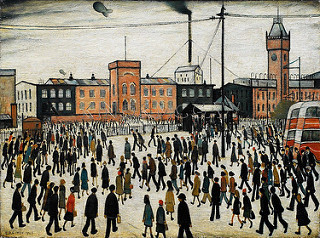
Written in prison, A Forger's Tale details Shaun's notorious career and the extraordinary circumstances that led to it. From Leonardo drawings to L.S. Lowry paintings, from busts of American presidents to Anglo-Saxon brooches, from cutting-edge Modernism to the ancient art of the Stone Age, Greenhalgh could - and did - copy it all. Told with great wit and charm, this is the definitive account of Britain's most successful and infamous forger, a man whose love for art saturates every page of this extraordinary memoir.

378 pages, Kindle Edition

Published June 1, 2017

53 people are currently reading
455 people want to read

About the author

Shaun Greenhalgh

1 book6 followers

Ratings & Reviews

What do you think?
Rate this book

Friends & Following

Create a free account to discover what your friends think of this book!

Community Reviews

5 stars
76 (21%)
4 stars
115 (32%)
3 stars
119 (33%)
2 stars
36 (10%)
1 star
11 (3%)
Displaying 1 - 30 of 65 reviews
Profile Image for Valerity (Val).
1,108 reviews2,775 followers
September 20, 2018
A moody read about forgeries in art, written by a prolific forger while still in jail who was busted and served time for it. named Shaun Greenhalgh who relates his story. He was the paid live-in caretaker for some years of both of his elderly parents who had health problems, and were in their 80’s, for forty-some pounds a week, which he compares to about as much as a kid’s paper route. Apparently, he’d needed a way to boost his income and had a love for doing art and visiting museums for years. So he tried his hand at making copies of different things, using different techniques until he became quite good at many different forms.

The book starts with the day he’s arrested, the knock on the door, the search, things hauled out as evidence, etc. Having to go down and give a statement to police. The wait while they go over the evidence and decide what to charge him with, and see if he will cooperate. The media bugging him. Then it goes into his art, how he got interested in it, learned to do it and branch out to so many kinds as he experimented.

He talks about how he offered his ‘copies’ at low prices, playing dumb and watching as the sellers instead of offering to have the pieces looked at by someone with experience, would offer a bit more, running off to sell them at huge markups, then asking for a letter of provenance stating that they’d had the piece in the family for a long time. Showing a lot of shady goings-on in the art business already by many. A sort of true crime in the art world story, perpetrated by an unusual character who wrote about it after. My thanks for the advance electronic copy that was provided by #netgalley, author Shaun Greenhalgh, and the publisher for my fair review.

Atlantic Books 384 pages
Oct 1st, 2018

RATED: 3.5/5 Stars

My BookZone blog:
https://wordpress.com/post/bookblog20...
This entire review has been hidden because of spoilers.
Profile Image for Caroline.
561 reviews725 followers
January 22, 2018
I found this book interesting for the first chapter or so, but after that it dissolved into a rather woolly recipe book of the techniques used by Shaun Greenhalgh in doing his forgeries in art and sculpture. After about the fifth artefact described, my eyelids begin to droop. I found it similar to reading any other instruction manual, and equally as boring.

In 2007, Shaun Greenhalgh was busted for forgery by The Art and Antiques Squad of Scotland Yard, He was given four years and eight months in prison. Initially the police thought that several forgers were responsible for the artefacts he produced, as they were so wide-ranging in character. Herewith some of genres he worked to emulate -

Victorian watercolours
Oil paintings
Cameos - from Roman hardstone gems and intaglio reliefs to large terracottas and marble reliefs.
Stone carving
Wood carving
Metalwork casting
Concrete casting
Ceramics - in terracotta and porcelain.
Ivory carving
Glass casting.

The only art training he had were two years of art classes at secondary school, but he was obviously incredibly able. Right from the beginning his passion was copying. He would look at a work of art or sculpture, and analyse how it was made - and how he could replicate what the artist had achieved. Even when young, all his interest was in copying the work of others.

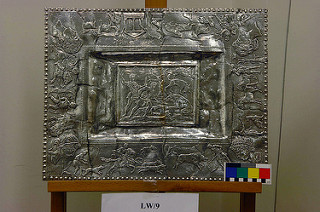
Making forgeries, or copying, is often incredibly difficult. In many cases the hardest part of the process is ageing the artworks, so that they look genuinely old, be that a hundred or several thousand years old, and this book discusses in detail the great lengths he went to in order to produce these likenesses - many of which ended up being sold for eye-watering prices , as original artworks. The scope of Greenhalgh's work was pretty impressive...

433229

risley-park-lanx

2616

Other issues I had with the book were that Greenhalgh is not a writer, and the book is plodding. I also found his attitude to art incredibly pedestrian and uninspired. I like art books that fill me with excitement and make me want to rush off to the nearest museum or gallery, but I found Greenhalgh's approach lacklustre and mechanical. For me the book was all technique and no spirit.


-----------------------------------------

Forgeries seem to be quite common. Here is a link to Victoria and Albert Museum's collection of forgeries/copies.

https://collections.vam.ac.uk/search/...
Profile Image for Ana.
811 reviews717 followers
March 19, 2018
The "A Forger" in the title refers to the author. Greenhalgh wrote his autobiography whilst in prison, serving his 4+ years for art forgery. The sheer volume of his output is insane: he forged everything from Assyrian reliefs, to Egyptian statues, to 20th Century watercolours. His talent - as he specifies multiple times - lays in copying, not in producing original work. And by Odin, is he talented. Not only did he study the historical background of all of his pieces in order to situate them in their time, but he produced most of the forgeries using original methods, and then concocted strange ways of making them "look the part" - in some cases, 4000 years old.

Most fascinatingly, he claims he is the creator of the famous drawing that has sparked a lot of controversy - La Bella Principessa. The drawing has been attributed to Leonardo da Vinci by some top experts in the field, whilst others say it is definitely a fake. Whatever they believe, the piece is now privately owned and the last offer to the owner was 80 million dollars. In case you don't know what it looks like, you probably do - I myself have seen the piece multiple times online when the "discovery" was made that it was da Vinci's work. Greenhalgh, in his own words, drew it in 1978 - when he was 18 years old. Given that I'm not an expert, I couldn't tell. But after reading his book and understanding the ease with which he was able to create pieces that passed for originals, I do think he is capable of it.

His story is a truly fascinating one. He served more time in prison than some do for murder, so I think he did his time. I myself, while believing that punishment for forgeries is well deserved, also think it's not that much of a serious crime. As he says, stop looking at the labels and just look at the god damn piece of art - judge for yourself if it's beautiful or not. He does draw a limit, though, in his respect for the true giants of the arts. And, to be honest, he never signed any forgery with another artist's name - he simply created copies as close to reality as he could, then sold them for often minimal prices. In any case, it is worth the read.
Profile Image for Kathrin Passig.
Author 51 books476 followers
July 5, 2020
Kunstfälscher-Autobiografien sind ein seltsam verlässliches Genre, bisher waren alle, die ich gelesen habe, lustig und interessant: Eric Hebborn, Wolfgang Beltracchi, Lee Israel und auch diese hier, mit Ausnahme ein paar etwas langweiligerer Stellen gegen Ende. Für eine gründlichere und ernsthaftere Rezension von Christina Dongowski bitte hier entlang: https://www.goodreads.com/review/show... und noch ausführlicher hier: https://www.54books.de/von-schrottwer...
Profile Image for Nick Davies.
1,740 reviews60 followers
October 17, 2024
Both really interesting and really annoying. This autobiographical work by Shaun Greenhalgh, imprisoned for the production of (and profiting from) a large number of fake artistic works and archaeological items, was fascinating in subject. The author talks with passion and intelligence about his labours - clearly a talented craftsman, and I found much of this book an intriguing read as well as a frank and transparent memoir of how he came to discover and develop the skills he did.

However through it all, I just couldn't get on board with Greenhalgh's style and his attempts to justify some of his actions. Call me a moral absolutist, but no matter how many times he talked about how little profit he made compared to the art dealers to whom he sold fakes, no matter how often he talked about making items for his own hobbies and not intending them to be sold as genuine, no matter how passionately he explained his humble working class beginnings and how 'getting one over' the ignorant rich buyers felt justifiable.. I just didn't agree with it. It's corrupt, it's immoral, it's wrong. I felt the informal Northern grafter voice also didn't lend itself to me being sympathetic, oddly (as a Northerner myself).

I understand the frustration he felt that for all his talent he wasn't able to make a living as an original artist under his own name - there are some really good points made about the ridiculousness of how much additional value a piece has when believed to be by someone famous as opposed to some nobody - but still thought it wrong, and a shame that he'd come to justify himself in this manner.

I am glad that I bought this from a charity shop in Govan, literally 100 yards from Greenhaugh Street (almost a freaky coincidence?) so Starter Packs Glasgow benefitted as opposed to the author :-)
Profile Image for Jo.
3,917 reviews141 followers
November 9, 2025
Shaun spent four years in prison for making copies of artwork that was so good they made it into museums and even into the private hands of a senior Royal. His memoir tells us how he did it, how he got caught and what his upbringing was like. He comes across as something of a cheeky chappie rather than a master criminal and this is an enthralling tale.
Profile Image for Adam.
221 reviews119 followers
August 14, 2017
Very talented self-taught artist that made realistic reproductions and copies of famous artifacts and pieces of art. Doesn't name names and is not a tell all, but certainly an eyeopener on dealing in art and the whole quaint cottage industry (for lack of a better term to describe the insular, wanky, posh art world of London etc. See the Wied-something Jewish family that somehow became the 'authority') 'Institute' where they're supposed to be world class but were fooled by one of Greenhalgh's pieces. And also a Monet that was discovered recently that was almost certainly legit, but for reasons of ego and pride they're denying it is real, it was part of a BBC 'Fake Or Fortune' https://en.wikipedia.org/wiki/Fake_or... documentary) in the UK of buying and selling massively overpriced artworks.

Author dislikes the 'infamous' tag by media, yet he didn't tell the publisher not to put it on the cover, or did but they ignored him. Why do publisher's treat authors like this?

Shaun Greenhalgh from a very young age had great artistic talent and a voracious appetite for history and mechanics led him to art and creating fakes. Initially it was the challenge to recreate pieces he admired, see how he measured up. If it wasn't for dodgy dealers commissioning pieces to resell for huge profits (initially without his knowledge or consent) and his girlfriend dying he probably could have been a sculptor in his own right or perhaps eventually an examiner/appraiser. And working under art restorer Carol and getting access to expert analysis reports of material composition data and other inside secrets. He just couldn't seem to create his own original art because he felt he wasn't creative and original enough. Perhaps the dislike for 'modern' art influences that also.

Photoplates aren't really referred to. Illustrations of what he was explaining would have been helpful. Index would have been useful. Not a page-turner but interesting nevertheless. Nothing beats Frank W. AbagnaleFrank Abignale's 'Catch Me If You Can'. Catch Me If You Can: The True Story of a Real Fake

Good to see there are a few dozen titles in this art forgery & theft genre. https://www.goodreads.com/author/show...
https://www.goodreads.com/author/show...

Similar books I've read previously are Priceless (green cover by UK art dealer) and one about the history of Sotheby's auction house. Recommended, just can't find their actual authors & titles.
https://en.wikipedia.org/wiki/Shaun_G...
ISBN:978 1 76029 522 6 by Allen & Unwin is not listed on GR yet. Printed in Australia by Griffin Press, but first published in 2015 by ZCZ Editions in limited editions.
NoveList data to come.
Profile Image for Laura Hundley.
839 reviews48 followers
January 22, 2021
A Forgers Tale by Shaun Greenhalgh was not exactly what I hoped for. While the autobiography covers much of how Shaun was able to fool people who were experts in art, it also told us a lot about why he did it. I really wanted to understand the author and how he was able to create imitation art work that brought in hundreds of thousands of dollars. Yet we were told lots of irrelevant information that, if left out, would have kept the story to a minimum at least and not going on a round about of info that was already told to the reader in another way. I hope that maybe the author will take the criticism in a good way because the book has great potential it just needs a few things fixed. I am glad that the author decided to do the right thing in the end and give up information so that others may be thwarted from doing the same thing in the future.

Thank you to netgalley as well as the author for giving me this book in exchange for my honest review.
Profile Image for Story.
899 reviews
September 16, 2018
The author, forger and art-maker Shaun Greenhalgh has so much talent, drive and curiosity that this should have been a fascinating read. And indeed, parts of the book, especially those relating to the slimier side of the art world, were very interesting.

Alas, however talented a painter, sculptor and metal smith Greenhalgh may be, he is no author; his memoir was long and rambling, causing me to skim entire sections in order to get through it. I think this story would be best told as a documentary allowing interested parties to actually see the copies Greenhalgh so brilliantly made.

Thank you to Netgalley and the publisher for this ARC.
134 reviews10 followers
February 6, 2021
This guy is seriously talented. His in depth knowledge of the art world, both across different mediums and different millennia, is impeccable, and I found the intricate detail of his techniques fascinating. Kudos for taking the leap and writing his side of the story of his own criminality.

Minus stars for his consistent mention of 'moaning' regarding the art world/art dealers, general pompous/bitter tone, and lack of a structured/chronological tale. At times it was hard to read, demonstrated by it taking me a whole three months to complete.
Profile Image for Lyazzat.
202 reviews
October 19, 2020
Вот я понимаю, что руки выросли у него в правильном месте!
История очень интересная и могу только позавидовать таланту, что мог и рисовать и делать любые вещи! Человек от Бога?! Да!
Profile Image for Christina Dongowski.
255 reviews72 followers
May 2, 2020
This is a quite unusual book on art: As the autobiography of Shaun Greenhalgh, it’s not only his account about his rather astonishing & highly successful career as a forger of art and antiquities. It’s although one of the rare accounts about loving and making art from a decidedly not middle class point of view and experience. Greenhalgh has had very minimal formal art historical education and artistic training, he’s mostly self taught, except from some training on the job while working with a highly skilled restauration specialist that worked with him for a semi-shady arts & antiquities’ dealers network. She basically taught him how to successfully paint in oils & what specialists are looking for, when trying to establish, if the object in question is genuin. Greenhalgh styles himself in the book as a sort of nerd whose love & interest in the technical side of making art has gone badly awry and that making money out of his works wasn’t his prime motivation for creating his “body of work”. I tend to believe him. But nevertheless, money plays a big role in his story: The ever increasing amount of money that is paid for his works as they wind their way through the mostly British art (business) world functions for as an indicator: It shows simultaneously how rotten the business is & how shallow some of the expertise of some of the experts, but it also indicates how good his forgeries were - by the official standards of the art world. Greenhalgh often reflects on the class differences between him & his family and the members of the art world he’s dealing with. A will to revenge the de-skilled & de-valued working class against the business suit types who took away the jobs in the local textile industry, paper mills and potteries & the industrial culture that went with it is very palpable, but probably not the main factor for his career as a first class copyist and forger. I think Waldemar Januszczak is basically right when he writes in his foreword that Greenhalgh’s motives lay mainly in the joys of appreciating great art and a insatiable curiosity about how it was & can be made. Although this is often a very amusing (& highly informative) book, it’s basically a sad story how the British class system didn’t recognise an outstanding creative & technical talent in a working class boy and so he turned himself in one of the greatest art forgers of the modern era. It’s not always an easy read: the narrative structure is somewhat convoluted, Greenhalgh”s love for technical detail often gets in the way of telling the story straight. Maybe a ghostwriter would have made a “better” book out of the material, but what the book loses on readability it gains in authenticity.
246 reviews3 followers
September 11, 2017
A truly personal account of a 'everyman' talent. An enjoyable and interesting read.
It would seem that in another age Shaun Greenhalgh would have been hailed as a talented 'copyist' and set to work for any number of wealthy sources.
Even today artists such as Susie Ray are acknowledged as 'copyists' and well paid to assist those with priceless collections wishing to display a work but not the original. Many of the copyists work only in a single medium.
Shaun appears to be truly gifted in multiple aspects of art work. THIS is a genuinely human picture by the author of his life, his 'doings' and his art adventures. The challenge he says was in the achievements themselves. Often sold as copies he was secretly amazed, then titillated by the apparent greed and credulity of the High End dealers and their customers.
he says his original efforts and intentions were so far from forgery it is hard to believe.
Sadly, he eventually received a prison sentence for his efforts. NOW...he says HIS telling is the accurate version. That many have benefited to the tune of perhaps millions, certainly thousands, of pounds from his UNsigned works. His deliberate 'forgeries' were minimal. I KNOW that doesn't absolve him from the few acts of deception undertaken deliberately. BUT....
Why, oh why was he not snapped up much earlier on in life and re-directed and why was his transgression seen as so much more despicable or sentence-worthy than others?? Indeed some of the European artists of fakes have received serious sentences and his must be seen in parallel. BUT...again, it seems so sad that such a talent was under-played for so long. There is a certain humour in his distance from some of the later fraudulent sales undertaken by those who were keen to receive his unsigned copies, re-package them, then sell on with dubious provenance.
IT seems clear that those investigating his 'work' and subsequent misdeeds in part didn't understand his talent and from another angle admired his industriousness.
It is to be hoped, in my opinion, that his talent is finally acknowledged and redirected to the benefit of all.
AN ENJOYABLE and interesting read.
Profile Image for Karen.
81 reviews
June 6, 2019
Having lived for many years in Bolton, and being an art history fan, this book immediately caught my eye. Greenhalgh, a Boltonian, wrote his autobiography whilst serving a 4+ year prison sentence for art forgery. The first chapter was interesting and was in effect a summary of the whole book. Sadly from then on it declined and I was unable to read more than a couple of chapters. The story is really interesting but it would have benefitted being written by a competent writer, or at least severely edited by one. It rambled around, went off at uninteresting tangents and at times read like a manual for art forgery.
669 reviews8 followers
September 6, 2020
In 2006 The Greenhalghs, Mum, Dad and youngest son Shaun were in the news. They’d been arrested, charged and found guilty of forging art works and passing them off as genuine. The parents were described as ‘The Artful Codgers’ and were the ones that created the provenances to accompany the items.
I had the impression that these people from a working class background and living in a council house were seen as a bit of joke. Artworks that fooled the art world produced in a garden shed – impossible! The newspapers created an impression of an underclass almost aping its betters.
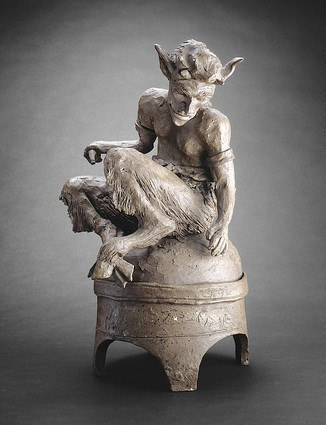
This book written by Shaun Greenhalgh sets the record straight. The truth is stranger than fiction. This wasn’t a back garden bodger but instead a man utterly enthralled by art, who knew how to create it authentically and how to sell it on. After all, in the introduction written by Waldemar Januszczak, who says that he normally spots fakes and then goes onto write about the piece that brought about Shaun’s downfall, the purported Gauguin Faun. He was entirely convinced by it. However, after it was revealed to be a fake, he and Shaun met and eventually Waldemar read the manuscript of this book and sent it to an agent.
A Forger’s Tale is written in a very conversational style. It’s as if Shaun was sitting down and telling it to you. He has a sense of humour as when he describes ‘an old horsehair wig, sitting on the table in front, looking for all the world like a sleeping moggy’ and one of the dealers that he does business with is ‘a Toby Jug of a man.’ It’s lively, well written and very, very good on the technical details of how he created his fakes. The description of how, for example, he recreated the plaster used by the ancient Egyptians is impressive. But this isn’t a forger’s handbook.
The book begins with an 8.30m knock on the door at the Greenhalghs house in Bolton. It was the Scotland Yard Serious Organised Crime Unit, the Art & Antiques Squad, who then searched the house. Shaun was living there as his parents carer and I sensed his outrage at them trampling on his father’s fossil collection or, more lightheartedly, watching a WPC pulling apart a chicken that his sister was about to cook for lunch as if something incriminating might be hidden inside it.
The garden shed which was described as ‘The Northern Annex of the British Museum’ had items removed and taken away, some of which Shaun has never seen again. In fact it was the British Museum that rumbled him and let the police to his parents door.
I did feel with Shaun, and other famous forgers, that they fooled the art experts so successfully because they all want to find a lost or unknown work by an artist and make it their own. For instance, the painting by Richard Dadd that appeared on the Antiques Roadshow which had languished in a loft behind an inferior painting and also charity and boot fair finds such as the Faberge brooch. But he always refers to his work as copies not fakes and always put in little flaws to identify them which no one spotted. In fact, Shaun writes tellingly of seeing his copies in sales and auctions with fake provenances attached to them to make them more convincing. Several of his pieces, the more well-known ones, appear to have vanished. Maybe their notoriety makes them valuable in themselves. He writes of seeing his pieces on sale with additional marks not done by him. Perhaps he wasn’t the only forger.
At the time there were several theories as to why he did it. But as he says in the book art was his great passion in life; ‘when I tried to walk away from it. It would search me out and wind me in again.’ He had several jobs including the butchery department at the Co-Op, joining the Royal Marines and of working in a salvage company during the ‘70’s as they cleared out abandoned, derelict mills. But he always returned to art’s embrace. However he also misses chances and wonder what might have been. Instead he sells his copies onto unscrupulous art dealers initially for a pittance and they add their own fakery. They don’t want Shaun’s own work only the copies of others. But I found it fascinating as he described his ‘70’s upbringing and the way in which art kept appearing in his life. One of his father’s angling friends owned 2 bronze plaques from the Benin Kingdom in West Africa. Later on in the book Shaun will make copies of similar plaques himself. The salvaging of derelict mills and factories; one stained glass panel sold on as ‘no-one cared’ and the Victorians weren’t fashionable.
Shaun doesn’t dwell on prison. He received a sentence of 4 years and 8 months reduced from 7 years. It was never mentioned how much, or if, he made any money from his copying career.
The book really soars when he visits Rome for the first time and see Caraveggio paintings and Bernini sculptures for the first time instead of in books. He also sees a back street fake workshop set up in a wheelbarrow. Then visits to Florence and Dublin where, at Newgrange, he is in awe of its Stone Age builders. I really sensed his excitement at these experiences.
A Forger’s Tale is excellent on how he recreated the materials to make his pieces look authentic and also the actual stone such as Imperial Porphyry used by the ancient Egyptians. He also displays an amazing knowledge of art history and discusses his favourites such as the Russian Constructivists.
I loved this book. It really emphasised that art is for everyone and how much it can enrich and enhance lives. My own life would be the poorer without it. It was also a very entertaining book from which I learned a lot.
Profile Image for Fionnuala.
646 reviews51 followers
December 3, 2025
This was very interesting, and a good glimpse into several worlds that I am totally clueless about. I like reading books by people who know a lot about a subject, and have lots of thoughts about it -- more than the average person or even most people involved in the field. Critics are a good bet for this, and people who are experts in one way or another, and there's no denying that Greenhalgh is some measure of both. Having said that, he doesn't always have a good grasp on what's interesting detail to include, and there are some duller moments of surface-level detail rattled off like bullet points. The introduction is also strangely condescending, explaining several times that there's a glossary as the humble reader can't be expected to understand all the terms to which the genius author makes such casual reference... a glossary that I, top artistic qualification GSCE Art, did not have to refer to once.

Greenhalgh is undeniably talented, and it's honestly impressive what he's capable of. I genuinely can't believe I've never heard of any of this before. He knows his stuff and he did something very cool -- it's just a shame that he's such an arse. I think he tried to go for humble but it's quite clearly not; there's a smugness to this whole book that made it incapable to warm to him, even though he's generally very funny and does admit when something is beyond him. There's just such a contempt in this book for all the people he's duped, even as he's simultaneously denying that's why he did it; he's talking in great detail about forgery and his identity as a forger, which he doesn't seem to mind, but in the next breath he's stating he didn't actually do anything wrong. It's just other people's fault for being too stupid to notice that the art he's designed in the exact same style and speficially dated and sourced period-appropriate materials for so it passes age testing is actually fake. But he didn't deliberately fake it! He just spent thousands of pounds and many hours making it indistinguishable from an original, and then sold it to dealers in the business of the original artist, and did not disclose it was a fake. He's innocent!

Ever so often, true passion for art cracks through, but it's muted by two unfortunate facts. The first is that Greenhalgh suffers from that annoying British disdain for any sincere emotion, so he comes across as too good to be truly moved by anything; he's clearly writing for an audience he thinks will scoff at real passion, and unfortunately this is a common trait in British culture. So he smooths over his passion with flippancy and occasional disrespect; with sudden coldness and dismissal. The other is the fact that not once does he really address the damage he's done to the art world with his forgeries. It seems odd to me that someone can claim to be so passionate and yet commit such fraud, all while insisting he's not actually doing anything wrong, when creating imitation pieces is a legitimate and, if you're good enough -- which Greenhalgh absolutely is -- well-paying field. It seems to me that he's not brave enough to make his own way as an independent artist (something he admits) but he still wants the glory and doesn't see that in out and out imitation, so he forges and kind of rides on the coattails of the greats. Very odd for someone who professes to love art so much, and clearly does appreciate it despite his attempts to hide it.

Overall an interesting but often irritating read.
Profile Image for Julie Stielstra.
Author 5 books31 followers
September 16, 2020
For art geeks. Greenhalgh was a breathtakingly gifted forger of art works of all kinds, from all periods, in most media. His pieces passed muster with the British Museum, the Art Institute of Chicago, and Bill Clinton - or whoever bought his stuff for him. A working-class kid from the north of England, he was ensnared by art from childhood, faking Victorian pot lids to flog at local antiques markets. Local dealers took note, bought some of his stuff and sold it on.. as... what? A teenager's kiln project or, um, an actual 19th century ceramic? Not that he really noticed, you know? Or cared. It was the work itself that enthralled him: what kind of clay? How to make the right glaze. What the lettering should say and how it looked. And buyers ate it up. He made medieval jewelry, reverse-engineering the raw metals and minerals in his dad's garage. He dashed off pretty watercolor landscapes "in the style of" various popular painters. His skill, knowledge, and craft make your head spin. There's more than a bit of the "savant" about Shaun, and a severe brain injury in a motorcycle accident as a teenager probably had its own effects - as did the heartbreaking death of his one serious girlfriend a few years after that. So he just did his art, till Scotland Yard came knocking and he did nearly five years in prison, where he wrote this memoir.

"Self-justificatory," said dubious publishers. Yes, it is. He did what he did because he wanted to, and he repeatedly denies deliberate intent to deceive, selling his pieces for modest (though often handsome) sums to dealers "as seen," and after that... what they did with them or what they told buyers they were - not his problem. But he was on his way down the slope, aided and abetted by the shysters, and began to truly "forge." An ersatz Ming vase, the fake Gauguin ceramic faun, the celebrated "Principessa" drawing supposedly by Leonardo... all his. And he tells us how he did it. The details can get arcane, and even he gets bored once he has mastered a medium, and skips on to something else. But as a portrait of a phenomenally gifted craftsman, and an insight - intended or not - into the mind of someone who pulled off what he did, it's fascinating. And as Shaun points out: it may be best to simply look at the work in front of you. Don't put too much credence in the wall label and the auction catalog - they have their own agendas - and you never know. What should matter is the thing itself, and what it says to you.

juliestielstra.com
Profile Image for June.
258 reviews
March 29, 2018
Having read and loved Laura Cumming’s art-based James Tait Black Prize biography winning book, I was excited to read this biography contender as it is also based in the art world. However, instead of an account of the life of a relatively unknown artist, this book is 357 pages of confessions from Shaun Greenhalgh, otherwise known as the Bolton Forger. His business was to forge famous paintings or sculptures either on behalf of other people or, latterly, for himself, often selling them to very high-profile galleries and museums in Britain and elsewhere. While there were many times when he got away with his crime, he was eventually arrested in 2006.

The narrative starts with his arrest and then looks backwards on his life, tracing his love of art from boyhood, his studio in his father’s shed, the tragic death of his girlfriend, and his passion for falconry. He addresses the reader in a conversational style, which makes the narrative accessible; he drew you into his crimes, so that as a reader you felt you were witnessing, rather than reading, his shady undertakings. My main criticism of the book is that while in the first 150 pages, the artistic techniques that he describes (which he employed in order to carry out these copies) is interesting, by the time I got to page 300, I was getting a little bored with them. Indeed, it was a struggle of the will to finish the book. In my opinion the book was a little too long, and that reference to so many forgeries in minute detail were making my mind wander from the text more than it should have done.

Final verdict: The first half of the book was good. It wasn’t amazing, but it was interesting learning about the man and the events which acted as catalysts for his life of forgery. The last 200 pages, though, were hard work to get through.
Profile Image for Christina Dudley.
Author 28 books265 followers
September 21, 2018
Having never heard of Shaun Greenhalgh or his decades of art forgeries, this was a fun and fascinating memoir to come to "cold," although I spent lots of time all along, phone in hand, googling artworks and artists he mentioned.

The main takeaway, which, in Greenhalghian fashion, he repeats at least four times, is that you should buy art because it pleases you, not because of whoever supposedly created it. Fakery is rampant in the art market and has been for centuries, so just buy it if you like it, and not for the name brand.

Greenhalgh turns out to be an impressive craftsman, working in paint and sculpture and ceramics across multiple eras and spanning the globe. Really he ought to hire his services to make fakes for people who love a certain work of art but could never afford it. I'd love one of his Peploes or L. S. Lowrys, for example.

And speaking of which, I really liked learning about and looking up all kinds of amazing artists and craftsmen that Greenhalgh imitated or admired.

If you like art, this memoir will interest, instruct, and even amuse. It's somewhat repetitive, and I confess to skimming some of the non-art-related bits, but altogether it was a worthwhile read. And take a look at the Smithsonian video where Greenhalgh argues that that famous bust of Nefertiti is a fake!!! It's quite convincing.

Thank you to the publisher for the opportunity to read this book!
Profile Image for Bryant Whelan.
69 reviews
January 31, 2019
I delighted in this tell-all memoir about the life of a master forger who began making fakes as a child in the 1970s and continued until he got caught and imprisoned in his forties. He explains in detail his processes, tools, and mechanics used to create his fakes that fooled experts and now live in collections literally around the world believed to be the “real thing.” Sculpture, paintings, carved relief panels—attributed to masters from Gaugin, Moran, to DaVinci, Egyptian carvers, Reliquary...there seems to nothing he could not create as a copy. But Shaun Greenhalgh admits he is not a creative artist with a vision to express himself with original art, and confessed that any attempt to do so was not well received. So he studied, practiced, learned the methodologies of masters, copied them, created fake provenances, fooled the auction giants and museums, and took their money. And after 40 years the law gathered up all of his stuff from his garden shed where he worked and sent him to jail. I enjoyed his humor, willingness to call himself out, and his detail on the processes he used. He was passionate about his work-and writes with humor. Fun stuff. It was a bit long and detailed but I liked it. Just also makes me realize that a lot of the “authenticated” works just might actually be fakes, made by some dude down the street who was bored and liked to experiment.
Profile Image for Richard Howard.
1,746 reviews10 followers
June 15, 2018
An eye-opening read! Throughout the book 'The Forger' decries his lack of talent, though he managed to fool many 'experts' for many years. His understanding of historical techniques is astounding, even more so because it was self-taught. The pages of descriptions of these techniques do become wearying but I applaud his persistence. Two observations I found enlightening. The first is about artistic technique and artistic vision: the author believes he has the first but not the second and that with many modern artists it is the reverse. (Having been to the Tate Modern on a number of occasions, I see his point.) The second is that of the many 'experts' he encountered, few were artists themselves; a fact he believes made them easier to fool.
Did he deserve 5 years in jail? From the TV show 'Hustle' comes a pertinent quote: 'You cannot con an honest man.'
Perhaps the forger's beloved ancients said it best 'Caveat emptor!' - Let the buyer beware.
23 reviews
August 15, 2018
I really wanted to like this book, due to its unusual topic and the "man vs. The system" feel. And while I found bits of it entertaining, it has a couple of failings that dilute the enjoyment too much.

There are three broad threads in this book:
a- the story of a working class, self taught man from Bolton conning the entire art world,
b- a really brief tour through the history of art, and
c- an explanation of how forgery works.

Had this booked mostly focused on point a, with brief explanations of point C, while making just the necessary refence to point B, it would have been thoroughly enjoyable.

Instead, there are just too many technical details on faking techniques and too many art periods covered too extensively.

Take 100 pages of this book, and it would have been more enjoyable. As it is, it remains for the niche of readers who appreciate all three points mentioned above equally
736 reviews3 followers
September 16, 2018
Brilliant read and makes you chuckle with his baldly-stated non-PCness. There is a refreshing clarity and simplicity about the way he writes with no delusions of grandeur or arrogance. Despite what he says about himself, he is obviously a genius of sorts and fantastically gifted in his application and ingenuity. He skewers the elite art market brilliantly and gives fantastic details of how he created his "art ". He obviously has an ingenious imagination and knowledge and, I think, would be fascinating to know. I totally believe he created the disputed "La Belle Princessipa" because what gain has he to lie and he comes across as very open about what he did and didn't do. He gives very cogent reasons to say he did it, both about construction of it and of its faults. I found it a page-turner and Greenhalgh to be a true-blue English eccentric. He is not a sentimentalist but it was very affecting when his partner died tragically at a young age.
Profile Image for Nancy.
20 reviews20 followers
July 25, 2019
Amazingly interesting! A fast read which will be highly entertaining for anyone who loves art. I even saw one of the pieces the author forged, in a big Gauguin show long ago, which makes a personal link. I have two minor criticisms which I only mention in case the book ever gets republished.
1) more pictures please! It’s a visual subject and more illustrations of the items or processes mentioned would be welcome.
2) I’d edit out a certain self-exculpatory tone the author sinks into frequently. It’s not appealing, and only makes him look worse than if he just admitted his actual motivations. Which I’m sure were complex. But for instance, he often claims he wasn’t doing it for the money. Hmm. I have to think financial gain was definitely at least part of it, as he wasn’t just leaving these things lying in fields for others to find or donating them anonymously to museums was he?
Despite these criticisms, it’s a fascinating read. This is a really enjoyable and engaging book!
This entire review has been hidden because of spoilers.
758 reviews
August 25, 2017
A fascinating tale no doubt. It really opened my eyes to how the art world operates, its unethical practices and the importance of a good story for a piece of art. Shaun's story is a good story too even if he seemed to leave out some significant details and obviously put his own spin on events. The development of his interests and skills in childhood and early career was particularly interesting, all the technical detail was fascinating too, and enjoyed reading how seeing the art of Italy influenced him. An interesting character to have the range of artistic skills he did, and the practical and research skills. I was left wondering what he did with all the money he must have made. Did he have a gambling problem? Pity that just about all his references to women had a description of their ranking on the 'good sort' scale.
Profile Image for Lori.
23 reviews
January 13, 2020
The Guy Knows His Stuff

Told in his own voice, it was a bit hard to follow, chronologically, but OH the work and research that goes into fakery. He keeps saying these works were not meant to be passed off as genuine, and I took guilty pleasure in the "experts's" authentication. I don't quite believe he meant these as copies, or "in the style of". As an artist myself, I was completely surprised at his admission that he could not produce his own originals very well, but he had the eye and hand for it, being the great copyist he was. Such talent wasted. But,I'm still giggling at the art snoots eager to get their hands on his repros - whether they figured them as fakes (and perpetuated the hoax on the buying public) or truly believed they were genuine. It just proves the adage when it comes to art, "Buy what you like to look at, not amass "treasure" to prove your wealth.
98 reviews2 followers
April 2, 2020
This is an enjoyable read, but it is less of an autobiography and more of a recipe book for creating replicas of valuable artworks. Shaun Greenhalgh’s breadth of knowledge regarding the processes used by artists and craftsmen through the centuries is astounding. It has clearly been his lifelong obsession and driving motivation.

As someone who has studied art history and dabbled in antiques, I found his insights fascinating. However, the human side of the story seems deficient somehow. Greenhalgh only really opens up about his personal life at one point in the book, to reveal a personal tragedy. It feels as though emotions are something he feels uncomfortable expressing, but his telling of that particular incident was deeply moving.

I do wonder, because of certain behavioural traits that crop up throughout the book, whether the writer has high functioning autism, or ADHD, or both. The obsessive interests, tendency to become easily bored, risk taking/rule breaking, very literal communication and leaning toward the lower end of the empathy scale all seem to point in those directions. The arguments offered for embarking on a forgery career also seem to fit with the pragmatic, systemising, type of mindset.

True, most of the wealthy dealers who bought the forgeries, thinking them genuine, wouldn’t have batted an eyelid at ripping off an unsuspecting punter by offering a price that was a fraction of the true value of the artwork. However, some of the forgeries ended up in museums and Greenhalgh says that he has had a lifelong love of museums, as a means of educating himself about art. Surely, creating false artefacts that museums had to raise money to buy goes against that. He does say that he has regrets about it, but it feels as though he still takes pride in having fooled the experts and finds it all rather amusing.

It’s a book that’s well worth reading. The lengths the author went to in order to create his forgeries were jaw-dropping. I learned things from Greenhalgh’s ‘recipes’ that you never see in textbooks, although I lack his amazing ability to remember it all.

He freely admits to lacking originality in his own art, but as a maker of replicas he’s a bit of a genius! I hope he finds peace in the direction his life is now taking.
12 reviews1 follower
March 24, 2021
I absolutely loved this book. As a museum professional, I was ready to loathe the author, but just the opposite happened. Greenhalgh is charming, very self-aware, and not nearly as devious as I had presumed. I thoroughly enjoyed reading his accounts of how he worked certain things out, how thorough of a researcher he was, and what he retained from conversations with experts and on guided tours. I was in awe of his quest to find perfection and the sometimes years it took to perfect a process. His work really calls into question what we value and why we value it. If someone could perfect a Chelsea soft paste porcelain figure, why does it matter to us when and by whom it was made? I found this book to be well-written and exceedingly engaging.
This entire review has been hidden because of spoilers.
Displaying 1 - 30 of 65 reviews

Can't find what you're looking for?

Get help and learn more about the design.