

What do you think?

The Academy #4
Omega
A civilization-destroying omega cloud has switched direction, heading straight for a previously unexplored planetary system--and its alien society. And suddenly, a handful of brave humans must try to save an entire world--without revealing their existence.
498 pages, Mass Market Paperback
First published November 1, 2003
About the author
Jack McDevitt
193 books1,367 followersJack McDevitt is a former English teacher, naval officer, Philadelphia taxi driver, customs officer and motivational trainer. His work has been on the final ballot for the Nebula Awards for 12 of the past 13 years. His first novel, The Hercules Text, was published in the celebrated Ace Specials series and won the Philip K. Dick Special Award. In 1991, McDevitt won the first $10,000 UPC International Prize for his novella, "Ships in the Night." The Engines of God was a finalist for the Arthur C. Clarke Award, and his novella, "Time Travelers Never Die," was nominated for both the Hugo and the Nebula awards.
McDevitt lives in Georgia with his wife, Maureen, where he plays chess, reads mysteries and eats lunch regularly with his cronies.
McDevitt lives in Georgia with his wife, Maureen, where he plays chess, reads mysteries and eats lunch regularly with his cronies.
Ratings & Reviews
Friends & Following
Create a free account to discover what your friends think of this book!
Community Reviews
Displaying 1 - 30 of 200 reviews

August 10, 2018
I'm of two minds on this book.
It's pretty damn awesome when it comes to characters and the gentle push toward an alternate Star Trek kind of universe with almost no posturing and no overpowered gunships. The dearth of alien species is a nice touch, making it more of an archeological mystery. These future humans happen to be peaceful, too, for once, and most of their principled actions reflect those of the Federation but there's also a more realistic bending of the rules, too.
Enter this book. The Omega clouds are absolutely immense intergalactic clouds of nanotech that spike huge energies and are apparently programmed to seek out any intelligent life. Cool, right? It might explain the lack of aliens. The next world in the path of one of these happens to be pre-industrial LIVING aliens! Oops. And the cloud will reach them during this novel. Oops.
Enter conflict, a race to save an alien species, provide tons of commentary on general human stupidity and opportunism. Hey, look, let's grab as much as we can of their civ to sell because they're all about to become instant relics!
It sounds like a really good episode of Trek, right? Right. Well, no complaints there. I never expected total and complete originality out of these. Just a careful and methodical worldbuilding, care and devotion to characters, and a hopeful outlook despite everything. Including a very regular death toll on every single outing. (Wait... redshirts?)
So what's my problem? We get a fully developed alien culture here including PoVs from these guys, right down to a fully religious world-build and science-debates and a huge survival thing.
Well... I'll be honest. As long as we stuck with the humans I was pretty invested. The aliens? ... not so much. The whole self-aware cartoon character nod and the way we humans fell for how cute these buck-toothed aliens... well... I guess I can see it but I didn't really appreciate it.
It might just be me. The commentary was fairly clever but the way it was pulled off? I don't think McDevitt went far enough. Or the amount he did go was a bit too far for the pacing and investment I was supposed to have in saving these guys.
Too much of the novel was slightly meh. Not a lot of meh. Just slightly. The rest was engaging and interesting. :) Hence the four stars. But this is pretty much on the same level as the second Academy novel for me.
It's pretty damn awesome when it comes to characters and the gentle push toward an alternate Star Trek kind of universe with almost no posturing and no overpowered gunships. The dearth of alien species is a nice touch, making it more of an archeological mystery. These future humans happen to be peaceful, too, for once, and most of their principled actions reflect those of the Federation but there's also a more realistic bending of the rules, too.
Enter this book. The Omega clouds are absolutely immense intergalactic clouds of nanotech that spike huge energies and are apparently programmed to seek out any intelligent life. Cool, right? It might explain the lack of aliens. The next world in the path of one of these happens to be pre-industrial LIVING aliens! Oops. And the cloud will reach them during this novel. Oops.
Enter conflict, a race to save an alien species, provide tons of commentary on general human stupidity and opportunism. Hey, look, let's grab as much as we can of their civ to sell because they're all about to become instant relics!
It sounds like a really good episode of Trek, right? Right. Well, no complaints there. I never expected total and complete originality out of these. Just a careful and methodical worldbuilding, care and devotion to characters, and a hopeful outlook despite everything. Including a very regular death toll on every single outing. (Wait... redshirts?)
So what's my problem? We get a fully developed alien culture here including PoVs from these guys, right down to a fully religious world-build and science-debates and a huge survival thing.
Well... I'll be honest. As long as we stuck with the humans I was pretty invested. The aliens? ... not so much. The whole self-aware cartoon character nod and the way we humans fell for how cute these buck-toothed aliens... well... I guess I can see it but I didn't really appreciate it.
It might just be me. The commentary was fairly clever but the way it was pulled off? I don't think McDevitt went far enough. Or the amount he did go was a bit too far for the pacing and investment I was supposed to have in saving these guys.
Too much of the novel was slightly meh. Not a lot of meh. Just slightly. The rest was engaging and interesting. :) Hence the four stars. But this is pretty much on the same level as the second Academy novel for me.

September 5, 2011
I enjoy McDevitt's books. This one was no exception. However, if you are the impatient sort you should perhaps take note that this novel has a bit of a long build-up before, well, you know. Omega is a good book, and the preceding Academy novels are awesome. It doesn't have quite the same spark as, for example, Chindi. It's a more serious book, and perhaps not quite what I was expecting from a Priscilla Hutchins novel. I was tremendously eager to learn more about the origins of the Omega clouds, a theme introduced in the very first Academy novel (The Engines of God). This particular topic, however, is slightly neglected as the bulk of the novel concerns itself with a society of aliens and the humans studying them in an attempt to save their hides from one of the Omega clouds. An explanation is provided for the clouds themselves, but I'm assuming at this point that more details are forthcoming in either Odyssey or Cauldron.
I thought that the fun element was slightly missing this time round. It was what made the earlier novels great. Like one reviewer mentions: Indiana Jones in Space. There's a lot less of that this time round. Despite this, it's still a novel that's worth your time if Science Fiction is your thing. I would recommend reading the series though, since this book in itself isn't a true indication of just how cool these novels are.
Omega won the John W. Campbell award and was nominated for the Nebula award.
I thought that the fun element was slightly missing this time round. It was what made the earlier novels great. Like one reviewer mentions: Indiana Jones in Space. There's a lot less of that this time round. Despite this, it's still a novel that's worth your time if Science Fiction is your thing. I would recommend reading the series though, since this book in itself isn't a true indication of just how cool these novels are.
Omega won the John W. Campbell award and was nominated for the Nebula award.

March 21, 2012
Jack McDevitt is among my favorite authors, but Omega is definitely not his best work. The story itself is good, and Mr. McDevitt paints an excellent portrait of what a peaceful alien society, a la the planet Ba'ku in Star Trek: Insurrection, might look like. As usual for Mr. McDevitt's writings, belief in God is still shown as being present two centuries from now, which is much better than Arthur C. Clarke's prediction of "the abolition of religion" in the future. However, some significant problems existed: First off, the pace was very plodding at times, which made some parts difficult to get through. At times, I was reminded of when I tried to sit through The Fellowship of the Ring, which bored me to death in the theater because I didn't really understand it. (Thankfully, I've watched the entire extended edition of the trilogy on DVD, and now realize how amazing those films are; yay for closed captioning!) Also, although some of the quotations and "news updates" were a nice touch, they got old about three-quarters into the book; the excerpts from The Goombah Show, which sounded like E.T. meets Barney and Friends, were especially dreadful. If you've read Mr. McDevitt's previous works, you might like this, but those who are new to the author's works should check out one of the Alex Benedict novels first.
EDIT: I enjoyed this more reading it for the third(?) time.
EDIT: I enjoyed this more reading it for the third(?) time.

August 11, 2008
I read this book a few months back.
One of the problems with alot of science fiction is that it can revel to0 much in didacticism. Some authors that I like are particularly prone to this. For example, half of the dialogue in a Heinlein novel is a thinly disguised lecture. Sometimes, the disguise isn't even that thin, as for example his tendency to set characters in classrooms and let the lecturer lecture. Neil Stephenson is prone to do this in entirely different ways, launching into chapter length descriptions of Touring machines, cryptography, the birth of finance, and so forth.
Mostly, I tolerate this pretty well. The ideas and information is often interesting, and the stories are generally interesting and exciting enough that I don't always mind the digression. Science fiction is after all, above all, about ideas. In the case of Heinlein, one of the attractions is that he's more subtle than you might initially give him credit for if you read only one work. This is after all, the same author that wrote both 'Starship Troopers' and 'Stranger in a Strange Land'. Heinlein seems to have the ability to treat his ideas as toys, and to finish - as in the end of 'Starship Troopers' - with sufficient jingoism that it seems to serve to question his own jingoism. Heinlein and Stephenson don't seem to write angry, they hold novel positions that seem to be their own, create interesting arguments even when I don't agree with them, and it doesn't hurt - I admit - that I often agree with many of their ideas.
McDevitt is nothing like that. He's preachy and he annoys me. He seems like he's writing angrily, scornfully, and his ideas are pretty much the opposite of novel. He's predictable. He isn't inventing some future ideology or exploring ideas; he's writing the politics of the moment into his stories and he isn't even particularly persuasive about it.
It's not that I can't enjoy writers that hold McDevitt's position. I don't imagine that his politics are all that different than Charles Stross, Kim Stanley Robinson, China Meiville, or my current favorite Sci-Fi author Iain M. Banks. It's just when I don't particularly enjoy the work AND don't agree with the ideas, the in your face shallow strawman didactic rants leap out and get annoying.
Omega isn't a bad work. The prose is generally good, and the characters sufficiently interesting that I was able to get through it. I might give it three stars without the preachiness. But even ignoring that, it has problems that make the preachiness hard to ignore. The most glaring of these is that the central mystery of the work surrounding the 'Omega Clouds' seems a little dumb to begin with, holds no surprises for you over the course of the novel, and has no really interesting twist at the end to justify going through the motions. The other problem is that the story tends to drag compared to the number of ideas it presents. About three quarters of the way in, I was just ready for it to be over and only finished because I'd invested so much time and wanted to find out how it ended. Ultimately, it really didn't end in any satisfying way.
One of the problems with alot of science fiction is that it can revel to0 much in didacticism. Some authors that I like are particularly prone to this. For example, half of the dialogue in a Heinlein novel is a thinly disguised lecture. Sometimes, the disguise isn't even that thin, as for example his tendency to set characters in classrooms and let the lecturer lecture. Neil Stephenson is prone to do this in entirely different ways, launching into chapter length descriptions of Touring machines, cryptography, the birth of finance, and so forth.
Mostly, I tolerate this pretty well. The ideas and information is often interesting, and the stories are generally interesting and exciting enough that I don't always mind the digression. Science fiction is after all, above all, about ideas. In the case of Heinlein, one of the attractions is that he's more subtle than you might initially give him credit for if you read only one work. This is after all, the same author that wrote both 'Starship Troopers' and 'Stranger in a Strange Land'. Heinlein seems to have the ability to treat his ideas as toys, and to finish - as in the end of 'Starship Troopers' - with sufficient jingoism that it seems to serve to question his own jingoism. Heinlein and Stephenson don't seem to write angry, they hold novel positions that seem to be their own, create interesting arguments even when I don't agree with them, and it doesn't hurt - I admit - that I often agree with many of their ideas.
McDevitt is nothing like that. He's preachy and he annoys me. He seems like he's writing angrily, scornfully, and his ideas are pretty much the opposite of novel. He's predictable. He isn't inventing some future ideology or exploring ideas; he's writing the politics of the moment into his stories and he isn't even particularly persuasive about it.
It's not that I can't enjoy writers that hold McDevitt's position. I don't imagine that his politics are all that different than Charles Stross, Kim Stanley Robinson, China Meiville, or my current favorite Sci-Fi author Iain M. Banks. It's just when I don't particularly enjoy the work AND don't agree with the ideas, the in your face shallow strawman didactic rants leap out and get annoying.
Omega isn't a bad work. The prose is generally good, and the characters sufficiently interesting that I was able to get through it. I might give it three stars without the preachiness. But even ignoring that, it has problems that make the preachiness hard to ignore. The most glaring of these is that the central mystery of the work surrounding the 'Omega Clouds' seems a little dumb to begin with, holds no surprises for you over the course of the novel, and has no really interesting twist at the end to justify going through the motions. The other problem is that the story tends to drag compared to the number of ideas it presents. About three quarters of the way in, I was just ready for it to be over and only finished because I'd invested so much time and wanted to find out how it ended. Ultimately, it really didn't end in any satisfying way.

December 17, 2025
Omega might be the strongest book McDevitt has written. Coming off the powerful Chindi that's saying something.
The stakes escalate dramatically - we're talking planetary extinction events from the cloud entities. But McDevitt doesn't just go bigger; he goes deeper. Hutch faces impossible choices about who to save and how to allocate limited resources. Her three-dimensionality shines here as she navigates moral complexity alongside the physical danger.
The action sequences are relentless and visceral. McDevitt's archaeological fascination transforms from background texture into the story's heart - we're racing to preserve civilizations and their knowledge before they're erased forever. That quiet intellectualism now carries desperate urgency.
What makes this exceptional is how McDevitt handles the scale. Multiple worlds, multiple races, countdown timers on entire societies - it could collapse into chaos. Instead, it's focused and emotionally resonant. The space opera spectacle serves a genuinely moving meditation on what we lose when civilizations die and what we owe to those facing extinction.
If Chindi showed the series hitting its stride, Omega proves it can sustain that excellence and push even further. Essential reading. Essential sci-fi!
The stakes escalate dramatically - we're talking planetary extinction events from the cloud entities. But McDevitt doesn't just go bigger; he goes deeper. Hutch faces impossible choices about who to save and how to allocate limited resources. Her three-dimensionality shines here as she navigates moral complexity alongside the physical danger.
The action sequences are relentless and visceral. McDevitt's archaeological fascination transforms from background texture into the story's heart - we're racing to preserve civilizations and their knowledge before they're erased forever. That quiet intellectualism now carries desperate urgency.
What makes this exceptional is how McDevitt handles the scale. Multiple worlds, multiple races, countdown timers on entire societies - it could collapse into chaos. Instead, it's focused and emotionally resonant. The space opera spectacle serves a genuinely moving meditation on what we lose when civilizations die and what we owe to those facing extinction.
If Chindi showed the series hitting its stride, Omega proves it can sustain that excellence and push even further. Essential reading. Essential sci-fi!

July 4, 2020
This is another edge-of-your-seat adventure in with McDevitt's recurring character Priscilla "Hutch" Hutchins. Although, now 25 years after the setting of THE ENGINES OF GOD, she is an Earth-bound bureaucrat. The center of attention falls on the various ships and crews around Lookout, one of the few planets in the Orion Arm with a planet found to have a native intelligent civilization. Unknown to the inhabitants, one of the mysterious Omega clouds is bearing down on them, and it is a race to see if the humans can divert it, or at least convince the natives to head for the hills. I especially enjoyed the comical attempts of Digger Dunn to get the important message, or any message at all, through to them. (For some reason, I kept picturing the natives to resemble Jar-Jar Banks.) The book is, finally, a satisfying conclusion to the series, which consists of the following -
THE ENGINES OF GOD - endangered archeologists discover the mystery of the Omega Clouds
DEEPSIX - endangered archeologists on planet about to be destroyed
CHINDI - endangered archeologists on alien artifact
OMEGA - the Omega Clouds threaten civilization
THE ENGINES OF GOD - endangered archeologists discover the mystery of the Omega Clouds
DEEPSIX - endangered archeologists on planet about to be destroyed
CHINDI - endangered archeologists on alien artifact
OMEGA - the Omega Clouds threaten civilization

December 22, 2010
The fourth of six Priscilla Hutchins novels. Hutch has retired from being an active pilot for the Academy and is now second in command. She is married to Tor from the book Chindi and has a little girl.
The Omega Clouds (from the first book Engine of the Gods) is 900 years from destroying the earth so interest in finding a way to stop them is low. Until it is dicovered that there are Omega Clouds heading to destroying a world that contains the recently discoverd Goompahs. The Goompahs are unaware of the rest of the universe so the Academy must find out a way to save them or divert the Omega Cloud. Since Hutch is an executive now the main characters in finding a way to stop the Omega Clouds are Doug Collingdale and Dig Dugger among others. I enjoyed the compassion shown by members of the rescue team for the Goompahs.
Hutch even figures out what the Omega Clouds are, although I was let down by this. Very weak disappointing. Two more from the series to go. Enjoyed the read.
The Omega Clouds (from the first book Engine of the Gods) is 900 years from destroying the earth so interest in finding a way to stop them is low. Until it is dicovered that there are Omega Clouds heading to destroying a world that contains the recently discoverd Goompahs. The Goompahs are unaware of the rest of the universe so the Academy must find out a way to save them or divert the Omega Cloud. Since Hutch is an executive now the main characters in finding a way to stop the Omega Clouds are Doug Collingdale and Dig Dugger among others. I enjoyed the compassion shown by members of the rescue team for the Goompahs.
Hutch even figures out what the Omega Clouds are, although I was let down by this. Very weak disappointing. Two more from the series to go. Enjoyed the read.

May 10, 2013
Anthropology takes over from archaeology as the main focus in this fourth Academy novel. Priscilla Hutchins is stuck on Earth as an administrator this time, which I thought was a little disappointing. She was one of the best fast-thinking action heroes in years and shouldn't be stuck behind a desk. The story concerns a civilization that's being threatened by one of the Omega-clouds that have figured in all of the previous volumes. McDevitt does an excellent job of creating a fascinating alien culture and examines the Academy team's efforts to save it while still observing their non-interference Prime Directive. It's another fine novel in the series, though I prefer the Kolpath/Benedict books. (I'm growing impatient to learn the Omega's story.)

April 9, 2019
The series is heating up. In this episode, we Earthlings take on the Omega clouds and learn more about their scope and that of the hedgehog shapes that seem to accompany them - and the nova-like explosions that we figure out are connected. At the same time, there's an alien culture, not as advanced as ours but similar to us, and likable, whose planet is about to be attacked by an omega cloud. We try to intervene in the least visible way possible, with all kinds of complications. All good space adventure.
Our series protagonist, Hutch, has retired from piloting and become a high muckety-muck at the Academy. In the previous books, she seemed to be more of an aloof loner. But now, besides the administrative/political job, she has a husband and even a child! I guess people evolve. Speaking of which, reading this series in 2019, I'm watching the evolution of not only Jack McDevitt's writing, but what is culturally acceptable to me, as a reader. In the earlier books, I had lots of quibbles with the way our culture looked. I think if I'd read them when they were written, I would have barely thought twice. With this book, the giant differences between men and women, and how men and women are motivated, seems to have been moderated, and was not as jarring to me. Still plenty to quibble about, but it's more enjoyable to read. I'm looking forward to the next books.
Our series protagonist, Hutch, has retired from piloting and become a high muckety-muck at the Academy. In the previous books, she seemed to be more of an aloof loner. But now, besides the administrative/political job, she has a husband and even a child! I guess people evolve. Speaking of which, reading this series in 2019, I'm watching the evolution of not only Jack McDevitt's writing, but what is culturally acceptable to me, as a reader. In the earlier books, I had lots of quibbles with the way our culture looked. I think if I'd read them when they were written, I would have barely thought twice. With this book, the giant differences between men and women, and how men and women are motivated, seems to have been moderated, and was not as jarring to me. Still plenty to quibble about, but it's more enjoyable to read. I'm looking forward to the next books.

March 17, 2019
3.5 Stars
Another solid installment in the series, which keeps getting better.
McDevitt masters the subtle art of writing a series with the right amount of recognition to keep the line between the books but still make every novel its own.
Returning to the Omega clouds from the first volume, we follows the race to save a newly discovered race without interfering with them in the process, classic sci-fi right out of an early star-trek episode.
Another solid installment in the series, which keeps getting better.
McDevitt masters the subtle art of writing a series with the right amount of recognition to keep the line between the books but still make every novel its own.
Returning to the Omega clouds from the first volume, we follows the race to save a newly discovered race without interfering with them in the process, classic sci-fi right out of an early star-trek episode.


July 3, 2013
This is the fourth of six books in Jack McDevitt's "Academy" series, and it is by far the best up to this point (haven't read 5 or 6 yet). I am a big fan of the overall series because of the believable way it handles humanity's lack of contact with alien species in the 23rd century - we either find them too early or too late. I have summarized the first three books of the series as "Archaeologists in Space," and while it has its issues (spaceships apparently leave Earth with unlimited fuel, food, water, and oxygen), it presents a fascinating glimpse of a galaxy full of ruined civilizations and a few pre-industrial societies shielded by, basically, a Prime Directive prohibiting contact.
Here are my two biggest issues with the first three books in the series: (1) Over-reliance on rescue scenes, with each book culminating in a nail-biter rescue of characters stranded on a planet, spaceship, etc.; and (2) a lack of compelling characters. The series centers on Priscilla Hutchins, a space pilot (spoiler alert) turned bureaucrat who represents the "everyperson" perspective of the story. Since she is not an archaeologist, physicist, and so forth, she views the events surrounding her the way many of us probably would. Every other character is pretty forgettable, with a tiny handful of exceptions. Each book features numerous setbacks, in which a central character is killed by a natural disaster, eaten by indigenous wildlife on an alien planet, and so forth, but I generally found that, by the end of the book, I had forgotten all about them. From one book to another, even the characters who survive are forgettable. Omega bucks that trend.
Omega succeeded both at creating a compelling setting and some very believable and memorable characters. In the first book of the series, The Engines of God, we learn that most of the ruined civilizations discovered by humans were destroyed by "omega clouds," possibly-artificial, planet-sized clouds that move through space and target technological societies (as identified by right angles detectable from space). The next two books in the series mentioned the omegas, but they did not figure prominently in the stories. Omega, obviously, puts the omegas front and center.
An omega cloud is headed towards Earth, but won't arrive for about 900 years. Much of humanity doesn't see any rush to do anything. A newly-discovered pre-industrial civilization, however, is directly in an omega's path, and it will reach that planet in a matter of months. The book chronicles the efforts to mount a rescue of the creatures, known as "Goompahs" because of their resemblance to characters from a 23rd-century children's show, without violating the series' version of the Prime Directive. The story has a good mix of scifi world-building and action, but also the first truly memorable characters in the series.
The character of Digger Dunn fills in for the "everyman" role previously played by Hutchins, who spends this story back on Earth. I don't even remember what Digger's actual job or training is, but he is aboard the closest ship to the planet, sent there to set everything up for the big rescue. Unlike Hutchins, who generally observed the action without getting directly involved (she just flies the ship), Digger gets his hands dirty, so to speak. McDevitt imbues him with very believable humanity, including a nervous disposition, a general lack of self-confidence, and possibly-unrequited love for the ship's pilot (no spoilers here!) I won't tell you if Digger saves the day or not, but I found myself caring about what happened to him far more than any character in previous books.
The other impressive character is Macao, a Goompah scholar who seems to be on the cusp of some major breakthroughs in science and technology. While most of the Goompahs, whose technology is about on par with ancient Rome, seem content to trust in their various religious practices and mythology, Macao challenges them to ask questions and to make no assumptions. Mild spoiler: Digger reaches out to her directly, in violation of the Prime Directive, to seek her help in preparing the Goompahs for the omega's arrival. The results are.....interesting.
Here are my two biggest issues with the first three books in the series: (1) Over-reliance on rescue scenes, with each book culminating in a nail-biter rescue of characters stranded on a planet, spaceship, etc.; and (2) a lack of compelling characters. The series centers on Priscilla Hutchins, a space pilot (spoiler alert) turned bureaucrat who represents the "everyperson" perspective of the story. Since she is not an archaeologist, physicist, and so forth, she views the events surrounding her the way many of us probably would. Every other character is pretty forgettable, with a tiny handful of exceptions. Each book features numerous setbacks, in which a central character is killed by a natural disaster, eaten by indigenous wildlife on an alien planet, and so forth, but I generally found that, by the end of the book, I had forgotten all about them. From one book to another, even the characters who survive are forgettable. Omega bucks that trend.
Omega succeeded both at creating a compelling setting and some very believable and memorable characters. In the first book of the series, The Engines of God, we learn that most of the ruined civilizations discovered by humans were destroyed by "omega clouds," possibly-artificial, planet-sized clouds that move through space and target technological societies (as identified by right angles detectable from space). The next two books in the series mentioned the omegas, but they did not figure prominently in the stories. Omega, obviously, puts the omegas front and center.
An omega cloud is headed towards Earth, but won't arrive for about 900 years. Much of humanity doesn't see any rush to do anything. A newly-discovered pre-industrial civilization, however, is directly in an omega's path, and it will reach that planet in a matter of months. The book chronicles the efforts to mount a rescue of the creatures, known as "Goompahs" because of their resemblance to characters from a 23rd-century children's show, without violating the series' version of the Prime Directive. The story has a good mix of scifi world-building and action, but also the first truly memorable characters in the series.
The character of Digger Dunn fills in for the "everyman" role previously played by Hutchins, who spends this story back on Earth. I don't even remember what Digger's actual job or training is, but he is aboard the closest ship to the planet, sent there to set everything up for the big rescue. Unlike Hutchins, who generally observed the action without getting directly involved (she just flies the ship), Digger gets his hands dirty, so to speak. McDevitt imbues him with very believable humanity, including a nervous disposition, a general lack of self-confidence, and possibly-unrequited love for the ship's pilot (no spoilers here!) I won't tell you if Digger saves the day or not, but I found myself caring about what happened to him far more than any character in previous books.
The other impressive character is Macao, a Goompah scholar who seems to be on the cusp of some major breakthroughs in science and technology. While most of the Goompahs, whose technology is about on par with ancient Rome, seem content to trust in their various religious practices and mythology, Macao challenges them to ask questions and to make no assumptions. Mild spoiler: Digger reaches out to her directly, in violation of the Prime Directive, to seek her help in preparing the Goompahs for the omega's arrival. The results are.....interesting.
This entire review has been hidden because of spoilers.
June 21, 2015
I was somewhat disappointed in this book, especially when compared to its predecessor in the series, Chindi, which was an amazing book. The series features an Academy pilot, Hutch, who everyone loves. She constantly saves the day through smarts and bravery. In this book, however, she's no longer a pilot. She's now an administrator for the Academy and when we do see her, she's taking flak from everybody for not being able to grant inane wishes or she's sending messages off to her star ship pilots. That's all we get from her. Major disappointment.
In this book, we get more of the Omega clouds, monstrously huge clouds floating through space, decimating virtually every city on all worlds they encounter. One is headed for earth in about 1,0000 years. Meanwhile, they find another that's turning and heading for an earth-like planet in about nine months. The problem is, this planet is inhabited by a pre-industrial, but still advanced civilization. Aliens. They look vaguely similar to us, in a cartoon like way, and have amazing architecture, libraries, restaurants, theaters, temples, etc. There are 11 cities on this planet, all fairly near each other. And they have no idea what's about to happen to them.
There's an Academy ship out there and the four people aboard are instructed to go down to the planet and interact with the aliens, who are being called Goompahs, a term I learned to utterly hate by the end of the book. The team wears clothing that make them invisible and they go into the cities, but Dig, one of the book's heroes, starts a stampede that kills the leader of the team, so something goes wrong right away.
Another ship is on the way with supplies, including dozens of things to be placed around the cities to eavesdrop on them so we can learn their language. Because the only way to save them is to either divert the Omega or to convince the Goompahs to leave their cities and head for the high ground. Unfortunately, the Goompahs are scared to death of humans, having seen Dig, and think he's a demon. So convincing them to leave their cities seems out. A ship is sent with scientists and linguists. The linguists get daily reports from the planet with recordings of conversation and start learning Goompah and become quite conversant in it. They're going to dress up as Goompahs and tell them in their own language to leave when the cloud arrives. Another ship is sent with a huge kite (which struck me as really stupid) and some video devices, to divert the cloud. The leader of this ship is a major asshole. It's a nine month flight, so they'll just barely be beating the cloud there.
The ship with the linguists loses its engines after six months and is stranded. Another ship comes by with room for one passenger, and the asshole gets on, determined to divert the cloud. Meanwhile, Dig has heard an alien woman speak who makes wild claims about seeing things all over the world which may or may not exist. He decides to appear before her and tell her about the cloud, which is now visible to the Goompahs, and tell her to head to the hills and to tell everyone. She freaks, but doesn't run away and he gives her the message.
Dig has a thing for his pilot, Kellie, and one of the other ship's captains marries them. Rather than a celebration, the asshole insists that Kellie take him right then and there to the cloud to try and divert it. Nice. The cloud sucks them in and Kellie escapes, while asshole blows the ship up in the cloud. I was glad to see him die.
Do the humans divert the cloud? Or do they convince the Goompahs to leave their cities and go to higher ground? If so, how? And what happens to the planet? You'll have to read it to find out.
Aside from some of the problems that I've already mentioned, this book is too long and simply DRAGS. Oh my God, I thought it would never end. I wanted everyone to die by the end of the book. I couldn't say that about the previous books in this series. McDevitt is a good writer, normally, and I have the last two books in this series. I'm hoping for a return to form. Recommended if you're reading the series. Otherwise, not recommended.
In this book, we get more of the Omega clouds, monstrously huge clouds floating through space, decimating virtually every city on all worlds they encounter. One is headed for earth in about 1,0000 years. Meanwhile, they find another that's turning and heading for an earth-like planet in about nine months. The problem is, this planet is inhabited by a pre-industrial, but still advanced civilization. Aliens. They look vaguely similar to us, in a cartoon like way, and have amazing architecture, libraries, restaurants, theaters, temples, etc. There are 11 cities on this planet, all fairly near each other. And they have no idea what's about to happen to them.
There's an Academy ship out there and the four people aboard are instructed to go down to the planet and interact with the aliens, who are being called Goompahs, a term I learned to utterly hate by the end of the book. The team wears clothing that make them invisible and they go into the cities, but Dig, one of the book's heroes, starts a stampede that kills the leader of the team, so something goes wrong right away.
Another ship is on the way with supplies, including dozens of things to be placed around the cities to eavesdrop on them so we can learn their language. Because the only way to save them is to either divert the Omega or to convince the Goompahs to leave their cities and head for the high ground. Unfortunately, the Goompahs are scared to death of humans, having seen Dig, and think he's a demon. So convincing them to leave their cities seems out. A ship is sent with scientists and linguists. The linguists get daily reports from the planet with recordings of conversation and start learning Goompah and become quite conversant in it. They're going to dress up as Goompahs and tell them in their own language to leave when the cloud arrives. Another ship is sent with a huge kite (which struck me as really stupid) and some video devices, to divert the cloud. The leader of this ship is a major asshole. It's a nine month flight, so they'll just barely be beating the cloud there.
The ship with the linguists loses its engines after six months and is stranded. Another ship comes by with room for one passenger, and the asshole gets on, determined to divert the cloud. Meanwhile, Dig has heard an alien woman speak who makes wild claims about seeing things all over the world which may or may not exist. He decides to appear before her and tell her about the cloud, which is now visible to the Goompahs, and tell her to head to the hills and to tell everyone. She freaks, but doesn't run away and he gives her the message.
Dig has a thing for his pilot, Kellie, and one of the other ship's captains marries them. Rather than a celebration, the asshole insists that Kellie take him right then and there to the cloud to try and divert it. Nice. The cloud sucks them in and Kellie escapes, while asshole blows the ship up in the cloud. I was glad to see him die.
Do the humans divert the cloud? Or do they convince the Goompahs to leave their cities and go to higher ground? If so, how? And what happens to the planet? You'll have to read it to find out.
Aside from some of the problems that I've already mentioned, this book is too long and simply DRAGS. Oh my God, I thought it would never end. I wanted everyone to die by the end of the book. I couldn't say that about the previous books in this series. McDevitt is a good writer, normally, and I have the last two books in this series. I'm hoping for a return to form. Recommended if you're reading the series. Otherwise, not recommended.
November 10, 2018
A great sci-fi read. Entertaining, thought-provoking, and thoroughly enjoyable.

March 17, 2015
McDevitt is a tad frustrating. He’s a highly competent writer and one can’t fault his science or his characterisation. The ‘Academy’ novels (of which this is the fourth) have been highly enjoyable and I’m sure there are legions of readers out there who want more of Priscilla ‘Hutch’ Hutchins, Academy pilot and now, somewhat older, in an executive role within the Academy itself.
The Omega Clouds – agents of destruction which seem to be able to recognise right angles and other signs of intelligent life – have been studied intensively. Apart from the fact that they are based on nanotechnology, there is very little else discovered about them. One is heading toward Earth and will arrive in around a thousand years.
Meanwhile, elderly scientist Harold Tewkesbury has been studying a series of novalike explosions (his students have called them ‘Tewks’) that have shown up along Omega wave fronts.
Additionally, around 3000 light years from earth, a planet with a pre-industrial civilisation has been discovered, and an Omega cloud will reach them within months.
Hutch is determined to find a way to divert the Omega cloud and/or persuade the indigenes to abandon their coastal cities and move inland.
My frustration with McDevitt - putting aside for the moment his Americocentric view of the universe, which I have covered in previous reviews – lies with his alien races.
Very early on in this novel the Academy are trying to salvage what they can from an already Omega-scarred world which is about to be revisited. In a large auditorium they find a statue of what could be the architect; a tall alien beastie but wearing garments that overly resemble Twentieth Century European attire. In a previous volume we had a similar occurrence where a representation of a long-extinct wolflike creature showed him wearing a dinner jacket.
Think about it Jack! What are the odds that aliens, no matter how humanoid, would evolve the dinner jacket? It may seem that I am splitting hairs here but these are the things that ruin my enjoyment of the novel, which is a shame because on the whole it’s one of the best in the series so far.
There are wonderful characters, fascinating scientific anomalies, vast world-destroying clouds and… these Walt Disney aliens.
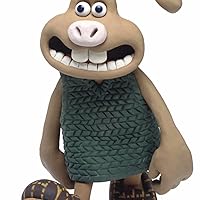
The race that Hutch is trying to save are cute green webfooted large-eyed bucktoothed beasties who look very like the creatures on a children’s show called Goompahs. They fall into that category of alien design beloved of ‘Star Trek’ and its clones, where the civilisation is basically human, but the people look different.
A third of the way into the novel they began to annoy me and I was at the point of hoping the Omega cloud would arrive prematurely and save me the trouble of reading any more about them.
Fat chance of that, as it turned out.
McDevitt tries to make a point about the cuteness factor. Many companies petition the Academy for permission to travel to Lookout for various money-making purposes, virtually all of which are refused. Humanity is completely engaged with them and their possible extinction, and at one point Hutch asks herself whether there would be so much public interest if the aliens had been unappealing insects?
Not enough is made of this, however, which is a shame as it is an issue that relates to how we deal with endangered species. The cute ones get all the attention, while threatened species of snails or beetles seldom appear in petitions or Facebook appeals. McDevitt missed an opportunity here which may have raised the bar on this book a tad.
It is by no means a bad novel, but one feels that as a nominee for the Nebula award this is surely missing something, and not just the world outside America.
The Omega Clouds – agents of destruction which seem to be able to recognise right angles and other signs of intelligent life – have been studied intensively. Apart from the fact that they are based on nanotechnology, there is very little else discovered about them. One is heading toward Earth and will arrive in around a thousand years.
Meanwhile, elderly scientist Harold Tewkesbury has been studying a series of novalike explosions (his students have called them ‘Tewks’) that have shown up along Omega wave fronts.
Additionally, around 3000 light years from earth, a planet with a pre-industrial civilisation has been discovered, and an Omega cloud will reach them within months.
Hutch is determined to find a way to divert the Omega cloud and/or persuade the indigenes to abandon their coastal cities and move inland.
My frustration with McDevitt - putting aside for the moment his Americocentric view of the universe, which I have covered in previous reviews – lies with his alien races.
Very early on in this novel the Academy are trying to salvage what they can from an already Omega-scarred world which is about to be revisited. In a large auditorium they find a statue of what could be the architect; a tall alien beastie but wearing garments that overly resemble Twentieth Century European attire. In a previous volume we had a similar occurrence where a representation of a long-extinct wolflike creature showed him wearing a dinner jacket.
Think about it Jack! What are the odds that aliens, no matter how humanoid, would evolve the dinner jacket? It may seem that I am splitting hairs here but these are the things that ruin my enjoyment of the novel, which is a shame because on the whole it’s one of the best in the series so far.
There are wonderful characters, fascinating scientific anomalies, vast world-destroying clouds and… these Walt Disney aliens.
The race that Hutch is trying to save are cute green webfooted large-eyed bucktoothed beasties who look very like the creatures on a children’s show called Goompahs. They fall into that category of alien design beloved of ‘Star Trek’ and its clones, where the civilisation is basically human, but the people look different.
A third of the way into the novel they began to annoy me and I was at the point of hoping the Omega cloud would arrive prematurely and save me the trouble of reading any more about them.
Fat chance of that, as it turned out.
McDevitt tries to make a point about the cuteness factor. Many companies petition the Academy for permission to travel to Lookout for various money-making purposes, virtually all of which are refused. Humanity is completely engaged with them and their possible extinction, and at one point Hutch asks herself whether there would be so much public interest if the aliens had been unappealing insects?
Not enough is made of this, however, which is a shame as it is an issue that relates to how we deal with endangered species. The cute ones get all the attention, while threatened species of snails or beetles seldom appear in petitions or Facebook appeals. McDevitt missed an opportunity here which may have raised the bar on this book a tad.
It is by no means a bad novel, but one feels that as a nominee for the Nebula award this is surely missing something, and not just the world outside America.
March 15, 2018
Prosegue la saga dell'Academy.
Questa volta una di queste misteriose nubi spaziali (chiamate Omega) sta per colpire un pianeta fino ad oggi sconosciuto in cui si scopre esserci una civiltà di simpatici pupazzotti pre-tecnologici, diciamo a livello dei greci, dediti al dibattito, al teatro, al sesso libero.
Questa civiltà ignara sta per essere spazzata via (le nubi Omega scorrazzano per l'universo e sono attratte da tutto ciò che presenta linee squadrate. Da dove si originino e come funzionino è ancora un mistero, si suppone da qualche parte ai confini dell'universo ci sia una remota civiltà di lazzaroni dalle enormi potenzialità tecnologiche che si diverte così).
Al che l'Academy, ora capitanata da Priscilla Hutchinson - che per la prima volta nella serie ricopre un ruolo secondario - mette in piedi un po' alla buona una missione per tentare di sviare la nube e salvare i Korbs, altrimenti detti Goompah perché somigliano ai personaggi di una trasmissione per bambini. Facciamo conto della specie di Teletubbies.
Questo episodio della saga è forse uno dei più divertiti, e forse divertenti, proprio per la presenza di questi buffi e arrapati alieni. Non ci si scappa dal confronto impietoso fra la società pacifica ma poco curiosa dei Goompah e gli esseri umani che esplorano l'universo ma ancora nel 2200 e fischia ancora non ha risolto la questione palestinese.
Non mi stancherò di dirlo, ma questa saga è un po' come dovrebbe essere la fantascienza.
Purtroppo per renderla potabile al grande pubblico si è macinato il concetto di fantascienza rendendolo un minestrone di puttanate, esplosioni, dischi volanti, dimensioni parallele. La fantascienza data in pasto al pubblico oggi è sostanzialmente fantasy.
Invece lo spazio è vuoto, gli alieni virtualmente non esistono. Il viaggio spaziale è una questione brigosa. Certo si può viaggiare più veloci della luce (condizione sine qua non per poter avere una narrativa spaziale) ma comunque raggiungere i vari pianeti qua e là per l'universo è questione di mesi. E se qualcosa va storto ciao.
La Fantascienza ("hard-core sci-fi" in questo caso) non dovrebbe reggersi su magie, mostri, poteri paranormali. In questa saga McDevitt ci chiede solo uno sforzo, accettare la possibilità che si scopra l'iper-velocità.
Poi tutto il resto è narrazione credibile e circostanziata. Il mondo e l'umanità rimangono quelli che sono sempre stati, i problemi che affliggono la terra sempre quelli sono. Certo si può andare in vacanza nello spazio (se si è abbastanza ricchi). La medicina ha fatto passi in avanti e la vita si è allungata parecchio. Priscilla "Hutch" Hutchinson in questo capitolo ad esempio ha una bimba piccola, ma ha almeno una sessantina di berrette sulle spalle. Scattanti centenari si avventurano per lo spazio...
Il matrimonio si rinnova dopo un determinato numero di anni. Se i due contraenti non sono d'accordo mutualmente, tanti saluti.
L'Academy (una specie di Nasa che si occupa di esplorazione ma anche di archeologia e conservazione) è un'istituzione statale che regola i contatti con le civiltà aliene e lo studio delle stesse. Ma dopo una prima fase di entusiasmo della politica e dell'opinione pubblica, inizia ad essere malvista. Il salvataggio dei Goompah è anche un'occasione per migliorare anche l'immagine e ricevere nuovi fondi.
La realtà è che i viaggi spaziali costano un sacco alle casse statali e rendono praticamente nulla. Le civiltà spaziali che sono state trovate in cinquant'anni di esplorazione fra migliaia di sistemi sono una misera manciata, e per lo più sono estinte da migliaia di anni. Alcune spazzate via dalle nubi Omega. Altre semplicemente estinte. Ormai è questione di archeologia, di linguistica, di studiare i fossili e i manufatti.
Roba ben poco interessante per l'umanità alle prese con un'inesorabile aumento del livello dei mari, dalla soffocante sovrappopolazione, dagli squilibri socio-economici. Jack McDevitt usa ogni tanto lo stratagemma di infilare come nota di colore dei "titoli di giornali" dell'epoca.
Il "futuro" è l'ambientazione, le scoperte scientifiche ancora al di là da venire sono un traliccio su cui costruire la narrazione, ma poi tutto il resto deve essere credibile e rispondere alla logica, al senso della storia, alle leggi fisiche.
Non si può saltare da un orbita all'altra come si cambia nastro trasportatore all'areoporto (Gravity), non si può stare in maniche di camicia in una fessura fra i multiversi a ribaltare libri dallo scaffale (Interstellar), non è che se impari a leggere una lingua aliena dopo sei capace di prevedere il futuro (The Arrival - giudicato da molti un grande film, ma appunto per questa cosa che gli alieni arrivano per donarci i superpoteri letterari per me cade nel calderone delle puttanate).
Si noti come uso dei film come paragone. Il che perché di solito non leggo fantascienza e anche perché nessuno legge fantascienza, ma tutti vedono film di fantascienza. Ed è in questa trasmigrazione dei concetti fantascientifici dalla pagina allo schermo che il realismo narrativo viene macinato in favore di una favoletta fantastica e fantasiosa.
Tornando a questo capitolo della saga, concludo sennò vado lungo, è appunto il meno rigoroso e serioso. Gli altri volumi sono incentrati sull'archeologia spaziale, sulla linguistica, su incidenti su pianeti derelitti... Questo è incentrato finalmente su l'incontro con degli alieni bonaccioni che ci mettono a confronto con la nostra umanità. (gli altri alieni vivi ad oggi erano i Noks - delle teste di cazzo di civiltà diciamo paragonabile al nostro 900 che stanno sempre a farsi la guerra fra loro, talmente sfigati a cui sono state dedicate un paio di righe in tutta la saga, e gli altri erano delle specie di sparvieri umanoidi dall'aspetto angelico ma cattivi come la merda. Poi ci sono anche dei selvaggi da qualche parte la cui civiltà era stata distrutta da una nube. Ci sono poi delle civiltà estinte o misteriose, che hanno lasciato monumenti o gigantesche astronavi automatizzate che raccolgono testimonianze di altri mondi).
Il discorso è che la vita nell'universo è rara, ma non impossibile. La vita intelligente appare, nella vastità enorme dell'Universo, magari diverse migliaia di volte. Solo che la civiltà dura un battito di ciglia. McDevitt ha deciso che i pianeti abitati devono somigliare alla terra bene o male e che gli alieni sono sempre più o meno umanoidi e che godono della riproduzione sessuata. Che le piante sembrano sempre piante e che gli animali sono sempre simili... ci sono gatti, pesci, uccelli. Diversi ma biologicamente simili in ogni eventuale pianeta vivo. Come se la vita non potesse prescindere da alcune costanti. Chiaro, è solo uno schema teorico narrativo. Ma tant'è.
Comunque in conclusione, episodio carino, più ha divertito di più pur essendomi piaciuto un po' meno.
Questa volta una di queste misteriose nubi spaziali (chiamate Omega) sta per colpire un pianeta fino ad oggi sconosciuto in cui si scopre esserci una civiltà di simpatici pupazzotti pre-tecnologici, diciamo a livello dei greci, dediti al dibattito, al teatro, al sesso libero.
Questa civiltà ignara sta per essere spazzata via (le nubi Omega scorrazzano per l'universo e sono attratte da tutto ciò che presenta linee squadrate. Da dove si originino e come funzionino è ancora un mistero, si suppone da qualche parte ai confini dell'universo ci sia una remota civiltà di lazzaroni dalle enormi potenzialità tecnologiche che si diverte così).
Al che l'Academy, ora capitanata da Priscilla Hutchinson - che per la prima volta nella serie ricopre un ruolo secondario - mette in piedi un po' alla buona una missione per tentare di sviare la nube e salvare i Korbs, altrimenti detti Goompah perché somigliano ai personaggi di una trasmissione per bambini. Facciamo conto della specie di Teletubbies.
Questo episodio della saga è forse uno dei più divertiti, e forse divertenti, proprio per la presenza di questi buffi e arrapati alieni. Non ci si scappa dal confronto impietoso fra la società pacifica ma poco curiosa dei Goompah e gli esseri umani che esplorano l'universo ma ancora nel 2200 e fischia ancora non ha risolto la questione palestinese.
Non mi stancherò di dirlo, ma questa saga è un po' come dovrebbe essere la fantascienza.
Purtroppo per renderla potabile al grande pubblico si è macinato il concetto di fantascienza rendendolo un minestrone di puttanate, esplosioni, dischi volanti, dimensioni parallele. La fantascienza data in pasto al pubblico oggi è sostanzialmente fantasy.
Invece lo spazio è vuoto, gli alieni virtualmente non esistono. Il viaggio spaziale è una questione brigosa. Certo si può viaggiare più veloci della luce (condizione sine qua non per poter avere una narrativa spaziale) ma comunque raggiungere i vari pianeti qua e là per l'universo è questione di mesi. E se qualcosa va storto ciao.
La Fantascienza ("hard-core sci-fi" in questo caso) non dovrebbe reggersi su magie, mostri, poteri paranormali. In questa saga McDevitt ci chiede solo uno sforzo, accettare la possibilità che si scopra l'iper-velocità.
Poi tutto il resto è narrazione credibile e circostanziata. Il mondo e l'umanità rimangono quelli che sono sempre stati, i problemi che affliggono la terra sempre quelli sono. Certo si può andare in vacanza nello spazio (se si è abbastanza ricchi). La medicina ha fatto passi in avanti e la vita si è allungata parecchio. Priscilla "Hutch" Hutchinson in questo capitolo ad esempio ha una bimba piccola, ma ha almeno una sessantina di berrette sulle spalle. Scattanti centenari si avventurano per lo spazio...
Il matrimonio si rinnova dopo un determinato numero di anni. Se i due contraenti non sono d'accordo mutualmente, tanti saluti.
L'Academy (una specie di Nasa che si occupa di esplorazione ma anche di archeologia e conservazione) è un'istituzione statale che regola i contatti con le civiltà aliene e lo studio delle stesse. Ma dopo una prima fase di entusiasmo della politica e dell'opinione pubblica, inizia ad essere malvista. Il salvataggio dei Goompah è anche un'occasione per migliorare anche l'immagine e ricevere nuovi fondi.
La realtà è che i viaggi spaziali costano un sacco alle casse statali e rendono praticamente nulla. Le civiltà spaziali che sono state trovate in cinquant'anni di esplorazione fra migliaia di sistemi sono una misera manciata, e per lo più sono estinte da migliaia di anni. Alcune spazzate via dalle nubi Omega. Altre semplicemente estinte. Ormai è questione di archeologia, di linguistica, di studiare i fossili e i manufatti.
Roba ben poco interessante per l'umanità alle prese con un'inesorabile aumento del livello dei mari, dalla soffocante sovrappopolazione, dagli squilibri socio-economici. Jack McDevitt usa ogni tanto lo stratagemma di infilare come nota di colore dei "titoli di giornali" dell'epoca.
Il "futuro" è l'ambientazione, le scoperte scientifiche ancora al di là da venire sono un traliccio su cui costruire la narrazione, ma poi tutto il resto deve essere credibile e rispondere alla logica, al senso della storia, alle leggi fisiche.
Non si può saltare da un orbita all'altra come si cambia nastro trasportatore all'areoporto (Gravity), non si può stare in maniche di camicia in una fessura fra i multiversi a ribaltare libri dallo scaffale (Interstellar), non è che se impari a leggere una lingua aliena dopo sei capace di prevedere il futuro (The Arrival - giudicato da molti un grande film, ma appunto per questa cosa che gli alieni arrivano per donarci i superpoteri letterari per me cade nel calderone delle puttanate).
Si noti come uso dei film come paragone. Il che perché di solito non leggo fantascienza e anche perché nessuno legge fantascienza, ma tutti vedono film di fantascienza. Ed è in questa trasmigrazione dei concetti fantascientifici dalla pagina allo schermo che il realismo narrativo viene macinato in favore di una favoletta fantastica e fantasiosa.
Tornando a questo capitolo della saga, concludo sennò vado lungo, è appunto il meno rigoroso e serioso. Gli altri volumi sono incentrati sull'archeologia spaziale, sulla linguistica, su incidenti su pianeti derelitti... Questo è incentrato finalmente su l'incontro con degli alieni bonaccioni che ci mettono a confronto con la nostra umanità. (gli altri alieni vivi ad oggi erano i Noks - delle teste di cazzo di civiltà diciamo paragonabile al nostro 900 che stanno sempre a farsi la guerra fra loro, talmente sfigati a cui sono state dedicate un paio di righe in tutta la saga, e gli altri erano delle specie di sparvieri umanoidi dall'aspetto angelico ma cattivi come la merda. Poi ci sono anche dei selvaggi da qualche parte la cui civiltà era stata distrutta da una nube. Ci sono poi delle civiltà estinte o misteriose, che hanno lasciato monumenti o gigantesche astronavi automatizzate che raccolgono testimonianze di altri mondi).
Il discorso è che la vita nell'universo è rara, ma non impossibile. La vita intelligente appare, nella vastità enorme dell'Universo, magari diverse migliaia di volte. Solo che la civiltà dura un battito di ciglia. McDevitt ha deciso che i pianeti abitati devono somigliare alla terra bene o male e che gli alieni sono sempre più o meno umanoidi e che godono della riproduzione sessuata. Che le piante sembrano sempre piante e che gli animali sono sempre simili... ci sono gatti, pesci, uccelli. Diversi ma biologicamente simili in ogni eventuale pianeta vivo. Come se la vita non potesse prescindere da alcune costanti. Chiaro, è solo uno schema teorico narrativo. Ma tant'è.
Comunque in conclusione, episodio carino, più ha divertito di più pur essendomi piaciuto un po' meno.

February 9, 2012
2 Stars...a real surprise how boring this one is. A planet is discovered with intelligent life, similar to humans at a 5th Century technology level. It takes forever to get to the action at the planet about to be attacked by an Omega cloud. It is once again a menagerie of calm, heroic, intelligent, patient, thoughtful, inventive women carrying out the rescue while having to put up with stupid, vain, emotional, weak, thoughtless men getting in the way. Even the alien women are better than most of the men. Belongs in a unique category from all my other books, basically, progressive female chauvinist environmentalist science fiction. I'll read the next in the series and probably no more unless it gets off the lopsided tone.

January 19, 2013
Good book, really enjoyed it. Only quibble would be that the the omega clouds would seem to have been improbably astonishingly poorly designed but perhaps that is addressed in the later books in the series.
Bit unfortunate that it was up for the 2005 Nebula in competition with Lois McMaster Bujold's Paladin of Souls, which is probably one of the best fantasy novels ever written.
Bit unfortunate that it was up for the 2005 Nebula in competition with Lois McMaster Bujold's Paladin of Souls, which is probably one of the best fantasy novels ever written.

February 28, 2016
what is the point anymore ?
these are bad books with a bad writer
these are bad books with a bad writer

November 23, 2018
Interested in some science fiction that features a killer cloud, a race against time, an almost-human alien race, and a romance that is both sweet and memorable? This fourth book in McDevitt’s Academy series may be exactly what you’re hoping for. It’s pretty important that you read the first three books in the series though.
An Omega cloud appears to be inexorably headed for earth. Granted, it won’t arrive for a thousand years, and the politicians are eager to kick the can down the road. But Priscilla “Hutch” Hutchins is certain that putting off finding a solution is a terrible idea. Once a memorable character in earlier books in the series and a pilot who figured high in the series, Hutch has now become a bureaucrat, and that’s an unfortunate drawback to the book.
Scientists at the Academy nervously watch the killer comet draw closer to Earth. The clouds aren’t simply nonliving collections of materials. They appear to be able to focus on civilizations with technology, and they have a frightening record of destroying every technically advanced civilization they encounter.
One of these clouds seems to have discovered a humanoid civilization on a world light years from Earth. The civilization has pre-industrial-revolution technology, but that’s enough to draw attention to the killer cloud. Academy members like Priscilla Hutchins realize that studying this cloud and perhaps figuring out how to distract it from its mission to destroy the almost-human civilization will help as a similar cloud draws near to Earth in coming centuries.
But the cloud draws closer to its target, and the unsuspecting humanoids have only days to live. Scientists must find a way to rescue the humanoids without violating the protocol not to interfere with the civilization.
It turns out that convincing the humanoids to move to higher ground in order to save themselves just can’t be done without interfering in their civilization, and it’s up to Digby “Digger” Dunn and his wife, Kellie, to both find a way to contact a civilization that is petrified of humans and help its members survive. Other members of the academy are engaged in diverting the cloud if at all possible.
This book mostly gets kicked to the curb by sci-fi readers on Goodreads. I guess I’m a bit more forgiving than the average thoughtful science-fiction reader. Granted, the book moved slowly in places, but the romance between Digger and Kellie is sweet and kind of charming. After all, how easy can it be to engage in sexual experiences while cloaked in invisibility light-bending technology. Additionally, McDevitt creates female characters who are always interesting, often enigmatic, and worth the time you invest in getting to know them.
The world building the author does is excellent and memorable. The humanoid aliens to which he introduces readers of this series in book four are a fascinating lot, and you ultimately feel to congratulate Kellie and Digger for finding a way to communicate with them in as unobtrusive a manner as possible.
An Omega cloud appears to be inexorably headed for earth. Granted, it won’t arrive for a thousand years, and the politicians are eager to kick the can down the road. But Priscilla “Hutch” Hutchins is certain that putting off finding a solution is a terrible idea. Once a memorable character in earlier books in the series and a pilot who figured high in the series, Hutch has now become a bureaucrat, and that’s an unfortunate drawback to the book.
Scientists at the Academy nervously watch the killer comet draw closer to Earth. The clouds aren’t simply nonliving collections of materials. They appear to be able to focus on civilizations with technology, and they have a frightening record of destroying every technically advanced civilization they encounter.
One of these clouds seems to have discovered a humanoid civilization on a world light years from Earth. The civilization has pre-industrial-revolution technology, but that’s enough to draw attention to the killer cloud. Academy members like Priscilla Hutchins realize that studying this cloud and perhaps figuring out how to distract it from its mission to destroy the almost-human civilization will help as a similar cloud draws near to Earth in coming centuries.
But the cloud draws closer to its target, and the unsuspecting humanoids have only days to live. Scientists must find a way to rescue the humanoids without violating the protocol not to interfere with the civilization.
It turns out that convincing the humanoids to move to higher ground in order to save themselves just can’t be done without interfering in their civilization, and it’s up to Digby “Digger” Dunn and his wife, Kellie, to both find a way to contact a civilization that is petrified of humans and help its members survive. Other members of the academy are engaged in diverting the cloud if at all possible.
This book mostly gets kicked to the curb by sci-fi readers on Goodreads. I guess I’m a bit more forgiving than the average thoughtful science-fiction reader. Granted, the book moved slowly in places, but the romance between Digger and Kellie is sweet and kind of charming. After all, how easy can it be to engage in sexual experiences while cloaked in invisibility light-bending technology. Additionally, McDevitt creates female characters who are always interesting, often enigmatic, and worth the time you invest in getting to know them.
The world building the author does is excellent and memorable. The humanoid aliens to which he introduces readers of this series in book four are a fascinating lot, and you ultimately feel to congratulate Kellie and Digger for finding a way to communicate with them in as unobtrusive a manner as possible.

December 8, 2021
Disclaimer: The version of this book that I read was an ‘Uncorrected Proof for Limited Distribution’. So, it’s possible that the final draft is much improved over what I read, but for that to happen, this book would need a team of editors and a vast reserve of scientific advisors. (But it's still possible.)
I think a big part of my disdain for this book is due to my misguided belief that I was about to discover a popular, gifted and prodigious new author but was confronted with a book that seems too absurdly complicated to be enjoyable.
Despite the fact that this author is popular and has written a slew of other books, I never heard of him. That being said, in fact, there was nothing wrong with the writing itself. This guy can write, but the plot has some very thin areas, the story has too many characters, too much detail (pointless, needless, useless detail), complexity where it isn’t wanted or needed, and simplicity where depth is called for.
Specifically, there are far too many characters who simply aren’t germane to the plot, a dozen linguists who never even reach their destination, a slew of researchers, historians, professors, a dignitary or two. In the end, the action boils down to three or four, or five, or should I call it six characters, none of whom can be said to be the main character, who gets killed off well before the ending.
I’ve read quite a few books in my day, some complex, some simple, some with convoluted plots and surprise endings. But this book has way too much complex machinery.
The book does not lack ambition though. It’s like one of those Christmas trees at the mall. Twenty-five feet tall, with a hundred thousand ornaments. Fifty thousand are red, and fifty thousand are gold, and the tree is fake, of course. It doesn’t even smell like a tree. And yet, it certainly qualifies as a Christmas Tree.
This book is like that. It’s a Science-fiction novel written by someone that doesn’t seem all that concerned with the science that went into his fictional tale. I mean look, in the first chapter they try nukes on the ‘mysterious space creature.’ We’re talking about a story that takes place 300 years into the future. Nukes? Maybe they were antique nukes, but there was no explanation. (That I can remember.) And yet, by chapter 51, you realize that humans possess large cloaking devices, enormous projectors, faster-than-light starships, artificial hurricanes, faster-than-light communications, particle beams and lasers. Even so, it seems an entire race of beings is rescued with holograms, bullshit and baling wire. (In essence.) It’s odd, as if the book was written by a committee. And it’s a shame because the book has so much potential. The alien characters are far more interesting than their human counterparts, not because they’re cute, but because they’re scared and conflicted.
I cannot recommend this particular book—but based on his skill and competence, I could easily be induced to try another book by this author.
I think a big part of my disdain for this book is due to my misguided belief that I was about to discover a popular, gifted and prodigious new author but was confronted with a book that seems too absurdly complicated to be enjoyable.
Despite the fact that this author is popular and has written a slew of other books, I never heard of him. That being said, in fact, there was nothing wrong with the writing itself. This guy can write, but the plot has some very thin areas, the story has too many characters, too much detail (pointless, needless, useless detail), complexity where it isn’t wanted or needed, and simplicity where depth is called for.
Specifically, there are far too many characters who simply aren’t germane to the plot, a dozen linguists who never even reach their destination, a slew of researchers, historians, professors, a dignitary or two. In the end, the action boils down to three or four, or five, or should I call it six characters, none of whom can be said to be the main character, who gets killed off well before the ending.
I’ve read quite a few books in my day, some complex, some simple, some with convoluted plots and surprise endings. But this book has way too much complex machinery.
The book does not lack ambition though. It’s like one of those Christmas trees at the mall. Twenty-five feet tall, with a hundred thousand ornaments. Fifty thousand are red, and fifty thousand are gold, and the tree is fake, of course. It doesn’t even smell like a tree. And yet, it certainly qualifies as a Christmas Tree.
This book is like that. It’s a Science-fiction novel written by someone that doesn’t seem all that concerned with the science that went into his fictional tale. I mean look, in the first chapter they try nukes on the ‘mysterious space creature.’ We’re talking about a story that takes place 300 years into the future. Nukes? Maybe they were antique nukes, but there was no explanation. (That I can remember.) And yet, by chapter 51, you realize that humans possess large cloaking devices, enormous projectors, faster-than-light starships, artificial hurricanes, faster-than-light communications, particle beams and lasers. Even so, it seems an entire race of beings is rescued with holograms, bullshit and baling wire. (In essence.) It’s odd, as if the book was written by a committee. And it’s a shame because the book has so much potential. The alien characters are far more interesting than their human counterparts, not because they’re cute, but because they’re scared and conflicted.
I cannot recommend this particular book—but based on his skill and competence, I could easily be induced to try another book by this author.

May 15, 2019
The fourth installment in the Hutchins saga has plenty aspects going for it, and few aspects working against. For the most part, the overall impression left by Omega is one of localized triumph, followed alongside globalized insights. The localized triumph is a victory against the ominous clouds that act as the main arc of the saga; the globalized insights acquired through the triumph relate to the clouds as well. Whereas the previous installment took a mostly wrong turn down subplot alley, Omega uses its narrative GPS to reorient us readers back towards the best part of the series.
The strengths of Omega lie in its internally consistent use of hypothetical technologies, its cast of believable characters carrying realistic beliefs and taking realistic actions, and proper pacing that effortlessly switches scenes between Earth, spaceships, and the colony of aliens under immediate threat. I found it difficult to pull away from the book once I got going again – certainly a strong page-turner of McDevitt’s collection.
There were aspects of the plot, such as poor service to beloved characters, that reduce the quality of Omega. Nevertheless, the reduction is minimal, especially for readers that can use their imagination and project into the future. In essence, Hutchins and Tor are short shrifted in Omega, relegated to administration tasks conducted from afar while all the gripping action occurs light years away.
Even so, I can envision a possible setup, where frustration at the omega clouds and their seemingly mindless destruction of planets drives Hutchins to take personal action in the future. Sure, knowing there are a few more books in the series allows me to make such a projection – kind of a cheat. I’m okay with that, as it means more sci-fi goodness from Mr. McDevitt. I get a feeling of space opera grandeur slowly unfolding as I read the Hutchins novels, a kind of Babylon 5 simmer into what I hope is huge stakes for the future of the galaxy.
It all feels as though we’re being set up for a climatic explosion of forces. The aliens (Goompahs) may not ever return in the following books, yet I hope they do. What will return is the omega clouds, further uncovering of the ultimate truth behind their origin and purpose, and (crosses fingers) the makers of the malevolent tech. If the closing revelation of Hutchins is true, the entire galaxy should be worried about a force treating celestial objects as playthings.
The strengths of Omega lie in its internally consistent use of hypothetical technologies, its cast of believable characters carrying realistic beliefs and taking realistic actions, and proper pacing that effortlessly switches scenes between Earth, spaceships, and the colony of aliens under immediate threat. I found it difficult to pull away from the book once I got going again – certainly a strong page-turner of McDevitt’s collection.
There were aspects of the plot, such as poor service to beloved characters, that reduce the quality of Omega. Nevertheless, the reduction is minimal, especially for readers that can use their imagination and project into the future. In essence, Hutchins and Tor are short shrifted in Omega, relegated to administration tasks conducted from afar while all the gripping action occurs light years away.
Even so, I can envision a possible setup, where frustration at the omega clouds and their seemingly mindless destruction of planets drives Hutchins to take personal action in the future. Sure, knowing there are a few more books in the series allows me to make such a projection – kind of a cheat. I’m okay with that, as it means more sci-fi goodness from Mr. McDevitt. I get a feeling of space opera grandeur slowly unfolding as I read the Hutchins novels, a kind of Babylon 5 simmer into what I hope is huge stakes for the future of the galaxy.
It all feels as though we’re being set up for a climatic explosion of forces. The aliens (Goompahs) may not ever return in the following books, yet I hope they do. What will return is the omega clouds, further uncovering of the ultimate truth behind their origin and purpose, and (crosses fingers) the makers of the malevolent tech. If the closing revelation of Hutchins is true, the entire galaxy should be worried about a force treating celestial objects as playthings.

April 23, 2018
It's hard to focus on reading for me at the moment, so I ended up reading this book a couple of pages at a time, sometimes with weeks of not reading anything. It's possible that that influenced my rating, but I don't really think so. This book simply does not have what the first and third books in the series had ("The Engines of God" and "Chindi"). There are no ancient archeological mysteries to solve and whether the ultimate quest of saving the cuddly aliens succeeds or not isn't going to influence humanity's future. At all.
This book is a bit closer to the second book, Deepsix, which was a standalone story in the same universe. The difference is that Deepsix had a lot of action, adventure and there was still the mystery of what had happened on the planet. But nothing interesting ever happens on the Goompah planet. There's a little bit of action, but I couldn't bring myself to care about the outcome. The humans were bland and the aliens were an annoying fit to the "noble savage" template.
Basically, in the first few chapters we learn what the problem is and how it's going to be solved. The rest of the book is just the boring execution of that setup.
But all of that I could have lived with. After all, a good series of books can survive a clunker. The part I hated about this book was that the Omega cloud were vastly different than they were in "The Engines of God". That book created a universe where advanced races were regularly, every 6000 years or so, nearly wiped out by the Omega clouds. But in "Omega", we learn that . So the universe went from dark and menacing to just plain nuts.
Maybe the next book will redeem this clunker.
This book is a bit closer to the second book, Deepsix, which was a standalone story in the same universe. The difference is that Deepsix had a lot of action, adventure and there was still the mystery of what had happened on the planet. But nothing interesting ever happens on the Goompah planet. There's a little bit of action, but I couldn't bring myself to care about the outcome. The humans were bland and the aliens were an annoying fit to the "noble savage" template.
Basically, in the first few chapters we learn what the problem is and how it's going to be solved. The rest of the book is just the boring execution of that setup.
But all of that I could have lived with. After all, a good series of books can survive a clunker. The part I hated about this book was that the Omega cloud were vastly different than they were in "The Engines of God". That book created a universe where advanced races were regularly, every 6000 years or so, nearly wiped out by the Omega clouds. But in "Omega", we learn that . So the universe went from dark and menacing to just plain nuts.
Maybe the next book will redeem this clunker.

June 1, 2022
McDevitt, Jack. Omega. Academy No. 4. Ace, 2003.
Jack McDevitt has had a long career of writing very good science fiction. He creates nuanced and believable characters and puts them in a credible far future space-faring society. The Academy is a government-funded organization of scientists and spaceship crews that make first contact with alien species and explore astrophysical anomalies. Most of the books in the series deal with Fermi’s paradox as the Academy works to find out why technological societies are so rare. Omega offers a partial explanation, the eponymous Omega Cloud, a cloud of gas and nanoparticles thousands of kilometers long. It homes in on star systems with technological societies, destroying artificial structures. No one knows why. Now a newly discovered pre-industrial society is threatened, and an expedition is launched to warn the aliens and try some tricks to deflect the cloud. It is the sort of situation one might find in a Star Trek plot, complete with its own version of the Prime Directive, but McDevitt handles it more realistically than the usual Trek story. For one thing, space travel is expensive, starships are in short supply and the central characters of the series are aging. His early protagonist, Priscilla “Hutch” Hutchinson, is now an administrator struggling with funding and public relations. The expedition has trouble learning the alien language without violating its non-interference mandate. No Babel Fish or universal translators here. In sum, Omega is a well-told story with intriguing ideas, adequate action, and engaging characters. 4 stars.
Jack McDevitt has had a long career of writing very good science fiction. He creates nuanced and believable characters and puts them in a credible far future space-faring society. The Academy is a government-funded organization of scientists and spaceship crews that make first contact with alien species and explore astrophysical anomalies. Most of the books in the series deal with Fermi’s paradox as the Academy works to find out why technological societies are so rare. Omega offers a partial explanation, the eponymous Omega Cloud, a cloud of gas and nanoparticles thousands of kilometers long. It homes in on star systems with technological societies, destroying artificial structures. No one knows why. Now a newly discovered pre-industrial society is threatened, and an expedition is launched to warn the aliens and try some tricks to deflect the cloud. It is the sort of situation one might find in a Star Trek plot, complete with its own version of the Prime Directive, but McDevitt handles it more realistically than the usual Trek story. For one thing, space travel is expensive, starships are in short supply and the central characters of the series are aging. His early protagonist, Priscilla “Hutch” Hutchinson, is now an administrator struggling with funding and public relations. The expedition has trouble learning the alien language without violating its non-interference mandate. No Babel Fish or universal translators here. In sum, Omega is a well-told story with intriguing ideas, adequate action, and engaging characters. 4 stars.
January 18, 2019
Jack McDevitt is becoming one of my favourite authors. While his work might not push the bounderies as much as other writers, it still shows enough originality to keep me entertained. His series work well both as series and importantly, stand alone works. I encountered the Alex Benedict novels with Coming Home and despite it been the last book in the series I enjoyed it a lot. As is typical for McDevitt's work Omega is a Space Opera Puzzle box. Humanity is face with a threat, an advanced civilisation somewhere in the Galaxy's core is creating Omega clouds that destroy civilisations on planets they encounter and one is heading towards Earth and will arrive in 900 years time (It's a nice piece of writing to make the long timeframe something that increases the danger by introducing procrastination into the mix). In the course of investigating this phenomena, it's discovered that an Omega cloud is about hit a planet on which a classical era civilisation has emerged and in this setting intelligent life is rare. There is a lot of drama as Humans struggle with how to save this civilisation without destroying it through cultural contamination and a lot of things go wrong forcing the heros to improvise. The story ends with the Series arc been advanced and some questions been answered, or at least having some original answers provided. If you like mysteries and Space Opera, you cannot go wrong with a Jack McDevitt book.

January 2, 2024
This one starts off a bit slow, Priscilla Hutchins has retired from piloting superluminals now she's married and has a child. Instead she's taken a desk job at the Academy. There's a few chapters of her sorting out grumbling academics, impatient journalists and politicians who are always looking for ways to cut her budget. But don't worry, this is a space adventure that doesn't disappoint. Scientists studying the dreaded destructive Omega clouds discover there's one headed towards a habitable planet.
In the Academy series, we've usually only known alien civilisations by their relics, but this time, humans realise they've found one alive and flourishing. The Goompahs are confined by geography to a relatively small area of their world, and they are still quite low tech, but have reached a point that will attract the attention of the Omega cloud. The race is on to try to save them. First efforts are directed at breaking up the cloud or diverting it. When that fails they must be warned to flee their cities and head for the hills. But, how to do that? The Academy has protocols akin to Star Trek's prime directive, not to interfere in any way with the development of a less developed race.
By the way, the Goompahs are green and stocky. It was a complete coincidence that I was reading this book over Christmas and one of my presents was a dvd of The Grinch Who Stole Christmas, but somehow, that is how I'm going to picture them....
In the Academy series, we've usually only known alien civilisations by their relics, but this time, humans realise they've found one alive and flourishing. The Goompahs are confined by geography to a relatively small area of their world, and they are still quite low tech, but have reached a point that will attract the attention of the Omega cloud. The race is on to try to save them. First efforts are directed at breaking up the cloud or diverting it. When that fails they must be warned to flee their cities and head for the hills. But, how to do that? The Academy has protocols akin to Star Trek's prime directive, not to interfere in any way with the development of a less developed race.
By the way, the Goompahs are green and stocky. It was a complete coincidence that I was reading this book over Christmas and one of my presents was a dvd of The Grinch Who Stole Christmas, but somehow, that is how I'm going to picture them....
September 11, 2018
Maybe it's because I'm all "McDevitted" out after reading the first four Academy books one after the other, but I definitely didn't enjoy this one as much as the other three, despite it being the first of the series to win an award.
Yes, the universe is still the same. Yes, the big set pieces, with the associated thrills, are still there. Yes, characters still do stupid things (with their associated consequences) which, in fact, probably makes them more human than character sin some other books...
But this one felt less... cinematic - more of the narrative dealt with the interaction (or attempted lack thereof) of the humans with the Goompahs and, being completely honest, I felt very little for this part of the story. I wanted to know the mystery of the Omega clouds, not that aliens had debates and orgies. The "rescue" felt strained and was, ultimately, brought about in a very deus ex machina way.
Not only that, but Hutch has been sidelined. One of the stronger female characters that I have come across in SF literature, and she has been reduced to a bureaucrat, with nobody really filling the void left by taking her out of the centre of the story. OK, so the story would have had to have been different if she was the main character, but it's that sort of story I was expecting and hoping for.
Time for a break from the Academy before the next three novels, I think.
Yes, the universe is still the same. Yes, the big set pieces, with the associated thrills, are still there. Yes, characters still do stupid things (with their associated consequences) which, in fact, probably makes them more human than character sin some other books...
But this one felt less... cinematic - more of the narrative dealt with the interaction (or attempted lack thereof) of the humans with the Goompahs and, being completely honest, I felt very little for this part of the story. I wanted to know the mystery of the Omega clouds, not that aliens had debates and orgies. The "rescue" felt strained and was, ultimately, brought about in a very deus ex machina way.
Not only that, but Hutch has been sidelined. One of the stronger female characters that I have come across in SF literature, and she has been reduced to a bureaucrat, with nobody really filling the void left by taking her out of the centre of the story. OK, so the story would have had to have been different if she was the main character, but it's that sort of story I was expecting and hoping for.
Time for a break from the Academy before the next three novels, I think.

January 16, 2025
Four and a half stars rounded up to five. My favorite in the series so far (I've current read 5 of the 8). Nominated for the Nebula Award in 2004, and winner of the John W. Campbell Memorial Award for Best Science Fiction Novel in the same year.
"In the sequel to the critically acclaimed Chindi, the best military and scientific minds on Earth band together in a desperate attempt to preserve an alien society from the deadly force heading for its home planet." In a way, it's also a sequel to "Engines of God", as the Omega clouds are back.
It's got a lot of things I really like in a science fiction novel: first contact, an interesting alien race, a good grasp of the problems (and time scale) involved with interstellar distances. It also does a good job with the politics and bureaucracy. Half a star off for an annoying trope, the one where a character says "I think I've worked out what it's all about. Rather than tell you now, I just need a few more days to go through all the data" and then promptly dies before saying anything. I try to read books in a series, in sequence, so I don't go spoiling myself, but I apparently read book #5 in 2021, so I worked out (remembered) what the Omega clouds were all about, way before Hutchins did. Now I need to find the final three books and (hopefully) wrap everything up.
"In the sequel to the critically acclaimed Chindi, the best military and scientific minds on Earth band together in a desperate attempt to preserve an alien society from the deadly force heading for its home planet." In a way, it's also a sequel to "Engines of God", as the Omega clouds are back.
It's got a lot of things I really like in a science fiction novel: first contact, an interesting alien race, a good grasp of the problems (and time scale) involved with interstellar distances. It also does a good job with the politics and bureaucracy. Half a star off for an annoying trope, the one where a character says "I think I've worked out what it's all about. Rather than tell you now, I just need a few more days to go through all the data" and then promptly dies before saying anything. I try to read books in a series, in sequence, so I don't go spoiling myself, but I apparently read book #5 in 2021, so I worked out (remembered) what the Omega clouds were all about, way before Hutchins did. Now I need to find the final three books and (hopefully) wrap everything up.
October 5, 2025
The omega clouds have baffled humanity for years as they plow unhindered through space devastating any world with regular buildings. When a cloud is discovered heading for a world with intelligent life a ship is sent to see if it can somehow help the vaguely humanoid inhabitants, affectionately known as Goompahs, avoid extinction. Clouds have been discovered to have small devices known as hedgehogs, which trigger the cloud eruptions and may be linked to nova-like explosions called tewks. A survey group on the ground at Lookout (the planet) gets to learning about their language and customs and it is revealed that their devils in mythology resemble humans and so appearing to them and warning them is ruled out. Using their mythology however may be the only way to get the warning out as the cloud approaches. Jack McDevitt has given us a solid plot and engaging characters and aliens you care about. Priscilla Hutchins is pretty much irrelevant to the tale and it can be read without knowing the previous tales.

February 12, 2020
I had already decided I won't read McDevitt anymore, but then I came across this book and decided to give him one more chance, because the premise sounded very intriguing. But the writing style was so tedious it took me several weeks to read this thick novel. Furthermore, I was annoyed by these aliens: they were just far too human-like! The acted like humans and their language was very human (its grammar "resembled Latin"(!!)), and apparently its phonology was super easy for (English-speaking) humans. They are _aliens_ in a foreign planet, so why would their mouths and throats be similar to humans? And another thing: it's the 23th century, they have FTL space ships and sophisticated AIs, but they apparently have no translation software! Instead they start to decipher an alien language with just pen and paper...
Displaying 1 - 30 of 200 reviews