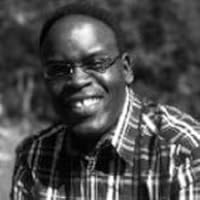
Pyramids Around the World is an in depth look at pyramids which have been discovered on every continent on Earth—Bosnia, Egypt, Mexico, Peru, India, China and even the United States. Filled with more than 300 color photographs documenting various locations and aspects of the pyramids, this book is a must see.
Dr. Sam Osmanagich has authored 11 books about ancient civilizations and narrated a 12-episode documentary “Search for Lost Civilization” for the state Bosnian television FTVBiH (2007). This documentary was based on his book, Civilizations before the Official History (2005), and filmed in Peru, Bolivia, Easter Island, Costa Rica, Mexico, United Kingdom, France, Germany, Malta, Egypt, Jordan and Lebanon.
In 2005, “Dr. Sam” discovered what turned out to be the first pyramids in Europe near the town of Visoko, Bosnia-Herzegovina. In 2008, Dr. Osmanagich hosted an archaeological conference in Sarajevo which fueled controversy about his discovery dividing the archaeological community. He will host the second archaeological conference in September of 2012 in Sarajevo. Excavation on the vast complex has been ongoing and run by his non-profit Archaeological Park: Bosnian Pyramid of the Sun Foundation since 2006 compiling more and more evidence to validate his claims. To date the excavation has yielded 5 pyramids of various sizes as well as a vast labyrinth of underground tunnels and a pyramid that is 30% larger than the largest structure on the Giza Plateau.
Dr. Osmanagich is principal investigator of this project which has yielded some of the pioneering electromagnetic measurements in the pyramids. He is known worldwide as an expert on pyramids and has investigated the sites of pyramidal structures in China, Mauritius, Canary Islands, Egypt, Peru, El Salvador, Guatemala, Bolivia, Honduras, Mexico etc.
Dr. Osmanagich holds a Ph.D. in Mayan Studies and is a Foreign Member of the Russian Academy of Natural Sciences of Moscow, one of the most respected scientific institutions in the world. He lectures around the globe and is also a member of the Archaeological Society of Alexandria.
Dr. Sam Osmanagich completed elementary school in Sarajevo, graduated high school (Druga gimnazija) in Sarajevo as a top student in his class in the City of Sarajevo (student of generation) and completed college diplomas, Masters and PhD at the University of Sarajevo. In five years of college he acquired double majors in sociology and political science. Learning came easily for him and by attending classes faithfully he admits he could do well without a tremendous amount of additional studying.
From an early age Dr. Sam also loved basketball and well into his adult years played consistently. He contributes at least some of his business success to what he learned on the courts—teamwork and tenacity. These traits have also served him very well in dealing with the unfolding of his Bosnian pyramid discovery.
As a business man, Dr. Sam’s career started in the mid-1980s at UNIS (United Metal Industry of Sarajevo), a 55,000-employee corporation where he was a research fellow in the UNIS Institute of strategic planning. In 1989 he started his own export-import and construction business in Sarajevo (Bosnia) and Split (Croatia) as the owner of the Meteorit, Inc. and Meteorit 2, Inc.
After moving to Houston, Texas he worked for a manu-facturing company, Houston Protectors, Inc., as a general manager. In 1995 he started his own business Met Company, Inc.—a manufacturing company catering largely to the oil and gas businesses, construction and other industries. He is presently President of the Met Company, Inc. and owner of Met Holding Group, LLC. He was a long-time member of the Board of Directors of nonprofit Alliance for Multicultural Activities in Houston, Texas.
In addition to his business interests Dr. Sam has avidly investigated ancient sites around the word and has authored numerous books about ancient civilizations (The Mayan World, Peruvian, Mexican, Pacific civilizations) that were published in the United States, Turkey, Estonia, Croatia, Serbia and Bosnia-Herzegovina.
Disclaimer: I got this as a gift many years ago, never read it. I ended up giving it away, but the night before sending it, I felt a strange compulsion to read it. FOMO or - pyramid power? Find out in the following review.
Bosnian pyramids never stood a chance. Rarely is a phrase as absurd on the surface level alone, removing even the faintest chance of being taken seriously. And while the idea has certainly been thoroughly ridiculed in public, do I have any actual arguments on why the triangular-sided hill near Visoki cannot possibly be an ancient monument? I am no pyramid expert, and have certainly not spend as much time as the author researching them all across the globe. With one side saying "This needs to be investigated", and the other saying "No investigation, believe the dogma", I find myself sympathetic to the former. (Scott Alexander wrote about this much better than I could.)
The first part of the book lists all of the pyramids across the world, many of whom the author has visited. There are a lot of pyramids, and all are equal here - a sad rock pile on Sicily stands right besides the great pyramid of Giza. The writing is neither popular science - there are pages and pages drily listing heights and inclinations of various structures - but neither is it technically rigorous. It's more like a first draft of a high-school paper interspersed with anti-establishment rants. By the time we got to China, I was struggling to keep awake (it was also late).
The second part is all about the amazing discovery of the Bosnian pyramids. As mentioned, I know little about history, even less about geology and next to nothing about pyramids. And that hill sure looks a lot like a pyramid. It even has underground passages going below it! I have yet to hear the counter arguments to Osmanagić's claims, and frankly, I don't have all the time in the world to research them. Here's a few things in the book, however, I found working against its argumentation:
1. Citations. The author goes out of his way to cite experts that agree with his theory, but it always sounds like he managed to cut out a soundbite he needed among many caveats of the original context. Also, many of his experts aren't actual experts, but authors of obscure books claiming the world will end in year 2000. 2. The author has a tendency of presenting perfectly normal data as something supporting his findings. For example, the radiation under the hill is lower than atop of the hill - this must mean the pyramid has special healing powers! But it's absolutely expected for cosmic radiation to be attenuated below a ton of earth, be it magical or not. 3. When the data doesn't support the author's theory, he will come up with an even more ludicrous explanation instead of just finding the theory false. For example: the author's hypothesis is that the Bosnian pyramid is actually an energy generator located in the center of the hill (don't ask, it comes out of the blue). But the voltage measured above the hill is actually higher then the voltage of the hill, which doesn't make sense if the energy is coming from the hill itself. A-ha, the author explains, that must mean this is some very special type of generator, which works unlike any other generator we have seen. This is not only a historical discovery, but one that will shake the foundations of physic itself. 4. In his biography the author mentions he was the top student in his class in high school. I'm sorry, I just have a hard time taking seriously anyone who mentions high school achievements in their credentials.
I dont't know what the moral is. See the world. Ask questions. Find someone that looks at you the same way Osmanagić looks at any vaguely conical rock formation.
I was impressed by the research on the pyramids around the world, though I would have liked more info on the Sudan pyramids. Hopefully an updated book (also maybe in print form) would remedy this and update on the Pyramid in Indonesia.