Durante los últimos cuatrocientos años, las culturas del mundo han sido dominadas por un conjunto de estados occidentales, que han llegado a verse a sí mismos como el centro del universo, un centro desde el cual han controlado, además del poder económico y político, el poder cultural. Uno de los efectos más devastadores de este dominio ha sido la aniquilación y la represión de las culturas africanas. Con la cultura al servicio del pueblo debilitada y dividida, la lucha del campesinado y del proletariado por los derechos humanos fundamentales y por la redistribución de la riqueza es más difícil.
En este libro, wa Thiongo se preocupa de ´desplazar´ este centro en dos sentidos para liberar no solamente las culturas africanas, sino las de todo el mundo: internacionalmente hay que desplazarlo desde Occidente hacia el resto de esferas culturales, y nacionalmente hay que apartarlo de las minorías de poder y llevarlo hacia el auténtico centro creativo, las clases trabajadoras, en condiciones de igualdad racial, religiosa y de género.
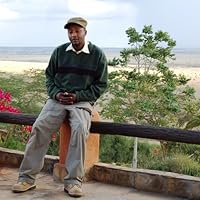
Ngũgĩ wa Thiong'o was a Kenyan author and academic, who was described as East Africa's leading novelist. He began writing in English before later switching to write primarily in Gikuyu, becoming a strong advocate for literature written in native African languages. His works include the celebrated novel The River Between, plays, short stories, and essays, ranging from literary and social criticism to children's literature. He was the founder and editor of the Gikuyu-language journal Mũtĩiri. His short story The Upright Revolution: Or Why Humans Walk Upright was translated into more than 100 languages. In 1977, Ngũgĩ embarked upon a novel form of theatre in Kenya that sought to liberate the theatrical process from what he held to be "the general bourgeois education system", by encouraging spontaneity and audience participation in the performances. His project sought to "demystify" the theatrical process, and to avoid the "process of alienation [that] produces a gallery of active stars and an undifferentiated mass of grateful admirers" which, according to Ngũgĩ, encourages passivity in "ordinary people". Although his landmark play Ngaahika Ndeenda, co-written with Ngũgĩ wa Mirii, was a commercial success, it was shut down by the authoritarian Kenyan regime six weeks after its opening. Ngũgĩ was subsequently imprisoned for more than a year. Adopted as an Amnesty International prisoner of conscience, he was released from prison and fled Kenya. He was appointed Distinguished Professor of Comparative Literature and English at the University of California, Irvine. He previously taught at Northwestern University, Yale University, and New York University. Ngũgĩ was frequently regarded as a likely candidate for the Nobel Prize in Literature. He won the 2001 International Nonino Prize in Italy, and the 2016 Park Kyong-ni Prize. Among his children are authors Mũkoma wa Ngũgĩ and Wanjiku wa Ngũgĩ.
Moving the centre in the two senses - between nations and within nations - will contribute to the freeing of world cultures from the restrictive walls of nationalism, class, race and gender. In this sense I am an unrepentant universalist. For I believe that while retaining its roots in regional and national individuality, true humanism with its universal reaching out, can flower among the peoples of the earth, rooted as it is in the histories and cultures of the different peoples of the earth. Then, to paraphrase Marx, will human progress cease to resemble the pagan idol who would drink nectar but only from the skulls of the slain ...
Una excelente recopilación de conferencias y charlas de Ngũgĩ, este es el segundo libro que leo del autor keniano y me sigue sorprendiendo la valentía con que denuncia y devela las atroces acciones de un sistema neo-colonial que continúa humillando y sobajando a los pueblos de África. Con este libro aprendí mucho más sobre la tortuosa travesía de la literatura africana y el desventurado neocolonialismo que tantos embates y estigmas ha generado en la sociedad de ese continente, nada alejado de lo que también sucede en Latinoamérica.
La tradición de literatura carcelaria en África que describe el autor es una de las cosas que más me impresionó, cómo de los abismos pueden emerger las artes más profundas del alma. Recuerdo que el libro anterior que leí de Ngũgĩ El diablo en la cruz fue escrito en papel de baño, el cual le proporcionaron durante uno de sus tantos encierros ¡qué temple y creatividad!
Me gusta que en las distintas conferencias se haga mención a otros autores africanos y demás libros que él ha publicado, entre ellos me llama Descolonizar la mente: La política lingüística de la literatura africana por la siguiente cita que leí: "En mi libro Descolonizar la mente he hablado sobre el lenguaje como el depósito de la memoria colectiva de los pueblos"; creo que no me podré resistir mucho tiempo para leer ese libro.
Finalmente agradezco mucho a la editorial Rayo verde por publicar esta serie de ensayos, antes ya había leído otro libro Por qué las mujeres salvarán el planeta publicado el año pasado y fue una gran lectura, sin duda es una editorial a tener muy en cuenta.
As part of my ongoing project to Get Some Kinda Clue about the 50 most populous countries[1], I picked up this collection of speeches.
Going in, I knew nearly nothing about East Africa and had only a very vague sense that Thiong'o advocated for writers to craft in a local tongue rather than a European tongue. While I wouldn't call myself expert now by any means, this anthology gave me some basic framework and a passel of names / events for deeper learning.
As with any collection, I connected with some pieces more than others. The book is divided into thematic sections, and within a theme the contents occasionally repeat... I found this mildly annoying, until I considered how annoying it must have been for Thiong'o to repeat himself (and his credentials) because a big portion of the audience always lacked fundamental knowledge & reference points.
Most of these come from 1985 - 1990, and as such offer some broader historical perspective on topics suddenly hot in the 2020s US.
His call for young creatives, academics and critics to become Chaucers for their people resonated, as he doubtless knew it would with any English speaker. His personal story of shifting from British colonial schooling norms and language to write in Gikuyu about working class Africans was a real-life Minke (see This Earth of Mankind and sequels).
It's quite clear Thiong'o was speaking in these to both Western European/American audiences and East African audiences. He provides enough historical context to make points I could follow, despite my lack, yet ultimately his messages are for fellow citizens of Africa.
Reading this was very enlightening. I've noticed unexpected thematic connections with some other books in progress (and conversations with friends). Would recommend without hesitation to anyone feeling a bit lost about current political discourse on class, race and neo-colonialism, or seeking to learn about East Africa but unsure where to begin.
[1] Kenya is 27th, between Myanmar and the Republic of Korea; Tanzania is 25th, just behind Italy; Uganda is 31st, slightly more than Argentina. Were East Africa to unite politically as it is historically and culturally, total population probably would be 9th -- somewhere between Bangladesh and Russia. With stats like that, the economic appeal of unification is clear, as is the motivation of opposition powers for undermining efforts in that direction.
És envejable la clarividència d'aquesta veu. Puc dir sense por a equivocar-me, que les dues vegades que he llegit en N'gugi han marcat un abans i un després, no només en les meves lectures, sinó en la meva manera d'entendre i afrontar el món. Em sembla absolutament brillant. I la tasca que està fent Raig Verd traduint la seva obra, encomiable i mai prou agraïda.
D'aquesta obra en particular sí puc posar un però, i és que al tractar-se d'un recull d'articles, discursos i escrits individuals, el conjunt a estones es fa una mica repetitiu. Però no importa, les idees que promou haurien de quedar gravades a foc a tothom. Ara, quina llàstima veure com l'autor albiraba esperances als anys noranta...
I decided to read "Moving the Centre" because I actually wanted to read "Decolonsing the Mind" and the former just looked more tantalising to me at the time. I do not regret my decision.
"Moving the Centre" is an excellent book by the Kenyan author, Ngũgĩ wa Thiong'o, wherein he talks about the pervasiveness of cultural imperialism and the need for us to dethrone Europe and the US as the centre of cultural influence. This is not only so that we can begin to add value to the languages and cultures and peoples who have been devalued since the dawn of western global colonialism, but also so that we can emancipate the marginalised people themselves.
I enjoyed this book as a whole, but my favourite part of the book was "Part 3: Freeing Culture from Racism".
That part of the book resonated with me so deeply as a black African who started reading books at a very young age. Books set in America, which I thought was a fictional place until I was around 9. Books in English, a language that is not my own. Books about blonde girls going ice skating, when I'd never seen or interacted with them (until I went to primary school).
This is a must read. The author is a *wordsmith* if I've ever seen one. He writes in a super accessible manner. The words he chooses and the way he uses them are nothing short of tantalising.
I've learnt a lot from this book. Just so much. The book helped me set a few new personal goals. It proved to me that the one of most important thing anyone who wants to Educate the proletariat can do is Educate in *their* home languages.
Esta obra es un conjunto de conferencias dadas por el autor a lo largo de los años 80 y 90. El título del libro es muy acertado porque se puede decir que en cada texto la idea que subyace es desplazar el centro, es decir, alejarse de la historia colonial de África, contada desde la perspectiva blanca e imperialista, y empezar a conocer el continente a través de su historia, sus tradiciones, su ficción y, sobre todo, sus lenguas. Porque las principales lenguas europeas (inglés, francés y portugués) siguen siendo hoy en día idiomas oficiales en buena parte de los países africanos; los currículos de las universidades se imparten en idiomas europeos y, en el ejemplo concreto de la literatura que pone el autor, se estudia literatura occidental. Es muy difícil que un pueblo pueda conocerse a sí mismo si se le niega incluso su propia lengua. Las reflexiones del libro son tremendamente interesantes y reveladoras. El problema es que al ser un conjunto de conferencias varias algunos temas se vuelven un tanto repetitivos. Pero es una lectura muy recomendable para darnos cuenta de hasta qué punto hoy todavía muchos países africanos subsisten bajo el yugo occidental neocolonial.
En el devenir de la vida, conforme vamos cumpliendo años, una de las cosas a las que tendemos los humanos es a poner etiquetas a las personas. "Fulanito es un cobarde", "Menganito fue muy generoso conmigo, es una buena persona", "Zutanita es muy retorcida, hay que ver cómo ha tergiversado lo que hablamos", etc. Después de leer el libro de Ngugi wa Thiongo, le he colocado la suya: es un amargado, un resentido, un enfurruñado, un tipo cabreado con el mundo. Lo digo después de leerme las trescientas páginas de su libro con las diecinueve conferencias y artículos pronunciados y escritos en la década de los ochenta del siglo pasado. Conforme iba avanzando en la lectura, mi indignación iba en aumento. ¿Qué es eso de ponerse a uno mismo como fuente de autoridad de lo que se dice? "Como ya dije en 1983 en mi discurso en bla bla bla, el imperialismo debe ser combatido bla bla bla". Pero hombre, wa Thiongo, un poco de humildad. Intentar tirar por tierra la carrera literaria de Dostoiewski, Shakespeare, Proust, Mann y no sé cuántos escritores más eurocentristas está muy bien, pero me parece una tarea complicada, difícil. Respeto el cabreo existencial de wa Thiongo, pero desde luego con libros como este no sé si va a conseguir modificar el rumbo y la historia de la literatura universal. A mí me ha sonado más a pataleta, a reivindicarse a sí mismo, un poco lo de siempre, el "quítate tú que ya me pongo yo". Mi conocimiento de la literatura africana es escaso, lo reconozco abiertamente. He leído tanto textos históricos, como modernos, entre estos últimos varios libros de los de los Nóbel Coetzee y Abulrazak Gurnah, entre los primeros estaría "Ébano", de Kapuscinski, algunos libros de Conrad, "Los viajes de Alí Bei", "Sinué, el egipcio", y algún otro más. Coincido con wa Thiongo en que los sentimientos y emociones de los nacidos en África pueden ser muy diferentes a los europeos y africanos. Pero solucionar la trata de esclavos y el imperialismo ocurrido en dicho continente en los últimos cinco siglos no creo que vaya a ser conseguido gracias a la literatura. Se necesitan actuaciones más profundas, más radicales, me parece. Con este libro, su autor tal vez consiga algunos ingresos, es posible. La que seguro no verá afectado su devenir histórico es África. Dos últimos aspectos negativos sobre el libro. El primero, que se ha quedado viejo muy pronto. En los últimos treinta y cinco años -el tiempo que ha pasado de la última conferencia del autor- el mundo ha cambiado mucho, mucho, mucho: la aparición de internet, la primavera árabe, la aparición del Estado Islámico, la crisis migratoria hacia el sur de Europa, etc. Las diecinueve conferencias y artículos deberían ser re-escritos, tal y como están actualmente son meras piezas históricas de información. La segunda crítica tiene que ver más con el corazón del libro. El autor, en mi opinión, restringe el mundo al imperio británico. Durante todo el texto, extrapola la manera en que el Reino Unido gobernó los paises que formaban parte de su imperio durante el siglo XIX y XX a cómo lo hicieron el resto de paises europeos, sobre todo Francia, Alemania y Países Bajos (de España y Portugal apenas hay referencias). Cuando se denuncian asuntos tan graves como los que incluye el texto, se debe ser -me parece- esquisitamente esquisito. Dejo, pues, al amargado, resentido y enfurruñado de wa Thiongo lamerse las heridas que vienen de cinco siglos atrás consciente de que quizá algún consuelo le produzca. Pero que así, con textos como este, poco va a conseguir, aparte de poner en evidencia su integrismo y ombliguismo.
Can’t believe I’ve finally finished reading these essays! A saga lasting almost a whole year, I have got to say that I can’t wait to read wa Thiong’o’s novels now.
Essays discuss eurocentricism in the arts, specifically arts created in Africa, Asia and South America, neo-colonialism, socialism being a vessel for change in post-imperialst Africa, you get the gist.
A lot of the essays are a bit repetitive, they’re not meant to be read after each other like this, after all, and many of them are actually speeches. Some I neverless found profoundly moving. I will also recommend these essays for the references to other historical and then-contemporary figures and writings. wa Thiong’o was a man with a love for Africa, for his fellow Africans, for his home country of Kenya and an unwavering belief in a bright future for the continent.
A time capsule of East African politics in the 1980s and 90s, expressed through various essays by the Kenyan writer when he had been forced into exile under President Daniel arap Moi.
To the reader nowadays, the genocide of Rwanda looms over his essays (the book was published a year before the genocide, in 1993) and casts a shadow on its optimistic moments. On the other hand, we also know brighter news: that apartheid will soon be over in South Africa.
The way wa’Thiong’o concretely lays out the principles of slavery is fantastic, when he comes to the conclusion that it is in fact a material production the abstract form of racism seems almost like a babys grasp on the world. The last essay really got to me it’s so refreshing thing to read about the possibility for action.
“I envy u! Being alive at a time of such great opportunity to build a radical mvmnt!" Boots Riley
A sophisticated and thoughtful analysis of an often forgotten arm of power in imperialism- culture. Moving the Centre is a collection of essays that blends scholarship with an inspiring personal narrative that you can read again and again and pick up at any point you wish.
I read this book at University. It is a work of deep thought concerning culture and how we relate to it. Although thought provoking I don't agree entirely with the sentiment it contains.
La idea o ideas, que son interesantísimas y con las que comulgo, quedan muy claras de inicio y el libro se va tornando repetitivo. Pero el capítulo final de literatura y racismo es imprescindible.
El libro esta dividido en los siguientes capítulos:
1. Liberar la cultura del eurocentrismo.
1.1. Desplazar el centro. Hacia la pluralidad de culturas.
Ngũgĩ, tras obtener una beca en la Universidad de Leeds para cursar un máster en Inglaterra, se enfrenta a la ausencia de literaturas de otras geografías. En su constante indagación, concluye que el imaginario del mundo está construido bajo una mirada eurocéntrica y descrito en sus lenguas. Por lo tanto, propone "desplazar el centro: de las lenguas europeas al resto de lenguas presentes en África y en el mundo; un desplazamiento hacia una pluralidad de lenguas como medios legítimos para la imaginación humana" y comprender el mundo desde la pluralidad de centros.
This entire review has been hidden because of spoilers.
"there could never only be one centre from which to view the world but that different people in the world had their culture and environment as the centre." (27)