

What do you think?

My Favourite London Devils: A Gazetteer of Encounters with Local Scribes, Elective Shamen & Unsponsored Keepers of the Sacred Flame
Here is a delirious gathering of some of the writers, living and dead, who haunt Iain Sinclair and who inform his own London books. A party at the end of time where familiar ghosts line up to tell their overlapping stories. My Favourite London Devils is a gazetteer of influences and enthusiasms. A charge sheet. And a fragmented autobiography laid out through a series of portraits as picaresque as John Aubrey's Brief Lives. Sinclair has assembled an accidental novel in the form of a dictionary of unreliable memories, passionate critiques and interviews with the London writers he has met and admired, or recovered, secondhand, from street markets and the recommendations of wandering untenured librarians. We encounter established London Peter Ackroyd, Michael Moorcock, JG Ballard, Angela Carter. We pay our respects to the eternally Patrick Hamilton and Alexander Baron. And the Roland Camberton and Robert Westerby. Lives become books. And books become a city. The devils are out there, waiting.
- GenresLondon
208 pages, Paperback
First published November 1, 2016
About the author
Iain Sinclair
131 books352 followersIain Sinclair is a British writer and film maker. Much of his work is rooted in London, most recently within the influences of psychogeography.
Sinclair's education includes studies at Trinity College, Dublin, where he edited Icarus, the Courtauld Institute of Art (University of London), and the London School of Film Technique (now the London Film School).
His early work was mostly poetry, much of it published by his own small press, Albion Village Press. He was (and remains) closely connected with the British avantgarde poetry scene of the 1960s and 1970s – authors such as J.H. Prynne, Douglas Oliver, Peter Ackroyd and Brian Catling are often quoted in his work and even turn up in fictionalized form as characters; later on, taking over from John Muckle, Sinclair edited the Paladin Poetry Series and, in 1996, the Picador anthology Conductors of Chaos.
His early books Lud Heat (1975) and Suicide Bridge (1979) were a mixture of essay, fiction and poetry; they were followed by White Chappell, Scarlet Tracings (1987), a novel juxtaposing the tale of a disreputable band of bookdealers on the hunt for a priceless copy of Arthur Conan Doyle's A Study in Scarlet and the Jack the Ripper murders (here attributed to the physician William Gull).
Sinclair was for some time perhaps best known for the novel Downriver (1991), which won the James Tait Black Memorial Prize and the 1992 Encore Award. It envisages the UK under the rule of the Widow, a grotesque version of Margaret Thatcher as viewed by her harshest critics, who supposedly establishes a one party state in a fifth term. The volume of essays Lights Out for the Territory gained Sinclair a wider readership by treating the material of his novels in non-fiction form. His essay 'Sorry Meniscus' (1999) ridicules the Millennium Dome. In 1997, he collaborated with Chris Petit, sculptor Steve Dilworth, and others to make The Falconer, a 56 minute semi-fictional 'documentary' film set in London and the Outer Hebrides about the British underground filmmaker Peter Whitehead. It also features Stewart Home, Kathy Acker and Howard Marks.
One of his most recent works and part of a series focused around London is the non-fiction London Orbital; the hard cover edition was published in 2002, along with a documentary film of the same name and subject. It describes a series of trips he took tracing the M25, London's outer-ring motorway, on foot. Sinclair followed this with Edge of the Orison, a psychogeographical reconstruction of the poet John Clare's walk from Dr Matthew Allen's private lunatic asylum, at Fairmead House, High Beach, in the centre of Epping Forest in Essex, to his home in Helpston, near Peterborough. Sinclair also writes about Claybury Asylum, another psychiatric hospital in Essex, in Rodinsky's Room, a collaboration with the artist Rachel Lichtenstein.
Much of Sinclair's recent work consists of an ambitious and elaborate literary recuperation of the so-called occultist psychogeography of London. Other psychogeographers who have worked on similar material include Will Self, Stewart Home and the London Psychogeographical Association. In 2008 he wrote the introduction to Wide Boys Never Work, the London Books reissue of Robert Westerby's classic London low-life novel. Hackney, That Rose-Red Empire: A Confidential Report followed in 2009.
In an interview with This Week in Science, William Gibson said that Sinclair was his favourite author.
Iain Sinclair lives in Haggerston, in the London Borough of Hackney, and has a flat in Hastings, East Sussex.
Sinclair's education includes studies at Trinity College, Dublin, where he edited Icarus, the Courtauld Institute of Art (University of London), and the London School of Film Technique (now the London Film School).
His early work was mostly poetry, much of it published by his own small press, Albion Village Press. He was (and remains) closely connected with the British avantgarde poetry scene of the 1960s and 1970s – authors such as J.H. Prynne, Douglas Oliver, Peter Ackroyd and Brian Catling are often quoted in his work and even turn up in fictionalized form as characters; later on, taking over from John Muckle, Sinclair edited the Paladin Poetry Series and, in 1996, the Picador anthology Conductors of Chaos.
His early books Lud Heat (1975) and Suicide Bridge (1979) were a mixture of essay, fiction and poetry; they were followed by White Chappell, Scarlet Tracings (1987), a novel juxtaposing the tale of a disreputable band of bookdealers on the hunt for a priceless copy of Arthur Conan Doyle's A Study in Scarlet and the Jack the Ripper murders (here attributed to the physician William Gull).
Sinclair was for some time perhaps best known for the novel Downriver (1991), which won the James Tait Black Memorial Prize and the 1992 Encore Award. It envisages the UK under the rule of the Widow, a grotesque version of Margaret Thatcher as viewed by her harshest critics, who supposedly establishes a one party state in a fifth term. The volume of essays Lights Out for the Territory gained Sinclair a wider readership by treating the material of his novels in non-fiction form. His essay 'Sorry Meniscus' (1999) ridicules the Millennium Dome. In 1997, he collaborated with Chris Petit, sculptor Steve Dilworth, and others to make The Falconer, a 56 minute semi-fictional 'documentary' film set in London and the Outer Hebrides about the British underground filmmaker Peter Whitehead. It also features Stewart Home, Kathy Acker and Howard Marks.
One of his most recent works and part of a series focused around London is the non-fiction London Orbital; the hard cover edition was published in 2002, along with a documentary film of the same name and subject. It describes a series of trips he took tracing the M25, London's outer-ring motorway, on foot. Sinclair followed this with Edge of the Orison, a psychogeographical reconstruction of the poet John Clare's walk from Dr Matthew Allen's private lunatic asylum, at Fairmead House, High Beach, in the centre of Epping Forest in Essex, to his home in Helpston, near Peterborough. Sinclair also writes about Claybury Asylum, another psychiatric hospital in Essex, in Rodinsky's Room, a collaboration with the artist Rachel Lichtenstein.
Much of Sinclair's recent work consists of an ambitious and elaborate literary recuperation of the so-called occultist psychogeography of London. Other psychogeographers who have worked on similar material include Will Self, Stewart Home and the London Psychogeographical Association. In 2008 he wrote the introduction to Wide Boys Never Work, the London Books reissue of Robert Westerby's classic London low-life novel. Hackney, That Rose-Red Empire: A Confidential Report followed in 2009.
In an interview with This Week in Science, William Gibson said that Sinclair was his favourite author.
Iain Sinclair lives in Haggerston, in the London Borough of Hackney, and has a flat in Hastings, East Sussex.
Ratings & Reviews
Friends & Following
Create a free account to discover what your friends think of this book!
Community Reviews
Displaying 1 - 6 of 6 reviews

September 6, 2020
I appear to be spending considerable time with my favorite authors these days (Cixous, Zadie, Sinclair) and I am at a loss as to why? Sinclair and Cixous blur all sorts of classification as to what their books actually constitute. I prefer the perforation. Perhaps such is suited to my maddened disposition?
This collection was actually perfect, being similar in form to Literary Lives by Javier Marias. Though true to form, Sinclair doesn't just supply profiles of his influences and interest, but rather he yields autobiographical anecdotes, travel accounts and a sort of flash poetics on contemporary culture. This book points the way towards dozens of unfamiliar authors. It is constitutes a reassurance of the divinity of walking and the quiet solitude of lifelong reading.
This collection was actually perfect, being similar in form to Literary Lives by Javier Marias. Though true to form, Sinclair doesn't just supply profiles of his influences and interest, but rather he yields autobiographical anecdotes, travel accounts and a sort of flash poetics on contemporary culture. This book points the way towards dozens of unfamiliar authors. It is constitutes a reassurance of the divinity of walking and the quiet solitude of lifelong reading.

November 17, 2022
"In these rollicking vignettes of London literary men Sinclair unearths the corpses of forgotten writers, breathing life back into them and into their dusty works."
— The Irish Times
"Here, spanning the last two centuries, the capital is presented in fact and fiction. We are led from the London of Sherlock Holmes to the one we experience today, captured in a rather poignant section on the 2005 London bombings. With a gentle mix of humour and nostalgia, the changing face of the city is hinted at as we learn that the pub where Jack Kerouac enjoyed stout and Welsh Rarebit is now an outlet of the fast-food chain Leon... And, without a doubt, Sinclair’s intention of capturing the city through the works and writers that mean something, have meant something, to him, is an exciting one."
— Hackney Citizen
"A devilishly engaging tour through literary London."
— Morning Star
"It (Burley Fisher Books) was packed for the recent launch of Sinclair’s new book My Favourite London Devils, a collection of essays dedicated to authors who, like himself, found their muse in London. Written over the past decade and a half, these pieces were recovered from storage and revised by Sinclair. Read together, they prove yet again that London is an inexhaustible theme, and that Sinclair’s take on it never stands still, mirroring the city in flux."
— Times Literary Supplement
"Part memoir, part field guide, My Favourite London Devils memorialises the weird and disreputable history of the capital’s authors, through anecdotes, criticism and biographical essays."
— Bookmunch
— The Irish Times
"Here, spanning the last two centuries, the capital is presented in fact and fiction. We are led from the London of Sherlock Holmes to the one we experience today, captured in a rather poignant section on the 2005 London bombings. With a gentle mix of humour and nostalgia, the changing face of the city is hinted at as we learn that the pub where Jack Kerouac enjoyed stout and Welsh Rarebit is now an outlet of the fast-food chain Leon... And, without a doubt, Sinclair’s intention of capturing the city through the works and writers that mean something, have meant something, to him, is an exciting one."
— Hackney Citizen
"A devilishly engaging tour through literary London."
— Morning Star
"It (Burley Fisher Books) was packed for the recent launch of Sinclair’s new book My Favourite London Devils, a collection of essays dedicated to authors who, like himself, found their muse in London. Written over the past decade and a half, these pieces were recovered from storage and revised by Sinclair. Read together, they prove yet again that London is an inexhaustible theme, and that Sinclair’s take on it never stands still, mirroring the city in flux."
— Times Literary Supplement
"Part memoir, part field guide, My Favourite London Devils memorialises the weird and disreputable history of the capital’s authors, through anecdotes, criticism and biographical essays."
— Bookmunch

April 4, 2023
Tremendously enjoying, as Sinclair has plenty of interesting things to say about writers you may know well and writers you may never have heard of. And yet it's also of a piece with his more psychogeographic work, which is an excellent touch. And some of the essays in here — in particular, his remembrance of Angela Carter — are incredibly moving.
January 16, 2021
An excellent introduction to writers about London that will have you scouring the kindle shop.

November 12, 2022
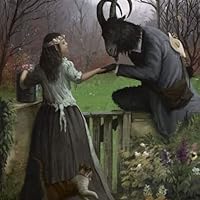
I bought this book for the Dave McKean illustrations, but it is a fantastic treasure chest of authors of London.

February 3, 2025
Brilliant stuff. Plenty of London lore and a long list of books to read.
Displaying 1 - 6 of 6 reviews