Clara Luna's name means "clear moon" in Spanish. But lately, her head has felt anything but clear. One day a letter comes from Mexico, written in Spanish: Dear Clara, We invite you to our house for the summer. We will wait for you on the day of the full moon, in June, at the Oaxaca airport. Love, your grandparents.
Fourteen-year-old Clara has never met her father's parents. She knows he snuck over the border from Mexico as a teenager, but beyond that, she knows almost nothing about his childhood. When she agrees to go, she's stunned by her grandparents' life: they live in simple shacks in the mountains of southern Mexico, where most people speak not only Spanish, but an indigenous language, Mixteco.
The village of Yucuyoo holds other surprises, too-- like the spirit waterfall, which is heard but never seen. And Pedro, an intriguing young goatherder who wants to help Clara find the waterfall. Hearing her grandmother’s adventurous tales of growing up as a healer awakens Clara to the magic in Yucuyoo, and in her own soul. What The Moon Saw is an enchanting story of discovering your true self in the most unexpected place.
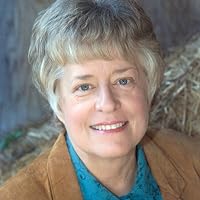
Laura Resau is the author of The Alchemy of Flowers, The River Muse, and eleven acclaimed books for children and teens. Her books have garnered nineteen starred trade reviews, five Colorado Book Awards, and spots on “best-of” book lists from Oprah, School Library Journal, and the American Library Association. Trilingual, she’s lived in Provence and Oaxaca, and has a background in cultural anthropology, languages, and ESL. She teaches graduate creative writing at Western Colorado University. You might find her writing in her cozy vintage trailer in Fort Collins, Colorado, where she lives with her rock-hound husband, musician son, wild husky, and a hundred house plants.
On the back of the paper jacket, a reviewer is quoted as saying that this is "a story that makes me want to be a better person, a story that touched my soul." That appealed to me, although I'd never heard of the author, Laura Resau.
The first couple of chapters were okay, but then I was dropped into rural Mexico, which is several hours by primitive road from Oaxaca (pronounced Wa-HA-ca). That's when the story caught my interest. Through the eyes of a 14-year-old girl from Baltimore, we are given a glimpse of her paternal grandparents' world, with their customs and beliefs. The people in this village are still closely connected to the land.
The grandmother, Abuelita, is a healer who invited her granddaughter to stay with them for two months. As Clara comes to understand the village and her grandparents, Abuelita's story unfolds.
Emigration is at the core of the story -- from the point of view of the family members left behind and the impact on the children of fathers who go north.
Clara, whose father has encouraged her to be aware of the plants and animals in their neighborhood, adjusts readily to her new setting (much more easily than most children would). Here are a few quotes that illustrate the peoples' connection with the land.
p. 60 What I love about making maps is that they tell you what to notice. My map showed landmarks like the high rock face, with its scars and wrinkles, ... when I draw these kinds of things, I notice them more the next time I pass by. I've never drawn a map, but my mental maps always include natural features.
p. 96 Here in Yucuyoo we have a saying: The land is our body and its streams are our blood. I wonder how many people in the U.S. feel this way. (Woefully few, I fear.)
p. 106 There was a high stone wall and on the other side, a tree. A huge old tree, as wide as I am tall. A tree whose branches gave shade for the grandmothers to gather and talk, for the children to play. Then one day a man came to town and bought the piece of earth on the other side of the wall. ... So do we really own our trees? Or are we caretakers?
I'll watch for other books by this author.
Aside: Apparently Hans Christian Andersen wrote a fairy tale titled 'What the Moon Saw.' I wonder if that has anything to do with the title of this book. http://hca.gilead.org.il/moon_saw.html
I wanted to read another book by Laura Resau but my library didn't have it, and I got this one instead. Good introduction to this author. It's a coming of age story about a girl coming to terms with her Mexican heritage. Reading it I was jealous of her 2 month vacation away from our world, so busy and fast that you never have time to stop and really enjoy it. The descriptions of the landscape and the food in this book were good enough to mentally transport me to the middle of nowhere, Mexico and it proved to be a very relaxing read. There's enough history of Mexico in this book to leave you wanting to learn more, but without being a very deep, long, historical book. And most of all, I related to it as an immigrant myself. This book really shows how hard it is for some to leave everything behind, after years, and decades, we don't forget where we come from. And yet others completely assimilate and are able to forget their past, their culture. I'm not saying either one is right, just interesting food for thought.
Some intense bits, but mostly a joyful read about a good kid from a loving family who is fortunate enough to discover her 'calling' before high school. Big diversity points, and the story-within-the-story counts as historical fiction.
For a cough, "boil oregano, chamomile, and garlic. Then add juice of a whole lime and three spoonfuls of honey. Drink a cup of it three times a day."
Two brief glossaries, in Spanish and in Mixteco. It would have helped me if I'd seen that early, because the village Yucuyoo is pronounced "yo-koo yohoh" which makes more sense than my stumbling.
This book was actually really good! It was a cute, easy read. I liked the story and kind of wish there was a sequel because I'm curious about what happened after it ended!
Clara has received an invitation to go visit her father's parents in Mexico, and she's a little intrigued, but mostly scared. Her father left many years ago and rarely looked back, and now she's expected to go to a place with no electricity, all they speak is Spanish (hers is rusty) and she won't know anyone? But something Clara hasn't told her parents is that she's been feeling restless, so this two month visit might just be what she needs to 'find herself'. So, Clara accepts the invitation and begins to learn all about what life was like for her father as a child. By the end of the summer, she appreciates all the flowers and herbs her grandmother teachers her about, and she has perfected making tortillas by hand.
This is a book of self-discovery, as well as a glimpse into life in rural Mexico (especially in Yucuyoo). Clara is an interesting character who truly grows and develops throughout the book. Readers will even want to know what happens next summer, as she promises Pedro, a neighbor boy, that she will come back to visit. Learning and appreciating one's roots is an important theme, as well as being grateful for what you have. Young readers who are in the world Clara starts out in (filled with CDs, DVD players, cars, Internet...) will be able to connect with Clara as she comes to terms with being in a place with few people and no electricity. There is Spanish and Mixteco sprinkled throughout the book (some get direct translations afterwards) and a glossary is included at the back.
What the Moon Saw by Laura Resau is the story of a 14 year old American girl named Clara Luna. She is at the age where she is trying to figure out just who she is. Her father, as a teen, came to America from Mexico, but that is all she knows about her father’s childhood. His family remains a mystery. One day Clara receives a letter from her father’s parents, Clara’s grandparents, who still live in the mountains of southern Mexico in a shack outside of the village of Yucuyoo. They invite her to visit. The invitation takes Clara and her family by surprise, but Clara decides to accept.
Clara’s journey and stay in Mexico is an enchanting story. Away from malls, cell phones, computers and friends, Clara learns about her ancestors and the area where her father grew up. She learns that living more simply can open your heart and soul to the magic of the world. Laura Resau’s writing paints a living, breathing picture that will have you wishing for less “things” and more time to explore life. I highly recommend What the Moon Saw.
Plot - 29/30 Writing – 19/20 Characters - 18/20 Creativity - 18/20 The *Wow* Factor - 9/10 Grand Total - 94/100
Grade – A
Review -
I read this book over a year ago, so my memories of it aren't as clear as with a book I just read. But I do remember how wonderful it was! When the story began, Clara Luna seemed pretty much like a normal American teenager, and remains so when she meets her grandparents in Mexico. She undergoes a transformation as she learns about her history, culture, and healing abilities. I also enjoyed the chapters about her grandmother's girlhood. The mystical elements mix well with the realistic parts of the story. I also enjoyed reading about Clara's relationship with Pedro and their adventures. Laura's writing was almost poetic and drew me into the story, and the ending satisfied me. I would recommend this beautiful book to anyone, especially if they are interested in Mexico, healers, and coming of age stories.
This is Laura Resau’s debut novel and from the very first, she had me hooked! Clara Luna is a modern teen living a middle class, convenience-filled life in the Bay Area. When she gets an invitation to visit her paternal grandparents whom she’s never met, she’s in for big surprises. Their home in southern Mexico is worlds away from her home in more ways than she imagines. After the initial culture shock of arriving in a small village with no electricity or indoor plumbing, Clara starts to absorb the ways of her grandparents. She learns healing techniques from her grandmother, how to live more simply, she experiences a first love and a life-threatening adventure in an underground waterfall. Laura Resau is a talented author who can paint pictures with words and whisk you away to a different time and place with such detail and emotion that you hate to see the story end. I highly recommend her other novels, especially the Notebook series.
4 1/2 stars Ooo, I really liked this one. I find language and culture fascinating, so it's not much of a suprise that I like it. I also liked that I was able to translate the bits of Spanish that were interwoven into the book (they're translated into English for non-Spanish-speakers). I think that this was a very well written book that fully deserved the LoneStar award (a TX award given to a list of books each yr). Some of the LoneStars are not so great, but this one lived up to my expectations.
As a new Laura Resau, I found this book pretty good. I liked how I was able to relate to the main character, Clara. Like her, I probably wouldn't have wanted to go to visit my long-lost grandparents over the summer. As the book progressed, I enjoyed the transitions from Clara's time and Helana's time. I really like hearing how strong and cool her grandparents are. This book made me think a lot and I really liked it. It was interesting to hear about another culture and I enjoyed hearing about their way of life.
This was a beautiful, lyrical novel of a teen girl from Maryland who discovers her roots in Oaxaca, Mexico. I picked it up because I'd recently met some families from there and thought it would be interesting. The writing is sweet and lovely as it tells Clara's story of visiting her grandparents for the summer, learning their history, and finding herself. She learns about herself as she learns about her grandmother's past and her abilities as a healer. The story is told with love for the area and the people.
i can really connect to clara. how she does not know much of her fathers past and family. this book helped me learn more of who i am and where i come from. after i read this book i had a really deep talks with my dad. i started asking him things about his life and family. i learned alot,me and my dad bonded through the talks we had. this book helped me want to know more of my family and my self. this book was one of the most wonderfull books i read in a long time.
I'm trying to read books based in other cultures. This book was amazing! It is based in the mountains of Mexico and mixes a lot of culture into the writing, without you really noticing. The writing is extremely figurative and filled with metaphors...I thoroughly enjoyed it and I'm thinking of putting it on my 7th graders' reading list because it is really a story of coming to realize how shallow all the possessions in America are.
I stumbled across this book while searching for something else. Glad I did. I enjoyed the dilemmas of a suburban teenage girl who chooses to spend a summer in the remote Mexican village where her father grew up. There's humor, drama, a touch of romance, and hints of magic in the gift for healing that the girl clearly shares with her grandmother.
I would actually give this book 3 3/4 stars. The stories of Clara and her grandmother, Helena, are woven together as Clara visits her grandparents in their small village in Mexico.
In this beautiful book called What the Moon Saw by Laura Resau, the author uses very strong imagery to show us the powerful message that change will not happen until you let it, or make a move to change to get what you want. This is shown by using a problematic social issue of poverty. The author portrays this message in various different places using the well used craft move of imagery and, the author also used some symbolism to further deepen the meaning. Although the book has many different important meanings, but it has a prominent meaning that the author portrays perfectly.
An example of this is when Pedro is talking to Clara about how his father left his family, it is on page 166, “... he said he saw my father there. He was married and had children. He has a whole new family now. He forgot about us here.” We rounded the bend, out of the sunshine, down into the shadows.here moss hung from tree branches.” This is when Pedro was talking to Clara about how his father has not come home because of his new family. In the story, Pedro’s dad is a bad character, but in this claim, he is almost a inspirable character. Because even though he left his family to go make money in America, he had a goal in mind and made a move to achieve it. Imagine how hard it is for people in Mexico, only 60% of of people in Mexicans from ages 15 to 64 have jobs. It is understandable that Pedro is mad, but he should try to follow his father’s footsteps and try to accomplish his dream. This is also an example of strong example of imagery and symbolism. This uses strong imagery because you can see the forest around you as Pedro is talking, with the light shining through the trees. Not only does this piece of evidence show imagery, but it also shows strong symbolism. “We rounded the bend, out of the sunshine, down into the shadows. Here moss hung from tree branches.” this part shows symbolism because what Clara and Pedro are talking about is sorrowful so “out of the sunshine” which means that they walked into the shadows, representing the sadness of the scene.
Unlike his father, Pedro can’t choose his own path in life. He has chose to be a goat herder and stay with his mom and being there for the family. Even though he loves music, he knows in his heart that he will never play but, he still plays every chance he can. He may have had the power before his dad left but after, he lost it. Evidence shows that 60% of mexican immigrants want to move back to their families. This can connect to in the first years he was still wiring money showing he wanted to come back and he was part of the 60%. Then he started to stop showing he was learning to go with it started a new life. I think if I were to look at newer evidence that number would be lower because people are starting to make new lives in there new world. I think that people want to go back in there first year is because they are living in poverty, they don’t have any money, a home, or a job. This is the time when they can only think about there family and they want to go back so they would have a job and a life. Most of the people in Mexico who move to the USA for a different life come because they are living in poverty and don’t have a lot of money. For example, on page 102 “Pedro sang everywhere we went.” “he sang thought the dark starry nights” This evidence shows how the author used craft moves (imagery) to show how pedro’s love for singing might get in the way of what him job is, a goat herder.
An Example is Silvia. From page 120, Silvia started of as a spoilt brat, and she did not care at all about Helena. She kept on saying things like “ It’s not even lunchtime and I am already bored” while pouting, on page 118, and “Someone thought that I was a maid once. That’s why I always wear fancy dresses at the market now. And powder my face white.” on page 119. The author shows this using imagery because on page 86, the author describes Silvia as “She sat slouched, staring at herself in a mirror. First she pouted her lips like a grumpy baby…”. Even though Helena wanted to be like sisters with her, she did not treat her well and bossed her around. She thought that Helena was just there to make her life easier, and she had the power over her. But when Helena got arrested for doing nothing, she changed. She found out that her mother had set up Helena. On page 153, she decided she wanted to change. She decided that it was enough, and stood up for Helena and did what was right. This is what Pedro needs to do.
An example is Clara because on page 20 she says, “What I came up with was a little adobe house with red flowers in the window boxes and a neat fenced-in garden and a small TV, small car and small old refrigerator .” This teaches us how her standards of living is way higher than her grandmother in Yucuyoo. On the article I read, it said that 65% of the mexican population have TV’s, and 60% of the population have a well paying jobs. Which just shows us how mexico is a developing country which is emerging to a developed country. And on the other hand, on page 36 it says that “There was only three wooden chairs and a table, not even a TV, not even a sofa or a chair.”Clara was so used to her life in Maryland, where she had all the that when she visited her grandparents in Yucuyoo, she realized that not everything is “sunshine and rainbows” and that there are dark clouds in life. Moreover, she realizes that she has to adapt to the dark clouds in life that will not always fit her normal lifestyle, But, as time goes by it will turn into a sunshine which will teacher her that the entertainments she has back in Maryland is only a small part of her life. To sum up, the author uses imagery in the evidence stated above that adapting to a change in life is important.
As we have learnt with everyone’s stories and flashbacks, change will not happen unless you make a move toward changing what you want. Pedro’s father was not happy with his situation in Yucuyoo because he wanted to chase a dream that he could not there. He wanted to become wealthier and so he decided to move forward and change. He moved to America where he lives a happy life. Similarly, first Pedro kept on feeling despair on his lost father and did not do anything to change it. This is why he kept on feeling sad and regret. But on page 248, he decided to do something about it and sent a message to his dad in America. Another person who changed is Silvia. Silvia was first very spoilt and bratty and could not care less about Helena. But when her mother hatched an evil plan that got Helena in hot water, she decided that it was enough. She willed herself to change and exposed her mother for the crime. Furthermore, Clara was first fixed in thinking that she was going to be bored in Yucuyoo but when she decide to change, she realized how wonderful Yucuyoo was and she found what she actually valued in life. All of these people have proven that no matter how big the dream, you will never be able to grasp it until you walk forward and turn that dream into reality.
In this beautiful book called What the Moon Saw by Laura Resau, the author uses very strong imagery to show us the powerful message that change will not happen until you let it, or make a move to change to get what you want. This is shown by using a problematic social issue of poverty. The author portrays this message in various different places using the well used craft move of imagery and, the author also used some symbolism to further deepen the meaning. Although the book has many different important meanings, but it has a prominent meaning that the author portrays perfectly.
An example of this is when Pedro is talking to Clara about how his father left his family, it is on page 166, “... he said he saw my father there. He was married and had children. He has a whole new family now. He forgot about us here.” We rounded the bend, out of the sunshine, down into the shadows.here moss hung from tree branches.” This is when Pedro was talking to Clara about how his father has not come home because of his new family. In the story, Pedro’s dad is a bad character, but in this claim, he is almost a inspirable character. Because even though he left his family to go make money in America, he had a goal in mind and made a move to achieve it. Imagine how hard it is for people in Mexico, only 60% of of people in Mexicans from ages 15 to 64 have jobs. It is understandable that Pedro is mad, but he should try to follow his father’s footsteps and try to accomplish his dream. This is also an example of strong example of imagery and symbolism. This uses strong imagery because you can see the forest around you as Pedro is talking, with the light shining through the trees. Not only does this piece of evidence show imagery, but it also shows strong symbolism. “We rounded the bend, out of the sunshine, down into the shadows. Here moss hung from tree branches.” this part shows symbolism because what Clara and Pedro are talking about is sorrowful so “out of the sunshine” which means that they walked into the shadows, representing the sadness of the scene.
Unlike his father, Pedro can’t choose his own path in life. He has chose to be a goat herder and stay with his mom and being there for the family. Even though he loves music, he knows in his heart that he will never play but, he still plays every chance he can. He may have had the power before his dad left but after, he lost it. Evidence shows that 60% of mexican immigrants want to move back to their families. This can connect to in the first years he was still wiring money showing he wanted to come back and he was part of the 60%. Then he started to stop showing he was learning to go with it started a new life. I think if I were to look at newer evidence that number would be lower because people are starting to make new lives in there new world. I think that people want to go back in there first year is because they are living in poverty, they don’t have any money, a home, or a job. This is the time when they can only think about there family and they want to go back so they would have a job and a life. Most of the people in Mexico who move to the USA for a different life come because they are living in poverty and don’t have a lot of money. For example, on page 102 “Pedro sang everywhere we went.” “he sang thought the dark starry nights” This evidence shows how the author used craft moves (imagery) to show how pedro’s love for singing might get in the way of what him job is, a goat herder.
An Example is Silvia. From page 120, Silvia started of as a spoilt brat, and she did not care at all about Helena. She kept on saying things like “ It’s not even lunchtime and I am already bored” while pouting, on page 118, and “Someone thought that I was a maid once. That’s why I always wear fancy dresses at the market now. And powder my face white.” on page 119. The author shows this using imagery because on page 86, the author describes Silvia as “She sat slouched, staring at herself in a mirror. First she pouted her lips like a grumpy baby…”. Even though Helena wanted to be like sisters with her, she did not treat her well and bossed her around. She thought that Helena was just there to make her life easier, and she had the power over her. But when Helena got arrested for doing nothing, she changed. She found out that her mother had set up Helena. On page 153, she decided she wanted to change. She decided that it was enough, and stood up for Helena and did what was right. This is what Pedro needs to do.
An example is Clara because on page 20 she says, “What I came up with was a little adobe house with red flowers in the window boxes and a neat fenced-in garden and a small TV, small car and small old refrigerator .” This teaches us how her standards of living is way higher than her grandmother in Yucuyoo. On the article I read, it said that 65% of the mexican population have TV’s, and 60% of the population have a well paying jobs. Which just shows us how mexico is a developing country which is emerging to a developed country. And on the other hand, on page 36 it says that “There was only three wooden chairs and a table, not even a TV, not even a sofa or a chair.”Clara was so used to her life in Maryland, where she had all the that when she visited her grandparents in Yucuyoo, she realized that not everything is “sunshine and rainbows” and that there are dark clouds in life. Moreover, she realizes that she has to adapt to the dark clouds in life that will not always fit her normal lifestyle, But, as time goes by it will turn into a sunshine which will teacher her that the entertainments she has back in Maryland is only a small part of her life. To sum up, the author uses imagery in the evidence stated above that adapting to a change in life is important.
As we have learnt with everyone’s stories and flashbacks, change will not happen unless you make a move toward changing what you want. Pedro’s father was not happy with his situation in Yucuyoo because he wanted to chase a dream that he could not there. He wanted to become wealthier and so he decided to move forward and change. He moved to America where he lives a happy life. Similarly, first Pedro kept on feeling despair on his lost father and did not do anything to change it. This is why he kept on feeling sad and regret. But on page 248, he decided to do something about it and sent a message to his dad in America. Another person who changed is Silvia. Silvia was first very spoilt and bratty and could not care less about Helena. But when her mother hatched an evil plan that got Helena in hot water, she decided that it was enough. She willed herself to change and exposed her mother for the crime. Furthermore, Clara was first fixed in thinking that she was going to be bored in Yucuyoo but when she decide to change, she realized how wonderful Yucuyoo was and she found what she actually valued in life. All of these people have proven that no matter how big the dream, you will never be able to grasp it until you walk forward and turn that dream into rea
This book is beautiful! It really touched the deepest of my heart. It reminded me of my own abuelita, my Mexican family and also the sadness of leaving my country. I recommend this book to everyone, it is a very wonderful narrative that touches the soul.
This is my second book by this author and I love her richly drawn characters. I enjoyed both main characters and their stories. I also loved the Oaxaca setting.
In this beautiful book called What the Moon Saw by Laura Resau, the author uses very strong imagery to show us the powerful message that change will not happen until you let it, or make a move to change to get what you want. This is shown by using a problematic social issue of poverty. The author portrays this message in various different places using the well used craft move of imagery and, the author also used some symbolism to further deepen the meaning. Although the book has many different important meanings, but it has a prominent meaning that the author portrays perfectly.
An example of this is when Pedro is talking to Clara about how his father left his family, it is on page 166, “... he said he saw my father there. He was married and had children. He has a whole new family now. He forgot about us here.” We rounded the bend, out of the sunshine, down into the shadows.here moss hung from tree branches.” This is when Pedro was talking to Clara about how his father has not come home because of his new family. In the story, Pedro’s dad is a bad character but in this claim, he is almost a inspirable character. Because even though he left his family to go make money in America, he had a goal in mind and made a move to achieve it. Imagine how hard it is for people in Mexico, only 60% of of people in Mexicans from ages 15 to 64 have jobs. It is understandable that Pedro is mad, but he should try to follow his father’s footsteps and try to accomplish his dream. This is also an example of strong example of imagery and symbolism. This uses strong imagery because you can see the forest around you as Pedro is talking, with the light shining through the trees. Not only does this piece of evidence show imagery, but it also shows strong symbolism. “We rounded the bend, out of the sunshine, down into the shadows. Here moss hung from tree branches.” this part shows symbolism because what Clara and Pedro are talking about is sorrowful so “out of the sunshine” which means that they walked into the shadows, representing the sadness of the scene.
Unlike his father, Pedro can’t choose his own path in life. He has chose to be a goat herder and stay with his mom and being there for the family. Even though he loves music, he knows in his heart that he will never play but, he still plays every chance he can. He may have had the power before his dad left but after, he lost it. Evidence shows that 60% of mexican immigrants want to move back to their families. This can connect to in the first years he was still wiring money showing he wanted to come back and he was part of the 60%. Then he started to stop showing he was learning to go with it started a new life. I think if I were to look at newer evidence that number would be lower because people are starting to make new lives in there new world. I think that people want to go back in there first year is because they are living in poverty, they don’t have any money, a home, or a job. This is the time when they can only think about there family and they want to go back so they would have a job and a life. Most of the people in Mexico who move to the USA for a different life come because they are living in poverty and don’t have a lot of money.
An Example is Silvia. Silvia started of as a spoilt brat, and she did not care at all about Helena. Even though Helena wanted to be like sisters with her, she did not treat her well and bossed her around. She thought that Helena was just there to make her life easier, and she had the power over her. But when Helena got arrested for doing nothing, she changed. She found out that her mother had set up Helena. She decided she wanted to change. She decided that it was enough, and stood up for Helena and did what was right. This is what Pedro needs to do. An example of this is on page 102 “We talked about everything like movies and family. Then we sang songs everywhere we went.” this shows how passionate he is about his music.
An example is Clara because on page 16 she says, “I started a list of what I would take on the trip”. Although it was just a small part of her life, she thought the DVD’s and CD’s and black shoes were a big part of her life. On the article I read, it said that 65% of the mexican population have TV’s, and 60% of the population have a well paying jobs. Which just shows us how mexico is a developing country which is emerging to a developed country. And on the other hand, on page 36 it says that “There was only three wooden chairs and a table, not even a TV.” Clara was so used to her life in Maryland, that when she visited her grandparents in Yucuyoo, she realized that not everything is “sunshine and rainbows” and that there are dark clouds in life.
I first read What the Moon Saw two summers ago and absolutely loved it. It’s such a sweet story. It doesn’t have the harshness or grittiness like some of the books we’ve reviewed for Vamos a Leer. It won’t break your heart the way Aristotle and Dante Discover the Universe does. Yet, it’s a beautifully written and moving read. I couldn’t put it down.
One of my favorite lines comes early on in the book during a conversation between Clara and Abuela: “The most beautiful things in life are unexpected, Clara. They tear at the fabric of the everyday world. The world of patting tortillas and fetching water and washing dishes. They show you the deeper world, where you talk with the spirits of trees. Where you see the silvery threads connecting a leaf to a star to an earthworm” (p. 42). The longer Clara is in Yucuyoo with her grandparents, the more she comes to realize the truth in her grandmother’s words. Away from the suburbs of Walnut Hill, Clara’s understanding of the world changes drastically. She begins to see how those threads connect us to the world and the people we love. This change of perspective is also the impetus for Clara to reflect on who she is, what she values, and the kind of person she wants to be. Like many teenagers, Clara struggles with her identity and the desire to fit in. Early on in the novel, Clara is a girl who fits in among her friends at school, yet she’s restless. While she doesn’t realize it, she’s searching for something more—“Now do you understand, Clara? Why your spirit was restless? I thought for a moment. “Because I was looking for something, but I didn’t know what it was. Something hidden. The thing that makes me feel alive” (p. 174). In Yucuyoo she finds what she’s looking for and allows herself to become the person she wants to be, not the person that her best friends from back home think she should be. While not filled with the angst of many books that tackle similar themes, Clara’s transformation is still quite powerful and has the potential to provide the space for classroom discussions around identity, values, and acceptance.
Set in the village of Yucuyoo, in Oaxaca, Mexico What the Moon Saw is an excellent book to use to teach literacy through Social Studies. Through Resau’s novel, students will learn about what rural indigenous life in Oaxaca, Mexico is like. Just as regions of the United States vary greatly, so do the countries of Latin America. Often our students get overly simplified pictures of what life is like in other countries, this book provides the opportunity to teach about the diversity of Mexico through discussions of indigenous groups and languages in Mexico. Resau references both Spanish and Mixteco words, demonstrating that not everyone in Mexico speaks just Spanish. As Clara’s father’s story unfolds, connections to the contemporary issues surrounding immigration are easy to draw out. The novel encourages students to move beyond polarizing statements about immigration and to think about it on a more personal level. Clara’s father’s experience could easily be the catalyst to discuss questions such as—What must one give up or sacrifice to immigrate? Why do people feel pressured to immigrate? What about the family left behind, what happens to them? How does immigration affect families who are separated?
It’s the perfect book for younger teenage readers. It grapples with the same issues of identity that many of our students are struggling through. It provides the space to discuss important contemporary issues, while also providing content knowledge about Mexico. I’m not alone in thinking it’s a book that should be on our classroom and library shelves. What the Moon Saw has been given a number of awards and recognitions: Colorado Book Award Winner (2007); Arizona Young Adult Book Award Winner, Arizona Library Association (2007); Américas Award Honorable Mention (2007); Booklist Top 10 First Novels for Youth (2006); Notable Social Studies Trade Book for Youth (2006); School Library Journal Pick of the Week (Aug. 28, 2006)
I hadn't realized this was a young adult book until I started reading it, but I think my 11-yr-old self would have enjoyed it. It flirted too much with magic and spirits for my adult self to be satisfied, but I did like watching Clara become open to understanding the world, her family, and herself in deeper ways.
What a lovely, lovely book! I highly recommend it! It starts out slowly, and the chapters are quite long, but the pace builds and one's love for the characters grows deeper with each passing page.
Fourteen-year-old Clara is an American girl who suddenly has the opportunity to meet her father's parents for the first time and to spend the summer with them in Mexico. Her grandmother is a healer, and Clara learns that she is, too. She reconnects with nature and her family and her past and future, and falls in love.
From an educational point of view, this is a book I will be recommending to my upper-grades students quite a lot because it deals with themes of family relationships, and cultures and straddling cultures, even within the same country. Clara's grandparents are Mixteco, indigenous Mexicans. The book also investigates themes of class and skin color and what it means to be rich and poor, as well as what it means to be male and female. Drunkenness and domestic violence are minor themes and there is an allusion to rape.
These were my favorite lines:
"[W]hen people think no one is listening, their song reveals their soul." (p. 156)
"They say that deep in the middle of the earth is a chamber lit by candles. Thousands of candles. White candles. Some tall, some short, all different heights, standing in pools of wax. Each of these candles is a person's life. The tall ones are the newborn babies. They have a whole lifetime yet to live. The short ones are mostly very old people. People whose flame of life is just about to go out. And watching over these candles is the spirit woman in charge of life and death and healing. When a short stub is about to go out, she places a new candle over it. A tall candle. She presses it into the pool of wax. And a new life begins. There must be death for life to happen." (p. 161)
"Usually mushrooms taste like dirt to me, but these tasted like forest secrets. Like sunsets hiding in tree hollows." (p. 173)
In the book, What The Moon Saw, by Laura Resau, the author uses anecdotes to show readers how immigration impacts the way families are connected, and how one must learn to accept the boundaries of different cultures before learning that it does not restrict them. Generally, when someone close leaves, people grieve before learning to move on. This is beautifully portrayed on page 103 where it says, “ When he left, people cried for days.” Pedro, a village boy, is telling a story about his old teacher, Marcus. This points towards the idea that immigration is restricting many people from the view of freedom as they mourn the loss of a close one. The values of townspeople is explicitly shown to be people who treasure family, and people who believe in returning to family while immigration is against these. However, Pedro shows a great amount of maturity and understanding as he later explains, “Instead of crying, I played it all the time.” This illustrates how Pedro has overcome the barriers of immigration by using the skill, playing the guitar Marcus has taught him. The maturity of his choices also affects is view on immigration, for he starts to understand immigration is a form of freedom. As such, the town should take the old advice that, “You have to leave something good to get something better.” If people become more accepting of how immigration leads to freedom, they shall be able to accept it, and decide to keep in touch. However, although Pedro got over Marcus leaving, he didn’t get over his father leaving. If you thought your father was dead only to hear someone say they saw them, you would feel the same. Yet, the ending journey of change for Pedro is finally shown on page 243, “ Maybe I need to make the first move.” This illustrates a state of closure when Pedro is able to grow from his fallacy of immigration. Here, he is able to understand that he must move first if he wants to be connected with his father. All in all, individuals must understand that one must cross the boundaries of countries to push the boundaries of a family if they truly believe in love.