

What do you think?

Somebody to Love: The Life, Death and Legacy of Freddie Mercury
When Freddie Mercury died in 1991, aged just 45, the world was rocked by the vibrant and flamboyant star's tragic secret that he had been battling AIDS. The announcement of his diagnosis reached them less than 24-hours before his death, shocking his millions of fans, and fully opening the eyes of the world to the destructive and fatal disease.
In Somebody to Love, biographers Mark Langthorne and Matt Richards skilfully weave Freddie's pursuit of musical greatness with Queen, his upbringing and endless search for love, with the origins and aftermath of a terrible disease that swept across the world in the 1980s. With brand new perspectives from Freddie's closest friends and fellow musicians, this unique and deeply moving tribute casts a very different light on his death. An intimate read, like Freddie and his art, it will stay with you for a long time to come.
In Somebody to Love, biographers Mark Langthorne and Matt Richards skilfully weave Freddie's pursuit of musical greatness with Queen, his upbringing and endless search for love, with the origins and aftermath of a terrible disease that swept across the world in the 1980s. With brand new perspectives from Freddie's closest friends and fellow musicians, this unique and deeply moving tribute casts a very different light on his death. An intimate read, like Freddie and his art, it will stay with you for a long time to come.
448 pages, Paperback
First published November 3, 2016
Ratings & Reviews
Friends & Following
Create a free account to discover what your friends think of this book!
Community Reviews
Displaying 1 - 30 of 455 reviews

August 21, 2018
This book offered not only a great background on Freddie Mercury and Queen, but on the western HIV/AIDS outbreak and epidemic of the 1980's and 90's as well.
Before I get started though, here's my own personal stock "biography review blurb," so to speak:
Any biography is written by a human (who may or may not have their own agenda) and recollected by more humans (whose recollections are skewed by time and perhaps their own ideas of what they want to remember happening and not necessarily what actually happened). All these things are subjective and inherently fallible. As a reader, you can never truly attest to the accuracy of any biography (or any autobiography for that matter), merely the enjoyment you garner from reading it.
As such, my reviews of biographies and autobiographies are never a review or judgement of someone's life, but simply my own reflection of how interesting I found the work and/or my own gut feeling of how reliable the information therein seemed at the time I read it.
Now, with that out of the way...
I have always adored Queen and their music and I ADORE Freddie Mercury. I've read a lot of books about them/him before joining GR, but felt like re-reading this one in preparation for the upcoming movie.
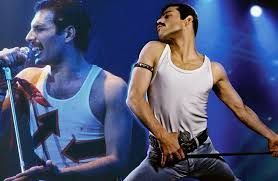
Something about Freddie Mercury has always intrigued me.
He was a true showman in concert, and yet, by his own admission, that was a personality he wore like a cloak for the stage. And while he (and Queen) were well known for their blatant hedonism, i.e., post show parties and free and gratuitous sex, Freddie was also known to be VERY private, shy, and reserved in many ways.
He rarely gave interviews and refused to talk to the press (and even his close friends, really) about his childhood/life before becoming "Freddie Mercury." In fact, it could be argued that his being sent away to boarding school and separated from his family at such a young made it veritably impossible for him to ever trust and get truly close to anyone in life as a result.
It was also undoubtedly difficult for him to be someone not purely heterosexual in an environment where it wasn't really accepted at that time. In seems foreign in light of the way things are today, but in the 1970's and 80's, a gay rock star just wasn't done. Even David Bowie, who proudly claimed his bisexuality still went home to a wife, thus making him "straight" enough in the eyes of a populace not yet ready to accept blurry personal sexuality lines the way we are today.
And while it's a shame that Freddie was never able to truly be himself, either because of the fear of backlash from the public or backlash from his religiously conservative parents, who knows if he even wanted to. I feel like Freddie was someone who enjoyed teasing people with ambiguity. He didn't like explaining his song lyrics in the same way he never truly answered questions about his sexuality and, in my opinion, that sense of mystery is a star quality missing from celebrities today.
These days, celebrities are TOO accessible. They Tweet their breakfast, they Instagram their workouts, they share personal family photos. And while that IS cool on some level - the fact that fans can connect so readily with their favorite actress or sports her0 - I also think there is something to be said for leaving some things to mystery.
But I digress.
As I stated at the beginning of this review, while this book told Freddie's story, it also paralleled Freddie's story with a basic timeline and history of how the HIV/AIDS virus went from being a virus affecting only chimpanzees in the African forest to becoming the global epidemic of the 80's and 90's, which I found very interesting. In fact, I might go look for a book on just that subject now.
All in all, I enjoyed this biography. Oddly enough, it quoted quite a bit from another biography I literally just read right before this one, which I thought was funny. Either way, reading both was very beneficial. I think I might also look for Jim Hutton's (Freddie's lover at the time of his death) biography, despite it getting poor reviews and being dubbed opportunistic, etc.
This is a good read for Mercury fans, although true diehards might already know or have already read about everything in this one. After all, it was published in 2016 and, outside the obviously independent research about AIDS, it pretty much just pulls information from other biographies that came before it. Maybe that makes it more comprehensive? Not sure. I'll you know after I finish reading all the other biographies, ha!
Before I get started though, here's my own personal stock "biography review blurb," so to speak:
Any biography is written by a human (who may or may not have their own agenda) and recollected by more humans (whose recollections are skewed by time and perhaps their own ideas of what they want to remember happening and not necessarily what actually happened). All these things are subjective and inherently fallible. As a reader, you can never truly attest to the accuracy of any biography (or any autobiography for that matter), merely the enjoyment you garner from reading it.
As such, my reviews of biographies and autobiographies are never a review or judgement of someone's life, but simply my own reflection of how interesting I found the work and/or my own gut feeling of how reliable the information therein seemed at the time I read it.
Now, with that out of the way...
I have always adored Queen and their music and I ADORE Freddie Mercury. I've read a lot of books about them/him before joining GR, but felt like re-reading this one in preparation for the upcoming movie.
Something about Freddie Mercury has always intrigued me.
He was a true showman in concert, and yet, by his own admission, that was a personality he wore like a cloak for the stage. And while he (and Queen) were well known for their blatant hedonism, i.e., post show parties and free and gratuitous sex, Freddie was also known to be VERY private, shy, and reserved in many ways.
He rarely gave interviews and refused to talk to the press (and even his close friends, really) about his childhood/life before becoming "Freddie Mercury." In fact, it could be argued that his being sent away to boarding school and separated from his family at such a young made it veritably impossible for him to ever trust and get truly close to anyone in life as a result.
It was also undoubtedly difficult for him to be someone not purely heterosexual in an environment where it wasn't really accepted at that time. In seems foreign in light of the way things are today, but in the 1970's and 80's, a gay rock star just wasn't done. Even David Bowie, who proudly claimed his bisexuality still went home to a wife, thus making him "straight" enough in the eyes of a populace not yet ready to accept blurry personal sexuality lines the way we are today.
And while it's a shame that Freddie was never able to truly be himself, either because of the fear of backlash from the public or backlash from his religiously conservative parents, who knows if he even wanted to. I feel like Freddie was someone who enjoyed teasing people with ambiguity. He didn't like explaining his song lyrics in the same way he never truly answered questions about his sexuality and, in my opinion, that sense of mystery is a star quality missing from celebrities today.
These days, celebrities are TOO accessible. They Tweet their breakfast, they Instagram their workouts, they share personal family photos. And while that IS cool on some level - the fact that fans can connect so readily with their favorite actress or sports her0 - I also think there is something to be said for leaving some things to mystery.
But I digress.
As I stated at the beginning of this review, while this book told Freddie's story, it also paralleled Freddie's story with a basic timeline and history of how the HIV/AIDS virus went from being a virus affecting only chimpanzees in the African forest to becoming the global epidemic of the 80's and 90's, which I found very interesting. In fact, I might go look for a book on just that subject now.
All in all, I enjoyed this biography. Oddly enough, it quoted quite a bit from another biography I literally just read right before this one, which I thought was funny. Either way, reading both was very beneficial. I think I might also look for Jim Hutton's (Freddie's lover at the time of his death) biography, despite it getting poor reviews and being dubbed opportunistic, etc.
This is a good read for Mercury fans, although true diehards might already know or have already read about everything in this one. After all, it was published in 2016 and, outside the obviously independent research about AIDS, it pretty much just pulls information from other biographies that came before it. Maybe that makes it more comprehensive? Not sure. I'll you know after I finish reading all the other biographies, ha!

February 18, 2017
Well, that wasn't what I expected.
A better title might have been "I Really Wanted to Write a Book about the History of AIDS, but I Want a Bigger Audience, So I'll Throw in Some Stuff about Queen and Freddie Mercury".
It was an interesting look at the AIDS epidemic, how the disease came about, and what's been done to help the many people who have it.
As for Freddie Mercury, I came away with the impression that the people closest to him weren't very forthcoming with this author. It read like he was reduced to digging through old news reports, and some minimal interviews with a couple of people. There was little to explain why he was so beloved, except for a few paragraphs as the very end. As a fan of the man, and of the group, I felt disappointed.
A better title might have been "I Really Wanted to Write a Book about the History of AIDS, but I Want a Bigger Audience, So I'll Throw in Some Stuff about Queen and Freddie Mercury".
It was an interesting look at the AIDS epidemic, how the disease came about, and what's been done to help the many people who have it.
As for Freddie Mercury, I came away with the impression that the people closest to him weren't very forthcoming with this author. It read like he was reduced to digging through old news reports, and some minimal interviews with a couple of people. There was little to explain why he was so beloved, except for a few paragraphs as the very end. As a fan of the man, and of the group, I felt disappointed.

July 31, 2018
I feel like I could write an entire review and just talk about biographies. Every biography is going to have false information or things that people misremember because they are written by humans based on information from other humans, and that is never going to be a completely accurate and honest portrayal of any person.
That being said, every time I read a biography I always take it with a grain of salt. I'm happy if the basic information is presented and written in a compelling manner. I don't really care if a biography has crazy rumor confirmations or salacious details, I just want a book about a person that I'm interested in that makes me more informed than I was before I read it, and that is also entertaining and engaging in the process. As far as those criteria go, I thoroughly enjoyed this book.
Even though this book is somewhat flawed (the writing isn't perfect), I still think it was the right choice as far as biographies about Freddie Mercury. I researched which were the best, and I couldn't find anyone who actually really liked or recommended a single one of them. People have high expectations for biographies, especially if they already know quite a bit about the person. I knew the very basics about Freddie, so this book was a good pick for my needs. It was published 2 years ago, so the writers were able to use a lot of source material. It kind of makes me want to read a biography about Freddie that was published a lot closer to his lifetime to see how different it is.
This book not only goes into detail about Freddie's life, but it also unflinchingly discusses his death and the origins of AIDS and how the pandemic spread across the world during Freddie's lifetime. So the reader typically gets a chapter or two about Freddie, and then there would be a chapter that goes into more detail about AIDS and what was happening with the virus during Freddie's timeline in the book. The authors are quick to note that most of the timeline for when Freddie contracted HIV and when he knew he had AIDS can only be speculation. Freddie was a very private person, and he told almost no one that he was seriously ill until it was so obvious that he couldn't hide it any longer. He valued his privacy so much that it was only hours before his death that he finally released a statement to the world saying that he had AIDS.
I found this book to be informative, entertaining, and incredibly sad. Knowing from the very beginning that Freddie had a limited amount of time to achieve everything he wanted was sobering, and made the entire book rather somber, even when Freddie was at the height of his success. The reader is constantly aware of a ticking clock, and it makes Freddie's story heartbreaking. I've loved Queen and Freddie since high school, so I'm wondering what took me so long to finally read a book about his life. Freddie died when I was a sophomore, so maybe I just needed to spend more time enjoying the music before I finally learned about the life behind the performer. And Freddie was certainly one of the greatest performers of the 20th century.
That being said, every time I read a biography I always take it with a grain of salt. I'm happy if the basic information is presented and written in a compelling manner. I don't really care if a biography has crazy rumor confirmations or salacious details, I just want a book about a person that I'm interested in that makes me more informed than I was before I read it, and that is also entertaining and engaging in the process. As far as those criteria go, I thoroughly enjoyed this book.
Even though this book is somewhat flawed (the writing isn't perfect), I still think it was the right choice as far as biographies about Freddie Mercury. I researched which were the best, and I couldn't find anyone who actually really liked or recommended a single one of them. People have high expectations for biographies, especially if they already know quite a bit about the person. I knew the very basics about Freddie, so this book was a good pick for my needs. It was published 2 years ago, so the writers were able to use a lot of source material. It kind of makes me want to read a biography about Freddie that was published a lot closer to his lifetime to see how different it is.
This book not only goes into detail about Freddie's life, but it also unflinchingly discusses his death and the origins of AIDS and how the pandemic spread across the world during Freddie's lifetime. So the reader typically gets a chapter or two about Freddie, and then there would be a chapter that goes into more detail about AIDS and what was happening with the virus during Freddie's timeline in the book. The authors are quick to note that most of the timeline for when Freddie contracted HIV and when he knew he had AIDS can only be speculation. Freddie was a very private person, and he told almost no one that he was seriously ill until it was so obvious that he couldn't hide it any longer. He valued his privacy so much that it was only hours before his death that he finally released a statement to the world saying that he had AIDS.
I found this book to be informative, entertaining, and incredibly sad. Knowing from the very beginning that Freddie had a limited amount of time to achieve everything he wanted was sobering, and made the entire book rather somber, even when Freddie was at the height of his success. The reader is constantly aware of a ticking clock, and it makes Freddie's story heartbreaking. I've loved Queen and Freddie since high school, so I'm wondering what took me so long to finally read a book about his life. Freddie died when I was a sophomore, so maybe I just needed to spend more time enjoying the music before I finally learned about the life behind the performer. And Freddie was certainly one of the greatest performers of the 20th century.

July 26, 2025
"There's more to Queen's enduring legacy than simply great songs and that, ultimately, is down to one man: Freddie Mercury. While Brian May, Roger Taylor, and John Deacon provided the instrumentation, always firmly in the background Freddie pranced, posed, preened, and performed like no one before or no one since. [.] Only in his last few years, during his fight against AIDS, did he become a staple figure in the gossip columns and tabloids. Then he achieved by default another level of public consciousness. And with his death, it seems he rose again." -- on pages 391-392
By what is presented in Richards & Langthorne's Somebody to Love (title copped from Queen's hit single in 1976), it appears that rock frontman Freddie Mercury - born Farrokh Bulsara in Zanzibar - was by all accounts a private and lonely man throughout his relatively brief 45 years. That should be problematic for a nearly 400-page bio, but smartly the authors also include informative chapters to track the genesis and development of the international AIDS epidemic in the latter part of the 20th century, notably as Mercury was one of the first celebrities to succumb to complications related to the illness. So Queen's 20-year history and music - especially that unparalleled stretch of hits from 1974 to 1981, 'Killer Queen' to the David Bowie duet 'Under Pressure,' and the monster tours that saw them breaking concert attendance records - are discussed, but usually kept at a polite level. (However, I did enjoy learning that Mercury composed Queen's supremely catchy 'Crazy Little Thing Called Love' - which I've always thought was a heartfelt nod to early Elvis rockabilly songs - in only ten minutes . . . while taking a bath. We should ALL be blessed with such talent!) So Queen fans beware - it is not, nor was it meant to be, a comprehensive chronicle of the band, but it is otherwise an often well-written (yet also occasionally depressing) account on their unique vocalist / songwriter.
By what is presented in Richards & Langthorne's Somebody to Love (title copped from Queen's hit single in 1976), it appears that rock frontman Freddie Mercury - born Farrokh Bulsara in Zanzibar - was by all accounts a private and lonely man throughout his relatively brief 45 years. That should be problematic for a nearly 400-page bio, but smartly the authors also include informative chapters to track the genesis and development of the international AIDS epidemic in the latter part of the 20th century, notably as Mercury was one of the first celebrities to succumb to complications related to the illness. So Queen's 20-year history and music - especially that unparalleled stretch of hits from 1974 to 1981, 'Killer Queen' to the David Bowie duet 'Under Pressure,' and the monster tours that saw them breaking concert attendance records - are discussed, but usually kept at a polite level. (However, I did enjoy learning that Mercury composed Queen's supremely catchy 'Crazy Little Thing Called Love' - which I've always thought was a heartfelt nod to early Elvis rockabilly songs - in only ten minutes . . . while taking a bath. We should ALL be blessed with such talent!) So Queen fans beware - it is not, nor was it meant to be, a comprehensive chronicle of the band, but it is otherwise an often well-written (yet also occasionally depressing) account on their unique vocalist / songwriter.

November 14, 2018
If you are looking for a well-rounded biography of Freddie Mercury, than I cannot recommend this book to you. This book is primarily interested in the most sensational aspects of Freddie Mercury's life, specifically, that he was a gay man who contracted AIDS and died. I found this problematic, and at times uncomfortably homophobic, for a text published in 2016.
This book parallels Mercury's story with that of the AIDS virus, and for those interested in the history of AIDS and HIV, there is some interesting material in this book. This does however tend to reduce Freddie Mercury's life, to the fact that he was a promiscuous gay man, who contracted HIV and died of AIDS. Even early accounts of his schooling tend to focus primarily on the question of how gay Freddie was at school. This results in some truly bizarre content, including a pseudo-scientific exploration of whether the trauma of being sent to boarding school turns boys gay. The author appears to be drawing a longbow here, linking Freddie Mercury's eventual death to his early life in boarding school. Frankly, it comes across a bit homophobic in an age when homosexuality is no longer considered a mental illness. In later sections, the book seems to dedicate an uncomfortably long time, trying to pinpoint the exact time, place and even sexual encounter, which likely resulted in Freddie's infection with HIV. I personally found this macabre, sensationalist and exploitative. I also took issue with the author's use of statistics (who knows how accurate or out of date) that seem to reinforce unhelpful stereotypes of gay men and women, as more promiscuous than heterosexual people and less likely to form lasting monogamous relationships.
This is the only biography I have read of Freddie Mercury. He appears to have been a very private person in life and perhaps there isn't a truly comprehensive alternative on the market. This book however, is less about Freddie Mercury's life than his death; at times reading more like a history treatise on the AIDS virus with some fun facts about a famous guy thrown in, to add interest and commercial appeal. For me it didn't really work. It left me feeling dirty.
This book parallels Mercury's story with that of the AIDS virus, and for those interested in the history of AIDS and HIV, there is some interesting material in this book. This does however tend to reduce Freddie Mercury's life, to the fact that he was a promiscuous gay man, who contracted HIV and died of AIDS. Even early accounts of his schooling tend to focus primarily on the question of how gay Freddie was at school. This results in some truly bizarre content, including a pseudo-scientific exploration of whether the trauma of being sent to boarding school turns boys gay. The author appears to be drawing a longbow here, linking Freddie Mercury's eventual death to his early life in boarding school. Frankly, it comes across a bit homophobic in an age when homosexuality is no longer considered a mental illness. In later sections, the book seems to dedicate an uncomfortably long time, trying to pinpoint the exact time, place and even sexual encounter, which likely resulted in Freddie's infection with HIV. I personally found this macabre, sensationalist and exploitative. I also took issue with the author's use of statistics (who knows how accurate or out of date) that seem to reinforce unhelpful stereotypes of gay men and women, as more promiscuous than heterosexual people and less likely to form lasting monogamous relationships.
This is the only biography I have read of Freddie Mercury. He appears to have been a very private person in life and perhaps there isn't a truly comprehensive alternative on the market. This book however, is less about Freddie Mercury's life than his death; at times reading more like a history treatise on the AIDS virus with some fun facts about a famous guy thrown in, to add interest and commercial appeal. For me it didn't really work. It left me feeling dirty.

December 3, 2020
Piecas asarainas zvaigznes rokmūzikas izcilākajam cilvēkam un tam, kurš uzrakstīja šo viņa biogrāfiju.
Šī grāmata nav tikai Fredija Merkurija dzīves gājums no bērnības līdz mokpilnajai nāvei. Autors pamatīgi iedziļinās arī AIDS atklāšanas un pētniecības vēsturē, lai lasītājam būtu vieglāk saprast, kāpēc brīžiem Merkurijs rīkojies tā un ne citādi.
Gluži tāpat ar homoseksualitāti, jo var gadīties, ka mūsdienu cilvēks vairs nesapratīs, kāpēc Merkurijs pats tā arī "neiznāca no skapja".
Atliek vien secināt, ka kopš 80. gadiem esam diezgan tālu tikuši, bet tas ir prasījis (pārāk) augstu cenu.
Šī grāmata nav tikai Fredija Merkurija dzīves gājums no bērnības līdz mokpilnajai nāvei. Autors pamatīgi iedziļinās arī AIDS atklāšanas un pētniecības vēsturē, lai lasītājam būtu vieglāk saprast, kāpēc brīžiem Merkurijs rīkojies tā un ne citādi.
Gluži tāpat ar homoseksualitāti, jo var gadīties, ka mūsdienu cilvēks vairs nesapratīs, kāpēc Merkurijs pats tā arī "neiznāca no skapja".
Atliek vien secināt, ka kopš 80. gadiem esam diezgan tālu tikuši, bet tas ir prasījis (pārāk) augstu cenu.

November 29, 2018
Volim glazbu. Volim rock. Volim Queen. Volim Freddija. Skakala sam od sriće kad su najavili ovu knjigu, no koliko sam bila ispunjena dok sam čitala knjigu toliko me i rastužila...Već sam čitala biografiju Queena od Laure Jackson i nisam ostala ravnodušna, ali ova me biografija dokrajčila...Bilo je i smijeha, i sriće, i iznenađenja, i tuge, i suza...cili spektar emocija...jer takav je bia i Freddie...pun ljubavi, topline, inspiracije, humora i ludosti a opet nekako usamljen i dalek...Koliko god se čovik zapita zašto je bia toliko lud, divlji, minja partnere i uništava sam sebe opet ga razumin s druge strane...jer je i on prije svega bia čovik od krvi i mesa i emocija...cili se život tražia i boria s unutarnjim demonima i svojom seksualnom orijentacijom...a na kraju, nažalost, i sa opakom bolešću...no, prije svega je tražia pravu ljubav (Somebody to love) i samoga sebe...Nažalost, opet se sve dogodilo prekasno u njegovom slučaju...Najlakše je osuđivat, ali većina nas nije bila u njegovoj koži u njegovo vrime kad je homofobija bila prisutna svugdi...Otiša je prerano...ali ono šta je ostavia za sobom će ostat zauvik...Najmoćniji vokal...najjači showman...jedan od boljih tekstopisaca...jedan jedini...jedinstveni Freddie..Kao što je i sam reka da on neće bit rock zvijezda nego legenda...i to je i uvik će ostat... Hvala ti <3
Show must go on.
Show must go on.
Inside my heart is breaking.
My make-up may be flaking,
But my smile still stays on.
Show must go on.
Show must go on.
Inside my heart is breaking.
My make-up may be flaking,
But my smile still stays on.

January 12, 2017
I was (and remain) a huge fan of Freddie Mercury and Queen, and I really thought this book was excellent. At first I was unsure about the medical chapters related to HIV/AIDS, thinking they were rather superfluous, but as I read along I realized that in terms of understanding the political atmosphere of the times, they really helped with context. I found the content to be balanced, and avoided being gossipy. My only wish is that they had been able to get the rest of the band to participate in assembling the book, rather than just relying on previously published interviews. Otherwise, it is an extremely interesting history of one of the great rock vocalists of all time and the disease with which he will forever be linked.

December 1, 2023
Great book.
August 9, 2017
Well done biography! As much of a great life story as a documentary of the HIV/AIDS crisis. A must-read for any Freddie/Queen fan!

November 5, 2018
this biography expertly weaves in the narrative of the AIDS crisis with the rise of Freddie Mercury and Queen, which is an innovative approach and really solidifies Freddie's legacy in both music and society. the biographers are detailed and specific, never embellishing or dramatizing anything (more than Freddie already did, that is) and connecting Freddie with the people around him in ways that made me think about the unpredictable shortness of life and the scope of humanity encompassed in one man who liked to dance and wear flamboyant clothes and had an otherworldly voice, but ultimately, just did his best to be himself in a world that wasn't ready for him.

May 4, 2019
I've been a Queen fan since I was a tot. I remember my dad and I sitting around listening to their greatest hits albums. It's a nostalgia thing for me. But I didn't know much about Mercury - he'd pass away when I was 6 years old and not only did I not know who he was but his illness meant very little to me because you know...I was 6. I'm glad I finally got around to reading about Freddie and his life.
Not only does this book delve into Mercury's life but it is sprinkled in with chapters discussing the AIDS epidemic. I enjoyed the back and forth and the further information on the epidemic - it would obviously play an important part in Mercury's story. I listened to the audio book and the narrator did great. I think my main qualm is the author seems to focus a bit much on Freddie being gay. It's good information to know how the singer struggled so much with his homosexuality in a time where prejudices were high and the need to keep it secret was often necessary for safety reasons. But there were times where the author makes it seem like being gay was Freddie's whole life, his only focus, the everything. And I think he, along with all other humans, would want to be remembered for more than their sexuality. If somehow you missed the memo that Mercury was gay, don't worry, the author will remind you on every other page. But otherwise, an informative look into this amazing singer.
Not only does this book delve into Mercury's life but it is sprinkled in with chapters discussing the AIDS epidemic. I enjoyed the back and forth and the further information on the epidemic - it would obviously play an important part in Mercury's story. I listened to the audio book and the narrator did great. I think my main qualm is the author seems to focus a bit much on Freddie being gay. It's good information to know how the singer struggled so much with his homosexuality in a time where prejudices were high and the need to keep it secret was often necessary for safety reasons. But there were times where the author makes it seem like being gay was Freddie's whole life, his only focus, the everything. And I think he, along with all other humans, would want to be remembered for more than their sexuality. If somehow you missed the memo that Mercury was gay, don't worry, the author will remind you on every other page. But otherwise, an informative look into this amazing singer.

Read
December 12, 2019RIP Freddie Mercury.
One of my all-time favs: ‘Under Pressure’ by David Bowie & Freddie Mercury/Queen
https://www.youtube.com/watch?v=YoDh_...
(altho Annie Lennox killed it, too, when it was her turn 🤩)
One of my all-time favs: ‘Under Pressure’ by David Bowie & Freddie Mercury/Queen
https://www.youtube.com/watch?v=YoDh_...
(altho Annie Lennox killed it, too, when it was her turn 🤩)

January 7, 2019
Excellent book. The directors of Bohemian Rhapsody should have read this before creating the fiction they plastered across the big screen in the name of a 'biography'. Also a fascinating and objective look at the history of HIV / AIDS. The massive contribution of right wing policies and colonialism in the spread of AIDS and the horrendous death toll is frequently overlooked as is the mercenary profiteering of the pharmaceutical industry.
I would add that the authors missed a rather more poignant symbolism of Mercury's final resting place....particularly given his love of anything Japanese. The cherry tree is a symbol closely associated with the samurai - because the flowers fall at the height of their youth and beauty.
I would add that the authors missed a rather more poignant symbolism of Mercury's final resting place....particularly given his love of anything Japanese. The cherry tree is a symbol closely associated with the samurai - because the flowers fall at the height of their youth and beauty.

August 12, 2018
A fabulous biography of a trully inspirational and brave soul. A legend I learned to love in my early childhood. Can’t believe that world still goes on without Freddie Mercury. A true legend. Long live the Queen!

February 12, 2017
One of the best Freddie Mercury biographies I've ever read!

March 9, 2019
Poorly written, terribly edited and, quite frankly, homophobic.
November 10, 2018
"I won't be a rock star. I will be a legend." — Freddie Mercury
Nisam sklona pisanju osvrta na pročitane knjige jer svi doživljavamo pročitano u skladu s onim tko smo, što nam se događa, što volimo...
S (auto)biografijama je malo drugačije nego s fikcijom, iako nam mogu svašta i tu napisati ovisno o svom stajalištu. Npr. da je osoba s izraženim homofobnim stajalištima napisala biografiju o Freddiu to bi sigurno bila jako drugačija knjiga od ove - a isto bi bila istinita jer je činjenica da je Freddie volio dečke i bolovao je od AIDSa. Međutim, to nije ono zbog čega je završio u povijesti glazbe i zbog čega će generacije i generacije iznova uživati u DOBROJ glazbi.
Ova knjiga je dala lijep presjek njegova života, razvoja (the) banda i nažalost razvoja bolesti zbog koje je Freddie prerano otišao u legendu. Uživala sam u svakoj stranici i moram priznati da kao dugogodišnji fan Queena svaki put kad čitam neku njihovu biografiju ili gledam dokumentarac da uvijek poželim drugačiji kraj - Freddie nije umro! (i da će Bandić stvarno ispuniti svoje obećanje i dovesti originalnu postavu Queena na Maksimir :D) - zbog njihove glazbe i energije koju prenose i preko videa na youtube-u na nas koji smo rođeni prekasno da bismo ih mogli live gledati i slušati, a ne zbog toga s kim je tko od njih ljubovao...
Sve u svemu knjiga je, po mom osobnom mišljenju, zaslužila svaki krak ovih 5 zvjezdica.
"...You can be anything you want to be
Just turn yourself into anything you think that you could ever be
Be free with your tempo, be free be free
Surrender your ego - be free, be free to yourself..." (Queen, Innuendo)
PS: Ivane, hvala na predivnom poklonu :)
Nisam sklona pisanju osvrta na pročitane knjige jer svi doživljavamo pročitano u skladu s onim tko smo, što nam se događa, što volimo...
S (auto)biografijama je malo drugačije nego s fikcijom, iako nam mogu svašta i tu napisati ovisno o svom stajalištu. Npr. da je osoba s izraženim homofobnim stajalištima napisala biografiju o Freddiu to bi sigurno bila jako drugačija knjiga od ove - a isto bi bila istinita jer je činjenica da je Freddie volio dečke i bolovao je od AIDSa. Međutim, to nije ono zbog čega je završio u povijesti glazbe i zbog čega će generacije i generacije iznova uživati u DOBROJ glazbi.
Ova knjiga je dala lijep presjek njegova života, razvoja (the) banda i nažalost razvoja bolesti zbog koje je Freddie prerano otišao u legendu. Uživala sam u svakoj stranici i moram priznati da kao dugogodišnji fan Queena svaki put kad čitam neku njihovu biografiju ili gledam dokumentarac da uvijek poželim drugačiji kraj - Freddie nije umro! (i da će Bandić stvarno ispuniti svoje obećanje i dovesti originalnu postavu Queena na Maksimir :D) - zbog njihove glazbe i energije koju prenose i preko videa na youtube-u na nas koji smo rođeni prekasno da bismo ih mogli live gledati i slušati, a ne zbog toga s kim je tko od njih ljubovao...
Sve u svemu knjiga je, po mom osobnom mišljenju, zaslužila svaki krak ovih 5 zvjezdica.
"...You can be anything you want to be
Just turn yourself into anything you think that you could ever be
Be free with your tempo, be free be free
Surrender your ego - be free, be free to yourself..." (Queen, Innuendo)
PS: Ivane, hvala na predivnom poklonu :)

May 14, 2019
In a book meant to be focused on Freddie Mercury, his life, his music, and his lasting impression on the world, it is my opinion that the author spends far too much time writing about the history of AIDS; the book starts with AIDS, half of the writing remains centered on it, and he specifically writes, "However much it might not be palatable to most fans, it is impossible to write about Freddie without the story of his HIV and AIDS. It was, and would be more so after his death, a defining aspect of what he was" (445). While, obviously, this disease was a major part of his life, leading to his death, I wanted this book to be more about his life as an artist, his relationship with his band-mates, and the lasting impact of his music. It felt that the author insisted to hyper-focus on his sexuality and disease, going so far as to insert his own theories regarding analysis of lyrics and style/life choices and presenting those theories as facts.
While I did learn quite a bit about a band that I have come to appreciate and admire, this book was rather disappointing overall.
While I did learn quite a bit about a band that I have come to appreciate and admire, this book was rather disappointing overall.

November 25, 2018
An interesting concept but lots of cut and pasting from previous autobiographies, weird amounts of repetition and way too much time given to tasteless and voyeuristic speculation regarding when Freddie became infected / knew he had HIV.

November 12, 2019
Bad, sensationalist, they put things in his mouth of which he stated the exact opposite in interviews. More a work of fiction than biography. The authors also pepper this book with contradictory statements, the confusion makes you dizzy.

July 14, 2019
This review originally appeared on aomonk.com.
Bohemian Rhapsody grossed almost a billion dollars worldwide and touched off increased sales, and interest, in Queen’s music. The broader cultural effects are harder to quantify, but I’ve certainly felt them. I can’t go three days without stumbling across a reference to Queen or Freddie Mercury: a line from “Bohemian Rhapsody” in an editorial, a Queen song over the store speakers, their songs in other films, a mention of Mercury in a stand-up routine. DVDs are still on display on the endcaps at my local Target, long after Instant Family, The Crimes of Grindelwald, and other November 2018 releases have faded away.
Maybe these random exposures led me to read Somebody to Love, an interesting but flawed biography of Freddie Mercury. The book draws heavily from other biographies and memoirs about its subject, press interviews of the band, and interviews with some of Mercury’s inner circle. The book intertwines the singer’s story with the broader, sociological narrative of HIV/AIDS’ spread from the Congo to the entire world. Both stories are fascinating and tragic.
The authors show how recklessness and ignorance led to the spread of HIV/AIDS, from the Congo to Haiti and then to the Americas. They don’t sugarcoat the promiscuity that supercharged the disease’s spread, or the mass indifference, even celebration, of the disease’s impact on gays, Haitians, and drug addicts (211). They distill a complex subject into a readable narrative, walking us through misstep after misstep that led to the epidemic. Through this book, I learned about the Hemo-Carribean plasma clinic, which exported thousands of liters of blood from Haiti to the United States, long after HIV had already reached Haiti. I also learned about the first doctors to notice the rise of an unknown, new disease around 1980. Contrasting these chapters with Mercury’s individual story brings home the impact of the disease.
Richards and Langthorne also do well in writing about Queen’s first years. This is the most interesting part of the book, an “anti-montage” that shows all the band’s struggles before their first big hit. The band searched for a bass player for a year, played gig after gig in small clubs across England, refined their set and their look without attracting much attention. They turned down a record deal and held out for one that would give them more creative control; there was no guarantee they’d get one. Their first big hit, “Killer Queen,” came from their third album. At any point, Queen might have foundered, but they didn’t. Unfortunately, after the release of A Night at the Opera, the book centers on Mercury’s personal life at the expense of his music.
Some of the book’s claims are hard to trace, e.g. that Mercury once had a conversation, in a nightclub, with Gaetan Dugas, an early HIV/AIDS case wrongly identified as Patient Zero (241). How do the authors know about this conversation? Was its content notable? Who saw them talking? They never tell. Things get worse when they detail Mercury’s various one-night stands. How can you know that two random men slept together forty years ago, especially when they’re both dead? How do you know it’s not a boast? If you could credibly claim to have slept with him, wouldn’t you? Your coworkers might stop stealing your lunch, if nothing else.
The book raises a few issues that it doesn’t have enough time to even mention, much less address. In one chapter, they include a long quote from Susan Sontag’s Illness as Metaphor and AIDS as Its Metaphors. If AIDS remained in Africa, Sontag says:
It would be one of those ‘natural’ events, like famines, which periodically ravage poor, overpopulated countries and about which people in rich countries feel quite helpless. Because it is a world event, which afflicts whites too, and because it affects the West, it is no longer a natural disaster. It is filled with historical meaning. (374)
Early victims of “slim” and “junkie pneumonia” didn’t attract any attention; it was only when American dermatologists started noticing new Kaposi’s Sarcoma cases, concentrated among gay men, that anyone realized a new disease was present (181-91). Mercury was a gay man in the West, a group which Sontag describes, in the same quoted passage, as “almost all white, many of them educated, articulate, and knowledgeable about how to lobby and organize for public attention and resources devoted to [AIDS].” Many of them were affluent, even rich, as Freddie was, and well-connected in political and cultural circles.
The authors of Somebody to Love fail to connect this passage to Mercury’s story, or draw out some of the deeper implications. They go to great lengths to show how ubiquitous shockingly anti-gay and anti-AIDS sentiments were at the time. How do these sentiments tie in to Sontag’s concept of “historical meaning”? Were gay men really “almost all white,” or were white gay men most likely to come forward and lobby on their own behalf—unlike Freddie Mercury, a Parsi immigrant who never publicly came out as gay, only revealed his AIDS diagnosis the day before he died, and kept his sexuality a secret from his parents his entire life? These questions may be beyond the scope of the book, but then why include the quote?
Before HIV arrived, Western medicine facilitated the promiscuity of men like Freddie Mercury, Wilt Chamberlain, Gaetan Dugas, Mick Jagger, and nameless others. A four or even five-digit notch count was not a sentence to death, disfigurement, or delirium. STDs were nuisances, not devastating ailments. Was this super-promiscuity possible in “poor, overpopulated countries” without access to modern medical care? How is sexuality expressed and treated in places without ready access to antibiotics, prophylactics, vaccines, and other modern treatments? Any one of these questions could be a dissertation or two, but to include Sontag’s quote, without at least mentioning them, makes the book feel frustratingly half-baked.
What of the quote’s relevance to other “‘natural’ events, like famines,” outside the West? Live Aid was a benefit for the Ethiopian famine, yet people mostly remember Queen’s set; the famine, not so much. How does that set, the pinnacle of Queen’s career, fit into Sontag’s thesis? The authors don’t make the connection—they only mention the famine once, on page 251—so the question goes unanswered.
This book goes into granular, frankly excessive detail about Freddie Mercury’s sex life, but it sidesteps his culpability in exposing others to HIV while he knew or suspected he was infected. The authors pinpoint his likely date of infection to the summer of 1982, describe symptoms he experienced that summer and afterwards, and chronicle his alleged positive HIV tests from 1985 on. There’s no way to know his thoughts, but the authors make the case that Mercury knew he had HIV/AIDS for years before he told those close to him. Yet they gloss over how he knowingly exposed his partner, Jim Hutton, to HIV, and how he might have knowingly or half-knowingly exposed others as well.
Late in the book, Freddie Mercury reveals his AIDS diagnosis to Jim Hutton. “[N]ot only was Jim his partner, but they had been having unprotected sex throughout their relationship and it was impossible to ignore the fact that Freddie had exposed him to the virus.” It’s just after Easter, 1987, two years into their relationship. Hutton “refused to accept the news, suggesting Freddie get a second opinion, unaware that he had already had a second opinion and had failed 12 HIV tests over the past few years.” (303-4) At this point, the two men lived together and even exchanged rings. In late 1986, Mercury denied taking an HIV test, to the press and to Hutton, and apparently kept further tests a secret from his partner (292-5). At this time AIDS was a death sentence, yet the singer held back this vital information, despite their relationship, their shared lives, their rings.
Imagine not telling someone you love that you have a fatal, incurable, transmittable disease, and continuing to expose them to it for over a year. This is what the authors allege Freddie Mercury did. If this is accurate, it must be one of the most evil things he ever did, yet the authors don’t address it, except to state the bald facts. Why?
They might fear sounding anti-gay. In the 1980s, AIDS was considered a “gay disease”; patients were often abandoned by family and friends, reviled by the public, and treated as plague vectors, not human beings. You deserved AIDS, you didn’t suffer from it. The press’s treatment of Rock Hudson, after his AIDS diagnosis was revealed in July of 1985, deeply affected Mercury. According to a friend, “if it came on the news he would watch it intently and not speak afterwards.” (280) He may have feared that telling other people would push them away, leaving him to die alone. Maybe they would tell the press, end his career, make him a pariah. Maybe telling would make it more real somehow. This might explain his actions, but they don’t excuse them. Nor does fear of anti-gay prejudice absolve him. It would not be better if he only put women at risk.
This issue goes beyond what Freddie Mercury did or didn’t do. Should a man face censure, even prosecution, for not telling his partner that he’s HIV-positive? Critics of anti-transmission laws say no. Prosecuting HIV transmission could become an excuse to crack down on gay sex. It may keep people from getting tested. Since it’s difficult to prosecute, HIV therapies are more effective than they used to be, and prosecution may increase infection rates, then it isn’t an issue.
Except it is. Lying about your HIV status can alter your partner’s life, even end it. Pulled the trigger, now he’s dead—or spending $20,000 a year on medications, suffering from exhaustion, heart disease, opportunistic infections, medication side effects, and much else. What if your erstwhile partner doesn’t get tested? HIV can incubate for up to ten years, with steadily increasing health problems or a steep drop-off at the end. Ten years for him or her to infect others, who also don’t know they’re at risk. All because of you.
Neither the left nor the right have really grappled with this issue. On the right, they tried to turn this into a religious issue, and…I guess it is, just as drunk driving is a religious issue. I think it’s even worse if you’re not religious. If death is the end, if you’re just gone, then “pozzing” someone cuts short their only conscious experience, their entire inner universe of thought, feeling, memory, ideas, dreams, all so you can feel pleasure, avoid a hard conversation, or pretend that you’re not sick. On the left, it’s just absolute denial. Any criticism is “blaming the victim” or anti-gay. But the issue isn’t having HIV or AIDS, it’s spreading it. You can lament the Reagan Administration’s slow response to the AIDS crisis, the institutional corruption that let it spread, and the people who knowingly and half-knowingly infected others. Each group made the epidemic much worse than it had to be.
I wish I didn’t read this book. Before I read it, I only knew that Freddie Mercury was the lead singer of Queen, he was gay, and he died of AIDS. Now, instead of thinking about his music as music—first hearing it as a teenager, listening to Jazz on my Dad’s record player, singing their songs Wayne’s-World-style with friends, school dances, parties, playing the songs for my kids—I now think of some of the issues I’ve raised in this review. I don’t want to think about these heavy subjects every time “Killer Queen” plays at Barnes & Noble, which is often, or whenever some acquaintance raves about Bohemian Rhapsody, which is doubly uncomfortable. This book made me “fall out of love” with Queen’s music; though I still recognize its merits, the emotional connection isn’t there anymore. Part of me still wishes it was.
This is not to demonize Freddie Mercury, or split him black. All people are capable of horribly selfish, dangerous acts, however generous or sweet they are at other times. Good deeds don’t blot out out the bad ones, or vice versa. It’s also possible that Richards and Langthorne are badly wrong, that someone remembered incorrectly, that the early tests didn’t happen, that Freddie suspected nothing. If they’re not wrong, this is another reminder how important it is to do the right thing, especially when it’s difficult.
Bohemian Rhapsody grossed almost a billion dollars worldwide and touched off increased sales, and interest, in Queen’s music. The broader cultural effects are harder to quantify, but I’ve certainly felt them. I can’t go three days without stumbling across a reference to Queen or Freddie Mercury: a line from “Bohemian Rhapsody” in an editorial, a Queen song over the store speakers, their songs in other films, a mention of Mercury in a stand-up routine. DVDs are still on display on the endcaps at my local Target, long after Instant Family, The Crimes of Grindelwald, and other November 2018 releases have faded away.
Maybe these random exposures led me to read Somebody to Love, an interesting but flawed biography of Freddie Mercury. The book draws heavily from other biographies and memoirs about its subject, press interviews of the band, and interviews with some of Mercury’s inner circle. The book intertwines the singer’s story with the broader, sociological narrative of HIV/AIDS’ spread from the Congo to the entire world. Both stories are fascinating and tragic.
The authors show how recklessness and ignorance led to the spread of HIV/AIDS, from the Congo to Haiti and then to the Americas. They don’t sugarcoat the promiscuity that supercharged the disease’s spread, or the mass indifference, even celebration, of the disease’s impact on gays, Haitians, and drug addicts (211). They distill a complex subject into a readable narrative, walking us through misstep after misstep that led to the epidemic. Through this book, I learned about the Hemo-Carribean plasma clinic, which exported thousands of liters of blood from Haiti to the United States, long after HIV had already reached Haiti. I also learned about the first doctors to notice the rise of an unknown, new disease around 1980. Contrasting these chapters with Mercury’s individual story brings home the impact of the disease.
Richards and Langthorne also do well in writing about Queen’s first years. This is the most interesting part of the book, an “anti-montage” that shows all the band’s struggles before their first big hit. The band searched for a bass player for a year, played gig after gig in small clubs across England, refined their set and their look without attracting much attention. They turned down a record deal and held out for one that would give them more creative control; there was no guarantee they’d get one. Their first big hit, “Killer Queen,” came from their third album. At any point, Queen might have foundered, but they didn’t. Unfortunately, after the release of A Night at the Opera, the book centers on Mercury’s personal life at the expense of his music.
Some of the book’s claims are hard to trace, e.g. that Mercury once had a conversation, in a nightclub, with Gaetan Dugas, an early HIV/AIDS case wrongly identified as Patient Zero (241). How do the authors know about this conversation? Was its content notable? Who saw them talking? They never tell. Things get worse when they detail Mercury’s various one-night stands. How can you know that two random men slept together forty years ago, especially when they’re both dead? How do you know it’s not a boast? If you could credibly claim to have slept with him, wouldn’t you? Your coworkers might stop stealing your lunch, if nothing else.
The book raises a few issues that it doesn’t have enough time to even mention, much less address. In one chapter, they include a long quote from Susan Sontag’s Illness as Metaphor and AIDS as Its Metaphors. If AIDS remained in Africa, Sontag says:
It would be one of those ‘natural’ events, like famines, which periodically ravage poor, overpopulated countries and about which people in rich countries feel quite helpless. Because it is a world event, which afflicts whites too, and because it affects the West, it is no longer a natural disaster. It is filled with historical meaning. (374)
Early victims of “slim” and “junkie pneumonia” didn’t attract any attention; it was only when American dermatologists started noticing new Kaposi’s Sarcoma cases, concentrated among gay men, that anyone realized a new disease was present (181-91). Mercury was a gay man in the West, a group which Sontag describes, in the same quoted passage, as “almost all white, many of them educated, articulate, and knowledgeable about how to lobby and organize for public attention and resources devoted to [AIDS].” Many of them were affluent, even rich, as Freddie was, and well-connected in political and cultural circles.
The authors of Somebody to Love fail to connect this passage to Mercury’s story, or draw out some of the deeper implications. They go to great lengths to show how ubiquitous shockingly anti-gay and anti-AIDS sentiments were at the time. How do these sentiments tie in to Sontag’s concept of “historical meaning”? Were gay men really “almost all white,” or were white gay men most likely to come forward and lobby on their own behalf—unlike Freddie Mercury, a Parsi immigrant who never publicly came out as gay, only revealed his AIDS diagnosis the day before he died, and kept his sexuality a secret from his parents his entire life? These questions may be beyond the scope of the book, but then why include the quote?
Before HIV arrived, Western medicine facilitated the promiscuity of men like Freddie Mercury, Wilt Chamberlain, Gaetan Dugas, Mick Jagger, and nameless others. A four or even five-digit notch count was not a sentence to death, disfigurement, or delirium. STDs were nuisances, not devastating ailments. Was this super-promiscuity possible in “poor, overpopulated countries” without access to modern medical care? How is sexuality expressed and treated in places without ready access to antibiotics, prophylactics, vaccines, and other modern treatments? Any one of these questions could be a dissertation or two, but to include Sontag’s quote, without at least mentioning them, makes the book feel frustratingly half-baked.
What of the quote’s relevance to other “‘natural’ events, like famines,” outside the West? Live Aid was a benefit for the Ethiopian famine, yet people mostly remember Queen’s set; the famine, not so much. How does that set, the pinnacle of Queen’s career, fit into Sontag’s thesis? The authors don’t make the connection—they only mention the famine once, on page 251—so the question goes unanswered.
This book goes into granular, frankly excessive detail about Freddie Mercury’s sex life, but it sidesteps his culpability in exposing others to HIV while he knew or suspected he was infected. The authors pinpoint his likely date of infection to the summer of 1982, describe symptoms he experienced that summer and afterwards, and chronicle his alleged positive HIV tests from 1985 on. There’s no way to know his thoughts, but the authors make the case that Mercury knew he had HIV/AIDS for years before he told those close to him. Yet they gloss over how he knowingly exposed his partner, Jim Hutton, to HIV, and how he might have knowingly or half-knowingly exposed others as well.
Late in the book, Freddie Mercury reveals his AIDS diagnosis to Jim Hutton. “[N]ot only was Jim his partner, but they had been having unprotected sex throughout their relationship and it was impossible to ignore the fact that Freddie had exposed him to the virus.” It’s just after Easter, 1987, two years into their relationship. Hutton “refused to accept the news, suggesting Freddie get a second opinion, unaware that he had already had a second opinion and had failed 12 HIV tests over the past few years.” (303-4) At this point, the two men lived together and even exchanged rings. In late 1986, Mercury denied taking an HIV test, to the press and to Hutton, and apparently kept further tests a secret from his partner (292-5). At this time AIDS was a death sentence, yet the singer held back this vital information, despite their relationship, their shared lives, their rings.
Imagine not telling someone you love that you have a fatal, incurable, transmittable disease, and continuing to expose them to it for over a year. This is what the authors allege Freddie Mercury did. If this is accurate, it must be one of the most evil things he ever did, yet the authors don’t address it, except to state the bald facts. Why?
They might fear sounding anti-gay. In the 1980s, AIDS was considered a “gay disease”; patients were often abandoned by family and friends, reviled by the public, and treated as plague vectors, not human beings. You deserved AIDS, you didn’t suffer from it. The press’s treatment of Rock Hudson, after his AIDS diagnosis was revealed in July of 1985, deeply affected Mercury. According to a friend, “if it came on the news he would watch it intently and not speak afterwards.” (280) He may have feared that telling other people would push them away, leaving him to die alone. Maybe they would tell the press, end his career, make him a pariah. Maybe telling would make it more real somehow. This might explain his actions, but they don’t excuse them. Nor does fear of anti-gay prejudice absolve him. It would not be better if he only put women at risk.
This issue goes beyond what Freddie Mercury did or didn’t do. Should a man face censure, even prosecution, for not telling his partner that he’s HIV-positive? Critics of anti-transmission laws say no. Prosecuting HIV transmission could become an excuse to crack down on gay sex. It may keep people from getting tested. Since it’s difficult to prosecute, HIV therapies are more effective than they used to be, and prosecution may increase infection rates, then it isn’t an issue.
Except it is. Lying about your HIV status can alter your partner’s life, even end it. Pulled the trigger, now he’s dead—or spending $20,000 a year on medications, suffering from exhaustion, heart disease, opportunistic infections, medication side effects, and much else. What if your erstwhile partner doesn’t get tested? HIV can incubate for up to ten years, with steadily increasing health problems or a steep drop-off at the end. Ten years for him or her to infect others, who also don’t know they’re at risk. All because of you.
Neither the left nor the right have really grappled with this issue. On the right, they tried to turn this into a religious issue, and…I guess it is, just as drunk driving is a religious issue. I think it’s even worse if you’re not religious. If death is the end, if you’re just gone, then “pozzing” someone cuts short their only conscious experience, their entire inner universe of thought, feeling, memory, ideas, dreams, all so you can feel pleasure, avoid a hard conversation, or pretend that you’re not sick. On the left, it’s just absolute denial. Any criticism is “blaming the victim” or anti-gay. But the issue isn’t having HIV or AIDS, it’s spreading it. You can lament the Reagan Administration’s slow response to the AIDS crisis, the institutional corruption that let it spread, and the people who knowingly and half-knowingly infected others. Each group made the epidemic much worse than it had to be.
I wish I didn’t read this book. Before I read it, I only knew that Freddie Mercury was the lead singer of Queen, he was gay, and he died of AIDS. Now, instead of thinking about his music as music—first hearing it as a teenager, listening to Jazz on my Dad’s record player, singing their songs Wayne’s-World-style with friends, school dances, parties, playing the songs for my kids—I now think of some of the issues I’ve raised in this review. I don’t want to think about these heavy subjects every time “Killer Queen” plays at Barnes & Noble, which is often, or whenever some acquaintance raves about Bohemian Rhapsody, which is doubly uncomfortable. This book made me “fall out of love” with Queen’s music; though I still recognize its merits, the emotional connection isn’t there anymore. Part of me still wishes it was.
This is not to demonize Freddie Mercury, or split him black. All people are capable of horribly selfish, dangerous acts, however generous or sweet they are at other times. Good deeds don’t blot out out the bad ones, or vice versa. It’s also possible that Richards and Langthorne are badly wrong, that someone remembered incorrectly, that the early tests didn’t happen, that Freddie suspected nothing. If they’re not wrong, this is another reminder how important it is to do the right thing, especially when it’s difficult.

December 6, 2023
Definiowanie kogoś poprzez chorobę? Słabe i niesmaczne. To raczej książka o historii HIV/AIDS, a nie biografia Freddiego. Od pierwszej strony czytelnik zostaje skonfrontowany z widmem jego ostatnich dni, opisanych tak naturalistycznie i bez cienia emocji, że serce pęka. Później jest już tylko gorzej. Bardzo trudno było mi przebrnąć przez tę książkę przede wszystkim z tego powodu 💔
July 5, 2025
Enjoyed this book of Freddy Mercury. It was interesting to learn the history of HIV - AIDS and the medical treatment they received. Appreciates learning the background to all of his music. Mary Austin was the love of his life —

April 29, 2020
Mix of Mercuries bibliography and development if HIV was very appealing first, but somehow by the end of the book it just felt a bit too much - it gave me a feeling that I know all Mercuries lovers :) But besides that I really enjoyed the stories about the whole band and Freddy himself. Made me find all songs and listen to them after listening to the stories how the songs were written.

April 24, 2019
A fantastic glimpse into the life of Freddie Mercury and Queen. Surprisingly, this biography also thoroughly explored and discussed the HIV and AIDs epidemic and origins adding even more value to my time spent with this book!

September 5, 2020
5 stars, without any doubt.
Loved the way two main stories intertwined in this book.
First story is about Freddie, from his birth until the day he died. Authors covered in great detail almost every single part of his life and by the end of the book, I fell in love with Freddie even more.
Second story is about AIDS and history of this devastating dissease. It's hard to imagine what was like to live in that time when the virus roamed the world without anybody knowing about it.
If you love Queen and Freddie, you'll love them even more after this book. So many emotions are waiting to knock you down.
Loved the way two main stories intertwined in this book.
First story is about Freddie, from his birth until the day he died. Authors covered in great detail almost every single part of his life and by the end of the book, I fell in love with Freddie even more.
Second story is about AIDS and history of this devastating dissease. It's hard to imagine what was like to live in that time when the virus roamed the world without anybody knowing about it.
If you love Queen and Freddie, you'll love them even more after this book. So many emotions are waiting to knock you down.

November 14, 2023
I totally get the vibe that the authors wanted to write a book about AIDS and a book about Freddie Mercury and decided to slap them together into one messy amalgamation. So much so that - while I know his being secretly gay was such an important part of his life - it feels a bit disrespectful at times when they reduce him again and again to his sexuality. At the end of each chapter they do a little spooky hamfisted foreshadowing in the vein of "while he was having fun now, little did he know that he would get is HIV+ diagnosis in a mere five years!!"
This book is also very boring, very often. It is SO repetitive, and it's written as if every chapter is designed to be readable on its own without the rest of the book, because they repeat facts and provide the (un)necessary context in EVERY CHAPTER.
That said, I really did learn a lot about a band I like a lot, and it was a great insight at times, and inspired me to go and actually listen to Queen's discography.
This book is also very boring, very often. It is SO repetitive, and it's written as if every chapter is designed to be readable on its own without the rest of the book, because they repeat facts and provide the (un)necessary context in EVERY CHAPTER.
That said, I really did learn a lot about a band I like a lot, and it was a great insight at times, and inspired me to go and actually listen to Queen's discography.

March 23, 2019
Interwoven with a history and stigma of HIV/AIDS, this is an in-depth biography of Freddie Mercury. Of course, every biography contains false information as it is written based on human recollection which can never be entirely accurate. That being said, the book goes into detail about Freddie's life and does not shy away from his rock star lifestyle and the dangers, and, eventually, devastating disease it brought to his life.
I knew most of this but it was an interesting view into how private of a person Freddie was and the huge persona he would present on stage. The authors immediately state that what they present about his contracting HIV and death is just speculation, but they do a good job of laying out the story behind the greatest performer in rock history.
We love you, Freddie!
I knew most of this but it was an interesting view into how private of a person Freddie was and the huge persona he would present on stage. The authors immediately state that what they present about his contracting HIV and death is just speculation, but they do a good job of laying out the story behind the greatest performer in rock history.
We love you, Freddie!
May 8, 2019
When Freddie Mercury died in November 1991, the world lost one of its most talented and flamboyant rock stars. But only hours before his death, it was revealed he had been battling AIDS. Biographers Mark Langthorne and Matt Richards tell the story of the superstar who was Queen’s charismatic frontman, from his birth in Zanzibar through his years with the band, solo projects and his endless search for love.
Like many people, I became a fan of Queen following the release of Bohemian Rhapsody in 1975, immediately buying all their albums up to that date and for several years afterwards. Though it was always the band’s early work that attracted me, in particular Brian May’s inimitable guitar sound, I was spellbound my Mercury’s amazing vocal talents and song-writing abilities. The sheer range and variety in Queen’s music seemed so different to that of other groups around at the time, that they always stood out as a unique and highly gifted group. And while May, Taylor and Deacon contributed hugely to the band’s success, it was Mercury who dazzled audiences with his virtuoso approach during Queen’s live shows.
Against the backdrop of the spread of AIDS, the authors chart the musician’s rise to fame, detailing his early life and musical development, his many relationships and his contribution to rock music. Though there are many biographies about Freddie Mercury, this one presents his life in all its glorious (and sometimes not so glorious) detail. A must for all Queen fans.
Like many people, I became a fan of Queen following the release of Bohemian Rhapsody in 1975, immediately buying all their albums up to that date and for several years afterwards. Though it was always the band’s early work that attracted me, in particular Brian May’s inimitable guitar sound, I was spellbound my Mercury’s amazing vocal talents and song-writing abilities. The sheer range and variety in Queen’s music seemed so different to that of other groups around at the time, that they always stood out as a unique and highly gifted group. And while May, Taylor and Deacon contributed hugely to the band’s success, it was Mercury who dazzled audiences with his virtuoso approach during Queen’s live shows.
Against the backdrop of the spread of AIDS, the authors chart the musician’s rise to fame, detailing his early life and musical development, his many relationships and his contribution to rock music. Though there are many biographies about Freddie Mercury, this one presents his life in all its glorious (and sometimes not so glorious) detail. A must for all Queen fans.
Displaying 1 - 30 of 455 reviews