Jump to ratings and reviews
Rate this book

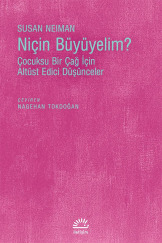
Niçin Büyüyelim? Çocuksu Bir Çağ İçin Altüst Edici Düşünceler

Rate this book
“Büyümek, bilmekten ziyade cesaret etmekle ilgili bir meseledir: dünyaya ilişkin tüm bilgiler bir araya gelse, yargıda bulunma yürekliliğini ikame edemezler. Yargıda bulunmak, öğrenilebilir bir şeydir –genellikle bu işi iyi yapanları gözlemleyerek öğrenilir– fakat öğretilemez. (...) Cesaret yalnızca kendi yargınıza güvenmeyi öğrenme meselesi değil, devletinizin, komşunuzun ya da en sevdiğiniz film yıldızının yargılarına güvenmeme meselesidir de. Daha da mühimi, cesaret hayatımızın içinden geçen yarıklarla birlikte yaşamayı da gerektirir. Bu yarıklar ne denli büyük olursa olsun, aklın idealleri bize dünyanın nasıl bir yer olması gerektiğini; deneyim ise dünyanın olması gerektiği gibi bir yer olmadığını söyler dururlar. İşte büyümek –ikisinden de vazgeçmeden– bu ikisi arasındaki uçurumla yüzleşmeyi gerektirir.”

Ehemmiyetsiz konularda bize fuzulî “seçme” fırsatları sunarken, hayatımızı ve dünyanın geleceğini ilgilendiren hayatî konularda karar özgürlüğümüzü giderek daraltan bir sistemde yaşıyoruz, Susan Neiman’a göre.

Kısacası, giderek daha vesayetçi hale gelen bir hükümranlık altında yaşıyoruz. Neiman, bizi bu gidişe boyun eğmemeye, büyümeye çağırıyor... Yetişkin insanlar olduğumuzu hatırlamaya, reşit olmanın gereğini yapmaya... Gerçek anlamıyla büyümek, özgürlük ve sorumluluk etiğini içselleştirmek demek. Kitap, bunun yolları olarak eğitim, seyahat ve iş (emek ve etkinlik) deneyimlerine eğiliyor. Eğitimin, seyahatin, emeğin-etkinliğin anlamlı, yaratıcı ve insanı olgunlaştıran biçimlerini arıyor.
Solun “iyi, güzel ve doğru”ya dair iddiasını yeniden yükseltmesi gerektiğini savunduğu Ahlâkî Açıklık kitabındaki arayışını sürdüren felsefeci, burada da öncelikle Aydınlanma’nın itibarını iade etme ve onu doğru anlama derdinde. Bu bağlamda Aydınlanma’nın “ceberrut yüzü” Rousseau’yu yeniden yorumlayışı başlı başına ilgiye değer. Arendt’in doğarlık kavramına özel bir önem atfettiği bu kitapta, Neiman düşünsel macerasının kerterizini yine Kant’tan alıyor.

208 pages, Paperback

First published May 5, 2008

177 people are currently reading
3242 people want to read

About the author

Susan Neiman

24 books237 followers
Susan Neiman is an American moral philosopher and essayist, her main interests are in the history of philosophy and morality, and the philosophy of politics and religion.

Ratings & Reviews

What do you think?
Rate this book

Friends & Following

Create a free account to discover what your friends think of this book!

Community Reviews

5 stars
276 (21%)
4 stars
532 (42%)
3 stars
330 (26%)
2 stars
99 (7%)
1 star
29 (2%)
Displaying 1 - 30 of 189 reviews
Profile Image for Caren.
493 reviews115 followers
July 5, 2015
You might think a book with this title is aimed at the young, maybe a good gift for a new college grad.....and you'd be wrong. This is a book for grown-ups, or at least , those who aspire to be. The author, a philosopher, asks why anyone would even want to be a grown-up when our society portrays aging as such a dismal process, a relentless squashing of our dreams. For someone like me, now a sexagenarian (and that is not nearly as risque as it sounds---it simply means I am in my 60s), this book came along at what the original Nancy Drew would have termed , "the psychological moment". Turning sixty kick-started all sorts of unsettling thoughts within me: what have I done with my life? what is the point of all this? and what now? Susan Neiman to the rescue! Using Enlightenment philosophers, especially Rousseau and Kant, she puts their ideas about living and growing into lay terms so that even I could understand them. Be warned , though, this is not light reading. As others have said, sometimes I had to take a deep breath, put the book down, and let it all percolate. On a very basic level, she says becoming a grown-up, a continuing process rather than an arrival, requires coming to terms with the fact that the "is" of life very often doesn't match the "ought" of life. Sounds pretty straight-forward and simple, doesn't it? But, just think about that for a minute. How do you find the courage to keep on living and striving to make the world better when faced with the injustice with which life is peppered? Her exploration of how others, especially those philosophers I mentioned, have dealt with that difficulty is what makes this book so intriguing and even, dare I say, exhilarating. It's a book I heavily marked and which I plan to keep by the bedside for a shot of courage every now and again.
I can't begin to do the book justice, but let me just share some little bits that may give you some of its flavor. Let's try pages 175-176:
"We are born with the urge for a life that embraces every kind of activity, be it learning or travel or work. Yet we're both caught and complicit in a world that turns human needs upside down. The problem is not the grown-up recognition that reality never quite matches the ideals we have for it. It's far worse, and more systemic, than that. We tell children that all the questions they ask,and many they've yet to think of, will be answered in school, and we send them to institutions that will dull their desire to pose questions at all. We want to find out more about the world than can be found in any one piece of it, but our travels are mostly regressions: either touring under conditions more protected than anything we experience in the adult world, or escaping from it altogether---otherwise known as playing in the sunniest heap of sand you can afford. We want to make an impact on the world, but we end up making or selling playthings that are developed to keep us distracted and designed to deconstruct. We have turned the activities that were meant to be the stuff of life into mere means of subsisting in it. In sum: the ways of life we have learned to take for granted are a twisted inversion of life itself. Who wants to grow up to that? I've been using philosophy to show something about the conceptual horror of the world we have come to, in the hope that understanding the depth of its violation of our own natures will be of use in acting against it, but none of the facts I mention is new."
The author notes near the end of the book that she spent a year reading widely from disparate sources to prepare for this text and she quotes liberally from those many sources. I loved that because it felt like an extended conversation with the great minds of the past.
Here is another excerpt, from pages 181-182:
"Given the complexity of social forces arrayed against it, coming of age is a subversive ideal. Like any ideal, it can guide our actions, but it will never be fully realized by any of them. Rousseau's problem remains with us: it's impossible to create fully active and responsible citizens in a society that undermines adulthood, yet it's impossible to create another society without a fairly large number of responsible adults. Kant knew his solution could only be partial: growing up will never be complete. It's the work of generations, for each of us limited by an education we could not choose, from which we can, at best, take something of value, and only free ourselves partly from the rest."
Continuing, on page 183, she says:
"The older you get, the more you know that the plateaus are not endless, the plunges rarely fatal. If you prefer to think in other modes of travel---for the metaphor of life as a journey is a very old one---you may like to think of yourself in Neurath's boat: 'We are like sailors who have to rebuild their ship on the open sea, without ever being able to dismount it in dry dock and reconstruct it from its best components.'"
That quote reminded me of the one I have had on my fridge for some time now: "Life is like playing a violin in public and learning the instrument as one goes on. ----Samuel Butler"
While not a playbook or manual for "life well-lived", this book offers a cascade of voices of other humans who have faced that voyage in an uncertain boat, or who have dredged up the courage to stride across that stage unprepared. Perhaps the comfort is in the human other, in just knowing "I am not alone."
When published in Great Britain by Penguin, this book was part of a series called "Philosophy in Transit", meant to be short enough to be read while commuting. In that spirit, the book is not long at just over 200 pages. It's a nice introduction to some complex philosophers and was, for me, 'food for the journey'.

**Postscript: I just heard this exquisite rendering of a poem that says perfectly what so many of us must feel, and which also adds to the thought lines of this book.

http://www.brainpickings.org/2015/07/...
Profile Image for Carla Coelho.
Author 3 books28 followers
October 25, 2016
This is an amazing book. In simple but by no means simplistic words the author shares with us the benefits of growing up. For me, as I read it, growing up means taking your share of responsibility in your life and in the world. Study, work and travel are means of getting to know the world and our place in it. I benefited a great deal of this reading and I am going to re-read it many times. It is also a good introduction to other Susan Neiman works, like Moral Clarity, which I plan to read soon.
Profile Image for Wendy.
521 reviews15 followers
November 18, 2008
When I was a freshman at Yale, Susan Neiman was one of my professors in a huge, team-taught, writing-intensive course in literature, philosophy, history, and political science called Directed Studies. What I particularly remember about her was the the other philosophy professors had an admiration for her that bordered on a schoolboy crush, in part because it was widely rumored that she actually understood the works of Immanuel Kant.

Moral Clarity is really sort of three books in one. The first, and probably the best, is an examination of the philosophical underpinnings of modern progressive ideals in the Enlightenment, with particular reference to the works of, you guessed it, Immanuel Kant. If you want a lively history of Enlightenment moral thinking, you can't beat this book. Neiman even makes Kant seem comprehensible, although, as when I was a freshman, I expect that my understanding will fade quickly unless refreshed.

The second book is one in which Neiman argues that modern progressives have given up all their best rhetorical weapons by refusing to use moral language, to talk about things like good and evil and heroism. Perhaps her arguments here are more aimed at academics. I've never had a problem saying that torture or discrimination are evil, and that alone hasn't helped me convince anyone who voted for the Bush administration or Prop 8 to do otherwise.

Third, Neiman presents a number of anecdotes or case studies to illustrate concepts like evil and heroism from a progressive point of view. Not every example she gives is a winner - I love a good neep about Homer as much as anyone, but her chapter on Odysseus still strikes me as a bit of a digression. I do like her examination of the way the Holocaust has become the benchmark of evil in our discourse, and how we really need to develop a vocabulary for talking about evil that allows for things less absolutely evil than the planned genocide of 12 million people to be labeled as evil.

In all: much better as history of philosophy than as a plan for political action, but still a worthwhile and thought-provoking read.
Profile Image for รพีพัฒน์ อิงคสิทธิ์.
Author 10 books107 followers
September 17, 2018
ผมว่าตั้งชื่อหนังสือ Click Bait ไปนิดนึง เพราะมันดันไปคล้ายๆ กับหนังสืออ่านง่าย "เพราะเป็นวัยรุ่นจึงเจ็บปวด"

เนื้อหาในเล่มค่อนข้างโหดและหนักมาก ผู้เขียนพาเราไปพินิจพิเคราะห์การเติบโตจากนักปราชญ์ยุครู้แจ้งจวบจนนักปรัชญาในยุคโมเดิร์น ซึ่งทำให้เราเห็นสายธารการพัฒนาการอย่างค่อนข้างแจ่มชัด น่าเสียดายที่บางบท 'เจาะลึก' จนรู้สึกเลี่ยน เช่น บทที่เล่าเรื่องอีมิล ซึ่งชวนให้นึกถึงบทวิจารณ์หนังสือที่หยิบจับประเด็นเล็ก ประเด็นน้อย มาขยายความยืดยาว

แต่บทที่สนุกที่สุดคือบทท้ายๆ เพราะอ่านแล้วรู้สึกเห็นภาพแจ่มแจ้งมากว่าการเติบโตไม่ได้เกี่ยวกับอายุแม้แต่น้อย แต่คือการไม่ยอมก้มหัวให้กับอำนาจ การกล้าที่จะตัดสินใจ และรับผิดชอบผลของการตัดสินใจนั้น

ลองชวนคิดต่อเล่นๆ ว่า ถ้าเหล่าคนที่ยังไม่เติบโตมีอำนาจหล่นใส่มือจะเป็นอย่างไร ? น่าเสียดายที่ขอบเขตของหนังสือเล่มนี้ยังไม่ได้แตะต้องประเด็นดังกล่าวอย่างจริงจัง
Profile Image for Jon Stout.
298 reviews73 followers
June 26, 2008
How many books are there that defend idealism? Susan Neiman gives a philosophical context for talking about idealism between the extremes of relativism and postmodernism on the left, and realism on the right.

The moral absolutes of religion have lost their influence. Relativism holds that one view is as good as another, and thus none has any special claim. Realism, as in Realpolitik, holds that we have to deal with the world as it is, rather than as we would wish it to be. Against this, Neiman argues that "the world can be improved by means of ideals expressing states of reality that are better than the ones we currently experience."

In concrete terms, she argues for specific moral values, such as reason, reverence and hope, and she describes individuals who have acted inspite of the ambiguities of the age, such as a man leading joint projects of Palestinians and Israelis on the West Bank, and a woman working to rectify the war damage to civilians in Afghanistan. The arguments are persuasive and the examples are inspiring.

Profile Image for Anna.
2,105 reviews1,013 followers
July 17, 2018
I was searching the library catalogue for some novel or other when I came across this book and was intrigued. Given the randomness of this discovery, it was especially pleasing to find it fitted well with other recent reading. Neiman refers to a number of philosophers ancient and modern, although her focus is on Kant. I appreciated her ability to make his work digestible, as she and Kant himself acknowledged it is very difficult to read. The theme of the book is how we grow up and why adulthood is a desirable state. I must admit, my first impression from the vague blurb was that Neiman would in fact suggest that there’s no need to grow up, to refute the checklist of adulthood signifiers (car, job, home ownership, marriage, kids, blah blah). I was ready to read that book, but also found the very different thesis that she was in fact advancing to be well-argued and powerful. She does in fact critique the neoliberal conception of adulthood as consumption of big ticket items, as well as using a selection of philosophical references to argue for growing up as psychological development. For instance: ‘Acknowledging that your best efforts to think and act autonomously will never entirely reach fruition, without acknowledging this as defeat, is part of growing up.’

To my mind the strongest parts of the book are the first two chapters, when Neiman considered the significance of childhood and how best to teach children to become happy, virtuous adults. This included much discussion of Rousseau’s Emile or On Education, which I found very interesting:

Emile never experiences a gap between what what is and what should be; virtue and happiness always go together. Each of his efforts is naturally rewarded: instead of empty marks or praise for memorising geometric theorems, he get the cherries on the tree when he figures out the proper angle for the ladder he needs to climb to them. What unhappiness occurs is a result of natural necessity; should he gorge himself on junk food, his belly will ache. Having been raised apart from servants or masters, he does not know haughtiness or obsequiousness, and meets the few people he does meet on equal terms, for he knows no other. Nothing seems to him unfair or arbitrary.
[...]
This means that Emile has never experienced what Kant called the gap between is and ought. This is not just any old hardship, but the basic fact that things go wrong. You may want to protect your child from many things, but if you protect them from that, how on earth can they grow up?


Neiman is a clear, articulate writer, which is essential considering the complex questions being dealt with here. I thought she was a little unfair to Stoicism, however. As she puts it, ‘The Stoics imagine we can can remedy our dissatisfaction with the world by working on the dissatisfaction. By whittling down our passions to the point where nothing in the world can provoke them, we gain both independence and contentment.’ While this is consistent with my reading of Epictetus Discourses, Fragments, Handbook (and with the disclaimer that I haven’t read other Stoic philosophers), it ignores that fact that Stoicism also involves acting virtuously. Epictetus wasn’t advancing a passive, fatalistic way of being, indeed he argued that you should be prepared to die for what you believe is right. According to Neiman, Nietzsche ‘called Stoicism a slave morality, consolation designed for the powerless by the powerless’. It seemed much more subtle than that to me - an imperative to focus on what is within your power to change and an encouragement to be strong enough to stand up for what’s right. That said, it was fascinating to learn how Kant further developed Stoic ideas: by adding that if you are worthy of happiness but do not obtain it, your reason will rebel.

For a short book, I found ‘Why grow up?’ disproportionately thought-provoking. The initial chapters are more philosophy-heavy and therefore more challenging and rewarding. The final chapter moves into critique of capitalism, which is well-written but not new. Neiman also advances her own personal view of how to adult well, as it were, which you may or may not agree with. Personally, I wouldn’t place such emphasis on travel, as I don’t think it’s that important or (to me) particularly interesting. I consider familiarity with your usual surroundings, which can only be achieved by exploration on foot or by bike, to be of more significance. Recent political developments have made me sceptical of the link between international travel and cross-border empathy. Also, while I see her point about the internet eroding our concentration, the subject is treated in a surprisingly superficial way. (Quite apart from the fact that this very evening I read the latter half of her book after getting bored with the internet.) I can’t argue that the occasional day off the internet is important, though, and I liked her take on 21st century cognitive dissonance:

I’ve been using philosophy to suggest the conceptual horror of the world we have come to, in the hope that understanding how deeply it violates our own natures will encourage us to against it. Still none of the facts I mention is new. They are so screamingly apparent that the Germand writer Ingo Schulze compares those who express thoughts like this to the child in Hans Christian Andersen’s story ‘The Emperor’s New Clothes’. Everyone knows that the rulers stand naked, but nobody cares to say it - for fear of no punishment greater than being called childish or dumb.


Actually, that particular frustration formed the theme of a short story in Tales From The Mall. Although Neiman is a philosopher and at one point refers dismissively to all this more modern ‘theory’, I found this book a good complement to various critiques of capitalism. The examination of philosophical debate on how children become adults was original and thought-provoking. I was not persuaded to read Kant, though.
Profile Image for Donakrap Dokrappom.
187 reviews31 followers
July 24, 2021
ดีงามเกินคาด! ชื่อหนังสือภาษาไทย อาจชวนคิดว่าเป็นหนังสือ How to ซึ่งใครที่ต้องการอะไรแบบนั้นอาจต้องผิดหวัง เพราะมันพาไปไกลกว่านั้นหลายขุม ผมมองว่าเป็นหนังสือปรัชญาสำหรับคนทั่วไปที่ผ่านการเคี่ยวจนตกผลึก รสชาติเข้มข้น กินไม่ง่ายนัก แต่ก็คุ้มที่จะลอง

หนังสือเขียนโดยนักปรัชญาโดยมีโจทย์คือ "การเติบโตคืออะไร" ซึ่งผมมองว่าเป็นโจทย์ที่ค่อนข้างใหญ่และยาก ในมุมมองของผม ผู้เขียนตีโจทย์นี้ได้ดีมาก ๆ เห็นได้ชัดเลยว่าแนวคิดส่วนใหญ่ได้รับอิทธิพลมาจากคานต์และรุสโซ และด้วยวิธีการเขียนเชิงวิเคราะห์วิจารณ์ หนังสือจึงไม่มีคำตอบที่กำหนดกฎเกณฑ์เหมือนหนังสือ How to ไม่สั่งสอนหรือมีคำตอบที่ตายตัวเหมือนที่หนังสือส่วนใหญ่ชอบทำ มันเปิดโอกาสให้ผู้อ่านได้ร่วมถกเถียงกับผู้เขียนได้ตลอดเวลาซึ่งเป็นวิธีการเล่าที่ผมค่อนข้างชอบ

หนังสืออ่านไม่ง่ายนัก แต่ก็ไม่ยากเกินไป หากใครที่อยากหาคำตอบว่าการเติบโตคืออะไรก็แนะนำให้ลองอ่านดูครับ

โทด ๆ ลืมไป หนังสือไม่มีคำตอบให้นี่หว่า 55

ปล. ชอบปกฉบับภาษาไทยจัง เป็นรูปเด็กที่ค่อย ๆ ขยายใหญ่ขึ้นเป็นกรอบสี่เหลี่ยม
Profile Image for Kin.
507 reviews164 followers
September 4, 2024
อ่านรอบสองแล้วชอบกว่ารอบแรกเยอะเลย ชอบประเด็นเรื่องการเติบโตเป็นผู้ใหญ่ไม่ใช่เรื่องความรู้เท่ากับความกล้าหาญ สุดท้ายการเติบโตจริงๆ จะทำให้เราคิดด้วยตัวเองเป็น และเข้าใจด้วยว่าโลกที่เป็นอยู่ไม่จำเป็นต้องโลกที่พึงเป็นหรือควรเป็นเสมอไป

การเติบโตทางความคิดแบบนี้ทั้งยากและอันตราย เพราะคนมากมายเชื่อเชื่องและยินยอมจะเป็นเด็กนิรันดร์ ไม่ต้องคิดเอง ไม่ต้องยืนหยัดบนหลักการใด และสยบยอมกับโลกที่เป็นอยู่ที่ตั้งใจเลี้ยงให้เราเป็นเด็กๆ ที่ไม่กล้าสู้เพื่อความถูกต้อง

ขอโควต

"ต้องใช้ความกล้าหาญเพื่อจะยืนยันว่า ยุคสมัยแบบที่อาจฆ่า ทรมาน หรือขังคุกคุณได้นั้น ควรจะเป็นแบบอื่น และเรามีความชอบธรรมที่จะแสวงหาโลกอย่างนั้น ความกล้าหาญชนิดนี้ไม่เคยเป็นเรื่องง่าย แต่มันมักจะตรงไปตรงมา การไปรวมกลุ่มกับคนอื่นนั้นง่ายกว่าที่จะหาญกล้ายืนท้าการล้อเลียนรูปแบบต่างๆ"
Profile Image for Braden Canfield.
115 reviews5 followers
January 23, 2010
I am truly just a beginner when it comes to reading and understanding philosophy. Neiman's book has helped to push me further on up the road of understanding. I would categorize this effort as an attempt at "applied philosophy": making the works of the Enlightenment philosophers (especially Kant) applicable to the current world. It didn't accomplish the task for me until I made it through to the last page and could contemplate the work as a whole.

This in mind, I highly recommend finishing this book if you start. It was well worth it for me. She ends with the telling of the stories of contemporary men and women who are to her mind "Enlightenment Heroes". This, along with her discussion of the dubious relationship between "intention" and "moral action" were particularly insightful for me and help to seal the deal on its influence in my life.

One last thing... I love a philosopher who challenges us to change the world by the power of moral ideas (the ought) rather than by empirical evidence (the is) alone. Viva philosophy!
Profile Image for Nikki.
1,144 reviews17 followers
February 1, 2015
This is a really amazing book. I highlighted so many passages, even though I never highlight or write in my books. There were just so many amazing, insightful parts I just had to accentuate. I spent last night going over the parts I had read, and trying to form my own opinions of the issues Neiman touches upon. Do yourself a favour and read this!
Profile Image for Shira.
210 reviews13 followers
Read
May 26, 2020
At once a very inspiring and difficult read.

What I got from reading this is ehm, that growing up is difficult. Which, well, no surprise. But, she argues, that not only is it difficult, people seem to be encouraged to stay infantile. By our (mostly western, I think she implies) governments (or maybe rather, big companies/consumerism, but I think one sustains the other) and by some sort of common idea that your (+/-) 20s are supposed to be the best years of your life. The latter doesn't seem particularly encouraging when you know those years will end, and often these exact years can be really hard. And the argument for a government preferring infantile citizens who are being sedated into caring about things that don't really matter in the bigger picture, well, how convenient that then they can make important decisions that no one will really care about. This is me trying to kind of paraphrase how I understood it. Just the easy part and I might have misunderstood.

Susan Neiman takes you along in an argument about why we should grow up. And that being an adult is to accept that you constantly have to live in the gap between the "is" an the "ought". That you have to live accepting what is but at the same time not giving up on what society could and should be, to fight for that. To make her points she takes many philosopher's arguments, with Kant and Rousseau as her main focus.

I think this book woke me up a bit. For me Neiman inspires action, or the realisation to fight for your ideals and the next generations, that that is important (she makes a great argument on the importance of 'good' education/teaching). I don't mean that now I will completely turn my life upside down, but I kind of hope I would.

This subject doesn't stop here for me (I hope...). For my book is now filled with many question marks and the question: "But why?" - to a lot. She probably actually answered some of my confusion in the text, but I guess often I was left with more questions (which is not bad). I often struggled to follow her train of thought, she seemed to keep taking sidetracks back and forth, seemingly unsure what point she wanted to reach, leaving me confused. Maybe I just need to read this 10 more times. Or read all the sources she mentioned and just study this and philosophy for the rest of my life, so I won't have time to fight for my ideals.
Profile Image for Holly.
1,069 reviews289 followers
September 13, 2015
Be prepared for a lot of Kant and Rousseau - this is a philosophy book and part of the Penguin UK Philosophy in Transit series. As A.O. Scott said in the NYT:
[...]“Why Grow Up?” isn’t an exercise in pop-culture polemics or pop-sociological cherry-picking. It’s a case for philosophy of an admirably old-fashioned kind. Neiman is less interested in “The Catcher in the Rye” than in “The Critique of Pure Reason,” and more apt to cite Hannah ­Arendt than Lena Dunham.
That said (because I'm more interested in Arendt and Emile than Lena Dunham) I liked it more than the two "School of Life" books I've read, which were too slight and tossed off (though I've not yet How to Age or How to Deal with Adversity, would could be directly compared to this).
Profile Image for Goan B..
253 reviews16 followers
February 24, 2021
''Filosofie zoekt antwoorden op vragen die kinderen opwerpen en waarvan de meeste volwassenen aannemen dat ze al beantwoord zijn. Waarom zou ik volwassen worden? Regels volgen? Een opleiding afmaken? Hoe kan ik iets echt weten? Zin vinden? Mijn eigen leven vormgeven? Al deze vragen kun je in één zin beantwoorden, of afdoen. Maar, misschien moeten we ze de aandacht geven die ze verdienen.''

Praise fucking be. Allereerst even een kleine ode aan Marit, die dit boek als cadeau kreeg als 18-jarige, maar waarvan de gever waarschijnlijk niet doorhad dat dit - ondanks de fluffy titel - een best wel zwaar filosofisch boek is. Sterker nog, ik kwam er laatst achter dat dit blijkbaar verplichte stof is tijdens mijn master filosofie. Gelukkig bedoel ik met zwaar filosofisch niet dat het langdradig of saai is. Neiman probeert de boek op een goede manier uit te leggen, zodat alles nog goed te volgen is. Daarnaast zet het boek je uiteraard aan het denken.

Daarnaast hield ik écht van de ode die Neiman toeschreef aan studeren, leren, lezen en last but not least, reizen. Bevestiging lezen kan je toch weer even op scherp zetten. Zeker een aanrader, dit boek! Want ''geconfronteerd met de vragen gesteld door Augustinus, Luther, Rousseau, Thoreau zijn we kinderen; we weten niet wat we met ze aan moeten, op welke grondslag we moeten leven. Bezien in dit licht is filosofie de opvoeding voor volwassenen.''


Profile Image for Wesley F.
336 reviews9 followers
February 8, 2016
Why Grow Up is slightly misrepresented in the summary. The Amazon summary suggests it is a critique on the modern obsession with youth in the culture, and the sociological and psychological changes that has happened in the past century. Drawing from Enlightenment philosophers as well as others, she was to make the case for "growing up" and moving past the worship of youth.

The author, Susan Neiman, perhaps started with this objective but did not stay on topic. Instead, the book spends large amounts of time discussing Immanuel Kant the man, citing text, and anecdotes from his life. She also covers Rousseau and a few others, giving the reader plenty of background on these two thinkers, including some of their personal history. After that, she puts together a strong rational argument for the distinction between childhood and adulthood and why we should strive for the latter.

To focus so much time on childhood, as in first grade, I think Neiman misses what would've been a far more interesting topic. Popular culture doesn't worship recess and coloring books. There is no discussion of adolescence, which is where the culture largely resides: doing adult things (partying, games, sex, etc.) with no regard for responsibility or learning how the world truly is. It is more about creating a bubble and staying in it, ignoring real world problems. That is much different than what Neiman calls childhood. It is more of a hybrid that deserved more discussion and analysis.

She spends almost no time describing popular culture or our obsession with youth, rather she seems to assume readers accept it as a given and that they don't need any context. There is very little empirical evidence provided whether sociological or qualitative studies in psychology or elsewhere.

Another disappointing part was that she boils down childhood as focused on what "ought to be" and adulthood as "what is." From this simplistic view, she builds a philosophical case for moving closer to "what is" rather than staying in naive fantasy. Much of it is intuitive, and probably already well understood be any layperson. In other words, the philosopher spent a lot of words and high-powered reasoning to support common sense.

If you are a fan of Kant, Rousseau, Cicero, Plato, or Hannah Arendt, you will enjoy Neiman's unique angle on their work. Otherwise, I just didn't get a whole lot out of this book. I was hoping for more psychology and sociology included to help give me a frame of reference for the discussion. Instead it stays heavily anchored in philosophical texts, without much modern context. It is pretty clear Neiman didn't care to learn anything about modern popular culture.
Profile Image for Jason Pettus.
Author 18 books1,450 followers
June 30, 2009
(Reprinted from the Chicago Center for Literature and Photography [cclapcenter.com:]. I am the original author of this essay, as well as the owner of CCLaP; it is not being reprinted here illegally.)

Even less than a year after it's ended, it seems that there are more and more Americans (even former supporters...er, especially former supporters) now openly acknowledging what an utter disaster the eight years of the Bush Junior administration was, and especially as more and more of the details from that shameful decade become public facts that not even the perpetrators bother denying anymore -- how it's pretty much a given now, for example, that the American public was lied to regarding weapons of mass destruction in Iraq, simply to justify a pointless war cooked up by a handful of violent sociopaths for petty personal gain; or how even the people responsible for it now happily admit that they authorized the use of torture among soldiers for the first time in American history, hiding the victims in other countries so to sidestep the jurisdiction of the US Constitution, then hiring a series of weasely lawyers to concoct elaborate justifications for the actions after the fact. This first year of the Obamian Age is essentially like Germany in 1946, both societies slowly starting to wake up from the collective nightmare their nations had become; and as such, there are suddenly millions of Americans starting to ask themselves the same tricky questions that millions of Germans did as well after the close of World War Two, questions like...

How did things get so out of hand in the first place? How is it that there could've been such a colossal, systemic breakdown of such basic philosophical understandings as the difference between right and wrong, among millions and millions of people all at the same exact time? Does this make all Americans "evil?" Does this make me evil, for sort of understanding all this while it was going on, but not doing more to stop it? How do you define evil in the first place? How do you collectively punish 400 million people, anyway? Is that what the economic collapse was? Divine retribution against an entire society for collectively turning into such monsters? How do you pick up the pieces after an event that nearly tore of the fabric of your society apart? And most importantly, how do you ensure that such a situation never occurs again, and ensure it in such a deep and lasting way that the very idea will never again even enter people's souls and lodge there to begin with?

These are all questions pondered by philosophy professor and thinktank head Susan Neiman in her smart and sober new book, Moral Clarity: A Guide for Grown-Up Idealists, a manuscript bound to be highly welcomed by a huge portion of Americans because of doing something that so few others do; namely, it clearly divorces the actions of the Bushists in particular from the entire ideological debate over Republicans versus Democrats, using basic lessons of philosophy to show how ashamed all of us should be over the things perpetrated in our name in the last decade, liberals and conservatives alike, then gently guiding us (mostly through the precepts of the Enlightenment) to a place where we can all be a little prouder of our life decisions, no matter who we'll be voting for in the next election. In fact, if anything you could call this book a "hybrid" in the best sense of the word: partly an informative history book, partly a heady primer to philosophy and the world of ethics, partly a Malcolm-Gladwellesque contemporary guide to politics and other practical issues, using a plethora of fascinating examples to make points that are always strong but never insulting. It can be a tough read sometimes but a highly worthwhile one, a book guaranteed to have you thinking differently about the Bush years no matter what you thought of them before, and that very well might change you into an entirely different person by the time you're done.

And in fact that's one of the most important things to understand about Moral Clarity, that despite her bipartisan approach, Neiman very clearly has an axe to grind; as she herself admits in the acknowledgments, for example, the entire book itself was inspired by the 2004 re-election of George Bush, which like millions of others Neiman reacted to with an almost overwhelming sense of alarm and depression, especially given that her day job is to sit around thinking very deeply about the slippery subject of morality. (After all, she's the previous author of the sleeper hit Evil in Modern Thought, and it's no coincidence that I earlier compared this "real-world philosopher" to Malcolm Gladwell.) Although she uses the very foundations of Western thought to get her points across, Neiman definitely has a very contemporary and very pointed issue that she wants to address: of how the Bush years could've happened in the first place, and by extension how it is that any formerly rational society can manage to get to the point where evil deeds are suddenly being perpetrated in their name.

And indeed, as she explored in more detail in her last book, one of Neiman's first big contentions is that the process of defining "evil deed" is a much more complicated thing than it might seem at first, using it as a gateway in her book to delve into the age-old question of moral absolutism versus moral relativism, an issue that's been debated among humans all the way bak to ancient Greece and beyond. And in fact this is one of many places in Moral Clarity where Neiman displays a refreshingly balanced look at the underlying causes of Bushism, given that this book is quite obviously designed to appeal mostly to Bush-hating liberals, because one of the other big early conclusions she makes concerns why so many tens of millions of Americans would end up supporting such mustache-twirling cartoon villains as made up the Bush administration, asserting that for many of these people, no matter how flawed the 2000s GOP was, it at least offered a clearly defined sense of right and wrong, and a clear sense that the world can be a great place again through the belief in "idealism" (that is, believing that ideal situations actually can be practically brought about in the real world, no matter what your particular vision of an "ideal situation" might be).

As Neiman methodically shows us through history and example, as little as a hundred years ago this situation was reversed: it was progressive, Marxist-friendly liberals who were the big optimistic idealists, who sincerely believed that a society without poverty, without untreated illness, could actually be brought about in the real world; and it was the conservatives who were resigned to the crappy pre-civil-rights reality of the world as it currently was, and not believing that the world was bound to ever get much better than that, the situation that brought about the popular rise of fascism in so many countries in those years in the first place. It's a surprising conclusion, one that makes sense but that I had never thought about; that after the collapse of Marxism as a viable long-term political structure, that after the counterculture and murky postmodernism of the 1960s and '70s, most liberals have given up on the very idea of there being absolute rights and absolute wrongs that exist in the world, have given up on the very idea that the world can eventually be brought to a more ideal state than it currently is. For example, later in the book she poses an interesting challenge to us, to quickly name a couple of contemporary people in our head we consider heroes. Did you just laugh at the very idea of there being heroes anymore in the early 2000s? Did you just mentally put quotation marks around the very word "hero" when thinking about it? Then you're probably a liberal, Neiman astutely guesses, and your snotty brushoff of the entire question was the exact reason that millions of otherwise sane middle-class suburbanites voted for Sarah Palin in the 2008 election, because at least she and her fellow Republicans think the question worth pondering in the first place, think not only that it can be answered but should be.

And so it is throughout Moral Clarity, with Neiman devoting each chapter to one big subject from metaphysical life (happiness, reason, hope, etc), using both classical philosophers and current-day examples to examine that issue from all sides, hesitant to tell you what conclusion to draw but insistent that you draw some kind of conclusion by the end. And that's why this book is so great for a bipartisan audience, because it essentially argues that all of us need in our lives at least a little of the attitude from both the traditionally liberal and conservative standpoints -- that liberals as a whole need to add a little more idealism to their lives, that conservatives in general need to add a little more common sense, and that all of us need to stop mistaking the loudly-shouted piety of fundamentalists for a legitimate commitment to "moral values." After all, she concludes, this is one of the biggest places where things went so wrong during the Bush years -- that since most on the left believe the entire idea of "being good" to be a childishly simplistic concept not worth even addressing, it allowed immoral hypocrites on the right to easily take advantage of the millions of Americans who precisely do think that "being good" should be a daily habit among both themselves and the people they elect, splashily declaring their beliefs in absolute morality through pandering surface-level gestures that make for great soundbites in the media (fighting gay marriage, covering the breasts of Justice statues in government buildings), while in actuality getting away with some of the most horrifically vile acts humans can commit behind closed doors when no one was looking (and of course lots of vice that's not so horrific -- it's no coincidence that more Bush-era politicians have been caught in sex scandals than the entire rest of American history added together).

Neiman wears her biases on her sleeve, make no mistake, and like millions of other Americans continues to have an almost all-consuming hatred for the "Christian Taliban" Bushists and the way they nearly destroyed our country; but such sleeve-wearing is just how it should be in cases like these, and I never mind a nonfiction writer having biases as long as they honestly admit these biases upfront. If you're able to get past this yourself, you'll find an infinitely informative and thought-provoking book, one bound to challenge your political beliefs no matter what they are, and help you understand how to more embrace both realism and idealism without the usual platitudes of the paleocon right or nihilism of the intellectual left. It's a heavy read, too heavy for some, but if you're comfortable diving into discussions regarding 18th-century philosophers and life-quality issues of pure thought, Moral Clarity is a title you'll surely not want to miss.

Out of 10: 9.3
Profile Image for Christina.
177 reviews6 followers
September 22, 2024
From the title, one might assume that this is a rant about how no one builds character any more, or how people used to be tougher and things better for it. Nope. Or, alternatively, a critique of how the script of job, marriage, 2.5 kids, keeping up with the Jones, etc. equals adulthood leads to lives empty of meaning. Not quite. It's a book of moral philosophy, which looks at growing up and why it seems to be about resigning oneself to disappointment and diminished expectations. It's about why this unappealing model isn't an accident, and how really growing up goes beyond this. It was also my accessible introduction to Immanuel Kant, not the easiest of Enlightenment philosophers, particularly his Critique of Pure Reason, not the easiest of books. Neiman says it "is at once the most important and worst-written book in the history of modern philosophy." Apparently, even Bertrand Russell admitted to falling asleep before he finished it. Neiman does an admirable job of distilling Kant's writing and presenting his ideas on adulthood. Is there a way between the ignorant wonderment of childhood and the disillusionment that follows when the world proves to be other than we believed? "Can philosophy help us to find a model of maturity that is not a matter of resignation?" (pg. 2)

There's less than 250 pages and four chapters here, but don't be mislead. This isn't a quick, breezy read. This is a book to be pondered and thought about and chewed over. The first two chapters, especially, present a lot of historical background on Kant's arguments, and how they were a response to Jean-Jacques Rousseau's The Education of Emile, one of the first Western philosophy tracts on child rearing since Plato, and Rousseau's thought experiment on raising a genuinely free adult. During the period of the Enlightenment, European society was reevaluating childhood, and what it meant to prepare someone for society and adult life in the wake of the rise of individualism and the fading of rigid, narrow traditions. How do we as individuals become mature members of society? "Children are not born acting on principle, and most adults never get there. If we want them to have a chance of doing so, we have to adopt an education appropriate to their development." (pg 51) Rousseau went into great detail in Emile about how he thought this could be accomplished in order to raise children to not just passively accept their world as it is, but endlessly question and challenge, despite never raising or educating any children himself.

The trouble, as Neiman shows, is that Rousseau's education for the hypothetical Emile is perfection itself, and therefore unobtainable. No one could give any child this education, and even if they could, it would only prepare them for a perfect world, which doesn't exist. Enter Kant. Unlike Rousseau, Kant doesn't believe that one can prepare someone for adulthood by preventing any encounters with trials and tribulations. We need the trials to grow our reason. But how do we prevent getting stuck in disillusionment? We need experiences, as well as our reason, to deal with the world as it is, but not give up on the world as it ought to be. The third chapter examines the experiences of education, travel, and work, three areas that can help us grow and are widespread, and how they can help us on this journey. If we actively work at growing, that is. One can experience all three in ways that avoid growth and change. Which leads to the fourth and final chapter, on how maturity is not a given, and how our society would rather we take the easier path of resignation. So much easier to let others make the hard decisions, to fill our lives with distraction instead. Or, as David Hume would have it, go have a glass of sherry with friends and quit worrying about stuff like child labor. That's just the way the world is. Thus is societal change made even harder or often thwarted. (It's not for nothing that Hume is considered the father of modern British Conservatism.)

With so much of our education and work beyond our control, and with travel often reduced to packaged escapes rather than horizon expanding experiences, where does this leave us? Kant's answer is simple, but once again, not easy. We must use our experiences, and our reason to develop judgement, which is a vital skill that can only be learned by purposefully cultivating it.
But how to use it well when none of the distinguished old philosophers will offer any guidelines? There is no question about it: think for yourself, Kant's motto for maturity, is undeniably vague. But how could it be made more specific without violating the message itself? By telling someone how to do it in any situation she might encounter? Exactly. To tell someone how to think for herself is to undermine the possibility of her doing it at all.
Ask yourself, is this the life you want to live? If not, then which parts are changeable, and which do you want to keep? Have you ever examined it enough to know which parts are really yours? True grown ups, like working democracies, are a balance, a constant work-in-progress, and while not impossible, require lots more effort. The payoff isn't always obvious or instant. Growing up is a lifetime's work of courage. Highly recommended.
Profile Image for JP.
454 reviews12 followers
February 16, 2019
Every human will have a thought of
Why I grow up?
It's human mind question such
Yes, other animal not bothered about ageing
A fantastic book
The author wrote precisely other wise she would have completed this in few volumes.
Peter Pan occupy your thoughts throughput the journey of this book
Final chapter, Becoming Adult was master piece
A lovely journey!
Profile Image for Philippe.
745 reviews718 followers
December 25, 2015
The Enlightenment project has been a target of persistent criticism, more or less from the moment that it articulated itself. Amongst other concerns, its rational and utopian ethos is seen as being at the root of the genocidal horrors that have been a motto theme in European history ever since the guillotine blades swept down at Place de la Révolution. For many of us being ambivalent about this legacy has become second nature. So it’s heartening to see someone taking the stand to calmly explain what Enlightenment was all about in the first place. Neiman is, however, not so much troubled by the critique of Enlightenment’s totalitarian reflexes. Rather she takes aim at „the infantilizing processes of non-totalitarian societies that encourage our natural laziness by giving us comfort through a range of toys”. Neiman: „Of course, neither smartphones nor automobiles are described as toys; crucially, they are portrayed as the tools without which no adult life is complete. By contrast, ideas of a more just and humane world are portrayed as childish dreams to be discarded in favor of the real business of acquiring toys, i.e. finding a steady job that fixes our place in the consumer economy. It’s a perfidious reversal that leaves us permanently confused.”

Neiman pitches Enlightenment as a worldview that takes individual human development very seriously. More specifically it sees the process of coming of age as a deliberate effort to enlarge an individual’s sense of possibility. But that is a process that inevitably happens in a context that exhibits friction. The world doesn’t bend to our wishes. There is a gap between ‚is’ and ‚ought’. The experience of this ‚metaphysical wound’ (Nietzsche) brings with it a persistent sense of loss and division: „Things are not as they should be, and you can neither get the ‚should’ or the ‚things’ out of your heart.”

Neiman discusses how key Enlightenment thinkers dealt with this predicament. Rousseau, the idealist, saw growing up as a progressive articulation of idiosyncratic desires without the troublesome interference of the ‚is’. Hume, the empiricist, took exactly the opposite position assuring us that there is only ‚is’ and that ‚ought’ is not part of the world and cannot be inferred from anything in it. It would take Kant to transcend the dilemma between dogmatism and scepticism. Kant’s ‚tragic philosophy’ (again Nietzsche) requires us to hold on to ‚is’ AND ‚ought’ and to honor the wonder and indignation that are present in both. Then: „If growing up is a matter of holding the ‚is’ and ‚ought’ in balance, it will never be a stable position: each will always seek the upper hand. Hence growing up is not a task that ever stops.”

Here Neiman shifts to a different register. She criticizes contemporary centers of formal education as places where development is being stunted rather than cultivated. The workplace has become a training ground for professional cyberloafers. Travel, another crucial vector of personal development, has morphed into mass tourism which is just another form of infantilization. For Neiman it’s not Enlightenment’s restless desire to act that has brought climate change upon us but the institutionalized complacency that keeps us from growing into responsible adults.

What we need are places that help us to grow out of this self-incurred immaturity, cultivate judgment and courage to accept life with all its contingencies and detours. In the end it’s Nietzsche’s Free Spirit, who is guided by a relentless ‚amor fati’, that should be an example for us all.
Profile Image for Makmild.
799 reviews213 followers
December 9, 2020
เคยคิดว่า นอกจากหนังสือนิยายหรือการ์ตูนแล้ว คงไม่มีแนวหนังสือประเภทไหนอีกที่ทำให้เราอ่านจบได้ภายในวันเดียว

จนกระทั่งได้มาอ่านหนังสือแนวปรัชญาเล่มแรกในชีวิต ที่ถือว่าเป็นแนวปรัชญาล้วนๆ เลย

หนังสือพูดถึง คานต์,รุสโซ,อริสโตเติล,เพลโต,โสเครติส เอาง่ายๆ คือก็ยกมาทั้งกรุนั่นแหละ เอามาให้หมดเลย

แต่เน้นย้ำเป็นพิเศษคือ คานต์ และรองลงมาคือ รุสโซ ที่บัญญัติคำว่า 'วัยเด็ก' ขึ้นมา

ด้วยความที่ไม่ได้จบปรัชญามา ไม่ค่อยได้อ่านงานปรัชญา เล่มนี้คือเปิดโลกมาก ไม่ได้อ่านยากจนเกินไปนัก

หนังสือไม่ได้บอกเราว่า จะเติบโตอย่างไรไม่เจ็บโต (ถึงแม้จะเขียนอย่างนั้นก็ตามทีเถอะ) เพราะการเติบโตยอมเจ็บปวดอยู่แล้ว แต่ชวนเรามาตั้งคำถาม

ทำไมต้องเจ็บปวดด้วยละ ไม่มีการเติบโตแบบไม่เจ็บปวดหรอ แล้วถ้างั้นการเติบโตคืออะไร เราไม่เติบโตแบบปีเตอร์ แพน ไม่ได้หรอ อยากอยู่ในเนเวอร์แลนด์ตลอดไปไม่ได้หรอ

ไม่ได้มีคำตอบอะไรตายตัว แต่เพียงหนังสือได้ให้นิยามของการเติบโต คือ การอยู่ท่ามกลาง 'โลกที่พึงเป็น' และ 'โลกที่เป็น' โดยที่ไม่ทิ้งฝ่ายใดฝ่ายหนึ่งไป

เพราะอย่างนั้น การเติบโตนั้นจึงเป็นเรื่องความกล้าหาญมากกว่าความรู้ เป็นความกล้าหาญที่จะใช้ชีวิตอยู่กับรอยแตกที่แล่นผ่ากลางชีวิตของเรา คือเรื่องของการเคารพสิ่งที่มาประกอบขึ้นมาเป็นตัวเรา

การเติบโตนั่นนำมาซึ่งความเป็นเสรีภาพ เสรีภาพหาใช่แค่เรื่อง เราจะทำอะไรก็ตามที่อยากทำในขณะนั้นๆได้ตลอด แต่เสรีภาพที่แท้จริงคือการควบคุมชีวิตของเราได้ทั้งหมด รวมถึงการรับผิดชอบต่อการกระทำของตนเองด้วย

และนี่คือสิ่งที่หนังสือเล่มนี้บอก

เป็นเหมือนเรื่องเล่าที่ทำหน้าที่เล��ากล่าวความเป็นมาของการเติบโตรูปแบบหนึ่งในรูปแบบปรัชญาเท่านั้นเอง

(จริงๆ คือ มีหลายเล่มที่บอกอะไรคล้ายๆแบบนี้ แต่ในลักษณะที่ง่ายกว่านี้ แต่โดยส่วนตัวแล้ว นี่ก็จัดเป็นหนังสือที่ชอบอยู่ดี)
67 reviews
January 26, 2021
A Schmooze recommendation for Mikey, this book is steep in philosophy teachings and references that I was unfamiliar, Despite that, the author does a good job of explaining the main points of the reference. I did find several of the concept thought provoking. I'd recommend it for those who can muscle through a lot of quotes and philosophers that are unfamiliar. If you can, it's worth it. However, this task is not for everyone.

What is and what ought is a good differentiator. Also, work (valuable long term) versus labor (not so) is an interesting topic.
Profile Image for Illiterate.
2,761 reviews55 followers
January 3, 2023
I like the sentiment. But, far from being subversive, it restates the Enlightenment’s simplistic and, in our age, infantile ideas of reason and morality.
Profile Image for Marguerite Hargreaves.
1,420 reviews29 followers
April 29, 2012
There's good information here, particularly tapping into Enlightenment values to help folks find moral clarity, with or without the framework of religion. Susan Neiman provides a scathing analysis of the second Bush administration's actions abroad (and to a lesser extent at home), but it's late to the party.

The discussion of heroic virtues and heroes completely overlooks how those concepts have been watered down and made meaningless in the aftermath of 9/11. Now, anyone who dies or is a victim (or wraps himself in a flag) is called a hero. Given Neiman's rant about Bush's use of the word "trifecta," it's an obvious omission.

Some useful points:
Being judgmental has come to be considered a big no-no. Moral values demand judgment, and ethics exist independent of religion. Get over your reluctance to judge.

"To invade a country, destroy its infrastructure, frighten and torture its civilians, and then lament that it reveals the bleakness of human nature is to have, at the least, a peculiar notion of causality."

"Not everything that's thinkable is genuinely possible, and distinguishing between the two is what allows us to distinguish between demands for utopia, and for responsible social change."

"Keeping ideals alive is much harder than dismissing them. ... Ideas are like horizons -- goals toward which you can move, but never actually attain. ... Resignation to the status quo was the stance conservatives supported ... just as cynicism about the possibility of fundamental change was their most formidable weapon."

"The idea of human rights ... is not invalidated just because it's unfulfilled or even abused."

"One great function of the arts is to keep ideals alive in a culture that does not yet realize them."

"The gap between is and ought is the space where questions begin. ... They only really cease when the world as a whole makes sense. This is one reason to see the problem of evil as the driving force not only of metaphysics, but of many other kinds of thinking as well."

"Have the courage to judge action, even those committed by the highest authority; don't have the presumption to judge agents, even those of the lowest appearance."

"We have lost a sense of moral clarity that would give rise to the fear that certain actions -- whether we privately feel guilty about them or not -- could lead to disgrace. ... The only way to stop the further erosion of shame is to return to the language of good and evil."

"The language of shame is the most effective moral weapon there is. To abandon talk of evil is to leave that weapon in the hands of those who are least equipped to use it."

I spent five and a half weeks reading this, and it was an ordeal. There are good nuggets here, but the mining is arduous work. Neiman's writing is painfully gassy at times and lacks continuity and clarity. The chapters could work as lectures or magazine articles, but there's nothing holding it all together as a single work. The midrash on Job and Odysseus grew tiresome. Likewise, the twelfth chapter, on modern heroes cast in an Enlightenment mold, left me unmoved. A CliffsNotes version, please?!
Profile Image for Julia.
652 reviews103 followers
April 26, 2016
Защо да порастнем?
Интересен въпрос с множество отговори.
За мен "порастване" и "да бъдеш възрастен" дълго време означаваше да работиш и да се издържаш сам, т.е. да бъдеш "независим", може би да караш кола, да можеш сам да разрешаваш сложни проблеми, да бъдеш сериозен, да можеш да пиеш и да стоиш до късно (или изобщо да спиш когато ти решиш), да плащаш данъци и прочие "възрастни" неща.
Е, сега съм "възрастна" и половината от тези неща изобщо не ме вълнуват/не практикувам.
Не се чувствам като "истински възрастен" човек - част от мен все още със зъби и нокти се е вкопчила в безгрижното детство и често се чувствам неадекватно за възрастта си.
Ако и вие се чувствате така и порастването ви кара да искате да избягате надалеч, тази книга е за вас.
Какво означава да си "порастнал/възрастен" ?
Означава постоянно да се бориш с "нормите" наложени от системата, да се опитваш да направиш света едно по-добро и по-приятно място (не се смейте мамка му! ), да озсъзнаваш, че си роден свободен, но си оплетен във веригите които всички се опитват да сложат (и продължават да слагат ) върху теб, да взимаш собствени решения, над които си помислил и си избрал, без друг да е повлиял върху мнението ти И да понесеш последствията от тях. Това е малка част.
Но, разбира се, системата няма нужда от такива хора - как иначе ще ни контролират? Затова и навсякъде пропагандата е една и съща - младост, забавления, безгрижие, живей за мига и майната му на всичко/всички...
Замислете се за момент (знам, трудно е) и ще осъзнаете, че системата ни контролира от десетилетия и ние не роптаем срещу това, всъщност, до толкова сме свикнали, че приемаме всичко това за "нормално" , за "единственият избор".
Сега се сетих за "Боен клуб" и цитата: “You are not your job, you're not how much money you have in the bank. You are not the car you drive. You're not the contents of your wallet."
Защо да порастнем?
Защото това, което ще получим в замяна, си заслужава (и ще послужи на много други).
И за завършек, понеже много може да се дискутира по темата, но просто ви препоръчвам да прочетете книгата, този цитат:
"A single idea from the human mind can build cities. An idea can transform the world and rewrite the all the rules."
Profile Image for Kate.
650 reviews146 followers
July 1, 2008
Fasten a seatbelt around your grad school brain, you libruls, it's gonna be a bumpy ride. Neiman is some fellow at some fancypants institute in Germany who really knows her philosophy. Boy, I had a work out, digging up my old Anthony Flew Dictionary of Philosophy to remember who all these Old Dead White Guys were. Her basic point is that the Enlightenment offers a foundation of Moral Behavior in the 21st Century. Yes. You read that right. The Enlightenment--reviled since at least the 1980's as the fount of all that is wrong with the world. Neiman points out that, actually, it's the fount of all that's right with the world. Personally, I think it's a mixed bag, just like every other philosophy. You think you know the difference between right and wrong? Neiman explains WHY you think you know the difference between right and wrong, and GOD has nothing to do with it. How refreshing.

Here's where she goes wrong, though. In setting up the difference between fundamentalists and, for lack of a better term, "the Left," she suggests that fundamentalists are against (philosophical?) materialism and, by extension, against crass consumerism. She's obviously spent too much time with Hegel and not enough with Ted Haggard. She obviously doesn't understand that big home and HumVee ownership are practically an article of faith in a lot of Christian fundamentalist households. She thinks the Islamic fundamentalists who blew up the World Trade Center were not in it for the sixty-some Virgins in Paradise (or "raisins" depending on which interpretation you choose), but were doing it to further the cause of Allah. Given the fact that they were engaging in debauchery in the days leading up to their demise, I'd say that the virgins probably were somewhat of a motivation. So, good reveiw of Greek philosophy, along with Kant, Hume, Hegel, and the rest of the lot. I'm a bit more limbered up for mental gymnastics, having read this book. Her take on fundamentalism, not so very accurate.
Profile Image for Robert.
73 reviews4 followers
June 16, 2010
Reading Neiman's "Moral Clarity" has changed my opinion on gay marriage. Not that she comments on the subject - confides herself to the "big picture" - i.e. the foundations of morals. But, previously to reading her, I had been, unbeknownst to me, caught up in a materialistic worldview. Thought that if gay couples had exactly the same rights and privileges in a "civil union", in the "real' world, it was meaningless to fight for a "word" - "marriage". Thought that "Marriage" was only a construct - something without meaning - something that postmoderns could take apart - something that would be regarded at best as empty or something constructed to control others - a "powertool". Anyway, Neiman made me realized how caught up I was in the postmodern worldview, clinging to the materialism of a long since gone Marxism. Pointed out to me how Ideals matter - are necessary to be fully human - and the need to turn our Ideals into reality is the essence of morality - to make "what is" into "what ought to be". And one of the things that "ought to be" is that everyone has a "Right to Happiness" - as well as the right to be treated as "an end in themselves" - i.e. to determine what that happiness is for themselves individually. Anything else is "not what it ought to be". So words (Ideals) matter, "Marriage" matters. Course, the real insight is that so much of the weakness, the passivity of the left - of "liberals" - can be explained by their failure to believe in Ideals - by their emphasis on physical realities - with the "real world" - with improving living conditions, wages, tolerance for examples - without providing the moral energy that only Ideals (or religion) can give - by their failure to take Ideals seriously as more than "constructs" - things like Justice, Reverence, etc.
Profile Image for Xue Wang.
2 reviews
August 28, 2015
The only thing I don't like about this book is on Page 158 - "All it costs is a ticket to get there and the decision to reject the voices that tell you such journeys are impossible". Here I sensed the author's ignorance. It can be a very subtle revelation of the western privilege. Is it really this easy to travel to remote places and earn the money you need on the road? Probably not. Such travel also depends on the kind of passport you are holding and your level of education. Many types of visa won't allow you to work in foreign countries unless your home government has negotiated that for you. Western guys with visa exemptions will never know how hard this can be for people from developing countries. Certainly, you can work even though you are not allowed to. But technically you will be illegal immigrants even though your residency in that country is only temporal. I was imagining that if you were a U.S. professor picking tea in India, few local people would hate you. But if you were a Chinese farmer picking tea in India, local people would doubt your motivations and be afraid that you will get more hardworking Chinese farmers to their places and take over their business. This may be a very bad example but certainly the world is far more complex. This reminds me that underprivileged people see the world better.
Profile Image for Colin Meert.
31 reviews6 followers
May 11, 2024
Update: eerlijk gezegd, dit boek verdient meer dan een snelle review. De laatste hoofdstukken zijn echt sterk en zetten je aan tot filosofisch activisme, tot zelfstandig denken, tot je verantwoordelijkheid opnemen, tot een kritische, participerende burger te worden.
Motiverend, aangrijpend, helder. Een flinke duw in de rug tot volwaardig volwassen worden - iets wat niet saai en grijs is maar je net strijdlustig in het leven werpt.
Profile Image for Mark.
128 reviews13 followers
December 30, 2008
Spectacularly uninvolving though I'm very interested in the subject. In the space of two weeks I attempted and failed to to get more than a couple dozen pages into this book.

Too much bible-talk for one thing. The bible has as much to do with morality as Velveeta has to do with nutrition. Just because a lot of people eat it, doesn't mean it's good for you - or real.
Displaying 1 - 30 of 189 reviews

Can't find what you're looking for?

Get help and learn more about the design.