Jump to ratings and reviews
Rate this book

Μες στην ομορφιά των κρίνων

Rate this book
Ένα ανοιξιάτικο πρωινό του 1910, ο ιερέας Κλάρενς Γουίλμοτ νιώθει αναπάντεχα την πίστη του να τον εγκαταλείπει. Αφήνοντας για πάντα το πρεσβυτέριό του, θα ζήσει πουλώντας εγκυκλοπαίδειες κι αγαπώντας με πάθος τον κινηματογράφο...

Τέσσερις γενιές των Γουίλμοτ θα ζήσουν ανάμεσα σ’ αυτούς τους δύο πόλους, τη θρησκευτική πίστη και τη λατρεία του σινεμά, από το Κραχ μέχρι τον Β' Παγκόσμιο Πόλεμο κι από την επαναστατική δεκαετία του ’60 I ως την προεδρία του Ρήγκαν.

Μέσα από την ιστορία τους, έναν καταιγισμό γεγονότων και αξέχαστων κινηματογραφικών ταινιών, ο Απντάικ σκιαγραφεί όλα όσα καθόρισαν την αμερικανική —και την παγκόσμια— κουλτούρα στον 20ό αιώνα- το τέλος της θρησκείας και κάθε βεβαιότητας, το πέρασμα στην αμφιβολία και την κρίση- την απόλυτη επικράτηση του πολιτισμού της εικόνας- την ανάγκη ενός καινούριου οράματος, ενός νέου Παραδείσου, για τη χιλιετία που έρχεται...

682 pages, Paperback

First published January 1, 1996

155 people are currently reading
2223 people want to read

About the author

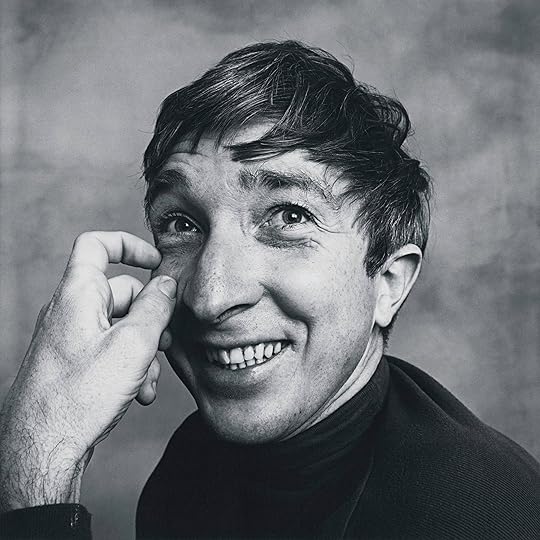
John Updike

861 books2,425 followers
John Hoyer Updike was an American writer. Updike's most famous work is his Rabbit series (Rabbit, Run; Rabbit Redux; Rabbit Is Rich; Rabbit At Rest; and Rabbit Remembered). Rabbit is Rich and Rabbit at Rest both won Pulitzer Prizes for Updike. Describing his subject as "the American small town, Protestant middle class," Updike is well known for his careful craftsmanship and prolific writing, having published 22 novels and more than a dozen short story collections as well as poetry, literary criticism and children's books. Hundreds of his stories, reviews, and poems have appeared in The New Yorker since the 1950s. His works often explore sex, faith, and death, and their inter-relationships.

He died of lung cancer at age 76.

Ratings & Reviews

What do you think?
Rate this book

Friends & Following

Create a free account to discover what your friends think of this book!

Community Reviews

5 stars
509 (22%)
4 stars
903 (40%)
3 stars
597 (26%)
2 stars
169 (7%)
1 star
54 (2%)
Displaying 1 - 30 of 242 reviews
Profile Image for Daniel C.
154 reviews23 followers
February 28, 2012
The plot of "In the Beauty of the Lilies" is as ambitious as the title itself, and in the hands of a lesser author, I daresay the story would've run out of steam by page 30. But this is Updike, an author who could write riveting and gorgeous VCR instruction manuals.

The book's scope is grand. It follows in intricate detail the pulses and patterns of an entire family through four generations, giving us not just a powerful look at the evolution of the family, but of the country in which they live. The balance between the two is delicate, but Updike's sparkling prose never loses its focus. Although the details of America's growing pains are ever-present and, even more important, amazingly done, they never overshadow the story of the Wilmot clan, never seem tacked on just for authenticity's sake.

Likewise, Updike's story itself, although it focuses on four individuals from the same clan, effectively utilizes two contrasting symbols that could very easily have become heavy-handed icons: religion and the movies. In fact, the book begins with two simultaneous incidents: a starlet passing out from heat exhaustion in the middle of filming a movie scene, and a pastor -- Clarence Wilmot -- losing his faith in God with equal suddeness. From here, Updike strolls through eighty years like a seasoned tour guide, showing us the bits and pieces that matter as this Wilmot family struggles to find its faith again in a world ever more obsessed with the superficial and unreal.

The book loses some steam in the second part, during the story of Teddy, Clarence's clawless son. This section functions most obviously as a chrysalis, giving the story (and the country) time to mature into something bigger. Updike's compelling writing keeps Teddy's rather uneventful tale from devolving into something mundane, although there are points where it is a bit redundant.

He moves from here, though, into the life of Teddy's daughter, Essie, within whom the book finds its strongest thematic purchase. Bred with a "private God" and an insatiable desire for filmdom's fame, Essie grows into a famous film actress who, amazingly, gets everything she prays for, although she doesn't necessarily pray for everything she gets.

One of the latter things is a son, Clark, who headlines the final part of the book, a tale overtly inspired by the Branch Davidian disaster. In spite of the glaring similarities, the story itself is still well-told (if not, in some parts, a tad hazy) and bristling with import.

Updike's message is not as clear as his vibrant words, but it is certainly as accessible. Flowing through his smooth, well-pieced narrative is a liquid-crystal meaning, a well-stated (never obvious) point about where true faith goes, if it ever goes anywhere at all. It certainly isn't a cliched coincidence that the book's most cinematic (and melodramatic) moment is also its most truly soulful. And for a book with this much spirit (see the last line of Clarence's section), this much tenderness (see the last line of Teddy's section), and this much brutal urgency (see the last line of Essie's section), well, that's saying quite a lot.
Profile Image for Kuszma.
2,849 reviews286 followers
April 12, 2021
Történelemlecke, ahogy az amerikai nagyepika mesterei szokták volt csinálni. Négy generációban átfogott történelmi idő, a huszadik század újvilági krónikája, némi keleti part, némi nyugati part, no meg persze az álmos középső megyék. Mindez összefonódó arcképekben bemutatva. Hadd mutassam be hát a szereplőket:

a.) Kezdjük Clarence-szel, a presbiteriánus egyház papjával, akit munkahelyi baleset ér: elveszíti hitét. Ez olyasmi, mintha a zongorista a jobb kezét veszítené el, gondolja ő. Környezete viszont mintha úgy vélné, ez inkább csak valami náthaféle, amit ki lehet bekkelni, nem hisz Istenben, na bumm, attól még prédikálhat. De aki Istent komolyan vette, Isten hiányán sem teszi könnyen túl magát, szóval kész is van a privát összeomlás.
b.) Fia, Teddy kevésbé tragikus figura, a paradoxonok szerelmeseként hadd kockáztassam meg: tragikuma a tragikum hiányából fakad. Ő csak nyugalmat akar, kívül maradni mindenféle versenyből, és úgy építeni méltó életet magának. Csak hát körötte ott lüktet a kapitalizmus, korbáccsal hajtaná előre az emberfiát, szegény Teddy pedig, úgy fest, nem kompatibilis az efféle világrendező elvekkel.
c.) Lányát, Essiet más fából faragták. (Nem is fából, inkább valami sokkal rugalmasabb, szívósabb anyagból.) Ő tudja, minek van olyan piaci értéke, hogy abból vígan megéljen: a testnek. Az ő pazar, álmodnivaló testének. Meg is találja helyét a film világában, és felhág a sztárság hófödte ormaira, bár meglehet, amikor onnan letekint, nem a jól végzett munka örömét érzi, hanem valami sokkal, de sokkal nyugtalanítóbbat.
d.) És végül essék szó Clarkról, aki Essie gyermeke, de mit sem örökölt az anyai célvezéreltségből, sokkal inkább nagyapára ütött. Ugyanaz a lanyha helykeresés, puhaság, tétova középszer. Mindazonáltal személyében mintha a regény útjai körbeérnének. A dédapa, Clarence problémái ugyanis Isten elhagyásával kezdődtek, Clark viszont felfedezi magának Istent – ám ez, ha lehet, még katasztrofálisabb következmények bölcsője lesz. Mert Isten útjai, mint tudjuk, kifürkészhetetlenek. Tegyen panaszt, akinek nem tetszik.

A portrék mögött pedig ott húzódik maga Amerika. A sztrájkok és szekták Amerikája, Hollywood Amerikája, az az Amerika, aki elküldi fiait az első világháborúba, a második világháborúba, no meg Vietnamba, de mi végre. Az ilyesmire szokták mondani, hogy: tabló. Mégpedig színpompás, vérbő, életteli tabló, olyasmi, aminek örül a szem, ha végigtekinthet rajta. Nem mondom, az első fele (az első két arckép) mintha kissé vontatott lenne, de második részre már illő gyorsvonati pótjegyet váltani, mert száguld, mint a veszett fene.

Updike meg nagyon tud. Eszem azt a huncut eszét.

description
Profile Image for Rebecca.
53 reviews9 followers
July 23, 2021
This is the first Updike novel I read, and upon reading, it was apparent to me what incredible mastery of the English language Updike has. I was totally impressed by his use of words to describe scenery, thoughts, feelings, people, everything. Beautiful, clean sentences. Compact thoughts that linger over the paragraph. A story of four generations in an east-coast American family, the reader rides the waves of nostalgia gliding along impressively guided by the pull of Updikes wordsmithing. The first 20 pages are the toughest to get through, as (and this is so neat) Updike seems to shape the text according to the character, and since the first character presented is an old-fashioned minister with Victorian-era values wrestling with his own spiritual/philosophical demons, the prose is wordy, flowery and kind of cumbersome. Then as the story moves on to his son, a child of the 30s, things loosen, and then on to that son's daughter, a child of the 50s, and the language is smooth and simplified. The book covers so much in the history of 20th-century American life, it's nearly impossible not to recognize places, items, phrases, people, films. Things get a bit unsettling toward the end with a Waco-like standoff at a religious compound in the Colorado mountains, and it left me feeling kind of sour. But overall, it's a sweet book, a story you can sink your teeth into and easily relate to while following these characters through their lives from adolesence through adulthood.
Profile Image for Derek Driggs.
684 reviews50 followers
January 15, 2025
Rating an Updike novel is a little bit like having *expensive* Italian food after a year of Olive Garden—you can’t help but give it five stars (because it’s just that much better than the norm) but its flaws become all the more apparent for its comparative elevation.

In short, this was refreshing because it was so clearly a masterwork. I love a family saga, and this one manages simplicity and depth in one easy sweep.

I thought the religious journey of Clarence was fascinating, as was the natural shift of his family’s ideals over the generations. Another reminder that morality is informed by circumstance and societal norms, both in its cohesion to those norms and its juxtaposition to the same.

Updike does a great job of just writing humans. In that vein, I would have appreciated a more drawn out ending to all the human stories here—but again, it’s easy to want more from a book when it offers so much.
Profile Image for Shane.
Author 12 books297 followers
December 22, 2018
A door stopper of a book that I kept ploughing through as the author was none other than John Updike (branding helps!); and after ploughing through the first 50 pages, I’m glad I stayed.

The novel covers four generations and the middle 80 years of the 20th century in America. Patriarch Clarence Wilmot is a Presbyterian minister who loses his faith, follows his conscience, leaves the ministry and plunges into a hardscrabble life of odd jobs, impoverishing his family. Son Teddy seeks safety, will not step into a church after what happened to his father, and settles for a predictable life as a mail deliverer for the post office in a small town. Teddy’s daughter Essie breaks out of the middle class trap to become a Hollywood starlet, recreating herself many times over with husbands and facelifts to stay relevant and marketable—she is the quintessential survivor. And her son, Clark, embodies the disillusionment with the liberal-capitalist establishment, seeking his salvation in a doomsday cult. All Wilmots, irrespective of the career they pursue, are selfish, reflecting the individualistic drive of America during the ages they lived through: the two world wars, the decline of organized religion, the postwar boom of the middle class, the rise of the entertainment industry and its lure as an escape from the disappointments of real life, and public disillusionment with the American Establishment that has led to phenomena such as Trump, nationalism and walls.

Updike’s pre-occupation with building the perfect sentence is evident in this book, for the eloquence of the narrative is an attraction in itself, easing the reader’s burden when sifting through voluminous historical, social and consumer detail that is offered to paint vivid pictures of the times these characters traverse. I learned that teaching Evolutionary Theory in 1926 was a criminal offence, and that although Methodists were allowed to go dancing and to movies at that time, they were prohibited from card playing, smoking and drinking. Sleeping with one’s agent, producer and director was standard fare for a budding starlet in Hollywood in the ‘40’s and ‘50’s —Weinstein was the poor sod who got caught years later, but guys like Harry Cohn of Columbia sailed through with impunity.

Updike throws in words of wisdom along the way that makes one raise an eyebrow: “The abyss of non-attainment is Hell,” “It was for the New Testament to make known the doctrine of pain,” “The Jews could have stopped Pearl Harbour; they got us into the war because it was good for the banks,” “Business is scrupulous method and faithful repetition,” and “Money makes the man, pussy takes.” Essie’s brother, Danny, who joins the CIA, articulates US post-war international strategy: “Know what the other guy won’t stand and go to the edge, but not over it,” as opposed to the “invade and talk” strategy of the two previous world wars.

Despite the voluminous detail, the preference for ideas over emotion (the dying man, Orr, has the most lucid and credible theological debate with Clarence, when I would have imagined him doubled up in pain instead), and the pre-occupation with beautiful sentences, there are interesting story-lines associated with these four generations of characters, culminating in tragedy. While Clarence’s story is tinged with guilt, Teddy’s is by far the least interesting, but that reflects his life as the dull postman. But Teddy’s progeny Essie and Clark more than make up for it, ratcheting up the stakes of the novel to a nail biting finish.

This is a generational book with a twist on Updike’s Rabbit series, except that in this novel the generations are embodied in different characters of the Wilmot family tree rather than in the different life stages of the same man (i.e. Harry Angstrom alias Rabbit). It is a good reflection of life in middle class America during the 20th century, although certain other pivotal events like the Vietnam War, the drug-fuelled psychedelic revolution, and the Reaganomics period are left out. And other than for Clarence’s older son Jared losing an arm in WWII, the principal characters are spared involvement in any wars. I was therefore left with a question: what the heck had the title, taken from a line in “Battle Hymn of the Republic,” have to do with the novel, other than hint to Clark’s last stand in Colorado?

Profile Image for Timothy Cole.
Author 3 books17 followers
February 15, 2015
One of Updike's finest. The thread running through four generations is the inability to maintain a faith, the proliferation of doubt. Even in the end, the resolve of unsupported faith fails the believer.
One cannot speed-read Updike. Anyone who tells you they breezed through this book (or many of Updike's other books) in a few hours is lying through his teeth. His complex sentences outdo Faulkner and Hardy; a single sentence can espouse a soul-changing philosophy but in 200 or so words.
I searched the book for meaningful paragraphs representative of Updike's personal revelations and found so many that the entire book is filled, page after page, with pencil checks, underlinings, and stars.
As with much of Updike, I had to return to previous pages to fully absorb a direction of thought, finding gem within gem with each re-reading.
Profile Image for Carol Storm.
Author 28 books236 followers
April 11, 2018
Drab and draggy, doomy and gloomy, sickeningly sentimental about some groups and viciously biased towards others, Updike's epic novel of American decay is a soggy mess from start to finish.

There's loads of boring-ass trivia, but nothing feels authentic. Characters shift their speech patterns and attitudes practically in mid-sentence. (Tough working men use Harvard vocabulary, and Bible-quoting fanatics suddenly drop into Valley Girl slang. And people in 1913 sound an awful like they learned English from Eighties sit coms!)

Is there a God? What if there isn't! What will happen to us when we die? Questions with no answers are always safe, and safe is what John Updike is all about. There's a minister around 1910 who decides he doesn't believe anymore, and he ends up becoming a failure, while his kids fend for themselves. One of them becomes a minor-league movie star in classic Hollywood. Don't worry, it's boring. No dirt gets dished (not even on major-league creeps like Harry Cohn and Bing Crosby) and there's no energy or excitement in anything the movie star does. In fact Updike does an amazing job of not capturing the glamour of Tinseltown, while at the same time not exposing the savage, sordid underbelly of the movie moguls. They did so many horrible things, but Updike doesn't want to know. And the old-time movies he glamorizes are the really dumb ones, (mostly musicals) not the gangster pictures and monster movies that accurately reflected America at the time.

By the way, as monstrous as Bing Crosby could be in his personal life, as a singer he got a lot of his early power and success from studying and copying black jazz pioneers like Louis Armstrong. (His first group was called the Rhythm Boys.) And Bing wasn't shy about helping Louis out in later life, getting him into movies like PENNIES FROM HEAVEN and HIGH SOCIETY. Classy old Updike doesn't want to mention that stuff, oh no. But he does let his elderly characters take plenty of cheap shots at poor blacks on welfare!

So anyway, farewell to Hollywood. Decades later, the weak-willed son of the faded movie star becomes caught up in some Jonestown like cult, where the messianic leader is pure evil (because he actually believes in God, natch) and decides he needs to off all his followers. But our boy offs him first and then somehow gets himself killed off before the law arrives. Because, you know, that's John Updike's idea of a happy ending.

Give me a good romance novel any day!
Profile Image for Justin.
351 reviews15 followers
March 10, 2009

With Updike's recent passing, I decided to tackle the lone remaining unread Updike book on my shelf (I've previously read the Rabbit books, Couples, Witches of Eastwick, Museums and Women, and Of the Farm.)


Lillies ranks near the bottom of these Updike books, but that's not to say it wasn't enjoyable.


The book traces four generations of the Wilmot family:
It begins with Clarence, a preacher who gives up his faith; moves on to his youngest son Teddy, who finds relative happiness living as a mailman with his wife Emily; then to their daughter Essie, who becomes a famous actress; and finally to Essie's son Clark, who latches on with some religious loonies in the Colorado mountains. Other family members are included throughout and the connection between the generations is a theme carried throughout the later part of the book.


This book could have been a lot better had Updike avoided some of his lengthy descriptive prose. In some parts, he would describe furniture or other mundane objects for so long that my eyes would just glaze over. Had these been eliminated or shortened, this nearly 500 page book could have been condensed to 400-450 and been much better for it.


So while this don't rank with the Rabbit books, I'm glad I read it as my own private tribute to Updike. Even when not at his best, he is truly one of the great American authors of our time.


Profile Image for Matt.
500 reviews1 follower
October 23, 2018
Updike relays the story of the 20th century and the progressive degradation of our society In the Beauty of the Lilies through 4 generations of the Wilmot family. Clarence, a Presbyterian minister who realizes he lost his faith. Teddy, Clarence’s son, who becomes a postmaster and never finds faith in his life. Essie, Teddy’s daughter, who becomes a famous movie star and has only a tenuous, weak faith, and then Essie’s son Clark who lives a joyless Hollywood life then joins a radical religious cult.

This novel was very raw in parts, but that is where Updike shines for me. His stories are hard to take sometimes while reading them, but he challenges his readers by shaking them up a little bit.

This novel was published by Updike in 1996, near the end of his writing career, and he definitely went out with a bang with this book. It reminds me of East of Eden which John Steinbeck wrote near the end of his career. This and East of Eden are similar, in my opinion, because in both you get a great writer, at the height of their life and writing experience, telling an epic story of how the 20th Century changed people.

This completes the “U” of my A-Z author challenge I’m doing this year. With this, I only have 2 books left to finish this challenge!
Profile Image for Cody | CodysBookshelf.
792 reviews316 followers
December 11, 2019
What an experience! In the Beauty of the Lillies is an expansive exploration of four generations of an American family; the story takes place over the space of eighty years. In doing so John Updike has created a sort of modern American history in miniature, with a focus on two modern American vices: religion, and film. Updike writes of both subjects with clarity and conviction, often weaving the two organically in and out of the plot as needed.

This was my first Updike novel, and I wasn’t sure what to expect . . . What I got was a highly involving, heartbreaking novel of the American experience; not to mention Updike’s exquisite prose! I just wanted to wrap myself in his words.

I must add a comment on Updike’s reputation, which isn’t so great these days: it’s often said the writer was a misogynist—in his stories, if not in life—but it is the capable and vivid female characters that carry much of this story’s narrative. Esther (all three of ‘em), Emily, Ama . . . vivid, unique, and essential characters, all.

I thought I had my top reads of the year sorted, but this novel changed that!
Profile Image for Mike Coleman.
Author 1 book9 followers
February 5, 2015
Let the master take you by the hand and lead you through four generations of a family, across the greater part of the 20th century in America. A beautiful work that can't be hurried through, starting with a Presbyterian pastor who wakes up one morning to discover his faith is gone. In the three sections that follow, the pastor's son, his granddaughter--who becomes a 1950s movie star--and his great grandson tell their stories. I won't give away the pleasure of following the meandering storyline by saying what the great grandson becomes; suffice it to say we return to a religious scene--televised, no less--in the final pages. Great structure, great detail and characterization, great picture of American life and America's soul--shaded with passion, discontent, loss and acceptance as only Updike can do it. Even the sordid details are elegantly expressed.
Profile Image for Connor Weyant.
45 reviews
April 26, 2025
A masterfully-written novel about a family’s struggle with Christianity as each navigates the ever-changing possibilities of life in America. Spanning four generations of Wilmots, Updike brings the audience through religious rejection, indifference, hypocrisy, radicalization, and ultimate freedom. Just as compelling are the great lengths that Updike goes to in portraying these slices of American history through the eyes of each generation. The constant references to each major event happening between 1910-1990 sets the context, but his detailed treatment of each character makes the shifting eras feel truly lived in. A thought-provoking read.
Profile Image for Old Man JP.
1,183 reviews76 followers
February 23, 2024
An epic multigenerational tale that spans eighty years and four generations. Beginning with Clarence Wilmot the story then goes to his son Teddy and to Teddy's daughter Essie and finally her son Clark. Clarence was a minister who lost his religious faith and decided to quit the ministry even though he wasn't qualified to do anything else. He eventually became an unsuccessful encyclopedia salesman. The story then continued following Teddy who was himself fairly unambitious and became a postal deliveryman. The most successful of the story was Teddy's daughter Essie who became a famous actress know as Alma. Her son, Clark, had been pretty much ignored as he grew up and eventually went full circle from his great-grandfather, Clarence, by becoming involved with a radical religious cult based on the Branch Davidian cult. Exceptionally well told by Updike, the story captured much of the atmosphere of each of the periods that the generations went through.
Profile Image for Christy.
124 reviews52 followers
March 10, 2009
I think the concept of a book which chronicles the lives of four generations of one family is a good one, though not new. And in the case of Updike's writing, which focuses on describing the minutiae of a setting in order to authenticate it, it can be dazzling, wearying.

The book begins with Clarence Wilmot, a Presbyterian minister in 1910 New Jersey who becomes aware one afternoon that he is an atheist. His ethical sensibilities compel him to resign, though he has no other trade and his ineptitude and lack of gumption drags his middle class family down. In keeping with Updike's theory that in the twentieth century religion has been replaced with cinema, Clarence becomes addicted to the flickering lights of the "talkies."

The second part deals with Clarence's soft, unremarkable son Teddy. Teddy marries a girl with a limp.

The story passes to Teddy's daughter Essie, who grows through World War II and the looming threat of Communism to become a movie devotee and eventually a B-class screen goddess herself who, though starring alongside Gary Cooper and Cary Grant, never quite becomes the kind of star she envies.

The last part is about Essie's son Clark - a soft, placid man like Clarence and Teddy - getting involved with a cult in the Colorado wilderness which ends badly on national television.

It's definitely not a page-turner, but it's Updike's homeground: describing the ordinary, hum-drum, glorious, middle-class struggles our parents and grandparents and great-grandparents had in lyrical American prose.
67 reviews
March 14, 2010
First John Updike book I've read, and probably the last. It started out promising, although depressing, describing a minister's loss of faith and the effect it had on his life and entire family. The high point was the section about his son Teddy, and the love interest with a club foot who he met in the small town they moved to when the father dies. He was a likable character in an affable, bland kind of way. But everything goes downhill from there. His daughter, Alma, becomes a vapid, self-centered, and insecure movie star; HER son, Clark, joins a commune run by a religious fanatic after an empty life of doing drugs and failing at any job.

It's all about faith, sex, movies. Those are the three apparent themes driving this family as we follow them through four generations. But what does Updike think about all these things? What does it all ultimately mean? Who knows. Maybe nothing? He doesn't really seem to care. He has his moments (few of them), including one where Clark's decision to take a stand against the cult's leader is (maybe) a symbolic reversal of his great-grandfather's loss of faith. But Updike portrays these people's lives as so desperate (at times unpleasantly sexually graphic), bland, meaningless. Asking the reader to invent their own meaning and sense to the whole line of four generations from beginning to end, based on one sentence in the last pages that merely suggests significance after all the banal exposition in between.... that's a tall order, and just kind of lazy on his part.
Profile Image for Harry Ramble.
Author 2 books52 followers
June 12, 2018
This was my second time through In The Beauty Of The Lilies. I read it when it came out in 1996 and I knew I'd get to it again. Updike wrote it when he was 64 and it was the last book he'd write at the height of his creative and observational powers. The literary world had just finished bestowing a heap of medals and awards on the concluding book of the Rabbit series (Rabbit At Rest, 1990) and seemed in a hurry to move on from Updike in 1996, so this to me feels like his most underrated book. (Adam Begley's otherwise definitive and exhaustive bio of Updike devotes less than two pages to it.)

The sweep of it is truly impressive, encompassing the Wilmot family's progress across four generations, from a Paterson clergyman's loss of faith amidst the Paterson textile mill strikes at the turn of the century, across the Depression, through the Hollywood 50s to a Waco-style siege in the Colorado mountains in the mid-90s. There are a lot of characters here and not one of them is less than fully realized and memorable. The third section, in which Essie Wilmot grows from sheltered and cherished child to ambitious model and starlet to cynical Hollywood screen icon, functions as an idealized portrait of Updike's own progress from rural prodigy to literary lion and ranks among the best 150 pages Updike ever wrote. It all works though, all of its moving parts fitting together to create a melancholy sense of the passage of time and what is lost along the way.
Profile Image for Cynthia.
233 reviews1 follower
February 19, 2018
I couldn't finish it. Just too much on religion. I tried the first 100 pages and decided to move on. I feel a little guilty because he's a good writer but I just wasn't interested in a preacher losing his faith and all the conversations that involved.
Profile Image for Stephen Hayes.
Author 6 books135 followers
February 25, 2020
A 20th-century USA family saga.

John Updike follows four generations of an American family through the 20th century, concentrating on one member in each generation, showing how their lives changed as the century progressed.

It begins in 1910, with the moment that Clarence Wilmot, a Presbyterian minister, loses his faith and becomes an encyclopedia salesman. His son Teddy (named after US president Theodore Roosevelt), has no faith at all, and becomes a postman. Teddy's daughter Esther becomes a film star, a screen goddess and so an object of worship for some, in the heyday of Hollywood of the big studios. Like many stars of that era, she has numerous marriages and divorces.

Esther's only son, Clark, drifts rather aimlessly until he inadvertently joins a Seventh-Day Adventist breakaway sect living in a commune in Colorado, where a personality cult develops around the leader, who is clearly modelled on David Koresh, and from that point on the story becomes rather predictable. There is a stand-off with the local police, a siege, and in the end the buildings burn and a lot of people die.

At the beginning and the end there is quite a bit of theology.

As Clarence Wilmot wrestles with his faith, or lack of it, contemporary Presbyterian theological trends are cited. John Updike seems to have done quite a bit of research into this, but I don't really know enough about Calvinism at that period to know whether he got it right or not.

I do, however, know enough about Seventh-Day Adventism to think that he got some aspects of their theology seriously wrong. Updike portrays the dwellers in the commune as willing to die because they believe that they will go straight to heaven after suffering martyrdom, but this contradicts a key point of Seventh-Day Adventist theology. They explicitly and emphatically do not believe that Christians, even Seventh-Day Adventist Christians, go straight to heaven when they die. Rather they believe that all men will rot in their graves when they die, and at the second coming of Christ they will be resurrected to face judgement. In this, Updike appears to have got it wrong.

Of course he could possibly, as part of his plot, have this sect in his story diverge from bog-standard SDA theology, but in that case he owes it to the reader to explain this divergence. He does not shy away from some of the obscurer details of Calvinist theology at the beginning of his story, so why does he skip it with SDA theology at the end? Or perhaps if I knew more about Calvinist theology, I would see that he got that wrong too.

Apart from the theological background, however, I think Updike gives a portrait, through his four main characters, of 20th-century America, which was to lead, 30 years later, to the America of Donald Trump.
This entire review has been hidden because of spoilers.
286 reviews7 followers
April 9, 2019
This novel was written by Updike late in his career, and it just might now be my favorite of his. It is certainly one of his longest novels.

The novel tells the story of four generations of the Wilmot family; each section of the book focuses on one generation, and one character in particular. The first section focuses on Clarence Wilmot, a Presbyterian pastor in Paterson, NJ who has just lost his faith. This section was particularly interesting to me since it is filled with references to Paterson around 1910, and I recognize much of the landscape. The second section focuses on Clarence's son Teddy, whose mother moved the family to rural Delaware after Clarence's death. The early part of the section talks about Teddy's days as a youth in Paterson, where he had a paper delivery route (as I did), delivering the Paterson Morning Call (same paper I delivered!), collecting from his customers on Saturdays (as I did), and managed a route of 70 customers (I had 72 at the height). Wow!

The third section focuses on Teddy's daughter Esther, who becomes a movie star and changes her screen name to Alma. As you learn much about the Paterson textile industry in the first section, and a little about Teddy's job as a mail carrier in the second section, so you learn about the movie industry in the third section. Updike is an assiduous researcher, and it shows.

The last section focuses on Esther/Alma's son Clark (yes, named after Gable), who drifts through life and eventually joins a sect in the mountains of Colorado, the Temple of True and Actual Faith, led by a deluded messiah wannabe. As you could imagine, this does not end well.

I was impressed by Updike's knowledge of the Bible (very extensive quoting of it in the last section particularly), of Presbyterian church polity, of Calvinism, of the aforementioned subjects, and of Paterson. Updike's prose is, as always, beautifully crafted. He has a marked gift for description. He also is as able as anyone in American literature to "give the mundane its beautiful due", as he wrote in one of his early books.

I would definitely recommend this book, particularly if you are an Updike fan, as I am.
Profile Image for J. Alfred.
1,820 reviews37 followers
December 2, 2019
This is a novel that changes the way you think about novels. It doesn't have a plot, exactly, but it will give you breathing characters that you won't forget in a hurry, and presented in such a way that plot itself seems sort of minor and uninteresting. I can't think of anything to compare it to except maybe Butler's The Way of All Flesh, and it's significantly better than that.
It's the story of four generations in the same family, and it does nothing less than give its readers a sketchy outline of the American Twentieth Century in film, sexual ethics, religious commitment, and international politics. It's also done with this absolutely majestic unhurried artistic control. And the ending is one of the more impressively earned conflagrations I've ever encountered.
Some thoughts:
-Updike is better, in a sense, at sex than anyone else I've ever read (by which I mean that I'm more uncomfortable reading his sex scenes than anyone else's). But it's there for a nonpornographic purpose: sex is weirdly inescapable and difficult to figure out in our lives, and so it is in his fiction.
-I am always blown away by his work, but I can't imagine writing about this guy. I'm guessing it's because he foregrounds what he's doing to such an extent that you as the critic feel like you don't have anything to say or reveal. You just kind of nod along. And here I am nodding.
192 reviews2 followers
May 12, 2023
How does a book age? I first read In the Beauty of the Lilies around the time that it came out. My wife and I often joke about how bland and boring it was. It was placed on the bookshelf above the television and stared at me for the last 25 years - almost begging to be read again. Well, I finally took up the challenge and gave it a reread.

I ended up being pleasantly surprised at the nuance and depth of the book. Updike tells the story of a family over four generations through the eyes of one family member in each generation. The family moves in and out of faith, parents differently, thinks about career, and events around them in unique ways. And, if course, the family lore and stories are told, sanded down, recast, and mold each generation differently.

I surmise that In the Beauty of the Lilies would be more interesting and enjoyable to an older reader who has the perspective of seeing generations above and below and how the passage of time changes perspectives. Updike is also a master of prose and he has a beautiful command and writing style. The novel is not plot driven but did give me some joy and things to think about.

I enjoyed it more than I did 25 years ago - so four stars it is.
Profile Image for Lilly Delehanty.
60 reviews2 followers
January 6, 2023
3.9 stars.
A classic Updike novel as he once agains nails that feeling of disenchantment with a larger American society. I really enjoyed how Updike tackled religion in America throughout the generations with his characters falling in and out of faith and their desires for more and maybe even all.

I felt the book to be a little slow at first but I believe that this pacing was intentional because life seemed to move slower all those decades ago when media and communication was simply less expansive. As society and culture begin to be more fast paced and connected so do the stories.

As with a lot of Updike’s work for me, i think this book will sit with me for some time.

Profile Image for Kent Winward.
1,799 reviews67 followers
February 12, 2020
It has been a while since I read a sweeping multi-generational story. Makes me feel old to look back on essentially my grandparents, parents, and own generation just slightly shifted.
Profile Image for Bruce.
52 reviews
March 13, 2024
As someone working almost 30 years as a hospital chaplain, the opening section -on a preacher’s sudden and permanent loss of faith - seemed like something I would never want to have happen to me. And yet…
Profile Image for Alyssa.
188 reviews3 followers
December 18, 2024
For such a cerebral concept, this book is remarkably unpretentious.
61 reviews3 followers
June 28, 2022
John Updike: ethics and aesthetics of adultery
This review looks at the following novels by John Updike: Marry Me, The Poorhouse Fair, The Centaur, The Complete Bech, The Maples Stories, Brazil, A Month of Sundays, In the Beauty of the Lilies, Seek My Face and a few of the essays in the collections Hugging the Shore and Odd Jobs.
John Updike’s fiction is noted for its exploration of adulterous, though conventional, heterosexual relationships. Along with those other literary ‘titans’ and male-point-of-view novelists, Philip Roth and Saul Bellow, he dominated mid-late 20th century American literature. It is only relatively recently that all of these writers’ varying degrees of misogyny or chauvinism has been called to account, although all three are still read and much of the how or the style of what they wrote is still intriguing. In the case of Updike his Flaubertian dedication to the craft of writing is still honoured, and maybe also there is something Flaubertian in his elaboration of adultery as a literary theme.
The first thing that strikes the reader of some of the early novels dealing with this theme, like The Centaur or Marry Me, is that Updike is very far from pursuing any kind of romantic treatment of adultery. Even in the later somewhat romantic novel Brazil, which teasingly reinterprets the classic romantic myth of Tristram and Isolde in its two young lovers Tristao and Isabel, we find they are fitfully unfaithful (and, at the end, are separated by death.) Updike’s anti-romanticism directs his criticism of other writers like Hemingway:
Hemingway’s heroes make love without baring their bottoms, and the women as well as the men are falsified by a romantic severity, and exemption from odours and awkwardness that [Edmund] Wilson, with the dogged selfless honesty of a bookworm, presses his own nose, and ours, into such solemn satisfaction. Hugging the Shore 1984: 198
In associating himself with Edmund Wilson’s approach to sex (in his novel Hecate Country), Updike is declaring himself by inclination anti-romantic. Truth to human life when exploring extra-marital sex is, for Updike, to be truthful to underlining the primary role of carnal instinctiveness in it. Adultery, betrayal, and the pursuit of sexual ecstasy are what Updike calls ‘that true life, the life of ecstasy and the spirits’ (Brazil 54).
So the romantic is displaced by amour in Updike’s adulterous world, a world in which we experience a detailed, refined, literary erotic of fleshed, naked, cheating bodies. But ‘the spirits’ referred to at the end of this quote from Brazil indicates, also, that for Updike the pursuit of sexual ecstasy provokes in his characters spiritual reflections on guilt and questions of right and wrong. Sexual passion brings in its wake knowledgeability -much like Adam and Eve discovering an awareness of sin and shame at their nakedness.
There is an aesthetic underpinning of this as well, seen across Updike’s novels, in which the stimulation of the flesh by desire, the material basis of human sexuality, provokes considerations of form, of representation. In his essays on Vargas Llosa and Saul Bellow Updike underlines how the two writers whilst writing about sex over-stress the materiality of the body - the spiritless fleshliness of flesh. Llosa’s In Praise of the Stepmother’s exploring its sexual theme to rigorous, materialist extremes, brings the reader up against the possible limits of his or her own commitment to sensuality. (Odd Jobs: 723). Similarly, in regard to Bellow’s Dean’s December Updike writes:
And what Bellow does with human bodies! Visually seizing upon lumps of fat and hollows of bone and ridges of gristle no one has ever put into words before, he makes of each body a kind of physical myth, a flesh-and-blood ideogram. (Hugging the Shore 260)
In contrast, the aesthetic and ethical are simultaneous dimensions of sexual desire in Updike’s adultery novels. This is seen in, for example, Seek My Face where the elderly famous artist Hope Chafetz (associated with a Jackson Pollock-like figure) becomes excited by the body of her young interviewer. She finds herself particularly fascinated by the septum of the young woman’s nose in which she ‘glimpses’ the ‘live creatureliness [that] brings the girl’s other features up into a feral glory’ (188). In The Poorhouse Fair Updike again focuses on the septum, this time of the dead flesh of the lying-in-state patriarchal figure of Mendelssohn:
Perfectly preserved his blind lids stretch above the crumbled smile. The skin that life has fled is calm as marble. Can we believe, who have seen his vital nostrils flare expressively, revealing in lifting the flaming septum, the secret wall red with pride within, that there is no resurrection? That bright bit of flesh; where would such a thing have gone? (The Poorhouse Fair 155)
There is much direct discussion about right and wrong, about religion and doubt(ers) in Updike’s novels. The advice that Dreaver, the Presbyterian moderator in In the Beauty of the Lilies, gives to the doubt-ridden minister Clarence is that The soul needs something extra, a place outside of matter where it can stand (79). But Updike does not mean by this some type of Platonic spirit realm but rather an accepting of the body as a means to, or an element in, the experience of ensoulment. So, early in this novel Updike describes how Clarence’s doubts coincide with a loss of a proportionate sense of things:
Without Biblical blessing the physical universe became sheerly horrible and disgusting. All fleshly acts became vile, rather than merely some. The reality of men slaying lambs and cattle, fish and fowl to sustain their own bodies took on an aspect of grisly comedy – the blood-soaked selfishness of a cosmic mayhem. (7)
Clarence is a sympathetic figure because in Updike’s view a loss of faith leads to questioning and reflection on petrifying morals, and when it’s stimulated by passion so much the better. This is clearly, almost baldly, stated in the more lightly Doubting Thomas figure of Masefield, a lusty priest (having parallels with Greene’s similarly ethically ambiguous ‘whiskey priests’) in A Month of Sundays.
Ethicality is not, then, found abstractly outside of materiality, of the flesh, of ecstasy or the mundane. This is personified in The Poorhouse Fair, by the contrasting figures of Hook, the irascible elderly incumbent of the old people’s home, and Connor, the Prefect/administrator who takes over the reins after Mendelssohn. Connor is shown to be a humanist and prone to making mistakes – he is a very human figure (much like the self-deprecating George Caldwell in The Centaur). Sceptical, Connor likens the abstract idea of God to ‘a hollow noun’ (99), he is a religion-doubting figure in contrast to the religious and strongly opinionated, censorious Hook. Hook’s complaining and rebelliousness against the post-Mendelsohn order at the home incites the other residents to ‘stone’ Connor at the fair. But through this experience of pain and ridicule Connor is shown attaining spiritual knowledge:
The shock of the incident this afternoon had ebbed enough for him to dare open the door which he had slammed on the fresh memory. A monster of embarrassment, all membrane, sprang out and embraced him. The emotion clung to him in disgusting glutinous webs, as if he were being born and fully conscious. (135)
But, for Hook, in contrast, ‘Providence strikes. Virtue is a solid thing, as firm and workable as wood’ – he is a character of habit who cannot reflect and therefore cannot change. (98)
When Updike’s Couples was published he became associated with the permissive ‘swinging’ Sixties. But his novels of adultery are not peopled by randy, wife-swopping, thoughtless ‘swingers’. In the novel Marry Me (ironically, I think, subtitled ‘A Romance’) Updike explores how adultery and unfaithfulness, makes Jerry and Sally extremely conscious of right and wrong – they are continually making choices about whether or not to continue their affair. At one point in the novel Updike keenly compares their position of fevered moral questioning to ‘the only place where there is no choice is in paradise’ (167). Updike consciously distanced himself from the commodified, tread-mill of Sixties sexual liberation, seen in his essay on Vargas Llosa:
Without a surrounding society to defy, adulterous passion often wilts, and a daring elopement sinks into ranch-house funk of socially approved marriage. Sixties-style sexuality, with its hot tubs and bustling crash pads, was on to something; promiscuity, at least until it turns into a quasi-religious, obligatory form of exercise, suits our interior multiplicity. (Odd Jobs 725)
Against mindless sex Updike also makes a more elaborate claim that there is to be found a kind of resurrectionary force derived in the always risky ‘commitment’ to committing adultery. In A Month of Sundays the over-sexed Thomas Masefield may be something of a unreliable narrator in his diaries that dominate the narrative, but I don’t think Updike is being ironical when Masefield makes the following theological point about adultery:
Adultery, my friends, is our inherent condition: ‘Ye have heard that it was said by them of old time, Thou shalt not commit adultery: But I say unto you, That whosoever looketh on a woman to lust after her hath committed adultery with her already in his heart’. But who that has eyes to see cannot so lust? Was not the First Divine Commandment received by human ears, ‘Be fruitful and multiply’? Adultery is not a choice to be avoided; it is a circumstance to be embraced. (44-45)
(See, also, how this Biblical quotation ‘parches’ Clarence’s throat when he delivers it in his sermon in In the Beauty of Lilies 52) Masefield’s reflections on adultery baldly address theological questions that are usually more subtly treated in the early novels like Marry Me or The Centaur. It is well-known that later in life Updike took up Barth’s theology, and the idea of ‘sympathy’ as the basis of faith. I don’t think it is a coincidence that this interest might be related to how Barth faced a witch-hunt by the Church when his long-standing extra-marital relationship came to light. So, Masefield ruminates:
Dear Tillich, that great amorous jellyfish, whose faith was a recession of beyond with thee two flecks in one or another pane: a sense of the word as ‘theonomous’, and a sense of something ‘unconditional’ within the mind. Kant’s saving ledge pared finer than a fingernail. Better Barth, who gives us opacity triumphant, and bids us adore; we do adore, what we also live in the world is its residue of resistance – these mortal walls that hold us to this solitude, the woman who resists being rolled over, who is herself. (192)
This Barthian-type attitude is also often accompanied by the adoption of animistic/Lawrentian tropes in Updike’s novels. In the epigram to The Centaur Barth is quoted by Updike:
Heaven is the creation inconceivable to man, earth the creation conceivable to him. He himself is the creature on the boundary between heaven and earth.
This novel is page-by-page infused with references to the complex- ambiguous figures of classical mythology. And so at school George Caldwell’s son is conscious of being ‘the petty receptacle of a myth’ that is spun around his late father. Early in the novel George is seen flirting with Vera Hummell in the school changing rooms where she likens him to a centaur, and he reflects that ‘His nether half, an imperfect servant of his will, preened itself’ (25).
Animism also crops up in the Maples stories. We find Richard Maples out one early morning in open countryside. Taking the wilderness as an opportunity:
Richard took off his clothes, all; he sat on a rough worm rock. The pose of thinker palled. He stood and at the water’s edge became a prophet, a Baptist; ripples of light reflected from the water onto his legs. He yearned to do something transcendent, something obscene… (104)
Animism informs Updike’s regular literary alternative spins on physics when describing the context of his characters’ actions. In the Maples stories Richard takes a sceptical stance on arguments about the world based on Newtonian and Einsteinian physics (135-6). And in the late novel, Villages, Updike has the intuitively pragmatic Owen call the mathematical logic of Frege and Russell ‘creepy’ (82). Similarly, in Seek My Face a contrast is found between the ‘soul’s expectations and bottomless appetite to the measured world of science and matter’ (65). But, of course, it is really human sexual agency in Updike’s fictional world that is the prime shaper of the human very earthly experience of time and space - seen in A Month of Sundays where sexual attraction is described as something that ‘curves space and time’ (125). And in Marry Me we find:
The world is composed of what we think it is; what we expect tends to happen; and what we expect is really what we desire. As a negative wills a print, she had willed Sally. 133
(Updike, though, will give physical determinants of human behaviour its due – for example, in Brazil, where we find the henchmen’s:
…two guns had, like pencils, redrawn the space of the room, reducing the finitude of possibilities to a few shallow tunnels of warped choice. Their spirits had all become very thin, walking the taut wires of the situation. (63)
Similarly, in the short story ‘Unstuck’, the snow-bound Mark hears his wife’s words ‘”If you are young” come to him faint and late, as if, because of the warping after-effect of the storm sound crossed the street from her side against the grain.’
I have dug these rather abstractly-stated ideas out of a range of Updike’s singular (i.e. not the series of ‘Rabbit’ Angstrom novels) novels. But I read them in the sway of Updike’s compelling literary prose. Yes, Updike always wrote ‘like a man’s man’, he was a writer of his time and place (reacting against the ingrained moral conservatism of 50s America – no small thing to do), and very few people now read him because the position he puts the reader into identifying with is, on the whole, probably politically incorrect. But the prose remains, despite so much of its content and positioning of the reader, and one cannot help but admire it for the way it conveys Updike’s ideas, how it makes us reexperience our understanding of human relationships in provoking, original, and always interesting ways. Updike revels in the detail, the minutiae of the human world and its physical – generally suburban America - and natural contexts, so apparently effortlessly and yet what must have been the result of a concentrated Flaubertian-dedication to the production of literary prose.
Updike regularly refers to the impressionists and other artists when describing moods, places, skies and nature. It is said that he wanted to be a painter, and his prose is often deeply pointillist in its detail. But there is also an unabashed emotive-impressionist colouring to this detail. Updike might be described as a writer in the genre of realism because his detailed prose creates mood, contextualizes the ‘action’ and underwrites our identification with his particular ‘truths to life’. But Updike is not a realist, and rejected a realist conception of ‘representation’, as is seen in the aesthetic discussions n Seek My Face:
This so-called ‘aesthetic’, he stated in his rather, high, affected voice, honed on years of education, Stanford and Columbia and with some English vowels picked up from a post-grad year in Oxford, concentrating not in art but in philosophy, back to the Greeks, back to ontology, ‘is merely the sensuous aspect of the world – it is not the end of art but a means, a means for egging at, let’s call it, the infinite background of feeling in order to condense it into an object of perception, These objects of perception are basically relational structures, which obliterate the need for representation.’ (Seek My Face 44)
In all probability Updike’s literary legacy will not be as a writer concerned with adultery in late 20th century America, but as one of the great writers of novelistic prose. In the Bech novellas Updike has his alter-ego, the writer Bech, consciously reflect on the process and aesthetics of writing and of being a writer. When Bech states that ‘actuality is a running impoverishment of possibility’ (The Complete Henry Bech 58) it is hard not to think that Updike is, glancingly, referring to Saul Bellow’s concern with ‘actuality’ and with all de-spirted conceptions of reality. Bech’s thinking:
[…]as Valery had predicted, did not come neatly, in chiming packets of language, but as slithering, overlapping sensations, micro-organisms of thought setting up in sum a panicked seat on Bech’s palms and a palpable nausea behind his belt. (89).
Profile Image for mia!.
163 reviews6 followers
November 3, 2023
1.5. Мъчително посредствена, както и да я погледнеш.
Profile Image for Jee Koh.
Author 24 books185 followers
August 19, 2011
It is a tour-de-force, a novel that telescopes 80 years of American history through the lives of four characters. A Presbyterian minister who loses his faith. A young man who fears the world and so settles for the routine of mail delivery. A Hollywood star. A joiner of a religious cult. What connects them is family, for the cult follower is the son of the Hollywood star, who is the daughter of the mailman, who is the son of the minister. Through these four generational representatives, Updike traces the loss of religious faith in American society, and its attempted replacement by cinematic and fanatic illusions.

And yet the characters are no mere tools. I finish reading the novel, feeling that I have lived with Clarence, Teddy, Essie, and Clark, that they are people I could have known had I lived in their time and place. Their realism is borne out not only by the acute observations and evocative language of the novel, but also by the clear motive force in their psychology. The same intellectual idealism that drove Clarence in his theological studies leads to his spiritual crisis. The sharp descent in the family's status and wealth causes Teddy's insecurities. Petted and pampered by her parents, though for different reasons, Essie grows to believe that she is the center of the universe. Neglected by a celebrity mother, Clark turns to one who gives him a sense of destiny. These people are not hard to understand. The same continuities that tie them together as a family appear in their individual characters. They develop but they don't change. There is no radical break in family or character.

When all is clear, all is too clear. And here is my reservation about the novel: though it struggles with the dark topics of religious doubt and death, it betrays a certain optimism in its power to illuminate the struggle. On the plot level, the optimism reveals itself at the end in an act of heroism. Despite everything, Updike seems to say, there is hope. James Wood in London Review of Books (quoted in Wikipedia) expresses the criticism more trenchantly:

For some time now Updike's language has seemed to encode an almost theological optimism about its capacity to refer. Updike is notably unmodern in his impermeability to silence and the interruptions of the abyss. For all his fabled Protestantism, both American Puritan and Lutheran-Barthian, with its cold glitter, its insistence on the aching gap between God and His creatures, Updike seems less like Hawthorne than Balzac, in his unstopping and limitless energy, and his cheerfully professional belief that stories can be continued; the very form of the Rabbit books – here extended a further instance – suggests continuance. Updike does not appear to believe that words ever fail us – ‘life's gallant, battered ongoingness ', indeed – and part of the difficulty he has run into, late in his career, is that he shows no willingness, verbally, to acknowledge silence, failure, interruption, loss of faith, despair and so on. Supremely, better than almost any other contemporary writer, he can always describe these feelings and states; but they are not inscribed in the language itself. Updike's language, for all that it gestures towards the usual range of human disappointment and collapse, testifies instead to its own uncanny success: to a belief that the world can always be brought out of its cloudiness and made clear in a fair season.


What Wood describes, stripped of its negative evaluation, is characteristic of Comedy. Updike may be usefully seen as a comedic writer. Wood's judgment, like mine, may, finally, say more about the spirit of our times than about the novel. The Tragic is, we think, a more suitable mode for representing our world. We want our literature to render us speechless.
Profile Image for Brian Washines.
228 reviews3 followers
March 17, 2022
The 20th century. An expensive landscape. And the people cast like bread upon its waters. Sure, it sorta comes full circle, the way a Moebius strip would, but I got lost in his work all the same.
Displaying 1 - 30 of 242 reviews

Can't find what you're looking for?

Get help and learn more about the design.