Впервые на русском языке выходит книга "Поля философии" (1972), одна из базовых работ Жака Деррида — крупнейшего современного мыслителя, интеллектуального лидера Парижской школы (1980 – 1990-е), организатора Группы исследований в области философского образования и Международного философского колледжа. Им создано около 40 книг, русскоязычному читателю уже знаком ряд работ Деррида: "О грамматологии", "Голос и феномен", "Письмо и различие", "Позиции", "Шпоры. Стили Ницше", "Почтовая открытка. От Сократа к Фрейду и далее", "Призраки Маркса", "Маркс и сыновья", "Диссеминация" и др. В оригинальной философской концепции, известной как деконструктивизм, Деррида интерпретирует мотивы философских размышлений Гегеля, Ницше, Гуссерля, Фрейда, Хайдеггера и др. Объектом ревизии для Деррида становится вся классическая западноевропейская философская традиция. Новый перевод представляет собой собрание текстов, которые воплощают неподражаемые образцы деконструкции классических философских произведений, а также разворачивают рискованные практики проблематизации всей западноевропейской метафизической традиции, ставя под вопрос речь и письмо, язык и текст, дискурс и метафору, перформативность и истину... Эта игра предела/перехода краев/границ до сих пор остается в фокусе современных интеллектуальных дискуссий. Книга адресована не только философам, но и специалистам других отраслей гуманитарного знания, а также всем читателям, интересующимся современной западной мыслью.
Jacques Derrida was a French philosopher best known for developing deconstruction, a method of critical analysis that questioned the stability of meaning in language, texts, and Western metaphysical thought. Born in Algeria, he studied at the École Normale Supérieure in Paris, where he was influenced by philosophers such as Heidegger, Husserl, and Levinas. His groundbreaking works, including Of Grammatology (1967), Writing and Difference (1967), and Speech and Phenomena (1967), positioned him at the center of intellectual debates on language, meaning, and interpretation. Derrida argued that Western philosophy was structured around binary oppositions—such as speech over writing, presence over absence, or reason over emotion—that falsely privileged one term over the other. He introduced the concept of différance, which suggests that meaning is constantly deferred and never fully present, destabilizing the idea of fixed truth. His work engaged with a wide range of disciplines, including literature, psychoanalysis, political theory, and law, challenging conventional ways of thinking and interpretation. Throughout his career, Derrida continued to explore ethical and political questions, particularly in works such as Specters of Marx (1993) and The Politics of Friendship (1994), which addressed democracy, justice, and responsibility. He held academic positions at institutions such as the École des Hautes Études en Sciences Sociales and the University of California, Irvine, and remained an influential figure in both European and American intellectual circles. Despite criticism for his complex writing style and abstract concepts, Derrida’s ideas have left a lasting impact on contemporary philosophy, literary theory, and cultural criticism, reshaping the way meaning and language are understood in the modern world.
I wasn't going to add this to the shelves, because I don't really have any intention of reading it any time soon, especially because I'm not at all in any way prepared to read Derrida. Fine. But then I saw it was on that "Pompous Books to Read in Public" listopia - and well, if there's anything that's gonna make me add a book it's to spite that fuckin' Pompous Books to Read in Public list, which in and of itself is a pompous list. Any case, look what's on there - Thucydides? Mrs. Dalloway? Little Fucking Dorrit by Charles Dickens?! Chekhov? Rilke? Musil? Valeria Luiselli?? Tolstoy and Dostoevsky for fuck's sake?? Paradise Lost? Motherfuckin' Madame Bovary is pompous?!? Solzhenitsyn? WEB Du Bois? Rebecca West? Goddamn Homer??!! These are pompous "hipster" reads?? I am truly baffled. Anyway, I won't be reading Margins of Philosophy in the near future, but fuck you, PBTRIP list.
Contains one of the two most important writings by Derrida, "White Mythology." this essay is a little less accessible than "Plato's Pharmacy" from the book Dissemination, but still fairly clear. Requires a bit of reading on Aristotle, but fairly accessible parts. The notion is that philosophy is really a kind of mythology that has been bleached of its context and so becomes "pure." This essay has an extended discussion of metaphor and how metaphors play in philosophical texts. The goal is to show that philosophy, while aiming at truth, uses metaphor in the extreme to not only attempt to strip language of context (and therefore contextual meaning) but by doing so to create its own mythology (or truth) totally devoid of context. The essay is a very effective criticism of any ability to provide "philosophical" truth and a strong criticism of Western philosophy, at least up to Kant. The essay questions our ability to do philosophy at all and yet shows how everything we do is embedded in metaphor.
يعيد جاك دريدا قراءة ونبش التراث الفلسفي- الفكري، اللغوي-اللساني عن طريق التحليل والتفكيك المستمر لحركة الاشتقاق التكويني الذي يمضي من مرحلة الحس البسيط والإدراك الحسي الحاضر، إلى البناء المعقد للتمثيل: أي "من الحضور الأصلي إلى لغة الحساب الأكثر شكلانية." لا يقوم التفكيك على الانتقال من مفهوم لآخر وإنما على قلب وتغيير النظام المفهومي، كما يقوم أيضاً وبنفس القدر على قلب وتغيير النظام غير المفهومي الملحق بالنظام المفهومي التقليدي.
I want to like this book more than I do. It just feels so much more dated and less articulate than some of Derrida's other work . The book follows dead ends as often as it follows invigorating insights; it reads more like a notebook en route to a book, rather than a final product.
Maybe this was a deliberate choice, seeing how much the text emphasizes philosophy's incapacity to enclose itself and establish its disciplinary boundaries. While he performs the failure, though, he doesn't take a single step away from it.
He gestures toward a world outside the bounds of philosophical discourse, in which it would be embedded but not isolated, but the text remains entrenched within the philosophy he critiques.
The intense, careful concern with philosophy's inadequacy just feels like the sterile mirror of its fantasy of adequacy. Derrida doesn't really look beyond the philosophical domain he dwells within, he just highlights all its shortcomings.
There are gems within the book, to be sure. Even if a notebook, it is the notebook of an insightful and careful mind. If you care about the specific topics he is addressing (be it metaphor in Aristotle or sense and meaning in Husserl), he says smart things that are worth taking under consideration. In the long run, though, I just feel like there are better and more fruitful avenues of development than those Derrida takes here.
Margins organizes itself in large part around the idea of the metaphorical consistency of metaphysical thinking as a repetition of physics; metaphysics metaphorically uses physis to give itself consistency, or a consistently present body. While metaphysics might understand itself as based in and dealing with concepts or to be occurring only at the level of ideas, in actuality, it is constantly deploying physical metaphors to guarantee the continuity of its presence. Presence would be a metaphorically continuous body which would constitute the consistency of truth conceived of as metaphysically certain. At the same moment metaphysics presents itself as being nothing but an ideal and conceptual proposition. Metaphysics appears to be practiced purely at the level of concepts and ideas, however in using metaphors in the constitution of its sense, it actually and covertly relies on a fabricated, metaphorically physical continuity or presence. This presence underwrites the continuity of the truth of its ideas. Because of this Derrida argues philosophy has always based itself in an exclusion of the metaphorical, as a way of thinking not compatible with concepts. Metaphors are the other of concepts, metaphysical thinking, and metaphysical ideality cannot be seen to be implicated with them. In Derrida's reading however, it constantly is, as it is the concept's location in metaphysical space, which allows one concept to be intelligible from another. That is, in the last instance it isn't the internal coherence of the idea or concept which distinguishes it from other concepts or ideas but rather just the metaphoric, corporal continuity which it is secretly presumed to possess. In this sense, metaphysics is “white mythology”, the mythology practiced by the white man, as that culture which understood as eminently 'rational' and defined by the absence of mythology in its thought. All of Derrida's thought takes place in a kind of 'reprojected space', or he derives the sense of his ideas in terms of a conceptual space where the events which define the the pre-understood coherence of metaphysics would be taking place. This space is like the unconscious of metaphysics, but thinking this space and its objects as a type of insubstantial model is the basis for the practice of deconstruction. So while there is the conceptual level of metaphysics in which for instance nature and culture, or even concept and metaphor itself, conducts themselves as a series of opposed tropes or concepts, there is a 'hidden', sublimated conceptual background which metaphysics both disavows but uses. For Derrida then thinking the problem of metaphysics involves thinking this relationship between a consciously represented conceptual level and a disavowed, unconscious, substantial metaphor.
A very important collection of essays from Derrida. The play of words, themes, and ideas disseminated and disseminating across these essays and his other works, linking them through the progressive enaction of deconstruction is well highlighted through this collective text. 'Differánce' is, perhaps, a good place to begin reading Derrida. As good as one may get, perhaps, for deconstruction plays throughout our thought, and we find ourselves always already familiar with Derrida, though never now.
Derrida's essay on differance is, in my opinion, his single greatest acheivement. The way that he addresses the ontological differance and follows the trace even to that "original genesis" is truly something to behold. This is not the place to start for Derrida, but if you are interested in Derrida and Heidegger, this is the place to go.
"Articolata in una serie di saggi apparsi tra il 1967 e il 1971, con l'eccezione di due inediti, l'opera affronta alcune questioni fondamentali: la natura dello spazio e del tempo, il significato della filosofia di Hegel in generale e della semiologia hegeliana in particolare, il problema dell'umanesimo e della fine della metafisica, la linguistica e la sua storia, la scrittura, la fenomenologia.
Avvertenza del Curatore
1. Timpano 2. La différance 3. Ousia e grammé. Nota su una nota di Sein und Zeit 4. Il pozzo e la piramide. Introduzione alla semiologia di Hegel 5. Fini dell'uomo 6. Il circolo linguistico di Ginevra 7. La forma e il voler-dire. Nota sulla fenomenologia del linguaggio 8. Il supplemento di copula. La filosofia innanzi la linguistica 9. La mitologia bianca. La metafora nel testo filosofico 10. Qual quelle. Le fonti di Valéry 11. Firma evento contesto
Traduzione italiana dal francese di Manlio Iofrida"
Derrida fiel a su análisis deconstructivista analiza la filosofía desde Aristoteles hasta Husserl. la estructura del lenguaje y su importancia para la filosofía, desde la gramática, etimológia hasta la metáfora.
El libro es una serie de ensayos, el mejor en mi opinión "White Man Mythology" un libro muy interesante pero no de lectura fácil.
A COLLECTION OF ESSAYS BY THE FOUNDER OF “DECONSTRUCTION”
Jacques Derrida (1930–2004) was a French philosopher and writer, best known for developing a form of semiotic analysis known as “Deconstruction.”
In the essay ‘DIfférance” (originally an address given in January 27, 1968) which opens this 1972 collection, he said, “I cannot let you know through my discourse… what difference I am talking about when I talk about it. I can speak of this graphic difference only… on the condition that I specify, each time, whether I am referring to ‘difference’ with an ‘e’ or ‘différance’ with an ‘a’… the oral specifications that I will provide… will refer uncircumventably to a WRITTEN TEXT that keeps watch over my discourse… The pyramidal silence of the graphic difference between the ‘e’ and the ‘a’ can function, of course, only within the language and grammar which is as historically linked to phonetic writing as it is to the entire culture in separable from phonetic writing.
"But I would say that… contrary to a very widespread prejudice, there is no phonetic writing… So-called phonetic writing… can function only by admitting into its system nonphonetic ‘signs’ (punctuation, spacing, etc.)… If there is no purely phonetic writing, it is that there is no purely phonetic ‘phone.’ The difference which establishes phonemes and lets them be heard remains in and of itself inaudible, in every sense of the world.” (Pg. 4-5)
He states, “Parousia is thought within the systematic movement of all these concepts. To criticize the manipulation or determination of any one of these concepts from within the system always amounts, and let this expression be taken with its full charge of meaning here, to ‘going around in circles’: to reconstituting, according to another configuration, the SAME system. Can this movement… be distinguished both from the Hegelian circle of metaphysics or ontotheology, and from that circle into which, Heidegger tells us so often, we must learn to enter in a certain way?” (Pg. 60)
In the essay ‘Semiology and Psychology,’ he observes, “Semiology is a chapter in psychology, the science of spirit determining itself in itself as a subject for itself. Let us note, nevertheless…that semiology, as part of the science of the subject which is for itself, does not belong to the science of consciousness, that is, to phenomenology.” (Pg. 75) He adds, “Semiology, then, is a part of the theory of the imagination, and more precisely, as we shall specify, of a phantasiology or a fantastic.” (Pg. 76)
In a 1972 lecture ‘The Ends of Man,’ he began with the statement, “Every philosophical colloquium has a political significance. And not only due to that which has always linked the essence of the philosophical to the essence of the political. Essential and general, this political import nevertheless burdens the a priori link between philosophy and politics, aggravates it in a way, and also determines it when the philosophical colloquium is announced as an international colloquium. Such is the case here.” (Pg. 111)
He comments on Heidegger, “And if Heidegger has radically deconstructed the domination of metaphysics by the present, he has done so in order to lead us to think the presence of the present. But the thinking of this presence can only metaphorize, by means of a profound necessity from which one cannot simply decide to escape, the language that it deconstructs.” (Pg. 131)
He concludes the essay ‘The Closure of Concepts’ with the statement: “Once more, we are not concerned with comparing the content of doctrines, the wealth of positive knowledge; we are concerned, rather, with discerning the repetition or permanence, at a profound level of discourse, of certain fundamental schemes and of certain directive concepts. And then, on this basis, of formulating questions. Questions, doubtless, about the possibility of given ‘anticipations,’ that some might ingenuously judge ‘astonishing.’ But questions too about a certain closure of concepts; about the metaphysics in linguistics, or, as you will, about the linguistics in metaphysics.” (Pg. 153)
He asserts, “Metaphysics---the white mythology which reassembles and reflects the culture of the West: the white man takes his own mythology, Indo-European mythology, his own ‘logos,’ that is, the ‘mythos’ of his idiom, for the universal form of that he must still wish to call Reason. Which does not go uncontested. Aristos, the defender of metaphysics… finishes by LEAVING, determined to break off dialogue with a cheater: ‘I leave unconvinced. If only you had reasoned by the rules, I could have rebutted your arguments quite easily.’” (Pg. 213)
He observes, “Thus, the general taxonomy of metaphors---so-called philosophical metaphors in particular---would presuppose the solution of important problems, and primarily of problems which constitute the entirety of philosophy in its history. Thus a metaphorology would be derivative as concerns the discourse it allegedly would dominate, whether it does to by taking as its rule the explicit consciousness of the philosopher or the systematic and objective structure of his text, whether it reconstitutes a meaning or deciphers a symptom, whether or not it elaborates an idiomatic metaphorics… based on a more general, more constricting, more durable metaphorics. The concept of metaphor, along with all the predicates that permit its ordered extension and comprehension, is a philosopheme.” (Pg. 228)
He concludes, "Deconstruction cannot limit itself or proceed immediately to a neutralization: it must, by means of a double gesture, a double science, a double writing, practice an OVERTURNING of the classical opposition AND a general DISPLACEMENT of the system. It is only on this condition that deconstruction will provide itself the means with which to INTERVENE in the field of oppositions that it criticizes, which is also a field of nondiscursive forces. Each concept, moreover, belongs to a systematic chain, and itself constitutes a system of predicates. There is no metaphysical concept in and of itself. There is a work---metaphysical or not---on conceptual systems. Deconstruction does not consist in passing from one concept to another, but in overturning and displacing a conceptual order, as well as the nonconceptual order, as well as the nonconceptual order with which the conceptual order is articulated.” (Pg. 329)
This is one of Derrida’s most important books, and will be of great interest to anyone studying his thought.
Major Book of jacques Derrida, pivotal inspiration to my research, specially interesting the chapters on Husserl and Hegel, while interesting in general, discussions on the origin of language around condillac, the vienna circle, paradoxes between linguistic and philosophy around Benveniste and Aristóteles as well as comments on austin, secound chapter on oussia and gramme contain significant moments around spatiality, less interested in the chapter about differance which miss understand saussure throught certain pos lacanian catastrophic reading of the signifier, chapters on methaphore in philosophy and valery as well are less of interest to me, first chapter around margins and leiris must be considered as an attitude which seems to be atractive. A deeper book significant red under focussed readings
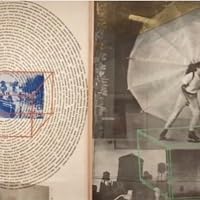
While “Of Grammatology” is a more formal philosophical text, in many ways I prefer “Margins of Philosophy.” The texts are more stylistic, particularly the first one where Derrida plays around the formatting to illuminate how the philosophical work quite literally takes place in the margins of the text. I should also point out that the text ”Signature, Event, Context” which originally was published here was one of the first academic texts I read (in his response to Searle), which I have used in my own work on speech-act theory, so of course it’s very dear to me.
“Every sign, linguistic or nonlinguistic, spoken or written (in the usual sense of this opposition), as a small or large unity, can be cited, put between quotation marks; thereby it can break with every given context, and engender infinitely new contexts in an absolutely nonsaturable fashion. This does not suppose that the mark is valid outside its context, but on the contrary that there are only contexts without any center of absolute anchoring. This citationality, duplication, or duplicity, this iterability of the mark is not an accident or anomaly, but is that (normal/abnormal) without which a mark could no longer even have a so-called “normal” functioning. What would a mark be that one could not cite? And whose origin could not be lost on the way?”
An absolutely essential collection of Jacques Derrida’s essays, which are all rigorously argued as well as playfully written. The highlight, for me, is Derrida’s engagement with speech act theory, “Signature Event Context,” which challenges the view that either intention or context can ever exhaustively determine the meaning of a signifier. Another highlight is Derrida’s long, very metaphorical essay on metaphor, “White Mythology”; which on the one hand shows the ubiquity of metaphor in philosophy and on the other hand shows how problematic the concept of metaphor is, especially the moment it seems to be everywhere. “The Linguistic Circle of Geneva” covers the same ground as Of Grammatology and might even be read as a summary of the latter. There are critical readings of Martin Heidegger (“Ousia and Grammé”), Hegel (“The Pit and the Pyramid”), and Husserl (“Form and Meaning”) — each of them being an immanent critique, really, which judges them on the basis of standards internal to their own thought. “Différance” is as clear a statement of Derrida’s whole project as he makes anywhere. Finally, “The Ends of Man” weighs in on the subject of humanism and its metaphysics; it might best be read as Derrida’s contribution to what is sometimes called “theoretical anti-humanism.”
You have to be a mad man to read this book at the age of 27 when you are just trying to make a sense of life and post college professional life.
I guess that means I am a mad man.
PHEW! What a book. It took me more than 3 years to finish the book. I had to re-read some of the pages just to get a grasp of how JD was trying to postulate a perspective.
Do I have regrets reading this book? No Will I read it again? No Will I remember it's contents in some context of my life? Yes.