Legendary tennis star and expert commentator John McEnroe's acclaimed follow-up to his #1 international bestseller, You Cannot Be Serious.
He is one of the most controversial and beloved athletes in history, a tennis legend and a volcanic, mesmerizing presence. But after reaching the top of his game—what came next? Fifteen years after You Cannot Be Serious, John McEnroe is back and ready to talk.
Now the undisputed elder statesman of tennis, McEnroe has won over his critics as a brilliant commentator at the US Open, Wimbledon, and other Grand Slam tournaments—with outspoken views on the modern game, its top players, and the world of 21st century sport and celebrity. Who are the game's winners and losers? What's it like playing guitar onstage with the Rolling Stones, hitting balls with today's greats, confronting his former on-court nemeses, getting scammed by an international art dealer, and raising a big family while balancing McEnroe-sized expectations?
In But Seriously, John McEnroe confronts his demons and reveals his struggle to reinvent himself from champion and tennis legend to father, broadcaster, and author. The result is a richly personal account, blending anecdote and reflection with razor sharp and brutally honest opinions, all in McEnroe's signature style. This is the sports book of the wildly entertaining, very funny, surprisingly touching, and 100% McEnroe.
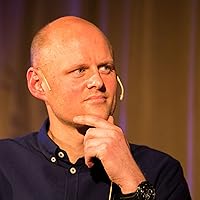
John McEnroe is a American former world professional tennis player. He grew up in Queens, NY and began playing tennis at age 8. McEnroe is often rated as the greatest in the sport. He is also well known for his on court behavior that got him in trouble with tennis authorities and umpires.
McEnroe is also an expert tennis commentator and occasionally makes guests appearances in TV shows. He was married to actress Tatum O'Neal for eight turbulent years and is currently married to singer Patty Smyth. He has five children between both marriages.
How does one review a sports autobiography? By the quality of the great life anecdotes that only a famous person could have experienced? As a literary work: the way in which the prose flows, and the quality of the writing? By reference (in McEnroe's case) to the very visible, and audible, public figure on our screens and radios almost every day?
But Seriously is billed as An Autobiography by John McEnroe. No mention is made of any 'collaboration with..'; and I can believe that much of this is McEnroe's own work. The book jumps all over the place. It's very disjointed. McEnroe's own playing career is spliced with talk about today's great players; his tennis commentating merges into other broadcasting interests; this happens mid paragraph, even mid sentence. Few readers, though, buy this sort of book for literary merit.
I bought his latest book (in a ridiculously over populated field of sports biographies), so despite my big reservations about so many aspects on the book, I'm conscious that I'm the mug for bringing on what turns out to be so predictable. I do admire McEnroe for expanding his career after his halcyon playing days, and achieving fame outside of, and beyond, his own considerable tennis playing accomplishments. He has undeniably established a bona fide second career based around verbal communication. In matters of tennis, his opinion is well informed, and worth listening to.
However, But Seriously is little more than an opportunity for McEnroe to drop names (Mick Jagger, Paul McCartney among others are thanked by McEnroe in his end of book acknowledgements!!), luxuriate in his enduring fame, and generally boast about his life achievements. So much of what he says is so hypocritical as to be embarrassing.
Few people born before 1990 will forget McEnroe's consistently appalling on court behaviour, the intent of which was to gain advantage by disrupting his opponents. Pretty well cheating. Yet McEnroe can blandly criticise todays gamesmanship, and then pseudo laugh about his own behaviour. McEnroe: "The question of gamesmanship arises; the whole thing has become a total joke; people calling trainers, taking medical timeouts, taking bathroom breaks, faking injuries, all the usual stuff. Any loophole in the rules is fully taken advantage of. I should know- I made an art of bending the rules I my day" Either you are poacher turned gamekeeper, and remorseful, or you continue to advocate winning by any means. You can't have it both ways.
One of the great joys of actually being present at a tennis match, at Wimbledon, anywhere, is that you don't have to endure the accompanying TV commentary. You still have the sound of the crowd, and the ball on racquet.
It would appear that such a view is a dissenting one, and John McEnroe more than any other commentator is the voice that viewers tune in to hear, to listen to his particular take on the contest.
When John McEnroe occupies the commentary booth there are two events taking place. There's the match of the day, and then there's the verbose McEnroe and his personal performance. If a match goes the distance it's not only the players showing fatigue. At the end of a McEnroe commentated match I'm also exhausted after the continuous verbal outpouring. He never shuts up. This is the one time I yearn for commercial breaks to afford some small respite. It's not helped by the slavish sycophancy of whoever is sharing his commentary booth. The support act is there to set up the great man. How would you have fared against today's players, Mac? What would you do to shake up British tennis/ American tennis/Australian tennis, Mac (select according to the hosting country)? How would you have handled today's Hawkeye technology, Mac? And so on. Those days of (radio) commentary, of Richie Benaud and John Arlott, painting their subtle and carefully considered pictures, are a million miles away from Mr. McEnroe.
Yet McEnroe describes Brad Gilbert, a contemporary, with whom he has had well-documented disagreements, thus: : " he's (Gilbert) known as a world class talker. And coming from me, that's saying something. If there's a silence he'll fill in and then never stop. : " (The only tennis player of similar vintage who really seems to get under McEnroe's skin is Ivan Lendl. I look forward to his biography, one day)!
McEnroe has already written one autobiography, when he finished playing the main events. You would think that he didn’t need to tell us again what a great player he is/was. It's no coincidence that he's manufactured some media interest in this newly launched (during Wimbledon) book, by talking up the disparity in playing standards between men and women. McEnroe is always talking about him vs Serena Williams as a match up. Donald Trump, no less, likes this sort of confrontational hypothesis. So McEnroe puts it out there again, to sell some books? Or to reinforce how amazing he is, at fifty eight, to be talked about by reference to Serena?
Self-selected examples of McEnroe's greatness dominate the book, but a particularly odious one is on Page 205: McEnroe on Andy Murray and GB Davis Cup success in 2015 " which he(Murray) won virtually single- handed, taking eleven matches out of twelve, just one less than my (McEnroe) clean sweep in 1982- one record that can only ever be equalled, not broken"
John McEnroe is one of the most famous people to have emerged, in any field, over the last fifty years. He gives a lot of joy, and he does great charitable work through tennis.
The doyenne of British sports anchoring, Sue Barker, has been a constant and familiar presence at multiple sports events and BBC TV shows over thirty years. She was an exceptional professional tennis player herself. But despite the wide range of her sporting and broadcasting experience, the one question she is always asked is "What is it like to work with John McEnroe"??!!
Look hard enough, though, and there's another untold story concerning John McEnroe.
"I must admit that as the years have gone, I and my sons in particular, have struggled to settle in a direction in life" (101)
I imagine that I will read any third part of JP McEnroe's life story, and just maybe a greater degree of humility and respect for others, and the realities of family life, will emerge then.
You cannot be serious! This was seriously a terrible book! This is a follow-up to his first book, so I guess it is to be expected that there would be little to tell in terms of his tennis matches and journey. However, the extent to which this book was uninteresting and illogical in terms of layout/timeframe/chronology/etc. was down right absurd.
To start, he told any story worth telling about his tennis in his first book so the only stories left to be told were...yes, about the Seniors tour. OMG! Just like watching it, the "inside truth" about matches played on the senior circuit is seriously snooze worthy. Overall his general takes on tennis are light in this book and really not worth the time investment to read. They are either incredibly obvious and surface level or based upon personal vendettas against certain people (boy he didn't like the scud).
The bigger problem with the book is his belief that people who bought it would be interested in his boring and weird affinity for art and rock and roll music and his countless attempts to "break into" television through hosting gigs or bit parts. The art chapters in particular just drag on with the exception of one interesting anecdote. He also has a very cavalier and nonchalant attitude about drug use, performance enhancing drugs (i.e. you really need to stop the Maria Sharapova love John, my goodness the time you spent talking about Sharapova could have been spent talking about other non-drug using actual superstars of women's tennis).
Oh, and he hates it when women grunt. Male grunts are o.k. But not the female grunts. This was bad y'all. Even the biggest tennis fan (i.e. me) was seriously annoyed at the fact this got published.
McEnroe writes exactly like he talks. Reading his book makes you feel like you’re having a conversation with him. My grandma and I used to watch him play tennis together and she would always yell at the TV, “give him hell McEnroe!” This was a fun read.
In this second memoir written by John McEnroe, “But Seriously” fails to meet the standard reached in his first book, “You Cannot Be Serious.” Like the first one, “But Seriously” is a very quick read, has plenty of humor and covers a wide variety of topics in addition to tennis.
However, unlike the first book, “But Seriously” does not have any structure, theme or any concrete thoughts in which a reader can ponder. This is done on purpose, and McEnroe states this to the reader in the introductory chapter. However, it makes reading the book feel very choppy and the reader will wonder where he is going with certain thoughts and what does a story about hanging with Vitas Gerulaitis at Studio 54 in the 1970’s have to do with his current love of art or his concern about his children and what does the future hold for them?
While reading this, there is a lot of name-dropping, which does make sense when one considers everything that McEnroe has done beyond tennis. That is the overriding theme that I had while reading this book – that McEnroe wants everyone to know how many other famous people he has known and what he has done with them. There is a very long passage about getting to play guitar for one song with Chrissy Hynde (one of his many “good friends” he talks about in the book) and the Pretenders. Sometimes stories like these will connect with a reader, but for me they didn’t.
Sometimes a mish-mosh collection of personal stories can work for a memoir, but in the case of this book, it didn’t feel that way – that it was simply that – a mish-mosh of stories. If this type of book appeals to a reader, then he or she should certainly pick this up and it isn’t necessary to have read McEnroe’s first memoir. Because of the humor and some of the tennis stories, I give it a passing grade of three stars.
I wish to thank Orion Press for providing a copy of the book in exchange for an honest review.
This was a decent read but its about someone I've never been a fan of. The kind of behavior and attitude that McEnroe has exhibited as a professional has always rubbed me the wrong way. There are some great examples of this in this book and yet you have to give the man grudging respect for the fact that he believed and owned his ability and his views of right and wrong. He definitely stood up for what he believed in and still does. Is he sexist and has below average views on many things? Yes he is. But.....he has learned from his past history and tried to be a more even keeled person now, and he has to because he is not longer the star. He is one of us, the few, the proud and the mundane. But according to him, mundane is the beginning of death, and I agree with this 100%. Over all this was entertaining, but nowhere near my usual fare. Still, its well written and a glowing insight into this man and his life, then and now.
But Seriously reads like a five hour chat (sometimes verging into a rant) by John McEnroe mainly about the world of tennis but also ranging over TV talk shows, music, raising kids and other stuff he has bumped up against in an interesting life. It's entertaining and McEnroe is a good storyteller but, every once in a while, you get the sense that he would not be easy to like in real life. I suppose that should not be a big surprise in light of his tennis court persona. McEnroe has a big ego; he has never been shy about going after what he wants which is not necessarily a bad thing but there is something about that essentially American brashness.... There are good points too. He is pretty generous with his praise when he sees excellence or even effort and I admire his wide ranging interests. He had played guitar on the same stage as Chrissie Hynde, is an art dealer and has a sincere dedication to the craft of tennis, still maintaining a high level of fitness to play on the seniors tour and exhibitions even after such a stellar career. I had forgotten how short the career of a tennis player used to be now that we live in the era of Roger and Serena. Borg essentially retired at 25 and I think McEnroe retired at 27 or 28. I guess Jimmy Connors was the every-ready bunny back in the day but he wasn't playing at the level to win majors in his 30s. All in all, an enjoyable read but there is nothing much there to stick in your memory too long.
An insightful book that shares some of the good, the bad, the ugly and the struggles of one of the greatest tennis players. A man that some love to hate, but you must respect. The book comes with several photographs.
I won a copy of this book during a Goodreads giveaway. I am under no obligation to leave a review or rating and do so voluntarily. I am paying it forward by passing this book along to a friend and sports enthusiast who I think will enjoy it too.
Everything you could want from an autobiography - honest, funny, self-deprecating and trumpet blowing. John McEnroe doesn't pull any punches and doesn't sugar-coat anything, but that's what makes it such a compelling read. If you liked his tennis, or like his commentary, then this is the book for you.
4.7. I listen to the Audible version, which John McEnroe read. And it was as if he was sitting in the car with me. I really enjoy this book. I am a Tennis 🎾 fan, and a John McEnroe fan. I think he was honest, he shared a great deal, it was very enjoyable. It’s not gonna change anyone’s life, and it’s not necessarily a book I’d recommend to a large group of people. But personally for me it was a five out of five stars. And I agree with what others said who gave it four and five stars.
I am not a big tennis fan but during the 8O's John McEnroe was always in the news both for his tennis victories and for his very bad behavior. I remember thinking how awful he was but at the same time being kind of in awe of someone who had the guts to behave that way in public. I am a baby boomer female and we were not brought up that way.
I enjoyed very much reading how he has fared as his career has progressed and he has matured. His stories of playing the guitar with bands, art dealing, his ageing parents, a failed marriage and a new one, and being a TV commentator were fascinating. Especially moving was the story of having his aged dog die, likely because I just lost a beloved dog. I love name dropping. I love a good sense of humor. This book has both. I will certainly read his first book "You Cannot Be Serious".
If you met John McEnroe at a cocktail party, you might be awe-struck by the 7-time majors-winning legend, or you might just think he's the same arrogant a-hole he always was, but either way, there's a good chance he'd be one of the smartest guys in the room. And McEnroe has the follow-up to his earlier autobiography to prove it. As you would expect, McEnroe deftly dishes on all our current great players - Roger, Rafa, Djokovic, Andy, the Williams sisters, and the Bryan brothers - not to mention his rivalries with Ivan Lendl and Jimmy Connors, which are still very much alive to this day, often hilariously so. But what you might not expect is that he's humbly and contentedly married to songwriter Patty Smyth, and plays guitar with the likes of Chrissie Hynde and the Rolling Stones. Or that he likes to unwind with Roger Waters of Pink Floyd with a round of golf. Or that he is a major collector and dealer of contemporary art, and hobnobbed with Andy Warhol and other celebrities as a young star in New York. In addition to all of this and much more, John is a terrific storyteller, recounting humorous anecdotes from stints as game show or talk show host, and cameos on "Curb Your Enthusiasm" and other productions.
I can't say enough about the audiobook, which of course he reads himself. If you've heard McEnroe doing tennis commentary, you'll know what a distinctive voice he has, and there's no doubt that McEnroe is one of those people who is a great narrator of his own story. You'd expect nothing less from the brash kid from Queens who always did things his own way, but in doing so has really grown up a lot. Seriously.
An insightful book that shares some of the good, the bad, the ugly and the struggles of one of the greatest tennis players. A man that some love to hate, but you must respect. The book comes with several photographs.
I won a copy of this book during a Goodreads giveaway. I am under no obligation to leave a review or rating and do so voluntarily. I am paying it forward by passing this book along to a friend and sports enthusiast who I think will enjoy it too.
John McEnroe's first autobiography Serious came out fifteen years ago, it was a really enjoyable and easy read, shedding a new light on tennis superstar. This follow up remains an easy read, John doesn't take himself so serious, however, the book struggles with flow. This is deliberate according to John at the beginning to not follow chronological order, but this means there's no continuity and I struggled with this approach.
I really enjoyed Johnny Mac's first book and decided to give this one a read as well. He's very self aware and a good storyteller. If tennis and the world around tennis is of interest then check out this book. He also has what I think are some insights into what it's like to go from world #1 tennis player to life after pro tennis.
Okay, I must start by saying I am an unabashed Mac fan. Ever since the historic 1980 Wimbledon Borg-McEnroe final, this former shy high school freshman tennis wannabe got a Mac-fueled push to actually join a sports team in high school. And wasn't Borg cool as hell, too? After the brick wall of the junior high in grade school and against my brother in the street, I got bit by the tennis bug early on. Hard. At perhaps at the right time in my own life when I was searching, I got on board with tennis. (And no, I've rarely argued on court) But after 30 years+ of fandom, parenthood, my own rise as a club player with a deepening understanding of the nuances of the game, and now with failing knees, this reader in her early 50s connected to the introspection Mac feels at this point of his life. But this review's not about me, is it?
In case you didn't notice, to enjoy this book as much as I did, it helps to be a tennis player and fan. In spite of a turbulent and well-publicized start, few can deny that Mac is a no-nonsense, articulate insider of the game, and hey, who doesn't enjoy a little celeb lore in a fun summer read? But what I mean to get at is the sense of layers of the man and his unique story, whether explaining stylistic differences between the games of tennis greats, or the challenge of reinvention in middle age, being with aging, opinionated parents, or in each of our unique parenting challenges that criss-cross socioeconomic and geographic lines. What kid thinks her parents know anything, even John McEnroe's?
In But Seriously, we get a glimpse into the life into arguably the best serve-and-volleyer, ever, in the game. A college teacher myself, a fave part of the book was the inclusion of his daughter's college essay about playing tennis and being a McEnroe. Can you even DO those things simultaneously amid constant comparisons? Pretty confident around the game myself, I certainly don't know if I could. To sports fans everywhere: Isn't it kinda cool that even though he's grown up on the court (yes, I refer to behavior here), Mac still, at 58, gets a huge charge out of working out regularly and competing to the highest level his old body will allow? Me too, Mac, me too. Maybe I should joke about it a little more, too.
At the same time, I think the significant influence of 2nd wife Patty Smyth is not lost. Mac explicitly and implicitly gives her much credit, for keeping it all together during extensive travels as commentator and seniors circuit player, being a true partner and best friend, as well as someone more than able to give him a swift kick in the ass when he's needed it. If you don't like tennis, what did you expect from this book? Plenty of us are still trying to make sense of the hand we've been dealt, and I give Mac credit for doing that, while entertaining us at the same time. If I hold back a star because he could have gone deeper into explaining himself, well, really, that's minor.
Until I have some grand statement of what it all means, I won't hold John McEnroe to it. I enjoyed hearing about a life journey from the back side of middle age--divorces, highs, lows, challenges and fun--a journey of which I've followed on the very public side. Now, I can say I've heard the tale from the other side...and had a damn good time doing it.
So picture this… you’re in Australia alone in January, and you’re traveling up and down the continent with lots of long flights. You breeze through the book you brought. You’re capping the trip off with the Australian Open. You’ve read Andre Agassi’s autobiography “Open”. You’re as big of a tennis guy right now as you’ll ever be. You don’t know it yet but you’re about to run into Coco Gauff and basically become best friends with her. You want another book to read for this trip and you’re sure you will fly through it as quick as the first book you had on the trip. You’re in Cairns in the Australian summer time and you want some time in the AC. So you walk to the mall and find a book store in it. Nice. It’s not too big- also nice. Not too many options to overthink what book to go with. You wander around the store and do the weird- squat and read- bookstore thing that everyone does in the, always very thin, aisle while perusing. You see an autobiography by a tennis player, and you think wow. How perfect is this. This is my book. Fast forward 7 MONTHS in the future and you’re on a flight back to San Diego from a bachelor party on the east coast. You’ve already slept several hours of the flight and you wake up with a couple hours left and you are STILL READING THIS BOOK that you bought in Australia all those months ago. Did I put it down and move on to other books in between? No. Of course I can’t do that. I can’t give up on a book. I can’t admit defeat. Instead I just ignored reading all together because that is such a better option. But it’s done, and I’m free. Now to be fair to old John McEnroe, I didn’t know that this was his second autobiography he’s written (kind of pretentious move if you ask me). Because look his life was so interesting he wrote a book about it. And then his life was way more interesting than just the book he wrote about himself, that he wrote another one. Do I think I would have liked his first autobiography more than this one? Almost definitely. Do I think I would have liked his first autobiography in general? Who’s to say? Maybe. But this book was brutal for me to pick up and read each time. I can’t tell you the countless times I brought it to the beach, on a flight, on a camping trip- and it stayed in the bag. I wouldn’t even break it out to be my classic 3 page sleep aide. I do find it truly remarkable I made it through the ‘second life’ of John. The after tennis life of… a famous tennis player. I’m sure that’s interesting to plenty of people. Most probably old people, most probably tennis fans. I’m neither of those things despite how my back feels sometimes. But I’m free and excited to move into a new chapter of my life- being Chapter 1 of a new book. As Natasha Bedingfield said in her 2000s hit song that I’ve loved long before Sydney Sweeney made it ‘cool again’ for all the Gen Zers who probably all made tik toks about how dreamy Glenn Powell was in the movie for basically just negging Sydney’s character the whole time, the rest is still unwritten. Not the words in the book chapter, those are definitely written already, but you know, my thoughts and journey of reading it is a blank page before me. Time to open up the dirty window and get the smell of John McEnroe’s sweaty shoes (that he didn’t even wear while playing tennis because he retired in 1992!)- out of here. Today is when my (next) book begins.
John McEnroe is someone who, in his own words, people either love or love to hate. I find myself in neither camp. I know his history and I currently enjoy him as a tennis commentator - I think he is the best one of the bunch, bar none - but this autobiography helped me get to know other sides of the man - husband, father, son, brother, art lover and dealer, rock musician-hopeful, druggie, surprisingly intelligent and articulate, talk-show and game show host, friend to many famous and influential people. Of course, those of us old enough to remember watching him play tennis in the 70's and 80's also recall him as the Super Brat. I recall how he would yell at the chair umpires and linespeople for having a call not go his way and thinking what a terribly unhappy person he must be. And I did not respect his attitude on the court; even as a young person I knew his behavior was wrong. I came to like and respect him as he aged and became a tennis commentator. It sounds to me like meeting and marrying his wife was the best thing to happen to him. I am unfamiliar with her, but might have to take a listen to her music.
So why do I neither love or hate the man? I appreciate that he laid out many of his faults and made himself vulnerable in the book. Nobody is perfect and he admits that he is far from it. I respect that and I like hearing about the ways he has changed. I think he and I share some opinions and values but are far away on others. I was a bit taken aback at his opinion about doubles. I always moan at the lack of doubles coverage on tv when watching the majors and now come to find that John might have some influence on those matches not being broadcast? He might be surprised to learn that there actually are MANY of us who don't understand why doubles do not get broadcast because we play it and love it! I am saddened about his dismissal of God and faith, although perhaps it is just religion/Catholicism he rails against. It seems a deep faith would have been a great help to him over the years, not to mention to his children. Also, he doesn't really grasp what it is like to be a middle-class American, although he considered himself one growing up. He now has at least 3 homes, a valuable art collection, and more money than most of us could ever imagine. It feels to me that he is too far removed from the ordinary folks to understand us.
The only part of the book I disliked was his daughter's college essay, describing what a poor little princess she is - ok, my words, for sure. But having McEnroe for a name really is not the terrible curse she wants us to believe. Try having an alcoholic, abusive or absent parent, a debilitating illness or injury, being hungry or homeless. A couple of his children have gone astray, but he didn't go into too many details other than drugs. Apparently, one of the sons anyway. That doesn't make me dislike him, but it doesn't make me love him. He is, like all of us, a human with multiple flaws - he just has way more money and louder opinions.
"Ain't no fun (Waiting round to be a millionaire)" heter en gammel sang av AC/DC. Hvis det er en trøst for alle ikke-millionærer der ute, er det ikke mye gøy å oppnå den statusen, heller. Det virker i alle fall som John McEnroe kjeder seg grundig som rik eks-tennisspiller i selvbiografien But Seriously. Jeg plukket den med meg på Gatwick lufthavn på vei hjem fra London.
Boka er selvopptatt og navnedroppende til det ekstreme. Noen vil huske at McEnroe skrev en selvbiografi tilbake i 2002, og denne boka er bare en oppdatering av hva som har skjedd i livet hans siden den gang. McEnroe har penger nok for resten av livet til seg og sine. Så hva fyller han dagene med? Han treffer kjendiser, flere kjendiser og enda flere kjendiser. Han samler på kunst. Han er sammen med familien. Han spiller med bandet sitt. Problemet er bare at McEnroe er en middels forteller av under middels interessante anekdoter. Her er også et par tekster av kona, et par av barna hans og fotomateriale som koker suppe på spiker.
Men hva er bokas TEMA, da, hører jeg dere norsklærere der ute spørre om. Jo, boka handler om aldring. John McEnroe begynte å kjenne seg gammel i tennissammenheng da han var 25 år gammel, altså for 40 år siden. Denne boka beskriver de mange forsøkene han gjør på å finne tilbake til den tenningen og spenningen han hadde som aktiv utøver. Det er beint fram superkomisk hvordan han legger for dagen en sterk trang til å slå sin gamle rival Ivan Lendl i old boys-kamper som betyr null og niks. Kanskje det er et utslag av anger over at han ikke brydde seg mer i siste del av den aktive karrieren sin, siden han nå jager meningsløse seire i tennispensjonistlivet?
McEnroe er en okei TV-kommentator, men analysene hans av dagens toppspillere (rettere sagt 2017, da boka kom ut) er middels synsing som enhver fan kunne prestert.
Unødvendig bok, grav deg heller ned i et McEnroe-kaninhull på YouTube.
I got this book because I love McEnroe's tennis commentary. In the booth, alongside Chris Fowler and brother Patrick McEnroe, he is honest and funny. Well, his book is far from being as entertaining. For the most part, it just drags on......in between the endless stories of celebrities with whom he has rubbed elbows, there are his efforts to be politically correct (he cares about female athletes and declares himself a feminist only because he has daughters?! I guess he was tired of the backlash for speaking the truth about men athletes vs women athletes and that they are actually different.). He makes it a point to show how evolved he is because he makes breakfast for his kids but has a travel schedule that rivals someone who is still active on the ATP tour. There's a feeling that there isn't a balance of power in the marriage, except to hint that "Patty would not like that" "Patty will get mad"."He tries too hard on so many levels and portraying his marriage as a true partnership falls flat. Patty comes off whiney and judgemental. Then, there is the attempt at apologizing for growing up privileged. It is nauseating to hear him get close to saying he is sorry for having a father who worked so hard to provide a great life for his family and be able to afford the expense of tennis because there are poor people in the world who can't afford tennis (funny, Francis Tiafoe found a way). Mc has made himself a millionaire and should be proud. He says he's fiscally conservative and socially liberal (read: Let the government take care of people as long as they don't touch my millions to do it). There are times where he talks about the tour and his impressions of other pros. Sometimes, it is interesting. I was determined to finish this book but it was as captivating as a high school student's journal.
John McEnroe is one of those rare sporting individuals who has been able to write not one but two tell-all biographies that are engaging and very readable. Many sportsmen and women have tried and failed to do so,
As in his earlier book You Can't be Serious, But Seriously an Autobiography pulls no punches and is a follow-on covering his life after he retired from the top tier of the pro tennis world. He is unfailingly honest even at his own expense. His new life as a commentator is well documented here and its interesting how he moved into this new role and quickly established himself as one of the few former players who could bring something different to the millions of tennis viewers around the world.
In this update we also get to learn about McEnroe the father, the husband, the art collector and the charity organiser. There's never a dull moment as he traverses these worlds with a frank and often self deprecating approach. Although he retired from top level tennis its very apparent that he still has a hunger for the game, and although now in his fifties is still capable of bringing his passion to the court for exhibition and seniors tour games, mostly without the brattish style that he brought to Wimbledon when he surprisingly made the Final when he was just eighteen.
This is one of those sports books that doesn't go by the often boring formula as the sports-person looks back on their career. Not sure if there's another book in prospect for John McEnroe but this one and his earlier autobiography will do just fine.
3.5 Stars. Though this probably had the usual ghost writer that accompanies most celeb memoirs, it does very much “sound” like McEnroe’s voice, if you enjoy his personality, you’ll enjoy this well enough.
I don’t always agree with what he has to say (especially not with the idea that he could have defeated Serena long after he retired or that Brad Gilbert, generally one of the best parts of any ESPN broadcast, talks too much), but I like that as usual McEnroe doesn’t sanitize his opinions here, he doesn’t sit on the fence for fear of landing on the “wrong” side, it very much would not “sound” like him if he weren’t occasionally teetering on the edge of cancellation, right?
Plenty of ground is covered here, from hosting a game show and a talk show to how surprisingly seriously he takes exhibition and seniors matches (not a sense I’ve gotten from other players I’ve watched in those kind of events). McEnroe also throws in his two cents on players new and old, drops a ton of celebrity names, discusses his passion for music and the art world and touches on some family stuff, with short contributions from his wife and daughters.
This does suffer a bit from second memoir syndrome, in that arguably the most pivotal aspects of his life were probably covered in the previous book (which I have not yet read), leaving this one feeling kind of like the commentary booth during a blowout tennis match, when they just kind of start rambling about anything and it seems sort of like time-wasting filler yet somehow still entertains, that’s very much this book.
I listened to the Audiobook narrated by John McEnroe. I enjoyed his narration. I have mixed emotions on this book. I grew up in Queens near his family. I had my own take on his younger years and was actually shocked to hear some neighborhood information I had not known. I am glad John seems to be very stable mature and married to a great woman who I had no idea grew up in Queens. I’ve read a few autobiographies from former Douglaston residents. They refer to the area as middle class. I think these fellow neighbors need a reality check. Most houses in Douglas Manor sell for over 1 million so not really a middle class neighborhood. But to the Uber rich I guess it probably is. Maybe the authors want to say they had a rough childhood in Queens but please not true at all. So please stop with the class thing. That’s my pet peeve. Ok John has many Rock Star best friends. Ok I’m happy for you. The best part of the book is the information on tennis and his family. That is the interesting stuff. What comes through is John’s love for tennis and his family. Johns parents were great people who were well respected. John was raised right. I can hear the love of tennis in John’s words and that is beautiful. The art information was interesting too. If you enjoy tennis I think this book is great. John is a great sports commentator too. I also think the fact tennis is a life long sport is wonderful.