5 beautiful, insightful stars!
This is probably the longest review I have ever written, but the moral of this story is so powerful, yet written in a light, fun way, it has stayed with me weeks after finishing it!! Also, it was a wonderful buddy read with my GR friend PorshaJo!! Thank you for reading it with me. It had sat on my shelves forever and I might not have ever gotten to it had we not decided to read it together - and what a beautiful story I would have missed out on!! This will definitely go on my favorites shelf!
The Trouble with Goats and Sheep is charming story set in two different decades -1967 and 1976. In 1967 a baby goes missing - in 1976 an older woman, Mrs. Creasy disappears, both from the neighborhood estate (Avenue). The backdrop of the story is set in the summer heat wave of 1976 and everyone is blaming the weather, as well as each other for all going wrong on the Avenue. The heat not only reveals secrets from the 1967 storyline, but is bringing out the worst in everyone. One Sunday, Grace, spunky ten year-old and narrative, and her fragile ten year-old friend, Tilly, decide to go to church to ask God to help them find Mrs. Creasy. When they ask the vicar how to stop people from disappearing, he tells them "You have to help them find God." After more questioning they are told that God is everywhere and will keep everyone safe. The adorable little girls, taking everything literally, decide to spend their summer holiday making everyone safe by finding God, and Mrs. Creasy, by becoming amateur detectives. They go door to door disguising themselves as Scouts. Their bored, and sweltering, neighbors are all too eager to talk about anything they will listen to. One house the girls are warned not to go near is No. 11, home of neighbor, Walter Bishop. He has been judged and set apart from the rest by the Avenue residents. The neighbors have taken matters into their own hands, as we will learn in the 1967 timeline story, and have judged him based on appearances.
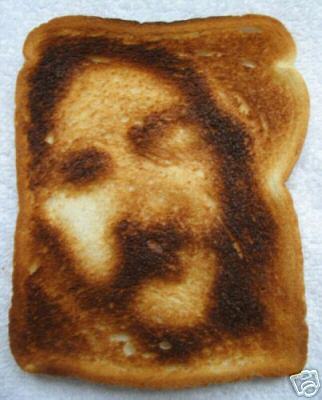
In the girls' search for God, Tilly finds Jesus, on the most unimaginable surfaces (possibly due to the heat) - a rusty drainpipe. Headline reads "The Second Plumbing." The neighbors argue and judge who should sit closest to Jesus and guard Him, based on their worthiness. Not all the neighbors are convinced it looks like Jesus, but as Tilly says, "...it doesn't really matter if it's Jesus or a stain on a garage wall. ...it brought us all together, didn't it. ....and after all, Jesus is definitely in the drainpipe. He always has been. God is everywhere. Everybody knows that."
I love the symbolism of Jesus portrayed as a goat. One of the neighbors explains to the girls that He was crucified because He was an outsider, an "unbelonger", "because He had different views and beliefs...and others were very hard on anyone who didn't think they way they did." Tilly replied, saying, "He was probably the biggest goat of them all." A very good point of how quick we are to judge anyone who is not like us, as Jesus was judged the same way.
The character development in The Trouble with Goats and Sheep is exceptional and it is not surprising after reading that the author, Joanna Cannon, is a psychiatrist. She was inspired to write the book after meeting a lot of people and observing they share a common feeling of "unbelonging." She met lots of people who stood at the 'edge of the dancefloor, where they try to copy what everyone else is doing, but never quite get it right." She saw the sheep as respectful, ordinarily appearing people and the goats as different and didn't quite fit in - the ones who stood out. Cannon saw lots of people, not just in mental health facilities as a 'silent herd of unbelongers...the goat.' "It is only when something goes wrong, and society needs someone to blame, that the sheep turn into the goats and say we knew they were strange all along, and of course they must be guilty, because they just look the type, don't they?" The trouble is, behind most sheep you will find a goat.
The book is so insightful and a powerful lesson in how we should live our lives. The story is about judging others, belonging and 'unbelonging' and how those we judge as different are mistreated. Cannon said that she hoped the story would help us be kinder to one another - to those "standing at the edge of the dancefloor.....and realise that unbelonging is actually a belonging all of its own."
My favorite quotes from the book::
I still hadn't learned the power of words. How, once they have left your mouth, they have a breath and a life of their own. I had yet to realize that you no longer own them. I hadn't learned that, once you have let them go, the words can then, in fact, become the owners of you.
You only really need two people to believe in the same thing, to feel as though you just might belong.