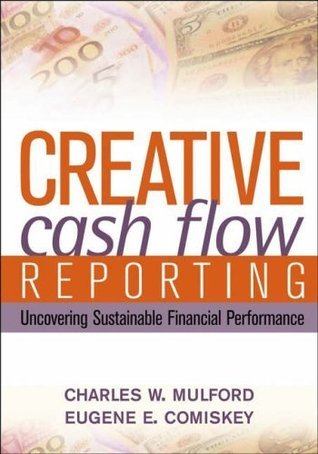
Successful methodology for identifying earnings-related reporting indiscretions Creative Cash Flow Reporting and Analysis capitalizes on current concerns with misleading financial reporting on misleading financial reporting. It identifies the common steps used to yield misleading cash flow amounts, demonstrates how to adjust the cash flow statement for more effective analysis, and how to use adjusted operating cash flow to uncover earnings that have been misreported using aggressive or fraudulent accounting practices. Charles W. Mulford, PhD, CPA (Atlanta, GA), is the coauthor of three books, including the bestselling The Financial Numbers Identifying Creative Accounting Practices. Eugene E. Comiskey, PhD, CPA, CMA (Atlanta, GA), is the coauthor of the bestselling The Financial Numbers Identifying Creative Accounting Practices.
- Cash flow, unlike other metrics required by GAAP, is harder to fake. However, during down terms, people are more focused on cash flow, which gave companies incentives to fake. The author noted that while it does occur, it only occurred through outright fraud and will eventually get caught. Companies have way more wiggle room to fake metrics such as EPS and revenue, cash flow is usually the last place they’d fake
- There are numerous method to increase cash balance, one of them being overdraft: a company could overdraft (increasing liabilities, under GAAP) thus boosting its cash balance (also increasing asset)
- Selling of assets (or gaining money through selling of financial assets) could also boost company’s cash balance. Yet, those are often one-time only. Cash provided by operating activities are the gold standards
- Really try to understand how a company gets its organic income (often categorized under “operating cash flow”) from: a company could use numerous metrics to disguise the income
- Securitization of future earnings is an easy way for companies to boost temporary earnings (at the expense of future earnings). Just by reading the income statement alone would not be sufficient to know how it happened as the company would simply have higher earnings, less receivables (in the future), thus reading footnote would be crucial (as well as reading management discussions). Author further noted:
…before operating cash flow can be used… it must be adjusted to remove non recurring items to obtain a sustainable measure of cash flow.
- Software R&D needs to be analyzed company-to-company. Since amortization of software development can’t be easily quantifiable
- Before reading cash flow statement, first read the footnotes - see the irregularities companies pose (and their ethics). In addition, this allows the reader to reconstruct cash flow statement, removing “misclassified and non recurring items”
- Classification of “operating activities” or “investment activities” can’t be interpreted literally. One has to carefully understand how a company does business - a business that required by GAAP , classifies income as “investment activities” could really well be “operating activities” in practice if the said investment activity is the business’ routine course of action
- Capitalization (rather than expensing) was an accounting metric that was deployed by HealthSouth. Perhaps one downside of capitalization would be in order to balance the book, said firm would have to increase their asset (in order to capitalize over years). Their net cash generated each year (not net profit) compared to their asset would be abysmally smaller by ratio (returns of capital) if a firm continues to capitalize
- (Perhaps a good way to measure companies is to always expense all their expenses/capitalizations, regardless of if it’s operating or investing. This while penalizes companies on paper for doing routine work, does set a certain amount of margin of safety should things go wrong. At the end of the day what I want to see is a company that is so efficient that they don’t need a lot of asset/expenses to generate cash, and the cash they have are returned to shareholders either through repurchase (preferred) or dividend)
- Bank overdraft: happens when the company owes bank money, but sometimes companies would list the overdraft amount as cash (and didn’t disclose the overdraft as short-term debt)
- Book overdraft: not an overdraft to the bank, but often a technicalities between check being written (would trigger an accounting event, forcing company to declare the money gone) and check being actually cleared (maybe because the client is slow, or maybe due to bank being slow). The money is technically still under the company account on paper, but in actualities belong to someone else
- When a company sells its accounts receivable, Special Purpose Entity is set up so the seller company’s status would have no effect on the receivables that the company sold going forward
- When an accounts receivable is sold, the money is then lumped into operating cash flow (not financing cash flow), which would lump up the earning for said quarter, at the expense of future quarter
- Temporary vs Permanent accounting differences: Temporary are mostly due to accounting differences (such as consolidation over time of depreciation where shareholder accounting uses straight line whereas tax accounting use accelerated, and after certain years, those metrics will be merged resulting in a temporary accounting differences), whereas Permanent difference will not be merged (such as life insurance payout that is not taxable)
- Direct vs Indirect method of cash flow: Direct methods shows more precise cash entries, whereas indirect only shows net income then adjustment for other entries
- One important thing one ought to watch for is undervaluation of liabilities. Things like pensions and warranty are important to watch out for (other obvious liabilities, such as debt are more likely to be obviously presented - unless it’s an intentional fraud wrapped in SPEs)
- The author suggests to look at the ratio between Excess cash margin to see if a company’s cash flow and earning grow proportionally (in balance of either end could signal problems with the company, especially over long periods of time), equation: ((Operating cash flow - Operating earnings)/Revenue) x 100
- Watch out for increase in liabilities assets, such as account payable, deferred tax liabilities and accrued expenses payable. A struggling company can make their book look good temporary by delaying paying things (that eventually has to be paid). Another common strategy is to use accounting tricks to extend depreciation/amortization periods (Thus the company’s asset would decrease slower)
- Free Cash Flow, especially if a company foresees itself having the ability to grow for decades to come (e.g. Amazon), can be seen essentially as an interest free loans (especially if the company grows so dominant that they can also stretch out the payment terms, e.g. Walmart). Or alternatively, in the case of many tech companies, payments are collected up-front, it’s even superior because they have no need to seek lost provisions
I got this book from my accounting prof, and I’m very thankful I got to give it a read!
Specifically, I’m reading this book after taking a few accounting classes - meaning it serves to bolster my past experience. In my opinion this is how the book should be read. Yes, the authors do explain every nook and cranny of the 3 statements but it’s in your best interest to read what matters to you - and the authors do a fantastic job of explaining those areas well.
Creative cash flow reporting is an in depth analysis of how companies, accountants, investors and all other parties use cash flow as well as how it should be analyzed when underwriting a company. Not only is there in depth theoretical analysis, but the authors give phenomenal case studies for every concept.
In a world where earnings have continued to be manipulated, the book shows how cash flow can also be shifted in the same way. However, unlike earnings the authors paint some of the key signals you can look for to see manipulation.
Some of the coolest aspects where tracing CFO vs EPS, how the accounting standards started, hiding CFO expenses in CFI/CFF, management incentives around CF, and how companies can manipulate WC/CapEx for ST CF.
Everything was very helpful, and I’m thankful that my prof let me give it a read!
— Notes:
Important OV - EBITDA from the merger boom - amortization of Goodwill - Xerox had growing EPS with declining CFO due to add-backs - Moving from trading security to AFS can obfuscate EPS - Capitalized OpEx - good if steady state R&D (ex IBM) but if malleable then not economic reality (ex American Software or Worldcom) - Acquisition of WC - you can acquire WC in an acquisition as a use of cash but then liquidate the WC as a source (ex AutoNation) which artificially boosts CF - Vendor financing (stretch DPO) to gain CFO - HD did this (stretch from 22 -> 34) to create $1.1bn in cash - Client financing - Dynergy sold 9 month right to nat gas and promised to pay over 51 months -> recorded as CFO - Misclsdsified investment - In project Nahanni Enron got $500m loan and then sold it - recording the cash as CFO when it was CFF - Tax on gains - huge taxes on sales of subs - 5bn sale of BMS’s Clairol sub by down $1.1bn in cash taxes - Tax benefits from options - MSFT changed options from CFF to CFO which led to lapping boost due to new rules - In 99’ Xerox boosted CFO by 1.5bn by selling its AR
History - History - GAAP started in the 60s then SFAS 95 started the CFS in 1987 —> the term “funds” was used before by adjusting the I/S - 1902 - US Steel the first co with proper statements - just a B/S - 1939 - first proper treatment but accounting boards - 50/60s - started accrual accounting with add backs of non cash expenses (direct CFS) - CAP -> APB -> FASB
Changes in uses of cash - AmeriCredit changed vehicle financing pay back from CFF to CFO -> causing a huge restatement of CFO Down - Inventory is free from D&A so firms can reclassify merchandise there to raise EPS - ex Aaron Rents that did the opposite - Capitalized advances - ex pre-paid Legal services booked 3 years of subscriptions with a new sub - Deferred CACx policy acq cost, etc - really raises margins - Tyco reported CAC through dealers as CFI which boosted NI and CFO - Capitalized Interest - if interest was used to finance PP&E or smthn it can cause an outflow through CFI instead of CFO (ex Delta and KB Home) - SWE costs can be capitalized in and interest expensed too - Classifying ST investments as trading securities and then selling them boosts CFO (ex Ford, Nahtica Enterprises, Curtis Wright,etc) - Notes receivable consumer financing fraud cases: Motorola, Qualcomm, Notrtel Networks Corp, HD - ^^LT receivables are exceptionally bad - Sales type lease receivables: ex Xerox sells copiers on a lease basis - Insurance claims: reported as CFI inflow but can make EPS look too low (American Media x Anthrax, Gulfport, Albany Intl Corp) - Bank overdraft come in through CFF ex Amgen - Acquisitions can spike CFO - assets sale leads to CFO up, but the initial acquisition was CFI outflow! - ^^ex Tyco told Raychem to juice up AR pre-acquisition so they can sell them off post deal to boost CFO - Comptronix - gave fake vendor checks to the bank for cash and then used that money to buy PP&E from those vendors —> boosts CFO but equally cuts down CFI - Capitalize OpEx (HealthSouth, Chambers dev co, WorldCom)
Ch4 - CFO/CFF? - Enron: EPS growing but not CFO -> to quell this Enron issue loans through special purpose entities (SPE) to banks for future nat gas - Dynergy: bought nat gas for below mkt rates from an SPE under the agreement that it’ll sell it back at above mkt rates—> all CFO inflow - ^^ both are “trading activities” so not CFF - 3com: they sold puts (basically a buyback) but also issued calls - so in effect they did a buyback at a stable price and nullified the impact of both - Shareholder loans: blue book Intl reporting “consulting” loans to shareholders in CFF - Debt issuance / accrued interest - CAN be capitalized in CFI and amortized if tied to PPE - Dividends on pref can be reported as a liability under SFAS 150 - Book overdraft: more check nominal value on hand than cash ln BS - usually reported as a AP credit (4% of companies have this) - Bank overdraft - when the check required for the co EXCEEDS the banks cash availability - book becomes bank overdraft if taken to a bank to pull $$ - ^^ can be an issue when looking at net debt because overdrafts are included - ^^61% of companies include it in CFF instead of AP (16%) - AP extension can artistically boost CFO - ex Ford stock crashed post GS report - Huge deferred revenue cuts can signal forward EPS decline - ex Symbol Tech or Avaya as the opposite - Notes payable - show up in CFO under operations of floor plans (ex URI) - Delphi / GE: used a financing agreement where they got GE financing for CFO inflow y1 but then recorded CFF outflow y2 as they paid them back - AR sales: sold at a discount, but they’re placed in an SPE where cash collected by the co is used to buy more AR and put in th SPE - co usually has to also pay some interest - ^^ means the sponsor has no risk - ^^con - kills future collections which can lead to uncertain CFO drops (ex Halliburton) - options / buybacks: bc options are issued at midpoint price vs buybacks that are negative - for MSFT it could look more conservative than reality - Capital lease: 1) asset transfer at end of period 2) right to buy asset at less than fair value 3) lease term is 75%+ economic life 4) PV of lease is 90%+ fair value - Global crossing: converted leases to capital leases to boost EBITDA (rent counted as interest now)
Ch5 - income tax and CFS - Gain on sale = tax on new cash AND the gain which cooks you - ex Tredegar - Carry forward / back: boosts/lessens CFO - Option benefits - can boost CFO (ed MSFT by 40%) - NOL: can carry forward 20 yrs, but only 5 yrs for capital loss - MD&A liquidity + capital resource section can show tax discrepancies - Ex. Q logic (options), Cisco/Forest Labs (carry forward benefits) - Keys for tax impact: high ETR, spike of BS tax payable, CFO boost from NI, || y2 -> lower tax payable, MD&A explains
Ch6 - non recurring sources/uses of CFO -
Ch7 - measuring CF - Layers 1-3 based on certainty of non recurrence - EPS>CFO - some manipulation - EPS- Cycles - EPS fluctuates but CFO will stabilize - Most 1x changes - taxes and vendor reliance - Capitalized expenses - make CFO go up - Declining ECM and declining future EPS - Rev Manipulation (Xerox, Sunbeam, Enron) - Declining ECM and higher future EPS - financing (ex TGT’s credit cards)
Creative Cash Flow Reporting sat in relative anonymity until the CFA Institute added it to the 2007 curriculum. Mulford and Cominsky teach readers how to identify misplaced cash flows and explain "best practices" to adjust statements to reflect economic reality. What Ted O'Glove did for exposing manipulated earnings, M & G offer the same kind of insight around manipulation of the statement of cash flows.
Must read for security analysts. Some of the accounting is out of date, but the message is still solid. Adjustments of cash flow should also be taken with a grain of salt - not sure I agree to 100% of how he gets to sustainable cash flow. However, this is a great read. I'd give it 3.5 stars.
This is a solid book to improve understanding of the cash flow statement. There are some very useful takeaways for managers and analysts. I plan to re-read the book.
Some really useful stuff, but also some deathly dull stuff and a fair bit of verbosity and repetition. Clearly from my score I felt that usefulness carried the day.
Enron. Worldcom. Tyco. Healthsouth. Sunbeam. Cendant. Just the mention of those names puts a chill and fear in the hearts of investors. Each represents a recent accounting fraud that burned investors badly. Shell-shocked investors began to feel helpless, wondering if investing in securities is a loser’s game. Is the game rigged? they wondered. If not, how do you win? What’s the holy grail of successful investing?
I believe that I have found the holy grail. The new book by Charles Mulford and Eugene Comiskey, Creative Cash Flow Reporting: Uncovering Sustainable Financial Performance, points us to it. Find a company’s sustainable cash flow from operations. Use it as a means of finding the creators of real value and as a way of confirming reported earnings.
Case in point: Enron. In the year 2000, Enron reported cash flow from operations of $4.8 billion. In contrast, its legitimate, sustainable cash flow was -$3.1 billion. That same year, the company claimed that it generated about $1 billion in profits. Mulford and Comiskey provide a simple and sensible approach for calculating sustainable cash flow from operations. They show how easily reported cash flow from operations can be inflated by the way items are classified among the operating, investing, and financing sections of the statement of cash flows—typically well within the boundaries of generally accepted accounting principles. Consider, for example, the effect of acquisitions on cash flow. Specifically, cash paid for working capital is shifted to the investment section rather than being shown as a reduction in cash flow from operations. Many other books on financial analysis focus on techniques that improperly inflate profits by manipulating revenue or expenses. But none, however, points us precisely to the holy grail: sustainable cash flow from operations. Read this book and begin your journey. This may be the most important book in your investment collection library.
Dr. Howard M. Schilit, CPA Author, Financial Shenanigans:
Contents Foreword xi Preface xiii About the Authors xv
1 Seeking Sustainable Cash Flow 1 An Artificial Boost to Operating Cash Flow 3 Classifying Cash Flow 5 Sustainable Cash Flow 9 Creative Cash Flow Reporting 18 Ignoring the Statement of Cash Flows 29 Cash Flow Analysis 30 Plan of This Book 32 Summary 33
2 Structure of the Statement of Cash Flows 37 Historical Background 38 Arrival of the Statement of Cash Flows 49 Non-GAAP Measures of Cash Operating Performance 68 International Differences in the Statement of Cash Flows 73 Summary 74
3 Is It Operating or Investing Cash Flow? 81 Investing Cash Flow 8 GAAP Flexibility: Is It Operating or Investing Cash Flow? 91 Beyond the Boundaries of GAAP 114 Summary 116
4 Is It Operating or Financing Cash Flow? 121 Financing Cash Flow 125 GAAP Flexibility: Is It Operating or Financing Cash Flow? 131 Beyond the Boundaries of GAAP 154 Summary 155
5 Income Taxes and the Statement of Cash Flows 159 Tax Reporting Essentials 160 Classification of Tax-Related Cash Flow 166 Nonrecurring Income Tax Cash Flows 180 Summary 203
6 Nonrecurring Sources and Uses of Operating Cash Flow 209 Characteristics of Nonrecurring Items of Operating Cash Flow 211 Examples of Nonrecurring Cash Sources and Uses 211 Management Identification of Nonrecurring Operating Cash Flow 213 Locating Nonrecurring Items of Operating Cash Flow 218 Cash Flow Tracking 231 Summary 235
8 Using Operating Cash Flow to Detect Earnings Problems 269 Relationship between Earnings and Operating Cash Flow 271 Earnings Supported by Artificial Means 284 Excess Cash Margin 290 Summary 300
10 Understanding Free Cash Flow 345 Uses of Free Cash Flow 348 What Is Free Cash Flow? 358 Free Cash Flow to Common Equity: A Closer Look 362 Capital Expenditures 370 Acquisitions and Free Cash Flow 375 Summary 375 Glossary 379 Subject Index 395 Company Index 409