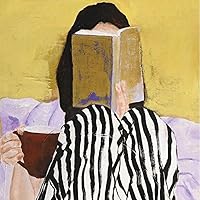
Every Single Bone in My Brain is an enthralling debut story collection—by turns electric and thoughtful, comic and wise. A young music journalist tries to avoid becoming a band groupie, only to discover she has far more to offer to their music than she realized. A Jewish teenager gets involved with an alluring Mormon woman who presents an alternative to life with his dysfunctional family. And in the title story, a man whose condition—his body is a conduit for enough electricity to kill a person—forces him to live and work in isolation, uses the internet to form a relationship with a similarly reclusive woman; one that may bring them both joy or end in tragedy. Aaron Tillman’s beautiful prose and sense of fun make him an essential new voice in contemporary short fiction.
Aaron Tillman is a fiction writer who grew up in Wilkes-Barre, PA, lives in Boston, MA, and is Associate Director of the Writing Program at the University of Massachusetts Amherst. His magical realist mystery novel, LUCY MILES’ PHOTOGENIC MIND, is forthcoming from Regal House Publishing (Nov. 2026). He is the author of two short story collections, Consolation Miracles and Every Single Bone in My Brain, and a book of critical nonfiction, Magical American Jew. He received the Gival Press Short Story Award, the John Gardner Memorial Prize in Fiction from Harpur Palate, a Short Story Award for New Writers from Glimmer Train Stories, and his work has been nominated for the Pushcart Prize. His stories have appeared in Mississippi Review, Pembroke Magazine, Glimmer Train, Narrative Magazine, Harpur Palate, upstreet, Sou’wester, great weather for MEDIA, and elsewhere. He has recorded stories for radio broadcast, and his essays and reviews have appeared in The Writer’s Chronicle, Colorado Review, Studies in American Humor, Symbolism, The CEA Critic, and The Intersection of Fantasy and Native America. He earned his PhD in English from University of Rhode Island, his MFA in Fiction Writing from Sarah Lawrence College, and his BA in English from Hobart College. He can be found online at aarontillmanfiction.com
I generally stick to full-length novels, because I like to sit a while with the characters. However, this collection of short stories is a pure-bred winner. Within two sentences, I was completely involved in (and enthralled by) Tillman's stories. The characters, in all of their pain and glory, were new soulmates of mine in seconds flat. My favorite? Smiling. Read it!
When the terrific English novelist Howard Jacobson got tired (at last) of being called the “English Philip Roth,” he responded that he preferred to think of himself as the “Jewish Jane Austen.”
It’s no surprise that some of the blurbs for Aaron Tillman’s striking collection, Every Single Bone in My Brain, compare him to Roth, but I think it’s the wrong comparison. Roth’s genius lies in the way he confronts the internal conflict between recognizing the power of the (generally Jewish) intellect while understanding its limitations in the America he comes to discover. (In that light, he’s broadening the insight behind a lot of Saul Bellow. His characters aren’t “merely” intellectuals; they’re “street smart” and yet still challenged by some who can’t accept them fully into our culture.) Roth, in other words, makes Jewish neuroticism three-dimensional, extending it beyond self-referentiality to full-on cultural critique.
Tillman belongs to a different genealogy of Jewish-American writers. His characters are less burdened by a disconnect between inspiration and feeling a full part of American culture than they are by a hunger for some sign in the world that orients their ambition or, even, purpose. That’s more in keeping with the impulses of Malamud who, mildly educated as a Jew, has his characters look for Jewish resonances in the culture around them, secret signs that their jumbled heritage echoes in the startling spaces of America. (For what it’s worth, that’s where Cynthia Ozick picks up; her characters have the same impulse but are much more confident in their knowledge of a Jewish past.)
Tillman explores that sign-hungry impulse across these stories, imagining characters of a newer and younger generation doing much of what Ozick’s Pagan Rabbi was doing. He does so with yet another couple decades of demonstrated Jewish belonging in America. His characters don’t question their deep citizenship or the possibility of their cultural place. It’s a new world, but it’s theirs. In that light, Tillman is not another in that long line of new Roths. Call him, instead, the Jewish Nathaniel Hawthorne.
The opening story, “The Great Salt Desert,” is a great example of that impulse as a young Jewish boy takes off on a wild road-trip adventure with a slightly older woman who’s fallen from her full embrace of Mormonism. Ian is understandably taken by her; she promises liberation from his straitened home life, and she promises a tutorial in sex. As they drive, though, her growing need for a direct sign of her salvation (or permission to return to the fold) proves infectious. He eventually hears what he understands must be “the voice of God,” but it comes by telephone on Cheryl’s terms, and it seems to invite him to continue as her passenger. In the end, when her journey crashes, he finds a more personal sign in “the expanse of this beautiful, petrified stretch” of desert. He’s free again to be himself, which means he free again to be a Jew in a country someone else has helped him discover.
One of the main characters of the excellent “Vacancy” doesn’t quite know she’s looking for signs when she becomes the top celebrant of rock band at her high school. She enjoys the music, sort of, but she isn’t entirely sure why she’s drawn to the guys in it. She thinks it ought to mean something, but she isn’t sure what and, as a reflection of that, she finds herself in complicated relationships with the different musicians.
And those are only the start in a collection that’s often kaleidoscopic, from the great title story to the final “Cross-Eyed Monkey Cabaret.” There are seeming signs at every turn, which gives this philosophical heft, but there are laughs as well. We see the spiritual hunger that animated Malamud and Ozick, but we see as well – yes, I admit we do – the humor that made Roth so much the measuring stick for the Jewish-American writers on whose shoulders Tillman stands.
I really enjoyed this short fictional story collection by Aaron Tillman. It was a beautiful diverse collection. His voice and characters are strong. Not every strong was as good for instance I didn’t love the final story The Cross- Eyed Money Cabaret as much as the rest of the collection. But the title story was phenomenal & made me cry. I hope to read more from him the future. He is an excellent story teller! I would recommend this to anyone not just people who enjoy short stories.