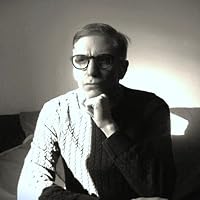
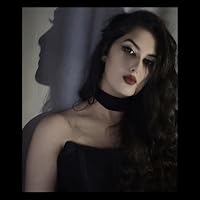
Russian poet Nika Turbina (1974-2002) wrote her first poem aged only four, and by the age of ten her first collection of poems 'First Draft' was published. She was awarded the Golden Lion for her poetry in 1985.
It's hard to believe that at the time of Nika Turbina's death at the age of only 27, she had taken to writing poetry more than twenty years before. The seventy-six poems that make up First Draft were written between the ages of five and eight, and show an awareness and lyricism that, taking into account her age at the time, is quite astonishing. Turbina's poems are mournful, passionate, and precise, covering themes such as family, nature, childhood, dreams, memory, loneliness and death. Oddly, outside of Russia, the book was a big hit in Italy, and won the prestigious Golden Lion of Venice prize. The only thing I had known about Nika Turbina previously is that she attended the very same school in Yalta as the great Russian poet Marina Tsvetaeva. Could Turbina have been a 21st-century Tsvetaeva? Sadly, we will never know.
After her discovery, Turbina went on to read her poetry on television, with an audience of millions. Some claimed she was a young poetic genius, while others were more sceptical, saying the poems were far beyond her years, and much too adult. The Russian poet Yevgeny Yevtushenko got to meet Nika and her mother by chance in 1983, visiting Boris Pasternak's house of all places, and asked for a reading, as he didn't get to see her on TV. Any doubts of her poetic mind were blown out the window, and he was convinced after only a few lines that a talented young poet was right before his eyes. He could sense something special, and a voice that only a poet could speak.
I wouldn't go as far as to say this book of poems is an absolute phenomenon, as there are weaknesses, but again, it all comes down to the age factor. Just how many other five to eight-year-old's would have poetry on their minds? Let alone how to go about writing poems at the same level as these. Taking that into account, she was quite remarkable.
I picked out three poems -
WOUNDED BIRD
Have pity on me, let me go, don't tie my wounded wings. I can no longer fly. My voice is broken with the pain my voice is turned into a wound I am no longer crying. Help me, Autumn hold back a little longer. The birds are flying south without me now, and the only muscle of mine that contracts is my frightened heart.
Loneliness is a friend of death.
THE DOLL
I am like a broken doll. They forgot to put a heart in my chest. They have left me, unwanted in a dusty corner. But just before morning I hear a quiet whisper: 'Sleep, my dear, for a long time, years will pass, and when you wake people will want to pick you up again they will cuddle you and play with you and then your heart will beat.' But it's frightening to wait for that.
I'LL BE LOST IN THE FOG
I'll be lost in the fog like a tiny star in the sky. I'll be lost in the fog and no one cares about me. But I go forward, because I believe in my path. It will definitely bring me to the sea. All paths meet there, the bitter ones and the ones easy to follow. And I will give the sea my star, which I carry carefully in my hands. That is my future, but it is so big . . . It's hard to carry it alone.
I found this collection of poems today in a used bookstore in Madison, WI. As I flipped through it I was immediately drawn in by the rhythm and length of the poems. Then I realized that the entire collection was written by a 9 year old.
Nika was able to share her mature view of the world, from the eyes of a child. I think most children see the world in a mature way but just aren’t able to express it in a way that adults will accept it. I read the whole thing on my flight home, but will likely pick it up again and again since I think I still have more to learn from her.
From the introduction: Nika states, “The important thing is truth… I began composing verse out loud when I was three… I banged my fists on the piano and composed… The poems came to me as something incredible that comes to you and then leaves… But for now it hasn’t left. Like a dream that doesn’t leave. When I write, I have the feeling that a person can do anything if he only wants to…There are so many words inside that you get lost. A person must understand that his life is not long. And if he values his life, then his life will be long, and if he deserves it, it will be eternal, even after death.” (I think Seneca might agree with that last bit.)
Quite a thoughtful and articulate statement. Her “poetic diary” is an absolute pleasure to read.
Here are a few poems that resonate with artistry:
● ● ●
We speak a different language, you and I. The script may be the same, but the words are strange. You and I live on different islands, even though we are in the same apartment.
1983 (p.27)
● ● ●
Rain, night, a broken window and shards of glass stuck up in the air like leaves the wind does not pick up.
Suddenly, there is a sound of ringing . . . That is exactly how a human life breaks off.
1981 (p.29)
● ● ●
I’m — wormwood. Bitter on the lips, bitter in words. I’m — wormwood.
And over the steppe a moan is stifled by the wind. The stem is thin — it’s broken.
Born in pain is a bitter tear. It will fall into the ground . . . I’m — wormwood.