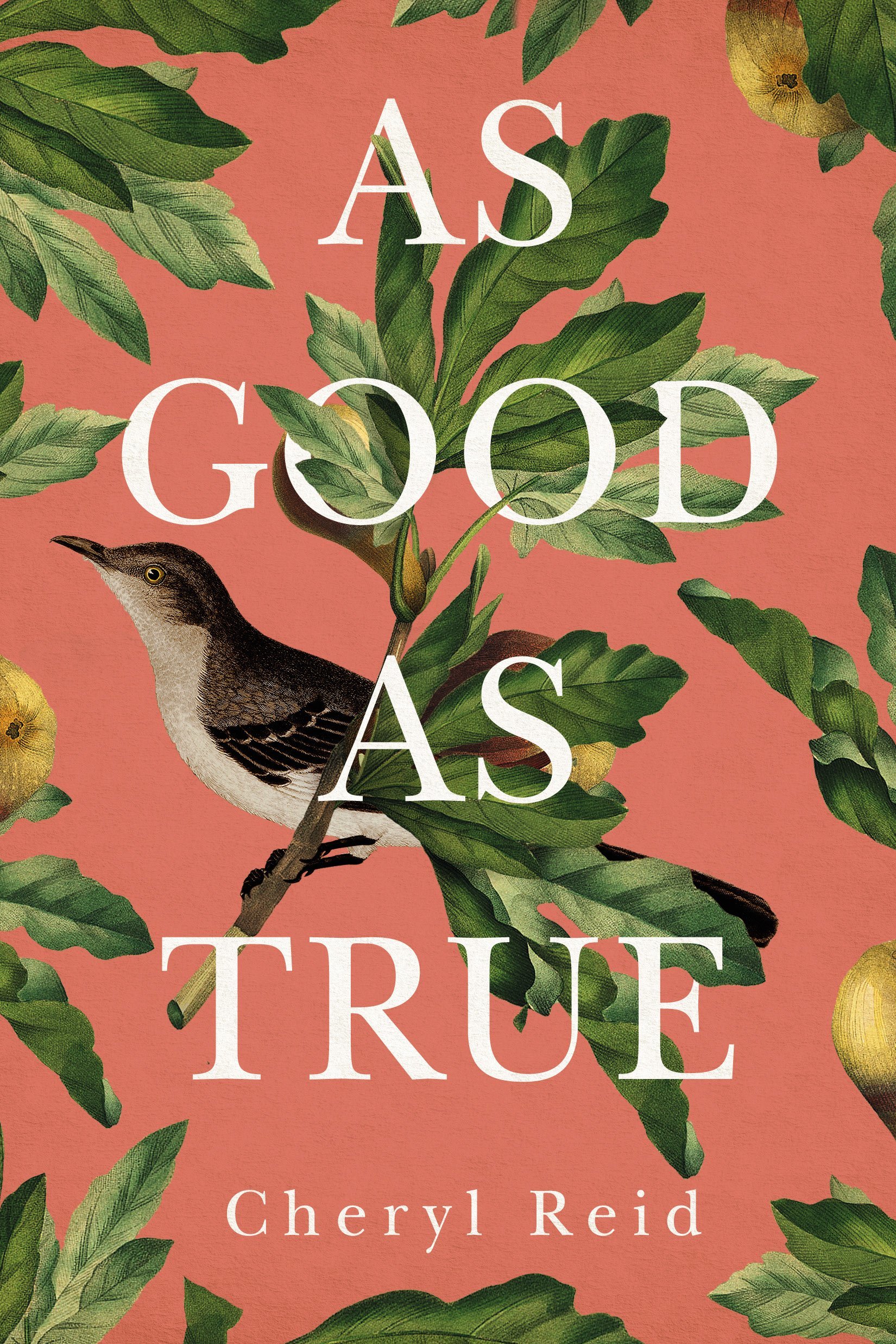
A powerful and haunting novel of a woman’s broken past and the painful choices she must make to keep her family and her home.
August 1956. After a night of rage and terror, Anna Nassad wakes to find her abusive husband dead and instinctively hides her bruises and her relief. As the daughter of Syrian immigrants living in segregated Alabama, Anna has never belonged, and now her world is about to erupt.
Days before, Anna set in motion an explosive chain of events by allowing the first black postman to deliver the mail to her house. But it’s her impulsive act of inviting him inside for a glass of water that raises doubts about Anna’s role in her husband’s death.
As threats and suspicions arise in the angry community, Anna must confront her secrets in the face of devastating turmoil and reconcile her anguished relationship with her daughter. Will she discover the strength to fight for those she loves most, even if it means losing all she’s ever known?
Every novel needs balance. The timing and pace should be appropriate for the story being told. Unfortunately this book fails on all those tenets.
As Good as True deals with domestic violence, segregation and extremely complex family dynamics. While author Cheryl Reid clearly produced a book with significant depth a bit of good news would have been welcomed.
After several days of extreme misery I was so hoping the protagonist would find some joy. The ending was ambiguous and a major let down. I love books dealing with complex and discouraging or distressing issues...but when that is all you have, it makes for a tough read.
I finished it, but I didn’t love it. I admire the perseverance and the strength portrayed here, yet the clinginess to guilt over things completely out of her control was tiring and incongruent. The understanding of complex race relations I have no experience with in a time I wasn’t there for was what I was after. A woman beating herself up for not being a better mother, when she did just fine, and her spoiled brat ridiculous daughter holding her mother accountable for her father’s horrid mistakes was irritating beyond words. “I should’ve done better” ad nauseam while covering bruises with long-sleeves in sweltering heat. I mean, COME ON! There were some aspects I loved and some I really disliked both in the plot and the writing. If you’re going to describe something over and over again, at least switch up the phrases. Maybe a final edit was in order? I don’t know. It’s good and bad. You decide.
Really not my cup of tea....very disappointed. I thought it would be such a great read from the description but instead it was slow, repetitive and downright boring in my opinion. I couldn't finish it (got just over half way through). I don't know if it was just how I was interpreting it but the main character just seemed to be whining all the time....I imagined her voice to be whiny and pathetic....which I suppose was what the author was trying to portray due to the nature of the story (now that I think about it). Maybe I found it hard to read because I couldn't relate to it? However, there was too much descriptive text during conversations (she had the main character go off on a tangent a lot) and I regularly had to skip back a page or two to remind me what the last person had said or asked! I can imagine it being made into a film that will also be long and boring!
This story beautifully illustrates a family torn by cultural experience, racial issues and difficult topics. The author is a powerful writer and I cannot wait for her next novel. This book was not what I expected, it was better.
Poignant but powerful book about a Syrian woman who has been mentally, physically, and sexually abused all her life by her husband. The story takes place in the late 1950's when racial segregation was still considered the norm. This was a January Amazon First Reads choice (bought in hardback). Other reviewers have commented on the behaviors and attitudes of Marina (the daughter) as being bratty and abhoring..but I thought the personalities of the two children were wonderfully developed. Both kids were raised in the same dysfunctional environment but they each have such different moral compasses. Overall, a book that was full of sadness and guilt but in the same breath so full of hope.
This started out as a beautiful tapestry of tragedy but somewhere near the end, I started to find Anna loathsome. Someone asked me, and now I really need to know if the author intended for the character to be unlikeable. It’s difficult to believe that a character who grew up motherless and then became a victim of domestic violence could be anything but sympathetic. As her story unfolded, I found her to be selfish and her stubbornness wasn’t endearing. The book might’ve been saved with some kind, any kind, of resolution. All in all, a pretty good story though.
GAb As good as True is a wonderful novel. Cheryl Reid brings to us the pain and joy and love of childbirth and motherhood, the duties we owe our parents, the necessity of familial bonds, and the injustice and repercussions of segregation of all sorts. Until we can all live as one family we are bound to fail at the art of humanity.
Prime January free Kindle 01/01/18 Was not able to review on B&N until 2-1-18
I liked As Good As True but I don't think it was as good as it could have been. As much as I have lots of sympathy for Anna, I felt at times that she was written to be unlikeable. There was so much despair and heaviness in her and it just felt too much. I really wish the author focused on just one theme. Trying to fit so many things into one story, it all just felt flat and undeveloped.
While "As Good As True" has an interesting premise and a well thought out cast of characters, it just wasn't a hit for me. I found it plodding and dull, and I really couldn't find the desire to care about the main character in the book.
Thanks to NetGalley, Cheryl Reid, and Lake Union Publishing for an ARC of this novel in exchange for an honest review.
I have so many mixed feelings about this book. Ultimately, I think this stems from the fact that there are certain things that Reid treated really well, and other things that were handled not so well.
The themes of domestic abuse in a small town environment and the complexities of race (to a certain extent) in the late 1950s Deep South were handled well. The domestic abuse plot had depth and nuance - Anna's efforts to hide her bruises to shield her children from the hurt her husband wrought; the wavering of her feelings towards her husband, Elias; the struggle she had to leave him especially with her two children in tow; the complicity of Elias's mother Nelly - herself an abuse victim, constantly making excuses for her son and accusing her daughter-in-law - those rung true, and seemed to have real human complexity to them. Especially true are Anna's efforts to save face in a small town mid-century and her certainty that nobody would've helped her - not local law enforcement, not her church, definitely not her in-laws...nobody. The sense of despair, imprisonment, and devastating loneliness on this issue was palpable, and I felt like this was really well done.
I also thought spinning the tale about a Syrian immigrant family - in-between, neither black nor considered fully white - was an interesting way to approach the story. So many stories about race relations in the civil rights era are simply about black and white, without acknowledging that there have always been people of many races here - and that they faced challenges and discrimination as well. Through Anna's eyes we see that her Syrian family was really only a hair's breadth away from being completely discounted themselves; you see snippets of the family struggling to position themselves as white for dear life - and also about the harshness of interactions with the black community they live amongst that this kind of closeness brings. It was an interesting take.
However, there were some other things that were done kind of strangely, and the biggest of these was the insertion of black/white race relations in the story. Orlando Washington's trials as a black mailman exist simply as a catalyst to tell Anna's story, and despite her constant insistence that he is a person and not a thing, his story really does exist as a shadow in the background to move forward her own. We don't even really find out what happens to him - the story refuses to tell us for a long time, and even when it does we only get vague snippets. Despite the fact that a significant portion of the story takes place in Mounds (the black side of town), none of the black characters are ever fully realized as humans (rather than symbols). An opportunity for this was missed, for example, when Anna tries to go into a black church to get more information about Orlando's fate and the black church ladies wave her away without speaking. There were also some opportunities for Reid to show some nuance to racial beliefs - not everyone was either fully on either side; there were some folks who just kind of hovered in the middle and hoped it would all blow over. Marina was the character that came closest, but she spit some of the worst vitriol in the book, so...not so much.
Another symptom of that is that Thea is both a mammy and a Magical Negro character rolled into one. Anna's memories of her are limited to her as a surrogate mother and figure of universal good; she fulfills the role of the hired help who nonetheless loves the family she works for deeply. Think Viola Davis's character in The Help.
The characters are flat and lack any nuance; they are pretty one-dimensional. Anna is a perpetual victim; things just happen to her, and she lets them while wringing her hands and basically saying nothing. The only times she ever takes decisive action she does painfully stupid things and has an almost childlike sense of expectation about the consequences. (Did she really think no one was going to ask questions about Elias's death?) That kind of character can be well done, but in this case it was just boring and frustrating. Eli is pretty much lawful good; Ivie is chaotic evil; Nelly is a witch from hell; Marina is an oblivious spoiled brat. MARINA. She was the character I couldn't stand, that I wanted terrible things to happen to. I couldn't tell how the author wanted us to feel about Marina, but I hated her badly - and not in the good-hate kind of way. She felt just as manipulative, evil, and abusive as her father, just in a woman's guise. On the other hand, though, I felt like Reid's exploration of the complexity of a mother's love - how a mother could love a child deeply, desperately, and still resent them - was pretty good, and Marina had to exist in order for that to happen.
Interestingly, the only true complex character was Elias. Through flashbacks, you learn that he was a pretty insecure and unhappy man, and that the pressures of living the life everyone expected him to have rather than the one he wanted contributed to his drinking and abuse. The book makes no excuses for him, but it was an interesting take you rarely see in an examination of domestic abuse.
The other big shortcoming is the unrelenting humiliation conga that Anna is put through. Sometimes books are sad, and I can accept that; sometimes books are depressing to make you thoughtful or stir up feelings. This book didn't feel like that - everything bad that could happen to Anna pretty much did. It felt like one long stretch of Bad Things happening to Anna - bad things in flashback, bad things in the present - and Anna doing pretty much nothing about any of them. She lets everyone around her just steamroll over her and say whatever they want about her.
The plot also plodded, I must say. Someone else mentioned in their review that they kept waiting for the story to kick off and only realized around 80% that it wasn't going anywhere. I felt the same. I kept waiting for things to really get into gear but realized too late that they would not, and that nothing would really happen - Anna would just continue to allow things to happen to her, wring her hands and on to the next Terrible Thing that would plague her.
This entire review has been hidden because of spoilers.
There’s a lot going on here. A story of segregation and female oppression, domestic violence, anger, death, grief...I could go on.
I found it quite a slow read and was expecting the story the really kick-start for most of the novel. It was only when I reached the 80% mark that I realised that it wasn’t actually going to really go anywhere. The flashbacks of Anna’s life were a happy (although that’s a poor choice of words given that nothing about this story made you feel happy!) diversion away from the constant mourning of her husband’s life but I wanted more from the real story. It was quite repetitive and it could have done with taking 20% of the musings and repetitions of the past and removing them and replacing it with 20% of what comes after. I didn’t really feel like this had a resolution and I dislike the realisation that you’ve read nearly 400 pages and nothing has really happened.
On a positive note, I really enjoyed the characters and I did sympathise with the protagonist and felt all the anger and pain that you were encouraged to feel. It just felt like the story line was missing somewhere and I just wanted a little bit more. I think this would be someone’s 5 star read, but it was just too depressing to be mine.
This was a free ebook from Amazon won through Goodreads. Wonderful writing, and interesting story, had me engrossed from the beginning. The daughter of Syrian immigrants, Ana lives in Alabama. Segregation, racism runs deep even today with people of "colour" and what countries their ancestors came from. Her husband dies. Did she kill him? An angry community takes action. Ana has an inner strength and had me turning the pages eagerly awaiting justice.
Some good writing and world-building, but needs more plot and less violence. I actually feel kind of bad giving this 2 stars, because the setting and characters were so interesting, I thought the protagonist was relatable, and there were some really well-done passages. But I couldn't read the whole thing due to the gratuitous, graphic depictions of domestic violence and psychological abuse. Also, the book tended to be repetitive, circling back on itself and re-explaining already familiar ground. I got about 35% through, then skipped to the last 3 or so chapters. If I did skip any important plot points, I don't even miss them.
I didn't start highlighting until halfway through my Kindle edition, but my large collection of highlights from the second half explains how powerful this book was to me. Anna/Vega and I have a strange overlap of life experiences--I have a wonderful husband, for example, but have suffered wrong from others that makes so much of this novel a poetic expression of my own heart cries. Reid deftly captures the sudden shadows of clouds passing quickly over the sun in a high wind, as her characters defy simple explanation. All are nuanced, and we change our affections and allegiances as we read of them just as we do our connections to and assessments of others in any closely-examined life. Highly recommended. (Just sample a couple of my highlights, then read the book to see the others in context.)
This book drew me in and kept me reading until finished. Family pride and prejudice, mistakes from the past, common decency shown to someone from another culture, all collide together and make one realize what the really important things in life are.
A beautiful debut novel about a Syrian women who grew up in Alabama in the days before the civil rights movement. Anna, the daughter of Syrian immigrants, grew up in Alabama in the era of segregation. Neither white nor black, she never felt she belonged in either world. Raised in the black area of town, she moved to the white area after marriage to another Syrian immigrant. A random act of kindness toward a black man she knew as a child results in a chain reaction of troubles. Told from both past and present, we learn who Anna is and the circumstances that shaped her and made her the woman, wife and mother she became. A wonderful novel that makes you think about who you are and where you feel we belong. – Jennifer C.
As Good as True, Cheryl Reid’s debut novel, elucidates the harsh truth of motherhood. Desire is not enough to form a relationship; physical presence today won’t eliminate previous absences. Anna Nassad does not understand this. Growing up motherless, the idea of physicality became all-encompassing. She deified a mother she didn’t know, and in so doing created a role of mother that revolved around duty. Mothers marry fathers. They have babies. Everyone is happy.
Without any concrete memories of her own parents marriage, she has no basis to judge her relationship with Elias or her own mothering abilities. In innocence, she sets out to complete her marital duties, but finds no joy in her sexually aggressive, older husband. Nor does she find her calling in motherhood. Faced with the reality of a child, Anna loses herself in postpartum depression, leaving her husband to find his own tenderness in the eyes of his daughter.
When she recovers, her opportunity is lost. Marina, her child, has chosen a favorite, or so Anna thinks. For the next 30 years, Anna’s jealousy of her husband underscores every interaction between mother and daughter. The home vibrates with Anna’s desperation for love, but her daughter rebuffs her, and behind closed doors her husband beats her.
Anna closes in on herself, floating in her own regrets, enduring without growing. In 1956 things change. With her children grown, Anna allows a Black postman, the son of her childhood housekeeper, to deliver the mail, the deep seated racism of the community comes to light. Her daughter and husband unite in their condemnation of such an act. In defiance, Anna invites the postman inside for water.
This single courtesy destroys Anna’s life. Drunk with rage and alcohol, her husband rapes her a last time, he puts his hands around her neck, he covers her arms in bruises. Then, he dies. For a glorious morning, Anna sees a life free from her abuser, a life revolving around her children and soon-to-be-born grandchild. Unfortunately, relationships aren’t repaired over funeral prayers and her daughter refuses to forgive a lifetime of neglect.
Elias’ death catalyzes Anna’s empowerment, forcing her to reflect on life instead of trying to forget. She sees the pain she suffered. She remembers the blows. She hears her daughter calling for her abuser. What she doesn’t see is how her choice to silently follow duty darkened the lives of her children, leaving them without a mother at all.
This is one of the best books I’ve read recently, and am impressed that it’s Cheryl Reid’s first (published) novel. For once, I wasn’t constantly looking for how many more pages until the end, wishing the book would come to a close. Instead, I enjoyed the ride very much. I will definitely look out for more of her work.
The story is both multi-layered, deep, and effortless: just the kind of writing style I like. It truly makes you think about your perceptions of the strangers you meet. Perhaps that grumpy saleswoman is bitter because her husband despises her and beats her and she has nothing to live for. Perhaps her charming husband is a sadist in the eyes of his family, and only puts on a façade to impress people he doesn’t know. I love how Ms. Reid told the story from the viewpoint of a Catholic Arab woman who grew up among the kind and warmer people on the “wrong” side of town, and moved “up” to the more affluent neighborhood where people were more judgmental and fake. I also like how the main character Anna struggles between helping her African American friend and doing what society deems correct, and how the different people around her react.
The only thing that bothered me while reading was that the story kept jumping from one place to another, from the past to the present, without a paragraph break, which sometimes confused me and took me out of the story.
I highly recommend this novel to people who like to think and see different points of views of difficult and uncomfortable issues. If you like light reads and fluff, this is not for you. It’s not a happy story.
A powerful book which addresses many different themes
This book revolves strongly around two key themes: Grief and domestic violence. Although many other themes play a strong part, such as racism and alcoholism.
Vega's (Anna) late mother is at the forefront of her mind throughout the story and well into her adulthood. It is clear from the get-go that losing her mother has greatly impacted her life, and that of her father who struggled to cope with his wife's death. Having denied his kids any memories of her, his internal struggle contributed to her sense of longing for a mother's love which she felt was cut short.
Although both Vega, and her mother, were very young when she died, Vega appears to be fixated on recalling every small memory of her that she has. This fixation perhaps represents somebody who has not yet properly grieved, and despite all these years later, is still coming to terms with loss.
A key part of this story was the domestic violence experienced by Vega by her abusive husband, Elias. Naivety, fear, and wanting to protect her children led Vega down a downward spiral. However, despite Vega's efforts to cover up her husband's abuse, more people knew than she realised. Poor communication were at the heart of this novel, and at times made for a frustrating read. However, it gave a true example of how many of us struggle to talk openly about our problems throughout our lifetimes.
I had high hopes for this. The description sounded promising. Unfortunately, I felt everything about this novel was mediocre. This was one of those books that I finished more because I had to than because I wanted to. It just did not deliver. It was slow moving and did not hold my attention. Much of the plot points were rather obvious considering the subject matter and setting. I also had a hard time sympathizing with the main character. I will say that it does illustrate the extent to which domestic violence can ruin a family. I wish the author had explored more of the civil rights aspect of the story line instead of the old vs. new world mentality of the immigrant family. Thank you to NetGalley for providing an ARC for review.
This story intriqued me from the first page but by about half way through, I was about ready for the book to be over. I did not find the main character a very sympathic person even though her story was quite traumatic. I felt that she brought a lot of it on herself and did not deal with her circumstances very well.
I can not read another word of this depressing story. The spoiled, self-centered daughter was enough to make me want to stop reading. The mother, who is the narrator, wouldn’t leave her abusive husband because her 5-year-old daughter “would never allow it.” Really? She’s five!!! I just find this story and the characters unbearable.
I was excited for this book, but it fell flat for me. I do not think the blurb on the back captured the essence of this book, implying it would be more about the relationship between Anna and Orlando. Instead,5)8/ just became the inciting incident for violent act after violent act. The author tried to tackle everything from abuse to broken families to mother-daughter relationships to racial tensions, and it was just too much. As another reviewer said, a good book has balance, but this book was heavy and sad on every page to the point where it felt like one long confession with no sense of forgiveness or redemption.
I won this book on Goodreads, and promised to give an honest review. I liked this book, the story, the characters the ones you should like and root for the best. Even the evil doings by so many, the detail in which the author made you dislike them was done really well.
I did feel however, that I was reading so much of the thoughts of the main character over and over.
Masterful storytelling by Cheryl Reid and a profound look at the dark life of a Sirian immigrant woman in America. Anna Nassad’s life is filled with loss, pain, hate, tension, regret, physical abuse in the hands of her husband and mental and psychological abuse by his family. Racial discrimination is a main theme throughout the book and our main character finds herself at the center of it. It’s a heart-wrenching story you need to have a strong stomach to read. It’s thought-provoking, informative and uplifting. Anna’s character is a very impressive one. Her love for her family, for her children, her determination and courage to rise above all that she is faced with is truly inspiring. The story is beautifully written and a true page-turner. Highly recommended.
I wasted too many months putting off reading this. Once I started I couldn't stop. Gripping story. Great characters. I loved that I couldn't tell when it took place until I was told the year. The family issues, cultural issues, and societal issues could have happened anywhere and any time. Well done.
Totally enjoyed this book. It was frustrating at times that Anna/Verga was so accepting of husband's bad behavior, until you put it in perspective. Not a big difference between the Old Country and Alabama in the bigoted 1950s . Everybody was supposed to know their place and suffered the consequences if they tried to change the status quo. A likeable heroine . . .