In No Water No Moon, Osho reveals the essence of Zen in all its beauty and mystery. Full of absurdities and humor this book is about sudden enlightenment-that supreme moment when we cease struggling to understand with our minds matters beyond the mind and jump wholeheartedly into the abyss. Osho also confides about the most profound love, the love we come to know when we finally become one with love itself. He offers us deep insights into ourselves, our individual natures and the universe in which we live.
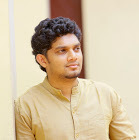
Rajneesh (born Chandra Mohan Jain, 11 December 1931 – 19 January 1990) and latter rebranded as Osho was leader of the Rajneesh movement. During his lifetime he was viewed as a controversial new religious movement leader and mystic.
In the 1960s he traveled throughout India as a public speaker and was a vocal critic of socialism, Mahatma Gandhi, and Hindu religious orthodoxy.
Rajneesh emphasized the importance of meditation, mindfulness, love, celebration, courage, creativity and humor—qualities that he viewed as being suppressed by adherence to static belief systems, religious tradition and socialization.
In advocating a more open attitude to human sexuality he caused controversy in India during the late 1960s and became known as "the sex guru".
In 1970, Rajneesh spent time in Mumbai initiating followers known as "neo-sannyasins". During this period he expanded his spiritual teachings and commented extensively in discourses on the writings of religious traditions, mystics, and philosophers from around the world. In 1974 Rajneesh relocated to Pune, where an ashram was established and a variety of therapies, incorporating methods first developed by the Human Potential Movement, were offered to a growing Western following. By the late 1970s, the tension between the ruling Janata Party government of Morarji Desai and the movement led to a curbing of the ashram's development and a back taxes claim estimated at $5 million.
In 1981, the Rajneesh movement's efforts refocused on activities in the United States and Rajneesh relocated to a facility known as Rajneeshpuram in Wasco County, Oregon. Almost immediately the movement ran into conflict with county residents and the state government, and a succession of legal battles concerning the ashram's construction and continued development curtailed its success.
In 1985, in the wake of a series of serious crimes by his followers, including a mass food poisoning attack with Salmonella bacteria and an aborted assassination plot to murder U.S. Attorney Charles H. Turner, Rajneesh alleged that his personal secretary Ma Anand Sheela and her close supporters had been responsible. He was later deported from the United States in accordance with an Alford plea bargain.[
After his deportation, 21 countries denied him entry. He ultimately returned to India and a revived Pune ashram, where he died in 1990. Rajneesh's ashram, now known as OSHO International Meditation Resort and all associated intellectual property, is managed by the Zurich registered Osho International Foundation (formerly Rajneesh International Foundation). Rajneesh's teachings have had a notable impact on Western New Age thought, and their popularity has increased markedly since his death.
This is happening in this story. Ikkyu is one of the greatest masters, a very rare, revolutionary, nonconformist. Once he stayed in a temple. The night was very cold and there were three wooden Buddhas in the temple, so he burned one Buddha to warm himself. The priest became aware – he was fast asleep, it was in the middle of the night and the night was very cold – he became aware that something was going on, so he looked. Buddha was burning! – and this man Ikkyu was sitting, happy, warming his hands. The priest became mad; he said, ”What are you doing? Are you a madman? – and I thought you to be a Buddhist monk, that’s why I allowed you to stay in the temple. And you have done the most sacrilegious act." Ikkyu looked at the priest and said, ”But the buddha within me was feeling very cold. So it was a question whether to sacrifice the living Buddha to the wooden one, or to sacrifice the wooden one to the living one. And I decided for life.” But the priest was so mad with anger, he couldn’t listen to what Ikkyu was saying. He said, ”You are a madman. You simply get out of here! You have burned Buddha.”
So Ikkyu started to poke the burned Buddha – ashes were there, the statue was almost completely finished. He started to poke with a stick. The priest asked, ”What are you doing?” He said, ”I am trying to find the bones of Buddha.” So the priest laughed, he said, ”You are either a fool or a madman. And you are absolutely mad! You cannot find bones there, because it is just a wooden Buddha.” Ikkyu laughed, he said, ”Then bring the other two. The night is still very cold and the morning is still far away.” This Ikkyu was a very rare man. He was turned out immediately, out of the temple. In the morning he was sitting just on the side of the street outside the temple – worshipping a milestone, putting flowers, doing his prayers. So the priest said, ”You fool! In the night you misbehaved with Buddha. What have you done? You have committed a sin, and now what are you doing with this milestone? This is not a statue.” Ikkyu said, ”When you want to pray, everything is a statue. At that time the buddha within was feeling very cold. At this time the buddha within is feeling very prayerful.”
This man Ikkyu had thousands of disciples all over the country, and he used to wander from one place to another to help disciples. This story is about one of his disciples, Ninakawa. He was just on the verge, almost enlightened. But ’almost enlightened’ means nothing; you can move back, from the last point also you can fall. Unless it has happened, it has not happened. From the very last moment, when only one step remains and you will become an enlightened one, you can come back. This Ninakawa was almost enlightened but still in the grip of the scriptures, because unless you reach to the truth, it is very difficult to get out of the grip of the scriptures. It is very difficult to get out of the prison of words. It happens only when you are really enlightened. Then you can see that words are just words: nothing is there, they are not substantial, they are made of the stuff dreams are made of. They are just ripples in the mind, nothing else; sounds in the mind. And the meaning? Meaning is given by us; it is not there, no word is meaningful. And any word can become meaningful by common agreement. So it is just a social phenomenon, not concerned with truth at all. But people live by words: if someone says something against Jesus and you are a Christian you will be ready to kill him, or be ready to be killed – it is a question of life and death. Someone says something against Mohammed, a Mohammedan gets mad. Just a word – ’Mohammed’ is just a word, ’Jesus’ is just a word – but people live by words.
Jesus is right: unless you hate your father and mother you can-not come to a master. That’s why,whenever you go to a master, your father and mother are very disturbed – it has to be so. They are never so disturbed. You can go to a prostitute – they will not be so disturbed; you can become an alcoholic – they will not be so disturbed. But going to a Buddha or a Jesus... to a master, they are abso-lutely disturbed. Something in the unconscious says, ”Now this is the last break. Now, if this boy or this girl goes to a master, then ’father’ and ’mother’ are completely closed” – the fear! Even if a son moves with a woman, the mother can have some relationship, some sort of relationship. But if the son moves with a Jesus, then all relationship is broken; then there is no possibility; Jesus demands total surrender. No woman can demand it, no husband can demand it; only a master can demand total surrender, no holding back. Pg 112
There is another saying which is also very mysterious, looks very hard on the part of Jesus. He was talking to a crowd and then somebody said, ”Jesus, your mother is waiting outside, and the crowd is so large she cannot come in, and she wants to see you.” Jesus said, ”No one is my mother. Tell that woman, no one is my mother” – looks very hard, rude. But Jesus cannot be rude and he cannot be hard. But sometimes truth is rude, truth is hard. And Jesus cannot lie, he is right: ”No one is my mother.”Once it happened: Jesus was a small child and the father and mother had come to the great temple of the Jews for the annual festival. Jesus was lost somewhere in the crowd, so they tried and tried, and only by the evening – when they were very much disturbed, worried – only by the evening could they find him. He was sitting with some scholars, and he was just a child, and he was discussing things about the unknown with them. So his father said, ”Jesus, what are you doing here? We have been worried about you the whole day.” Jesus said, ”Don’t be worried about me. I was looking after my father’s business.” The father said, ”I am your father – and what type of business are you looking after here? I am a carpenter.” And Jesus said, ”My father is there, up in heaven. You are not my father.” Just as a child has to leave the body of the mother, otherwise he will be dead in the womb – he has to come out of the womb – the same happens mentally also. One day he has to come out of the father and mother’s womb. Not only physically – mentally; not only mentally – spiritually. And when the spiritual child is born, is completely out of the past, has broken with it completely – only then for the first time does he become a self, an independent reality, standing on his own feet. He is! Before this he was just a part of the mother, or the father, or the family – but he was never himself. From the very beginning the mother and father are trying not to give freedom to the child. And love is born only in freedom, because it is a spontaneous phenomenon, you cannot do anything about it. If you do, you will destroy the whole possibility. They try: ”Love us” – and the child has to yield, he is helpless. Just to exist he has to bargain. This is a bargain when a child says, ”Yes, I love you mother,” and when he says, ”I love no one else like you.” When a child says, ”I love you, father, and there is nobody else like you. You are unique, the best, the greatest father that ever was,” he is just making a bargain, he is just playing politics, he has become part of a deceiving game. Pg 113
Why is it so difficult for logic to love? – because love needs a very courageous act, and that courageous act is to move into the unknown. Logic is always a coward, it never moves into the unknown. Logic says, ”First I must know. When the territory is well known, then I will move.” Pg 128
Logic has no adventure in it. Love is absolutely adventurous; sometimes it even looks foolish. To the logical mind it always looks foolish: ”What are you doing, moving into the unknown without knowing where you are going? What you are doing? And leaving the territory that was known, secure, safe, becoming unnecessarily homeless. Don’t lose that which you have got, first be sure of that which you are going to gain.” This is the problem. Logic says, ”First know the further step well; only then leave the step you are standing on.” Then you can never leave this step, because there is no way of knowing the further step unless you reach to it. Logic is... Pg 128
With logic you move towards the source; with love you move towards the ultimate flowering – the dimensions are different. Logic asks, ”Who created the world?” It is interested in the creator, in the past, the original source – the Gangotri, from where the Ganges flows. Love never asks who created the world. It is already there, so why bother? Whosoever created ABC makes no difference. How is it going to affect you, whoever created the world? Whether it was a Hindu god, a Brahma, or a Christian trinity – what difference does it make? Pg 128
Love is interested in what the ultimate flowering is going to be. Love is interested in buddhahood.Love is interested what is going to happen to me, to my seed, how it will flower. Note the difference: logic is always interested in the known, in the past, the path that you have already traveled; love is always interested in the unknown, in the ultimate flowering, the path that you have not traveled – not only not traveled, the path that you have not even imagined, not even dreamed of. Pg 129
Only humbleness, deep humility, can bring you to a buddha – now you are ready to learn, because you don’t know anything. Pg 130
So there are two types of ignorance: ordinary ignorance is when a man is ignorant but is not aware that he is ignorant. When a philosopher becomes aware that he is ignorant – this is the second type of ignorance, very deep: he has come to realize that he is ignorant, he is fully aware that he is ignorant – when ignorance is aware of itself, that becomes the first step of wisdom. Pg 130
Why not leave off hoping? Why do you hope? What is the basis of it? Discontent becomes hope; this is the disguise. Because here and now you are in so much discontent, in so much misery, that you need some hope in the future. That hope will help you to move. You can somehow tolerate the present; through hoping, you can tolerate the present... hope is anesthesia. The present is miserable, painful; hope is alcoholic, it is a drug, it makes you unconscious enough so you can tolerate the present. Hope means here and now there is discontent. But have you ever looked at the whole phenomenon? Why are you discontented here and now in the first place? Why? – because you hoped in the past, that’s why here and now you are in discontent. This today was tomorrow yesterday. Yesterday you hoped for today, because it was tomorrow then. Now that hope is not fulfilled, so you are in misery,frustrated. And to hide this misery, to somehow pass today, you are again hoping for the tomorrow. Pg 86
Pg 99 When love becomes a frustration – and it will become a frustration, because it is not love – then you by and by start loving things. Look at people when they polish their cars, the way they look at their car – enchanted! Look at the romantic light that comes to their face when they look at their car; they are in love with their car. In the West particularly, where love has been killed completely, people are in love with things or animals: dogs, cats, cars, houses. It is easier to love a thing or an animal; a dog is more faithful than a wife ever can be. You cannot find a more faithful animal than a dog – he remains faithful, there is no danger. A wife is dangerous. A husband is dangerous; any moment he can move away and you cannot do anything. And when he moves, your whole ego is shattered, you feel hurt. To protect from that hurt ever happening you start killing the husband or the wife, so they become just like cars and houses – dead things.
Pg 99 - 100 This is the misery: if you want to possess, you kill. And the moment you have succeeded the whole glory is lost, because now the other cannot respond. The other can respond only in freedom, but you cannot allow freedom because you are not in love. Love is never possessive. It cannot be, by its very nature. And not only loving a man or a woman: if you start loving a Buddha you will repeat this whole thing. You will do the same, you will be possessive there also. That is why so many temples have been created – possessiveness. Christians think Christ belongs to them. Christ cannot belong to anybody, but Christians think he belongs to them; they are the possessors. Mohammedans think Mohammed belongs to them. You cannot draw a picture of Mohammed – you will be dragged to the court. You cannot make a statue of Mohammed, because Mohammedans won’t allow it. But who are these Mohammedans? How did they become the possessors? They have turned Mohammed into a dead thing. Nobody can possess Mohammed, nobody can possess Christ – they are so big and your hands are so small. They cannot be possessed. Love can never be possessed; it is such a vital force, and such an infinite force, and you are so tiny and so small, you cannot possess it. But Christians have their Christ, Mohammedans have their Mohammed, Hindus their Krishna, Buddhists their Buddha.
Pg. 101 Priests are in the know. They know that Christ is dead – and you are a fool, you are praying to a dead thing. But they cannot say that to you, because that is a trade secret; and only through it is exploitation possible. And it is in their favor, because if Christ is alive they cannot become the agents in between. An alive Christ will come directly to you; he will not allow a mediator, a broker. He will not allow it. Christ will not allow a priest to come and stand in between the lovers and himself – he will face them, he will come to you directly. So for priests, a live Christ is dangerous, only a dead Christ is good.
Pg 101 This has happened in religions so deeply, that religion, rather than becoming a blessing to the world, has proved dangerous. Through this possessiveness religion becomes the sect – then you go on worshiping this dead thing and then nothing happens in your life; and then you think something is wrong with religion. Nothing is wrong with religion. Mahavira could have transformed you. Krishna could have given you the light that he had, but you didn’t allow him. Christ certainly could have become the salvation, but you didn’t allow. Jews crucified him, and you – you have mummified him in the churches. Now he is a dead thing – good to worship, good to possess, but how can a dead Christ transform you?
Pg 103 Buddha is alive if you dissolve into him. But then Buddha is dangerous, because you will never come back. It is a point from where no one can come back. Once you have fallen, you have fallen into it; there is no returning. There is fear and trembling, you are afraid you may be lost. And your fear is true – you are going to be lost.
Pg 115 When love becomes artificial, money becomes important. This is to be understood. Why does money become important when love is artificial? Because love gives you an inner security. When you are in love you are safe – no other safety is needed. When you are in love you are absolutely secure – no other security is needed. Love is enough, nothing else is needed. You can be a beggar on the street, but if you are in love no emperor can compete with you in your security; even Solomon is a poor man before you.
Pg. 7 Those who have been working for a long time on the science of sleep, they say that sleep is needed for dreaming. And if you ask them why dreaming is needed, they say it is needed so that you can remain sane, because in dreams you can throw your insanity. The whole night is a catharsis. In your dreaming you are throwing your insanity, and by the morning you can behave sanely. The whole day you can behave in a sane way, because the whole night is there to behave in an insane way. Scientists say that if you are deprived of your dreaming and sleep for a few days you will go mad, because the catharsis will not be there and then madness will start erupting. You will explode.
Pg 83 You never think about the mind, that it has been used by many. Your every thought is borrowed, old, rubbish; many have thrown it. But you go on believing in it, because this mind has learned a trick, and that trick is how to promise. It goes on promising: ”I will give you everything. You need God? I will give you God, just wait. Do this and that. Make effort, and hope and pray, and you will get it.” It always postpones. It says, ”Tomorrow it will happen” – and tomorrow never comes. Tomorrow cannot come – all that comes is always today, and all that mind does is to transfer everything for tomorrow. It promises you – in the future. Whether it is heaven, whether it is God, or moksha, or nirvana – it always promises you, ”In the future.” Meditation, Zen, never promises you anything. It simply gives you here and now. Mind is a postponement, it says, ”It will happen. It will happen gradually. Go by and by. Don’t be in a hurry, nothing can be done right now.” Mind says, ”Time is needed. Long is the path. Much has to be done and unless you do it, how can you attain?” Mind always divides ends and means. In reality, there is no division. Every step is the goal, and every moment is nirvana. The present is all that exists. Future is the most illusory thing, it is a creation of the mind. But you believe in the mind, and it is really wonderful, you don’t even get discouraged!
"Απο'δω κι από 'κει τον κουβά να κρατήσω προσπάθησα ελπίζοντας πως το αδύναμο καλάμι ποτέ δεν θα έσπαγε. Ξαφνικά ο πάτος έπεσε. Ούτε νερό ούτε φεγγάρι στο νερό. Η κενότητα στα χέρια μου."
Αντι-Οσσικό αυτό που θα πω, αλλά Dimitra's mind approves.
Realmente encontré reflexiones muy hermosas y profundas, principalmente acerca del amor. Sin lugar a dudas, Osho siempre ha tenido la facultad de transmitirme en palabras, cosas que en el fondo de mi ser yo ya conozco, pero que no puedo verbalizar. A veces resulta un poco cansado su reiteratividad, pero los años de leerlo me han enseñado que se debe a su deseo de dejar totalmente claro sus puntos, si es que eso fuera posible.
Sa incep cu inceputul: cartea asta este una dintre favorite; una dintre cele mai bune.. la care am apucat.
De ce? - Pentru ca si deoarece: 1. nu ai informatii inutile; 2. iti expune poza de ansamblu intr’o exprimare usor de digerat; 3. atinge punctele esentiale ale existentei umane (inclusiv moartea) pe care le explica printr’o logica imbatabila; 4. anecdote care par neinsemnate ajung sa fie descompuse treptat pana la miezul esentei pe intelesul tuturor; 5. Intareste ideea in care tu nu esti mintea ta, corpul tau printr’un amalgam de exemple clare... si multe altele pe care o sa le descoperi citind.
———————————————————————— Din carte:
“Cu cat te gandesti mai mult, cu atat filosofia devine mai inutila. Numai prostii cred in certitudini. Cu cat te gandesti mai mult, cu atat devii mai inteligent si iti dai seama ca toate astea sunt doar cuvinte, fara substanta”
“Mintea ta poate produce numai vise, nu poate produce adevar. Adevarul nu poate fi produs, nimeni nu-l poate produce. El exista, trebuie sa fie vazut. Nu trebuie sa se faca nimic, este nevoie doar de o privire - o privire fara prejudecati, o privire fara alegere, o privire care nu face deosebiri.”
“Egoul pretinde intruna; nu are nimic, dar tot pretinde”
Dumnezeu nu o sa te intrebe de ce nu ai devenit ca Iisus sau Buddha. NU!.. O sa te intrebe de ce nu ai devenit tu.
“Buddha: daca vrei sa ti se raspunda.. nu intreba”
————————————————————————
O carte care merita studiata/citita macar o data in viata.
“Vrei sa cunosti mai mult sau vrei sa fii mai mult?”
One of the most inspiring books ever! A very interesting read, Osho tries to guide us to inner consciousness through 10 absolutely inspiring short zen stories. Each story has something to say and conveys an important message to the reader. I have lost count of the 'Aha' moments I had when I read this book.And among all the stories, Chiyono's story - the one that forms the basis for this book, was the most hard - hitting! Thank you, Osho for those wonderful words of wisdom!
So, what is my final verdict for this book? Just six words: Interesting, Inspiring & an absolutely Engaging read!
This was my first Osho book. I absolutely love it! I would definitely recommended! It's easy, funny and it flows. Osho has this amazing skill to get directly to the point, the target. He speaks directly to the heart.
After reading No water, no moon, it seems to be that to impress the content of this book on the memory. The book will change your thought, then change your life.
“Tôi kềm giữ đôi thùng nước… Bất chợt, dây đứt thùng văng Không còn nước trong thùng, không còn trăng trong nước Tay tôi rỗng không, chẳng có vật gì Tâm tôi rỗng không, không có vật gì.”
Khó có thể nói về cuốn sách trong vài dòng. Sau 2 lần nghiền ngẫm, chỉ nhớ được đôi điều, hi vọng sẽ ngộ ra thêm điều gì mới.
Nếu bạn đang đi tìm Sự Sống Vĩnh Cửu, hãy sống cởi mở, an nhiên, bình dị ngay từ phút giây tỉnh thức này. Sống thành thật với chính mình. Không chờ đợi tương lai, không lục vấn quá khứ. Ăn biết ăn, uống biết uống. Thăng bằng nội tâm, không khởi niệm phân biệt, không bị lay động, vạn vật qui tâm – một là tất cả tất cả là một. Buông bỏ, người cho cần phải cảm ơn. Nghệ thuật trong Thiền chính là buông bỏ tự ngã, là nghệ thuật học cách Chết - chết tâm ràng buộc, không tham đắm.
Stunning book. Commentaries on Zen stories but with his own spiritual understanding, drawing on many of the other traditions he explores. Life affirming and challenging.
"Life is not a problem for the religious man. It is nothing to be solved, it is something to be lived."
"One who knows himself is never disturbed by what you think about him."
"Every step is the goal, and every moment is nirvana."
"Love is the real moon, money is the reflection."
"Philosophy believes in thinking but religion believes in trust."
My fav quotes (not a review): I have heard: One Christian priest was sending a Bible as a present to some friend – he had made a beautiful parcel. He came to the post office and the clerk at the window asked, ”Is there something breakable in it?” The priest laughed and said, ”Yes, Ten Commandments.”
This book was an opening pathway into eastern thought for me. interestly depicted Zen stories and their implications into daily life and thought,although the further the auther is a quite controversial i believe there is much to absorb (and stay clear of) in this one.
I am doing some shows on TV, and I have some uncertainty and doubts. After speaking with my older friend, he recommended me the book and it is quite eye-opening. It did give me a good portion of stress and anxiety release. I can for sure recommend it to anyone who is dealing with doubts in life."