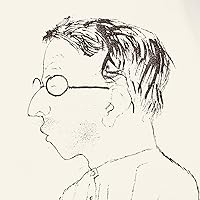
A mystic lyricism and precise imagery often marked verse of German poet Rainer Maria Rilke, whose collections profoundly influenced 20th-century German literature and include The Book of Hours (1905) and The Duino Elegies (1923).
People consider him of the greatest 20th century users of the language.
His haunting images tend to focus on the difficulty of communion with the ineffable in an age of disbelief, solitude, and profound anxiety — themes that tend to position him as a transitional figure between the traditional and the modernist poets.
Tonight my heart makes angels sing, remembering. . . . Lured by too much silence, some voice, barely mine,
rises and decides never to return; tender and intrepid, what will it unite with?
2
Night light, my calm confidante, my heart's not unveiled by you; (we might lose ourselves); but the slope of its South side is softly lit.
It's still you, O student lamp, who wants the reader, now and then, to stop and be distracted at his desk as he stares at you, astounded.
(And your simplicity supplants and Angel.)
3
Stay still, if the Angel suddenly chooses your table; gently smooth those few wrinkles in the cloth beneath your bread.
Then offer him your own rough food so he can have his turn to taste, so he can raise to that pure lip a simple, common glass.
4
How many strange secrets have we told the flowers so that delicate balance can tell us passion's weight.
All stars are confounded when mingled with our grief. From the frailest to the strong, not one can still support
our ever-changing moods, our revolts, our cries - except the tireless table and the bed (unconscious table).
5
Everything happens a little as if we reproached the apple for being good to eat. But there are other risks:
to leave it on the tree, to sculpt it out of marble, and the last, the worst: to wish that it were wax.
6
No one knows how mastered we are by what the Invisible refuses when, to the invisible ruse, our life concedes, invisibly.
Slowly, at the will of fascinations, our centre starts to shift so, in turn, the heart can yield: it, at last, Grand-Master of absences.
7. PALM
Palm, soft unmade bed, where sleeping stars left wrinkles as they rose up towards the sky.
Was this bed such that they rested, clear and incandescent, among the friendly stars in their eternal swirl?
Oh, the two beds of my hands, abandoned and cold, light with the absent load of those brazen stars.
8
Our next-to-last word will be one that is full of misery, but, facing mother-conscience, the very last one will be lovely.
Because we'll have to summon every ounce of some desire that no taste of bitterness will know how to hinder.
9
If we sing a god, that god offers us his silence. None of us advances bu towards a silent god.
This imperceptible exchange that makes us shiver becomes an angel's heritage we can never own.
10
The Centaur has good reason: it leaps across the seasons of a barely started world that with its power it fulfilled.
Only the Hermaphrodite is complete in its plight. We search against the odds for the lost half of these half-gods.
11. CORNUCOPIA
O lovely horn, from where are you curved towards our waiting? No more than the leaning of a calyx, pour yourself out!
Flowers, flowers, flowers, that while falling make a bed for the springing fullness of so many finished fruit!
And all that endlessly leaps out and attacks us to punish the deficiency of our heart already full.
O too-huge horn, what miracle gives itself through you! O hunting horn that rings all things with heaven's breath!
12
As Venetian glass, becoming, knows this gray and cloudy brightness will be its enchantment,
so your tender hands had dreamed in advance of being the slow balance of our overflowing moments.
13. IVORY FRAGMENT
Sweet shepherd tenderly surviving in your role with a sheep's shards across your shoulder. Sweet shepherd surviving your shepherd's role in a yellow ivory. Your flock is lost as much as you last in the slow melancholy of your staring face that resumes in infinity the living pasture's truce.
14. SUMMER PASSER-BY
Do you see that slowly waling, happy girl coming down the road, the one we envy? At some turn in the road she ought to be greeted by handsome men of days gone by.
Under her parasol, with passive grace, she exploits the tender alternative: disappearing briefly in the blinding light, she gathers the shade of her incandescence.
15
The whole night rests upon a lover's sigh, a brief caress crosses the dazzled sky.
As if in the universe an elemental power again became the mother of all love being lost.
16
Little porcelain angel, if they should take stock of you, when the season reached its peak we crowned you with a raspberry.
Capping you with that red bonnet seemed so futile, but since then all else trembles except your tender coronet.
It is withered, bu endures, sometimes seeming to embalm; crowned with such a phantom, your little brow remembers.
[...]
29. THE ORCHARD
I If I dared to write you, borrowed tongue, perhaps it was to use this rustic name whose rare kingdom always has tormented me: Orchard.
Poor poet, who must select to day all that you name implies, a vague approximate capsized, or worse: a fence that protects.
Orchard: oh lye's privilege to be able just to name you simply; unequaled name attracting bees, name that waits and breathes. . . .
Bright name hiding antique spring, as much transparent as it's full, which in its symmetry of syllables becomes abundant by redoubling all.
II Toward what sun do so many heavy longings gravitate? Where is the firmament of this ardor you profess?
Just to please each other must we lean so much? Let us be light and lighter on this earth that's moves by such contrary powers.
Look closely at the orchard: inevitable, it's heavy; yet with the same malaise it makes the summer happy.
III Never is the earth more real than in your branches, O blonde orchard, not more floating than in your shade's lace on the lawn.
There, what is left for us, what is heavy and what feeds meets the manifest passage of infinite tenderness.
But in your centre, the calm fountain, almost sleeping n her ancient round, barely mentions contradictions, since in her they're so well blended.
IV What do they do with their wiles, all these gods now out of usage that a rustic past engages to be wise and puerile?
As if veiled by the sound of looting insects, they make the fruit get round (a divine occupation).
For none ever self-destructs, no mater how abandoned, and those who menace us are gods now unemployed.
V Do I have memories, do I have any hopes when I look at you, my orchard? You feed yourself around me, O flock of abundance, and you make you shepherd think.
Though your branches let me contemplate the night about to start. You have worked; for me it was a Sunday - did my rest do me any good?
What could be better than to be a shepherd? Can it be that part of my peace today had softly entered in your apples? For you well know that I am leaving. . . .
VI This orchard, all of it, wasn't it bright clothes around your shoulders? And didn't you feel how much its soft grass, that bent under foot, consoles?
How often, instead of parading, it was impressive just by becoming great; it was the orchard and evasive hour that passed by your hesitant being.
Sometimes a book was with you. . . . But, haunted by concurrences, your gaze chased a changing game of slow resemblances in the mirror of the shade.
VII Happy orchard, stretched out to perfect the countless plans of all your fruit, and who well knows your daily instinct bending toward an instant's youth.
What handsome work, what order is like yours! So insistent in the twisted limbs, bu finally, enchanted by their power, soars into an aerial calm.
Your dangers and my own, are they not related, O orchard, O my brother? The same wind, coming from afar, forces us to be austere and tender.
“Tonight my heart makes angels sing, remembering.... Lured by too much silence, some voice, barely mine,
rises and decides never to return; tender and intrepid, what will it unite with?” — “Stay still, if the Angel suddenly chooses your table; gently smooth those few wrinkles in the cloth beneath your bread…
Then offer him your own rough food so he can have his turn to taste, so he can raise to that pure lip a simple, common glass.” — “No one knows how mastered we are by what the Invisible refuses when, to the invisible ruse, our life concedes, invisibly.
Slowly, at the will of fascinations, our center starts to shift so, in turn, the heart can yield: it, at last, Grand-Master of absences.” — “Palm, soft unmade bed, where sleeping stars left wrinkles as they rose up towards the sky.
Was this bed such that they are rested, clear and incandescent, among the friendly stars in their eternal swirl?
Oh, the two beds of my hands, abandoned and cold, light with the absent load of those brazen stars.” — “If we sing a god, that god offers us his silence. None of us advances but towards a silent god.
This imperceptible exchange that makes us shiver becomes an angel's heritage we can never own.” — “Justice doesn't hold the accurate scale; it's you, O god of undivided envy, who weighs our faults and from two murdered and ground hearts makes one huge heart, bigger than nature, that would still want
to grow... You, haughty and indifferent, who humiliates the mouth and exalts the word towards an ignorant heaven.... You, who mutilates beings while adding them to the ultimate absence they're fragments of.” — “Have the angels turned discreet! Mine hardly questions me. Let me offer him at least the glow of Limoges glaze.
And let my reds, my greens, my blues make his round eye rejoice. If he finds them earthy, good! —for a paradise of premises.” — “It's that we must consent to all extremes of power; audacity's our problem, despite the grand repentance.
And so, it often happens, what we affront will change: the calm turns into hurricane, the abyss into an angel's mold.
We musn't dread that curve. The Organs have to boom for the music to abound with all the notes of Love.” — “We've forgotten so well challenged gods and their rites, that we envy faithful souls their simple way of life.
It's not that we must please nor that we must convert, if we know to obey the complementary orders.” — “I want just one lesson, and it's yours, fountain falling back into yourself— that of risked waters on which depends this celestial return towards earthly life.
Nothing will serve as example as much as your multiple murmur: you, O light column of a temple that destroys itself by nature.
In your fall, how each jet of water modulates itself as it ends its dance. I feel like such a student, imitator of your innumerable nuance.
But what's more convincing than your singing is that instant of ecstatic silence when at night, drawn back by a breath, your own return passes through your liquid leaping.” — “In the empty sleeping noon, how often she will pass and not leave the slightest hint of a body on the terrace.
But if nature senses her, the habit of invisible power renders a terrible clarity to her soft visible contour.” — “You don't survive in me because of memories; nor are you mine because of a lovely longing's strength.
What does make you present is the ardent detour that a slow tenderness traces in my blood.
I do not need to see you appear; being born sufficed for me to lose you a little less.” — “The sublime is a departure. Instead of following, something in us starts going its own way and getting used to heavens.
Isn't art's extreme encounter the tenderest farewell? And music: that last glance that we ourselves throw back at us!” — “The Angels' view: perhaps the tips of trees are roots that drink the skies; and in the earth the beech's deepest roots look like silent summits.
For them, is not the earth transparent against a sky full as a corpse? This ardent earth where, near the springs, the dead's oblivion laments.” — “O my friends, all of you, I renounce none of you: not even that transient who, from the inconceivable life, was no more than a soft glance, open and hesitant.
How often, with an eye or gesture, someone, despite himself, stops the imperceptible flight of another by paying attention to him a moment.
Strangers. They play large parts in our fate that every day completes. O discreet stranger, take good aim, as you lift your gaze towards my distracted heart.” — “Tonight there was something in the air that makes us bow our heads; we want to pray for prisoners for whom life stops. And we think of life stopped....
Of life no longer moving towards death and of where the future's absent; where one must be uselessly strong and sad, uselessly.
Where all days are marking time, where all nights fall into the abyss, and where childhood's intimate awareness effaces itself at that point
when our heart's too old to think a child. It's not so much that life is hostile, but that we lie to it, locked in a block of immobilized fate.” — “Tender and ineffable, what good would sweetness be if it were never able to frighten all of us?
It surpasses violence so, that when it springs no one defends himself.” — “In the animal eye I saw a peaceable life that endures, the unprejudiced calm of dispassionate nature.
A beast knows what fear is but keeps going nonetheless; and in its field of plenty a certain presence grazes with no taste for someplace else.” — “Savoring sleep, the figure of a woman seems to taste a noise that's like no other and that fills her up again.
From the echo of her sleeping body, she draws the pleasure of still being just a murmur beneath the glance of silence.”