

What do you think?

The Swamp Fox: How Francis Marion Saved the American Revolution
This comprehensive biography of Francis Marion, the Swamp Fox, covers his famous wartime stories as well as a private side of him that has rarely been explored
In the darkest days of the American Revolution, Francis Marion and his band of militia freedom fighters kept hope alive for the patriot cause during the critical British "southern campaign." Employing insurgent guerrilla tactics that became commonplace in later centuries, Marion and his brigade inflicted enemy losses that were individually small but cumulatively a large drain on British resources and morale.
Although many will remember the stirring adventures of the "Swamp Fox" from the Walt Disney television series of the late 1950s and the fictionalized Marion character played by Mel Gibson in the 2000 film The Patriot , the real Francis Marion bore little resemblance to either of those caricatures. But his exploits were no less heroic as he succeeded, against all odds, in repeatedly foiling the highly trained, better-equipped forces arrayed against him.
In this action-packed biography we meet many colorful characters from the Banastre Tarleton, the British cavalry officer who relentlessly pursued Marion over twenty-six miles of swamp, only to call off the chase and declare (per legend) that "the Devil himself could not catch this damned old fox," giving Marion his famous nickname; Thomas Sumter, the bold but rash patriot militia leader whom Marion detested; Lord Cornwallis, the imperious British commander who ordered the hanging of rebels and the destruction of their plantations; "Light-Horse Harry" Lee, the urbane young Continental cavalryman who helped Marion topple critical British outposts in South Carolina; but most of all Francis Marion himself, "the Washington of the South," a man of ruthless determination yet humane character, motivated by what his peers called "the purest patriotism."
In The Swamp Fox , the first major biography of Marion in more than forty years, John Oller compiles striking evidence and brings together much recent learning to provide a fresh look both at Marion, the man, and how he helped save the American Revolution.
In the darkest days of the American Revolution, Francis Marion and his band of militia freedom fighters kept hope alive for the patriot cause during the critical British "southern campaign." Employing insurgent guerrilla tactics that became commonplace in later centuries, Marion and his brigade inflicted enemy losses that were individually small but cumulatively a large drain on British resources and morale.
Although many will remember the stirring adventures of the "Swamp Fox" from the Walt Disney television series of the late 1950s and the fictionalized Marion character played by Mel Gibson in the 2000 film The Patriot , the real Francis Marion bore little resemblance to either of those caricatures. But his exploits were no less heroic as he succeeded, against all odds, in repeatedly foiling the highly trained, better-equipped forces arrayed against him.
In this action-packed biography we meet many colorful characters from the Banastre Tarleton, the British cavalry officer who relentlessly pursued Marion over twenty-six miles of swamp, only to call off the chase and declare (per legend) that "the Devil himself could not catch this damned old fox," giving Marion his famous nickname; Thomas Sumter, the bold but rash patriot militia leader whom Marion detested; Lord Cornwallis, the imperious British commander who ordered the hanging of rebels and the destruction of their plantations; "Light-Horse Harry" Lee, the urbane young Continental cavalryman who helped Marion topple critical British outposts in South Carolina; but most of all Francis Marion himself, "the Washington of the South," a man of ruthless determination yet humane character, motivated by what his peers called "the purest patriotism."
In The Swamp Fox , the first major biography of Marion in more than forty years, John Oller compiles striking evidence and brings together much recent learning to provide a fresh look both at Marion, the man, and how he helped save the American Revolution.
400 pages, Paperback
First published October 25, 2016
Ratings & Reviews
Friends & Following
Create a free account to discover what your friends think of this book!
Community Reviews
Displaying 1 - 30 of 256 reviews

April 30, 2017
”They were a motley-looking bunch, the twenty or so militia volunteers who rode on horseback that day into the camp of General Horatio Gates.… At their head rode a diminutive, forty-eight-year-old man who, at about five-foot-two and 110 pounds, possessed the physique of a thirteen-year-old boy. His knock knees, deformed since birth, nearly touched one another, his hook nose and narrow face gave him a homely appearance, and he walked with a pronounced limp. Yet his flashing black eyes and steely demeanor, along with his blue Continental uniform, rumpled though it was, cautioned the mocking soldiers not to laugh at the ragged group in his presence.”
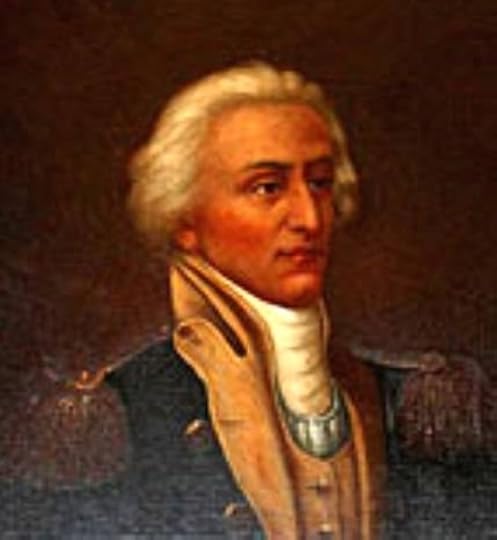
Francis Marion portrait
Colonel Francis Marion was the polar opposite of the majestic 6’4”, 200+ pound General George Washington. For a man who looked more like a wizened boy to command troops and keep them fighting for him, he had to do it with the force of his personality. His men obviously respected him. Unlike the Continental Armies commanded by Washington, Horatio Gates, and Nathaniel Greene, Marion was a Colonel in the militia. The men who signed up for the militia frequently wandered back home if there was plowing to be done or if they missed the comfort of their wives or if they became bored with the lack of activity. Marion’s forces were never very large, but sometimes they became so depleted to be more the size of a small boy scout troop.
I realized as I started to read this book that I knew very little about the Southern campaigns, as most of my reading had been about the trials, tribulations, and battles that happened in the New England states. I did watch the Mel Gibson movie The Patriot (2000,) which was based on a composite of several South Carolina patriots, including Marion. This was before I started my Mel Gibson movie ban, which I’m not sure I’ve officially lifted. Of course, because they used a composite character, they did not feel any need to stick close to historical accuracy.
Marion’s story was compelling enough. without needing to fabricate.
When we look back at the Revolutionary War, we look at the Tories, who were Americans loyal to England, as misguided fools. Of course, we have to understand that most of these people had been born British citizens, either in Britain or in America. To switch their loyalty to a ragtag bunch of patriots, or rebels as they were called by the other side, was not as cut and dried as it would seem. Just like in current Presidential elections, there was a certain segment, a rather large one actually, who wanted to vote for the winner. They are not affiliated with one party or the other. People were no different in South Carolina or anywhere else in America. There were many Americans who blew with the wind. They fought for one side and then the other, depending on who was winning at the time. In some cases, they had to join whichever side controlled their district or face sanctions or imprisonment. Whigs, which was another word for patriots, and Tories, also called Loyalists, who had lived peacefully side by side for their entire lives, found themselves on different sides of the conflict. Houses were burned; people were hanged, and it was difficult to know whom to trust.
Marion fought for the British army during the Indian Wars, but when the Revolution started, there was never a doubt in his mind that he would fight for the Patriot cause.
The British, who were stressed and strained in numerous places, primarily financially, to continue the war in America, had an idea. ”Parliament saw a way to save money and British lives by having loyal colonial subjects do much of the fighting themselves, a plan to ‘Americanize’ the war similar in concept to the Vietnamization policy adopted by the US government in Southeast Asia almost two hundred years later.” They thought it would work best in the South because Southerners did not seem as committed to the cause as those Patriot infested states up North.
It might have worked if not for that pesky mosquito Marion. There were several commanders working in South Carolina, but there were several points during the war when Marion was the only one actively harassing the British. Gates and the regular army had plenty to contend with further North and had little help to spare for the effort down South.
When you are outnumbered, outgunned, and constantly low on supplies, what do you do?
Marion hit the British hard and ran for the swamps.
As William Gilmore Simms, an early biographer, said of him: ”The swamp was his moat; his bulwarks were the deep ravines, which, watched by sleepless rifles, were quite as impregnable as the castles on the Rhine.”
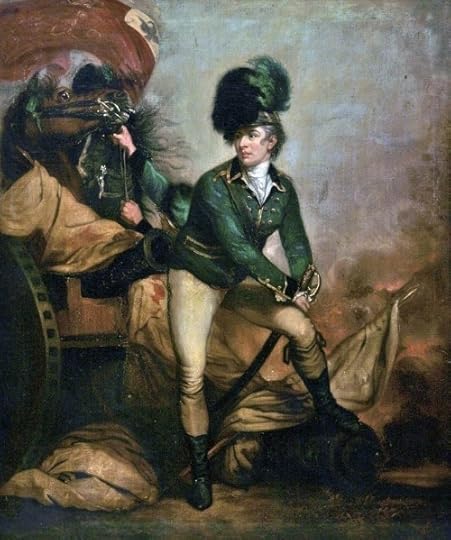
Major Banastre Tarleton
In fact, Marion annoyed the British so much that they finally asked Colonel Banastre Tarleton to take a task force and kill him or capture him. Tarleton, after chasing him through 26 miles of swamp, failed to capture him. Tarleton stated with much frustration: ”As for this damn old fox, the Devil himself could not catch him.” Thus, Marion’s nom de guerre of the Swamp Fox was born.
There were many points during the war when most men would have thrown their hands up in despair and retired to their farms or plantations, but Marion never did. He hung in there through thick and thin. South Carolina took the brunt of the casualties in 1780 and 1781. ”Of the thousand patriots killed in action in the Revolution in 1780, 66 percent died in South Carolina. Even more startling, 90 percent of the two thousand patriots wounded in action in 1780 fell in that state. But 1781 would be bloodier still.”
I had no idea.
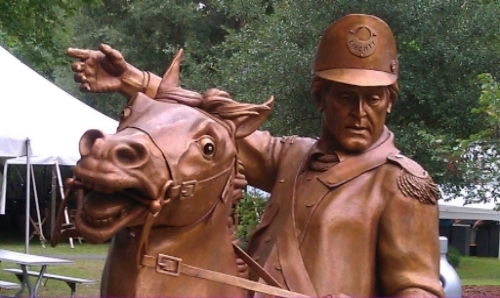
Wonderful statue of Marion
Information on Marion seems rather slender, certainly there isn’t as much known about him as the more illustrious patriots up North, but there is enough to know that this man, built more like a boy, had the heart of a lion. He did as much to win the war as any other patriot, except maybe Washington himself. He used tactics and terrain to harass and, at times, defeat an enemy much better equipped and better trained than his farmer soldiers. I learned a lot about a part of the war that I was not well acquainted with. This book wetted my appetite to pursue more books regarding the war in the South. Marion certainly deserves more of my attention.
If you wish to see more of my most recent book and movie reviews, visit http://www.jeffreykeeten.com
I also have a Facebook blogger page at:https://www.facebook.com/JeffreyKeeten

Francis Marion portrait
Colonel Francis Marion was the polar opposite of the majestic 6’4”, 200+ pound General George Washington. For a man who looked more like a wizened boy to command troops and keep them fighting for him, he had to do it with the force of his personality. His men obviously respected him. Unlike the Continental Armies commanded by Washington, Horatio Gates, and Nathaniel Greene, Marion was a Colonel in the militia. The men who signed up for the militia frequently wandered back home if there was plowing to be done or if they missed the comfort of their wives or if they became bored with the lack of activity. Marion’s forces were never very large, but sometimes they became so depleted to be more the size of a small boy scout troop.
I realized as I started to read this book that I knew very little about the Southern campaigns, as most of my reading had been about the trials, tribulations, and battles that happened in the New England states. I did watch the Mel Gibson movie The Patriot (2000,) which was based on a composite of several South Carolina patriots, including Marion. This was before I started my Mel Gibson movie ban, which I’m not sure I’ve officially lifted. Of course, because they used a composite character, they did not feel any need to stick close to historical accuracy.
Marion’s story was compelling enough. without needing to fabricate.
When we look back at the Revolutionary War, we look at the Tories, who were Americans loyal to England, as misguided fools. Of course, we have to understand that most of these people had been born British citizens, either in Britain or in America. To switch their loyalty to a ragtag bunch of patriots, or rebels as they were called by the other side, was not as cut and dried as it would seem. Just like in current Presidential elections, there was a certain segment, a rather large one actually, who wanted to vote for the winner. They are not affiliated with one party or the other. People were no different in South Carolina or anywhere else in America. There were many Americans who blew with the wind. They fought for one side and then the other, depending on who was winning at the time. In some cases, they had to join whichever side controlled their district or face sanctions or imprisonment. Whigs, which was another word for patriots, and Tories, also called Loyalists, who had lived peacefully side by side for their entire lives, found themselves on different sides of the conflict. Houses were burned; people were hanged, and it was difficult to know whom to trust.
Marion fought for the British army during the Indian Wars, but when the Revolution started, there was never a doubt in his mind that he would fight for the Patriot cause.
The British, who were stressed and strained in numerous places, primarily financially, to continue the war in America, had an idea. ”Parliament saw a way to save money and British lives by having loyal colonial subjects do much of the fighting themselves, a plan to ‘Americanize’ the war similar in concept to the Vietnamization policy adopted by the US government in Southeast Asia almost two hundred years later.” They thought it would work best in the South because Southerners did not seem as committed to the cause as those Patriot infested states up North.
It might have worked if not for that pesky mosquito Marion. There were several commanders working in South Carolina, but there were several points during the war when Marion was the only one actively harassing the British. Gates and the regular army had plenty to contend with further North and had little help to spare for the effort down South.
When you are outnumbered, outgunned, and constantly low on supplies, what do you do?
Marion hit the British hard and ran for the swamps.
As William Gilmore Simms, an early biographer, said of him: ”The swamp was his moat; his bulwarks were the deep ravines, which, watched by sleepless rifles, were quite as impregnable as the castles on the Rhine.”

Major Banastre Tarleton
In fact, Marion annoyed the British so much that they finally asked Colonel Banastre Tarleton to take a task force and kill him or capture him. Tarleton, after chasing him through 26 miles of swamp, failed to capture him. Tarleton stated with much frustration: ”As for this damn old fox, the Devil himself could not catch him.” Thus, Marion’s nom de guerre of the Swamp Fox was born.
There were many points during the war when most men would have thrown their hands up in despair and retired to their farms or plantations, but Marion never did. He hung in there through thick and thin. South Carolina took the brunt of the casualties in 1780 and 1781. ”Of the thousand patriots killed in action in the Revolution in 1780, 66 percent died in South Carolina. Even more startling, 90 percent of the two thousand patriots wounded in action in 1780 fell in that state. But 1781 would be bloodier still.”
I had no idea.

Wonderful statue of Marion
Information on Marion seems rather slender, certainly there isn’t as much known about him as the more illustrious patriots up North, but there is enough to know that this man, built more like a boy, had the heart of a lion. He did as much to win the war as any other patriot, except maybe Washington himself. He used tactics and terrain to harass and, at times, defeat an enemy much better equipped and better trained than his farmer soldiers. I learned a lot about a part of the war that I was not well acquainted with. This book wetted my appetite to pursue more books regarding the war in the South. Marion certainly deserves more of my attention.
If you wish to see more of my most recent book and movie reviews, visit http://www.jeffreykeeten.com
I also have a Facebook blogger page at:https://www.facebook.com/JeffreyKeeten
July 10, 2022
This was an excellent biography and historical narrative on Francis Marion, the Swamp Fox. He was born and raised in the South Carolina Lowcountry Berkeley County just outside of Charleston. Marion was born into a French Huguenot family in 1732 and grew up among the French Huguenot community in Goose Creek and Moncks Corner, South Carolina (20 minutes outside of Charleston). Marion internalized the Huguenot identity, French language, customs and manners, and would use it later to strengthen alliances. As a teenager he was immersed in the ways of English culture while working the family farm business in Georgetown (60 miles from his home). He hunted and fished the inland woods and swamps beyond the coast, gaining knowledge of the local terrain and vegetation that one day would serve him well in battle.
He remained loyal to the family farm, remained a bachelor, and then at age 24 he and his brother Gabriel volunteered for the state colonial militia. In 1759 he was activated and called for active duty in the South Carolina Cherokee War. In 1760 he was attached to the Lyttelton Expedition—the final push to eradicate the Cherokee problem. The expeditionary force was comprised of British regulars, South Carolina provincials, rangers, Mohawk, Catawba, Stockbridge, and Chickasaw Indians as well as slaves. This was a brutal war of attrition and wanton violence committed by both sides: ambushes, revenge attacks, scaplings, village burnings, crop burnings, and migratory genocide. He learned guerrilla warfare on the frontier and would use it against the British and Tory Loyalists years later. Marion returned to quiet farming after the 1761 Cherokee War peace treaty.
As tensions grew among the colonial Americans and the British, Marion was elected as a delegate to South Carolina's First Provincial Congress in December 1774. The Continental Association was endorsed by South Carolina in January 1775 and took up arms against the British after Bunker Hill in April. Marion again volunteered for the 2nd Regiment (SC Militia) and was promoted captain. After 1776 South Carolina remained quiet until the British came back to reconquer in late 1779.
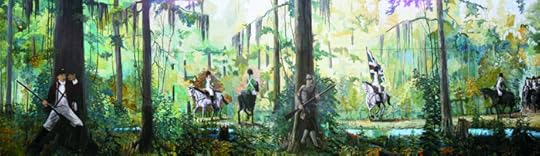
From 1780 through 1781 Lieutenant Colonel Marion agitated, disrupted, and attacked British regulars and Tory Loyalists throughout the backcountry. Using what he learned in the Cherokee War, his tactics would become doctrine in guerrilla and maneuver warfare
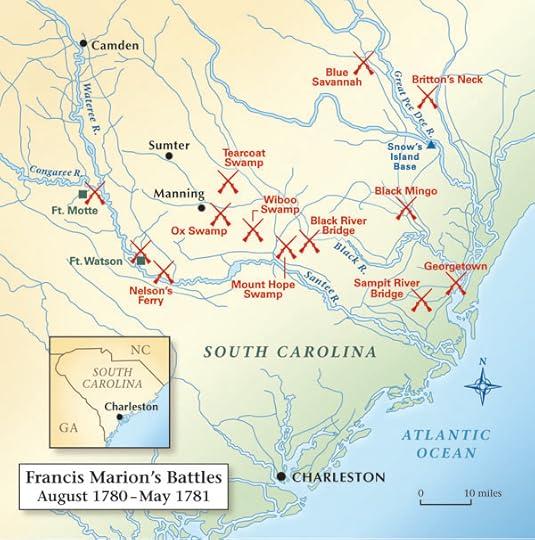
Throughout the Lowcountry you can still find murals and monuments dedicated to the man. The Swamp Fox and Marion's Brigade are still revered as heroes in South Carolina history.
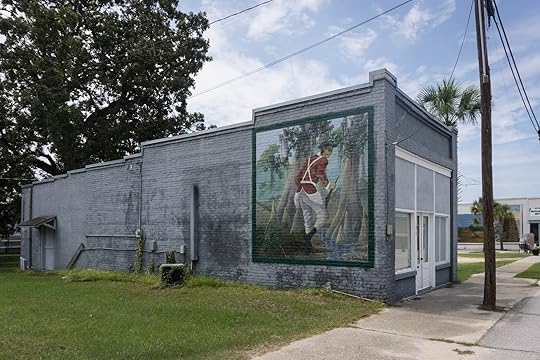
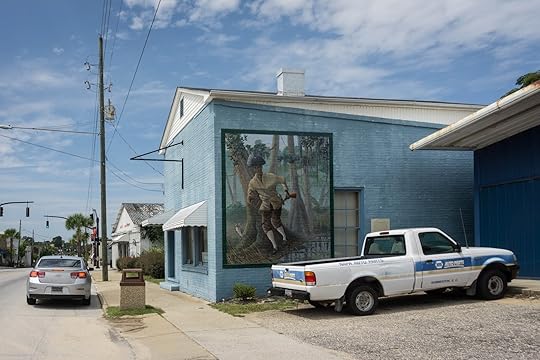
This was an excellent book in my opinion. Francis Marion is one of the unsung heroes of the American Revolution and has the title the "Washington of the South." Much of this story was seen in the 2000 film The Patriot, Some of it has been fabricated for Hollywood but was still a good movie for historical relevancy in my opinion. Throughout the book the author did a good job of disputing fact from fiction between two. I would recommend this book to anyone interested in the American Revolution. Thanks!
He remained loyal to the family farm, remained a bachelor, and then at age 24 he and his brother Gabriel volunteered for the state colonial militia. In 1759 he was activated and called for active duty in the South Carolina Cherokee War. In 1760 he was attached to the Lyttelton Expedition—the final push to eradicate the Cherokee problem. The expeditionary force was comprised of British regulars, South Carolina provincials, rangers, Mohawk, Catawba, Stockbridge, and Chickasaw Indians as well as slaves. This was a brutal war of attrition and wanton violence committed by both sides: ambushes, revenge attacks, scaplings, village burnings, crop burnings, and migratory genocide. He learned guerrilla warfare on the frontier and would use it against the British and Tory Loyalists years later. Marion returned to quiet farming after the 1761 Cherokee War peace treaty.
As tensions grew among the colonial Americans and the British, Marion was elected as a delegate to South Carolina's First Provincial Congress in December 1774. The Continental Association was endorsed by South Carolina in January 1775 and took up arms against the British after Bunker Hill in April. Marion again volunteered for the 2nd Regiment (SC Militia) and was promoted captain. After 1776 South Carolina remained quiet until the British came back to reconquer in late 1779.
From 1780 through 1781 Lieutenant Colonel Marion agitated, disrupted, and attacked British regulars and Tory Loyalists throughout the backcountry. Using what he learned in the Cherokee War, his tactics would become doctrine in guerrilla and maneuver warfare
Marion's cooperative relationship with the community marked him as one of the earliest guerrilla warriors who understood the importance of moral, material, and intelligence support from the local civilian population. It was a principle applied by later guerrilla leaders such as Mao Tse-tung and continues to be endorsed as part of official US Army doctrine. And it was one reason Marion gained the hears and minds of his countrymen, whereas the British, with their threats and reprisals against the inhabitants, failed to do so. pg 107The famous Marion Brigade was a mixture of French Huguenot plantation owners from the Santee River region and Scotch-Irish small farmers of the Pee Dee River region. The war of South Carolina was filled with irregular warfare and atrocities: church burnings, farm burnings, killing livestock, and more. He created a psychological impact against the British that aided his mission
The British chronically overestimated his numbers, partly because of the many patrols he had spread out around the countryside, creating an illusion that he was everywhere. In the war of appearance of strength can be as important as the reality in scaring the enemy. pg 94
Throughout the Lowcountry you can still find murals and monuments dedicated to the man. The Swamp Fox and Marion's Brigade are still revered as heroes in South Carolina history.
This was an excellent book in my opinion. Francis Marion is one of the unsung heroes of the American Revolution and has the title the "Washington of the South." Much of this story was seen in the 2000 film The Patriot, Some of it has been fabricated for Hollywood but was still a good movie for historical relevancy in my opinion. Throughout the book the author did a good job of disputing fact from fiction between two. I would recommend this book to anyone interested in the American Revolution. Thanks!

January 17, 2018
I’m a Revolutionary War buff and was aware of Francis Marion. I viewed him as minor character in the battle for independence. But I stand corrected. He was a major thorn in the side of the British in South Carolina and it’s said he was one of the influences for the main character (played by Mel Gibson) in the movie, “Patriot”, a determined bad-ass.
If you’re interested in this period of US History and have neglected the southern theater of battle, like I did, you’ll want to read this. To tweak your interest further, did you know. . ,?
”More battles, engagements, and skirmishes were fought in South Carolina than in any other colony. Conservative estimates place the number of combat actions in the state at more than 200—a third of all that took place in the entire war. No other colony had as many inches of its territory affected by battle. Of the state’s 46 present day counties, 45 ended up seeing Revolutionary War actions. Nearly 20% of all Americans who died in battle in the Revolution War, died in South Carolina in the last two years of the war. “
I’m embarrassed to have neglected this part of Revolutionary history for this long as there were many brave men who deserve not to be forgotten. I will certainly be looking to remedy that with similar, additional good reads.
If you’re interested in this period of US History and have neglected the southern theater of battle, like I did, you’ll want to read this. To tweak your interest further, did you know. . ,?
”More battles, engagements, and skirmishes were fought in South Carolina than in any other colony. Conservative estimates place the number of combat actions in the state at more than 200—a third of all that took place in the entire war. No other colony had as many inches of its territory affected by battle. Of the state’s 46 present day counties, 45 ended up seeing Revolutionary War actions. Nearly 20% of all Americans who died in battle in the Revolution War, died in South Carolina in the last two years of the war. “
I’m embarrassed to have neglected this part of Revolutionary history for this long as there were many brave men who deserve not to be forgotten. I will certainly be looking to remedy that with similar, additional good reads.

March 27, 2025
I’m only giving “The Swamp Fox” three stars and I’m feeling sort of stingy, like I should be doing more to heap praise on one of the Revolutionary War’s great heroes.. First of all I recently reviewed “George Washington’s Westchester Gamble” a slim book about what happened in the Revolutionary War between the years 1777 and 1781, years that get short shrift in history books. When the British army ran into a stalemate against George Washington’s forces who denied them the seizure of the Hudson River, they took the bulk of their forces to North and South Carolina, and Virginia where they thought the populace was more sympathetic to the Crown. This might have been true in the cities but as the British plunged into the interior they met greater resistance. Their reaction to the resistance was to take a heavy handed approach against the population by plundering and burning of properties, and murder. Not a great way to capture local hearts and minds.
Enter patriots like Francis Marion, the Swamp Fox. Like many of his era Marion began his career fighting for the British in the French and Indian War. When the Revolutionary War began he drifted toward the Patriot cause and as the British army showed its true destructive colors in the south Marion began a guerrilla movement harassing the British. This caused the British to designate troops led by the odious Banastre Tarleton to hunt Marion down and kill him. But Marion knew the terrain and the British didn’t and he was able to strike at the British and disappear into the swamp. For all his harassment though Marion had a hard time fitting in with the Revolutionary command. There were other guerrilla leaders like Thomas Sumter (yes, that Sumter) who also waged war with the British and with whom Marion was reluctant to join forces with or to take orders. He had trouble assimilating his forces into the armies of General Gates and Nathaniel Greene and was much more comfortable executing missions with his own volunteers.
And that was probably the key to Marion’s success. He didn’t allow plunder so the neighboring countryside were loyal to him. He was acutely aware that his volunteers were just that, and he allowed men to leave and take care of a harvest or a sick relative. It’s interesting to me that patriots like Sumter and Moultrie (See “The Demon of Unrest” by Erik Larson) received more notoriety and even had forts named after them whereas Marion, who seemed to have more accomplishments, lives mainly in South Carolina folklore.
Maybe I’ve read too much about South Carolina history lately, or maybe Marion’s raids became too repetitive, but it got to the point where I just wanted to finish the book and move on. But if Francis Marion is of interest there probably is not a better book about him.
Enter patriots like Francis Marion, the Swamp Fox. Like many of his era Marion began his career fighting for the British in the French and Indian War. When the Revolutionary War began he drifted toward the Patriot cause and as the British army showed its true destructive colors in the south Marion began a guerrilla movement harassing the British. This caused the British to designate troops led by the odious Banastre Tarleton to hunt Marion down and kill him. But Marion knew the terrain and the British didn’t and he was able to strike at the British and disappear into the swamp. For all his harassment though Marion had a hard time fitting in with the Revolutionary command. There were other guerrilla leaders like Thomas Sumter (yes, that Sumter) who also waged war with the British and with whom Marion was reluctant to join forces with or to take orders. He had trouble assimilating his forces into the armies of General Gates and Nathaniel Greene and was much more comfortable executing missions with his own volunteers.
And that was probably the key to Marion’s success. He didn’t allow plunder so the neighboring countryside were loyal to him. He was acutely aware that his volunteers were just that, and he allowed men to leave and take care of a harvest or a sick relative. It’s interesting to me that patriots like Sumter and Moultrie (See “The Demon of Unrest” by Erik Larson) received more notoriety and even had forts named after them whereas Marion, who seemed to have more accomplishments, lives mainly in South Carolina folklore.
Maybe I’ve read too much about South Carolina history lately, or maybe Marion’s raids became too repetitive, but it got to the point where I just wanted to finish the book and move on. But if Francis Marion is of interest there probably is not a better book about him.

February 18, 2018
A well-written and engaging biography of Francis Marion the "Swamp Fox" who was best known for keeping the British occupied in the southern Theater of the Revolution(In Marion's case South Carolina) which was largely a disaster for conventional Continental forces. Often he received orders from the General in charge of the theater... There were three of these in the course of the war. Nathanael Greene being the best of them. However a lot of the time the generals were busy in the Northern Theatre or simply didn't bother to communicate with Marion at all. The author seems to indicate that there were times when Marion and his irregular militiamen were the only thing standing between the British Army and the total collapse of patriot efforts in the south. The conclusion seems to be that Marion's delaying tactics in South Carolina bought Washington much needed time up North.
Mel Gibson's character in the patriot is based on Marion. The author wrote this book in part to help set straight some of the myths that the movie has perpetuated. Anybody with a passing interest in the American Revolution should read this book but it will probably be most interesting to natives of South Carolina which is where most of Marion's major operations took place.
Joe Barrett's narration is very good for this kind of book however he has one of those cool old man/ smoker kind of voices so sometimes it seems like he's whispering, I only bring this up because I found it necessary to adjust the volume frequently.
Mel Gibson's character in the patriot is based on Marion. The author wrote this book in part to help set straight some of the myths that the movie has perpetuated. Anybody with a passing interest in the American Revolution should read this book but it will probably be most interesting to natives of South Carolina which is where most of Marion's major operations took place.
Joe Barrett's narration is very good for this kind of book however he has one of those cool old man/ smoker kind of voices so sometimes it seems like he's whispering, I only bring this up because I found it necessary to adjust the volume frequently.

December 24, 2016
This is a fine biography of Fancis Marion, the "Swamp Fox." His irregular fighting against the British and loyalist forces in South Carolina was an important element in keeping an American military presence in the south. With other irregular units (e.g., Sumter and ), the4se patriots were able to take up some of the slack after Horatio Gates' crushing defeat at Camden. The American army had largely disappeared. Later, Nathanael Greene began to rebuild a force to obstructs Lord Cornwallis' efforts.
The book begins with the historical context for battle in the south. There is also a nice portrayal of Marion's youth. From his youth to adulthood, he finally created a life style that allowed him to live fairly well. When war came, he threw his lot in with the Americans. After the defeat of Gates' army, he and others began a hit and run guerilla warfare against the British. The work does a nice job of outlining his strategy, his realization that his troops would come and go as the season or some occasion called for such departure. He was also adept at finding "hideouts" and keeping them invisible (not always successful). He developed generally positive relations with nearby settlements.
He developed a useful working relationship with Greene and, thus, aided the larger military strategy of Greene. The book discusses ups and downs of Marion's military career, a few failures as well as his many successes.
In the final analysis, this is a satisfying work on "the Swamp Fox," including a nice analysis of his live after the Revolutionary War. . . .
The book begins with the historical context for battle in the south. There is also a nice portrayal of Marion's youth. From his youth to adulthood, he finally created a life style that allowed him to live fairly well. When war came, he threw his lot in with the Americans. After the defeat of Gates' army, he and others began a hit and run guerilla warfare against the British. The work does a nice job of outlining his strategy, his realization that his troops would come and go as the season or some occasion called for such departure. He was also adept at finding "hideouts" and keeping them invisible (not always successful). He developed generally positive relations with nearby settlements.
He developed a useful working relationship with Greene and, thus, aided the larger military strategy of Greene. The book discusses ups and downs of Marion's military career, a few failures as well as his many successes.
In the final analysis, this is a satisfying work on "the Swamp Fox," including a nice analysis of his live after the Revolutionary War. . . .

July 3, 2025
Have you ever seen the movie ‘The Patriot’ with Mel Gibson? Not only is it hugely historically inaccurate. But it is also both epic and bombastic in its scope, plot, and wildly entertaining!
Mel Gibson’s character is based upon the real ‘Swamp Fox’ Francis Marion. American Revolutionary, Militiaman, Brigadier General, Marion was nothing like his on screen counterpart. He was humble to the core, gave others credit for his work, and joined the Patriot cause early after advocating resistance within South Carolina’s State Congress.
What the movie did get right was that the Redcoats hunted him down ruthlessly. Utilizing the guerrilla tactics he learned from the French and Indian War against the European warfare Brits, made him a hard target to kill. And because of his actions throughout the War, South Carolina was saved from British control.
Leading small grouped militiamen, Marion excelled in ambushes, raids, disrupting British supply lines, and weakening their control over his home state. Marion even led a daring attempt to rescue 150 Americans held prisoner within a British encampment.
He said of his compatriots who gave their lives for the sake of Liberty,
"They fell, but o'er their glorious grave floats free the banner of the cause they died to save.”
Some say that Marion was the ‘George Washington of the South’, that he never lost his humanity through either war he went through. Marion was an American original to say the least. And it was fascinating to learn of one of our lesser-known heroes.
🇺🇸🇺🇸Happy Independence Day!!🇺🇸🇺🇸
Mel Gibson’s character is based upon the real ‘Swamp Fox’ Francis Marion. American Revolutionary, Militiaman, Brigadier General, Marion was nothing like his on screen counterpart. He was humble to the core, gave others credit for his work, and joined the Patriot cause early after advocating resistance within South Carolina’s State Congress.
What the movie did get right was that the Redcoats hunted him down ruthlessly. Utilizing the guerrilla tactics he learned from the French and Indian War against the European warfare Brits, made him a hard target to kill. And because of his actions throughout the War, South Carolina was saved from British control.
Leading small grouped militiamen, Marion excelled in ambushes, raids, disrupting British supply lines, and weakening their control over his home state. Marion even led a daring attempt to rescue 150 Americans held prisoner within a British encampment.
He said of his compatriots who gave their lives for the sake of Liberty,
"They fell, but o'er their glorious grave floats free the banner of the cause they died to save.”
Some say that Marion was the ‘George Washington of the South’, that he never lost his humanity through either war he went through. Marion was an American original to say the least. And it was fascinating to learn of one of our lesser-known heroes.
🇺🇸🇺🇸Happy Independence Day!!🇺🇸🇺🇸

July 30, 2019
I knew only a little about the Revolutionary War in America before reading this book, especially the role of the fighting that took place in South Carolina. Of course I know about Paul Revere and his famous ride and of George Washington’s conquests as the general of the Continental army. I believed most of the fighting took place in New England and the middle Atlantic states, New Jersey Pennsylvania, Maryland, Virginia and North Carolina. However, I learned by reading this history book that more fighting during the Revolutionary War occurred in South Carolina than in any other state.
The unsung hero of the war was South Carolinian, Francis Marion also know as the Swamp Fox. He applied guerrilla tactics during battles that he learned fighting the Cherokee. Attacking the British in small hit and run skirmishes that were so significant that his actions contributed greatly to ending the war, and the British army leaving America for the last time.
The book is well researched and the writing admirable. The author John Oller provided significant details not brought forward before about Marion and his contributions to ending the war.
The unsung hero of the war was South Carolinian, Francis Marion also know as the Swamp Fox. He applied guerrilla tactics during battles that he learned fighting the Cherokee. Attacking the British in small hit and run skirmishes that were so significant that his actions contributed greatly to ending the war, and the British army leaving America for the last time.
The book is well researched and the writing admirable. The author John Oller provided significant details not brought forward before about Marion and his contributions to ending the war.

March 1, 2017
Though it was heavier on military/campaign details than I personally like, I wanted to learn about Francis Marion & I did. And now I wonder how lacking my education was in that he was such a pivotal American Revolutionary figure &, yet, I knew him by name only, not by who he was or what he accomplished. I think it was a well-researched biography of an admirable leader during the Revolutionary War. Recommended for those that enjoy non-fiction, historical &/or military history books.
February 16, 2024
I enjoyed listening to this biography by Oller. It seemed like he based most of his work on writings by Marion's contemporaries, Marion's war correspondence, Marion's wills, and archeological evidence. I did notice a slightly conservative bias, but he seemed to be well balanced in his portrayal of information. He rejects the revisionist history of Marion raping his slaves.
Now, to the book proper, Marion was the youngest of 6 or 7 children and was the grandchild of Benjamin Marion, a Hugonot immigrant from France. He grew up in the South Carolina backwoods and served in the Indian wars where he learned British fighting tactics and observed Indian guerilla warfare, which served him well later in his career. Marion served a stint as commander of continental soldiers, but ultimately became general of the South Carolina Militia, mostly comprised of Scotch-Irish Presbyterians.
Throughout the Revolutionary War, Marion was often left as the only line of defense against British forces seeking to drive north towards Washington from Charleston and Georgia. He utilized guerilla warfare to great success against the British, hindering their movements and which constantly draw resources and men away from pursuing Nathaniel Green and General Washington. I would liken his situation to how Stonewall Jackson constantly harassed and raided the Union through JEB Stuart's calvary. Nathaniel Green utilized Marion in a very similar manner. In the end, Marion sustained one defeat when he was the primary commander of the American forces. It was his final battle.
After the war, Marion served for the South Carolina legislature and for a port in Charleston. He, age 54, also married his 49 yr old 1st cousin. Together, they rebuilt his plantation at Pond Bluff and sent a number of his nephews through college. He died at age 67.
To gain a better understanding of Marion's admirable character and a deeper understanding of the Revolutionary War in South Carolina, I would recommend listening to the book.
* Given this was an audiobook, the information above may not be 100% accurate.
Now, to the book proper, Marion was the youngest of 6 or 7 children and was the grandchild of Benjamin Marion, a Hugonot immigrant from France. He grew up in the South Carolina backwoods and served in the Indian wars where he learned British fighting tactics and observed Indian guerilla warfare, which served him well later in his career. Marion served a stint as commander of continental soldiers, but ultimately became general of the South Carolina Militia, mostly comprised of Scotch-Irish Presbyterians.
Throughout the Revolutionary War, Marion was often left as the only line of defense against British forces seeking to drive north towards Washington from Charleston and Georgia. He utilized guerilla warfare to great success against the British, hindering their movements and which constantly draw resources and men away from pursuing Nathaniel Green and General Washington. I would liken his situation to how Stonewall Jackson constantly harassed and raided the Union through JEB Stuart's calvary. Nathaniel Green utilized Marion in a very similar manner. In the end, Marion sustained one defeat when he was the primary commander of the American forces. It was his final battle.
After the war, Marion served for the South Carolina legislature and for a port in Charleston. He, age 54, also married his 49 yr old 1st cousin. Together, they rebuilt his plantation at Pond Bluff and sent a number of his nephews through college. He died at age 67.
To gain a better understanding of Marion's admirable character and a deeper understanding of the Revolutionary War in South Carolina, I would recommend listening to the book.
* Given this was an audiobook, the information above may not be 100% accurate.

Did Not Finish
March 21, 2026I’ll come back to this one day. But alas today is not that day

September 7, 2026
The third read of my “America’s 250th series.”
The 21st century biography of the man that was inspiration for and the focus of Mel Gibson’s “The Patriot”: Francis Marion, AKA the Swamp Fox.
His physical attributes were definitely Hollywood-ified by Gibson, because in real-life he was “a diminutive, forty-eight-year-old man, who at around five-foot-two and 110 pounds, possessed the physique of a thirteen-year-old boy. His knock knees, deformed since birth, nearly touched one another, his hook nose and narrow face gave him a homely appearance, and he walked with a pronounced limp.”
Some of his actions may have also been exaggerated by the year 2000 movie, but Marion was no doubt a Patriot and a hero. He really did camp out in the middle of swamps to stay hidden from the British, and the engagement known as Parker’s Ferry saw Marion and his militia men surprise the British by attacking them from his vantage point in “a thick, jungle-like swamp.”
It was interesting to learn that Marion did not get along with Thomas Sumter, known as “The Gamecock.” The little knowledge I had of Sumter before reading this book was that Ft Sumter was named for him, as he had an important role in the Revolutionary War. It was refreshing to read that while Sumter was brash in his strategy and treatment of enemies, Marion became respected not for his physical prowess but because of his success rate with respectable tactics, including the absolute abhorrence and intolerance of looting/pillaging.
To demonstrate the respect he garnered during his lifetime, read the following: “more places have been named for Marion than any other revolutionary figure, excepting Washington. …29 cities and towns and 17 counties across America, not to mention a four-year university, a national forest, and a small park on Capitol Hill.”
He has been called the “Washington of the South,” but I will remember him as his British foe (Banastre Tarleton) remembered him “Let us go back, and we will soon find the Gamecock. But as for this damned old fox, the Devil himself could not catch him.”
The 21st century biography of the man that was inspiration for and the focus of Mel Gibson’s “The Patriot”: Francis Marion, AKA the Swamp Fox.
His physical attributes were definitely Hollywood-ified by Gibson, because in real-life he was “a diminutive, forty-eight-year-old man, who at around five-foot-two and 110 pounds, possessed the physique of a thirteen-year-old boy. His knock knees, deformed since birth, nearly touched one another, his hook nose and narrow face gave him a homely appearance, and he walked with a pronounced limp.”
Some of his actions may have also been exaggerated by the year 2000 movie, but Marion was no doubt a Patriot and a hero. He really did camp out in the middle of swamps to stay hidden from the British, and the engagement known as Parker’s Ferry saw Marion and his militia men surprise the British by attacking them from his vantage point in “a thick, jungle-like swamp.”
It was interesting to learn that Marion did not get along with Thomas Sumter, known as “The Gamecock.” The little knowledge I had of Sumter before reading this book was that Ft Sumter was named for him, as he had an important role in the Revolutionary War. It was refreshing to read that while Sumter was brash in his strategy and treatment of enemies, Marion became respected not for his physical prowess but because of his success rate with respectable tactics, including the absolute abhorrence and intolerance of looting/pillaging.
To demonstrate the respect he garnered during his lifetime, read the following: “more places have been named for Marion than any other revolutionary figure, excepting Washington. …29 cities and towns and 17 counties across America, not to mention a four-year university, a national forest, and a small park on Capitol Hill.”
He has been called the “Washington of the South,” but I will remember him as his British foe (Banastre Tarleton) remembered him “Let us go back, and we will soon find the Gamecock. But as for this damned old fox, the Devil himself could not catch him.”

January 5, 2024
Francis Marion was a man of true valor. Fighting against an ever present enemy in the low country, the South Carolinians’ enduring desire to protect and serve the country he so loved would continually prevail. Although the British, and many in the Continental Army, had a vast disdain for militiamen, Marion would prove to be more than worthy of respect when it came to the battlefield. A man who was above reproach that regularly sought out the honorable decision, Marion’s Character would be second to none. For the man who kept the dream of a Free Union alive in the swamps and levees of South Carolina, despite all opposition and no recognition, may his effort not long be forgotten and his love for America be rekindled in our Nation today.

July 30, 2026
I should read more about the war for independence. I had no idea what a wild time it was, or just how small of a scale so many of the encounters were. Just a bunch of guys getting together for a shooting and stabbing match. What a time.
This book was "just the facts." The author was intentionally steering clear of the lore and legend around Francis Marion, so it makes sense that he cut out any editorially (except what else backed up with quotes from letters written by concerned parties). My biggest critique was that for the "just the facts" model, there were so few dates. Many, many times reading the book I was just wondering what year it was, and there wasn't a clue to be found.
Also, the more I read about history, the more I'm convinced that wars are won by whichever side can keep their generals from bickering like toddlers the most.
This book was "just the facts." The author was intentionally steering clear of the lore and legend around Francis Marion, so it makes sense that he cut out any editorially (except what else backed up with quotes from letters written by concerned parties). My biggest critique was that for the "just the facts" model, there were so few dates. Many, many times reading the book I was just wondering what year it was, and there wasn't a clue to be found.
Also, the more I read about history, the more I'm convinced that wars are won by whichever side can keep their generals from bickering like toddlers the most.

October 6, 2023
This quick read was pretty interesting. I like reading about characters in history who are just obscure enough to not show up in the primary history books I've read growing up, yet have a significant impact on the course of history. Marion was not a saint by any means, but his story is worth telling, and his faithful and brave stand against the British, combined with his prowess and stealth in the swamps of South Carolina, make for quite an interesting story!

July 3, 2022
It is so nice to read about an American hero who held such high standards in ethics and morality. I admire this guy.

July 26, 2021
Portrait of a man who used hit and run militia warfare during the American Revolution.
I was not well-versed in the history of Francis Marion. My interest piqued after the move the Patriot, which for the most part is not accurate to the real patriot. The fact that Marion used guerilla type warfare as opposed to the "typical" battles of the day drew me in, due to my love of reading Special Ops type fiction and non-fiction.
Oller does a good job of moving this book along and reads like a novel at times. There are a couple of maps in the front to reference, but would have preferred more of these through the book.
Finding out that South Carolina had more battles during the American Revolution than any other colony was an enlightening fact, as seems Virginia and points north get more of the attention.
The conflict between the militia/volunteers that Marion helped lead, amongst themselves, those of the Continental Army and the British, may have been the more eye-opening, but not surprising, as this tends to happen in all wars, with different leadership styles, versus what your core beliefs area.
Based on Oller's account, Francis Marion, was the Purest Patriot.
I was not well-versed in the history of Francis Marion. My interest piqued after the move the Patriot, which for the most part is not accurate to the real patriot. The fact that Marion used guerilla type warfare as opposed to the "typical" battles of the day drew me in, due to my love of reading Special Ops type fiction and non-fiction.
Oller does a good job of moving this book along and reads like a novel at times. There are a couple of maps in the front to reference, but would have preferred more of these through the book.
Finding out that South Carolina had more battles during the American Revolution than any other colony was an enlightening fact, as seems Virginia and points north get more of the attention.
The conflict between the militia/volunteers that Marion helped lead, amongst themselves, those of the Continental Army and the British, may have been the more eye-opening, but not surprising, as this tends to happen in all wars, with different leadership styles, versus what your core beliefs area.
Based on Oller's account, Francis Marion, was the Purest Patriot.
August 11, 2017
John Oller has carefully collected and written some extraordinary research; I’m convinced that Francis Marion, The Swamp Fox, really did save the American Revolution. I was shocked to find out how much fighting took place in the state of South Carolina and how important these battles were in winning the Revolutionary War.
As Joseph C. Goulden writes in his review of this book in ‶The Washington Times″: ‶Of the thousand patriots killed in action in the Revolution in 1780, 66 percent died in South Carolina . 90 percent of the two thousand patriots wounded in action in 1780 fell in that state. A South Carolinian, Francis Marion was “a diminutive, forty-eight-year-old man who, at around five-foot-two and 110 pounds, possessed the physique of a thirteen-year-old boy. His knock knees, deformed since birth, nearly touched one another .” Yet his “flashing black eyes and steely demeanor” suggested a man ready for a fight.″
As Joseph C. Goulden writes in his review of this book in ‶The Washington Times″: ‶Of the thousand patriots killed in action in the Revolution in 1780, 66 percent died in South Carolina . 90 percent of the two thousand patriots wounded in action in 1780 fell in that state. A South Carolinian, Francis Marion was “a diminutive, forty-eight-year-old man who, at around five-foot-two and 110 pounds, possessed the physique of a thirteen-year-old boy. His knock knees, deformed since birth, nearly touched one another .” Yet his “flashing black eyes and steely demeanor” suggested a man ready for a fight.″
April 6, 2017
Great specifics on Marion and good overview of the entire Revolution in the South.

March 19, 2026
Fabulous, better than fiction, and funny (most impressive for history!)!! Banastre Tarleton is the very best villain name I’ve ever heard-his portrait is so characteristic, can totally picture him madly cutting through the swamp. Came because of the Patriot movie, stayed because of the tea. Be warned that it is not a total hero story, with 2 cousin marriages and a lot of slavery.
“It was a cold winter in Sheldon, and Marion's men, lacking shoes blankets, and clothing, passed the time by growing mustaches. you see me," Marion wrote to Lincoln, "you will find I have a formidable ... Mustassho, which all the regiment now ware and if you have not one you will be singular." (It is not known how long Marion kept his
mustache.)” 53 🥸
“The success of Marion's hit-and-run tactics so infuriated the British high command that at least half a dozen death squads, beginning with Wemyss, were dispatched in sequence to go after him.” 61 ⚡️
“Although he lacked physical presence or a magnetic personality, they regarded him with awe.
Part of their reverence was due to his success, which naturally bred respect. But it was his steady, equable character that most caused them to follow where he led. "He had no uproarious humor," wrote one man who spoke with surviving members of Marion's Brigade. "At most a quiet smile lighted up his features." Although capable of sarcasm and sharp retorts and even playfulness among friends and military intimates, his demeanor was quiet and subdued. "He was singularly considerate of the sensibilities of others, and had his temper under rare control," the same chronicler wrote. "He yielded to few excitements, was seldom elevated by successes to imprudence as seldom depressed by disappointments to despondency." 66 my type I fear
“It was a cold winter in Sheldon, and Marion's men, lacking shoes blankets, and clothing, passed the time by growing mustaches. you see me," Marion wrote to Lincoln, "you will find I have a formidable ... Mustassho, which all the regiment now ware and if you have not one you will be singular." (It is not known how long Marion kept his
mustache.)” 53 🥸
“The success of Marion's hit-and-run tactics so infuriated the British high command that at least half a dozen death squads, beginning with Wemyss, were dispatched in sequence to go after him.” 61 ⚡️
“Although he lacked physical presence or a magnetic personality, they regarded him with awe.
Part of their reverence was due to his success, which naturally bred respect. But it was his steady, equable character that most caused them to follow where he led. "He had no uproarious humor," wrote one man who spoke with surviving members of Marion's Brigade. "At most a quiet smile lighted up his features." Although capable of sarcasm and sharp retorts and even playfulness among friends and military intimates, his demeanor was quiet and subdued. "He was singularly considerate of the sensibilities of others, and had his temper under rare control," the same chronicler wrote. "He yielded to few excitements, was seldom elevated by successes to imprudence as seldom depressed by disappointments to despondency." 66 my type I fear
February 12, 2021
I remember, fondly, the 1950’s Walt Disney TV series called “The Swamp Fox” featuring a swashbuckling handsome Revolutionary War hero played by Leslie Nielsen. This biographical portrait of the real Francis Marion doesn’t disappoint. Appearances notwithstanding, “a diminutive, forty-eight-year-old man who at around five-foot-two and 110 pounds, possessed the physique of a thirteen-year-old boy. His knock knees, deformed since birth, nearly touched one another, hid hook nose and narrow face gave him a homely appearance, and he walked with a pronounced limp. Yet his flashing black eyes and steely demeanor, along with his blue Continental uniform, rumpled though it was, cautioned the mocking soldiers not to laugh at the ragged group in his presence.” (3) Marion was every inch in character the hero portrayed on TV. Although he was a trained Continental soldier, his role as a guerilla leader in the swamps of South Carolina was new to him. Guerilla warfare was not new, but Marion had to invent his version as he went along and he did it brilliantly. Unlike many of his contemporaries both British and American, he was even-handed and fair and didn’t subscribe to the brutal tactics and plundering that characterized many of his contemporary military leaders. He worked well with his fellow officers and was adored by his men. This fast-paced and exceptionally readable biography depicts a truly exceptional Revolutionary leader.
“Unlike so many leaders with feet of clay, Francis Marion holds up to scrutiny. The more one learns about him, the more he inspires admiration. He has been called the “Washington of the South.” (247)
“Unlike so many leaders with feet of clay, Francis Marion holds up to scrutiny. The more one learns about him, the more he inspires admiration. He has been called the “Washington of the South.” (247)

May 12, 2021
While 'The Patriot' (Mel Gibson) was a good movie, it was very loosely based on the reality of who the real Swamp Fox was. Francis Marion truly was a patriot who put everything on the line for the sake of the cause of freedom. This book paints an authentic picture of who the man really was (including his flaws) and of what he accomplished. There were a few eye-openers for me in this: 1 - This was as much a civil war as it was a war of independence. The loyalist militias were every bit as active as the patriot militias and atrocities abounded on all sides. 2 - Yorktown (the surrender of Gen. Cornwallis) was not the end of the war. It finally ended with the British withdrawing from Charleston and the the signing of a peace treaty in Paris a year later. 3 - Personal rivalries and petty jealousies among the various patriot militia leaders sometimes cost them dearly in their struggle for independence. Also, the Continental Army tended to look down on the militias with distrust (not unfounded in some cases) since men were free to come and go as they chose. 4 - The whole idea of capture and parole of the enemy made the whole thing seem like a game of tag to some degree. While there was some incarceration of enemy combatants, most who were "tagged" were supposed to sit out the war. Those who broke their parole were subject to hanging. It really was a different way of prosecuting a war. All in all, a fascinating read.

July 15, 2023
After reading biographies of George Washington and Alexander Hamilton, I decided that it was time to learn more about Francis Marion. Many sources have pointed out that Francis Marion, the Swamp Fox, managed to tie up a lot of British troops in South Carolina and probably prevented General Cornwallis from taking North Carolina and possibly ending the Revolution for Britain.
This is a very highly engaging non-fiction account of the life of Francis Marion. John Oller does a thorough job of presenting Francis Marion as well as the dynamics of the Revolution in the South. I was surprised to hear how much direct fighting and violence there was between the Patriots and Tories, not just the military. The British committed their share of atrocities, but both sides of the colonists were probably worse in their treatment of each other.
Francis Marion was an extremely capable leader with a remarkably strong moral code for those times. He worked actively to prevent looting and unnecessary violence and destruction of property. His ability to recruit soldiers into the local militia for short periods of time and still lead an effective fighting force is remarkable. He was extremely effective in “asymmetrical” warfare, and ably balanced attacking and provoking the English, while losing very few of his own troops.
If you have any interest in the history the American Revolution and want to learn about the war was fought in the south – get this book!
This is a very highly engaging non-fiction account of the life of Francis Marion. John Oller does a thorough job of presenting Francis Marion as well as the dynamics of the Revolution in the South. I was surprised to hear how much direct fighting and violence there was between the Patriots and Tories, not just the military. The British committed their share of atrocities, but both sides of the colonists were probably worse in their treatment of each other.
Francis Marion was an extremely capable leader with a remarkably strong moral code for those times. He worked actively to prevent looting and unnecessary violence and destruction of property. His ability to recruit soldiers into the local militia for short periods of time and still lead an effective fighting force is remarkable. He was extremely effective in “asymmetrical” warfare, and ably balanced attacking and provoking the English, while losing very few of his own troops.
If you have any interest in the history the American Revolution and want to learn about the war was fought in the south – get this book!

September 23, 2024
I picked up this book during a family trip to South Carolina and loved reading more about Francis while traveling around some of the areas where he operated. While so much of his story has been embellished by legend, the truth about him is in some ways even more amazing. The fact that he was able to maintain such dignity while fighting the way that he was is truly amazing. Some of my favorite books ever are stories about men of high character and Francis Marion was one of the highest. If you’re interested in this time period, this book is a must read!
Favorite Quote: “One might expect that Marion, as the leader of a guerrilla bridge, would descend to the level of barbarism practiced by so many of his contemporaries. Yet he did not. “Of all the men who ever drew the sword, Marion was one of the most humane,” avowed his friend Peter Horry. “He not only prevented cruelty, in his own presence, but strictly forbade it in his absence.”
Favorite Quote: “One might expect that Marion, as the leader of a guerrilla bridge, would descend to the level of barbarism practiced by so many of his contemporaries. Yet he did not. “Of all the men who ever drew the sword, Marion was one of the most humane,” avowed his friend Peter Horry. “He not only prevented cruelty, in his own presence, but strictly forbade it in his absence.”

June 11, 2023
"Surrounded on every side with a superior force, hunted from every quarter with veteran troops, you have found means to elude all their attempts, and to keep alive the expiring hopes of an oppressed militia, when all succor seemed to be cut off. To fight the enemy with prospect of victory is nothing; but to fight with intrepidity under the constant impression of defeat, and inspire irregular troops to do it, is a talent peculiar to yourself." - General Greene, Letter to Francis Marion, 1781.
November 23, 2023
An excellent biography of Francis Marion. I have always been interested in the legendary Swamp Fox. From my dad telling me of the exploits as a hit-and-run tactician to watching the movie, The Patriot, my curiosity has never gone away. This book was an excellent eye opener to Francis Marion as a person. Highly recommend to anyone interested in learning more about The Swamp Fox or the Revolutionary War.
March 7, 2026
Pretty good. Another example of how absurd and embarrassing (for the British) it was that a rag tag group of Patriots was able to successfully defeat a British army that at that point in time was the most successful military the world had ever seen. A very broad book with lots of people and places I was not familiar with, so at times you get a little lost being a casual reader. Easy to understand high level significance of Francis Marion and the Southern theater of the American revolution.
August 2, 2021
Enjoyed the read
Enjoyed the history in this book. Like many I assume the contrast of the actual man to the Mel Gibson character in the Patriot is stark. I think more people would benefit learning what it took to make this country free and this book does a good job of recognizing the past and acknowledging it was exactly perfect.
Enjoyed the history in this book. Like many I assume the contrast of the actual man to the Mel Gibson character in the Patriot is stark. I think more people would benefit learning what it took to make this country free and this book does a good job of recognizing the past and acknowledging it was exactly perfect.

August 27, 2026
A nice non-fiction read, pretty easy to get through. I couldn't tell if Marion was personally rather dull, similarly to some other great leaders, or if the author failed to humanize him. I guess what I'm saying is that I always felt like I was reading about Marion and never felt like I got to know him.

July 8, 2026
Great information but a bit tedious at times. Learned a lot
Displaying 1 - 30 of 256 reviews