

What do you think?

About Betty's Boob
Betty Boob is an inspired examination of one woman’s painful, surreal, and oddly humorous journey following a mastectomy.
When Betty wakes up alone in a hospital she’s disoriented by the body that greets her. She must face the cruel outside world obsessed with beauty standards, starting with her boyfriend, who’s having a very hard time dealing with her new look. No one seems to know what to make of this new Betty and neither does she.
Embarking on a journey of self-discovery, Betty runs straight into the arms of fellow outcasts familiar with what it means to be on the outside looking in.
An inspiring and surprisingly comedic tale of loss and acceptance told largely through silent sequential narrative, Betty Boob is seminal work from master storytellers Véro Cazot and Julie Rocheleau.
When Betty wakes up alone in a hospital she’s disoriented by the body that greets her. She must face the cruel outside world obsessed with beauty standards, starting with her boyfriend, who’s having a very hard time dealing with her new look. No one seems to know what to make of this new Betty and neither does she.
Embarking on a journey of self-discovery, Betty runs straight into the arms of fellow outcasts familiar with what it means to be on the outside looking in.
An inspiring and surprisingly comedic tale of loss and acceptance told largely through silent sequential narrative, Betty Boob is seminal work from master storytellers Véro Cazot and Julie Rocheleau.
192 pages, Hardcover
First published September 13, 2017
Ratings & Reviews
Friends & Following
Create a free account to discover what your friends think of this book!
Community Reviews
Displaying 1 - 30 of 273 reviews

November 23, 2018
"What are you going to do now?
Anything I want."
This is a highly energetic, even at times effervescent graphic novel, almost completely wordless, with script by Vera Cazot and wild, colorful illustrations by Julie Rocheleau. And the back cover describes the basics:
"She lost her left breast, her job and her guy. She doesn't know it yet, but this is the best day of her life."
So it's a book ostensibly about mastectomy, but obviously much more than that defines her. Not without attention to grief, madness, pain and loss, Cazot and Rocheleau's story is an allegory of hope and sometimes surreal hilarity, funnier and more fun than you would expect. I can tell you that when I saw the subject matter I was not looking forward to it, but I have a growing number of books in my gn-health shelf, and I knew I had to read it, especially after Hannah's review. And it is pretty amazing. Of course this story doesn't relate every version or approach to the situation; surely there are worse horror stories, but this one chooses to be inspiring, and I think it works.
Anything I want."
This is a highly energetic, even at times effervescent graphic novel, almost completely wordless, with script by Vera Cazot and wild, colorful illustrations by Julie Rocheleau. And the back cover describes the basics:
"She lost her left breast, her job and her guy. She doesn't know it yet, but this is the best day of her life."
So it's a book ostensibly about mastectomy, but obviously much more than that defines her. Not without attention to grief, madness, pain and loss, Cazot and Rocheleau's story is an allegory of hope and sometimes surreal hilarity, funnier and more fun than you would expect. I can tell you that when I saw the subject matter I was not looking forward to it, but I have a growing number of books in my gn-health shelf, and I knew I had to read it, especially after Hannah's review. And it is pretty amazing. Of course this story doesn't relate every version or approach to the situation; surely there are worse horror stories, but this one chooses to be inspiring, and I think it works.

July 24, 2018
Betty has to contend with loosing her left breast, her job and her boyfriend - all at the same time. A powerful examination of what women have to go through when breast cancer intrudes on life - adult in nature. If you know someone who is dealing with breast cancer this book would be good for you to read so that you could help to support them better.
July 1, 2018
I don't often set myself up as an authority, but as a comics reader who is also a young breast cancer survivor, I feel particularly qualified to review this one.
The Good: this artwork is stunning, y'all. The emotion and movement on every page are expressive, energetic... I can't say enough good things. I haven't been this impressed with how intelligent and evocative comic art can be since Asterios Polyp.
The Meh: (Disclaimer: I have not been able to find any information about whether this book was autobiographical or what kind of research the writer conducted.) The narrative itself didn't ring true to me, possibly because it was so different from my own experience. I felt, though, like this was the story of what a well-intentioned woman thought a young breast cancer survivor should hear.
No two people experience treatment and recovery in the same way, but this story seemed out of touch with our current Pink Ribbon/Susan G Koman/Rah-Rah attitude about breast cancer. This may be where the cultural difference to the US comes into play: possibly other countries haven't sized upon the "Cancer Warrior" mentality. I can also attest that anyone who endured chemo would not be so quick to treat it as a prelude to the rest of the story: chemo suuuuuuucks, far worse than surgery imo. Whatever the reason, the actual story, charming as it is, reads like guesswork: imagining how people would react in that situation vs. being a reflection of a lived experience.
The Good: this artwork is stunning, y'all. The emotion and movement on every page are expressive, energetic... I can't say enough good things. I haven't been this impressed with how intelligent and evocative comic art can be since Asterios Polyp.
The Meh: (Disclaimer: I have not been able to find any information about whether this book was autobiographical or what kind of research the writer conducted.) The narrative itself didn't ring true to me, possibly because it was so different from my own experience. I felt, though, like this was the story of what a well-intentioned woman thought a young breast cancer survivor should hear.
No two people experience treatment and recovery in the same way, but this story seemed out of touch with our current Pink Ribbon/Susan G Koman/Rah-Rah attitude about breast cancer. This may be where the cultural difference to the US comes into play: possibly other countries haven't sized upon the "Cancer Warrior" mentality. I can also attest that anyone who endured chemo would not be so quick to treat it as a prelude to the rest of the story: chemo suuuuuuucks, far worse than surgery imo. Whatever the reason, the actual story, charming as it is, reads like guesswork: imagining how people would react in that situation vs. being a reflection of a lived experience.

October 30, 2018
I have historically been as obnoxious as every single other person who, reading graphic works, humble-brags about how hard it is to pay attention to the pictures, but realizing that actually you do know how to read visual language only takes a little time and attention. It doesn't even need to be learned it just needs to be minded.
Anyway this book blew my mind. I got into the bathtub with it to get started and never moved a muscle until I was pinckled to the eyeballs, flipping the final page. It was just that goddamn gorgeous and absorbing.
But not absorbing like the trashy mysteries I love to read--they do all the thinking for you, which is one excellent way to be absorbing. This book, on the other hand, elegantly, graciously absorbs you, welcomes you back to the ticklish satisfying cognitive puzzle of reading. Which is . . . I mean just really a very peculiar and disarming pleasure.
Anyway it's truly an astonishing work of storytelling, and the art couldn't be more luscious. A perfect collaboration, a true beauty.
Anyway this book blew my mind. I got into the bathtub with it to get started and never moved a muscle until I was pinckled to the eyeballs, flipping the final page. It was just that goddamn gorgeous and absorbing.
But not absorbing like the trashy mysteries I love to read--they do all the thinking for you, which is one excellent way to be absorbing. This book, on the other hand, elegantly, graciously absorbs you, welcomes you back to the ticklish satisfying cognitive puzzle of reading. Which is . . . I mean just really a very peculiar and disarming pleasure.
Anyway it's truly an astonishing work of storytelling, and the art couldn't be more luscious. A perfect collaboration, a true beauty.

October 5, 2021
Betty loses a breast and instead of it all going down the toilet, life actually BEGINS. She loses the man, gets friends, a new job, hobbies... and becomes a popular person in her line of work! Well, despite being a fetishized sex doll--she embraces it!
This may be one of the most beautiful graphic novels, ever! Taking Toulouse Latrec's poster of joie de vivre persons, the illustrations are a marvel to behold!
This may be one of the most beautiful graphic novels, ever! Taking Toulouse Latrec's poster of joie de vivre persons, the illustrations are a marvel to behold!

August 12, 2020
Η Betty Boob χάνει το αριστερό της στήθος, τη δουλειά της και τον σύντροφό της.
Πρέπει να αναγεννηθεί μέσα από τις στάχτες της. Όπως κάθε γυναίκα που περνάει από τη δοκιμασία της μαστεκτομής.
Το Betty Boob είναι ένα κόμικ με ελάχιστα λόγια, σχεδόν σαν να παρακολουθούμε βουβό κινηματογράφο, με μια burlesque αισθητική με υπέροχους συνδυασμούς χρωμάτων και μια ατμόσφαιρα καμπαρέ. Μερικές φορές η 9η τέχνη σε αποζημιώνει πολύ δυνατά με την ευγλωττία της.
Το άρρωστο στήθος, αρχικά κατατρεγμένο από κακορίζικα μαύρα καβούρια, γίνεται σύμβολο της αναγέννησης και παίρνει τη μορφή λουλουδιού, χαρακωμένης καρδιάς, λούτρινου παιχνιδιού, cupcake, δίνοντας απίστευτα πολλές δυνατότητες, δυνατότητες για μια καλή και δημιουργική ζωή την οποία η κάθε παθούσα νόμιζε ότι είχε αφήσει πίσω.
Σε αντίθεση με τη θεματολογία, το έργο έχει απίστευτο παλμό και ενεργητικότητα, χιούμορ και νευρικότητα –άρα είναι γεμάτο ελπίδα, χωρίς να έχει αφήσει ασχολίαστο το ζοφερό στάδιο της διάγνωσης, του πένθους, της θλίψης και της τεράστιας απώλειας ενός συμβόλου της γυναικείας σεξουαλικότητας.
Πρέπει να αναγεννηθεί μέσα από τις στάχτες της. Όπως κάθε γυναίκα που περνάει από τη δοκιμασία της μαστεκτομής.
Το Betty Boob είναι ένα κόμικ με ελάχιστα λόγια, σχεδόν σαν να παρακολουθούμε βουβό κινηματογράφο, με μια burlesque αισθητική με υπέροχους συνδυασμούς χρωμάτων και μια ατμόσφαιρα καμπαρέ. Μερικές φορές η 9η τέχνη σε αποζημιώνει πολύ δυνατά με την ευγλωττία της.
Το άρρωστο στήθος, αρχικά κατατρεγμένο από κακορίζικα μαύρα καβούρια, γίνεται σύμβολο της αναγέννησης και παίρνει τη μορφή λουλουδιού, χαρακωμένης καρδιάς, λούτρινου παιχνιδιού, cupcake, δίνοντας απίστευτα πολλές δυνατότητες, δυνατότητες για μια καλή και δημιουργική ζωή την οποία η κάθε παθούσα νόμιζε ότι είχε αφήσει πίσω.
Σε αντίθεση με τη θεματολογία, το έργο έχει απίστευτο παλμό και ενεργητικότητα, χιούμορ και νευρικότητα –άρα είναι γεμάτο ελπίδα, χωρίς να έχει αφήσει ασχολίαστο το ζοφερό στάδιο της διάγνωσης, του πένθους, της θλίψης και της τεράστιας απώλειας ενός συμβόλου της γυναικείας σεξουαλικότητας.

September 24, 2022
A French woman comes to terms with her breast cancer and mastectomy scar through means surreal and absurd, involving burlesque and the second tribute to Betty Boop that I've read this year (not a trend I was expecting). It took me a while to warm up to this graphic novel -- which is mostly wordless for the first half excepting sound effects and background signage and in the second half throws in some song lyrics -- but the message of empowerment and self-acceptance is strong enough to shine through the pantomime and slapstick.

March 20, 2021
An inspiring and surprisingly comedic tale of loss and acceptance told largely through silent sequential narrative, About Betty’s Boob is a seminal work from master storytellers Véro Cazot (script) and Julie Rocheleau (illustrations).
“Betty lost her left breast, her job, and her guy. She does not know it yet, but this is the best day of her life.”
Inspirational, funny, uplifting, great artwork!
m/f
Themes: mastectomy, body-issues, burlesque, finding yourself.
5 Stars
“Betty lost her left breast, her job, and her guy. She does not know it yet, but this is the best day of her life.”
Inspirational, funny, uplifting, great artwork!
m/f
Themes: mastectomy, body-issues, burlesque, finding yourself.
5 Stars

June 16, 2018
Why are women tied up with their breasts, with their looks, as though that is all the self-worth a woman has?
In this mostly wordless graphic novel, Betty has just undergone a mastectomy on her left breast. She is given the breast, in a little box, because she demands it, though it is never clear what she intends to do with it, as it slowly rots away.
The problem Betty faces, however, is that her husband no longer loves her without her hair, without her breast, and so leaves her. She loses her job at the beauty bar of the shop, because it requires two breast. She is rejected by the society she has lived with all her life.
And so, she begins her journey to find those that will accept a woman with only one breast. To a world of weirdos and outcasts. But they do love her, there, for herself.
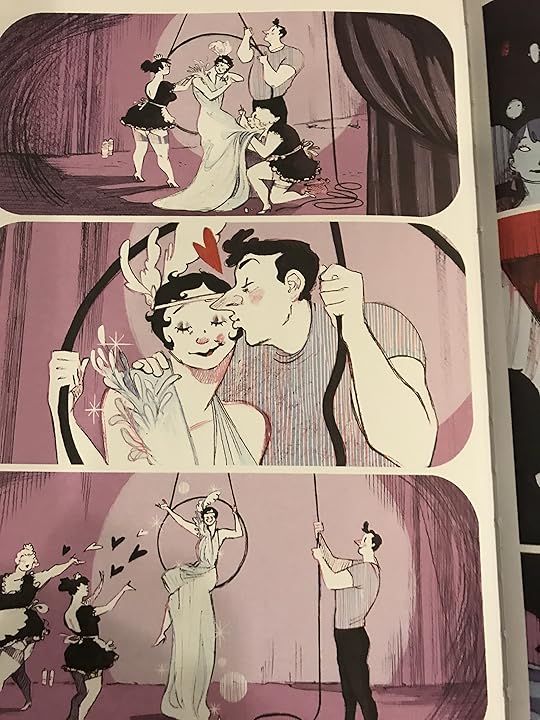
Since it is French, there is, of course, a lot of nudity, but it works here, because, well, how else would you see her scar.
You would think a nearly wordless comic would be a quick read, but it took a while as it is a thick book, and there is a lot going on in each page.
In this mostly wordless graphic novel, Betty has just undergone a mastectomy on her left breast. She is given the breast, in a little box, because she demands it, though it is never clear what she intends to do with it, as it slowly rots away.
The problem Betty faces, however, is that her husband no longer loves her without her hair, without her breast, and so leaves her. She loses her job at the beauty bar of the shop, because it requires two breast. She is rejected by the society she has lived with all her life.
And so, she begins her journey to find those that will accept a woman with only one breast. To a world of weirdos and outcasts. But they do love her, there, for herself.
Since it is French, there is, of course, a lot of nudity, but it works here, because, well, how else would you see her scar.
You would think a nearly wordless comic would be a quick read, but it took a while as it is a thick book, and there is a lot going on in each page.

March 4, 2019
This is the nearly wordless story about how it's possible to be a sensual, sexual, life-affirming woman after a mastectomy.
The illustrations are charming.
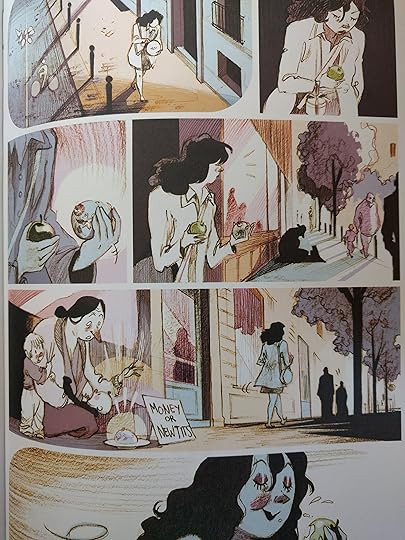
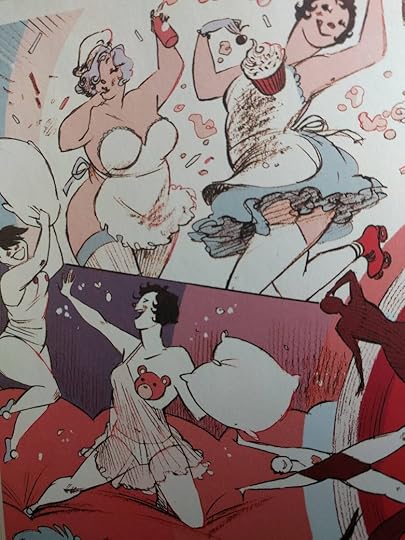
The illustrations are charming.
March 13, 2018
Ce n'est pas le genre de BD que j'aurais normalement lu, mais étant odnné tout ce que j'avais entendu sur celle-ci j'ia décidé de lui donner une chance... et j'ai bien fait. Un bijou d'originalité, presque sans aucun mot, des illustrations magnifiques, on joue avec les cases par moment et le tout en traitant d'un sujet difficile, l'ablation d'un sein suite à un cancer. Un sujet difficile, auquel je peux difficilement comprendre au premier plan étant un homme, mais on arrive quand même a ressentir l'émotion et le besoin de réapprendre à accepter son corps suite à ce changement. J'enlève un étoile, car le côté un peu trop ludique du théâtre burlesque était un peu long à mon goût, mais sinon, une excellente oeuvre qui vaut amplement le détour!

March 26, 2019
All told thru pictures a story about a girl dealing with cancer and her mastectomy in a positive way. Cute story and great art.

May 27, 2019
The funniest wordless book about cancer I ever read!
In real life, not everyone can become a stage star after losing a breast. But this isn't supposed to be realistic. (Example: dogs do not really pay attention to streetlights.) Just go along with the craziness and you'll have a good time. The art is lovely and fun, especially in the scenes of burlesque dancers.
In real life, not everyone can become a stage star after losing a breast. But this isn't supposed to be realistic. (Example: dogs do not really pay attention to streetlights.) Just go along with the craziness and you'll have a good time. The art is lovely and fun, especially in the scenes of burlesque dancers.

May 9, 2019
Dit is een modern sprookje over een vrouw die na de behandeling van borstkanker door het leven moet met een geamputeerde borst. Ondanks het thema is dit een zeer leuk, speels beeldverhaal over het herwinnen van levenskracht na dergelijk trauma. Het uiterst dynamische tekenwerk van Julie Rocheleau sprankelt van de pagina's. Aangezien het bijna helemaal tekstloos is was het geen uitdaging om ten volle van deze Franstalige strip te genieten.

October 22, 2018
Fun! Betty’s post-mastectomy life looks bleak at first. Unable to afford the latest in prosthetic replacements, she tries to make do, but winds up losing both her job and her boyfriend in short order. She stumbles upon a burlesque troupe, and, with their help, learns to embrace her body as-is, and what looked like tragedy soon becomes triumph instead.
This book is quite funny and surreal in all of the best ways. The entire volume is almost entirely wordless, the main exceptions being song lyrics and sound effects. But it's not the creation of a single writer/artist as such books usually are. I found myself idly wondering what Vero Cazot’s script looked like? Certainly it must have done the trick, as Julie Rocheleau’s art is fabulous! It’s worth studying. There are all sorts of delightful little touches to the panels. Her characters are expressive, the story flows nicely … It all has the feel of a French comedy, or even a silent film.
This is a highly impressive book. Recommended!
This book is quite funny and surreal in all of the best ways. The entire volume is almost entirely wordless, the main exceptions being song lyrics and sound effects. But it's not the creation of a single writer/artist as such books usually are. I found myself idly wondering what Vero Cazot’s script looked like? Certainly it must have done the trick, as Julie Rocheleau’s art is fabulous! It’s worth studying. There are all sorts of delightful little touches to the panels. Her characters are expressive, the story flows nicely … It all has the feel of a French comedy, or even a silent film.
This is a highly impressive book. Recommended!

January 18, 2018
Des crabes… Un cancer… Nous retrouvons la protagoniste juste après l’ablation de son sein gauche, au moment où elle doit composer avec cette perte, celle de son partenaire incapable d’y faire face (obsédé par la symétrie) et finalement la perte de son emploi.
Cette BD presque exclusivement muette suit le cheminement de Betty Boob faisant face à toutes ces épreuves, ces deuils, ces rencontres, mais aussi la réalisation de ce qu’elle peut réellement accomplir grâce à toutes ces remises en causes. À la fois un hommage aux cartoons des Fleischer Studios, mais aussi une réappropriation féministe de cette esthétique sexiste qui transforme les corps marginalisés en corps puissants et émancipés des attentes sociales.
Ma BD préférée de 2017
Cette BD presque exclusivement muette suit le cheminement de Betty Boob faisant face à toutes ces épreuves, ces deuils, ces rencontres, mais aussi la réalisation de ce qu’elle peut réellement accomplir grâce à toutes ces remises en causes. À la fois un hommage aux cartoons des Fleischer Studios, mais aussi une réappropriation féministe de cette esthétique sexiste qui transforme les corps marginalisés en corps puissants et émancipés des attentes sociales.
Ma BD préférée de 2017

Read
July 25, 2018A nearly-wordless graphic novel about a woman after a mastectomy. Rejected by her lover and shunned by her job where she must look like all the other ladies, Betty finds solace on a boat running a burlesque show and begins to accept and celebrate the changes in her body. This is quirky and affirming, might make the perfect gift for a breast cancer survivor in your life.

July 20, 2018
Beautifully illustrated, light-hearted, inspirational

March 27, 2023
Bon ben ça parle de boobs (en fait exactement d’un boob), comme le titre l’indique.
Une narration très bien construite avec le minimum de texte, des illustrations superbes, ça pétille et ça donne la pêche. Parfait !
Une narration très bien construite avec le minimum de texte, des illustrations superbes, ça pétille et ça donne la pêche. Parfait !

January 31, 2021
A largely wordless comic, it was almost to the point where I wasn't sure if this could count as a translated work, but there are a few more word heavy sections in this originally French comic so we are good.The art is certainly an incredibly strong part of the book. Colourful and dynamic, a lot is communicated through very few words. There's vintage feel that I can't quite outline.
Gender was something that bothered me a bit for the first half of the book. Spoiler alert, this plot involves Betty being persecuted for not having two breasts before transitioning to how Betty discovers a better life in a new crowd. The first part just dragged on much longer then I thought was necessary and it was honestly a bit hard to follow everyone's obsession with breasts = women not knowing what would happen next. Of course once things turn around and the creators let Betty find acceptance and celebration for her less then "perfect" body I was a lot more comfortable, although I could see it still not being super fun for many. The book also includes a lot of playful and often none-sexual nudity, which is a huge plus.
In the later part of the book we pass through a metaphorical vale and things become much more diverse when it comes to gender expression and sexuality. There was a bit more race diversity, but in the crowds of extras there was only a dash so I feel like there could have been more pretty easily. The one note I would say about the apparent queerness at the end of the book, is that since Betty appears to remain pretty cis and straight otherwise, it could be seen as kind of the gay best friend sort of dealio. Queerness to the service of making straight and CIS white women feel good. I felt like the very strong contrast between before and after, combined with the total celebration of queerness two thirds of the way in, left me feeling pretty positive about the representation. It being a wordless comic, we don't get much traditional character development of anyone, except maybe Betty herself. But I would be interested in how y'all feel. It's not going into my next A to Z of queer lit video for sure.
Class was erased in this book and money never comes up. People are just magically able to live fairly comfortable middle class lives.
As far as ability vs disability, while my understanding of the term doesn't seem to indicate that Betty is disabled, the book is exploring what happens when certain bodies are less then perfect. Ability and sexuality are often tied together in ways that are pretty toxic and I would say this is a nice push back against that.
Reading this book digitally probably also made the first part feel longer, as I had no idea how far I was through the book at any given time. But it ended up being pretty fun and something I could see many people enjoying. The way the story is communicated mostly sans word was beautiful and so very playful. Four out of five stars.
Gender was something that bothered me a bit for the first half of the book. Spoiler alert, this plot involves Betty being persecuted for not having two breasts before transitioning to how Betty discovers a better life in a new crowd. The first part just dragged on much longer then I thought was necessary and it was honestly a bit hard to follow everyone's obsession with breasts = women not knowing what would happen next. Of course once things turn around and the creators let Betty find acceptance and celebration for her less then "perfect" body I was a lot more comfortable, although I could see it still not being super fun for many. The book also includes a lot of playful and often none-sexual nudity, which is a huge plus.
In the later part of the book we pass through a metaphorical vale and things become much more diverse when it comes to gender expression and sexuality. There was a bit more race diversity, but in the crowds of extras there was only a dash so I feel like there could have been more pretty easily. The one note I would say about the apparent queerness at the end of the book, is that since Betty appears to remain pretty cis and straight otherwise, it could be seen as kind of the gay best friend sort of dealio. Queerness to the service of making straight and CIS white women feel good. I felt like the very strong contrast between before and after, combined with the total celebration of queerness two thirds of the way in, left me feeling pretty positive about the representation. It being a wordless comic, we don't get much traditional character development of anyone, except maybe Betty herself. But I would be interested in how y'all feel. It's not going into my next A to Z of queer lit video for sure.
Class was erased in this book and money never comes up. People are just magically able to live fairly comfortable middle class lives.
As far as ability vs disability, while my understanding of the term doesn't seem to indicate that Betty is disabled, the book is exploring what happens when certain bodies are less then perfect. Ability and sexuality are often tied together in ways that are pretty toxic and I would say this is a nice push back against that.
Reading this book digitally probably also made the first part feel longer, as I had no idea how far I was through the book at any given time. But it ended up being pretty fun and something I could see many people enjoying. The way the story is communicated mostly sans word was beautiful and so very playful. Four out of five stars.

June 27, 2018
4 stars for quality, 5 because I personally loved it. Smart, touching, sassy, and inspirational. ❤️❤️❤️

July 31, 2018
A nest of crabs, the sign of Cancer, swarms around Betty's breast, and in just a few short pages the reader is shown how it is returned to her in a glass jar. Despite this horrific description this is one of the most beautiful graphic novels I have ever read.
This book was literally just handed to me by a friend and I devoured it in just one quick read. Whether it's the colors that seem to be stolen from sunsets and dreams, the wordless physical language that each character plays to their own strengths, or the sheer emotional power of this book I couldn't put into words effectively this book which felt, more than anything else, a poem of the emotional burden of cancer. Betty's struggle isn't just the lost of part of her body, it's the trauma that comes with such a loss. Too often the story of cancer is about the death of the victim, but Vero Cazot tells a far more powerful and riveting story: that of the survivor. What does cancer take from the survivor's, and how do they make a new life after their loss.
Betty finds a new life, spirit, and strength by the end of this book, and Cazot reminds the reader that victory over cancer isn't just beating the disease, it's beating the trauma and self-doubt that follows it.
This book was literally just handed to me by a friend and I devoured it in just one quick read. Whether it's the colors that seem to be stolen from sunsets and dreams, the wordless physical language that each character plays to their own strengths, or the sheer emotional power of this book I couldn't put into words effectively this book which felt, more than anything else, a poem of the emotional burden of cancer. Betty's struggle isn't just the lost of part of her body, it's the trauma that comes with such a loss. Too often the story of cancer is about the death of the victim, but Vero Cazot tells a far more powerful and riveting story: that of the survivor. What does cancer take from the survivor's, and how do they make a new life after their loss.
Betty finds a new life, spirit, and strength by the end of this book, and Cazot reminds the reader that victory over cancer isn't just beating the disease, it's beating the trauma and self-doubt that follows it.

May 14, 2021
Друге перечитання:
Коли стає тривожно через рак, знаю за яку книжку братися.
---
Прекрасно намальований, веселий, глибокий мальопис з цікавими сюжетними поворотами, створений без вживання єдиного слова. На яку тему? Рак груди.
Розповідаю про нього всім, хто каже що комікси, а тим більше німі графічні романи - то дитяча дурня.
Коли стає тривожно через рак, знаю за яку книжку братися.
---
Прекрасно намальований, веселий, глибокий мальопис з цікавими сюжетними поворотами, створений без вживання єдиного слова. На яку тему? Рак груди.
Розповідаю про нього всім, хто каже що комікси, а тим більше німі графічні романи - то дитяча дурня.

July 20, 2018
Utterly fantastic. Storytelling at it's finest.
February 6, 2025
Une BD coloré et pétillante qui traite du cancer du sein et de l'acceptation de soi.
Toutes les planches sont absolument magnifiques. Et le parti pris muet fonctionne parfaitement !
Toutes les planches sont absolument magnifiques. Et le parti pris muet fonctionne parfaitement !

April 16, 2018
On entre immédiatement dans la BD avec une succession de planches envahies par des crabes, allégorie du cancer qui touchera notre héroïne, se précipitant sur elle, alors qu'elle repose nue, à côté de son compagnon.
Puis, l'effroi. La chambre froide de l'hôpital, le sein malade disparu, l'héroïne qui perd la tête et son amant aussi. S'ensuit une succession d'événements assez... loufoques et irréels, et c'est parti pour la nouvelle vie de Betty.
J'ai beaucoup aimé le côté décalé du dessin, les événements qui s'enchainent avec un côté surréaliste, on se croirait dans les triplettes de Belleville. Le mouvement est extraordinairement bien décrit, et de nombreuses planches sont d'une beauté, d'une sensibilité à couper le souffle et à mettre les larmes aux yeux.
C'est une BD quasi sans parole, les actes sont entrecoupés par 1-2 phrases présentées à la façon des vieux films de cinéma muet.
Progressivement, l'héroïne retrouve le goût de vivre, après une succession d'aventures. Elle retrouve sa confiance en elle, en sa féminité, s'entoure de personnes qui lui permette de s'affirmer et de s'accepter.
C'est une ode à la vie, à l'amour, à la folie, à "empoigne les opportunités qui s'offrent à toi", à "tu es belle, peu importe comment ton corps est, malgré et grâce à ce qu'il a vécu".
Une belle BD, avec un beau message.
Puis, l'effroi. La chambre froide de l'hôpital, le sein malade disparu, l'héroïne qui perd la tête et son amant aussi. S'ensuit une succession d'événements assez... loufoques et irréels, et c'est parti pour la nouvelle vie de Betty.
J'ai beaucoup aimé le côté décalé du dessin, les événements qui s'enchainent avec un côté surréaliste, on se croirait dans les triplettes de Belleville. Le mouvement est extraordinairement bien décrit, et de nombreuses planches sont d'une beauté, d'une sensibilité à couper le souffle et à mettre les larmes aux yeux.
C'est une BD quasi sans parole, les actes sont entrecoupés par 1-2 phrases présentées à la façon des vieux films de cinéma muet.
Progressivement, l'héroïne retrouve le goût de vivre, après une succession d'aventures. Elle retrouve sa confiance en elle, en sa féminité, s'entoure de personnes qui lui permette de s'affirmer et de s'accepter.
C'est une ode à la vie, à l'amour, à la folie, à "empoigne les opportunités qui s'offrent à toi", à "tu es belle, peu importe comment ton corps est, malgré et grâce à ce qu'il a vécu".
Une belle BD, avec un beau message.

May 8, 2024
I do not read a lot of books that are either about loss (cancer, other sickness), puberty and growing up, or anything similar. Most of the time those stuff just scream at me 'pity me, oh poor me', 'I am a woman, my life is harder than yours' or 'I got through serious stuff, so I am better than you' somehow.. And it bores me. This, on the other hand, was one of the best stuff when it comes to health problems and changes caused by them, and what effect it has on the mental health. Second one I loved was by Czech authors called "Bez vlasů".
This story was beautifully illustrated. It was fun. And though it had parts showing struggles and sadness about losing a breast, it was very positive and cute.
Loved every bit of it.
I will recommend it everywhere.
This story was beautifully illustrated. It was fun. And though it had parts showing struggles and sadness about losing a breast, it was very positive and cute.
Loved every bit of it.
I will recommend it everywhere.

April 30, 2019
This is a very beautiful and empowering almost entirely visual graphic novel, with so little text that when there were words they were often confusing (perhaps due to mistranslations from French). I love its jubilance and fantastical scenes and playful joy.
Here is what we ate at club:
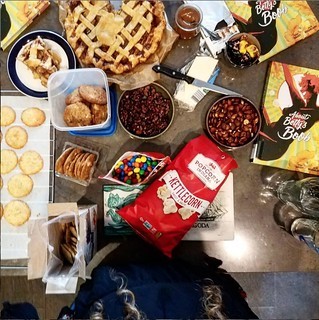
Here is what we ate at club:
May 28, 2020
L'histoire touchante d'une femme qui, après avoir subi une mastectomie, lutte pour s'accepter et trouver des gens près à l'apprécier comme elle est. Cette bande dessinée ne contient pratiquement aucun dialogue, mais on en a pas besoin pour ressentir toutes les émotions du personnage principal. Par ailleurs, les dessins sont magnifiques et méritent de recevoir toute l'attention du lecteur. Je recommande aux amoureux du corps sous toutes ses formes.
June 3, 2022
"No body is perfect." Every body is beautiful <3
Displaying 1 - 30 of 273 reviews