

What do you think?

The Neuroscientist Who Lost Her Mind: A Memoir of Madness and Recovery
'Oliver Sacks-meets-When Breath Becomes Air ... Barbara Lipska's remarkable story illuminates the many mysteries of our fragile yet resilient brains.' LISA GENOVA, bestselling author of Still Alice and Every Note Played
All we think, feel and dream, how we move, if we move, everything that makes us who we are, comes from the brain. We are the brain. So what happens when the brain fails? What happens when we lose our mind?
In January 2015 renowned neuroscientist Barbara Lipska's melanoma spread to her brain. It was, in effect, a death sentence. She had surgery, radiation treatments and entered an immunotherapy clinical trial. And then her brain started to play tricks on her. The expert on mental illness - who had spent a career trying to work out how the brain operates and what happens when it fails - experienced what it is like to go mad.
She began to exhibit paranoia and schizophrenia-like symptoms. She became disinhibited, completely unaware of her inappropriate behaviour. She got lost driving home from work, a journey she did every day. She couldn't remember things that had just happened to her. Small details like what she was having for breakfast became an obsession, but she ignored the fact that she was about to die. And she remembers every moment with absolute clarity.
Weaving the science of the mind and the biology of the brain into her deeply personal story, this is the dramatic account of Dr Lipska's own brilliant brain gone awry.
All we think, feel and dream, how we move, if we move, everything that makes us who we are, comes from the brain. We are the brain. So what happens when the brain fails? What happens when we lose our mind?
In January 2015 renowned neuroscientist Barbara Lipska's melanoma spread to her brain. It was, in effect, a death sentence. She had surgery, radiation treatments and entered an immunotherapy clinical trial. And then her brain started to play tricks on her. The expert on mental illness - who had spent a career trying to work out how the brain operates and what happens when it fails - experienced what it is like to go mad.
She began to exhibit paranoia and schizophrenia-like symptoms. She became disinhibited, completely unaware of her inappropriate behaviour. She got lost driving home from work, a journey she did every day. She couldn't remember things that had just happened to her. Small details like what she was having for breakfast became an obsession, but she ignored the fact that she was about to die. And she remembers every moment with absolute clarity.
Weaving the science of the mind and the biology of the brain into her deeply personal story, this is the dramatic account of Dr Lipska's own brilliant brain gone awry.
208 pages, Hardcover
First published April 3, 2018
Ratings & Reviews
Friends & Following
Create a free account to discover what your friends think of this book!
Community Reviews
Displaying 1 - 30 of 938 reviews

April 9, 2018
This book made very little sense. The author is an intellectual high-achieving scientist in a family of high-achievers, and what's more she's a top athlete too and a fantastic homemaker who despite everything, always cooked a home-made dinner (until she couldn't). She tells us all this repeatedly and it is one of the reasons I didn't warm to her. Is this to contrast her off-the-wall behaviour when she was ill?
The author was not mad, she had deficits more in line with loss of function rather than the peculiar function that comes from psychosis where people are operating from a different frame of reference. Her speciality is schizophrenia but I just couldn't see that she became anything like that or at least not like any I have known or whose books I have read.
In addition to the deficits, her personality changed to being moody, bad-tempered and intolerant but given all she went through, how much of that was a product of the tumours altering her brain and how much the treatment and how much the stress and pressure of living through a second bout of cancer (she had previously had breast cancer and her first husband had died of the same type of cancer, melanoma, she had)?
I did wonder if her (second) husband or other of the people who liked to promote her in her athletic endeavours and neuroscience speaking hadn't read My Stroke of Insight: A Brain Scientist's Personal Journey and Brain on Fire: My Month of Madness and said to her "You could do this. You could write a book like they did, only better." I'm glad the author has recovered, it doesn't seem to be a permanent recovery but she is back to athletics and neuroscience and I hope it lasts, I hope a total cure is found for her. I wish her well. 2.5 stars rounded up.
The author was not mad, she had deficits more in line with loss of function rather than the peculiar function that comes from psychosis where people are operating from a different frame of reference. Her speciality is schizophrenia but I just couldn't see that she became anything like that or at least not like any I have known or whose books I have read.
In addition to the deficits, her personality changed to being moody, bad-tempered and intolerant but given all she went through, how much of that was a product of the tumours altering her brain and how much the treatment and how much the stress and pressure of living through a second bout of cancer (she had previously had breast cancer and her first husband had died of the same type of cancer, melanoma, she had)?
I did wonder if her (second) husband or other of the people who liked to promote her in her athletic endeavours and neuroscience speaking hadn't read My Stroke of Insight: A Brain Scientist's Personal Journey and Brain on Fire: My Month of Madness and said to her "You could do this. You could write a book like they did, only better." I'm glad the author has recovered, it doesn't seem to be a permanent recovery but she is back to athletics and neuroscience and I hope it lasts, I hope a total cure is found for her. I wish her well. 2.5 stars rounded up.

January 12, 2019
I made short work of this one. Was totally absorbed in her story. I find anything to do with the mind fascinating. It can be our best friend or our worst enemy. Yet, so little is known about this miraculous organ, the control center of what makes us who we are. The author is the head of the NIH, studying the brains of those with mental deficits, among them schitzophrenia. She had besten cancer twice, was an avid marathon and triathlon partcipant, when she found out she had a melanoma that had spread to her brain. Despite the many years studying the brains, she didn't recognize her own symptoms, but she was in for the fight of her life.
The impact on her family was costly. The disease making her a completely different person. This is her story, and it is written in a no nonscence but honest manner. Her descriptions of how the brain works, and how hers was not, was told in a way that was easy to understand. Her treatments and trials, informative. A very interesting, and quite in spring memoir.
The impact on her family was costly. The disease making her a completely different person. This is her story, and it is written in a no nonscence but honest manner. Her descriptions of how the brain works, and how hers was not, was told in a way that was easy to understand. Her treatments and trials, informative. A very interesting, and quite in spring memoir.

June 1, 2018
3.5 stars
Barbara Lipska was born, raised, and educated in Poland before she immigrated to the United States in 1989 to do post-doctoral studies at Maryland's 'National Institute of Mental Health' (NIMH). In 2013 Lipska became 'Director of the Human Brain Collection Core' at NIMH, which secures post-mortem brains for research about the brain and behavior.

Barbara Lipska
Lipska's expertise helped her understand her symptoms when she developed metastatic brain cancer in 2015, at the age of 63. Lipska - who had previously been treated for breast cancer and melanoma (skin cancer) - realized something was wrong when she was preparing for 2015's 'Winter Conference on Brain Research' in Montana. Reaching out to turn on her computer, Lipska noticed that her hand 'disappeared' when she moved it to the right and 'reappeared' when she moved it to the left.
Lipska immediately thought 'brain tumor' - and an MRI confirmed her worst fears. The brain scan revealed three tumors in the scientist's head, one of which was bleeding.

Barbara Lipska had three brain tumors
Lipska is very fortunate to have a husband, Mirek, who's a cool-headed mathematician; a son, Witek, who's a neuroscientist; a daughter, Kasia, who's a physician; and a sister, Maria, who's a physicist and chief of therapy in the radiation oncology department at Boston's 'Brigham and Women's Hospital.'

Barbara Lipska with her husband Mirek
Lipska's family arranged for her to go to Brigham's, where the bleeding tumor was excised, and the other tumors were treated with stereotactic radiosurgery - a procedure that focuses high doses of radiation onto individual tumors. Lipska was also given steroids, to reduce the swelling in her brain.


Barbara Lipska was treated at Brigham and Women's Hospital
Within months after her surgery, Lipska felt good enough to go skiing with her family and to resume her regular triathlon training, which includes swimming, cycling, and running.

Barbara Lipska (second from left) skiing with her family

Barbara Lipska cycling
The scientist knew, however, that she wasn't cured, and that new tumors were likely to appear. Lipska decided that her best chance of survival lay with an experimental immunotherapy procedure, which primes the body's immune system to recognize and destroy cancer cells. Lipska got into an immunotherapy clinical trial at Georgetown University Hospital, and was periodically infused with powerful antibody drugs over a period of months.
The treatment helped to shrink Lipska's tumors, but also (temporarily) damaged her brain, and the scientist's behavior changed dramatically. Lipska says, "I was changing very gradually, from a loving mother, grandmother and wife, into a kind of a heartless monster. I was yelling at my loving husband. I was yelling at my beloved grandsons and my children. I was behaving like a 2-year-old with a tantrum — all the time." The scientist explains that parts of her brain - specifically areas of the frontal lobe and parietal lobe - were not working properly.

Parts of the brain
Lipska notes that, "Deep inside my brain, a full-scale war had erupted. The tumors that had been radiated were shedding dead cells and creating waste and dead tissue. Throughout my brain, the tissues were inflamed and swollen from the metastasis and the double assault of radiation and immunotherapy. What’s more, I had new tumors—more than a dozen. My blood-brain barrier…..had become disrupted.....and was leaking fluid. The fluids were pooling in my brain, irritating the tissue and causing it to swell."
Lipska's family was disturbed and worried by the changes in her demeanor, but Barbara herself didn't realize anything was wrong - even when her conduct became increasingly bizarre. Examples of changes in Barbara's behavior during cancer treatment include:
- becoming irrationally furious at Amtrak when her train was delayed, and talking about it for days, to everyone in sight.
- refusing to seek help for lymphedema (swelling) in her arm, then yelling at the therapist and storming out when she finally went for treatment.
- compulsively eating chocolates - though she normally avoided sweets.
- driving her car erratically.
- failing to recognize her regular exterminator and throwing him out of the house.
- losing her ability to do simple arithmetic.
- becoming infuriated when she 'lost' her husband after sending him to pick chanterelle mushrooms in the park.
- being unable to locate pots, pans, and utensils in her kitchen.
- forgetting how to cook (though she normally prepared dinner every night).
- and more.
Lipska explains that her symptoms mimicked those of people suffering from various kinds of mental illness, like bipolar disorder, schizophrenia, Alzheimer's, and other dementias. Barbara emphasizes that these mental illnesses are brain diseases - not moral defects - and should be treated like any other disease....like disorders of the heart, liver, or kidney.
Lipska did recover, both from the cancer and the side effects, though she's aware the 'cure' might not last forever. Still, Barbara's at peace, and very grateful to her family - as well as the doctors and other medical professionals who treated her. She says "I'm feeling great, although I am not as powerful as I used to be — both in terms of my physical strengths and emotions. I went through so much. My brain was assaulted with drugs, with radiation. I lost my vision in the left eye.....I lost some balance. I am a little disoriented spatially, so I have sometimes trouble with maps and finding my places. But, you know what? I'm alive — and that's all that counts. And I'm happy!"

Barbara Lipska with her husband Mirek
The book is both informative and inspirational. Lipska provides a brief, but instructive description of the brain and how it works, with comparisons between experimental rats and humans. And it's heartening to see Barbara travel from health, to madness, and back again.

Barbara Lipska
I'd recommend the book to anyone interested in the brain and mental illness.
Thanks to Netgalley, the authors (Barbara Lipska and Elaine McArdle) and the publisher (Houghton Mifflin Harcourt) for a copy of the book.
You can follow my reviews at https://reviewsbybarbsaffer.blogspot....

April 28, 2018
While the author makes no mention of this, to me this book manages to highlight the stunning inequality in the US healthcare system. The author is wealthy, her children are well off, her son in law’s parents are wealthy; she is extremely well connected, white, and lives in D.C. giving her location advantage. She needed all these factors to survive.
Most of us in her health situation would be dead, but because she had means and access she has now survived 3 years out from her malignant melanoma diagnosis. I am happy for her, of course, and also know if it was me in her situation I would likely not have.
Most of us in her health situation would be dead, but because she had means and access she has now survived 3 years out from her malignant melanoma diagnosis. I am happy for her, of course, and also know if it was me in her situation I would likely not have.

May 8, 2018
This book had a lot of ego and back patting in it.
I mean who are these people? Obsessed with fitness, ducking around skiing all over the place or doing triathlons and massive training. Every family member was amazing, loving, kind, with perfect children, grandchildren and loving partners. The way she defined success in life was mind blowing and she has incredibly high expectations of those around her, and of herself.
She was still training while she was sick as a dog, and blasted the idea that rest helps people get over illness. She boasted about being up and about three days after intensive treatments and was revolted that a friend gave her a pair of soft pyjamas to wear in hospital- like she would need them! I wonder how much better she would have recovered if she had let herself off the hook and rest instead of pushing her body to the limits.
How the hell did her work place allow her to keep working? Did she mess up the data at all? At times she did not know how her phone worked. I hope they checked her work.
She wrote like a scientist, almost giving itineraries instead of building a story. When she tried to build a story I knew what she was eluding to well before she gave the reason for the story. Throwing in some visual stuff or smells because that is what writers do, felt forced.
It made for a detached read. Her access to medical facilities that most people in the world would never have access to and the way she expected that access was revolting, and she could not believe she had to wait for things. A whole hour in a waiting room!
I do not know or understand how her family missed what was going on with her, they are doctors who grew up in a household with a neuroscientist, you would think that that would give them a pretty good idea of what was normal and what was not. Perhaps it is because Barbara is highly controlling and they were scared shitless of her? Just a theory.
The bits I liked? I liked learning about the brain and functions, but I think there may have been a better way to learn about it. Oliver Sacks is a better read.
I mean who are these people? Obsessed with fitness, ducking around skiing all over the place or doing triathlons and massive training. Every family member was amazing, loving, kind, with perfect children, grandchildren and loving partners. The way she defined success in life was mind blowing and she has incredibly high expectations of those around her, and of herself.
She was still training while she was sick as a dog, and blasted the idea that rest helps people get over illness. She boasted about being up and about three days after intensive treatments and was revolted that a friend gave her a pair of soft pyjamas to wear in hospital- like she would need them! I wonder how much better she would have recovered if she had let herself off the hook and rest instead of pushing her body to the limits.
How the hell did her work place allow her to keep working? Did she mess up the data at all? At times she did not know how her phone worked. I hope they checked her work.
She wrote like a scientist, almost giving itineraries instead of building a story. When she tried to build a story I knew what she was eluding to well before she gave the reason for the story. Throwing in some visual stuff or smells because that is what writers do, felt forced.
It made for a detached read. Her access to medical facilities that most people in the world would never have access to and the way she expected that access was revolting, and she could not believe she had to wait for things. A whole hour in a waiting room!
I do not know or understand how her family missed what was going on with her, they are doctors who grew up in a household with a neuroscientist, you would think that that would give them a pretty good idea of what was normal and what was not. Perhaps it is because Barbara is highly controlling and they were scared shitless of her? Just a theory.
The bits I liked? I liked learning about the brain and functions, but I think there may have been a better way to learn about it. Oliver Sacks is a better read.

April 23, 2018
Barbara Lipska, a Polish-born neuroscientist who serves as director of the Human Brain Collection Core at the National Institute of Mental Health in Bethesda, Maryland, is a long-time researcher in the field of schizophrenia. After being diagnosed with breast cancer in 2009 and melanoma in 2011, Lipska had gone on to enjoy good health and a very active lifestyle for several years. Although advised in 2011 that there was a 30% chance of the melanoma recurring, she was confident that she had beaten it. However, in 2015, the then sixty-three-year-old neuroscientist found herself gaining first-hand experience of the kind of cognitive dysfunction and paranoia seen in the people whose disease she'd studied. A number of brain tumours—metastases of the melanoma that had been removed from behind her ear a few years before—were the cause.
The initial tumours were in the occipital lobe (responsible for vision) and, as a brain scientist, Lipska knew almost immediately that the loss of sight in the lower right quadrant of her visual field was almost certainly due to the spread of cancer. However, a significant tumour that would later grow in her frontal lobe would greatly affect her cognitive abilities as well as her capacity to regulate her emotions. Other regions of her brain would also be afflicted. Over a period of two months, during the summer of 2015, she “descended into madness”. She also regularly got lost, had trouble orienting her body (and her car) in space, and experienced significant problems with reading and basic arithmetic.
In her book, written with Elaine McArdle, Lipska documents her grueling struggle with one of the most lethal cancers. At the time of her diagnosis with metastatic melanoma, one of the original three tumours was bleeding and required immediate surgery. A bleed in the brain is serious. Blood irritates the tissues, causing them to swell dangerously. Pressure builds within the skull, and a patient can die when the brain “cones”—that is, when it is forced downward and the centres controlling heart rate and respiration are compressed.
After successful surgery to remove the raisin-sized cancerous growth that was bleeding, Lipska received targeted radiation to the other tumours. Only after this could such treatments as immunotherapy (which empowers the immune system to recognize and destroy cancer cells) and “targeted” therapy (aimed at specific molecules within cancer cells) be tried. In spite of an iron will and a high tolerance for pain and discomfort, Lipska confronted tumours that had minds of their own. They kept popping up “like weeds in a garden”. At one point, she had eighteen simultaneously. Many of us might not be able (or even want) to persist in the face of considerable suffering as Lipska did. However, she attributes at least some of her endurance to her long-time training and competing as a marathoner and tri-athlete. Lipska is still not out of the woods; however, the mostly new treatments she underwent have prolonged a life that she obviously values, even if that life continues to pose challenges.
While Lipska’s story is certainly interesting, the writing in the book is not the best. Some of it is quite cliché and bland. Apparently Lipska and McArdle strove for accessibility over detail, so some of the scientific information is very general. Lipska acknowledges that her bizarre and frankly hostile behaviour was difficult for her family to endure. The many examples of it form a significant portion of her book. However, with respect to this, Lipska sometimes doesn't supply enough detail for the reader to understand how her family agreed to let her carry on with her life as usual when she was clearly suffering significant mental disability. It seems, for example, that she continued to drive to work when there was ample evidence she had serious spatial deficits. Did no one notice the banged-up SUV? And why was she continuing to go for runs alone in the neighbourhood when it was clear that she was frequently disoriented and often got lost? Lipska does mention the distress of family members—the phone calls and tears—over her hurtful and aggressive behaviour, but it seems surprising that her neuroscientist son and endocrinologist daughter wouldn’t have figured out that their mother’s brain was significantly and dangerously impaired (in ways that could put herself and others at risk). They certainly knew about the tumours and their locations.
When discussing her first husband’s diagnosis and eventual (1985) death from the very same cancer she would later fight, Lipska mentions that in the Poland of the time, cancer was highly stigmatized. A diagnosis of malignancy was viewed as a sign of weakness and a loss of control over one’s life. No cancer patient discussed his condition with friends, or even with family. One has the sense in reading her memoir that this kind of attitude continued to affect (or, maybe, “infect”) Lipska herself. She states that her typical response to emergencies is to throw herself “into a rational, organized plan, and grasp whatever control” she can. She also writes that (earlier in her life) after breast cancer treatment, she was up and about on the fourth day and that she never failed to cook a meal when undergoing chemotherapy. While receiving treatment for her brain tumours, she remained physically active; she even ran a five-kilometer race a few weeks after her first radiation treatment, placing fourth in her age group. I suppose I should be impressed by this, but I honestly found Lipska’s drive bizarre and even alarming at times.
Generally Lipska’s husband, children, and grandchildren are presented quite stereotypically in her book. Her grandsons are adorable; her son, tall and handsome; and her daughter is beautiful and intelligent. I found myself occasionally wondering how Lipska, clearly a high-achieving Type-A personality, would manage if she had to describe children who were not athletic high achievers like herself. I also wondered what the descriptions of family might have been like if they'd been written by a writer other than McArdle--one more sensitive to language and nuance, who could tease compelling details out of her subject.
One of the biggest problems I had with The Neuroscientist Who Lost Her Mind was the authors’ persistent use of the present tense. It often does not work well in a book of this sort. Explanatory information (also written in the present tense) about Lipska’s symptoms and the side effects of treatments is interwoven with the narrative proper. As a result, the reader can't always distinguish between what the author understood about her condition as she was experiencing it and what she only knew later--when she'd regained her faculties. “Is this what is happening with me?” she asks at a point in her story when it seems highly unlikely her brain would allowed her such reasoning. Lipska’s tumours created the conditions for anosognosia, a lack of insight into her disease. (50 % of those diagnosed with schizophrenia and 40% of bipolar patients also experience this lack of insight—and it often makes them non-compliant with treatment). The tumours themselves, along with the swelling of brain tissue, also triggered a complete loss of empathy in Lipska--the same lack of empathy that characterizes those stricken with fronto-temporal dementia—a form of dementia which sometimes strikes younger people in the 45-64 age group. In my opinion, to eliminate confusion, it would have made much more sense to narrate Lipska's story in the past tense, shifting only to the present tense when providing explanatory information.
Lipska believes that she “emerged from that dark place” through a combination of luck, groundbreaking scientific advances, vigilance, and the support of her family. To this combination should be added her educational level, financial means, and social connections. No matter how lucky, vigilant, and supported a patient might be, and no matter how advanced the medical treatments he undergoes, if he lacks a level of education that allows him to access and comprehend demanding medical literature which will assist him in advocating for himself, as well as the means to see some of the finest doctors in the land, he may not be able to gain the extra time Lipska so clearly treasures. Not everyone has a sister like Lipska’s: a physicist who happens to be the chief of therapy in the radiation oncology department at Brigham and Women’s Hospital in Boston, where Lipska received her initial treatment.
Early in her book, Lipska says that one of her goals in writing is to identify the parallels between her experiences and the experiences of those with Alzheimer’s and other dementias, bipolar disorder, and schizophrenia. This she manages to do very well. Lipska emerges as a determined, admirable woman--a fighter. Her experience is certainly an interesting and terrifying one, but her book is not quite as compelling as I had expected.
The initial tumours were in the occipital lobe (responsible for vision) and, as a brain scientist, Lipska knew almost immediately that the loss of sight in the lower right quadrant of her visual field was almost certainly due to the spread of cancer. However, a significant tumour that would later grow in her frontal lobe would greatly affect her cognitive abilities as well as her capacity to regulate her emotions. Other regions of her brain would also be afflicted. Over a period of two months, during the summer of 2015, she “descended into madness”. She also regularly got lost, had trouble orienting her body (and her car) in space, and experienced significant problems with reading and basic arithmetic.
In her book, written with Elaine McArdle, Lipska documents her grueling struggle with one of the most lethal cancers. At the time of her diagnosis with metastatic melanoma, one of the original three tumours was bleeding and required immediate surgery. A bleed in the brain is serious. Blood irritates the tissues, causing them to swell dangerously. Pressure builds within the skull, and a patient can die when the brain “cones”—that is, when it is forced downward and the centres controlling heart rate and respiration are compressed.
After successful surgery to remove the raisin-sized cancerous growth that was bleeding, Lipska received targeted radiation to the other tumours. Only after this could such treatments as immunotherapy (which empowers the immune system to recognize and destroy cancer cells) and “targeted” therapy (aimed at specific molecules within cancer cells) be tried. In spite of an iron will and a high tolerance for pain and discomfort, Lipska confronted tumours that had minds of their own. They kept popping up “like weeds in a garden”. At one point, she had eighteen simultaneously. Many of us might not be able (or even want) to persist in the face of considerable suffering as Lipska did. However, she attributes at least some of her endurance to her long-time training and competing as a marathoner and tri-athlete. Lipska is still not out of the woods; however, the mostly new treatments she underwent have prolonged a life that she obviously values, even if that life continues to pose challenges.
While Lipska’s story is certainly interesting, the writing in the book is not the best. Some of it is quite cliché and bland. Apparently Lipska and McArdle strove for accessibility over detail, so some of the scientific information is very general. Lipska acknowledges that her bizarre and frankly hostile behaviour was difficult for her family to endure. The many examples of it form a significant portion of her book. However, with respect to this, Lipska sometimes doesn't supply enough detail for the reader to understand how her family agreed to let her carry on with her life as usual when she was clearly suffering significant mental disability. It seems, for example, that she continued to drive to work when there was ample evidence she had serious spatial deficits. Did no one notice the banged-up SUV? And why was she continuing to go for runs alone in the neighbourhood when it was clear that she was frequently disoriented and often got lost? Lipska does mention the distress of family members—the phone calls and tears—over her hurtful and aggressive behaviour, but it seems surprising that her neuroscientist son and endocrinologist daughter wouldn’t have figured out that their mother’s brain was significantly and dangerously impaired (in ways that could put herself and others at risk). They certainly knew about the tumours and their locations.
When discussing her first husband’s diagnosis and eventual (1985) death from the very same cancer she would later fight, Lipska mentions that in the Poland of the time, cancer was highly stigmatized. A diagnosis of malignancy was viewed as a sign of weakness and a loss of control over one’s life. No cancer patient discussed his condition with friends, or even with family. One has the sense in reading her memoir that this kind of attitude continued to affect (or, maybe, “infect”) Lipska herself. She states that her typical response to emergencies is to throw herself “into a rational, organized plan, and grasp whatever control” she can. She also writes that (earlier in her life) after breast cancer treatment, she was up and about on the fourth day and that she never failed to cook a meal when undergoing chemotherapy. While receiving treatment for her brain tumours, she remained physically active; she even ran a five-kilometer race a few weeks after her first radiation treatment, placing fourth in her age group. I suppose I should be impressed by this, but I honestly found Lipska’s drive bizarre and even alarming at times.
Generally Lipska’s husband, children, and grandchildren are presented quite stereotypically in her book. Her grandsons are adorable; her son, tall and handsome; and her daughter is beautiful and intelligent. I found myself occasionally wondering how Lipska, clearly a high-achieving Type-A personality, would manage if she had to describe children who were not athletic high achievers like herself. I also wondered what the descriptions of family might have been like if they'd been written by a writer other than McArdle--one more sensitive to language and nuance, who could tease compelling details out of her subject.
One of the biggest problems I had with The Neuroscientist Who Lost Her Mind was the authors’ persistent use of the present tense. It often does not work well in a book of this sort. Explanatory information (also written in the present tense) about Lipska’s symptoms and the side effects of treatments is interwoven with the narrative proper. As a result, the reader can't always distinguish between what the author understood about her condition as she was experiencing it and what she only knew later--when she'd regained her faculties. “Is this what is happening with me?” she asks at a point in her story when it seems highly unlikely her brain would allowed her such reasoning. Lipska’s tumours created the conditions for anosognosia, a lack of insight into her disease. (50 % of those diagnosed with schizophrenia and 40% of bipolar patients also experience this lack of insight—and it often makes them non-compliant with treatment). The tumours themselves, along with the swelling of brain tissue, also triggered a complete loss of empathy in Lipska--the same lack of empathy that characterizes those stricken with fronto-temporal dementia—a form of dementia which sometimes strikes younger people in the 45-64 age group. In my opinion, to eliminate confusion, it would have made much more sense to narrate Lipska's story in the past tense, shifting only to the present tense when providing explanatory information.
Lipska believes that she “emerged from that dark place” through a combination of luck, groundbreaking scientific advances, vigilance, and the support of her family. To this combination should be added her educational level, financial means, and social connections. No matter how lucky, vigilant, and supported a patient might be, and no matter how advanced the medical treatments he undergoes, if he lacks a level of education that allows him to access and comprehend demanding medical literature which will assist him in advocating for himself, as well as the means to see some of the finest doctors in the land, he may not be able to gain the extra time Lipska so clearly treasures. Not everyone has a sister like Lipska’s: a physicist who happens to be the chief of therapy in the radiation oncology department at Brigham and Women’s Hospital in Boston, where Lipska received her initial treatment.
Early in her book, Lipska says that one of her goals in writing is to identify the parallels between her experiences and the experiences of those with Alzheimer’s and other dementias, bipolar disorder, and schizophrenia. This she manages to do very well. Lipska emerges as a determined, admirable woman--a fighter. Her experience is certainly an interesting and terrifying one, but her book is not quite as compelling as I had expected.

December 15, 2017
Oliver Sacks meets When Breath Becomes Air in this fascinating, page-turning account of insanity. Barbara Lipska's remarkable story illuminates the many mysteries of our fragile yet resilient brains, and her harrowing journey and astonishing recovery shows us that nothing is impossible.
—Lisa Genova, New York Times bestselling author of Still Alice and Every Note Played
—Lisa Genova, New York Times bestselling author of Still Alice and Every Note Played
May 24, 2018
While this book was well-written, I found it surprising in several ways. I expected some deep insights on the part of the author about going through this significant period of suffering, but instead the story is simply about the triumph of science and (her own) human determination. Both are obviously important, but the author shares disappointingly little about what she may have learned about empathy or compassion or the deep lessons that only suffering can produce. What we get instead, is an entirely humanistic portrayal that honestly left me unsettled and unsatisfied.
October 25, 2018
I applaud the author for sharing a story that must have been very hard to relive/write about. However, there were a couple issues that made it hard to enjoy this book.
First, I think the book would have been much better with more collateral information from others (family, physicians, physical therapists she interacted with) about all these different episodes during which the author was acting bizarre. It was hard to trust the author as the narrator of these stories because she's, well, literally brain-damaged.
Second, I took issue with some of her interactions with the healthcare system. When she was about to enter the clinical trial and called up her other doctor to take a second look at her scans, she was upset when he called her back saying that there were tumors in her frontal lobe that would make the trial dangerous for her. She then argues with the doctor and ignores his advice, entering the clinical trial while knowing she is not eligible. I have so many issues with this. Doctors are extremely busy, over-worked and stretched thin trying to meet the needs of patients. So, you call this doctor for a consult, for which he is not paid anything, and then ignore his advice because it is not what you want to hear? Why even contact him in the first place? Also, you have now burdened this doctor with a complicated moral dilemma wherein he must consider breaking HIPAA confidentiality because entering the trial is potentially a life-or-death situation for you. Honestly, I think the doctor should have broken confidentiality given the grave nature of the patient's condition and the potentially lethal side effects. I hope he didn't get in trouble for this.
And that's not even the worst part. OK, you enter a clinical trial because you believe it will benefit you. Clinical trials are meticulously designed and exclusion criteria exist in part to empower a specific intended analysis. By entering the trial under false circumstances, you are jeopardizing the results and potentially the possibility of this drug getting to market. When you had your brain swelling, that very serious adverse event is thoroughly reported. When reviewed by the FDA, such a serious side effect may cause them to decide not to proceed with further trials of this drug. You are potentially sabotaging the release of this drug, and its potential benefit to many patients, by falsifying your information. Also, just considering local consequences, you could have taken the clinical trial spot for someone who could have actually benefitted from it. I mean, I get it, the author was desperate at this point, eager for anything that would help. But, bottom line, it was a very selfish decision.
Lastly, speaking as someone who works regularly with schizophrenic patients, it is misleading to say the author's experience was consistent with full-blown psychosis.
First, I think the book would have been much better with more collateral information from others (family, physicians, physical therapists she interacted with) about all these different episodes during which the author was acting bizarre. It was hard to trust the author as the narrator of these stories because she's, well, literally brain-damaged.
Second, I took issue with some of her interactions with the healthcare system. When she was about to enter the clinical trial and called up her other doctor to take a second look at her scans, she was upset when he called her back saying that there were tumors in her frontal lobe that would make the trial dangerous for her. She then argues with the doctor and ignores his advice, entering the clinical trial while knowing she is not eligible. I have so many issues with this. Doctors are extremely busy, over-worked and stretched thin trying to meet the needs of patients. So, you call this doctor for a consult, for which he is not paid anything, and then ignore his advice because it is not what you want to hear? Why even contact him in the first place? Also, you have now burdened this doctor with a complicated moral dilemma wherein he must consider breaking HIPAA confidentiality because entering the trial is potentially a life-or-death situation for you. Honestly, I think the doctor should have broken confidentiality given the grave nature of the patient's condition and the potentially lethal side effects. I hope he didn't get in trouble for this.
And that's not even the worst part. OK, you enter a clinical trial because you believe it will benefit you. Clinical trials are meticulously designed and exclusion criteria exist in part to empower a specific intended analysis. By entering the trial under false circumstances, you are jeopardizing the results and potentially the possibility of this drug getting to market. When you had your brain swelling, that very serious adverse event is thoroughly reported. When reviewed by the FDA, such a serious side effect may cause them to decide not to proceed with further trials of this drug. You are potentially sabotaging the release of this drug, and its potential benefit to many patients, by falsifying your information. Also, just considering local consequences, you could have taken the clinical trial spot for someone who could have actually benefitted from it. I mean, I get it, the author was desperate at this point, eager for anything that would help. But, bottom line, it was a very selfish decision.
Lastly, speaking as someone who works regularly with schizophrenic patients, it is misleading to say the author's experience was consistent with full-blown psychosis.
This entire review has been hidden because of spoilers.

May 18, 2018
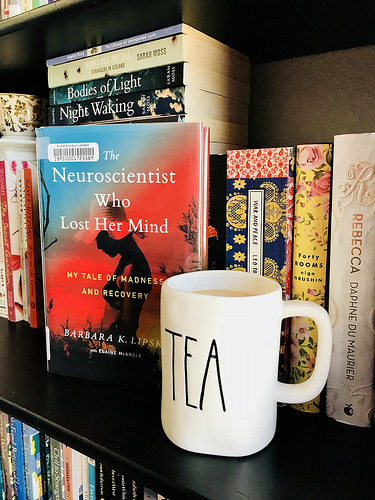
"I am a neuroscientist. For my entire career, I have studied mental illness. My specialty is schizophrenia. In June 2015, without warning, my own mind took a strange and frightening turn. As a result of metastatic melanoma in my brain, I began a descent into mental illness that lasted about two months."—Barbara K. Lipska
I really enjoy books about neuroscience and the brain. I think the book that really turned me on to the subject matter was Brain on Fire. Like that book, I read this one in two sittings, and I'm pretty sure it would have been one had it not been for life getting in the way. I really enjoyed the way Lipska was able to write about how she experienced her "insanity" from the angles of both the patient and the scientist (although I have a quibble about the author's perception of "madness" and feel the title of this book is misleading). I hadn't realized what parts of our brain do what, and the ripple effect irregularities can have on cognitive functions! We are wonderfully made!
There were times during my reading though, when the writing and sequence seemed disjointed. I suspect that it might have something to do with translation. Lipska is a native of Poland, and I feel like Elain McArdle, the journalist who helped write and edit this memoir, could have been a little more handy in that respect. Other than that, I've come away with so much more knowledge about oncology and the different treatments that are now available.
"The motto that adorns the main hallway of the Georgetown University Hospital pops into my mind: We are all broken, that's how the light gets in. It speaks strongly to me, and I whisper to myself, 'Through my broken brain, the light starts getting in.'"

March 29, 2018
A very good book written by multiple cancer survivor Barbara Lipska, who is such an accomplished lady. She is the head of the brain bank at NIMH (National Institute of M. H.) in and has studied the brain for over 30 years. Until one day hers seemingly went haywire and she had to go and get treated for melanoma in the brain. While she was being treated for it, it left her acting like she had some of the mental illnesses that she'd been studying all those decades.
This is one strong lady used to being in charge and when her brain started acting off, her family really didn't know how to react, and she didn't realize it's happening, so it's a real mess for a while because no one wants to take the reins from her or tell her she's not in charge anymore.
She tells a well planned out story and is so wonderfully qualified to explain what went wrong,
and how it made her act while it was going on. She knew pretty quickly that there was a problem and went to get checked out by her doctor, and they found the problem. An MRI was done and 3 tumors were found. It follows as she fights to get well again with this scary condition, knowing what's going on in her head all too well.
An advance digital copy was provided by NetGalley and author Barbara K. Lipska for my honest review.
Houghton Mifflin Harcourt
April 3, 2018.
This is one strong lady used to being in charge and when her brain started acting off, her family really didn't know how to react, and she didn't realize it's happening, so it's a real mess for a while because no one wants to take the reins from her or tell her she's not in charge anymore.
She tells a well planned out story and is so wonderfully qualified to explain what went wrong,
and how it made her act while it was going on. She knew pretty quickly that there was a problem and went to get checked out by her doctor, and they found the problem. An MRI was done and 3 tumors were found. It follows as she fights to get well again with this scary condition, knowing what's going on in her head all too well.
An advance digital copy was provided by NetGalley and author Barbara K. Lipska for my honest review.
Houghton Mifflin Harcourt
April 3, 2018.

October 7, 2018
3.75 Stars, perhaps barely 4.
Read for US Disability Awareness Month.
The source of Lipska's brain cancer: Skin cancer. Loud Warning to me who lives in a brutal summer climate and who is just starting to have problems beyond the eczema.
Because Lipska is a neuroscience researcher, she can explain what is going on with her medically to those who have a solid college/university year-long biology course. Those with the first basic biology course for medical people--Biology A&P--will have an easier time.
Many of the symptoms that Lipska manifested are symptoms of dementia. She makes and makes clear again her dementia-type symptoms. The descriptions of her symptoms can help those who are watching family members, wondering if the symptoms might match up with dementia diagnoses.
So not only a memoir about her return from madness and the Door of Death, also a way to help families determine if they need to consult with a doctor.
Informative and Worthwhile.
Read for US Disability Awareness Month.
The source of Lipska's brain cancer: Skin cancer. Loud Warning to me who lives in a brutal summer climate and who is just starting to have problems beyond the eczema.
Because Lipska is a neuroscience researcher, she can explain what is going on with her medically to those who have a solid college/university year-long biology course. Those with the first basic biology course for medical people--Biology A&P--will have an easier time.
Many of the symptoms that Lipska manifested are symptoms of dementia. She makes and makes clear again her dementia-type symptoms. The descriptions of her symptoms can help those who are watching family members, wondering if the symptoms might match up with dementia diagnoses.
So not only a memoir about her return from madness and the Door of Death, also a way to help families determine if they need to consult with a doctor.
Informative and Worthwhile.

December 9, 2019
Mental illness as experienced by a scientist -- interesting musings on mind/body connection and who are we exactly. "We are all broken - that’s how the light gets in..." Good narration.

June 7, 2021
Primul soț al autoarei s-a îmbolnăvit de melanom, o formă de cancer care avea o rată de supraviețuire de doar câteva luni (la acea vreme). La scurt timp, căsnicia celor doi s-a răcit. De ce? Păi, cică omul trăia în negare, adică nu îi venea să creadă că va muri și s-a închis în el. Probabil trebuia să îi ducă flori, când venea de la chimioterapie. Așa că autoarea l-a înșelat. Nici măcar nu a avut decența de a se despărți de el înainte să se culce cu altul. Peste ani, s-a îmbolnăvit și ea de aceeași formă de cancer. Atât de scârbită am fost de atitudinea ei, încât i-am numit boala ,,karma".
După ce am aflat asta, nu mi-a mai păsat deloc de ea, așa că nu am simțit niciun fel de emoție. Ca parteneră a lui de atâția ani, să nu înțelegi de ce reacționează așa?! Ca om, să nu înțelegi ce le face ideea de moarte oamenilor?! În calitate de om de știință, care cercetează creierul de câteva decenii, să nu înțelegi că și tumorile aferente cancerului, implicit tratamentele, pot afecta creierul, determinând schimbări de atitudine? În fine, dezgustătoare purtarea ei. Eu oricum nu sunt impresionată de poveștile oamenilor bogați despre cum au supraviețuit pentru că au fost optimiști. Și săracii ar fi optimiști, dacă ar avea acces la cei mai buni și scumpi medici, dar ei preferă să fie realiști.
Cu toate acestea, am mai învățat câteva lucruri noi despre creier și mi s-a părut foarte interesant să urmăresc declinul și, ulterior, repararea lui pe parcursul bolii. Sunt absolut fascinată de puterea lui, așa că nu regret lectura, chiar dacă a trebuit să o suport pe autoare. Încă sunt iritată de faptul că, după ce a rămas oarbă de un ochi și abia reușea să meargă, a continuat să conducă, pentru că o făcea să se simtă independentă, punând viața tuturor din trafic în pericol. Și cică fostul soț era în negare...
,,Este o experiență extraordinară să-ți dai seama că tot ce ține de o ființă umană îți poate sta în palme."
,,Personalitatea fiecărui om este rezultatul unor interacțiuni complexe între factori nenumărați care influențează funcționarea creierului."
,,Amintirile pe termen lung sunt puse deoparte de creierele noastre și sunt păstrate în strânsă legătură cu trăiri emoționale, pentru că pot fi importante pentru supraviețuire. Informațiile stocate în memoria pe termen scurt sunt mai degrabă evenimente temporare care așteaptă să fie categorizate și evaluate. Dacă sunt importante, vor fi stocate. Dacă nu, nu primesc validarea pentru a fi reținute și se pierd."
,,Faptul că avem aceleași celule nervoase de la începutul până la sfârșitul vieții noastre poate fi unul dintre motivele pentru care ne considerăm pe sine ca fiind ,,noi". Ceea ce totuși se poate schimba sunt conexiunile dintre celule și dintre regiunile țesutului cerebral. Unele legături sunt mai puternice, altele dispar, altele se strică. Dacă o regiune a creierului nu mai funcționează cum trebuie, între celule pot apărea noi conexiuni care să ne ajute să recuperăm, într-o proporție mai mică sau mai mare, funcția alterată. Dar, în acest fel, se schimbă oare esența noastră?"
,,Creierul ne fascinează cu complexitatea lui și cu misterele pe care le ascunde. Tot ce visăm, credem, simțim și facem - tot ceea ce ne face oameni - vine de la emisferele cerebrale. Noi suntem creierul nostru. Este înspăimântător ca mintea să nu mai funcționeze din cauza bolii sau a îmbătrânirii și să pierdem ce ne este mai drag: persoana noastră.''
,,Viața e un sport de echipă!"
După ce am aflat asta, nu mi-a mai păsat deloc de ea, așa că nu am simțit niciun fel de emoție. Ca parteneră a lui de atâția ani, să nu înțelegi de ce reacționează așa?! Ca om, să nu înțelegi ce le face ideea de moarte oamenilor?! În calitate de om de știință, care cercetează creierul de câteva decenii, să nu înțelegi că și tumorile aferente cancerului, implicit tratamentele, pot afecta creierul, determinând schimbări de atitudine? În fine, dezgustătoare purtarea ei. Eu oricum nu sunt impresionată de poveștile oamenilor bogați despre cum au supraviețuit pentru că au fost optimiști. Și săracii ar fi optimiști, dacă ar avea acces la cei mai buni și scumpi medici, dar ei preferă să fie realiști.
Cu toate acestea, am mai învățat câteva lucruri noi despre creier și mi s-a părut foarte interesant să urmăresc declinul și, ulterior, repararea lui pe parcursul bolii. Sunt absolut fascinată de puterea lui, așa că nu regret lectura, chiar dacă a trebuit să o suport pe autoare. Încă sunt iritată de faptul că, după ce a rămas oarbă de un ochi și abia reușea să meargă, a continuat să conducă, pentru că o făcea să se simtă independentă, punând viața tuturor din trafic în pericol. Și cică fostul soț era în negare...
,,Este o experiență extraordinară să-ți dai seama că tot ce ține de o ființă umană îți poate sta în palme."
,,Personalitatea fiecărui om este rezultatul unor interacțiuni complexe între factori nenumărați care influențează funcționarea creierului."
,,Amintirile pe termen lung sunt puse deoparte de creierele noastre și sunt păstrate în strânsă legătură cu trăiri emoționale, pentru că pot fi importante pentru supraviețuire. Informațiile stocate în memoria pe termen scurt sunt mai degrabă evenimente temporare care așteaptă să fie categorizate și evaluate. Dacă sunt importante, vor fi stocate. Dacă nu, nu primesc validarea pentru a fi reținute și se pierd."
,,Faptul că avem aceleași celule nervoase de la începutul până la sfârșitul vieții noastre poate fi unul dintre motivele pentru care ne considerăm pe sine ca fiind ,,noi". Ceea ce totuși se poate schimba sunt conexiunile dintre celule și dintre regiunile țesutului cerebral. Unele legături sunt mai puternice, altele dispar, altele se strică. Dacă o regiune a creierului nu mai funcționează cum trebuie, între celule pot apărea noi conexiuni care să ne ajute să recuperăm, într-o proporție mai mică sau mai mare, funcția alterată. Dar, în acest fel, se schimbă oare esența noastră?"
,,Creierul ne fascinează cu complexitatea lui și cu misterele pe care le ascunde. Tot ce visăm, credem, simțim și facem - tot ceea ce ne face oameni - vine de la emisferele cerebrale. Noi suntem creierul nostru. Este înspăimântător ca mintea să nu mai funcționeze din cauza bolii sau a îmbătrânirii și să pierdem ce ne este mai drag: persoana noastră.''
,,Viața e un sport de echipă!"

December 5, 2025
Dr. Barbara Lipska is the director of the Human Brain Collection Core at the National Institute of Mental Health in Washington, D.C. In 2015, she was diagnosed with metastatic melanoma that had spread to her brain, leading to vision and memory loss along with other devastating symptoms. When the cancer reached her frontal lobe, it altered her personality. She underwent a series of aggressive treatments, including surgery, radiation, and experimental immunotherapy. In the end, it was a new targeted therapy, not yet approved by the FDA and offered as a last resort, saved her life. I’m not a medical scientist, but it seems this drug targeted a specific genetic mutation driving the melanoma in her brain.
My thoughts:
1. Personality change is not rare. Many people change their personality this way or that throughout their life. But if your personality, unbeknown to yourself, is drastically changed, are you still you? Dr. Lipska’s became “the worst version” of herself. As a scientist, she documented her own illness, but she had no awareness of how badly she behaved in public and towards her family. To me, that is terrifying.
2. Dr. Lipska had breast cancer before she was diagnosed with early stage melanoma. A few years later the melanoma metastasized in her brain. A college friend died of pancreatic cancer two years ago. A few years prior, she had breast cancer. Why are some people prone to cancer, and do breast cancer survivors prone to other types of cancer?
3. It’s fascinating that there is a silver lining in her ordeal: Her early memory improved, while she lost her usual personality, and was unable to do math, could not remember her way home or follow a sequence of steps in daily tasks such as cooking. She could vividly recall smells and sounds from childhood.
4. Dr. Lipska has been a high energy person who loves physical exercise throughout her adult life. She was training for a triathlon when she was diagnosed with brain cancer. Did high-intensity exercise aggravate her cancer, or did it aid her recovery?
My thoughts:
1. Personality change is not rare. Many people change their personality this way or that throughout their life. But if your personality, unbeknown to yourself, is drastically changed, are you still you? Dr. Lipska’s became “the worst version” of herself. As a scientist, she documented her own illness, but she had no awareness of how badly she behaved in public and towards her family. To me, that is terrifying.
2. Dr. Lipska had breast cancer before she was diagnosed with early stage melanoma. A few years later the melanoma metastasized in her brain. A college friend died of pancreatic cancer two years ago. A few years prior, she had breast cancer. Why are some people prone to cancer, and do breast cancer survivors prone to other types of cancer?
3. It’s fascinating that there is a silver lining in her ordeal: Her early memory improved, while she lost her usual personality, and was unable to do math, could not remember her way home or follow a sequence of steps in daily tasks such as cooking. She could vividly recall smells and sounds from childhood.
4. Dr. Lipska has been a high energy person who loves physical exercise throughout her adult life. She was training for a triathlon when she was diagnosed with brain cancer. Did high-intensity exercise aggravate her cancer, or did it aid her recovery?

January 28, 2019
Medical memoir that details Barbara Lipska's fight against cancer.
Such suffering and myriads of days and weeks and months in offices, hospitals and with dozens of advocates and possible optimal medicine associations and paths.
What an intrepid spirit.
Somehow, the way it was written sounds painful to me. Particularly in regards to all her other interests, avenues of physical exertions / sports especially- to list them so frequently. Those background information tangents too, quite outside to her brain studies (chemical primarily) career. Not family information so much at all, but the way she is exercise obsessed in particular. Yet it was intricately detailed for her own melanoma tumors mental altering episodes/ treatments during the last 3 years before the book was published. I am not critical at all. But just wonder about all that reciting towards her SuperIron and other exercise regimes. And her ideas about her own weight equivocations! Does she truly believe that "helps" or has aided her immune system? That's barely broached.
Very rarely do I get upset at anything I read. I did for some judgments made on this book by other reviewers. I wish I had not read them at all. Somehow I want to believe that people can be non-judgmental, tolerant. And see more than a class or an identity or ethnicity or a skin color.
Barbara is such a fighter. And her illness and all its symptoms that come out of the blue again and again- just a circumstance that few could "take" mentally for any length of time. Some patients would never choose to.
Such suffering and myriads of days and weeks and months in offices, hospitals and with dozens of advocates and possible optimal medicine associations and paths.
What an intrepid spirit.
Somehow, the way it was written sounds painful to me. Particularly in regards to all her other interests, avenues of physical exertions / sports especially- to list them so frequently. Those background information tangents too, quite outside to her brain studies (chemical primarily) career. Not family information so much at all, but the way she is exercise obsessed in particular. Yet it was intricately detailed for her own melanoma tumors mental altering episodes/ treatments during the last 3 years before the book was published. I am not critical at all. But just wonder about all that reciting towards her SuperIron and other exercise regimes. And her ideas about her own weight equivocations! Does she truly believe that "helps" or has aided her immune system? That's barely broached.
Very rarely do I get upset at anything I read. I did for some judgments made on this book by other reviewers. I wish I had not read them at all. Somehow I want to believe that people can be non-judgmental, tolerant. And see more than a class or an identity or ethnicity or a skin color.
Barbara is such a fighter. And her illness and all its symptoms that come out of the blue again and again- just a circumstance that few could "take" mentally for any length of time. Some patients would never choose to.

May 10, 2018
Netgalley #47
Many thanks go to Barbara Lipska, Houghton Mifflin, and Netgalley for the free copy of this book in exchange for my unbiased review.
If Brain on Fire had an impact on you then you must read this book
This woman was a Polish immigrant and of the highest intellect. She ran her own brain study clinic, which makes what happened to her all the more ironic. She was a strong athlete and excelled at several activities. She cooked dinner every night for her family. But she lost all of that and more when she developed brain tumors. Her harrowing tale of treatment and recovery is told in this book.
It scared me to death knowing this can happen to anyone and how finding the right doctor to heal any illness often takes luck and tenacity not to mention lots of funds, which most of Americans do not have. I think the most important thing about Lipska was that she never gave up. She did not always face her problems, but she also never let it beat her. She was a real trooper. And she had a strong support group.
I was left with an inspiring quote by the end. Adorning one of hallways at Georgetown University Hospital is a quote: We are all broken, that's how the light gets in. Light heals. Light elicits good cheer. Light makes one smile in the darkness. I will take this thought away with me.
Many thanks go to Barbara Lipska, Houghton Mifflin, and Netgalley for the free copy of this book in exchange for my unbiased review.
If Brain on Fire had an impact on you then you must read this book
This woman was a Polish immigrant and of the highest intellect. She ran her own brain study clinic, which makes what happened to her all the more ironic. She was a strong athlete and excelled at several activities. She cooked dinner every night for her family. But she lost all of that and more when she developed brain tumors. Her harrowing tale of treatment and recovery is told in this book.
It scared me to death knowing this can happen to anyone and how finding the right doctor to heal any illness often takes luck and tenacity not to mention lots of funds, which most of Americans do not have. I think the most important thing about Lipska was that she never gave up. She did not always face her problems, but she also never let it beat her. She was a real trooper. And she had a strong support group.
I was left with an inspiring quote by the end. Adorning one of hallways at Georgetown University Hospital is a quote: We are all broken, that's how the light gets in. Light heals. Light elicits good cheer. Light makes one smile in the darkness. I will take this thought away with me.
May 11, 2018
Not about madness or mental illness. I feel deceived. The author is remarkably unlikable.

June 30, 2018
This book is an account of what mental illness looks like from the inside. But it is also a map of my evolution as a scientist and as a person. It is the story of an incredible journey, one from which I could not have imagined I would ever return. It is a story that I never thought I would be able to tell, of how I went from being a scientist studying mental disorders to being a mental patient myself – and how, remarkably, I came back.
Right from the title – The Neuroscientist Who Lost Her Mind: My Tale of Madness and Recovery – and then from that quote from the introduction, "How I went from being a scientist studying mental disorders to being a mental patient myself”, I was totally intrigued: I thought this was another My Stroke of Insight: A Brain Scientist's Personal Journey; a neuroscientist who “becomes a mental patient”, gets better, and goes on to write about what it was like inside that fractured mind – that sounds so interesting to me. But that's not really what happens here: Barbara Lipska thought she had conquered melanoma, but years later, it metastasized into lesions and tumours in her brain. While undergoing aggressive therapies to kill the tumours, she spent two months not quite herself – she was paranoid, quick to anger, would become disoriented and get confused easily, and lost the ability to calculate the tip at a restaurant. Madness? “Mental patient”? I don't think so. The story was not as interesting as the buildup led me to believe, and ultimately, it wasn't very well written either (despite being co-written by journalist Elaine McArdle) .
My emotional overreactions – anger, suspicion, impatience – suggest that my frontal lobe is undergoing catastrophic changes. But these warning signs are lost on me. As an expert on mental illness, I, more than most people, should be able to see that I'm acting strangely. But I can't. Although I don't know it yet, my six tumors and the swelling around them are shutting down the frontal cortex, the part of the brain that allows for self-reflection. Paradoxically, I need my frontal cortex in order to understand that mine has gone missing.
Barbara Lipska, a Communist-era Polish-born neuroscientist who serves as director of the Human Brain Collection Core at the National Institute of Mental Health in Bethesda, Maryland is perfectly poised to give insight into the science behind what happened to her: she spends her days slicing up cadaver brains, looking for the physical markers of “madness” (and in particular, schizophrenia), and when she noticed some loss in her visual field, Lipska could mentally picture the tumour that must be pressing on her visual cortex. A quick MRI confirmed the worst, and because she professionally knew or was related to all of the best cancer doctors working in the field locally, Lipska was able to receive multiple therapies (an experimental immunotherapy clinical trial at Georgetown University Hospital, radiation, steroids for swelling, and targeted therapy for melanoma cells) that made her one of the lucky few to escape a terminal outcome for metastasized melanoma. The science and the medicine is all explained adequately, but because Lipska's tumours were pressing on her frontal cortex, she wasn't aware that her behaviour had changed, and her “report from the inside” isn't particularly insightful. And because she's such an A-type, in-charge, rule-the-roost boss/wife/mother, no one in her circle was willing to confront Lipska over her more alarming behaviours: allowing her to continue driving herself to work after banging up her car, driving wildly over the freeway, getting lost on a familiar route; allowing her to go out for her solo morning runs despite getting lost, losing inhibitions about her personal appearance, even becoming incontinent; continuing to run a prestigious medical facility despite an increasing inability to read and retain information from emails and frequent mental distractions that would send her running out of her office to attend to something “important”.
Kasia doesn't tell me until much later, but it deeply pained her to see me so disoriented, so altered, from the sharp-minded and accomplished person I used to be: her sharp-witted mother, the one who taught her math and logic as well as the importance of honesty and how to enjoy her life. She doesn't want our roles to change. She doesn't want to be a physician examining my symptoms and observing my strange new behaviors in an attempt to understand what's wrong. She wants her loving, fun, competent mama. Not this confused, angry, self-absorbed impostor.
Honestly, between a self-important tone and her specific behaviours – she's concerned about being able to continue training for an Ironman competition, which smacks of the most out of touch sense of privilege; she lied about the presence of existing tumours in her brain that would have excluded her from the experimental immunotherapy clinical trial (thus skewing the study's results and taking someone else's spot); she bemoans getting a takeout pizza after her last round of immunotherapy because even when she was getting chemotherapy for breast cancer many years earlier, she always cooked dinner from scratch every night; gave away the cosy pjs a friend gave her after her mastectomy because she didn't want to think of herself as in need of comfort – Lipska is just not very likeable or relatable. No acknowledgment is made that she was incredibly fortunate to have had the right connections to get cutting edge therapies – all paid for by her insurance company – and the ski trips, biking in Hawaii (and entering a footrace there on a lark), even the big house she shares with her husband, having two hour dinners every night, splitting a bottle of wine as they enjoy the forest view and each other's company, reinforces that Lipska's life is not like your life; it's hard to like her or understand her.
As if from some previous life, as if from the deepest fog of perception, images of my recent past begin to emerge. I'm regaining my hold on everyday life and on reality. It's like I'm clawing my way up from a black hole and slowly beginning to recognize my surroundings and see the sun. And I'm starting to realize how deep that hole was.
And on the other hand, Lipska did face down a terminal diagnosis and lived to tell the tale; I have plenty of empathy for that; for the effect that all of this must have had on her obviously loving family. Just don't call what happened to Lipska “madness” – that seems a strategy to sell some books. (For anyone who wants just the basic story, it was first published in this article in The New York Times .) I wish her well.
August 19, 2024
The Neuroscientist Who Lost Her Mind: My Tale of Madness and Recovery
Not an entertaining read but I was determined to go on, especially that the development of the narrative, which is in fact a life memoir of one year, began to have very much the air of a tragedy, but not in disguise. Well, it was odd. I was expecting more warmth, closeness from the author’s voice specially, but it had kept going on cold and undisturbed. It was more a touch on mental plane, less or even none on the emotional. I had appreciated the heroic course of the author during her illness episode and that she had bravely managed to come back still alive from all those so aggressive cancer treatment sessions. Here is to her health!
Not an entertaining read but I was determined to go on, especially that the development of the narrative, which is in fact a life memoir of one year, began to have very much the air of a tragedy, but not in disguise. Well, it was odd. I was expecting more warmth, closeness from the author’s voice specially, but it had kept going on cold and undisturbed. It was more a touch on mental plane, less or even none on the emotional. I had appreciated the heroic course of the author during her illness episode and that she had bravely managed to come back still alive from all those so aggressive cancer treatment sessions. Here is to her health!

March 14, 2018
As a clinical psychotherapist I enjoyed this book a lot, mostly of course, because she survived and she is fine, but her tale was brilliant and interesting and gave me many insights about the "right way" to handle situation like those she was living.
Come psicoterapeuta e psicologa clinica ho trovato questo libro molto molto bello, specialmente perché l'autrice é sopravvissuta e sta bene, ma anche perché mi ha offerto numerosi insight e molti suggerimenti sul modo in cui gestire situazioni come quelle che ha vissuto lei.
THANKS NETGALLEY FOR THE PREVIEW!
Come psicoterapeuta e psicologa clinica ho trovato questo libro molto molto bello, specialmente perché l'autrice é sopravvissuta e sta bene, ma anche perché mi ha offerto numerosi insight e molti suggerimenti sul modo in cui gestire situazioni come quelle che ha vissuto lei.
THANKS NETGALLEY FOR THE PREVIEW!

February 19, 2024
..šo paņēmu nosaukuma pēc. un lai gan man visa tā medicīniskā nozare jau latviski ir sveša, klausīties angliski bija izaicinājums. romāns par dzīvi kā tādu, par darbu, kurā esi labs un par to, kā vienā jaukā dienā viss var sagriezties kājām gaisā. un tikai tāpēc, ka galvā iemetās kaut kādi sūdi. bija diezgan interesanti sekot līdzi autores pēkšņajam sabrukumam un pēcāk arī augšāmcelšanās procesam. | 4,5*

March 12, 2018
The Neuroscientist Who Lost Her Mind is a fascinating memoir. Barbara Lispska is an inspiring woman; she is a high-level scientist who is a two-time cancer survivor (breast cancer and melanoma). This memoir details her battle with cancer (melanoma) that has metastasized to her brain. Lipska studies the brain and mental illness (with a focus on schizophrenia), so she has a strong background regarding the brain and its functions. Nevertheless, she does not recognize the progressive breakdown that she experiences due to tumours growing in her brain.
This memoir details many of the symptoms that she experiences during her battle with melanoma and links them to the function of the various brain areas involved. Looking back at her experiences, Lipska is able to provide insight into what was happening as her brain function had deteriorated. I would recommend this book to people interested in the brain, biological psychology, and books like Brain on Fire. This was a relatively short and a quick read.
This memoir details many of the symptoms that she experiences during her battle with melanoma and links them to the function of the various brain areas involved. Looking back at her experiences, Lipska is able to provide insight into what was happening as her brain function had deteriorated. I would recommend this book to people interested in the brain, biological psychology, and books like Brain on Fire. This was a relatively short and a quick read.

August 5, 2023
"...survivor means: a person who remains alive, carries on despite hardships or trauma,
perseveres, and remains functional or usable."
perseveres, and remains functional or usable."

February 4, 2019
Another gem from an insightful brain expert who experiences the nightmare of recurring brain tumors. Again, the message hit home -to enjoy each day like it's your last, as you don't know what tomorrow holds. First hand wisdom is to be cherished from memoirs like these. Also, a glimpse into the inner workings of a mind that plays tricks on her due to disease, the sudden lack of self awareness and drastic personality changes caused by the presence of tumors. Complimenting the honest evaluation from someone whose mind was spiraling out of control, was the fascinating explanation of what part of the brain does what, the role of neurons communicating between the hemispheres, and the amazing ability to adapt and heal. I feel I can understand what my clients are going through in the field of rehabilitation for people with acquired brain injuries, as well as what happens when a person goes through dementia. I liked the bottom line of this book -that 'life is a team sport' (page 181-Mirek). But I especially loved the creativity Barbara expressed while she was undergoing treatment for her tumors, when she wrote this poem: (page 123)
"Holes like winter potholes dot my broken head,
They quickly fill with mud and make a flower bed.
Green grass covers the holes, flowers begin to bloom.
Sorrow like water seeps through my ailing brain.
It soothes the worried soul, eases the gnawing pain.
There is no point to worry having a grassy head.
It's funny,
It giggles and chuckles,
It laughs and dreams,
It's not dead."
"Holes like winter potholes dot my broken head,
They quickly fill with mud and make a flower bed.
Green grass covers the holes, flowers begin to bloom.
Sorrow like water seeps through my ailing brain.
It soothes the worried soul, eases the gnawing pain.
There is no point to worry having a grassy head.
It's funny,
It giggles and chuckles,
It laughs and dreams,
It's not dead."
July 7, 2018
I still recommend this book because its premise --the author's ability to analyze her decline scientifically-- does indeed offer insight... but somehow the idea (repeated often) that the author's experience might represent in some way or speak for those with mental illness or decline struck me in a strangely personal way. ...I found it a bit brash. I know that this sounds harsh but I often found myself thinking "How nice for you." Sometimes it felt a lot like the way distant but caring community members chat with my family these days --appreciated but not terribly helpful. I suppose the capacity for trauma increases over time. The ability to even broach the depths by those who have not been touched by it... One can't really expect an experience of a few months to reflect that of years with no hope of reprieve. Anyhow, does that have much to do with this book and its goals? Barely I guess. But perhaps those with a family member on long term decline might want to read this book with a bit of reserve.

February 23, 2018
As the step-parent of a child with mental illness, I've often wondered what is really going on in his head. Granted, he suffers from autism as well, but there was so much cross-over between Barbara Lipska's experiences and what I see with my stepson. The idea that every human is just one unlucky event away from madness is terrifying, but Lipska presents her story brush with mental illness factually and scientifically in a way that only a scientist could. Despite the clinical nature of some passages, Lipska could be any of us, her family could be my own as we deal with the changes in one of our own, and the story it frighteningly relatable.
I highly recommend this book to anyone dealing with mental illness in their family. I've already recommended it to a friend whose mother has dementia. It is a powerful passage into the psyche of someone in the throes of brain disease and it is a view not often granted to those on the outside.
I highly recommend this book to anyone dealing with mental illness in their family. I've already recommended it to a friend whose mother has dementia. It is a powerful passage into the psyche of someone in the throes of brain disease and it is a view not often granted to those on the outside.
December 5, 2020
I read as much of this nonsense as I could stand. Because of this woman’s connections, she managed to get in to see doctors immediately. Like, same day immediately. She got an MRI the next day. Who does that??? I have excellent insurance and it takes me at least a few weeks.
Then, she dismisses depression as if it’s a weakness and basically makes fun of the gift of pajamas that her friend gives her.
She’s an elitist and privileged and generally unlikeable. Good for her that she made it through her cancer but the only people who this will benefit are other people with the same privilege. The rest of us have to actually schedule appointments and follow the rules.
Then, she dismisses depression as if it’s a weakness and basically makes fun of the gift of pajamas that her friend gives her.
She’s an elitist and privileged and generally unlikeable. Good for her that she made it through her cancer but the only people who this will benefit are other people with the same privilege. The rest of us have to actually schedule appointments and follow the rules.
This entire review has been hidden because of spoilers.

April 16, 2018
The book goes over and over now world renown she is. She has a perfect family, and they are all world class athletes. I never attached to this woman who brags that she made dinner after chemo!

August 11, 2019
It took me two days to decide whether I was going to write a review or not, but after a personal challenge I posed myself, here it is.
Judging the book by its title (and not by its cover, as I've heard you're not supposed to do that), the first thought that came to me was, huh, this book must be along the lines of Oliver Sacks' The Man Who Mistook His Wife For A Hat, only this one's written by a neuroscientist who suffered brain damage and lived to tell the tale. Was it what I thought it was?
In one word: no.
In more words: um... what the heck am I reading?
In a nutshell, Lipska developed brain tumors that caused damage to her pre-frontal cortex, making her display symptoms of dementia. Not insanity. Dementia. So, right of the get-go, the book title is completely misleading.
After deciding to look past that and solely focus on the way the brain malfunctions after a severe head injury or as a result of ageing, I discovered that Lipska had fooled me yet again. She mostly talked about her battle with cancer, her chemotherapies, her previous cancer battles, her earlier life in Poland, her present life in the States, where she spent time running, swimming, cycling, taking part in triathlons, cooking homemade meals and never stooping so low as to eat pizza (On a side note, I seriously don't trust people who don't eat pizza).
The one star I gave the book is merely for the, maybe, 20 worth of pages that actually described the reality of living with dementia.
The four stars I didn't give it are because I honestly did not like Lipska as a person (It wasn't because of the pizza, although that was the definitive moment I said it out loud). I could describe her as a cold, snobbish person who only cares about herself. Having lost a dear friend to cancer, I couldn't help fuming with rage when I read that she decided to conceal the results of her MRI (depicting several inflamed tumors) from her doctor so she wouldn't miss her clinical trial. Oh, did I mention she wanted this trial so badly because she had a skiing trip planned? Her selfishness deprived someone else of that spot in the trial. Way to go, Dr. Lipska. You just killed someone.
And that doctor she talks about? He treated her with infusions plus a combination of two drugs. When Lipska's tumors shrank, she wondered, "what did it? The infusions or the drugs?" You know what he replied? He said, --and I swear I would slap him across the face if I had him before me-- "what does it matter?" Seriously, Doc? Seriously? What if someone else is interested in knowing because, oh, I don't know, they have the same freaking cancer?
Judging the book by its title (and not by its cover, as I've heard you're not supposed to do that), the first thought that came to me was, huh, this book must be along the lines of Oliver Sacks' The Man Who Mistook His Wife For A Hat, only this one's written by a neuroscientist who suffered brain damage and lived to tell the tale. Was it what I thought it was?
In one word: no.
In more words: um... what the heck am I reading?
In a nutshell, Lipska developed brain tumors that caused damage to her pre-frontal cortex, making her display symptoms of dementia. Not insanity. Dementia. So, right of the get-go, the book title is completely misleading.
After deciding to look past that and solely focus on the way the brain malfunctions after a severe head injury or as a result of ageing, I discovered that Lipska had fooled me yet again. She mostly talked about her battle with cancer, her chemotherapies, her previous cancer battles, her earlier life in Poland, her present life in the States, where she spent time running, swimming, cycling, taking part in triathlons, cooking homemade meals and never stooping so low as to eat pizza (On a side note, I seriously don't trust people who don't eat pizza).
The one star I gave the book is merely for the, maybe, 20 worth of pages that actually described the reality of living with dementia.
The four stars I didn't give it are because I honestly did not like Lipska as a person (It wasn't because of the pizza, although that was the definitive moment I said it out loud). I could describe her as a cold, snobbish person who only cares about herself. Having lost a dear friend to cancer, I couldn't help fuming with rage when I read that she decided to conceal the results of her MRI (depicting several inflamed tumors) from her doctor so she wouldn't miss her clinical trial. Oh, did I mention she wanted this trial so badly because she had a skiing trip planned? Her selfishness deprived someone else of that spot in the trial. Way to go, Dr. Lipska. You just killed someone.
And that doctor she talks about? He treated her with infusions plus a combination of two drugs. When Lipska's tumors shrank, she wondered, "what did it? The infusions or the drugs?" You know what he replied? He said, --and I swear I would slap him across the face if I had him before me-- "what does it matter?" Seriously, Doc? Seriously? What if someone else is interested in knowing because, oh, I don't know, they have the same freaking cancer?
Displaying 1 - 30 of 938 reviews