Eight Cousins, or The Aunt-Hill is the story of Rose Campbell, a lonely and sickly girl who has been recently orphaned and must now reside with her maiden great aunts, the matriarchs of her wealthy Boston family. When Rose's guardian, Uncle Alec, returns from abroad, he takes over her care. Through his unorthodox theories about child-rearing, she becomes happier and healthier while finding her place in her family of seven boy cousins and numerous aunts and uncles. She also makes friends with Phebe, her aunts' young housemaid, whose cheerful attitude in the face of poverty helps Rose to understand and value her own good fortune.
The sequel to Eight Cousins is Rose in Bloom, which continues Rose's story into young adulthood, depicting courtship and marriage, poverty and charity, transcendental poetry and prose, family and friends.
Louisa May Alcott (1832-1888) was an American novelist and poet best known as the author of the classic Little Women and its sequels Little Men and Jo's Boys. Alcott was an abolitionist and a feminist.
Louisa May Alcott (1832–1888) was an American novelist, short story writer and poet, best known for her beloved novel Little Women (1868) and its sequels, Good Wives (1869), Little Men (1871) and Jo's Boys (1886).
The Alcott family struggled with financial difficulties, and Louisa began working at an early age to help support her family. Despite these responsibilities, she remained determined to pursue her literary ambitions. She began achieving critical recognition during the 1860s. Early in her career, she sometimes wrote under pseudonyms, most notably A. M. Barnard, publishing sensational stories and novels for adult audiences that often explored themes of passion, revenge and forbidden desires.
Published in 1868, Little Women is set in Concord, Massachusetts, and draws heavily on Alcott's own childhood experiences growing up with her three sisters: Anna Bronson Alcott Pratt, Elizabeth Sewall Alcott and Abigail May Alcott Nieriker. The novel was an immediate success and has remained a beloved classic for generations of readers, both young and old. It has been adapted numerous times for the stage, film and television.
Alcott was a committed abolitionist, feminist and advocate for social reform. Throughout her life, she supported causes including women's suffrage and the temperance movement. She never married and remained devoted to her family and literary work. She died in Boston on March 6, 1888, at the age of 55, just two days after the death of her father.
First up: this book is older. Some parts have not aged as well as others. But still I think it to be a beautiful coming-of-age story about a relatable heroine. Though the story may be set in the 1870s (possibly 80s as well) I think about Rose (or Rosie in my translation) to be a good example for a compassionate, intelligent and driven young women. She stands up against the olden believes of her family for the people and causes she believes in. She continuously proves a woman’s value as more than just a wife and mother without belittling the importance a caring figure has in peoples lives, children especially. Furthermore it sets a nice example for the growth of a healthy relationship based on trust and esteem for each other.
Two related books by the author of Little Women. I thought I would not like them because I hate Little Women (it’s too sappy for me) but I liked her writing very much.
Eight Cousins is the story of young 13 year old orphan Rose Campbell who has gone to live at "The Aunt Hill," exhausted and unwell. Her uncle and eight boisterous cousins son set her to rights.
In Rose in Bloom, Rose returns after two years of travel as a young lady on the threshold of maturity life and love.
Yes, they are a bit dated and ‘preachy’, but the writing is superb. I found myself reaching for Google frequently to understand various words and references, which might put off some readers but I enjoy. I was especially taken with the theme of how a good young lady’s influence can affect the character of young men.
I recommend this book to anyone not put off by old-fashioned writing and themes. You will find it a rewarding read. 5 stars!
As a teenager, I loved Louisa Mae Alcott. Re-reading her books as a senior person did not have the same magic. Oh to be young and naive again! And that is who I would recommend to read this book -- innocent girls with romantic hearts.
This book is actually a compilation of two of Alcott's books which feature the same main character, Rose Campbell. Rose is an orphan and comes to live in the seat of the Campbell family home town. The extended Campbell family is large -- with many aunts and uncles and cousins. In fact, she has seven male cousins who become her playmates in her youth; thus the title of the first book, "Eight Cousins." The second book is "Rose in Bloom," which presents Rose as a young woman with a great inheritance being pursued by many suitors.
Alcott was a prolific writer before she began her books for young adults. But it was her books like these two which capture the joys and pitfalls of youth that propelled her into the status of a writer of classic fiction.
I didn't care for the stories separately, but when read together it makes for a good read. Eight Cousins was the story of Rose's childhood. Rose in Bloom took off with Rose as a young adult. Of course there is more emotional issues in the second half. It had one chapter where I cried. Other than that it had a good ending.
I think Eight Cousins may be my favorite Alcott book. I love the interactions between the cousins and their distinct personalities. Beautiful book. Rose in Bloom is rated very slightly less in my mind, if only because I love Eight Cousins so much!
While I realize they were written in a completely different time when it was an acceptable practice, I had difficultly with Rose marrying her cousin… although I’m certain it’s a second cousin.
I love how it starts off in a happy-go-lucky setting seemed to be written for amusement, and turns into a deep story with a lot of lessons to be taken away from it. One of these, I think, was showing how parents shouldn't neglect the growth of their children, and the author shows this by telling how spoiling your children isn't good for them, as well as the extreme opposite isn't either. As always, Louisa May Alcott puts it in the best way possible. Another thing I got out of this is that a relationship can't survive on love alone, and that there is so much more to it. This applies not only to romantic relationships, but any kind, such as friendship, or a parent/child relationship, going along with the first thing I mentioned. A very important lesson, especially for today.
I would definitely recommend these two books!
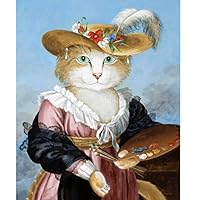
Note: Although I loved this, I wouldn't recommend buying this particular edition. There are a lot of errors in grammar, the print is very small, and the cover doesn't match the story at all.
Poor little Rose has been recently orphaned. Thankfully, "Eight Cousins" isn't the type of book where someone gets locked in a garret and made to shovel coal. Rather, Rose is taken in by her Uncle, a gentleman sailor & physician recently returned from the sea. Surrounded by a large & rowdy family, Uncle Alec begins to raise Rose as he thinks best befits a little girl- basically, just like her male cousins. No corsets and "lady-like" behavior here! Rose learns to run and play, is comfortable and well-fed, rows a boat and has dozens of adventures with her cousins.
Uncle Alec (and through him, Louisa May Alcott) isn't at all shy about sharing his opinions, either. "Eight Cousins" is full of little homilies about family and child-rearing, honesty and courage and forthrightness. It comes just shy of being overbearing, but is thankfully saved by the sheer sense of fun in the story. Rose and her seven male cousins are always up to something- play-acting in the country, camping on an island, cavorting and having a fabulous time. They're joined by Phoebe, the dish-washing maid whom Rose decides to "adopt" as her sister, and the family thus opens their arms to her.
I remember adoring this book as a little girl (mostly wishing that I could also have a fantastic, rich family and fabulous adventures). This time around I still enjoyed it, but I also found myself actually paying attention to some of Alcott's little rules of life. I'm sure we could all stand to be a little more honest & good in our lives, right?
The story of Rose & her cousins continues in "Rose in Bloom." I have to admit that I was less impressed with this installment. Rose is a grown woman now, and her moral problems now have more to do with balancing her fortune and the expectations of her social circle. Uncle Alec would prefer that she avoid her peers entirely, but Rose is determined to be a part of it. There's a definite sense of "poor little rich girl" for large parts of it. Woe is Rose, people like her for her money. Rose's moral values are also quite a bit stronger than some of her peers, and I felt that she often judged people a bit too harshly. In fact, the entire family seems a bit more harsh and less-than-accepting of people's faults. Maybe it's just because the cousins are adults now, and they're exposed to the more "adult" side of the family, but the story definitely isn't as sweet as "Eight Cousins."
If the goal of "Eight Cousins" is to teach us to good people, "Rose in Bloom" serves as a warning: don't get so caught up in being good that you neglect or reject people because they aren't as good as you are.
I had never come across these books although familiar with some of Louisa M Alcotts writings. This story seems to me far superior to any others and kept me under its spell from start to finish.
I much prefer these two books to the Little Women series. I never wanted to be part of the March family, but I wanted to live on Aunt Hill! It sounded delightful.