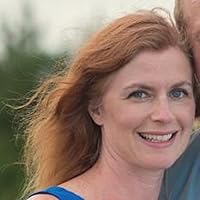
Anne Evelyn Bunting, better known as Eve Bunting, is an author with more than 250 books. Her books are diverse in age groups, from picture books to chapter books, and topic, ranging from Thanksgiving to riots in Los Angeles. Eve Bunting has won several awards for her works.
Bunting went to school in Ireland and grew up with storytelling. In Ireland, “There used to be Shanachies… the shanachie was a storyteller who went from house to house telling his tales of ghosts and fairies, of old Irish heroes and battles still to be won. Maybe I’m a bit of a Shanchie myself, telling stories to anyone who will listen.” This storytelling began as an inspiration for Bunting and continues with her work.
In 1958, Bunting moved to the United States with her husband and three children. A few years later, Bunting enrolled in a community college writing course. She felt the desire to write about her heritage. Bunting has taught writing classes at UCLA. She now lives in Pasadena, California.
In simple words and pictures author Bunting, and illustrator Gammell have created a picture book evocative of both of the following famous quotes:
First They Came for the Jews
First they came for the Jews and I did not speak out because I was not a Jew. Then they came for the Communists and I did not speak out because I was not a Communist. Then they came for the trade unionists and I did not speak out because I was not a trade unionist. Then they came for me and there was no one left to speak out for me.
Pastor Martin Niemöller
If I am not for myself, who will be for me? If I am not for others, what am I? And if not now, when? Rabbi Hillel Jewish scholar & theologian (30 BC - 9 AD)
One of my favorite books to use with middleschoolers when teaching the Holocaust. We did this as a read aloud in all five of my classes today, and each time I finished, the room was silent- perfectly still in a very eerie but moving way. This is a book that when read to elementary students, they can explain that the bunny was trying to stand up for those being bullied, but 8th graders can take away so much more from it and explain the allegory itself. Definitely a book I'd recommend when wanting to get the message across of what happens when people don't stand up for others.
Standing up for what is right is a difficult thing. This book shows what can happen if one cannot find the strength and courage to speak up when one knows something is happening that is wrong. It can be used for all ages to begin discussions about the historical time of the Holocaust, but is written for young children as an introduction to those times. It tells the story of animals in the forest and each time Terrible Things come for a certain group, like those with feathers, everyone else is relieved that they are not taken. They step away, not understanding, yet still happy to be left alone. There are key phrases that adults will notice, like “we mustn’t ask” and “It doesn’t matter” and “Life went on almost like before.” Stephen Gammel illustrates the text in black and white, showing well the fear of those taken and the creepy faces of the Terrible Things. It is a chilling book, perhaps because I already know what happened, and I hope others remember to tell the story and talk about it, again and again. There are numerous lessons available for this book! Added to this re-read: The story feels as if we should all learn again this lesson from Eve Bunting's book. It's time to speak up before we lose our democracy!
Based off the "First they came for..." poem, it tells the story of Little Rabbit who slowly watches all the forest animals be taken from the glade for arbitrary reasons. Little Rabbit 's family make excuse after excuse to either justify it or keep Little Rabbit quiet and compliant...because of course, why should the Terrible Things come for *them*? ...Until the day that the Terrible Things come for all the creatures that are white, and Little Rabbit is left all alone.
Not an easy story. Not an easy conversation...but a necessary one.
I haven’t read this since middle school, but it’s been on my mind this week. This book may be about the holocaust, but it offers a powerful lesson to stand up for others even when it feels impossible to speak up.
So, while I don’t know what actions to take against injustices that feel so big and out of my control, it feels like this offers a good place to start. Simply saying something and taking a stand against what is wrong.
Terrible Things is a powerful allegory of the Holocaust and, more generally, a story about the importance of standing up for others. It is formatted as a picture book, but I think it's actually more of a middle grade book.
I've had this short book on my to-read list for a very long time and am glad to finally have read it!
This book was about a group of animals that lived peacefully until "The Terrible Things" started taking small groups of them one by one. Instead of sticking together and fighting off The Terrible Things, the animals started coming up with reasons that they were glad the groups were gone. This story is portrayed as a children's book but the real meaning behind it is about the Holocaust. Afterall, if the Jewish people stuck together to fight off Nazis, maybe more could have survived.
Since I’ve been working on a children’s book about the Holocaust, I’ve read other books on the topic written for young readers. One of the most compelling stories I found is Eve Bunting’s, Terrible Things: An Allegory of the Holocaust. Beautifully illustrated by Stephen Gammell, this book is an outstanding introduction to teaching children about how terrible things can happen.
The story took place in a clearing in the woods where small creatures lived in harmony. Then one day, the Terrible Things came and captured all the feathered birds. What did the other animals do? Most did nothing. One little bunny tried to help but was told to mind his own business. When the Terrible Things returned, they took away all animals with bushy tails. What did the other creatures do? Nothing. Some even stated that didn’t like those bushy-tailed animals anyway. As the allegory continued, more and more creatures disappeared, and the bunny was left alone to wonder why the animals didn’t stick together. Finally, the bunny leaves the clearing, in search of others who will listen to his story.
Terrible Things sends an important message, but not just to children, to all ages. The story reminds me of Martin Niemöller's quotation: First they came for the Socialists and I did not speak out—because I was not a socialist. Then they came for the trade unionists, and I did not speak out—because I was not a trade unionist. Then they came for the Jews, and I did not speak out—because I was not a Jew. Then they came for me--and there was no one left to speak out for me.
This book is an excellent allegory of the horror that took place during the Holocaust. Though the Holocaust itself is never mentioned, the nightmare of that event is felt through this picture book. I definitely would not read this picture book to young children due to the heaviness of the subject. In this book, the setting takes place in a forest with all the animals living in peace and harmony with each other. Then a very dark and scary shadowy being enters in and stirs up fear in all the animals. Each time this dark shadow monster comes it wants a different animal, and captures it with its nets. The other animals exclaim how they don't have those characteristics of that particular animal it is after, and therefore they are safe. They even go on to say negative things about the particular animal that was taken. There is a definite theme of "minding your own business" and the impact that takes place when people are silent and inactive to injustice they see around them. This book is definitely for more mature readers and I would recommend upper elementary at the youngest. It's a great story that represents the horror of the Holocaust, but also how staying silent and not helping those in need is just as horrible.
I haven't been able to read as much lately as I normally do. There is, however, one book I just can't get out of my head. I keep thinking about the picture book Terrible Things by Eve Bunting.
In Terrible Things, Little Rabbit watches while the shadowy "Terrible Things" come to the forest to carry away the animals. First they come for the animals with feathers, then the animals with bushy tails, then the animals that swim, and so on and so forth. When Little Rabbit asks questions, the remaining animals in the forest make excuses and they tell her to be glad it wasn't her they had come for. Then, when they do eventually come for the white creatures and it is her the terrible things intend to carry away, the rabbits call out for help and there is nobody left to hear them.
This book should make a comeback. The thoughts contained in it are simple enough for children, but a powerful reminder for the rest of us, as well. Just because you are not being targeted by whoever is targeting other people, don't think you can turn your back and it will never happen to you.
I just purchased this book to read aloud to my 6th grade students as we are beginning our Holocaust unit. I found it very powerful, and I'm hoping that my students find a great deal of meaning in this book. The artwork is beautiful, and the allegory is perfect. Every person needs to read this.
much like maus, this does not require a rating- but i just want to say that this is a beautiful allegory of the holocaust- anything that doesn’t explain the straight facts is going to be problematic in one way or another, but this was very well adapted for its intended audience
This WOW book fits perfectly for the informational text genre. I would use this book "Terrible Things: An allegory of the Holocaust" written by Eve Buting, in 5th grade or above. This is a really good way of introducing the cental message of the Holocaust in a more kid-friendly, age appropriate way. This book is definitely a wow book for me because of that. I have not read anything like this before so it was super interesting for me and gave me a different persepective. The illustrations by Stephen Gammell are really captivating and thought provoking too. This book would be useful as an introduction for having a discussion about the holocaust in older grades as it hints at the problems people at that time faced and how scared they were. You could have 4th gaders do this book too as you could you use the messages in the book in a lesson about bullying or standing up for what you believe in. It is very important to instill those ideas in our students and children. Students could also assume the role of Little Rabbit and think about what advice they would give to the other forest creatures when they go to tell them about the Terrible Things. They could even create a poster with their advice.
Eve Bunting is a prolific and versatile writers with over 100 books to her credit. On this blog alone, I have written about two of her World War II works - Spying on Miss Müller, a school story, and One Candle, a Chanukah story. Among her considerable oeuvre is a small but powerful allegory of the Holocaust and what happens when one turns a blind eye to the terrible things that are being done to others instead of standing up for what was right.
The trouble begins in a forest where everything is fine and all the animals get alone well, That is until the Terrible Things arrive, blocking out the sun and announcing that they have come for all the creatures who have feathers. Though all the feathered creatures try to fly away, the Terrible Things had brought big nets, capture them all and take them away. Seeing this, Little Rabbit doesn't understand what was wrong with having feathers, but Big Rabbit tells him not to say anything, and to mind his own business, so as not to anger the Terrible Things.
And so, it went from then on. The Terrible Things come day by day for the animals of the forest, type by type. And each time they come, the remaining animals look the other way and ignor the cries of the captured creatures. Pretty soon, the only animals left are the rabbits. But one day, the Terrible Things come for them, too...
Introducing the Holocaust to younger readers is never an easy task. On the one hand, you don't want to scare them so much they can't get beyond their own fear. On the other hand, as the Holocaust slips further and further into history, it may be difficult for kids to fully realize the importance of the lessons of tolerance we should have hopefully learned from it. The indirect way Bunting presents both of these concerns in Terrible Things makes it a good book for readers to learn about the Holocaust and for helping kids to understand the consequences of behavior like that of the Rabbits, and for encouraging them to be brave enough to stand up for wrongs.
Bunting words are chilling and are expertly illustrated in the haunting pencil drawing by Stephen Gammell, which add so much to the ominous feeling in this story. He is spot on in the way he has captured the fear of the animals as the Terrible Things come for them, but in the sense of isolation each animal type feels as they try to flee.
Years ago, I bought a postcard at the Holocaust Museum in Washington, DC and have kept it all these years to remind me of the very thing that Even Bunting is writing about in Terrible Things. Most people will probably recognize the words, since it is a well know quote, but I though I would include it anyway:
First they came for the Communists And I did not speak out Because I was not a Communist Then they came for the Socialists And I did not speak out Because I was not a Socialist Then they came for the trade unionists And I did not speak out Because I was not a trade unionist Then they came for the Jews And I did not speak out Because I was not a Jew Then they came for me And there was no one left To speak out for me
Unlike Pastor Niemöller's quote, I should say that Terrible Things does end on a more hopeful note. Though it is basically a picture book, Terrible Things can easily be used for elementary, middle school and even high school students. And there are any number of excellent lesson plans available for this book that has so much to offer in terms of teaching kids about courage, tolerance, diversity as well as the Holocaust. One example of an excellent lesson plan for older students can be found at the Mandel Project.
This children's book tells an allegory of the Holocaust using animals in a clearing and some scary, nondescript "Terrible Things," based on the Martin Niemoller quote: "First they came for the Socialists, and I did not speak out— Because I was not a Socialist.
Then they came for the Trade Unionists, and I did not speak out— Because I was not a Trade Unionist.
Then they came for the Jews, and I did not speak out— Because I was not a Jew.
Then they came for me—and there was no one left to speak for me."
This book is an effective tool for teaching not only how people will discriminate against others for seemingly trivial aspects of their identity, but how others will draw "us vs them" lines and refuse to stand by those of other identities either because it's inconvenient or because of trivial infractions, until the effects eventually become too great to ignore.
I would frontload this with an anticipation guide such as ones used by Beers that asks really difficult questions about the Holocaust and similar atrocities, specifically questions about how these things are allowed to happen. I would use questions like "Whenever I see something bad happening, I always step in and help" and "I'm more likely to help someone if I can relate to them" and "Sometimes I ignore a problem because it's not my problem."
Thanks for the recommendation, Matt! Stephen Gammell's illustrations added the same horror he brought to the Scary Stories to Tell in the Dark series. Eve Bunting's simple allegory is all the more chilling for these dark illustrations. It might have been more subtle if it weren't so easy to see the terrible things for what they are, if they had been somehow disguised to look more normal or innocuous. The main discussion of why people don't act would be an interesting topic to bring up with kids. So many of us would like to think we wouldn't act that way, but until we think closely about why people don't act we won't be ready.
I really enjoyed this story. I really liked how Eve Bunting used sybolism in the story. It was very interesting to see how she told a story about the Holocaust using different animals, and shadows called the terrible things. The animals were a good representation of the Jews, while the Terrible things were a good representation of the Germans. I also really enjoyed the ending, and how Bunting left the reader wondering that if everyone would have stood up in the beginning, could it have possibly made a difference.
It's not exactly a new perspective on the tale of the poem "And then they came for me", but it's great to see it in book form for children to understand the scope of it. As an illustrated allegory, it's easier to understand Us vs. Them, and how that which we cannot see seems so frightening + uncontrollable.
Eve Bunting's books are always filled with candid life lessons, and this one does the same.
I gave this book 4 stars. It deserves 4 stars in my opinion because it shows a very well representation of the Holocaust. It clearly explains to (older) kids how the Nazis came in and stole the Jews from their houses. How no one did anything until when it was all over the one little rabbit hid from the terrible things and then went to warn the others so they can go to a safer forest away from the terrible things.
I thought the book was good, but it didn't keep my interest like other books. The book seemed too rushed and at the end when it says that the little rabbit goes to the next town to see if anyone will listen to it, it does not make sense. They never mentioned before that any members of the forest tried to tell someone before the end of the story. The ending should have been worded more like the little rabbit went to the next town to see if anyone will believe it's tales of terrible things.
This book was interesting because it showed how you can't stick up for yourself. It also shows that you should question what is going on. For example if a senior is bullying a classmate, you should question why they did this. You should go together with the classmate and stand up to the bully. Just because the senior may seem to have the authority, it doesn't mean they can do anything they want. If everyone sticks together you can be able to stop the bully.
This book took allegory and used it to get the main point across of what the Nazis did during the Holocaust. By the end of this time period, people started to realize that these horrific events could've been prevented; however, they were too late and many people died. The author then explains this theme in a more kid appropriate way by using a community of animals who had a similar situation.
This entire review has been hidden because of spoilers.
I really enjoyed this book because it was a great representation of the holocaust without being so in-depth that it couldn't relate to any other situations. Because this book was more vague, the moral and/or theme of the story could go greatly with many other lessons or events. I really appreciated how the story was represented and presented, and therefore I really liked it.