

What do you think?

And Then It Happened
The only man you've ever loved is slipping away...Mel and Adam were childhood sweethearts and remain blissfully happy twenty years on.And then it happens...When tragedy strikes, Mel is faced with losing the only man she has ever loved. But what if he hasn't really been taken from her at all - he just can't find a way to let her know...From the bestselling author of While My Eyes Were Closed comes a heart-breaking story of love against all odds.***WHAT READERS ARE SAYING ABOUT AND THEN IT HAPPENED'Incredibly poignant' *****'Engaging, accurate and beautifully written' *****'A love story with a difference' *****Also available from Linda After I've GoneWhile My Eyes Were ClosedI Did a Bad ThingThings I Wish I'd KnownTen Reasons Not to Fall in LoveThe Last Thing She Told Me
402 pages, Kindle Edition
First published July 1, 2011
About the author
Linda Green
86 books664 followersI was born in North London in 1970 and brought up in Hertfordshire. I wrote my first novella, the Time Machine, aged eight, shortly after which I declared that my ambition was to have a novel published (I could have been easy on myself and just said ‘to write a novel’ but no, I had to consign myself to years of torture and rejections). I was frequently asked to copy out my stories for the classroom wall (probably because my handwriting was so awful no one could read my first draft), and received lots of encouragement from my teachers Mr Roberts, Mrs Chandler (who added yet more pressure by writing in my autograph book when I left primary school that she looked forward to reading my first published novel!) and Mr Bird.
My first publication came when I was thirteen and my Ode to Gary Mabbutt won second prize in the Tottenham Weekly Herald ‘My Favourite Player’ competition. At fifteen I won the Junior Spurs Football Reporter of the Year Competition and got to report on a first division football match from the press box at White Hart Lane (I got lots of funny looks and none of the journalists spoke to me.)
At sixteen I embarked on ‘A’ levels and a journalism course at De Havilland College, Hertfordshire, and my college magazine interview about football hooliganism with local MP and football club chairman David Evans made a double page spread in Shoot! magazine (they never paid me) and back page headlines in several national newspapers (only a nice man at the Daily Star bothered to check the story with me).
I joined my local newspaper, the Enfield Gazette, as a trainee reporter at eighteen. During a ten year career in regional journalism I worked as a reporter on the Birmingham Daily News, news editor on the Birmingham Metro News and Chief Feature Writer on the Coventry Evening Telegraph, winning Highly Commended in the Feature Writer of the Year category of the 1997 Press Gazette Regional Press Awards.
I loved working on regional newspapers but by 1998 my features were getting too long and the urge to write a novel had become too great so I left my staff job to write my first novel and work as a freelance journalist. I have written for The Guardian, The Independent on Sunday, The Times Educational Supplement, The Big Issue, Wanderlust and Community Care Magazine. I’ve also had a short story published in Best magazine
I found the writing and working from home a very solitary process so also worked as co-ordinator of the Birmingham Bureau of Children’s Express, a national charity which runs a learning through journalism programme for young people and taught journalism to schoolchildren for the National Academy of Writing. After I moved north in 2001 I qualified as an adult education tutor and taught creative writing classes to students aged between 18 and 82 for the Workers Educational Association across Calderdale, West Yorkshire.
After more than a hundred rejections from agents for my first novel (and more rewrites than I care to remember) I finally got an agent but still couldn’t get a publisher. I started work on my second novel I DID A BAD THING in 2003, finished the first draft and gave birth to my son Rohan in 2004, rewrote the novel and got a new agent in 2005, obtained a two-book deal with Headline Review in 2006.
I Did a Bad Thing was published in paperback in October 2007, made the top thirty official fiction bestsellers list (and number 3 in Tesco!) and has so far sold more than 77,000 copies. 10 Reasons Not to Fall in Love was published in paperback in March 2009, reached no 22 in the official fiction bestseller charts (and no 4 in Tesco) and has so far sold more than 80,000 copies. Both novels were also long-listed for the RNA Romantic Novel of the Year Award.
Following the success of my first two novels I got another two-book deal from Headline Review, with Things I Wish I'd Known being the first of these. I am currently working on my fourth novel.
I enjoy travelling.
My first publication came when I was thirteen and my Ode to Gary Mabbutt won second prize in the Tottenham Weekly Herald ‘My Favourite Player’ competition. At fifteen I won the Junior Spurs Football Reporter of the Year Competition and got to report on a first division football match from the press box at White Hart Lane (I got lots of funny looks and none of the journalists spoke to me.)
At sixteen I embarked on ‘A’ levels and a journalism course at De Havilland College, Hertfordshire, and my college magazine interview about football hooliganism with local MP and football club chairman David Evans made a double page spread in Shoot! magazine (they never paid me) and back page headlines in several national newspapers (only a nice man at the Daily Star bothered to check the story with me).
I joined my local newspaper, the Enfield Gazette, as a trainee reporter at eighteen. During a ten year career in regional journalism I worked as a reporter on the Birmingham Daily News, news editor on the Birmingham Metro News and Chief Feature Writer on the Coventry Evening Telegraph, winning Highly Commended in the Feature Writer of the Year category of the 1997 Press Gazette Regional Press Awards.
I loved working on regional newspapers but by 1998 my features were getting too long and the urge to write a novel had become too great so I left my staff job to write my first novel and work as a freelance journalist. I have written for The Guardian, The Independent on Sunday, The Times Educational Supplement, The Big Issue, Wanderlust and Community Care Magazine. I’ve also had a short story published in Best magazine
I found the writing and working from home a very solitary process so also worked as co-ordinator of the Birmingham Bureau of Children’s Express, a national charity which runs a learning through journalism programme for young people and taught journalism to schoolchildren for the National Academy of Writing. After I moved north in 2001 I qualified as an adult education tutor and taught creative writing classes to students aged between 18 and 82 for the Workers Educational Association across Calderdale, West Yorkshire.
After more than a hundred rejections from agents for my first novel (and more rewrites than I care to remember) I finally got an agent but still couldn’t get a publisher. I started work on my second novel I DID A BAD THING in 2003, finished the first draft and gave birth to my son Rohan in 2004, rewrote the novel and got a new agent in 2005, obtained a two-book deal with Headline Review in 2006.
I Did a Bad Thing was published in paperback in October 2007, made the top thirty official fiction bestsellers list (and number 3 in Tesco!) and has so far sold more than 77,000 copies. 10 Reasons Not to Fall in Love was published in paperback in March 2009, reached no 22 in the official fiction bestseller charts (and no 4 in Tesco) and has so far sold more than 80,000 copies. Both novels were also long-listed for the RNA Romantic Novel of the Year Award.
Following the success of my first two novels I got another two-book deal from Headline Review, with Things I Wish I'd Known being the first of these. I am currently working on my fourth novel.
I enjoy travelling.
Ratings & Reviews
Friends & Following
Create a free account to discover what your friends think of this book!
Community Reviews
Displaying 1 - 30 of 160 reviews

November 30, 2018
And Then It Happen by Linda Green is the first book I've read by this author and I will definitely give her books another go.
This book started extremely slow and I had many moments of where I thought I just couldn't go on but I stuck it out and it turned around in the end and became enjoyable to read.
It's about a perfect family, marriage and life (whatever perfect is) hit with a dreadful accident.
It's about relationships before and after,about how we deal will the truth and seeing how strong we really are.
I found it to be a annoying, sad and a hopeful read.
I would recommend it.
This book started extremely slow and I had many moments of where I thought I just couldn't go on but I stuck it out and it turned around in the end and became enjoyable to read.
It's about a perfect family, marriage and life (whatever perfect is) hit with a dreadful accident.
It's about relationships before and after,about how we deal will the truth and seeing how strong we really are.
I found it to be a annoying, sad and a hopeful read.
I would recommend it.

June 25, 2018
And Then It Happens by Linda Green will make you laugh and it will make you cry. Linda Green sure knows how to tug at those heart strings.
This is the story of Adam and Mel - childhood sweethearts who have been married for 10 years and together for 20. They are still madly on love and happy. They have a 4 year old daughter Maya who is just a brilliant little girl - the things that come out of her mouth!! Their lives together have been perfect - and then it happens - Adam is injured in a major accident and work and is in a coma. Mel's life is turned upside down.
Things are not looking good for Adam and Mel and Maya have to learn to deal with life without Adam around. This story is of love and friendship and the things people will do for those that they love - you will need tissues.
Thanks to Quercus Books and Netgalley for the advanced copy of this book to read in exchange for my honest opinions.
This is the story of Adam and Mel - childhood sweethearts who have been married for 10 years and together for 20. They are still madly on love and happy. They have a 4 year old daughter Maya who is just a brilliant little girl - the things that come out of her mouth!! Their lives together have been perfect - and then it happens - Adam is injured in a major accident and work and is in a coma. Mel's life is turned upside down.
Things are not looking good for Adam and Mel and Maya have to learn to deal with life without Adam around. This story is of love and friendship and the things people will do for those that they love - you will need tissues.
Thanks to Quercus Books and Netgalley for the advanced copy of this book to read in exchange for my honest opinions.

May 6, 2024
Mel and Adam met when they were thirteen years old, it was a case of love at first sight and they’ve been together ever since. Some twenty years after that first meeting and looking forward to their tenth wedding anniversary, Mel can’t quite believe how happy she is and how lucky she has been. She and Adam are still absolutely besotted with each other, they have a wonderful young daughter, Maya, they both have interesting, fulfilling careers, and they enjoy a very comfortable lifestyle accompanied by friends and family. Still, Mel can’t quite shake the belief that there is bad luck on the horizon.
Adam does his best to reassure Mel, but he doesn’t really believe that their undeniable good fortune is destined to be challenged by fate. Of course, he also doesn’t know about the secret that Mel has been keeping for years, a secret that has tainted her sense of happiness the entire time. When fate does eventually come calling, Adam suffers a serious accident at work and Mel is left to pick up the pieces of their shattered family life. Mel has to contend with the love of her life being taken from her, while Adam has to deal with the fact he is now trapped in a coma and dependent on others, with no way of letting them know he is still in there.
And Then It Happened is a thought-provoking novel about love and loss and everything that happens in between. The story is told in alternating chapters by Mel and Adam, which serves to highlight their feelings for one another and allows for secrets to be teased out as they both struggle to come to terms with their new reality. The emphasis that is placed on their happiness and supreme level of contentment with each other at the beginning of the book does initially seem a bit overdone, but actually it allows for the contrast in their circumstances after Adam’s accident to be even more pronounced. Their almost preternatural happiness at the beginning gives way with devastating effect to the realistic uncertainty, anger and upset that they both experience later.
Mel is arguably the lead character in the novel, despite the duel narrative approach. Although her persistent worry that she and Adam were due some bad luck was a little strange at first, she really came into her own as a strong, caring and very patient character after Adam’s accident. That’s not to say she didn’t have the odd wobble while looking after him, but such doubts made her a far more believable and sympathetic character. Really, it was nice that Linda Green didn’t make her totally perfect. The difference in Adam’s narrative before and after the accident was very well done. Green does a great job of portraying his sense of bewilderment and frustration. Their interactions with each other and their thoughts as the story progresses demonstrate that it is possible both to be a perfect couple and to have a few secrets. Their relationship remains convincing throughout.
A moving and surprisingly hopeful novel, And Then It Happened is almost certain to tug at the heartstrings. It’s a fairly slow and undeniably realistic portrayal of the difficulty of coming to terms with the consequences of a devastating accident and deciding how best to move on with life. It’s the kind of story that stays with you long after you have finished reading it.
Adam does his best to reassure Mel, but he doesn’t really believe that their undeniable good fortune is destined to be challenged by fate. Of course, he also doesn’t know about the secret that Mel has been keeping for years, a secret that has tainted her sense of happiness the entire time. When fate does eventually come calling, Adam suffers a serious accident at work and Mel is left to pick up the pieces of their shattered family life. Mel has to contend with the love of her life being taken from her, while Adam has to deal with the fact he is now trapped in a coma and dependent on others, with no way of letting them know he is still in there.
And Then It Happened is a thought-provoking novel about love and loss and everything that happens in between. The story is told in alternating chapters by Mel and Adam, which serves to highlight their feelings for one another and allows for secrets to be teased out as they both struggle to come to terms with their new reality. The emphasis that is placed on their happiness and supreme level of contentment with each other at the beginning of the book does initially seem a bit overdone, but actually it allows for the contrast in their circumstances after Adam’s accident to be even more pronounced. Their almost preternatural happiness at the beginning gives way with devastating effect to the realistic uncertainty, anger and upset that they both experience later.
Mel is arguably the lead character in the novel, despite the duel narrative approach. Although her persistent worry that she and Adam were due some bad luck was a little strange at first, she really came into her own as a strong, caring and very patient character after Adam’s accident. That’s not to say she didn’t have the odd wobble while looking after him, but such doubts made her a far more believable and sympathetic character. Really, it was nice that Linda Green didn’t make her totally perfect. The difference in Adam’s narrative before and after the accident was very well done. Green does a great job of portraying his sense of bewilderment and frustration. Their interactions with each other and their thoughts as the story progresses demonstrate that it is possible both to be a perfect couple and to have a few secrets. Their relationship remains convincing throughout.
A moving and surprisingly hopeful novel, And Then It Happened is almost certain to tug at the heartstrings. It’s a fairly slow and undeniably realistic portrayal of the difficulty of coming to terms with the consequences of a devastating accident and deciding how best to move on with life. It’s the kind of story that stays with you long after you have finished reading it.

June 13, 2018
Having read several of Linda Green’s books I was delighted to review this book from netgalley.
This book made me really think how I’d cope if my husband had an accident ( I’m not the patient type) the way this was written really moved me, the love between Mel and Adam was so touching I had tears in my eyes.
A must read have the tissues at the ready!
This book made me really think how I’d cope if my husband had an accident ( I’m not the patient type) the way this was written really moved me, the love between Mel and Adam was so touching I had tears in my eyes.
A must read have the tissues at the ready!

September 30, 2011
I’m quite a big fan of Linda Green, I read 10 Reasons Not To Fall In Love a couple of years back and I thoroughly enjoyed it. It was such a wonderful read that, despite its title, it really made you believe in love again. I then read the book she released last year called Things I Wish I’d Known. It didn’t blow me away as much as 10 Reasons Not To Fall In Love, but I did still enioy it. So I was inordinately pleased to know Linda would be back in 2011 with a new book and I liked how mysterious the synopsis sounded for And Then It Happened. I’m not a big fan of the cover – at least I wasn’t – but the more I look at it, the more it grows on me; it’s actually quite nice with the blue sky, the grey clouds and the people under an umbrella. The spine of the book is red, too, which adds a nice bright splash of colour. It’s a much different novel to her previous three, but in a good way.
And Then It Happened could very well be Linda Green’s break-out novel. Don’t get me wrong, I enjoyed the other two books of hers I’ve read but And Then It Happened is on an entirely different level. I’m loathe to say it’s “grown-up”, as if her other novels were immature or something, but it does have a different feel than her other books. The plot is much more hard-hitting, much more unique than your regular boy-meets-girl fare and anybody who goes around saying Chick Lit is about shoes and shopping and Mr Right will be proven infinitely wrong when they pick up this book as there is nothing of the sort in And Then It Happened. It’s one of the most touching books I think I will ever read; in terms of emotion it’s up there with Marian Keyes and you can just tell that Linda Green poured so much time and effort in to making sure she got everything spot-on with this book.
I am going to tell you what the book is about; I can’t review it otherwise, I can’t keep the mysterious synopsis alive and kicking because otherwise I can’t review it properly. I’m not spoiling the book, not really, but if you want to remain oblivious to what happens, I suggest you stop reading. Like I said, there’s no spoilers, so there’s no need to shout, but I am going to discuss what the “it” is that happens to Mel and Adam. Chick Lit books, it has to be said, rarely veer from happy-ever-afters. When you read a Chick Lit book you expect everything to go swimmingly; you expect that everything come the last page of the novel will be perfect and brilliant and the characters will live long and happy lives together. Green, however, has flipped that coin and she starts out with the happy-ever-after. Adam and Mel have been together almost twenty years, married for 10, with a beautiful girl, perfect house, perfect jobs… Until Adam loses a fight with a dinosaur and ends up in a coma. Mel and Adam’s worlds are turned upside-down and inside-out as Mel has to come to terms with the fact that her husband may forever be in a vegetative state. It’s a brave move from Green to focus on such a subject, make no mistake, to do a happy-ever-after novel in reverse, but it works. Boy, does it work.
Like I say, it’s rare for novels to deal with medical issues like comas and being in a vegetative state but I found it fascinating. It’s easy to have a book that’s all sweetness and light, so it’s nice to, once in a while, have a book come along that makes you wonder what you would do in that situation. Would I be brave enough, like Mel is, to look after someone I loved even in that kind of state? Would I be able to cope the way Mel does? I found it all to be so very readable and it’s a subject and an issue that’s so rarely dealt with and I felt Green managed to write about it perfectly. The emotion was the main thing for me. The way Mel and Adam felt for each other after so long together, to see the perfection come crumbling and to see Mel have to deal with their daughter Maya by herself, without Adam by her side, was heartbreaking. Who knows what the right thing to do is when your husband is lying stuck in a bed constantly for days, weeks, months, on end. Mel’s coping ability and Maya’s constant cheeriness were both admirable and amazing. I loved how Mel’s parents rallied round and how Mel’s best friend Louise and Adam’s best friend Steve rallied round, but what got me most of all was Mel’s constant belief that Adam would be back to being himself one day, her belief was just unshakeable.
And Then It Happened really was a work of art. I was captivated by the story, captivated by Mel and Adam’s love for each other, captivated by the writing. (You could say it was rather captivating…) The book was just really hard for me to put down and I had absolutely no idea how it was all going to pan out; whether Adam and Mel would ever get back to how they were before the accident, whether Adam would recover… There were so many questions and, in the end, we were given a very satisfactory ending. It was rather open-ended, in a way, perhaps paving the way for a sequel? But it was a satisfying ending. I hugely enjoyed the book, it was really nice to read something a bit different and it was made an even more poignant read when I read Linda’s notes at the back of the book and where her inspiration for the book came from. There’s been a lot of thought, and a lot of emotion poured into the novel and that’s evident from the very beginning right the way to the very end. It was a triumph, and I hope Linda will continue to tackle a more lesser-used plot in her next book!
And Then It Happened could very well be Linda Green’s break-out novel. Don’t get me wrong, I enjoyed the other two books of hers I’ve read but And Then It Happened is on an entirely different level. I’m loathe to say it’s “grown-up”, as if her other novels were immature or something, but it does have a different feel than her other books. The plot is much more hard-hitting, much more unique than your regular boy-meets-girl fare and anybody who goes around saying Chick Lit is about shoes and shopping and Mr Right will be proven infinitely wrong when they pick up this book as there is nothing of the sort in And Then It Happened. It’s one of the most touching books I think I will ever read; in terms of emotion it’s up there with Marian Keyes and you can just tell that Linda Green poured so much time and effort in to making sure she got everything spot-on with this book.
I am going to tell you what the book is about; I can’t review it otherwise, I can’t keep the mysterious synopsis alive and kicking because otherwise I can’t review it properly. I’m not spoiling the book, not really, but if you want to remain oblivious to what happens, I suggest you stop reading. Like I said, there’s no spoilers, so there’s no need to shout, but I am going to discuss what the “it” is that happens to Mel and Adam. Chick Lit books, it has to be said, rarely veer from happy-ever-afters. When you read a Chick Lit book you expect everything to go swimmingly; you expect that everything come the last page of the novel will be perfect and brilliant and the characters will live long and happy lives together. Green, however, has flipped that coin and she starts out with the happy-ever-after. Adam and Mel have been together almost twenty years, married for 10, with a beautiful girl, perfect house, perfect jobs… Until Adam loses a fight with a dinosaur and ends up in a coma. Mel and Adam’s worlds are turned upside-down and inside-out as Mel has to come to terms with the fact that her husband may forever be in a vegetative state. It’s a brave move from Green to focus on such a subject, make no mistake, to do a happy-ever-after novel in reverse, but it works. Boy, does it work.
Like I say, it’s rare for novels to deal with medical issues like comas and being in a vegetative state but I found it fascinating. It’s easy to have a book that’s all sweetness and light, so it’s nice to, once in a while, have a book come along that makes you wonder what you would do in that situation. Would I be brave enough, like Mel is, to look after someone I loved even in that kind of state? Would I be able to cope the way Mel does? I found it all to be so very readable and it’s a subject and an issue that’s so rarely dealt with and I felt Green managed to write about it perfectly. The emotion was the main thing for me. The way Mel and Adam felt for each other after so long together, to see the perfection come crumbling and to see Mel have to deal with their daughter Maya by herself, without Adam by her side, was heartbreaking. Who knows what the right thing to do is when your husband is lying stuck in a bed constantly for days, weeks, months, on end. Mel’s coping ability and Maya’s constant cheeriness were both admirable and amazing. I loved how Mel’s parents rallied round and how Mel’s best friend Louise and Adam’s best friend Steve rallied round, but what got me most of all was Mel’s constant belief that Adam would be back to being himself one day, her belief was just unshakeable.
And Then It Happened really was a work of art. I was captivated by the story, captivated by Mel and Adam’s love for each other, captivated by the writing. (You could say it was rather captivating…) The book was just really hard for me to put down and I had absolutely no idea how it was all going to pan out; whether Adam and Mel would ever get back to how they were before the accident, whether Adam would recover… There were so many questions and, in the end, we were given a very satisfactory ending. It was rather open-ended, in a way, perhaps paving the way for a sequel? But it was a satisfying ending. I hugely enjoyed the book, it was really nice to read something a bit different and it was made an even more poignant read when I read Linda’s notes at the back of the book and where her inspiration for the book came from. There’s been a lot of thought, and a lot of emotion poured into the novel and that’s evident from the very beginning right the way to the very end. It was a triumph, and I hope Linda will continue to tackle a more lesser-used plot in her next book!
October 18, 2017
Having read several of Linda Green’s books I was delighted to review this book from netgalley.
This book made me really think how I’d cope if my husband had an accident ( I’m not the patient type) the way this was written really moved me, the love between Mel and Adam was so touching I had tears in my eyes.
A must read have the tissues at the ready!

February 11, 2018
Crikey this was a bad book. I read it over a period of two days and kept hoping it would turn into a psychological thriller. I couldn't get past a "high end" restaurant serving tortilla chips in the first scene and Mel drinking rioja (even though she preferred white wine) because Adam didn't drink white. Why not order by the glass?

June 28, 2018
Linda Green is one of my favourite authors so you can imagine my excitement when I was asked to be on the blog tour for her latest book. I definitely wasn’t disappointed as I loved this emotional, gripping and thought provoking read.
This story is told alternately from Mel and Adam’s point of view. I thought this was really affective as it gave the reader a much deeper understanding of the characters and the couple’s relationship. The reader was able to experience events both as the victim and the observer which was very interesting and made for a fascinating, gripping read. There were times when one half of the story revealed something that the other person had no knowledge of which meant I was soon turning the pages faster and faster as I hoped that the other side would figure it out.
I actually liked both Mel and Adam equally which is quite unusual for me. They were both very real characters as neither was perfect and both had flaws. I did think Mel was a little silly with her paranoia that something was going to happen to destroy her perfect life. I wish she’d just relax and enjoy it more. The author really makes you care about both characters and the writing seems quite intimate at times as the reader knows their inner most thoughts and feelings. They start to seem like old friends and I found that I really cared about what happened to them both.
The book does slow down a little in the middle but by then I was so involved in the story and the characters lives that I wanted to keep reading as I was desperate for the story to have a happy ending. The fact it slows down is quite true to life as patients like this wouldn’t miraculously be healed in a few days. It would have been very easy for the author to include more drama into the book but I was pleased she didn’t as I think it would have taken away from the story.
I’ve read quite a few of Linda Green’s books and I can’t wait to read her next one! Luckily I haven’t got long to wait as her next book is out the end of next month.
Huge thanks to Milly Reid and Quercus for my copy of this book via Netgalley and for inviting me onto the blog tour.
This story is told alternately from Mel and Adam’s point of view. I thought this was really affective as it gave the reader a much deeper understanding of the characters and the couple’s relationship. The reader was able to experience events both as the victim and the observer which was very interesting and made for a fascinating, gripping read. There were times when one half of the story revealed something that the other person had no knowledge of which meant I was soon turning the pages faster and faster as I hoped that the other side would figure it out.
I actually liked both Mel and Adam equally which is quite unusual for me. They were both very real characters as neither was perfect and both had flaws. I did think Mel was a little silly with her paranoia that something was going to happen to destroy her perfect life. I wish she’d just relax and enjoy it more. The author really makes you care about both characters and the writing seems quite intimate at times as the reader knows their inner most thoughts and feelings. They start to seem like old friends and I found that I really cared about what happened to them both.
The book does slow down a little in the middle but by then I was so involved in the story and the characters lives that I wanted to keep reading as I was desperate for the story to have a happy ending. The fact it slows down is quite true to life as patients like this wouldn’t miraculously be healed in a few days. It would have been very easy for the author to include more drama into the book but I was pleased she didn’t as I think it would have taken away from the story.
I’ve read quite a few of Linda Green’s books and I can’t wait to read her next one! Luckily I haven’t got long to wait as her next book is out the end of next month.
Huge thanks to Milly Reid and Quercus for my copy of this book via Netgalley and for inviting me onto the blog tour.

September 13, 2018
Novel set in YORKSHIRE (thought provoking)
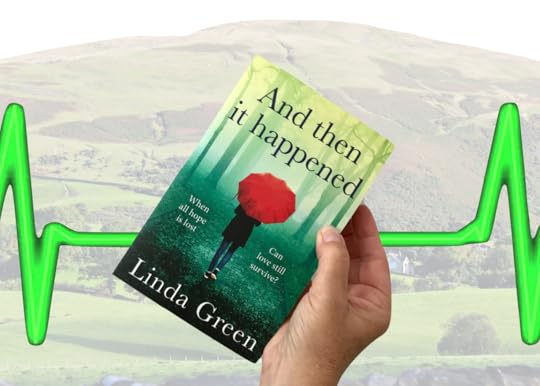
Mel met Adam when they were childhood sweethearts and, twenty years later, when we encounter the couple, they remain blissfully happy. Life seems pretty idyllic for them; they have an adorable daughter, Maya, successful careers that both enjoy and a lovely house in a Yorkshire village.
The only fly in the ointment is that Mel tends to worry that their good fortune might be about to be snatched away from them. She has a guilty secret that she has kept from Adam and feels that, at some point, she is bound to be punished for this. And she’s not wrong. Adam has a serious accident at work that results in him spending most of the rest of the novel first in a coma, then in a persistent vegetative state.
Linda Green is an award-winning journalist and the best-selling author of a lot of books. There’s no doubt that she can write. The beginning of the novel held my attention – the relationship between Mel and Adam is believable and heart-warming and nowhere near as cloying as might have been predicted from the blurb and four-year-old Maya is a delightful bit of characterisation. Once the “it” of the title happened, however, unfortunately it all went downhill. For a start, I wish the author had given Adam a different kind of accident – being nutted by a dinosaur skeleton at the museum where he works is just too farcical to take completely seriously, despite the grave consequences. And then, the rest of the novel is given over to a detailed account of Adam’s progress or lack of it and the profound effect the accident has on the people around him and it’s fairly heavy going. The sub-plot featuring Adam’s best mate, Steve is, I think, intended to provide the reader with a dramatic revelation, but it was pretty obvious where that was headed from the start. It’s difficult not to feel that, if the story had been handled differently, it could have had a lot more impact.
And then it happened is set in Yorkshire and there are some descriptions of the countryside when Adam is out running at the start of the novel that bring the area to life for the reader but these are, sadly, short-lived and the rest of the novel is set mostly in various hospital wards.
It is apparent that Linda Green has done extensive research for this novel and it’s certainly educational. I learned a lot about brain injury, coma, vegetative states and minimally conscious states and it is, without doubt, very thought provoking. Whether it hangs together as a successful novel is another matter.
Mel met Adam when they were childhood sweethearts and, twenty years later, when we encounter the couple, they remain blissfully happy. Life seems pretty idyllic for them; they have an adorable daughter, Maya, successful careers that both enjoy and a lovely house in a Yorkshire village.
The only fly in the ointment is that Mel tends to worry that their good fortune might be about to be snatched away from them. She has a guilty secret that she has kept from Adam and feels that, at some point, she is bound to be punished for this. And she’s not wrong. Adam has a serious accident at work that results in him spending most of the rest of the novel first in a coma, then in a persistent vegetative state.
Linda Green is an award-winning journalist and the best-selling author of a lot of books. There’s no doubt that she can write. The beginning of the novel held my attention – the relationship between Mel and Adam is believable and heart-warming and nowhere near as cloying as might have been predicted from the blurb and four-year-old Maya is a delightful bit of characterisation. Once the “it” of the title happened, however, unfortunately it all went downhill. For a start, I wish the author had given Adam a different kind of accident – being nutted by a dinosaur skeleton at the museum where he works is just too farcical to take completely seriously, despite the grave consequences. And then, the rest of the novel is given over to a detailed account of Adam’s progress or lack of it and the profound effect the accident has on the people around him and it’s fairly heavy going. The sub-plot featuring Adam’s best mate, Steve is, I think, intended to provide the reader with a dramatic revelation, but it was pretty obvious where that was headed from the start. It’s difficult not to feel that, if the story had been handled differently, it could have had a lot more impact.
And then it happened is set in Yorkshire and there are some descriptions of the countryside when Adam is out running at the start of the novel that bring the area to life for the reader but these are, sadly, short-lived and the rest of the novel is set mostly in various hospital wards.
It is apparent that Linda Green has done extensive research for this novel and it’s certainly educational. I learned a lot about brain injury, coma, vegetative states and minimally conscious states and it is, without doubt, very thought provoking. Whether it hangs together as a successful novel is another matter.

September 2, 2018
I loved this book. Kept me up till 2.30 a. m. Great read.

January 27, 2018
An OK read which unfortunately doesn’t stand up to comparisons with similar novels.
“I’m Still Here” by Clélie Avit handles the “coma storyline” much better than this book, with beautiful writing and engaging characters. While “My Husband the Stranger” by Rebecca Done analyses the impact of a traumatic event on a loved one, and the shifting relationship post-accident. Although Green’s book is pleasant enough, it doesn’t have the beauty or depth of either of the other two.
The characters are also somewhat one-dimensional. I couldn’t really buy into the best friends’ relationships. And I found it hard to believe that someone as in love as Mel was, would keep a secret from her husband for 15 years. That just didn’t ring true.
Overall an OK, but slightly disappointing, read.
“I’m Still Here” by Clélie Avit handles the “coma storyline” much better than this book, with beautiful writing and engaging characters. While “My Husband the Stranger” by Rebecca Done analyses the impact of a traumatic event on a loved one, and the shifting relationship post-accident. Although Green’s book is pleasant enough, it doesn’t have the beauty or depth of either of the other two.
The characters are also somewhat one-dimensional. I couldn’t really buy into the best friends’ relationships. And I found it hard to believe that someone as in love as Mel was, would keep a secret from her husband for 15 years. That just didn’t ring true.
Overall an OK, but slightly disappointing, read.

January 22, 2016
A gripping, moving and (at least in places) funny read. I have mixed feelings on some of the twists, and on the ending ... I won't say more for fear of spoilers. The writing style is engaging, easy to get on with, though a tiny bit long-winded in places. Definitely worth a read, but keep the tissues handy!

November 29, 2016
Utterly stunning.
Mel met Adam, aged 13. Twenty years on, they are still blissfully in love with a 4 year old little girl, Maya. In fact, their relationship is perfection. They are each others best friend. Until a serious accident leaves Adam in a coma which leads to a "vegetative state".
This is so beautiful, so heartbreaking.
Mel met Adam, aged 13. Twenty years on, they are still blissfully in love with a 4 year old little girl, Maya. In fact, their relationship is perfection. They are each others best friend. Until a serious accident leaves Adam in a coma which leads to a "vegetative state".
This is so beautiful, so heartbreaking.
August 21, 2017
An unusual love story
Was hooked from page one, Linda takes you from being amused to sad to happy and then all the way back again, loved every page
Was hooked from page one, Linda takes you from being amused to sad to happy and then all the way back again, loved every page
July 23, 2018
What an absolutely wonderful book. It had me gripped from the very beginning and I read it in a couple of sittings. It was such an emotional thought provoking read. It made me cry and made me laugh. Would highly recommend
July 23, 2019
Great book.
Thought provoking story, would you it wouldn’t you do what she did ?
Thought provoking story, would you it wouldn’t you do what she did ?
January 28, 2024
Didnt finish coz wow I have no words. Maybe Linda Green is just not for me. Started out okay but halfway through I just skimmed through it until I went to the last part and boom wtf.

October 31, 2024
I must have no soul because I found this story pretty boring.
Very well researched from a medical perspective, and therefore insightful, but slow, repetitive, and lacking momentum in the plot. I didn't feel like there was a proper beginning, middle, and end. Just a series of depressing interactions.
Very well researched from a medical perspective, and therefore insightful, but slow, repetitive, and lacking momentum in the plot. I didn't feel like there was a proper beginning, middle, and end. Just a series of depressing interactions.
February 16, 2018
Easy read
An easy read to pick up and put down. Emotional in places, I did speed read most of the last 50% as it was obvious what was going on. Not sure someone can recover in a year. But a sweet story.
An easy read to pick up and put down. Emotional in places, I did speed read most of the last 50% as it was obvious what was going on. Not sure someone can recover in a year. But a sweet story.
January 5, 2019
Very thought provoking with a scary yet real possibility for any of us.
February 4, 2019
In the beginning I wasn't enjoying this book as it was a bit soppy.The story developed and I was compelled to read .The story showed what the enduring power of love and resilience can accomplish in a difficult situation which could happen to any of us.
February 18, 2018
Can I give 10stars?
The affection that you feel for Mel Adam and Maya is very real. You feel that you somehow know them that they are friends or family. I loved every page of this book. It made me laugh, cry ,feel anger and feel helpless for them. Highly recommended.
The affection that you feel for Mel Adam and Maya is very real. You feel that you somehow know them that they are friends or family. I loved every page of this book. It made me laugh, cry ,feel anger and feel helpless for them. Highly recommended.
January 3, 2018
This is a compassionately written fictional story of a happy couple who are struck by tragedy when the husband goes into a coma. Mel and Adam have been together since school and have a daughter called Maya. They are so happy that Mel refuses to have a second chuild in case it temps fate. Not for a minute does she imagine what fate actually has in store for her and her husband Adam.
This was a pretty good read, and the author's note at the back really made me think. Linda green got to know a couple of families that had been in similar circumstances and she does a respectful and well researched job on the subject matter.
However, between about 50% and 85% I pretty much skim read a lot of it. The dialogue was way too pedestrian and mundane in places and could have been seriously stripped back. There was over detailing that never really went anywhere and many boring conversations that made my eyes glaze over and did nothing to move the action along.
Apart from that, I do enjoy Linda Green's books, but this isn't my favourite.
This was a pretty good read, and the author's note at the back really made me think. Linda green got to know a couple of families that had been in similar circumstances and she does a respectful and well researched job on the subject matter.
However, between about 50% and 85% I pretty much skim read a lot of it. The dialogue was way too pedestrian and mundane in places and could have been seriously stripped back. There was over detailing that never really went anywhere and many boring conversations that made my eyes glaze over and did nothing to move the action along.
Apart from that, I do enjoy Linda Green's books, but this isn't my favourite.

August 26, 2018
Mel was eleven, just starting at secondary school, when she first saw Adam. From his dark eyes and how his face scrunched up when he smiled, she knew she loved him and that they would belong to each other forever. It took Adam two years longer to recognise this but since then their relationship has been rock-solid. They got married ten years after Adam first asked her out and, as the story starts they are about to celebrate their tenth wedding anniversary. They are still in love, have a delightful four-year-old daughter, Maya, interesting and satisfying careers, good friends and lots of family support but, although Adam is content to accept their ongoing good fortune, possibly even take it for granted, Mel can never quite shake off a visceral fear that, at some point, there will be a price to pay for it. This fear has its roots in the guilt she feels about a secret she has been keeping from him for many years and so, when Adam is seriously injured and left in a coma following an accident at work, she feels that this is the retribution she has been expecting for so long.
Mel must now call on all her strengths if she is to pick up the pieces of their fractured lives. She needs to try to create some semblance of stability for Maya and to find ways to explain to her daughter why the daddy she adored, and was adored by, is no longer able to respond to her. Also, in the face of all the pessimism expressed by doctors, family and friends, all of whom believe that Adam is likely to remain in a persistent vegetative state, she must find the strength to hold onto her unshakeable belief that the Adam she loves, and who loves her, is still inside the inert body on the bed. She knows, without a shadow of a doubt that he is there, that he must desperately be trying to find a way to let her know and that she must never give up on her efforts to try to help him find a way of doing so.
Told in alternating chapters this thought-provoking story explores the far-reaching repercussions of the accident on the lives of Mel, Adam and Maya. This narrative format enables the reader to switch between reflecting on the daily stresses faced by Mel as she tries to cope, and the frustrations felt by Adam who feels trapped inside his unresponsive body. It also provides the opportunity to explore their past experiences and how these have made the characters who they are, as well as to place family and friends within the context of these experiences, and to make sense of their behaviour as the story unfolds. I thought that these switches were well managed, enhancing rather than disrupting the flow of the story. They also added depth and credibility to all the characters, none of whom was portrayed as perfect or saint-like as they struggled on the painful journey to accept a new reality. The ongoing help offered to Mel, by family, friends and, sometimes, strangers, as she struggled to cope, highlighted how important this support is for families facing long-term disability. However, it also demonstrated that this support is not always altruistic but can sometimes be motivated by a selfish self-interest; this credible psychological underpinning was an important element in my enjoyment of the story.
Although there are some very serious themes explored in this story, it is certainly not without moments of humour, sometimes of the laugh-out-loud variety. Much of this comes from the portrayal of the delightful behaviour of Maya and some of her wonderful observations, but an unforgettable reference to trifle (on page sixteen of the Headline edition!) still has the power to bring a smile to my face!
From the detailed exploration of the many hurdles which face people who have suffered a catastrophic brain injury, and their families, as they attempt to recover, it was clear just how much research into this subject Linda Green had done. However, although she used this to great effect, I never felt that it overwhelmed the story-telling but, rather, that it was appropriately woven into the narrative to enhance an understanding of the medical interventions and the various reactions and behaviour of the characters. I admired how she explored the various challenges all her characters faced, the ways in which their self-awareness developed, and how they discovered inner-strengths in the process.
I have struggled with my rating because, although the story often engaged me on an emotional level (I did shed a few tears!) there were some things I did find rather irritating. Although I was relieved that Mel and Adam weren’t portrayed as people without flaws, being told time after time about the unshakeable nature of the love they felt for each other did become tediously repetitive! I also felt that there was something of an imbalance between the part of the story focusing on the relatively immediate aftermath of Adam’s accident and the subsequent journey towards a “new normal”, with the latter feeling a bit too short and rushed. However, I did find the ending both credible and satisfying and so, although I have decided to give it 3*, a 3.5* rating would be a more accurate reflection of my overall experience of reading this memorable book.
There are so many themes which make this a moving and thought-provoking story, particularly those centred around the power of love, friendship, loss, grief and, when confronted by such a devastating trauma, the need to face reality whilst still holding onto hope, all of which were dealt with well by the author. However, and maybe especially for reading group discussion and debate, the most thought-provoking element emerges from the fact that this is a story which you cannot read without asking yourself “what would I do in that situation”? Therefore, my 4* rating for this category is unequivocal!
If I had read the cover of this book in a bookshop, I probably wouldn’t have chosen to buy it because I would have feared that it would turn out to be mawkishly sentimental; it didn’t feel like that so I appreciate the fact that I won a copy of it in a Nudge competition!

July 14, 2019
So I was really enjoying this book. I thought the writing was good, I liked the twists and surprises, I also loved the hope within it. I was rooting for Adam and Mel so bad. And the chapters of his thoughts and feelings were so real and I could feel his frustration! But the ending was just such a let down for me! I really thought there would be a proper happy ending. I get that it's not a sad ending but it's not the ending they deserve! They kept pointing out how he wouldn't get better but he just kept beating all the odds! I thought it was going to be a miraculous full recovery as that's what I was lead to expect! Also, at the end of the book the author states that she purposefully didn't head the Adam chapters with his name as they are really just Mel's imagination of what is going on inside his head!! Do not like that at all.
This entire review has been hidden because of spoilers.

February 19, 2020
The plot sounded like a good idea in principle, but wasn't at all well executed in my opinion. It dragged so much that I found myself skim reading and even skipping entire sections which would have added nothing to the story.
I found it to be overly descriptive and sometimes the dialogue droned on for pages. The book would have benefitted from a 100 page cull.
None of the characters were particularly well developed and I didn't warm to any of them.
There's also a lot of detail that really dates this book. References to the general election in 2010 for example. This could easily have been left out & the book would still have seemed current. Additionally, several chapters were dated. But most weren't. So it was difficult to get any sense of how much time was passing as you progressed through the book.
I certainly won't be rushing out to read another book by this author.
I found it to be overly descriptive and sometimes the dialogue droned on for pages. The book would have benefitted from a 100 page cull.
None of the characters were particularly well developed and I didn't warm to any of them.
There's also a lot of detail that really dates this book. References to the general election in 2010 for example. This could easily have been left out & the book would still have seemed current. Additionally, several chapters were dated. But most weren't. So it was difficult to get any sense of how much time was passing as you progressed through the book.
I certainly won't be rushing out to read another book by this author.
November 2, 2017
Emotional
I found this book difficult to read, emotionally. Although I wanted to get to the end, to see how it would finish, I had to keep putting it down because it made me anxious. The author does a great job of putting you, the reader, in the book and making you wonder how quickly life can change.
Definitely worth reading.
I found this book difficult to read, emotionally. Although I wanted to get to the end, to see how it would finish, I had to keep putting it down because it made me anxious. The author does a great job of putting you, the reader, in the book and making you wonder how quickly life can change.
Definitely worth reading.

August 18, 2017
Hmm. I was unsure of this book but it did grow on me throughout. It was an interesting premise, and it was heart breaking at times but honestly it didn't quite reach its full potential for me. I found the ending a bit disappointing - overall I just don't know... good but not great.
October 24, 2017
Unreal
Book chosen because of reviews.Disappointing started of well have a good description of vegetative state from both their viewpoints but lost flow in the middle and d
did not care how it ended .
Book chosen because of reviews.Disappointing started of well have a good description of vegetative state from both their viewpoints but lost flow in the middle and d
did not care how it ended .

December 3, 2017
Great book , wrong cover !
Displaying 1 - 30 of 160 reviews