Nine-year-old Eva Hoffman is the daughter of Austrian Jewish refugees who have found a precarious safety among a small community of European exiles attached to a psychoanalytic hospital in Topeka, Kansas. It is 1951, and the landmark school desegregation case, Brown v. Topeka Board of Education, is being tried in the local court. As the rising river inundates the town, the Hoffmans open their home to refugees from the flood, and Eva learns the complexities of prejudice—and courage—both within and outside her family.
I was born in Cleveland three weeks after my parents arrived as refugees from the Nazi regimes of Central Europe. Our home was bilingual, with German the language of nostalgia, frightening memories, as well as intimacy.
I grew up in Topeka, Kansas, straddling two very different worlds: the Midwestern Christian world of my public school and neighborhood, and the community of Jewish refugees who, like my father, had been hired as psychoanalysts by the Menninger Foundation, one of the early psychoanalytic clinics in America.
My novel, The Flood, describes a ten-year-old whose biographical information is similar to mine, as she comes to understand the nature of prejudice. The novel takes place in Topeka in 1951, the year the Kansas River overflew, turning hundreds into refugees, and Reverend Oliver Brown sued the Topeka Board of Education, because his daughter had to travel across town to attend a segregated school.
I attended Vassar College in Poughkeepsie, New York, for two years, and completed my BA at Barnard College. After taking off a few years to experience the life of a writer while taking a variety of jobs in New York City, I returned to Columbia, where I earned a doctorate in Anthropology and Education. I then spent several decades studying urban public schools, with most of my research directed at understanding issues of inequality and prejudice as they occur in public schools.
In the 1970s, sexual, reproductive and artistic issues in the Second Wave of feminism became the focus of my personal and public life. This led to two books, Simone deBeauvoir, a Life of Freedom, and a collection I edited with Sara Ruddick and Louise deSalvo, Between Women: Biographers, Novelists, Critics, Teachers and Artists Write about their Work on Women.
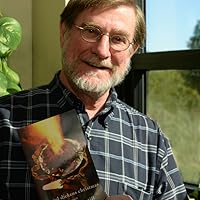
My refugee background has been a rich source on which I draw over and over in my writing. My memoir, Afterimages, focuses on how my parents' struggles to leave their homelands and make new lives for themselves in America, and describes my own journeys back to Germany and Austria to discover more about their pasts. This complicated background is also the xx of several personal essays, including The Dress, My Father's Violin, and, most recently, To Be Human in a Jewish Way, an essay about my aunt's experiences in the Jewish schools initiated by Martin Buber during the early years of the Nazi regime in Germany.
This is a solid well-written story about ignorance and prejudice, told from the eyes of nine-year-old, Eva Hoffman. Carol Ascher does a phenomenal job of showing the innocent perspective of a nine year old through the first-person point of view, but does it in a reliable, believable way that adults can relate to. The subject alone of discrimination, prejudice, and racism creates the anticipation of tension, and Asher piles it on in different layers.
For example, there is atmospheric tension as the story takes place at the same time and setting of the landmark school desegregation case, Brown v. Topeka Board of Education, and although the Hoffman’s are not directly involved, they are on peripheral and talk about the case as it applies to those around them (they have a black women as their housekeeper). Tension hits closer to home with conflict between best friends, Mordecai and Eva’s father, David and the tension between the mental patients and people who were not mentally ill. The flood puts a damper on everything. But the final escalation and concentrated blast of tension is substantial and makes the story, as the children become part of that prejudice.
There are beautiful passages to take the edge off and balance the constant tension the story creates like: “Grass waved like delicate seaweed under water, and bits of garbage floated like sad ducks,” and “There were days that summer when the sky hung over us like a monstrous dark water balloon someone had pricked.”
We are able to witness not only Eva’s growth and evolution, but given one of the vehicles to this transformation in her own words. “When I talked about ideas with Father, his views twisted mine in his direction before they were strong enough to live on their own.”
The one setback, if you could call it that, is there is no resolution in the traditional sense, and the story plays out more toward real life in a sort of logical exhaustion. We are however given a sense that Eva will be OK in her beliefs as we see a glimpse of her father’s mindset is his dialogue to her, which also is likely Ascher’s theme.
“It’s marvelous to notice differences among people,” he continued. “It’s why our world is so awesome. I’m different from you. Your father is different from me. What makes the thought dangerous is when it’s followed by a second thought: I’m better than you, or, my way’s better.” He nodded. “People often aren’t very careful when they notice the differences between themselves and another, and they rush to judge their own way best, which causes trouble.” “Maybe that’s because the difference makes them afraid. Mother said fear makes people prejudiced,” I reported. “Possibly, though I don’t think you can boil prejudice down to a single psychological cause.”
Carol Ascher's The Flood is a brilliant coming of age novel set in Topeka, Kansas. The Flood of the title is, of course, the great 1951 flood of the Kansas River. But another flood is the Brown v. Board decision and the flood of social change about to happen. And yet another flood--young Eva trying to understand the swirling flood of emotions that come with being of an immigrant (European) and also Jewish, as well as a psychiatrist's daughter in a town of sometimes small minds and fears of the "other." Eva navigates all of these floods to find understanding and even hope by the end of this wonderfully written book.
The Flood by Carol Ascher is a novel that emphasizes the civil rights movement. A 9 year old girl growing up in Kansas, Eva Hoffman witnesses various counts of racism and civil rights issues. This novel takes place at the time of Brown v. Board of Education, which would soon lead to the beginning of change in society's views of discrimination. Eva got to experience this, as she was living in the same place (Topeka, Kansas) at the same time as this Supreme Court decision. Eva didn't only watch this racism happen, she experienced it on her own as well. Eva received comments when she attempted to attend a black-only church with a family friend, eventually being accepted. However, Eva was living in a time when even though it was post WWII, not everyone was open to the idea of Jews being freed from the Nazis, so Eva received multiple forms of racism. Eva's parents both being Jewish refugees from Vienna, she has encounters with people against her passed-through-family religion. Those who enjoyed The Watsons Go To Birmingham by Christopher Paul Curtis will likely enjoy this read as well.
The Flood was originally published the year I left Kansas (1987) and I was totally unaware of it. It is a masterful novel of how political and social events impact a girl’s life. It’s a coming of age story around the events of 1951 when the town of Topeka was flooded and the battle for integration (Brown Vs. Board of Ed.) was raging. Eva is a 10-year old girl coming to grips with the fact that she is an outsider, the daughter of Jewish Austrian refugees, and that the world is filled with injustices. Ascher brilliantly portrays the adolescent mind, which is anxious to point out all the mistakes of the adult world, but also remains stubbornly selfish. There is a feeling of claustrophobia and doom as the skies darken, the water rises, and the town begins taking sides on the issue of integration. Eva learns that neighbors can turn ugly at any time, a lesson her parents had already learned in Europe. I highly recommend this book!
1987 I was glad to read this book, partly to learn something about Topeka; I don't recall ever hearing of the 1951 Flood, which submerged much of Kansas City and other towns up and down the Missouri and Kansas/Kaw rivers. Disheartening to read of the racist behavior of some white Topeka residents; Topeka was 8% black then, and about 13% today. Fascinating growing up situation; novel is from point of view of the 9 or 10 year old daughter of secular Jews from Austria. Daughter doesn't know and isn't told what her father is always angry and depressed about; this is shown very well.
Read Ascher's long blurb on author's page here. A fragment: "I grew up in Topeka, Kansas, straddling two very different worlds: the Midwestern Christian world of my public school and neighborhood, and the community of Jewish refugees who, like my father, had been hired as psychoanalysts by the Menninger Foundation, one of the early psychoanalytic clinics in America.
My novel, The Flood, describes a ten-year-old whose biographical information is similar to mine, as she comes to understand the nature of prejudice. The novel takes place in Topeka in 1951, the year the Kansas River overflew, turning hundreds into refugees, and Reverend Oliver Brown sued the Topeka Board of Education, because his daughter had to travel across town to attend a segregated school."
Set in Topeka Kansas in 1951! Mentions: McCarthy; Korean war; Negro minister Brown sues local Board of Education for the right to send his daughter to the all-white public school across the street.
Three levels: --portrait of a Viennese Jewish refugee psychiatrist, burdened with bitter memories and uneasy in his new setting, Topeka's upscale Menninger Clinic. --race relations --American-born daughter Eva, at 9 years trying to understand relations between blacks and whites, Jews and Christians, doctors and patients, husbands and wives.
"the autobiographical component is by far the strongest....simple sketches of domestic episodes are intimate and moving. Eva responds to her parents' fragility without fully understanding the horrors that lie behind it....Fear colors the most innocent pursuits..."
I really liked this book. The story is told by a nine year girl, whose Jewish parents escaped from Vienna to Kansas. The town floods and the family takes in flood victims until they have a new home. Topics are racism, Brown v. the Board of Education and a little girl trying to figure it all out.
It pulled up a lot of memories. I was born and raised in Topeka. We went to Colorado for vacation every summer and usually took highway 36 all the way to Denver. The year of the Flood we had to go north into Nebraska and go West on Highway 34.