

What do you think?

This Dark Road to Mercy
The critically acclaimed author of the New York Times bestseller A Land More Kind Than Home—hailed as "a powerfully moving debut that reads as if Cormac McCarthy decided to rewrite Harper Lee's To Kill a Mockingbird" (Richmond Times Dispatch)—returns with a resonant novel of love and atonement, blood and vengeance, set in western North Carolina, involving two young sisters, a wayward father, and an enemy determined to see him pay for his sins.
After their mother's unexpected death, twelve-year-old Easter and her six-year-old sister Ruby are adjusting to life in foster care when their errant father, Wade, suddenly appears. Since Wade signed away his legal rights, the only way he can get his daughters back is to steal them away in the night.
Brady Weller, the girls' court-appointed guardian, begins looking for Wade, and he quickly turns up unsettling information linking Wade to a recent armored car heist, one with a whopping $14.5 million missing. But Brady Weller isn't the only one hunting the desperate father. Robert Pruitt, a shady and mercurial man nursing a years-old vendetta, is also determined to find Wade and claim his due.
Narrated by a trio of alternating voices, This Dark Road to Mercy is a story about the indelible power of family and the primal desire to outrun a past that refuses to let go.
240 pages, Kindle Edition
First published January 14, 2014
About the author
Wiley Cash
17 books1,686 followersWiley Cash is theNew York Times best selling author of The Last Ballad, A Land More Kind than Home, and This Dark Road to Mercy (William Morrow/HarperCollins). He currently serves as the writer-in-residence at the University of North Carolina-Asheville and teaches in the Mountainview Low-Residency MFA. He lives in North Carolina with his wife and their two young daughters. Please visit wileycash.com to check the scheduled events for his book tour in the fall of 2017.
Ratings & Reviews
Friends & Following
Create a free account to discover what your friends think of this book!
Community Reviews
Displaying 1 - 30 of 1,493 reviews

January 9, 2014
There is a lot of used-to-be in Wiley Cash’s sophomore novel, This Dark Road to Mercy. Wade Chesterfield used to be a baseball player, used to be a husband and used to be a father. But he went oh-for three and now, as a guy who used to hang drywall and is on the run, he is mostly a crook.
Bobby Pruitt had been a ballplayer too, but his damaged youth led him in a dark direction, and now he is an enforcer for a local thug. He would like to apply his professional skills to Wade, not only in service of his current employer, but as personal payback for something Wade had done to him on the ballfield. He presents a clear and present danger not only to Wade but to his family.

Wiley Cash - image from Hoover Library
Brady Weller used to be a police detective, but after he was involved in an event that left a boy dead, he became an installer of home security systems, working for his brother-in-law. There is more going on with Brady, though. He is also a court-appointed guardian to children in need of such protection in Gastonia, North Carolina. This includes two young girls.
Easter Quillby hasn’t been around long enough yet to have much in her rear-view. But more than most pre-teens. Wade had surrendered custody of her and her little sister, Ruby, a few years back, and mom died recently of a drug overdose. Have a nice childhood. She and Ruby live in a state-run orphanage.
The action of the novel consists of Wade re-entering the girls’ lives after years of absence, snatching his daughters to join him as he flees dark elements in Gastonia, Pruitt pursuing Wade do him harm, and Brady trying to protect the girls. There are white-knuckle moments in this chase.
One of the true strengths of Wiley Cash’s debut novel, A Land More Kind Than Home, was his portrayal of children. That gift is manifest in full power here. Easter certainly reminds one of Scout from To Kill a Mockingbird, and the usual Stephen King pre-ad heroes and heroines. And with a name like Easter you’ve gotta figure she is gonna be reborn someway, somehow. Name a girl Ruby and I expect most of us might think of slippers and “There’s no place like home.” That would make sense here, for a girl who is hoping to have a family again. But it is Easter who will hold your attention and your affection. When there is danger afoot you will really, really want for Easter to be ok. She is not only a tough and decent kid, she is a very well-drawn one, and the best thing about this book
There are several threads (maybe red stitching?) running through The Dark Road…. Baseball figures large. Page 1 introduces Easter on a ballfield. Wade was a professional player, as was Pruitt. And when baseball is in play, one need not look too far to bring in the element of steroids. Wade and Pruitt have a history with them, and one of them still imbibes. And speaking of steroids, the time is 1998, and McGwire and Sosa are engaged in the most famous ‘roid-fueled home run derby of our age. The contest is large in the consciousness of these characters, and a subject of widespread daily conversation in the environments they inhabit. The heavy-hitters’ contest is even used in a very Hitchcockian way to provide a dramatic backdrop for the climax.
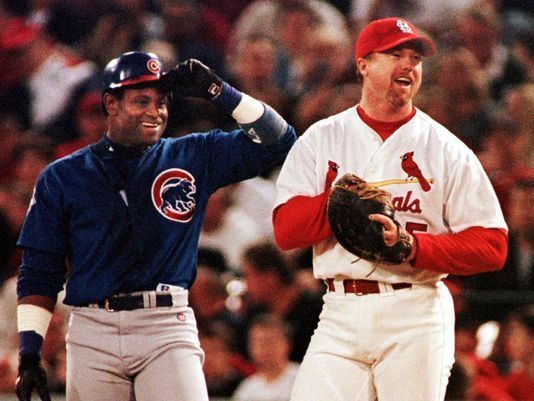
The Race is On
Another seam here is parenting. Wade is not a complete screw-up. He may not have made the best choices, and he may not be, exactly, the best person, but he does love his kids, and wants to be a father to them. But abandoning them for several years and snatching them on his way out of town was probably not what a good parent might do. Pruitt’s upbringing comes in for some inspection as well. And Brady copes with having a surly teenager he only gets to see some of the time. Finally, atonement comes in for a look. Wade may be a criminal, but he does want to make up for having left his children. He really wants to make a better life for them. Brady wants to atone for his part in the fatal accident, and does so by acting to protect vulnerable children. Pruitt is more interested in payback than atonement.
Another item you might keep an eye out for is the notion of what’s in a name.
Finally, this is a road trip, (it is even in the title) and that usually means a journey of self-discovery. The girls’ fondness for the computer game Oregon Trail foreshadows their later journey with Wade. What will these characters discover, how will they change, grow or wilt on this trip? A Catcher in the Rye mention does let us know there is some of coming of age going on. The girls are looking for a family. Pruitt is looking for revenge and Brady is looking for redemption. Wade is looking for some sort of gateway to a Promised Land.
This Dark Road to Mercy is indeed dark, but illuminated. There is plenty of road to contrast with a desire for home, and sufficient dollops of mercy to soothe sundry pains. This road is one worth taking.
Review first posted - January 28, 2014
Publication - January 14, 2014
=============================EXTRA STUFF
Links to the author’s personal, Twitter and FB pages
Interview in Crime Fiction Lovers - this is the source of the writer’s comments on writing kids quoted in the review
My reviews of some of Wiley Cash's prior books
-----2012 - A Land more Kind Than Home
-----2017 - The Last Ballad
Bobby Pruitt had been a ballplayer too, but his damaged youth led him in a dark direction, and now he is an enforcer for a local thug. He would like to apply his professional skills to Wade, not only in service of his current employer, but as personal payback for something Wade had done to him on the ballfield. He presents a clear and present danger not only to Wade but to his family.
Wiley Cash - image from Hoover Library
Brady Weller used to be a police detective, but after he was involved in an event that left a boy dead, he became an installer of home security systems, working for his brother-in-law. There is more going on with Brady, though. He is also a court-appointed guardian to children in need of such protection in Gastonia, North Carolina. This includes two young girls.
Easter Quillby hasn’t been around long enough yet to have much in her rear-view. But more than most pre-teens. Wade had surrendered custody of her and her little sister, Ruby, a few years back, and mom died recently of a drug overdose. Have a nice childhood. She and Ruby live in a state-run orphanage.
Writing in the voice of a child has its risks and rewards. Children often lack the power of reflection that adults possess, so their narratives can charge forward without the breaks of reflection or evaluation. Adults are more cautious, especially about what they divulge. If a child is an unreliable narrator it’s probably because he or she doesn’t fully understand what he or she is talking about. If an adult is an unreliable narrator then it means that he or she is hiding something. But child narrators also offer a challenge in terms of their emotional make-up. Their reactions to tragedies great and small are often displayed in similar ways. A young child’s reaction to the death of a pet can be similar to the reaction to the death of a family member. With that in mind, you have to be very careful about how you portray a child’s emotional scale. You want the reader to be able to intuit its depth even if the child’s reaction doesn’t reflect it. - from the Crime Fiction Lovers interviewEaster, Brady, and Pruitt are the three alternating narrators through whose eyes we see the events in Cash’s tale. We see Wade mostly through Easter’s eyes.
The action of the novel consists of Wade re-entering the girls’ lives after years of absence, snatching his daughters to join him as he flees dark elements in Gastonia, Pruitt pursuing Wade do him harm, and Brady trying to protect the girls. There are white-knuckle moments in this chase.
One of the true strengths of Wiley Cash’s debut novel, A Land More Kind Than Home, was his portrayal of children. That gift is manifest in full power here. Easter certainly reminds one of Scout from To Kill a Mockingbird, and the usual Stephen King pre-ad heroes and heroines. And with a name like Easter you’ve gotta figure she is gonna be reborn someway, somehow. Name a girl Ruby and I expect most of us might think of slippers and “There’s no place like home.” That would make sense here, for a girl who is hoping to have a family again. But it is Easter who will hold your attention and your affection. When there is danger afoot you will really, really want for Easter to be ok. She is not only a tough and decent kid, she is a very well-drawn one, and the best thing about this book
There are several threads (maybe red stitching?) running through The Dark Road…. Baseball figures large. Page 1 introduces Easter on a ballfield. Wade was a professional player, as was Pruitt. And when baseball is in play, one need not look too far to bring in the element of steroids. Wade and Pruitt have a history with them, and one of them still imbibes. And speaking of steroids, the time is 1998, and McGwire and Sosa are engaged in the most famous ‘roid-fueled home run derby of our age. The contest is large in the consciousness of these characters, and a subject of widespread daily conversation in the environments they inhabit. The heavy-hitters’ contest is even used in a very Hitchcockian way to provide a dramatic backdrop for the climax.
The Race is On
Another seam here is parenting. Wade is not a complete screw-up. He may not have made the best choices, and he may not be, exactly, the best person, but he does love his kids, and wants to be a father to them. But abandoning them for several years and snatching them on his way out of town was probably not what a good parent might do. Pruitt’s upbringing comes in for some inspection as well. And Brady copes with having a surly teenager he only gets to see some of the time. Finally, atonement comes in for a look. Wade may be a criminal, but he does want to make up for having left his children. He really wants to make a better life for them. Brady wants to atone for his part in the fatal accident, and does so by acting to protect vulnerable children. Pruitt is more interested in payback than atonement.
Another item you might keep an eye out for is the notion of what’s in a name.
Mom always said that she’d named us what she’d named us because those were her favorite things: Easter was her favorite holiday and rubies were her favorite jewels. Me and Ruby used to ask Mom all the time what her other favorite things were, and we’d pretend those things were our names instead…It seems crazy to say we played make-believe like that now, but we used those names so much they almost became real.Easter has to contend with a real-world decision concerning her name, and there is at least one adult in the story with a temporary alias, and another who has adopted a new name permanently.
Finally, this is a road trip, (it is even in the title) and that usually means a journey of self-discovery. The girls’ fondness for the computer game Oregon Trail foreshadows their later journey with Wade. What will these characters discover, how will they change, grow or wilt on this trip? A Catcher in the Rye mention does let us know there is some of coming of age going on. The girls are looking for a family. Pruitt is looking for revenge and Brady is looking for redemption. Wade is looking for some sort of gateway to a Promised Land.
”Oklahoma, Texas? California?” His eyes got bigger as he listed the names. “We could keep going clear on to the Pacific Ocean if we wanted to.”This is an engaging and fast-paced story. A pretty fair read. I do have some gripes of course. While the attempt for a North by Northwest moment was ambitious, it was not fully realized. Of course by then you have already enjoyed 95 percent of the book so it is not a huge issue. I still read Stephen King and I usually do not much care for his endings either. I did feel that some decisions made by characters here were stage-managed a bit too much. Why such and like has to take place here and then might fit into the author’s desire for the most dramatic possible setting, but did not make all that much sense to me as something the characters would actually do. There are also some convenient events that are inserted into the story to prepare one for the finale. It seemed to me that these were artificial and a bit jarring. Fine, whatever. It’s still a pretty good read, and those elements might not make your Spidey senses tingle the way they did mine.
“Then what?” I asked. “We can’t live in this car forever.”
“I don’t know,” Wade said again. “I guess that’s why they call it an adventure.”
This Dark Road to Mercy is indeed dark, but illuminated. There is plenty of road to contrast with a desire for home, and sufficient dollops of mercy to soothe sundry pains. This road is one worth taking.
Review first posted - January 28, 2014
Publication - January 14, 2014
=============================EXTRA STUFF
Links to the author’s personal, Twitter and FB pages
Interview in Crime Fiction Lovers - this is the source of the writer’s comments on writing kids quoted in the review
My reviews of some of Wiley Cash's prior books
-----2012 - A Land more Kind Than Home
-----2017 - The Last Ballad

November 14, 2017
Wiley Cash is an author that for a very long time I have been meaning to read. But he always get pushed to the bottom of my pile. I was excited there was a Traveling Sisters read for this one and I jumped in immediately. After all that, it was just OK for me.
Twelve-year-old Easter and her six-year-old sister Ruby are growing up in North Carolina and have a rough life. Their mother dies of a drug overdose and their father gave them up, signed those papers with no other thoughts. Now, they are in a home. The story is told from four points of view - the girls, their father Wade, a psychopath Pruitt, and their court-appointed guardian Brady. Wade wants to now do right by his girls, but he's so misguided and steals money from a local thug. Then, he kidnaps the girls from their home and flees with them. The thug hires Pruitt, who has past issues with Wade and is driven by revenge, to find him and his money. Brady, is a troubled soul who ultimately is confronted to do the right thing for the girls. He's an ex-cop, now a man just going through the motions of life. All of these people come together in an unusual way, at a baseball game in St. Louis. Sounds explosive right? It just seemed slow for me. Wade and Pruitt were ex-baseball players and this book was heavy on baseball. I don't care to read about sports. I watch it with my husband, book in hand, I just don't like to read about sports. Guess I'm just a big girlie.
The story moved slow and I kept thinking something is going to happen soon. I guess I wanted more edge, grit, tension. I listened to the audio and the narrators were good. It's a quick read/listen but it just needed more punch. Overall, I'm glad that I read it and finally gave Cash a try.
Twelve-year-old Easter and her six-year-old sister Ruby are growing up in North Carolina and have a rough life. Their mother dies of a drug overdose and their father gave them up, signed those papers with no other thoughts. Now, they are in a home. The story is told from four points of view - the girls, their father Wade, a psychopath Pruitt, and their court-appointed guardian Brady. Wade wants to now do right by his girls, but he's so misguided and steals money from a local thug. Then, he kidnaps the girls from their home and flees with them. The thug hires Pruitt, who has past issues with Wade and is driven by revenge, to find him and his money. Brady, is a troubled soul who ultimately is confronted to do the right thing for the girls. He's an ex-cop, now a man just going through the motions of life. All of these people come together in an unusual way, at a baseball game in St. Louis. Sounds explosive right? It just seemed slow for me. Wade and Pruitt were ex-baseball players and this book was heavy on baseball. I don't care to read about sports. I watch it with my husband, book in hand, I just don't like to read about sports. Guess I'm just a big girlie.
The story moved slow and I kept thinking something is going to happen soon. I guess I wanted more edge, grit, tension. I listened to the audio and the narrators were good. It's a quick read/listen but it just needed more punch. Overall, I'm glad that I read it and finally gave Cash a try.

January 21, 2015
Wiley Cash has shown once again that he is a writer I will continue to follow. I have to admit that I didn't feel the grip of the writing quite as much as I did with A Land More Kind Than Home; this one was a little less edgy . But I was so taken with one of the narrators, 12 year Easter. It's impressive how Cash gets inside the head of this young girl. I fell in love with the precocious Easter and her sweet younger sister Ruby.
They've had sad little lives right from the beginning . It's heartbreaking when first introduced to them . Living with their drug addicted mother, abandoned by their father , Easter tells this is how they lived :
"They'd see that we didn't have any furniture except for a plastic deck chair and two folding chairs that you might take to the beach. And they'd see that me and Ruby didn't have beds but just slept on mattresses on the floor that had mismatched sheets on them . They'd know that I'd called them from the corner store because we didn't have a phone and they'd see that even if we'd had food we didn't have no clean plates to eat from. I stood there looking all around that kitchens it ha knot in my throat and an empty stomach, and I swear I could hear flies buzzing in just about every windowpane in that house. I just wanted to leave it all behind ." (P25 kindle version)
With that I had a knot in my throat as well for the rest of the book . All I wanted was the best for these children and I wasn't always sure what that would be. When their wayward father returns to get back his daughters , I felt a twinge of hope for them even though he has made poor choices , he seemed to love his daughters. The question is - is that enough?
There are multiple narrators here as in his first novel . Besides Easter , there is Brady Weller , their court appointed legal guardian and Pruitt , the personification of evil as we would expect there to be in this type of novel . All of our narrators are in some way seeking and searching for something. Easter is seeking safety and a good life for her and her sister Ruby . Pruitt is seeking revenge against Wade , who injured him long years ago when they were minor league baseball players. Brady Weller is seeking redemption , a disgraced police detective, coming to terms with his past and his daughter . Easter is my favorite by far , but it is through all three of these narratives that we learn about not just their pasts , but Wade's. Wade , though not a narrator also seems to be seeking redemption for his past as a rotten dad and the mistakes he's made . He says he wants a normal life and we know that is what Easter hopes for too . But I kept questioning whether he could give them that .
I felt separated from Easter and Ruby by the other narratives and I kept wanting it to go back to Easter's perspective. A child narrator may not always be a reliable one but I felt Easter had a better handle on what was happening around her than anyone else in the novel. But does a twelve year old truly know what is best for them ?
Regarding the baseball throughout , I definitely enjoyed reading about the Sousa - McGuire rivalry, and I thought it connected Wade and the girls but I kept wondering what this meant in terms of the story as a whole . Who better to explain than Cash himself in an NPR interview.2/2/14 :
"That's kind of an interesting juxtaposition. I think at first glance it would seem as if the story has nothing to do with baseball. But, you know, the home run race is something that came during a particularly cynical time in American political history.
In 1998, we had a lot of scandal in D.C. But at night, we'd all turn on the television and we'd sit down as a family and we'd watch these two American heroes try to break this famous record, and it really brought us all together. But now we look back and we realize that that was fiction, that none of that was true.
And so that's kind of what this novel is about: It's looking back at things that we once believed to be true — whether it's about our families or about ourselves or about our national obsessions — and asking ourselves, "Am I believing correctly? Am I seeing this with clear ?"
It's a story of growing up much too quickly under difficult circumstances, a story of people seeking redemption, about making the right decisions even if they aren't the easiest. Cash's inspirations , he tells us in a note were from multiple sources but the one that touched me the most was the young girls that he knew as a young boy . Perhaps my expectations were too high after reading his first novel and maybe I would have given it 5 stars had I read this first . Definitely recommended!
They've had sad little lives right from the beginning . It's heartbreaking when first introduced to them . Living with their drug addicted mother, abandoned by their father , Easter tells this is how they lived :
"They'd see that we didn't have any furniture except for a plastic deck chair and two folding chairs that you might take to the beach. And they'd see that me and Ruby didn't have beds but just slept on mattresses on the floor that had mismatched sheets on them . They'd know that I'd called them from the corner store because we didn't have a phone and they'd see that even if we'd had food we didn't have no clean plates to eat from. I stood there looking all around that kitchens it ha knot in my throat and an empty stomach, and I swear I could hear flies buzzing in just about every windowpane in that house. I just wanted to leave it all behind ." (P25 kindle version)
With that I had a knot in my throat as well for the rest of the book . All I wanted was the best for these children and I wasn't always sure what that would be. When their wayward father returns to get back his daughters , I felt a twinge of hope for them even though he has made poor choices , he seemed to love his daughters. The question is - is that enough?
There are multiple narrators here as in his first novel . Besides Easter , there is Brady Weller , their court appointed legal guardian and Pruitt , the personification of evil as we would expect there to be in this type of novel . All of our narrators are in some way seeking and searching for something. Easter is seeking safety and a good life for her and her sister Ruby . Pruitt is seeking revenge against Wade , who injured him long years ago when they were minor league baseball players. Brady Weller is seeking redemption , a disgraced police detective, coming to terms with his past and his daughter . Easter is my favorite by far , but it is through all three of these narratives that we learn about not just their pasts , but Wade's. Wade , though not a narrator also seems to be seeking redemption for his past as a rotten dad and the mistakes he's made . He says he wants a normal life and we know that is what Easter hopes for too . But I kept questioning whether he could give them that .
I felt separated from Easter and Ruby by the other narratives and I kept wanting it to go back to Easter's perspective. A child narrator may not always be a reliable one but I felt Easter had a better handle on what was happening around her than anyone else in the novel. But does a twelve year old truly know what is best for them ?
Regarding the baseball throughout , I definitely enjoyed reading about the Sousa - McGuire rivalry, and I thought it connected Wade and the girls but I kept wondering what this meant in terms of the story as a whole . Who better to explain than Cash himself in an NPR interview.2/2/14 :
"That's kind of an interesting juxtaposition. I think at first glance it would seem as if the story has nothing to do with baseball. But, you know, the home run race is something that came during a particularly cynical time in American political history.
In 1998, we had a lot of scandal in D.C. But at night, we'd all turn on the television and we'd sit down as a family and we'd watch these two American heroes try to break this famous record, and it really brought us all together. But now we look back and we realize that that was fiction, that none of that was true.
And so that's kind of what this novel is about: It's looking back at things that we once believed to be true — whether it's about our families or about ourselves or about our national obsessions — and asking ourselves, "Am I believing correctly? Am I seeing this with clear ?"
It's a story of growing up much too quickly under difficult circumstances, a story of people seeking redemption, about making the right decisions even if they aren't the easiest. Cash's inspirations , he tells us in a note were from multiple sources but the one that touched me the most was the young girls that he knew as a young boy . Perhaps my expectations were too high after reading his first novel and maybe I would have given it 5 stars had I read this first . Definitely recommended!

November 17, 2017
4.5 stars!
This was an addictive, quick and suspenseful read. I flew through this book! The storyline grabbed me immediately as I fell in love with the first narrator, 12-year-old Easter Quillby. She and her sister, 9-year-old Ruby Quillby, are living together in foster care after the death of their unstable mother. They have lived a rough and unsteady life up to this point with an unreliable mother, inappropriate father figures, dirty housing and insufficient nourishment. My heart immediately opened up and made room for these two little girls.
There are several characters involved in this storyline including their biological father Wade, who signed off on his parental rights years prior. I enjoyed all character perspectives and felt completely immersed into the plot from all angles.
I enjoyed this novel and would recommend it. I look forward to reading more from this author!
This was another Traveling Sister Read which involved lots of great discussion. We had varying thoughts on this gritty and touching story.
This was an addictive, quick and suspenseful read. I flew through this book! The storyline grabbed me immediately as I fell in love with the first narrator, 12-year-old Easter Quillby. She and her sister, 9-year-old Ruby Quillby, are living together in foster care after the death of their unstable mother. They have lived a rough and unsteady life up to this point with an unreliable mother, inappropriate father figures, dirty housing and insufficient nourishment. My heart immediately opened up and made room for these two little girls.
There are several characters involved in this storyline including their biological father Wade, who signed off on his parental rights years prior. I enjoyed all character perspectives and felt completely immersed into the plot from all angles.
I enjoyed this novel and would recommend it. I look forward to reading more from this author!
This was another Traveling Sister Read which involved lots of great discussion. We had varying thoughts on this gritty and touching story.

December 29, 2016
There is so much more going on inside this novel that the synopsis doesn't mention. I'm not talking about plot points, either. I'm talking about the nuances between our perceptions of certain kinds of people versus how they feel about themselves, especially after they're forced to deal with the consequences of their actions.
Easter and Ruby, 13 and 8 respectively, are stuck in the foster care system after their mother dies from an overdose. Their father has long since disappeared, having signed away his parental rights years before. Don't worry- this info is in the synopsis, so it's not a spoiler, I promise!
The way that Wiley Cash writes these girls, shaping their characters and personalities is nothing short of fascinating. How a grown man understands so much about the inner workings of a young teen and a little girl enough to write them as well as he did is truly mind-boggling. He should have won an award for this book.
Oh, and his depiction of their father Wade stirred some complicated emotions in me that a book hasn't done in a long time. Cash managed to write him in a way that shows how much the girls are more mature than their father, some of which is the result of his mistakes, but yet you still care about the guy.
Some things in life are hard to face and even our options leave us feeling alone, or conflicted, no matter what we choose. Wiley Cash proves to be a master at spinning a story based on this harsh reality.
Easter and Ruby, 13 and 8 respectively, are stuck in the foster care system after their mother dies from an overdose. Their father has long since disappeared, having signed away his parental rights years before. Don't worry- this info is in the synopsis, so it's not a spoiler, I promise!
The way that Wiley Cash writes these girls, shaping their characters and personalities is nothing short of fascinating. How a grown man understands so much about the inner workings of a young teen and a little girl enough to write them as well as he did is truly mind-boggling. He should have won an award for this book.
Oh, and his depiction of their father Wade stirred some complicated emotions in me that a book hasn't done in a long time. Cash managed to write him in a way that shows how much the girls are more mature than their father, some of which is the result of his mistakes, but yet you still care about the guy.
Some things in life are hard to face and even our options leave us feeling alone, or conflicted, no matter what we choose. Wiley Cash proves to be a master at spinning a story based on this harsh reality.

April 15, 2019
Two young sisters are snatched from their foster home in the dead of night. Throw in a washed up minor league pitcher, an ex-cop, and a man who has been nursing a grudge for years. A duffel bag full of ill-gotten gains and a couple of baseball bats round out the roster. Not as dark as this author's other two novels, but his storytelling skills are there, safe and sound. I'll be on deck for Wiley Cash's next offering, no question about it.

February 21, 2014
Twelve-year-old Easter Quilby and six-year-old Ruby Quilby have lived in a foster home in Gastonia, North Carolina since their mother died from a drug overdose.

Their father, Wade Chesterfield - an unsuccessful former minor league baseball player - had unwillingly given up parental rights and longs to get his daughters back.

So when Wade gets the chance he robs a gangster of money from an armored truck heist.

Wade then sneaks his daughters out of the foster home, and runs off with them.

The story is told from three points of view: Easter Quilby, a mature wry young lady who sees things as they are;

Bobby Pruitt, a vengeful bouncer/hit man hired to get the money back;

and Brady Weller, former cop and guardian ad litem for the girls who's determined to bring them home.

In the background of the story is the 1998 rivalry between major league baseball players Mark McGuire and Sammy Sosa, who are both trying to break the home run record.

Mark McGuire

Sammy Sosa
On the road, Wade hustles to evade Pruitt as he takes the girls around the country. Unfortunately Pruitt is hot on their heels and will stop at nothing - not even murder - to accomplish his mission. And Brady, struggling with his own demons, is chasing them all.
Though suspenseful and dark, the story is also warm and touching. Good book.
You can follow my reviews at https://reviewsbybarbsaffer.blogspot....

August 20, 2019
This is my first book by Wiley Cash. I was engaged right away with Easter, twelve, and Ruby, six years old. They are caught up in the foster care program because their Dad disappeared three years ago and their Mother recently died. When Wade reappears in their lives, Easter refuses to call him “Dad.” What did he ever do to earn that title? Wade is the kind of character that just doesn’t get things right, whether it’s lack of motivation, dim-wittedness, or bad luck? Whatever it is, it trails him like a bad scent. He was a leftie pitcher with the Gastonia Rangers and had once dreamed of making it to the major leagues. He didn't make it. Now he works construction and wants to get his kids back.
Cash adds a lot of suspense to the story by introducing Pruitt. Not long out of prison, he has a vendetta against Wade from years ago. Now, Wade has stolen some money from Pruitt’s boss. Guess who’s in the front of the line to find Wade, retrieve the Boss’s money and do other unnecessarily evil things to his old buddy? Cash interjects an element of grit lit into the novel by juxtaposing Pruitt’s darkness against the innocence and light of the two young girls and other people in the story that are frail, exposed, too trusting. It set my teeth on edge.
Brady Weller is a disgraced ex-cop, who now works for his brother’s home security business and is a volunteer guardian ad litem. Easter and Ruby are his ‘girls,’ he is their advocate in court rulings, trying to see that the girls get whatever makes them the happiest and keeps them safe. Since losing his job with the police force, Brady’s marriage crumbled and his relationship with his own daughter is not the same. One of Cash’s major themes is fatherhood and does Dad get/deserve a second chance. Cash has excellent timing and pacing, which picks up as the novel comes to a close. I loved the interactions between the two girls and how well I got to know Easter as a character. I also enjoyed Cash’s use of baseball to create a bridge between Wade and his daughters. I will definitely read Cash again.
Cash adds a lot of suspense to the story by introducing Pruitt. Not long out of prison, he has a vendetta against Wade from years ago. Now, Wade has stolen some money from Pruitt’s boss. Guess who’s in the front of the line to find Wade, retrieve the Boss’s money and do other unnecessarily evil things to his old buddy? Cash interjects an element of grit lit into the novel by juxtaposing Pruitt’s darkness against the innocence and light of the two young girls and other people in the story that are frail, exposed, too trusting. It set my teeth on edge.
Brady Weller is a disgraced ex-cop, who now works for his brother’s home security business and is a volunteer guardian ad litem. Easter and Ruby are his ‘girls,’ he is their advocate in court rulings, trying to see that the girls get whatever makes them the happiest and keeps them safe. Since losing his job with the police force, Brady’s marriage crumbled and his relationship with his own daughter is not the same. One of Cash’s major themes is fatherhood and does Dad get/deserve a second chance. Cash has excellent timing and pacing, which picks up as the novel comes to a close. I loved the interactions between the two girls and how well I got to know Easter as a character. I also enjoyed Cash’s use of baseball to create a bridge between Wade and his daughters. I will definitely read Cash again.

November 13, 2017
3.5 stars rounded up
I read this one in our Traveling Sister reading group.
This Dark Road To Mercy took us through a few emotions as we followed along with our three narrators. The story explores, vengeance, redemption and justice. Our favorite road was with wise, heart-broken 12-year Easter who’s wayward father Wade drags her and her sister on the run bringing danger to the sisters. The chase is on as Wade tries to outrun his past and his bad luck. He brings danger and love to the chase that left us feeling we wanted to trust him but didn’t know if we could. We fell in love with Esther and wanted the best for her and her sister and that left us questioning what was the best for them. At times we felt like the story lacked some intensity, grit, and edge for us. Instead, it left us asking questions we didn’t know the answers to.
For all my reviews featuring Wiley Cash please check out our Traveling Sister Blog
https://travelingsistersbookreviews.c...
I read this one in our Traveling Sister reading group.
This Dark Road To Mercy took us through a few emotions as we followed along with our three narrators. The story explores, vengeance, redemption and justice. Our favorite road was with wise, heart-broken 12-year Easter who’s wayward father Wade drags her and her sister on the run bringing danger to the sisters. The chase is on as Wade tries to outrun his past and his bad luck. He brings danger and love to the chase that left us feeling we wanted to trust him but didn’t know if we could. We fell in love with Esther and wanted the best for her and her sister and that left us questioning what was the best for them. At times we felt like the story lacked some intensity, grit, and edge for us. Instead, it left us asking questions we didn’t know the answers to.
For all my reviews featuring Wiley Cash please check out our Traveling Sister Blog
https://travelingsistersbookreviews.c...

November 15, 2017
This was another excellent Traveling Sister read with Brenda, Lindsay, and PorshaJo. The Sister's blog with reviews to this and others can be found here:
https://twogirlslostinacouleereading....
The story is narrated by 3 characters: Easter, Brady, and Pruitt. Easter and her sister Ruby are left wards of the state after their mother dies from a drug overdose. The girls quickly captured my heart. Wiley knocked it out of the ballpark with his characterization of Easter. She’s precocious and wise beyond her years and such a good caretaker and protector to Ruby. I loved her chapters. Wade is their deadbeat dad who abandoned the family years ago after giving up his parental rights.
The girls are in an orphanage after their mother’s death until their wayward father whisks them away and goes on the run. He not only took the girls illegally but he's also on the run due to money he stole. Brady is the girls’ court appointed guardian, an ex-cop, who is looking for redemption from his past by rescuing the girls. The third narrator is Pruitt, the psycho hitman hired to find Wade and the money. Pruitt also has his own personal vendetta against Wade.
The story is told against the backdrop of the 1998 baseball season when Sammy Sosa and Mark McGuire seek to break the home run record. I'm a Cardinals fan, enjoy an occasional baseball game and well remember that season, but it’s not my favorite thing to read about so I didn’t really connect with that aspect of the story. Although, parts of the story are located in St Louis, a city I love and am very familiar with so I did enjoy that.
Wade is not a narrator but we learn his story through the other narrators. Cash was able to pull off a minor miracle by making Wade a sympathetic character. As I read, I found myself rooting for him. He really loved his daughters and wanted redemption from his past failures as a father. Their bond was strong and I loved reading about their relationship. He made many mistakes but wanted to change and do right by them. My take-away message was what looks like crappy uncaring parenting on paper doesn't mean there isn't a deep love for their children and a desire to be a good mother/father. But love alone isn’t enough. There are so many factors that can and do work against them. Wade didn't have the skills, made bad choices, and got caught up in a bad lifestyle.
Although this sounds like a manhunt story, and it is, this isn't an edge-of-your seat thriller and reads more like a family drama. The story was often slow which frustrated me at first, but after finishing it and discussing it, I think it is a book to read thoughtfully by looking at the underlying messages within the story. The title of the book is perfect.
I initially gave the book 3 stars but after letting it marinate for a few days and discussing it further with the group I bumped it up to 4 stars.
Having just recently read and enjoyed The Last Ballad, Wiley Cash has quickly become for me an author to watch.
https://twogirlslostinacouleereading....
The story is narrated by 3 characters: Easter, Brady, and Pruitt. Easter and her sister Ruby are left wards of the state after their mother dies from a drug overdose. The girls quickly captured my heart. Wiley knocked it out of the ballpark with his characterization of Easter. She’s precocious and wise beyond her years and such a good caretaker and protector to Ruby. I loved her chapters. Wade is their deadbeat dad who abandoned the family years ago after giving up his parental rights.
The girls are in an orphanage after their mother’s death until their wayward father whisks them away and goes on the run. He not only took the girls illegally but he's also on the run due to money he stole. Brady is the girls’ court appointed guardian, an ex-cop, who is looking for redemption from his past by rescuing the girls. The third narrator is Pruitt, the psycho hitman hired to find Wade and the money. Pruitt also has his own personal vendetta against Wade.
The story is told against the backdrop of the 1998 baseball season when Sammy Sosa and Mark McGuire seek to break the home run record. I'm a Cardinals fan, enjoy an occasional baseball game and well remember that season, but it’s not my favorite thing to read about so I didn’t really connect with that aspect of the story. Although, parts of the story are located in St Louis, a city I love and am very familiar with so I did enjoy that.
Wade is not a narrator but we learn his story through the other narrators. Cash was able to pull off a minor miracle by making Wade a sympathetic character. As I read, I found myself rooting for him. He really loved his daughters and wanted redemption from his past failures as a father. Their bond was strong and I loved reading about their relationship. He made many mistakes but wanted to change and do right by them. My take-away message was what looks like crappy uncaring parenting on paper doesn't mean there isn't a deep love for their children and a desire to be a good mother/father. But love alone isn’t enough. There are so many factors that can and do work against them. Wade didn't have the skills, made bad choices, and got caught up in a bad lifestyle.
Although this sounds like a manhunt story, and it is, this isn't an edge-of-your seat thriller and reads more like a family drama. The story was often slow which frustrated me at first, but after finishing it and discussing it, I think it is a book to read thoughtfully by looking at the underlying messages within the story. The title of the book is perfect.
I initially gave the book 3 stars but after letting it marinate for a few days and discussing it further with the group I bumped it up to 4 stars.
Having just recently read and enjoyed The Last Ballad, Wiley Cash has quickly become for me an author to watch.

January 3, 2014
"Sometimes I feel like moanin', and I feel like moanin' tonight. Cuz when I'm moanin' the devil don't know what I'm talking about."*
This satisfying and memorable novel takes place in the summer of 1998, during which now-disgraced St. Louis Cardinal Mark McGwire and Chicago Cub Sammy Sosa chased the single-season homerun record of 61 homers set by Yankee Roger Maris in 1961.** Wade and his daughter Easter, the twelve-year-old protagonist whose mom recently died from a drug overdose, travel from the North Carolina foothills to St. Louis to see a Cards ballgame. They're on the run from a man who has a vendetta against Wade.
The story keeps you interested, although it lags a bit and lacks much development of the beef between the antagonist and Wade. On the other hand, the father-daughter bond is touching, well-developed and realistic. Wade is a ne'er-do-well former baseball minor leaguer who hasn't seen Easter and his other daughter Ruby for years. A chance at repairing this relationship offers Wade an opportunity for redemption.
Another story strand was left underdeveloped and insufficiently connected to the main plot: the relationship of Brady (Easter's guardian ad litem) and his own daughter.
This Dark Road to Mercy is enjoyable and suspenseful, but not nearly as deep a character study with a complex, dark texture as in the author's A Land More Kind Than Home, a novel I consider one of the top novels in a couple of decades set in, and coming out of, the South.
This short novel offers the possibility of redemption and hope, but is missing the spark of a compelling story. Still, it's well-worthy of a read, particularly if you enjoyed Wiley Cash's absolutely outstanding debut novel A Land More Kind Than Home. I just can't highly recommend this one.
*Rev. Al Green, during a gospel concert in NYC
**Both McGwire and Sosa broke Maris' record with 70 and 66 homeruns, respectively. As you likely know though, these records and the 1998 chase have been forever tainted by uncontradicted allegations (and other circumstantial evidence) that each was using anabolic steroids at the time.
This satisfying and memorable novel takes place in the summer of 1998, during which now-disgraced St. Louis Cardinal Mark McGwire and Chicago Cub Sammy Sosa chased the single-season homerun record of 61 homers set by Yankee Roger Maris in 1961.** Wade and his daughter Easter, the twelve-year-old protagonist whose mom recently died from a drug overdose, travel from the North Carolina foothills to St. Louis to see a Cards ballgame. They're on the run from a man who has a vendetta against Wade.
The story keeps you interested, although it lags a bit and lacks much development of the beef between the antagonist and Wade. On the other hand, the father-daughter bond is touching, well-developed and realistic. Wade is a ne'er-do-well former baseball minor leaguer who hasn't seen Easter and his other daughter Ruby for years. A chance at repairing this relationship offers Wade an opportunity for redemption.
Another story strand was left underdeveloped and insufficiently connected to the main plot: the relationship of Brady (Easter's guardian ad litem) and his own daughter.
This Dark Road to Mercy is enjoyable and suspenseful, but not nearly as deep a character study with a complex, dark texture as in the author's A Land More Kind Than Home, a novel I consider one of the top novels in a couple of decades set in, and coming out of, the South.
This short novel offers the possibility of redemption and hope, but is missing the spark of a compelling story. Still, it's well-worthy of a read, particularly if you enjoyed Wiley Cash's absolutely outstanding debut novel A Land More Kind Than Home. I just can't highly recommend this one.
*Rev. Al Green, during a gospel concert in NYC
**Both McGwire and Sosa broke Maris' record with 70 and 66 homeruns, respectively. As you likely know though, these records and the 1998 chase have been forever tainted by uncontradicted allegations (and other circumstantial evidence) that each was using anabolic steroids at the time.

August 19, 2017
Wiley Cash channels Cormac McCarthy and Elmore Leonard to create the dark side of Bull Durham.
While tales of minor league baseball are a recognizable component of much Southern writing, Cash demonstrates that all that is baseball and southern is not always Susan Sarandon’s fetching smile and Kevin Costner waxing eloquent about in what he believes.
Cash had me at hello with his 2012 novel A Land More Kind Than Home; so much so that I immediately grabbed up this 2014 publication. Darker and more brutally violent than his earlier work, This Dark Road to Mercy makes up in Southern noir atmosphere and adventure what it loses in the fragile charm and personality of his earlier work.
Minor league lefty pitcher Wade Chesterfield gave up his rights to his two daughters years ago and the girls’ mother has just died of an overdose. Easter and her little sister Ruby are living with a foster family when Wade returns and takes (kidnaps) his daughters (no longer legally his) on a trip to reconnect and be a family again. Cash’s description of the girls and of this family dynamic were the high points in this narrative. Cash’s ability to convey through dialogue and setting a sense of tension and cautious familial relationship is outstanding and this alone makes this a good read.
Wade is in some trouble with a small time criminal and is being pursued by a goon with a personal score to settle. Mix in the girls’ very dedicated court appointed guardian ad litem with his own problems and we have ourselves a game sports fans!
All this described amidst the 1998 drama of the home run race between Mark McGwire and Sammy Sosa.
While I had to get past the jurisdictional and legal vagaries of Cash’s description and just accept some literary license, I enjoyed this overall. Cash is a very talented writer and tells a good story.
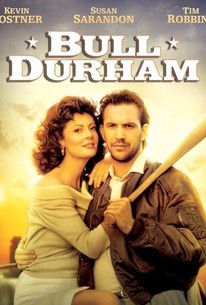
While tales of minor league baseball are a recognizable component of much Southern writing, Cash demonstrates that all that is baseball and southern is not always Susan Sarandon’s fetching smile and Kevin Costner waxing eloquent about in what he believes.
Cash had me at hello with his 2012 novel A Land More Kind Than Home; so much so that I immediately grabbed up this 2014 publication. Darker and more brutally violent than his earlier work, This Dark Road to Mercy makes up in Southern noir atmosphere and adventure what it loses in the fragile charm and personality of his earlier work.
Minor league lefty pitcher Wade Chesterfield gave up his rights to his two daughters years ago and the girls’ mother has just died of an overdose. Easter and her little sister Ruby are living with a foster family when Wade returns and takes (kidnaps) his daughters (no longer legally his) on a trip to reconnect and be a family again. Cash’s description of the girls and of this family dynamic were the high points in this narrative. Cash’s ability to convey through dialogue and setting a sense of tension and cautious familial relationship is outstanding and this alone makes this a good read.
Wade is in some trouble with a small time criminal and is being pursued by a goon with a personal score to settle. Mix in the girls’ very dedicated court appointed guardian ad litem with his own problems and we have ourselves a game sports fans!
All this described amidst the 1998 drama of the home run race between Mark McGwire and Sammy Sosa.
While I had to get past the jurisdictional and legal vagaries of Cash’s description and just accept some literary license, I enjoyed this overall. Cash is a very talented writer and tells a good story.

November 4, 2013
3.5 Wiley Cash has the enviable knack of writing about siblings needing to protect each other and he has created two sisters this time that find themselves in that same situation. Just the protecting because Easter and her little sister Ruby, are not in danger from their father Wade, but from a man who is after Wade for revenge.
I liked this book, liked outspoken and incredibly wise for her years, Easter and loved little Ruby who looks on so many things with wonder. Loved the baseball talk and the love for the game evinced by all three. I even liked Wade, who has made so many mistakes, royally messed up his life but I believe really loved his daughter. Loved Brady, who was making the most of his life and wanted to do right by the girls.
I never felt as close to the characters in this one as I did his last one. Writing from the view point of three characters interrupted the continuity of the story for me. Using that type of voice to tell a story is always a risk, working better in some books than others. In this one it served to keep me at a distance when I wanted to get closer, have a better understanding of these wonderful characters. Still it was a very good story, plenty of suspense, and a story of redemption for a few of the characters and the finding of a family for some others. One of the new authors whose books I will watch out for. Solid, suspenseful and surprising.
I liked this book, liked outspoken and incredibly wise for her years, Easter and loved little Ruby who looks on so many things with wonder. Loved the baseball talk and the love for the game evinced by all three. I even liked Wade, who has made so many mistakes, royally messed up his life but I believe really loved his daughter. Loved Brady, who was making the most of his life and wanted to do right by the girls.
I never felt as close to the characters in this one as I did his last one. Writing from the view point of three characters interrupted the continuity of the story for me. Using that type of voice to tell a story is always a risk, working better in some books than others. In this one it served to keep me at a distance when I wanted to get closer, have a better understanding of these wonderful characters. Still it was a very good story, plenty of suspense, and a story of redemption for a few of the characters and the finding of a family for some others. One of the new authors whose books I will watch out for. Solid, suspenseful and surprising.

November 13, 2013
‘Moderation in all things” is not bad advice, but Aristotle never wrote any good Southern gothic novels. In that macabre world, the last thing we want is moderation. Faulkner knew this. (Necrophilia? Check.) Ron Rash knows this. (Pet killer eagle? Check.) And in his first novel, “A Land More Kind Than Home,” Wiley Cash proved that he knew it, too. (Snake-handling preacher? Check.)
But now, in his second novel, the poetically titled “This Dark Road to Mercy,” Cash seems to have lost his nerve, which is a deadly mistake in these dark woods. All the elements are here for a thrilling drama: imperiled children, a duffel bag full of money and — most important — a disfigured psychopath thirsty for vengeance. But the whole production never generates much heat: a pinch of sentimentality, a touch of suspense, a little off-camera cruelty. This is Cormac McCarthy by way of Sears: “Some Country for Middle-Aged Men.”
That’s regrettable, because Cash knows his way around a good story. As he did in “A Land More Kind Than Home,” he once again gives us several different narrators. Easter Quillby is just 12, but she knows enough to be wary of her errant father, Wade, whose minor league baseball career struck out years ago. Three months after Easter’s mom overdoses in their squalid home, Wade shows up expecting to play daddy:
“Why are you here?” Easter demands.
“I just want to spend some time with you and your sister.”
“You can’t,” Easter tells him. “It’s too late.”
Wade, though, is a man with a dream of fatherhood, no matter how much it might endanger his two daughters. A few nights after reintroducing himself, he climbs through the window of their foster home in Gastonia, N.C., and tells the girls, “We’ve got to go.” You might think that petitioning the family court for custody would be a better plan than this midnight raid, but Wade has no time to start down that complicated legal path. Aside from kidnapping charges, he’s also outrunning an old baseball foe named Pruitt, who’s been hired to recover a stash of money Wade stole from the “hillbilly Mafia.”
The novel’s potentially exciting chase is well designed: Easter is a wise, broken-hearted kid who knows better than to hope for much from the adults in her life; Wade is a lovable fool who thinks he can finally beat his bad luck; and Pruitt, with his weirdly high-pitched voice and steroid-fueled muscles, is a terrifying, implacable assassin. For good measure, they’re all being pursued by the girls’ legal guardian, a sad-sack ex-cop who hopes he can atone for his sins by rescuing Easter and her sister. And all of them are being chased by the FBI. It’s a mad, mad, mad, noir world!
Strangely, for a story with so much momentum, Cash’s best scenes are flashbacks. His description of Easter and her sister finding their mother comatose in bed is swept with crosscurrents of dread and innocence. And Pruitt’s childhood memory of being showered in shattered glass from smashed beer bottles suggests so much about the monster that spawned him.
But this earnest novel seems reluctant to depart from the deeply etched dimensions of its standard plot. Early on, for instance, Cash begins to explore white poverty in a racially mixed neighborhood, but he quickly abandons that complex issue for far more predictable material. In one of the novel’s longest scenes, when some cool kid makes fun of Easter at a boardwalk arcade, we know in our apple-pie-lovin’ bones that Wade will eventually vanquish those punks and win the big stuffed teddy bear for his daughter. “It felt like a movie,” Easter says, perhaps recognizing it from any number of movies we’ve all seen.
That lack of surprise and emotional intensity wears on the story as the chase stretches out to the Midwest. None of these narrators is up to the task of building sufficient tension. Pruitt only hints at his creepier thoughts, drawing a shade over his most heinous actions, which mutes the novel’s horror. And the girls’ dogged guardian is prone to reusing old tea bags like this: “If twenty years as a cop taught me anything it’s that when folks disappear it usually means, one, they’re dead, or two, they don’t want to be found.” Even Easter, for all her spunky, childlike wisdom, doesn’t give us much heartache, and her powers of observation are thin. Seeing the St. Louis Arch for the first time, she says, “It was a huge white half-circle that looked to be sitting in a field off to our right,” which is the least awed description of the country’s tallest monument any child has ever uttered.
Good for Easter; she never gets overexcited. But neither will readers of this novel.
http://www.washingtonpost.com/enterta...
But now, in his second novel, the poetically titled “This Dark Road to Mercy,” Cash seems to have lost his nerve, which is a deadly mistake in these dark woods. All the elements are here for a thrilling drama: imperiled children, a duffel bag full of money and — most important — a disfigured psychopath thirsty for vengeance. But the whole production never generates much heat: a pinch of sentimentality, a touch of suspense, a little off-camera cruelty. This is Cormac McCarthy by way of Sears: “Some Country for Middle-Aged Men.”
That’s regrettable, because Cash knows his way around a good story. As he did in “A Land More Kind Than Home,” he once again gives us several different narrators. Easter Quillby is just 12, but she knows enough to be wary of her errant father, Wade, whose minor league baseball career struck out years ago. Three months after Easter’s mom overdoses in their squalid home, Wade shows up expecting to play daddy:
“Why are you here?” Easter demands.
“I just want to spend some time with you and your sister.”
“You can’t,” Easter tells him. “It’s too late.”
Wade, though, is a man with a dream of fatherhood, no matter how much it might endanger his two daughters. A few nights after reintroducing himself, he climbs through the window of their foster home in Gastonia, N.C., and tells the girls, “We’ve got to go.” You might think that petitioning the family court for custody would be a better plan than this midnight raid, but Wade has no time to start down that complicated legal path. Aside from kidnapping charges, he’s also outrunning an old baseball foe named Pruitt, who’s been hired to recover a stash of money Wade stole from the “hillbilly Mafia.”
The novel’s potentially exciting chase is well designed: Easter is a wise, broken-hearted kid who knows better than to hope for much from the adults in her life; Wade is a lovable fool who thinks he can finally beat his bad luck; and Pruitt, with his weirdly high-pitched voice and steroid-fueled muscles, is a terrifying, implacable assassin. For good measure, they’re all being pursued by the girls’ legal guardian, a sad-sack ex-cop who hopes he can atone for his sins by rescuing Easter and her sister. And all of them are being chased by the FBI. It’s a mad, mad, mad, noir world!
Strangely, for a story with so much momentum, Cash’s best scenes are flashbacks. His description of Easter and her sister finding their mother comatose in bed is swept with crosscurrents of dread and innocence. And Pruitt’s childhood memory of being showered in shattered glass from smashed beer bottles suggests so much about the monster that spawned him.
But this earnest novel seems reluctant to depart from the deeply etched dimensions of its standard plot. Early on, for instance, Cash begins to explore white poverty in a racially mixed neighborhood, but he quickly abandons that complex issue for far more predictable material. In one of the novel’s longest scenes, when some cool kid makes fun of Easter at a boardwalk arcade, we know in our apple-pie-lovin’ bones that Wade will eventually vanquish those punks and win the big stuffed teddy bear for his daughter. “It felt like a movie,” Easter says, perhaps recognizing it from any number of movies we’ve all seen.
That lack of surprise and emotional intensity wears on the story as the chase stretches out to the Midwest. None of these narrators is up to the task of building sufficient tension. Pruitt only hints at his creepier thoughts, drawing a shade over his most heinous actions, which mutes the novel’s horror. And the girls’ dogged guardian is prone to reusing old tea bags like this: “If twenty years as a cop taught me anything it’s that when folks disappear it usually means, one, they’re dead, or two, they don’t want to be found.” Even Easter, for all her spunky, childlike wisdom, doesn’t give us much heartache, and her powers of observation are thin. Seeing the St. Louis Arch for the first time, she says, “It was a huge white half-circle that looked to be sitting in a field off to our right,” which is the least awed description of the country’s tallest monument any child has ever uttered.
Good for Easter; she never gets overexcited. But neither will readers of this novel.
http://www.washingtonpost.com/enterta...

December 5, 2015
Having read two of this author’s books now, there were common features in both stories that I really liked. In both he creates a vivid Southern atmosphere, along with unforgettable characters, portraying the young and innocent in a way that tugs at your heart strings. Two young sisters are kidnapped from their foster home by their estranged father after the loss of their irresponsible mother. It was impossible not to care about these adorable sisters, Easter and Ruby as their safety was at risk. Easter was wise beyond her years and an admirable big sister to sweet Ruby. I also couldn’t help but feel sorry for their “dad”, Wade. Despite all his mistakes, I think he truly cared for and loved his daughters. The back story involving Wade's sketchy past became quite suspenseful as the story progressed. Unfortunately I saw no good outcome possible given all things considered. I almost wish I had read this before his debut novel, A Land More Kind Than Home, since that one blew me away. It was hard for me not to compare the two with their similar style and settings. 3.5 stars

June 20, 2016
I'll get my rant out of the way: I totally hate(d) the cover and the title of this book. Sure, the photo's beautiful, but what's it trying to convey? Bleak rural America? Wiley Cash's North Carolina? The Great Depression? There ain't no telling. And that pseudo-poetic title, This Dark Road to Mercy, so wordy, unspecific, and unmemorable, I'll be forever doomed to refer to this as "Wiley Cash's Second Novel" as there's no way my peabrain's gonna cull that title from the recesses of my addled brain. Just, what were they thinking? It was like publisher HarperCollins and Cash intentionally made this as cover as vague as possible. Despite my remembering solid reviews of this and "Wiley Cash's Debut Novel" (equally unmemorable title and cover) I made some kind of subconscious decision to block Cash from my awareness, perceiving the covers and faux poetry as a blatant attempt to *ahem* cash in on fellow North Carolinian novelist Ron Rash's success.
Yeah, that was some stinkin' thinkin' right there.
Messrs.Cash and Rash, though both hail from and write about the Tar Heel State, and both accomplished novelists, couldn't be any more different. Where Rash relies heavily on poetics and a splash of almost-magical realism to paint his oft grim portraits, Cash (if this novel is an accurate indicator) seems to adhere to a much more straightforward method of storytelling, free from stylistic flourish. He seems to cotton to the idea that there's simply no substitute for sticking close to a great idea and letting his characters (via first-person narration) convey the tension and sense of place.
In this (extremely lean 230 page) novel, set in Gastonia, NC (a largish suburb of Charlotte, kinda nothing resembling the front cover, really), Cash's three narrators (12 year-old Easter Quillby, Brady Weller {a court-appointed guardian ad litem for sisters Easter and Ruby after their mother died and left them wards of the state}, and Pruitt {a stop-at-nothing hitman with the sisters' good-for-nothing father Wade in his crosshairs}) weave an edge-of-your-seat, totally taut thriller that I (unlike its unmemorable title) am not likely to forget anytime soon.

January 9, 2014
While there is a darkness that is somewhat ever-present in this story, the flip side of that is a love story. A fairly messed-up love story, that adds even more darkness and craziness, but also more layers of the love that is just shown in just bits and pieces, tokens here and there in the beginning. Granted this is not your typical love story, but what true love story ever is?

July 12, 2015
3.4★
It was a goodread. But not great. I loved his first novel so it is easy for me to say if you can only read one of Wiley Cash’s two books I recommend A Land More Kind Than Home. That said, this was not unworthy of my time.
The great: The narrative of Easter Quillby. Her character was so authentic and I loved the sections told from her POV.
The not so great: The sense of drama fell flat. Unlike his first novel, I never felt the sense of dread, danger, and edginess that was so well done and palpable in Land . This one was overshadowed by what another reviewer noted as a been there, done that approach with the predictable outcomes. Attempting to portray a real and present danger failed for the most part. As a testament to the unbreakable bonds of family and the primal desire to outrun a past that refuses to let go is where he succeeded and I do think that was his objective.
It was a goodread. But not great. I loved his first novel so it is easy for me to say if you can only read one of Wiley Cash’s two books I recommend A Land More Kind Than Home. That said, this was not unworthy of my time.
The great: The narrative of Easter Quillby. Her character was so authentic and I loved the sections told from her POV.
The not so great: The sense of drama fell flat. Unlike his first novel, I never felt the sense of dread, danger, and edginess that was so well done and palpable in Land . This one was overshadowed by what another reviewer noted as a been there, done that approach with the predictable outcomes. Attempting to portray a real and present danger failed for the most part. As a testament to the unbreakable bonds of family and the primal desire to outrun a past that refuses to let go is where he succeeded and I do think that was his objective.

July 1, 2023
Now what? I just finished this 10 star read by Wiley cash and now I don't know What to do. I feel let down. But if I read another book by him I will be running through his books and then again I will be saying now what? No wonder he wins awards.
Easter and ruby have just lost their mother due to an overdose. Their father who had been divorced for a number of years decides that he wants them back in his life. But they are in a foster home, and they will not let him have the girls. He takes them. And what a wild chase that was. They had so much fun together. But their father wade has stolen money, and the man who stole the money In the 1st place once the money back.
Easter and ruby have just lost their mother due to an overdose. Their father who had been divorced for a number of years decides that he wants them back in his life. But they are in a foster home, and they will not let him have the girls. He takes them. And what a wild chase that was. They had so much fun together. But their father wade has stolen money, and the man who stole the money In the 1st place once the money back.

August 6, 2016
My memory is not infallible....plots and characters get scrambled because I read too much (is this even possible?). Well, anyway, the opening scene of this book stuck with me 2.5 years because it was so powerful. I knew immediately where it was going when I reread it, and still I felt dread and admiration for the understated storytelling.
There is a lot to dread in this novel, but much more to admire and enjoy.
-------
Originally read Feb 2014. Reread Aug 2016 for DCL book group.
There is a lot to dread in this novel, but much more to admire and enjoy.
-------
Originally read Feb 2014. Reread Aug 2016 for DCL book group.

October 11, 2025
What just happened? No, what didn’t happen?
The book lacked clear structure, a red thread, and was disjointed. The resolution felt weak and underdeveloped.
On the book’s cover it said: “A terrifying portrait of innocence, and the evil that threatens it.”
What was “the evil”? What was “the threat”?
What was the book’s meaning?
It takes a lot for a book to score 1 star.
I chose to give it 2, the author did good (I suppose).
I bet he made a lot better than this.
But I don’t recommend it.
It wasn’t horrible in particular. Just Extremely shallow.
The book lacked clear structure, a red thread, and was disjointed. The resolution felt weak and underdeveloped.
On the book’s cover it said: “A terrifying portrait of innocence, and the evil that threatens it.”
What was “the evil”? What was “the threat”?
What was the book’s meaning?
It takes a lot for a book to score 1 star.
I chose to give it 2, the author did good (I suppose).
I bet he made a lot better than this.
But I don’t recommend it.
It wasn’t horrible in particular. Just Extremely shallow.

November 5, 2013
Wow- I must've read this book in two sittings, once I started, I was hooked. Easter and Ruby Quillby are two sisters living in a foster home after losing their mother, relying on each other and making the best of a sad situation. Their father, Wade Chesterfield shows up and decides to take fate into his hands by taking the girls on a road trip that they will never forget. Mix in this family dynamic another side plot of money being stolen and Wade being on the run from a mob boss, seedy bar owner who has his creepy hit man chase Wade and the girls down. Also, enter Brady Weller, who may have been my favorite character. A man who's down on his luck (seriously- couldn't believe his backstory- how heartbreaking!) who decides to save the day and attempt to gain some self respect back for himself. I was on the edge of my seat, racing to find out what would happen next.
There were moments I could relate to having a sister, moments where I was proud, terrified, horrified, and heartbroken. Easter Quillby may be my favorite pre-teen character. So profound and brilliant for her age. The way she took care of little Ruby, managed to protect everyone, and eventually the way she came to feel about her less than available father showed true character growth that was refreshing. The very last sentence about broke me into a million pieces. "Stay on Base..."
The writing hooked me and then never let me go, the characters were so well developed I almost fell in love with every single one, they all had histories which made them feel like the complex humans we all are. I actually enjoyed this one more than A Land More Kind Than Home. Anxiously awaiting Mr. Cash's next novel.
There were moments I could relate to having a sister, moments where I was proud, terrified, horrified, and heartbroken. Easter Quillby may be my favorite pre-teen character. So profound and brilliant for her age. The way she took care of little Ruby, managed to protect everyone, and eventually the way she came to feel about her less than available father showed true character growth that was refreshing. The very last sentence about broke me into a million pieces. "Stay on Base..."
The writing hooked me and then never let me go, the characters were so well developed I almost fell in love with every single one, they all had histories which made them feel like the complex humans we all are. I actually enjoyed this one more than A Land More Kind Than Home. Anxiously awaiting Mr. Cash's next novel.

November 5, 2013
I really looked forward to this after loving A Land More Kind Than Home and I was pleased to read another wonderful story from Mr. Cash.
I would say that this one does not smack you in the face quite as quickly as his first, but the tension builds slowly and the page turning becomes faster as you move along. Cash creates some characters who have suffered broken dreams, hard times and have not always made the best choices. Some of them are trying to pull themselves up (without much luck) while others are bitter and full of grudges. I appreciate that these feel like real people to the reader. The story is not slick, full of glitz and glam....but rather takes the reader to a rural place where people struggle to "make it" or at least keep on going. Life is not always pretty or fair in this world.
Once again Cash used children as the jumping off point to his story, and I love that part of the narration comes from Easter's point of view. She is a savvy, rather world weary character all at a much too early age but she see's things very clearly. She and her sister Ruby, who is still able to be a child, give the story balance. They are an adaptable pair who sadly have not had a very good start in life. The relationships some of the other characters (Wade & Brady) build with these girls, and the girls feelings towards them, redeem these rather sad men for me. Cash also makes the settings so real. I could see the rather seedy hotel rooms, smell the chlorine in the pool and the musty smell of a young boys room, abandoned long ago. I felt the sweat that pools and makes your legs stick to a car seat....his descriptions are spot on!
All in all, this is a story of making mistakes, seeking revenge, dealing with moral questions. It is a race to see which character can get to these "kidnapped" girls first....the villain or the questionable hero. I liked the ending, with a satisfying little twist. I also liked that the timeline followed the famous McGuire/Sousa battle to break the home run record and the race was on to find and maybe save Easter and Ruby.
I would say that this one does not smack you in the face quite as quickly as his first, but the tension builds slowly and the page turning becomes faster as you move along. Cash creates some characters who have suffered broken dreams, hard times and have not always made the best choices. Some of them are trying to pull themselves up (without much luck) while others are bitter and full of grudges. I appreciate that these feel like real people to the reader. The story is not slick, full of glitz and glam....but rather takes the reader to a rural place where people struggle to "make it" or at least keep on going. Life is not always pretty or fair in this world.
Once again Cash used children as the jumping off point to his story, and I love that part of the narration comes from Easter's point of view. She is a savvy, rather world weary character all at a much too early age but she see's things very clearly. She and her sister Ruby, who is still able to be a child, give the story balance. They are an adaptable pair who sadly have not had a very good start in life. The relationships some of the other characters (Wade & Brady) build with these girls, and the girls feelings towards them, redeem these rather sad men for me. Cash also makes the settings so real. I could see the rather seedy hotel rooms, smell the chlorine in the pool and the musty smell of a young boys room, abandoned long ago. I felt the sweat that pools and makes your legs stick to a car seat....his descriptions are spot on!
All in all, this is a story of making mistakes, seeking revenge, dealing with moral questions. It is a race to see which character can get to these "kidnapped" girls first....the villain or the questionable hero. I liked the ending, with a satisfying little twist. I also liked that the timeline followed the famous McGuire/Sousa battle to break the home run record and the race was on to find and maybe save Easter and Ruby.

November 20, 2013
I think I am the only one so far who was very underwhelmed by this one.
It's the story of a pair of girls whose mother passes away suddenly and are shuffled into state custody. Their father, who signed away his rights a long time ago, shows up and decides he wants them back. When the officials balk at his request, he decides he's just going to take them. The problem is, Wade's made more than a few enemies and the court-appointed guardian is not the only person looking for him.
The book alternates POV, going from twelve-year-old Easter to Brady, the legal guardian, to Pruitt, a man seeking vengeance. Perhaps the biggest problem with this book, for me, is that the three voices are largely indistinguishable. I was probably three pages into Brady's first chapter before I realized that something was amiss, and that sort of thing should be instantly obvious. Maybe that's a little bit my fault, but even Pruitt's chapters read the same to me.
There's a lot of well-worn territory here and the characters ultimately end up reading more like types than fully developed characters: the pro baseball player with a haunted past, the children shuffled into the foster-care system, the ex-cop whose work is informed by his own, related personal tragedy. Even though I often enjoy reading this type of dark Appalachian fiction, this particular one was lacking in atmosphere. It sometimes read like the plot summary of a movie -- the story the way that it was blocked out was okay, but there was no real depth. It just kinda fell flat for me.
It's the story of a pair of girls whose mother passes away suddenly and are shuffled into state custody. Their father, who signed away his rights a long time ago, shows up and decides he wants them back. When the officials balk at his request, he decides he's just going to take them. The problem is, Wade's made more than a few enemies and the court-appointed guardian is not the only person looking for him.
The book alternates POV, going from twelve-year-old Easter to Brady, the legal guardian, to Pruitt, a man seeking vengeance. Perhaps the biggest problem with this book, for me, is that the three voices are largely indistinguishable. I was probably three pages into Brady's first chapter before I realized that something was amiss, and that sort of thing should be instantly obvious. Maybe that's a little bit my fault, but even Pruitt's chapters read the same to me.
There's a lot of well-worn territory here and the characters ultimately end up reading more like types than fully developed characters: the pro baseball player with a haunted past, the children shuffled into the foster-care system, the ex-cop whose work is informed by his own, related personal tragedy. Even though I often enjoy reading this type of dark Appalachian fiction, this particular one was lacking in atmosphere. It sometimes read like the plot summary of a movie -- the story the way that it was blocked out was okay, but there was no real depth. It just kinda fell flat for me.

November 29, 2015
First let me say how much I adore stories involving little girls. I cannot resist them. Secondly, the three narrators on the audio version were just so good, I don't think I missed a word, which rarely happens. Third, the story itself is simply irresistible. So very fine. Great Southern lit; a dad on the run from a particularly bad fellow while at the same time trying to win the approval of the two girls, his estranged daughters, so they can be a family; and a very loveable ex-cop who is trying to locate the threesome.
I think it was the girls, Easter and Ruby, who put this over and above what I felt for A Land More Kind than Home. I had a couple issues with implausible and/or predictable moments, but honestly they don't feel all that important now, looking at the big picture.
I think it was the girls, Easter and Ruby, who put this over and above what I felt for A Land More Kind than Home. I had a couple issues with implausible and/or predictable moments, but honestly they don't feel all that important now, looking at the big picture.

March 7, 2016
Having just finished the author's first book, A Land More Kind Than Home, I had really high expectations for this one, but This Dark Road to Mercy fell a little short. While I did enjoy the story - especially told from Easter's point of view, I found my mind wandering through the other two points of view at times. I loved the two sisters, and was even fond of their father who had kidnapped them. I even shed a few tears at the end. Part of my disappointment in the book could have been that this was my first audiobook and I didn't really like the voice of one of the narrators (just to be fair).
Like Cash's first book, he evokes all the senses with his descriptive writing. I look forward to more from him!
3.75 stars
Like Cash's first book, he evokes all the senses with his descriptive writing. I look forward to more from him!
3.75 stars

July 16, 2021
3 Stars

January 3, 2014
Wow. To say this book is flat is an understatement.
Once I cracked the book open and saw how it was going to be, I couldn't finish it fast enough even though it's a short novel with little real substance to necessitate attentive reading.
The novel is set in 1998 Gastonia, NC and follows the story of two sisters, 12-year-old Easter and 6-year-old Ruby Quillby, who have been placed in an orphanage after their mother dies. Their father Wade Chesterfield, a hopelessly inept criminal who has no rights to them, wants a second chance to be their father. Wade shows up out of the blue and kidnaps them, putting them in danger because of his own illegal activities. Wade is being pursued by a deranged ghost from his past, Pruitt. Sounds like an interesting read, right? So wrong.
I didn't really connect to any of the characters. Even the main characters are mostly 1D. Wade's careless and child-like character was the only one that I felt had a little depth, but it wasn't enough. Easter had the most boring and lifeless thoughts and reflections (even about the day her mother died), and Brady (the ex-cop and legal guardian) I couldn't have cared less about. The one guy who should be the most interesting was Pruitt, the quintessential homicidal maniac. He was just as dull, if not more, than the others. Pruitt was as flat as a cardboard cutout. He didn't seem real in any way. His whole demeanor was off and unfortunately his random, choppy back-story was not very enlightening, unless his problem is supposed to be mostly genetic. You would think that Wiley would have mentioned more about Pruitt's history with Wade at certain parts, instead describing things that didn't matter to the story.
Most of the descriptions are banal and pointless, and I now officially don't want to hear another thing about baseball for a long time. The story is paralleled by the 1998 race between Sammy Sosa and Mark McGwire to break Roger Maris' home run record. That might have been all the baseball the story needed. The constant mentioning by every character of playing baseball, watching baseball, loving baseball, remembering baseball, and daydreaming about baseball may be of interest to baseball fans; to me it was pure torture. The story seems to be mostly about baseball. Maybe baseball really is a big thing for Gastonians but I refuse to believe that the residents only play and talk about baseball 24/7.
Things began to heat up around chapter 20 (there are 35 chapters in my version). Still, the flat characters, the flat conversations, and some of the coincidental scenarios gave the feel of a '90s Lifetime movie. I didn't care for the writing style, which was confusing at times and not just because of the constant change of POV. As brief and tidy as the ending is, it's probably the most decent part of the book.
The story was lacking as a whole, with loose ends everywhere and details that take up space and yet come to nothing. As shallow as the central story is, Wiley could have built upon that instead of adding padding. I also think the setting could have been further elaborated upon. I was raised in Fayetteville, NC and the setting, 1990s Gastonia, NC was still not interesting to me. As many times as Gastonia is mentioned, it almost could have been any other city in the U.S. what with the lack of detail. This could have been such a good story, but in the end it just felt empty.
Once I cracked the book open and saw how it was going to be, I couldn't finish it fast enough even though it's a short novel with little real substance to necessitate attentive reading.
The novel is set in 1998 Gastonia, NC and follows the story of two sisters, 12-year-old Easter and 6-year-old Ruby Quillby, who have been placed in an orphanage after their mother dies. Their father Wade Chesterfield, a hopelessly inept criminal who has no rights to them, wants a second chance to be their father. Wade shows up out of the blue and kidnaps them, putting them in danger because of his own illegal activities. Wade is being pursued by a deranged ghost from his past, Pruitt. Sounds like an interesting read, right? So wrong.
I didn't really connect to any of the characters. Even the main characters are mostly 1D. Wade's careless and child-like character was the only one that I felt had a little depth, but it wasn't enough. Easter had the most boring and lifeless thoughts and reflections (even about the day her mother died), and Brady (the ex-cop and legal guardian) I couldn't have cared less about. The one guy who should be the most interesting was Pruitt, the quintessential homicidal maniac. He was just as dull, if not more, than the others. Pruitt was as flat as a cardboard cutout. He didn't seem real in any way. His whole demeanor was off and unfortunately his random, choppy back-story was not very enlightening, unless his problem is supposed to be mostly genetic. You would think that Wiley would have mentioned more about Pruitt's history with Wade at certain parts, instead describing things that didn't matter to the story.
Most of the descriptions are banal and pointless, and I now officially don't want to hear another thing about baseball for a long time. The story is paralleled by the 1998 race between Sammy Sosa and Mark McGwire to break Roger Maris' home run record. That might have been all the baseball the story needed. The constant mentioning by every character of playing baseball, watching baseball, loving baseball, remembering baseball, and daydreaming about baseball may be of interest to baseball fans; to me it was pure torture. The story seems to be mostly about baseball. Maybe baseball really is a big thing for Gastonians but I refuse to believe that the residents only play and talk about baseball 24/7.
Things began to heat up around chapter 20 (there are 35 chapters in my version). Still, the flat characters, the flat conversations, and some of the coincidental scenarios gave the feel of a '90s Lifetime movie. I didn't care for the writing style, which was confusing at times and not just because of the constant change of POV. As brief and tidy as the ending is, it's probably the most decent part of the book.
The story was lacking as a whole, with loose ends everywhere and details that take up space and yet come to nothing. As shallow as the central story is, Wiley could have built upon that instead of adding padding. I also think the setting could have been further elaborated upon. I was raised in Fayetteville, NC and the setting, 1990s Gastonia, NC was still not interesting to me. As many times as Gastonia is mentioned, it almost could have been any other city in the U.S. what with the lack of detail. This could have been such a good story, but in the end it just felt empty.

February 9, 2015
Sad, check.
Family, check.
Bad guys, check.
Baseball, check.
Good guys, check.
Motherhood, check.
Fatherhood, check.
Foster home, check.
Stolen money, check.
Stole my heart, check.
Great characters, check.
Fantastic storyline, check.
Read it and grateful I have because it might be the best book I'll read all year.
Family, check.
Bad guys, check.
Baseball, check.
Good guys, check.
Motherhood, check.
Fatherhood, check.
Foster home, check.
Stolen money, check.
Stole my heart, check.
Great characters, check.
Fantastic storyline, check.
Read it and grateful I have because it might be the best book I'll read all year.

November 21, 2015
In "This Dark Road to Mercy" Wiley Cash spins a yarn that readers will not soon forget.
Young sisters Easter and Ruby Quilby have never met an adult they can trust. They've essentially raised themselves since their drug addicted mother offers no support, and their father, Wade, has long-since run out on the family. When their mother dies, the girls move into a foster home. Several months later, their Wade resurfaces, wanting to make a new life with the girls. When told that he had previously signed away his parental rights, Wade kidnaps the girls and sets off to start a new life.
The story is told from the point of view of three narrators: Easter (now one of my all-time favorite characters in literature), Brady Weller (the girls' court-appointed guardian, who has a story of his own), and Robert Pruitt (a former associate of Wade's, intent on exacting revenge).
Set against the backdrop of the Mark McGwire/Sammy Sosa home run rivalry in the summer of 1998, this beautifully written story will have the reader thinking about the murky areas between right and wrong and what actions can be justified.
4.5 stars. Thank you to my GR friend Angela M for suggesting this fantastic book and putting Wiley Cash on my radar screen!
Young sisters Easter and Ruby Quilby have never met an adult they can trust. They've essentially raised themselves since their drug addicted mother offers no support, and their father, Wade, has long-since run out on the family. When their mother dies, the girls move into a foster home. Several months later, their Wade resurfaces, wanting to make a new life with the girls. When told that he had previously signed away his parental rights, Wade kidnaps the girls and sets off to start a new life.
The story is told from the point of view of three narrators: Easter (now one of my all-time favorite characters in literature), Brady Weller (the girls' court-appointed guardian, who has a story of his own), and Robert Pruitt (a former associate of Wade's, intent on exacting revenge).
Set against the backdrop of the Mark McGwire/Sammy Sosa home run rivalry in the summer of 1998, this beautifully written story will have the reader thinking about the murky areas between right and wrong and what actions can be justified.
4.5 stars. Thank you to my GR friend Angela M for suggesting this fantastic book and putting Wiley Cash on my radar screen!
Displaying 1 - 30 of 1,493 reviews