Set on the French Riviera in the late 1920s, Tender Is the Night is the tragic romance of the young actress Rosemary Hoyt and the stylish American couple Dick and Nicole Diver. A brilliant young psychiatrist at the time of his marriage, Dick is both husband and doctor to Nicole, whose wealth goads him into a lifestyle not his own, and whose growing strength highlights Dick's harrowing demise. A profound study of the romantic concept of character, Tender Is the Night is lyrical, expansive, and hauntingly evocative.
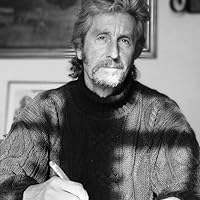
Francis Scott Key Fitzgerald, widely known simply as Scott Fitzgerald, was an American novelist, essayist, and short story writer. He is best known for his novels depicting the flamboyance and excess of the Jazz Age, a term he popularized in his short story collection Tales of the Jazz Age. During his lifetime, he published four novels, four story collections, and 164 short stories. Although he achieved temporary popular success and fortune in the 1920s, Fitzgerald received critical acclaim only after his death and is now widely regarded as one of the greatest American writers of the 20th century. Born into a middle-class family in Saint Paul, Minnesota, Fitzgerald was raised primarily in New York state. He attended Princeton University where he befriended future literary critic Edmund Wilson. Owing to a failed romantic relationship with Chicago socialite Ginevra King, he dropped out in 1917 to join the United States Army during World War I. While stationed in Alabama, he met Zelda Sayre, a Southern debutante who belonged to Montgomery's exclusive country-club set. Although she initially rejected Fitzgerald's marriage proposal due to his lack of financial prospects, Zelda agreed to marry him after he published the commercially successful This Side of Paradise (1920). The novel became a cultural sensation and cemented his reputation as one of the eminent writers of the decade. His second novel, The Beautiful and Damned (1922), propelled him further into the cultural elite. To maintain his affluent lifestyle, he wrote numerous stories for popular magazines such as The Saturday Evening Post, Collier's Weekly, and Esquire. During this period, Fitzgerald frequented Europe, where he befriended modernist writers and artists of the "Lost Generation" expatriate community, including Ernest Hemingway. His third novel, The Great Gatsby (1925), received generally favorable reviews but was a commercial failure, selling fewer than 23,000 copies in its first year. Despite its lackluster debut, The Great Gatsby is now hailed by some literary critics as the "Great American Novel". Following the deterioration of his wife's mental health and her placement in a mental institute for schizophrenia, Fitzgerald completed his final novel, Tender Is the Night (1934). Struggling financially because of the declining popularity of his works during the Great Depression, Fitzgerald moved to Hollywood, where he embarked upon an unsuccessful career as a screenwriter. While living in Hollywood, he cohabited with columnist Sheilah Graham, his final companion before his death. After a long struggle with alcoholism, he attained sobriety only to die of a heart attack in 1940, at 44. His friend Edmund Wilson edited and published an unfinished fifth novel, The Last Tycoon (1941), after Fitzgerald's death. In 1993, a new edition was published as The Love of the Last Tycoon, edited by Matthew J. Bruccoli.
Uma bela história de amor. Val tem 17 anos e é príncipe, filho de um nobre russo e de uma americana; eles são os Rostoff e estão em Cannes a passar a season.
Cannes era um paraíso privilegiado, onde ele fazia o que queria, porque era rico, jovem e o sangue de Pedro, o Grande, coloria as suas veias. Mas a questão do amor à noite era a que lhe falava mais de perto ao coração. Era ainda um vago sonho, algo que iria acontecer-lhe um dia, único e incomparável. Tinha a certeza que iria encontrar uma bonita rapariga sob o luar da Riviera.
O que é realmente interessante não é o facto de ele nutrir essa esperança quase espiritual por um romance — algo comum a todos os jovens imaginativos —, mas sim que isso realmente aconteceu. E quando ocorreu, foi totalmente inesperado tornando-o incapaz de esquecer toda a enxurrada de emoções. Encontra uma americana da sua idade, o seu primeiro amor, num iate à noite, uma noite verdadeiramente suave, terna e apaixonada como o encanto do luar da Riviera.
«Se a beijou uma ou diversas vezes, Val não se lembraria depois, embora tivessem passado uma hora sentados juntos, com ele segurando sua mão. O que mais o surpreendeu foi a absoluta ausência de paixão selvagem — lamento, desejo, desespero —, compensada pela delirante promessa da felicidade de viver, como ele nunca havia sentido antes. E este era apenas o seu primeiro amor — o primeiro! O que devia ser o amor em sua plenitude e perfeição! Val ainda não sabia que o que já estava experimentando, aquela sensação irreal de êxtase e paz, nunca mais seria recapturada.»
Val compreendeu que estava apaixonado:
«“Vou dizer-lhe a verdade”, ele falou. “Você é o meu primeiro amor. Tenho dezessete anos, o mesmo que você.» «Não vou esquecê-la. Prometo lembrar-me para sempre de você. Não importa quem eu ame, terei de compará-la com você, meu primeiro amor.»
A idade tornou-se indefesa diante do destino que os unira. Corria o ano de 1914 e os Rostoff voltam para a Rússia no final de temporada. A ofensiva de Kerensky em 1917, a revolução russa e a glória da Rússia Imperial termina e começa a debandada. Val volta para Cannes e arranja trabalho como taxista e um ano depois uma colocação na filial de um Banco Britânico. Dois anos mais tarde já ninguém se lembra que ele é um príncipe russo - a Rússia tinha passado de moda.
«Quanto a mulheres, não conhecia nenhuma. Aos dezessete anos, só tivera certeza de uma coisa — de que sua vida seria um eterno romance. Oito anos depois, descobrira que não seria assim. Não sabia por quê, mas nunca tivera tempo para amar. A guerra, a revolução e, agora, a pobreza conspiraram contra o seu coração. As nascentes de sua emoção, que haviam jorrado com tal abundância naquela noite de abril, tinham secado em seguida e delas só restara um pequeno filete.»
As emoções adormecidas despertam bem como a necessidade de recordar aquela noite de 1914. Tem agora 25 anos. Fora em Abril daquele ano que o que estava destinado a ser o melhor período da sua vida tinha chegado ao fim sob a luz do luar. E essa lembrança tornou-se sagrada para ele, pois o que imaginara ser o início era, na verdade, apenas o fim. Mas, está um iate ancorado no porto de Cannes. A escrita rendilhada e o universo social e literário de Fitzgerald estão presentes neste conto com a excepção do amor que aqui não é um luxo que se venda ou compre ou seja notícia nas colunas sociais.
First love.. So beautiful.. So pure.. This story is about love,memory of love and hope. I must say this is more about hope than love. Of waiting for one's lover when one doesn't even know the name. Of feeling that the other person might be thinking about you at the same moment.. Of the satisfaction in knowing that you have met that person once in your life and that you have known such love at least once and that's all that matters. Sometimes it's enough to know that the other person exists,just that knowledge is enough,it isn't necessary to get any sensory confirmation. It is about the feeling we have when we look at the moon and think that the other person might be looking at the same moon and thinking about us. It is about sharing the same world or having shared it once and has nothing to do with spatial or temporal nearness or togetherness.. You know there is you,that person and your love.. You don't need anything else in the world to exist.. Every breath seems an offering to that love that you nurture in your heart.. You cease to fight,you cease to harbor any hard feelings for anyone.. Wherever you look,you find love in its purest form and you can do nothing but smile.. No matter how many rocks life throws at you,you keep smiling because you see his love in it.. Life becomes peaceful,blissful.. Those around you feel the gentleness and love that you exude.. Your whole life is changed.. And without you doing anything.. Such is the change true love brings in one.. But true love is something like blue moon.. Only the rarest get it.. And rarer gets to live their lives with the same person.. And still less carry that love till the end of their lives.. This story is about such a love.. And so it's pleasant and can be enjoyed by anyone. No one gets offended by happily-ever-afters. In terms of creating luxury with words,one can find no one better than Fitzgerald. And in this story also,he beautifully pictures the grandeur of a Russian prince who becomes poor as time passes by. A beautiful,joyous story.. I liked it a lot..
Though it's no Gatsby, this is a great, very short story of love and loss and hope. Fitzgerald always has a way of bringing his characters to life...you root for them because you realize that their triumphs and their struggles are very similar to your own, no matter how great or small. As a Romantic and Idealist, I particularly like the end (though I won't spoil it for those who have yet to read the book). A quick read, yet so full! :)
“‘Love in the night; love in the night.’ He tried them in three languages-Russian, French and English-and decided that they were best in English. In each language they meant a different sort of love and a different sort of night-the English night seemed the warmest and softest with the thinnest and most crystalline sprinkling of stars.”
Delightful period piece from the inimitable F. Scott Fitzgerald … a longish short story or a brief novella … Set in Cannes on a night in April 1914 (and then the same month, eight years later) the narrative tells how a Russian-American prince meets a mysterious young woman on a yacht in the dark … blissfully of its time and place …
A half Russian, half American, Val, has a romantic encounter with an a married American woman when he is 17. This changes his life and he is never the same. This short story has a charming lead characters with Val and the American woman he is enchanted by. His parents reminds me of typical rich kid's parents with their snobby attitudes. You can feel the tension between Val and them. I have mixed feelings about the romance, because it is so brief and I cannot connect to love where people express intense feelings after a few hours together. I like how our main character is half Russian.
Whoever said F. Scott Fitzgerald was blessed with a "romantic imagination" was spot. Paired with rich descriptions of a life in Cannes and the contrast to a life during the Russian monarchy, it is a love story which borders cheesiness set under a background of culture.
This is akin to a modern day pulp romance novel or Netflix holiday film - a russian prince in an eternal love - but it’s shorter and has a deft analysis of early 20th century Europe and Class, from an American pov