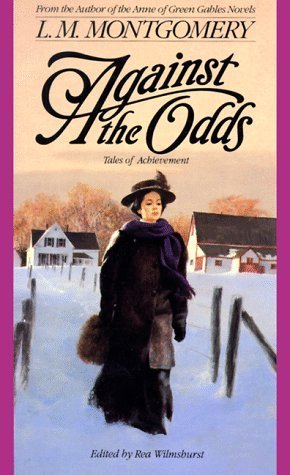
Inspiring new stories by the acclaimed author of the Anne of Green Gables books are set in small villages in Canada and include inspiring tales of characters who overcome hardships with honesty, creativity, and sheer stubbornness. Original.
Lucy Maud Montgomery was a Canadian author whose novels, stories, essays and poems made her one of the most widely read writers in Canadian literary history. Publishing under the name L. M. Montgomery, she achieved international recognition with the novel Anne of Green Gables, released in 1908, which quickly became a bestseller and introduced readers to the imaginative orphan Anne Shirley. The success of the book transformed Montgomery from a schoolteacher and magazine contributor into a celebrated literary figure whose work reached audiences far beyond Canada. Raised on Prince Edward Island, she drew deeply on its landscapes, rural communities, and storytelling traditions, turning the island into the setting for many of her novels. The popularity of Anne of Green Gables led to numerous sequels, including Anne of Avonlea and Anne of the Island, establishing a beloved series that followed Anne from childhood to adulthood. Montgomery continued to write steadily throughout her life, producing twenty novels and more than a thousand short stories poems and essays. Her fiction often centered on young women, personal growth, and the emotional ties between people and place, combining gentle humor with reflections on memory, imagination, and belonging. Although she enjoyed enormous popularity, Montgomery also faced personal difficulties, including long periods of depression and the strain of caring for her husband, a Presbyterian minister who struggled with mental illness. Writing became both a profession and a refuge, allowing her to transform memories of childhood and observation of everyday life into vivid storytelling. In addition to the Anne series, she created other notable works, including the Emily novels and several stand alone stories that explored identity, creativity, and attachment to home. Her books were translated widely and attracted devoted readers around the world, helping shape the international image of Prince Edward Island as a place of pastoral beauty and warm community life. Scholars later studied her extensive journals letters and manuscripts, which revealed the complex inner life behind the cheerful tone of many of her books. By the time of her death in 1942, Montgomery had become one of the most successful and influential authors in Canadian literature. Her stories about imagination, resilience, and the search for belonging continue to inspire readers of all ages, and Anne Shirley remains one of the most recognizable characters in children's fiction. Through generations of readers, Montgomery's work has encouraged appreciation for storytelling, nature, and the emotional richness of ordinary life. Her legacy also includes a vast body of diaries and correspondence that document the challenges faced by a professional woman writer in the early twentieth century. Institutions such as the L.M. Montgomery Institute have continued to examine her influence on literature culture and tourism, particularly on Prince Edward Island, where sites associated with her fiction attract visitors from many countries. Adaptations of Anne of Green Gables for film, television, and theatre have introduced new audiences to her stories, ensuring that her characters remain part of global popular culture. Though critical opinion once dismissed her as merely a writer for children, later scholarship recognized the depth of her themes and the enduring craft of her storytelling. Today she is remembered as a central figure in Canadian literature whose imaginative vision gave voice to the beauty of rural life while celebrating the hopes of young dreamers who search for belonging.
Although like with most if not all short story collections, I most definitely have my personal favourites amongst the eighteen featured thematic tales of so-called achievement presented by compiler and editor Rea Wilmshurst, L.M. Montgomery's Against the Odds is without a doubt also one of my all time most special comfort reads, with certain stories like Bessie's Doll, At the Bay Shore Farm, The Fillmore Elderberries and especially the final story, The Strike at Putney having been read more than twenty times by me (and that is a conservative estimate at best). For even with the at times rather heavy duty messages and preachiness, MOST of the stories encountered in Against the Odds are still and for all intents and purposes delicately and delightfully descriptive, evocative and clearly demonstrate that L.M. Montgomery has imbued her characters with common sense, a general and strong love for both fair play and willingness to admit one's faults, as well as a sense of irony and humor, and as these are all and sundry tales and anecdotes of overcoming the odds, also of course an often iron clad will to succeed, to prove oneself (no matter what obstacles might come one's way, no matter if friends, family and even society are at best skeptical and sometimes rather openly hostile).
And the only minor (but still important) caveats I do offer with regard to Against the Odds and the main reason this book is a three and not a four star read for me, is that there are two specific story offerings that I have personally and always found more than a bit problematic (and yes, also rather majorly and personally aggravating). Now the gender issues and stratifications present in In Spite of Myself are indeed a bit frustrating (although of course also a product of its time so to speak), but what has always bothered me most with this particular story is the simple fact that the first person and masculine narrator sounds both inauthentic and so constantly whining and complaining that it kind of totally ruins the ambience and renders how he and his cousin Augusta find that they are in fact simpatico and meant for each other rather mundane and actually a bit of a major let-down as well (for Gussie at least in my opinion could do so much better), and while I do not in any way actively despise In Spite of Myself, I just continuously find the male narrator grating and pretty much a tedious bore.
And with the second story of Against the Odds that I consider to be rather problematic and actually really quite majorly personally uncomfortable if truth be told (How We Went to the Wedding), well, the general theme of two women, of two cousins traveling alone by horse and wagon across rain-soaked and flooded prairies to reach a wedding, to attend the one girl's best friend's nuptials, while this all is in fact wonderfully uplifting, and much of the story in fact reads both evocatively, and with much entertainment, humour, diversion, sorry, butt he oh so blatant racism and bigotry that L.M. Montgomery almost constantly displays in How We Went to the Wedding against First Nations, against Native Canadians as a whole, this just makes me cringe and really, truly does make me actively despise How We Went to the Wedding to such an extent that I really cannot stand reading it. And while as mentioned, I have read most of the stories featured and presented in Against the Odds many and multiple times, I have only managed to read How We Went to the Wedding but twice and do now tend to actively avoid it during my regular rereads (but all that being said, I still do very much and yes most highly recommend Against the Odds, but with a further and also strong suggestion to definitely consider reading editor Rea Wilmshurst's excellent and astute introduction only AFTER having perused the stories, the featured tales, so as to avoid possible spoilers and/or having her analyses and musings possibly affect how one reads and approaches Against the Odds, in other words, to read the introduction as an afterword instead).
Perhaps the least sentimental and most fun of Montgomery's short story collections that I've read so far.
And I did not expect this.
Perhaps because of its rather pompous title – or because of Montgomery's almost mythic descriptions of climbing to the alpine path that so beautifully runs through her entire authorship, I imagined this to be a rather solemn book about characters who had to fight, tooth and claw, to achieve their dreams.
Instead, it was a collection of lighthearted and rather silly tales about people who tricked their way into marriages or jobs or who stumbled on a stroke of luck. There's actually very little achievement in this book, and more coincidences. But that's what makes it fun.
However some of the stories are horribly dated and betrays a prejudiced world-view – and I would take this into consideration when starting the book.
Feb 2025 reread: Some of the stories involve chance more than achievement from effort, but uplifting and inspiring stories nonetheless. I'm not sure how In Spite of Myself is an achievement sorry, but it is one of my favorites.
*** A great collection of stories, each of which I liked. They were nicely varied, although the plots were the same, hinging on either stubborn, forbidding relatives or rich people and their unwillingness to help the main characters, or young people proving that they aren't like disreputable predecessors-sometimes both. It's hard to pick favorites but here they are:
The Fillmore Elderberries,
Bessie's Doll (though I'm little annoyed at Bessie for getting so cast down when the doll is sold),
At the Bay Shore Farm (I love Frances' decision about her writing-'she must aim, however humbly, to help her readers to higher planes of thought and endeavour. Then, and only then, would it be worthwhile),
How We Went to the Wedding (the attitudes about Indians and 'half-breeds' are marked, but they don't bother me, since they are a product of the times and are more out of fear and ignorance than malice; and the girls are so charming and funny, with their ham!),
Their Girl Josie,
A Question of Acquaintance,
The Strike of Putney (this one reminds me of the Andy Griffith Show episode in which Ellie Walker wants to be on the town council but the men won't hear of it. So she and the other women break down the mens' will by causing them mishaps)
Inspiring, funny, and entertaining on the whole, and I say that Rea Wilmshurst knew what she was about when she grouped LMM's short stories together by theme. I wish I could find out more about her, as someone who was so passionate about LMM's work and put so much effort into bringing it to more people!
Oh, and I think the cover represents Joscelyn from Their Girl Josie. The girl looks like she's leaving home half sadly, half exultantly and determinedly, like Josie did in the story.
I read this when I was just about to do a really intimidating work presentation, and it was super-encouraging to read stories about people beating the odds. Try this when you're feeling discouraged and need a pep-talk!
Against the Odds is another collection of Lucy Maud Montgomery short stories and like many of the other anthologies, its stories all follow an overarching theme. While other collections have focused on stories of matrimony, orphans and lonely people, or on letters and journal writing, the common thread in Against the Odds is triumph over adversity through pluck and determination and often times a little cleverness. Because this was a common theme in Louisa May Alcott books and stories, I kinda felt like this book was a collaboration between two of my favorite authors. The writing and the characters was pure Montgomery but there were very Alcott-ian touches that I appreciated. Some of my favorite stories included:
The Fillmore Elderberries A young boy, haunted by the reputation of his ne’er do well father, is unable to secure work to support himself and his widowed mother. Finally he agrees to take on a field overrun by elderberries. Although he is being underpaid and the work is hard, he promises to see the job through to the end. In keeping his promise and doing the job well, he proves himself to be hardworking and trustworthy.
Bessie’s Doll Tommy is a poor boy has two joys in his life, one in his friendship with Bessie, a lame girl who lives nearby and the other in looking at the beautiful flowers in Miss Octavia’s garden. Miss Octavia is convinced that he is lingering near her garden to do mischief and so chases him off whenever she sees him. When he is not looking at the garden, he brings Bessie to look at beautiful doll in the window of a local store. While neither child could possibly afford the doll, Bessie falls in love with it and grieves for it when it is sold. When Tommy saves Miss Octavia’s garden from being ruined by frost, both he and Bessie are given their heart’s desires.
The Genesis of the Doughnut Club This is one of the stories that has a particularly Alcott-ish tone. An old maid who had been keeping house for her brother out west, is facing the prospect of having to move back east when he passes away. She is dreading it, partially because she will be viewed as a burden there and partially because she has taken a group of boys under her wing, to guide and care fore, and she hates the idea of leaving them. With no other options open to her, she decided to host a Thanksgiving dinner for all her boys before she leaves. An unexpected guest at the feast is impressed by her cooking and offers her an opportunity to stay in the place she loves and keep taking care of her boys.
At the Bay Shore Farm Two sisters are both very excited about an upcoming picnic until a summons from their Grandmother means that one of them will have to miss the event. Although she desperately wants to catch a glimpse of her hero, a famous author, one of the girls unselfishly volunteers to go so that her sister can see a dear friend who had moved away and would be visiting for only that one day and is rewarded for her deed in the most satisfactory way.
Why Mr. Cropper Changed His Mind A teacher is faced with a school out of control. A member of the school board is of the opinion that women shouldn’t be teachers and his sons, emboldened by this fact, has started a campaign of disobedience and mischief. When the teacher, armed with Kodak camera, takes a photo that would be of interest to several people in the community, the man and his sons have a change of heart. I thought this story was particularly fun because of how such a modern hobby (and with such a recognizable brand of camera) played such a prominent part in it.
A Substitute Journalist A young man is assigned two stories for a local newspaper. Although his heart is really in another field, the young man doesn’t have the opportunity to enter that field and is hoping that if he does a good job on these stories, he will have permanent place at the newspaper with which to support his mother and sister. However, he misses his train and is unable to make his second interview. Although she is unfamiliar with how to interview a politician, his sister takes his place and conducts the interview.
The Strike at Putney This was the best story in the collection, at least in my opinion. The ladies of Putney Church have arranged for a famous missionary to come and make an address. Because the church was not expected to be used that evening and because of the size of the expected audience, they request to use the church for their event. But the men of the church refuse them because the missionary in question is a woman and women had no place speaking in church. As a result, the women go on strike. All teas and socials (necessary fundraising events) cease. The women who took charge of cleaning the church and bringing flowers for the weekly service resign. The organist and the ladies of the choir refuse to sing. Their theory was that if a woman is unfit to speak in a church, then women should be considered unfit to work in one. The men, quickly get the point. As the granddaughter of a lady minister, I found this story to be especially funny and thought that it illustrated an important truth – that the well being of a church is dependent on the good will of the volunteers who keep it running.
Really excellent book! Perfect for bedtime stories or when you have just a quick moment to read. Really good morals and I would read this to kids, for sure.
It got a bit repetitive at points and, as usual with LMM, there were a couple of chapters that were a little outdated(and racist). But there were some fun ones.
This book, by the author of Anne of Green Gables, is a collection of short stories compiled in the early 1990s. All but one were previously published in newspapers or magazines, sometimes in more than one. And while they work together as a whole, I found them best ingested one or two stories at a time (which made them ideal commuting reading for a week).
I don’t know if Montgomery was capable of writing only one type of hero, or if that was merely the type she (or her publishers) preferred. But each of these 18 stories features, like Anne Shirley, a (usually young) protagonist best described as optimistic, smart, upright, and plucky. Usually they’re down on their luck, but combined with their good character, hard work, and a little serendipity, they’re able to turn their fortunes around. (Generally, though, Montgomery is tempered in her rewards. No one wins the lottery, discovers a rich, dying relative, or embarks upon a get-rich-quick scheme.
Whether it’s convincing a prospective employer to take a chance on them, crossing a flooded Canadian countryside to reach a wedding in time, or persuading a relative to pay for college, each of these tales will have you rooting for the protagonists to find their path to a better life.
Since LM Montgomery is just the best author in the world, no surprise that these short stories were good. True, I like Blythes Are Quoted,The and Chronicles of Avonlea much more, but these stories were mainly nice because the characters were all kindred spirits.
My favorite one may be the last one, The Strike at Putney. It was humorous and the women were all sensible and intelligent and didn't the men get what they deserved XD
I am pretty sure A Case of Trespass is in another book, because I've read this one before.
Fun! A lot of very similar tales, as always, but a couple of standouts. Although they were predictable, I found a lot of charm to "In Spite of Myself" (or whatever that story was called) and the final story about the strike. "How We Went to the Wedding," meanwhile, was a whole other adventure tale on its own. Ignoring if at all possible (cringe) the wildly ignorant stuff about "Indians," this was a good story and very different from anything else of hers I'd ever read. No wealthy benefactors or long-lost relatives, no love interests, just a couple of women making a long trek and the various adventures that befell them on the way.
L.M. Montgomery is a long time and all time favorite author of mine. She writes the perfect girls story with just the right mix of adventure, drama and happiness. I find her books a comfort to read and have re-read most of her works many times over the years. They are classics for a reason and that reason is they are great. These are true comfort books for me and books I enjoy re-reading again and again.
As a long time fan of L. M. Montgomery, I was excited to find this collection of short stories that I had not yet read. As usual, while there are some stories that will seem familiar as they probably ended up as chapters in her books, and there are some stories with dated opinions, overall it was an enjoyable collection of feel good stories. The last story, “Strike at Putney”, was my favorite.
Some of the stories in this collection were more memorable than others. But I personally felt there were some real gems here, especially for established fans of L.M. Montgomery's work. Did I like it? Yes. Would I reread it? I would want to reread individual stories, but probably not the whole collection. Would I recommend it? Overall, yes.
3.5 stars. I always enjoy reading her books. There is something so comforting about her stories, they seem so wholesome and real. While these lacked depth and were sometime repetitive thematically, it was still a nice fun read.
Her stories always make me smile, other times wistful. This collection is perfect to read when dealing with the hard times in your life. I'm dealing with my own hard times and reading this collection makes me press on. Read this and learn to not be afraid of going after what you want.
I will re-read this collection of short stories over and over! Montgomery was a master of character writing, and I wish I could spend more time with each main character. My favorite stories were "At the Bay Shore Farm," "In Spite of Myself," and "The Strike at Putney."
LM Montgomery book of short stories. The theme here is underdogs or outsiders finding a way to make it. I especially liked these stories: "The Strike at Putney," "Ned's Stroke of Business" and "The Blue North Room."
*The Strike at Putney by L.M. Montgomery and The Strike at Putney Church by Eliza Jane Wilson. (Not on Goodreads and I can’t find an ISBN to submit them.)
L.M. Montgomery has a special place in my heart. Her tales have a special flavor that only she brings to the page. The stories made me chuckle and shed a tear. Montgomery's writing style is not for everyone but I find it appealing.